When choosing between stamped and stained concrete for your home, think about aesthetics, costs, and durability. Stamped concrete features textured designs that imitate materials like stone or wood, whereas stained concrete offers vibrant colours on a smooth surface. Generally, stamped concrete is more expensive. The installation and maintenance also differ; stamped concrete requires more effort and regular sealing. Both options are durable, but they are suited to different environments. Read on to learn more about the ideal uses and installation processes for each type.
Key Takeaways
- Choose stamped concrete for a textured, three-dimensional appearance that resembles natural materials, making it perfect for outdoor patios and around pools.
- Opt for stained concrete if you prefer a sleek, smooth finish that showcases vibrant colours, ideal for indoor areas and busy commercial spaces.
- Consider the costs: stamped concrete typically ranges from £7 to £15 per square metre, while stained concrete is more affordable, costing between £3 and £10 per square metre.
- Think about maintenance; stamped concrete needs sealing every 2–3 years, whereas stained concrete usually requires less upkeep.
- Evaluate durability; with proper care, stamped concrete can last 20–25 years, while stained concrete has a similar lifespan but may lose some colour over time.
Understanding Stamped Concrete
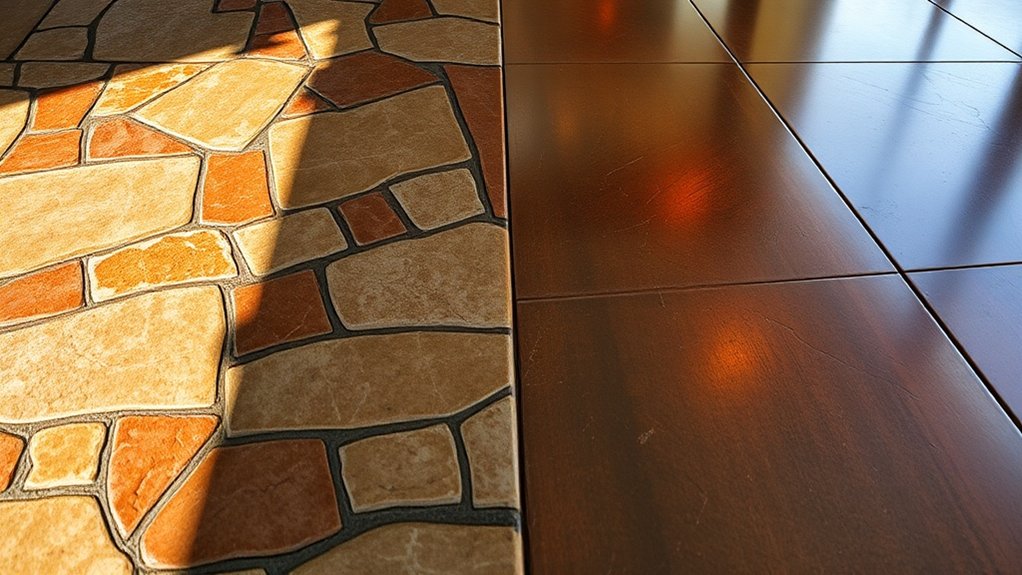
When you opt for stamped concrete in your project, you’re choosing a decorative method that enhances standard concrete to create an attractive surface. The process involves pouring a concrete slab, adding colour, stamping with moulds, and sealing it for protection. Design flexibility offers unlimited shapes and colors for personalized design with high malleability, strength, and durability.
To keep up with current design trends, consider patterns that imitate natural materials like stone or wood, which allow for significant customisation.
For successful installation, time your stamping carefully; the concrete needs to be firm yet pliable enough to hold the impression. Ensure proper curing and sealing to improve durability and reduce maintenance.
A well-installed stamped concrete surface can last for decades, making it a wise investment for patios, driveways, and pathways.
Understanding Stained Concrete
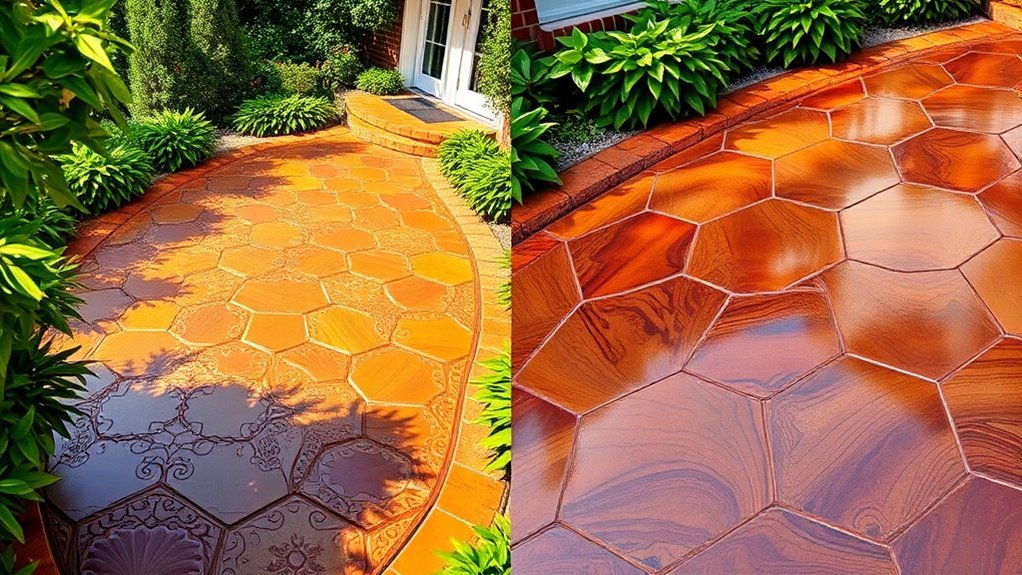
Stained concrete is a stylish option that enhances both indoor and outdoor areas, making it perfect for various applications, from patios to worktops. Its durability and low maintenance are significant advantages, as the colour seeps into the surface, ensuring a long-lasting finish without the thickness of traditional coatings. Additionally, stained concrete offers a wide range of hues from earthy tones to bold shades, allowing for unique design possibilities.
Benefits of Stained Concrete
Stained concrete is a standout flooring option thanks to its durability and versatility. It can handle heavy foot traffic without showing signs of wear, resisting scratches and fading for years. Additionally, proper care ensures that the surface maintains its beauty over time.
With a wide range of colours and unique patterns, stained concrete fits well with modern design trends, making each floor truly unique. Maintenance is minimal; it requires just basic cleaning and doesn’t trap allergens like carpets do.
From an environmental perspective, staining existing concrete helps reduce waste and promotes sustainability. Plus, its thermal mass aids in regulating indoor temperatures, which can lead to energy savings.
Ideal Applications for Staining
Understanding the ideal uses for stained concrete can help you choose the right flooring option.
Stained concrete is excellent for high-traffic areas in homes, such as living rooms and kitchens, where it combines durability with style. It’s also suitable for moisture-prone areas like bathrooms and basements, as proper sealing helps prevent mould and mildew.
In commercial spaces, its low maintenance and customised finishes make it ideal for retail shops and offices.
Outdoor spaces, including patios and driveways, benefit from stained concrete’s weather resistance, offering both style and functionality.
With a variety of design options, stained concrete can match your unique taste while providing lasting performance in different environments.
Aesthetic Differences Between Stamped and Stained Concrete
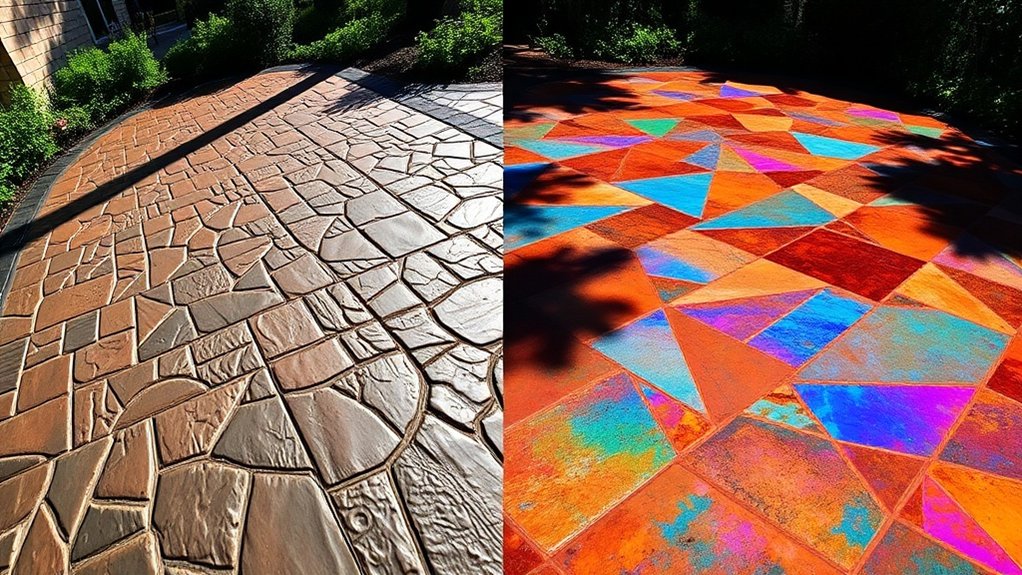
When deciding between stamped and stained concrete, you’ll notice clear aesthetic differences in texture, colour depth, and design flexibility.
Stamped concrete features a three-dimensional texture that resembles natural materials, whereas stained concrete offers a smooth surface that highlights vibrant colour variations.
For instance, if you’re looking for a patio that resembles stone, stamped concrete is a great choice. In contrast, if you prefer a sleek, modern look with bold colours, stained concrete may be ideal.
Understanding these differences can help you choose the right option for your project’s visual appeal.
Texture Variations Explained
Texture variations between stamped and stained concrete significantly influence the visual appeal of your indoor or outdoor spaces.
Stamped concrete incorporates detailed textures that mimic natural materials like stone and wood, creating a striking visual effect. This method involves imprinting patterns into wet concrete, resulting in a durable, slip-resistant surface that offers design flexibility.
In contrast, stained concrete features a smooth finish, concentrating on enhancing colour without changing the texture. This style suits modern aesthetics, highlighting colour variations rather than texture.
Your choice depends on your aesthetic preference; if you favour the rich textures of stamped concrete or the sleek sophistication of stained options, both offer unique opportunities for personalisation.
Color Depth Comparison
Both stamped and stained concrete have distinct aesthetic qualities, but they differ significantly in their colour depth.
Stamped concrete uses dry-shake colour hardeners, resulting in vibrant surface colours that create a dimensional look, similar to natural stone with colour highlighted in the ridges and recesses.
On the other hand, stained concrete employs acid-based or water-based stains that penetrate the surface, offering rich, translucent colours for a smoother, more uniform finish with subtle variations that highlight the concrete’s natural depth.
While stamped concrete provides a textured, tactile appearance, stained concrete leans towards a sleek, artistic style.
Ultimately, your decision will depend on the level of colour intensity and the visual impact you want for your space.
Design Versatility Insights
There’s no denying that stamped and stained concrete offer exceptional design versatility for various spaces.
Stamped concrete is ideal for outdoor areas, as it effectively mimics natural materials like stone or wood, making it perfect for patios and pool decks. Its ability to create various textures and patterns aligns with current design trends, providing a cost-effective alternative to high-end materials.
In contrast, stained concrete excels indoors, delivering a sleek, artistic finish that highlights colour and customisation. It’s particularly well-suited for modern interiors and low-maintenance settings.
While the installation of stamped concrete can be complex, stained concrete options are generally quicker and more budget-friendly, allowing you to personalise your space without sacrificing style or durability.
Cost Comparison of Stamped and Stained Concrete
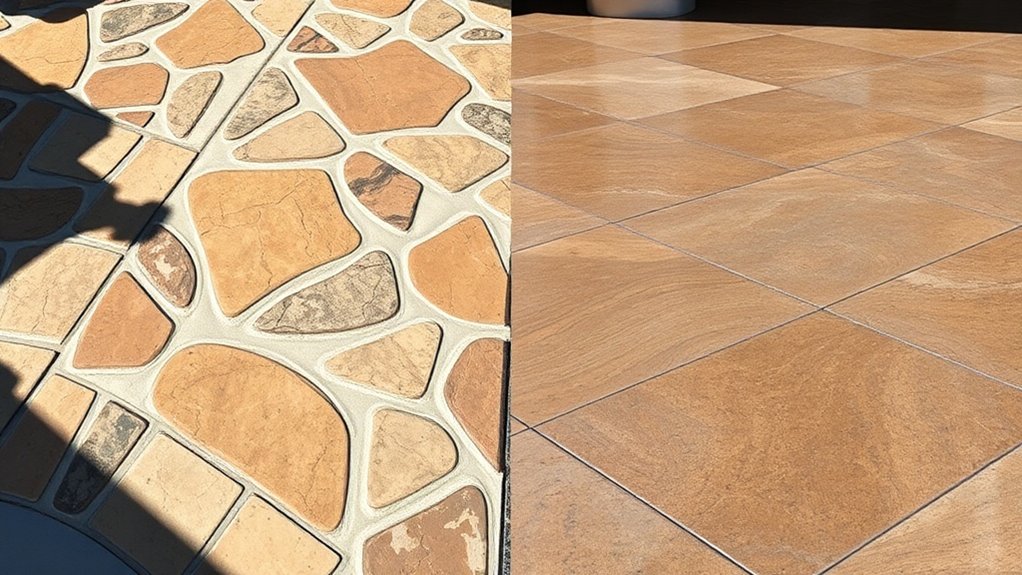
When comparing the costs of stamped and stained concrete, you’ll find notable differences that can affect your budget. Stamped concrete typically ranges from £7 to £15 per square metre, while stained concrete costs between £3 to £10 per square metre. Factors such as the complexity of the pattern and the necessary surface preparation significantly impact these prices.
| Type of Concrete | Cost per sq. m. |
|---|---|
| Stamped Concrete | £7 – £15 |
| Stained Concrete | £3 – £10 |
| Basic Stamped Design | £6 – £8 |
| Complex Stamped Design | £20+ |
| Paint (for context) | ~£5 |
Installation Process for Stamped Concrete
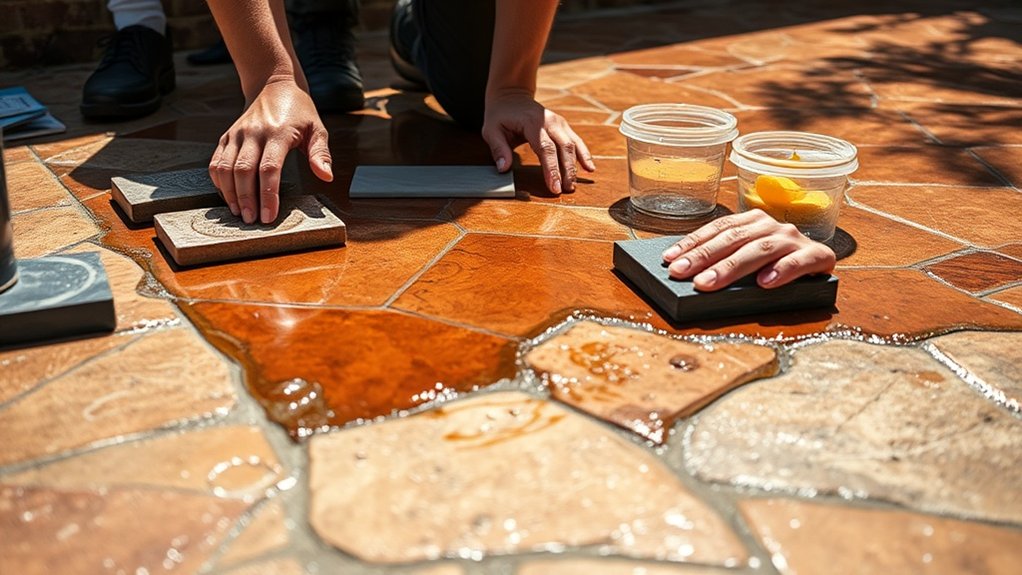
When installing stamped concrete, it’s crucial to prepare and layout properly to ensure a solid foundation.
Start by compacting and grading the soil, then build your forms and add reinforcement to minimise cracking.
After pouring the concrete, the methods you use for imprinting and finishing will significantly affect both the appearance and durability of the surface.
Preparation and Layout
To ensure a successful installation of stamped concrete, proper preparation and accurate layout are crucial. Begin by preparing the site: remove topsoil and compact the subgrade. Add a gravel layer for drainage, ensuring the area slopes away from buildings. Then, proceed to construct the forms.
| Task | Details | Tools Needed |
|---|---|---|
| Measure Boundaries | Use string lines or stakes | Measuring tape |
| Build Forms | Use straight timber or metal | Hammer, nails |
| Square Forms | Align forms carefully to prevent distortions | Level, square |
| Stake Forms | Secure forms firmly to maintain position | Stakes, mallet |
These steps lay a solid foundation for your stamped concrete project. A well-planned layout helps ensure the final result meets your expectations.
Imprinting and Finishing Techniques
Successful imprinting and finishing of stamped concrete requires a solid grasp of timing and technique.
Start by applying a release agent to prevent sticking and to add accent colours. Begin stamping when the concrete is firm enough to support the stamp yet pliable enough for effective imprinting.
Use various imprinting techniques, ensuring proper alignment and consistent tamping pressure to create seamless patterns.
After stamping, focus on the finishing touches: clean the surface and apply a sealer to enhance durability and colour.
For any rough edges, perform touch-ups using a mixture of dry-shake colour hardener and acrylic.
Installation Process for Stained Concrete
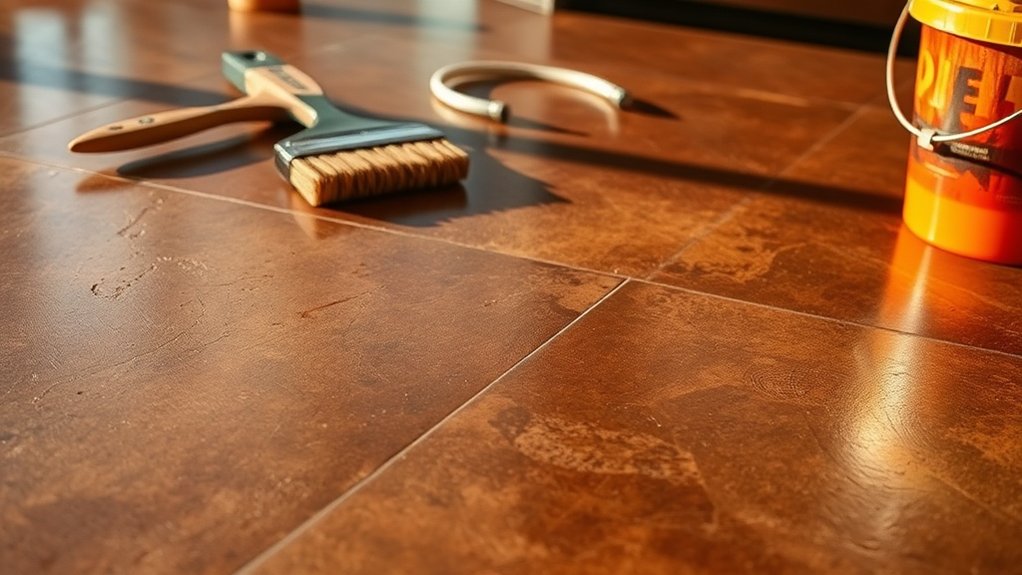
Before starting the installation process for stained concrete, it’s crucial to prepare the surface properly for the best results. Ensure your new concrete has cured for at least four weeks.
Clean the surface thoroughly, ideally with a pressure washer using a 45° nozzle to remove grease and grime. If there are existing sealers, you might need to grind them off mechanically.
Etch the surface with muriatic acid to improve stain absorption, and allow it to dry completely.
When it comes to stain application, you can choose between acid-based or water-based stains. Gather your tools, such as sprayers and brushes, and apply the stain in a figure-eight pattern to avoid pooling.
Finally, give it ample curing time before sealing to protect your work.
Maintenance Requirements for Stamped Concrete
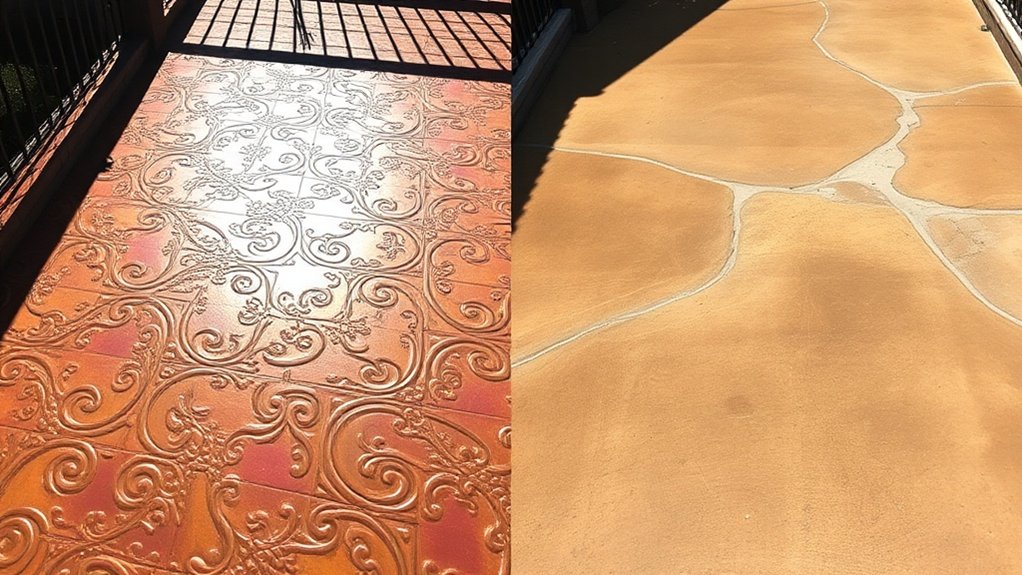
Maintaining stamped concrete is crucial for keeping it looking good and ensuring it lasts. If you skip regular care, you risk significant damage.
For routine cleaning, use a garden hose, mild soap, and a medium-bristle brush. Avoid pressure washers and harsh chemicals, as they can harm the protective sealer. Regularly sweep away leaves and dirt to stop stains and moisture build-up.
For tough stains, always test cleaning products on a small area first. Reapply sealer every 2–3 years, or as necessary, following the manufacturer’s instructions to ensure effective protection.
Check the surface regularly for wear and address any chips or cracks quickly to keep both its appearance and structural integrity intact.
Maintenance Requirements for Stained Concrete
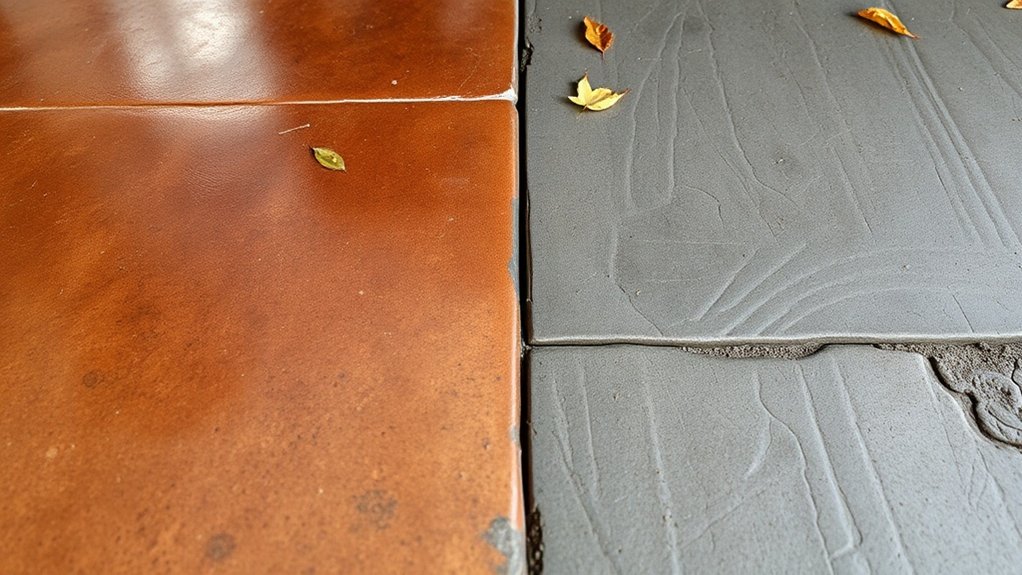
Stained concrete floors are easier to maintain than many other flooring options, but regular upkeep is crucial for their appearance and lifespan.
Start with routine cleaning by dry dust mopping or vacuuming with a horsehair brush attachment to avoid scratches. For deeper cleaning, use a damp mop with mild cleaners like liquid dish soap, steering clear of harsh chemicals that could harm the surface.
Inspect your floors every three to five years and maintain the sealer as needed; this protects against stains and wear.
Keep an eye out for any stains or signs of damage to tackle issues early. By following these steps, you’ll ensure your floor remains durable and visually appealing.
Durability of Stamped vs. Stained Concrete
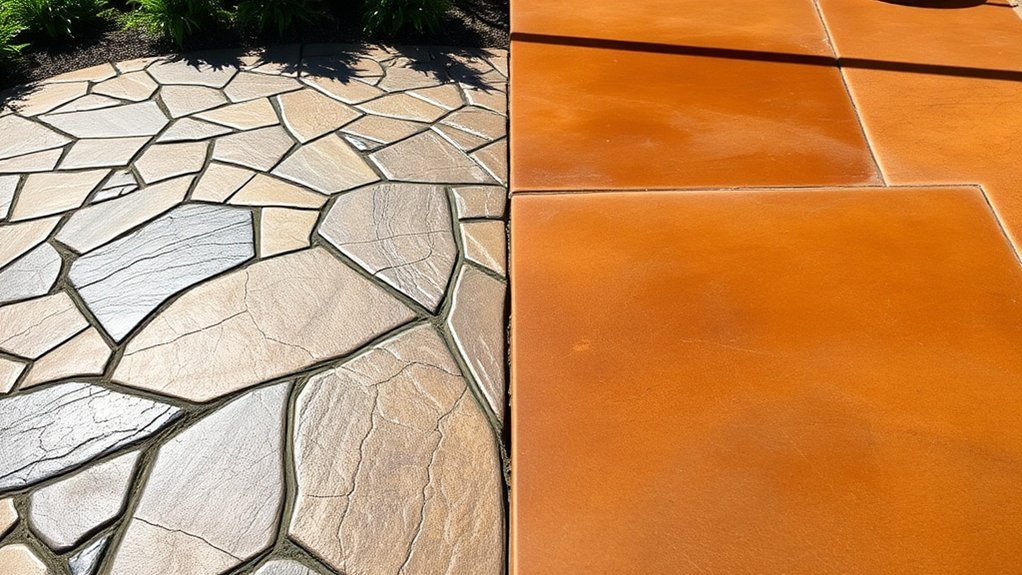
When assessing the durability of stamped versus stained concrete, it’s important to note that both finishes greatly depend on the quality of the concrete mix and the installation process. Here’s a straightforward durability comparison:
| Feature | Stamped Concrete | Stained Concrete |
|---|---|---|
| Lifespan | 20–25 years (up to 25+ with proper care) | Similar to standard concrete |
| Surface Wear Resistance | High, especially with sealant | Moderate, colour may fade |
| Repair Complexity | More complex (involves partial restamping) | Simpler (just requires patching) |
Regular maintenance is essential for both types, including resealing every 2-3 years, to enhance their resistance to environmental factors. Following these maintenance tips will help you maximise the lifespan and durability of your chosen finish.
Best Use Cases for Stamped Concrete
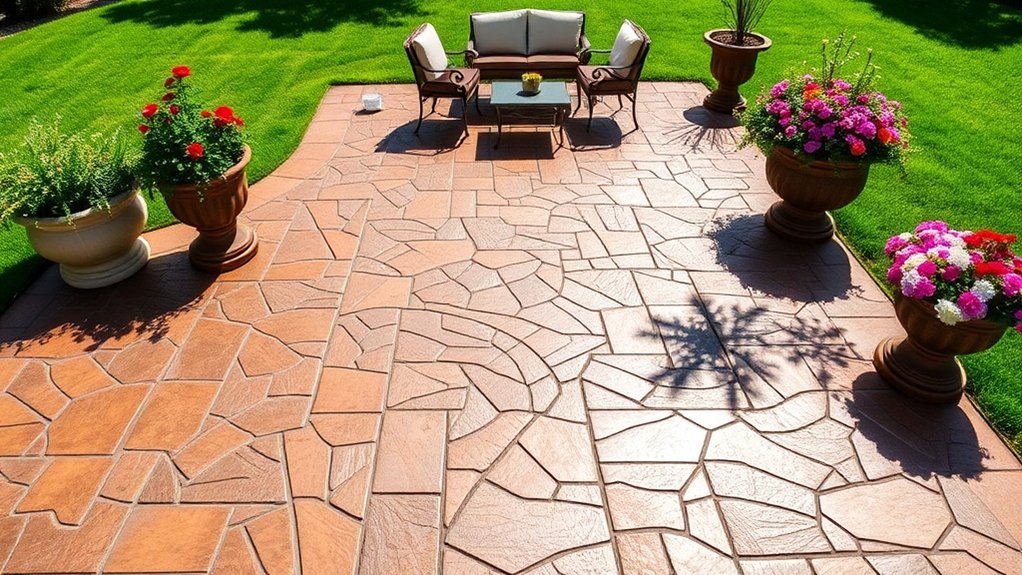
Stamped concrete is a versatile option suitable for both outdoor and indoor use.
Outdoors, it works well for garden patios, swimming pool surrounds, and barbecue areas, offering a robust surface that replicates premium materials like flagstone and weathered wood, all at a more affordable price.
Indoors, stamped concrete excels as a flooring choice in basements and around fireplaces, providing both durability and visual appeal. It can also be used for concrete countertops, allowing for creative design options.
With a wide range of colours and patterns available, stamped concrete can complement any style, making it a practical and attractive solution for homeowners wanting to enhance their spaces with minimal upkeep.
Best Use Cases for Stained Concrete
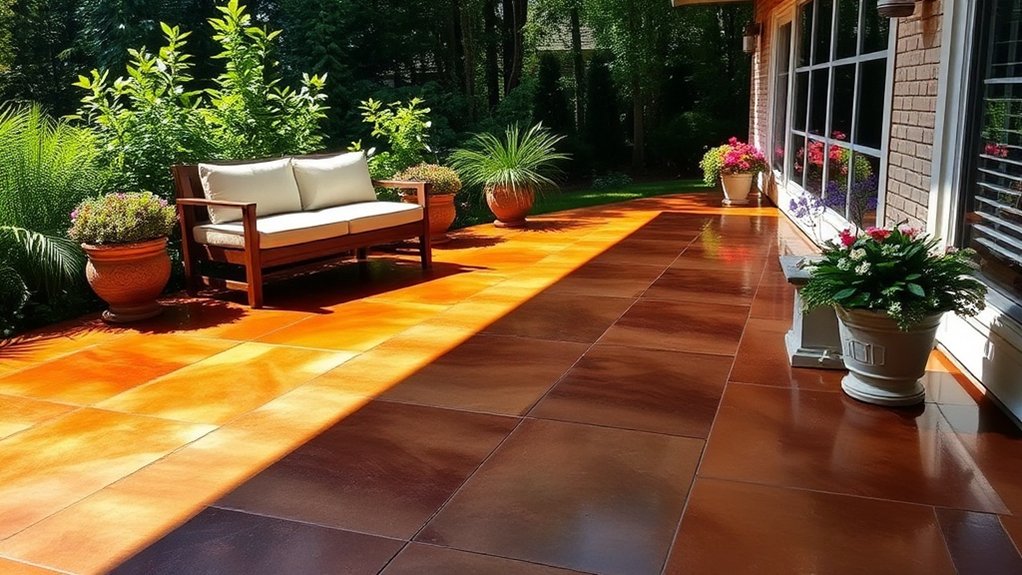
Stained concrete is a practical choice for both indoor and outdoor spaces, thanks to its durability and low maintenance.
Here are some ideal use cases:
- Indoor Spaces: Perfect for living rooms and kitchens, stained concrete provides a fade-resistant finish that’s straightforward to clean.
- Commercial Areas: Suitable for busy environments, it holds up well under heavy foot traffic while maintaining a sleek appearance.
- Outdoor Applications: Great for patios and driveways, it can withstand various weather conditions.
- Design Flexibility: Offers a range of styles that can mimic expensive materials without the high costs.
With these benefits, stained concrete is an excellent option for enhancing the look of any space.
Frequently Asked Questions
Can I Install Stamped Concrete Over Existing Concrete?
Yes, you can lay stamped concrete over existing concrete. Ensure you properly prepare the surface by cleaning it and repairing any cracks. Follow the installation steps closely for a durable and attractive finish that resembles a range of materials.
How Long Does Stamped Concrete Take to Cure?
How long does it take for stamped concrete to cure? It usually takes about 28 days for full curing. However, you can walk on it after 24 to 48 hours once it’s installed. Always follow the manufacturer’s guidelines for the best results.
Are There Eco-Friendly Options for Stained Concrete?
Yes, there are eco-friendly options for stained concrete. Using water-based stains is a sustainable choice, as they contain zero VOCs and develop colour quickly. This option ensures health safety and requires minimal maintenance for your projects.
Can I Change the Color of Stained Concrete Later?
Yes, you can change the colour of stained concrete later! Using colour restoration methods and advanced staining techniques, you can achieve slight changes in hue without needing to resurface. Just ensure you prepare properly for the best results.
How Do Weather Conditions Affect Installation?
Weather conditions can significantly affect installation processes. For instance, temperatures below 2°C can impede curing, while extreme heat can cause materials to dry too quickly. Keeping an eye on the weather forecast helps you plan for the best days, reducing the chances of errors and improving the overall quality of your project.
Conclusion
When deciding between stamped and stained concrete, it largely depends on your style preferences and practical needs. Your budget and willingness to maintain the surface could also influence your choice. Stamped concrete provides detailed patterns and textures, while stained concrete simply enhances the existing colour of your concrete. Both options are durable, but their installation and maintenance requirements differ. Understanding these factors will help you select the best option for your home. Ultimately, it’s about what suits your vision and lifestyle.

Learn about the diverse types of concrete used in construction and discover which mix can transform your next project.

For a long-lasting driveway that laughs in the face of the UK's unpredictable weather, the C20 concrete mix is your Read more

In the UK, you've got a a lot of lightweight concrete types to choose from, each with its unique perks. Read more