Using a concrete vibrating screed can significantly improve both efficiency and quality in your projects. Start by familiarising yourself with the various types, such as laser screeds and vibratory truss screeds. Key features to look out for include adjustable vibration speed and compatibility with different slump levels, which are crucial for achieving a smooth finish.
Ensure you adopt proper operating techniques, like maintaining a steady pace and performing regular maintenance, to extend the lifespan of your equipment. Choosing the right screed for your specific project is vital. There’s plenty more to learn about optimising your screed’s performance for the best results.
Key Takeaways
- Select the right type of vibrating screed based on the size of your project and the concrete mix to achieve the best results. For example, a smaller screed might be suitable for domestic patios, while a larger one is better for commercial slabs.
- Prepare properly by ensuring the concrete is at the right height for effective vibration before operating the screed. This helps to achieve a smooth finish.
- Regularly check and adjust the vibration speed according to the concrete mix you are using. Too much vibration can harm the mix, so find a balance that works.
- Keep the work area tidy, distribute the concrete evenly, and use accessories like edge guides to ensure straight edges. This makes finishing easier and improves the overall look.
- Carry out routine maintenance, such as cleaning and lubricating components, to keep your vibrating screed in top condition. This will extend its lifespan and performance.
Understanding Different Types of Vibrating Screeds

Choosing the right vibrating screed for your project can significantly influence both efficiency and finish quality. Here’s a quick overview of the different types:
- Vibratory Truss Screeds: Ideal for large projects, these have a modular design that can cover extensive areas. However, they’re not suitable for sloped surfaces.
- Laser Screeds: Perfect for large pours, laser screeds offer high precision, allowing for quick levelling of concrete while reducing the need for manual adjustments. They can compact and level concrete up to 20% more than conventional screeds.
- Vibrating Rollers: These combine rolling and vibration, making them versatile for road construction and smoothing slabs.
- Surface Vibrators: Best for compacting thin slabs directly, ensuring a solid finish.
- Immersion Vibrators: Effective for removing air pockets from thicker concrete, enhancing overall quality.
- External Vibrators: These vibrate concrete indirectly, providing additional support to other tools.
Selecting the right type depends on your project’s specific needs, such as slab thickness and the desired finish.
Key Features and Capabilities of Vibrating Screeds
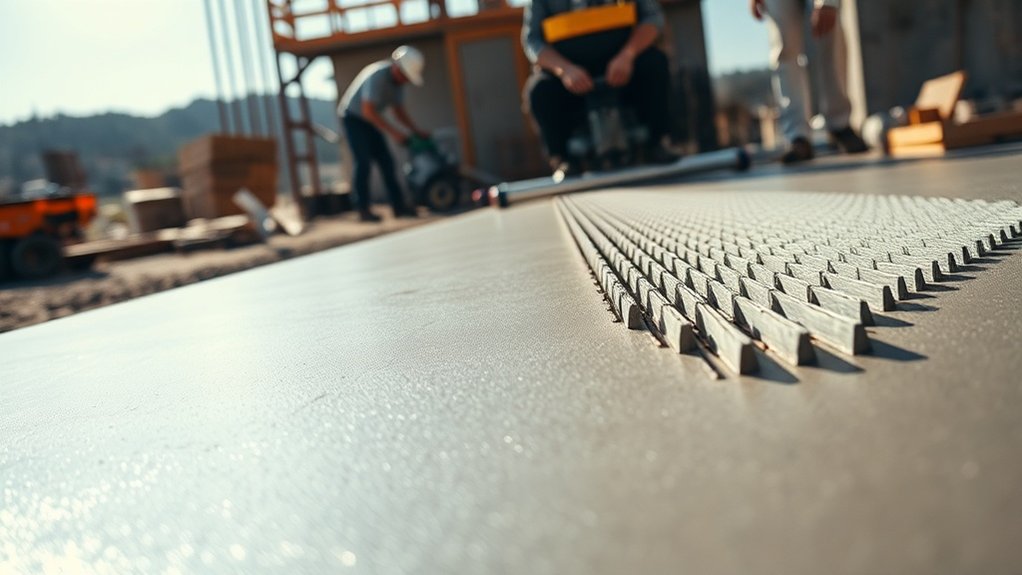
When choosing a vibrating screed, it’s important to consider slump compatibility for optimal results. The ability to adjust vibration speed and intensity helps you manage different concrete mixes effectively, improving both the speed of your work and the quality of the finish. For instance, a slower vibration may be better for wetter mixes, while a faster speed can help with drier mixes. The screed is capable of consolidating concrete with slumps of less than 2, making it suitable for a variety of applications.
Slump Compatibility Factors
Understanding slump compatibility is crucial for optimising the performance of vibrating screeds, as it directly affects the efficiency of concrete consolidation.
For effective results, aim for a low slump range of 25–50 mm (1–2 inches). Use slump measurement techniques to check the mix, steering clear of slumps exceeding 75 mm (3 inches), which can lead to surface defects. When working with thicker slabs, keep a close eye on slump compatibility to avoid over-vibration and uneven surfaces. Adjusting the concrete mix, such as limiting water content, can help maintain the desired slump. Additionally, incorporating standard techniques in the concrete leveling process can enhance overall efficiency.
Remember, lower slumps require higher vibration frequencies for effective consolidation, while high-slump mixes may result in mortar bleeding and poor performance.
Speed and Efficiency Benefits
Vibrating screeds provide notable speed and efficiency benefits that enhance the concrete pouring process. By cutting down leveling time by 50% or more compared to manual methods, you’ll see a significant boost in productivity.
This translates to shorter project timelines and lower labour costs, enabling your team to cover large areas quickly and effectively. The vibration mechanism not only compacts the concrete for a stronger slab but also reduces material waste, improving overall efficiency.
Additionally, the ergonomic design of power screeds ensures comfortable operation, minimising physical strain on workers. With these advantages, you can achieve a smooth finish while fostering a better work environment, ultimately leading to successful and cost-effective projects.
Operation and Usage of Vibrating Screeds

To achieve the best results with vibrating screeds, proper preparation is crucial. First, ensure your concrete height is just right—not too high or too low—for effective vibration.
Assemble the screed correctly by aligning the pulleys and tightening the jam nuts. Have workers rake the concrete slightly above the screed’s edge to ensure a level finish.
When operating the screed, move it slowly and steadily, keeping both ends in contact with the concrete. Regularly check the flatness with a taut string guide and make adjustments as needed.
Keep an eye on wear and tear, replacing components to maintain peak performance. Lastly, remember to prioritise ergonomics to reduce operator fatigue and improve control, ensuring a smooth, consistent concrete surface.
Performance and Efficiency Benefits
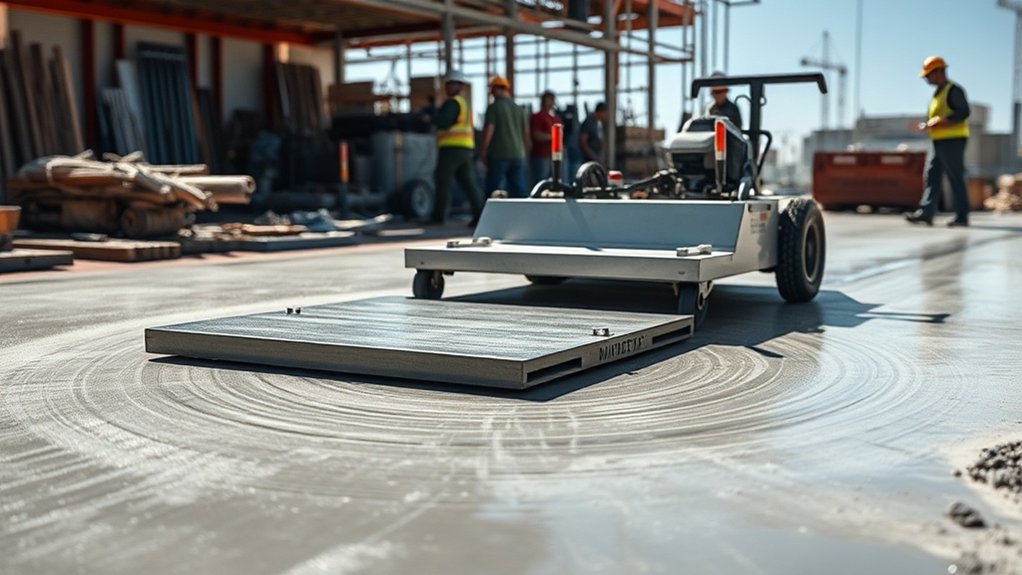
Using concrete vibrating screeds significantly cuts labour costs while boosting speed and precision on site.
One operator can achieve results that previously required several workers, leading to a quicker screeding process that improves overall project efficiency.
The consistent application of vibration not only speeds up the work but also ensures a superior finish with less manual effort.
Labor Cost Reduction
Traditional methods of concrete levelling often involve multiple workers and significant manual effort.
However, using power and vibrating screeds can significantly simplify the process, leading to lower labour costs and improved efficiency. By automating much of the levelling and consolidation, you can save up to 30% on labour. A one-man screed allows for enhanced crew efficiency, reducing the number of workers needed on-site.
Wider screed options can cover larger areas quickly, significantly cutting down on labour hours. Additionally, battery-powered models eliminate downtime caused by power cords or refuelling, ensuring a smooth workflow.
Speed and Precision
Integrating vibrating screeds into your concrete levelling process not only cuts labour costs but also significantly improves speed and precision.
These tools can reduce levelling time by 50% or more, enabling you to complete tasks up to four times faster than traditional methods. Their lightweight design and hydraulic features allow for quick repositioning and effective compaction, enhancing the strength and durability of the slab.
For precise levelling, the vibratory action ensures a smoother finish with fewer surface irregularities.
Technologies such as laser screeds offer high-precision control, achieving tight tolerances and minimising the need for rework.
Maintenance and Durability Considerations
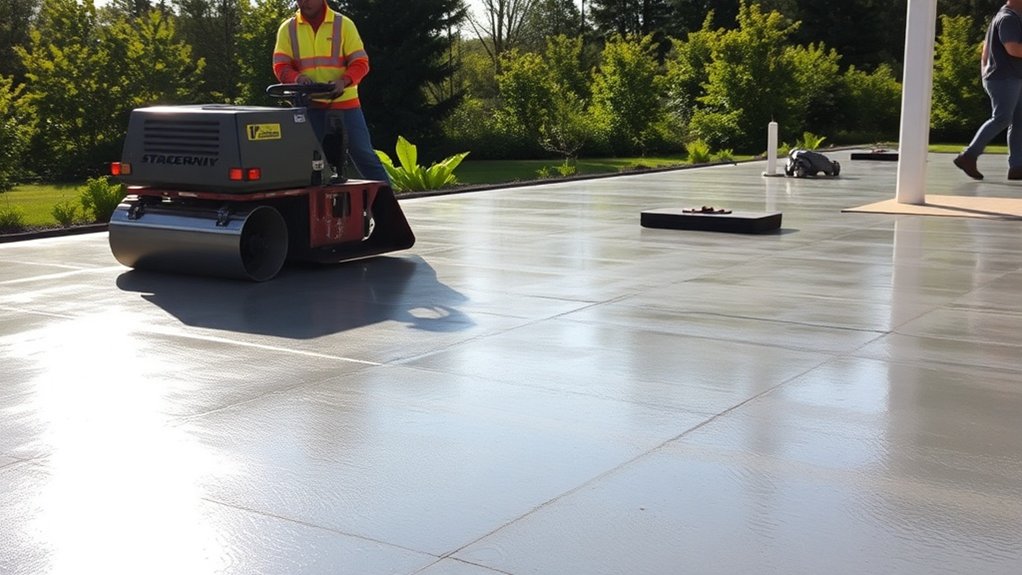
To ensure optimal performance and longevity of your concrete vibrating screed, regular maintenance is crucial.
Clean the screed after each use to remove concrete buildup, which helps maintain effective vibration. Use water and brushes carefully, steering clear of immersing engine components.
Regularly grease the bearings before and after use to remove debris and moisture, and inspect them for wear frequently. Change the engine air and fuel filters to keep performance at its best.
Adjust the vibration frequency to avoid undue stress on components, and check that the weights on the vibratory bar are balanced.
For long-term storage, clean the screed thoroughly and apply a protective oil to metal parts.
Following these steps will enhance your screed’s durability and prolong its lifespan.
Common Applications for Vibrating Screeds
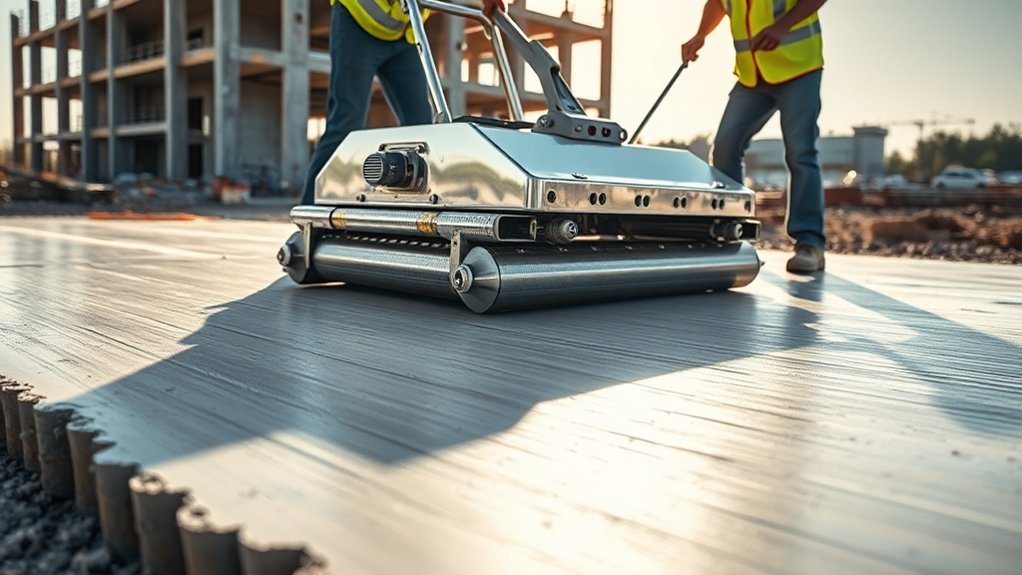
Regular maintenance enhances the durability of your concrete vibrating screed and maximises its effectiveness across various applications.
In residential settings, vibrating screeds are ideal for achieving flat, robust finishes on garage floors, pavements, and driveways, offering quicker results than manual methods.
For commercial projects, they’re invaluable for large-scale tasks like motorways and airport runways, efficiently levelling extensive surfaces. Their lightweight design reduces operator fatigue while ensuring rapid compaction and uniformity.
Additionally, vibrating screeds are essential for preparing floors for material installation, providing a smooth base for tiles or other flooring materials. Their versatility makes them indispensable in both residential and commercial concrete work.
Choosing the Right Screed for Your Project
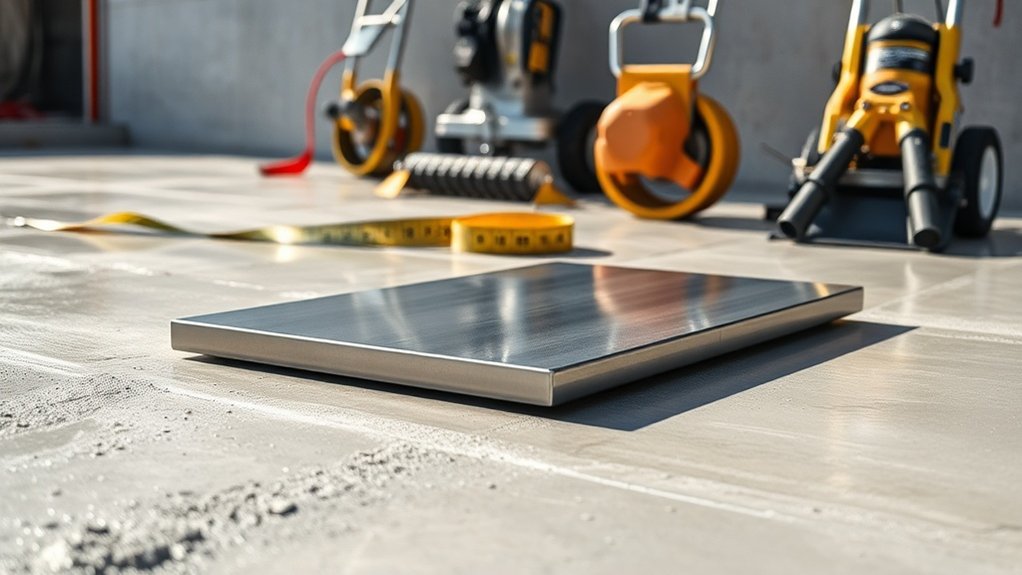
How do you choose the right vibrating screed for your concrete project? Start with the size of the project and the type of concrete mix.
For smaller to medium-sized jobs, portable screeds measuring 12 to 20 feet are suitable. For larger projects, like roadways, consider using truss or laser screeds for their accuracy and efficiency. If precise levelling is crucial for your project, laser screeds are the way to go.
Also, consider the concrete slump; wetter mixes work better with roller screeds to avoid surface issues.
Don’t overlook power sources—gasoline-powered models provide mobility, while electric ones are quieter, making them ideal for indoor use.
Ultimately, select a screed that fits your project scale and environmental conditions for optimal results.
Tips for Effective Use of Vibrating Screeds
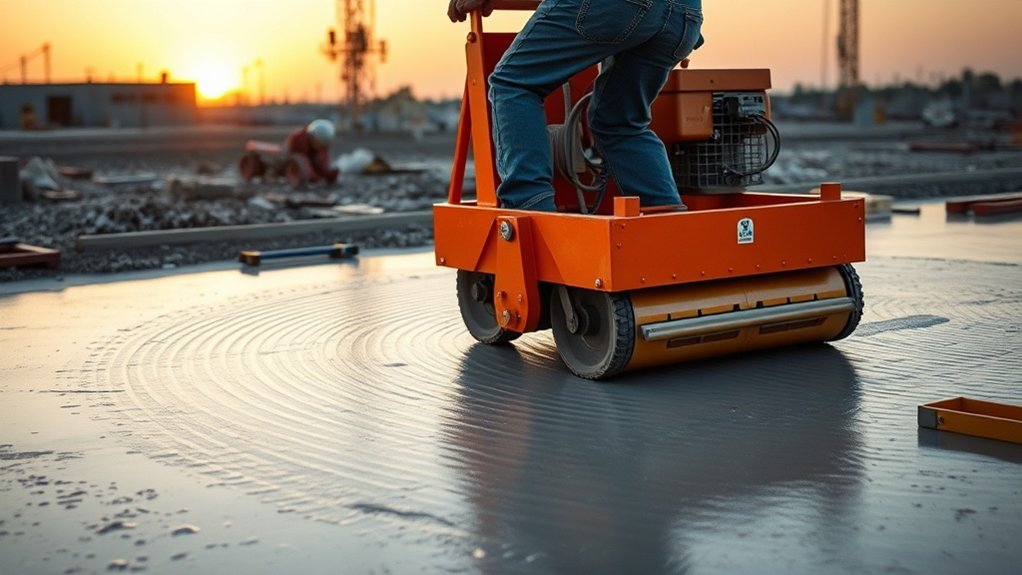
Using a vibrating screed effectively can significantly improve the quality and efficiency of your concrete project. Start by ensuring your work area is clear and stable. Distribute the concrete evenly to avoid settling problems.
Employ screed accessories, such as edge guides, to maintain straight edges and prevent any deviation. Adjust your speed to allow for adequate raking and levelling behind the screed.
Operator training is crucial for safe and effective use of the equipment. Always inspect the screed for any damage before use and monitor the vibration frequency for optimal compaction.
Be aware of weather conditions, as they can greatly affect the finish and setting time of your concrete. With proper preparation and technique, you can achieve a successful pour.
Frequently Asked Questions
What Safety Gear Is Recommended When Using Vibrating Screeds?
When using vibrating screeds, it’s essential to wear the right safety gear. This includes safety gloves, goggles, hearing protection, sturdy boots, a hard hat, and long-sleeved clothing. Adhering to these guidelines ensures your safety while operating the equipment.
Can Vibrating Screeds Be Used in Cold Weather?
Yes, you can use vibrating screeds in cold weather, but be mindful of the challenges it presents. To ensure successful results and keep the concrete at the right temperature, utilise appropriate curing techniques, such as heated vibrators and accelerators.
How Do I Transport a Vibrating Screed to a Job Site?
To transport a vibrating screed, opt for portable models for easy handling. Secure it in your vehicle with straps to prevent movement. When planning your journey, consider the route and access to the site to ensure smooth unloading and reduce the risk of damage.
Are There Specific Training Requirements for Operating Vibrating Screeds?
Yes, there are specific training requirements for operating vibrating screeds in the UK. Operators must complete a recognised training programme, obtain certification, and follow established guidelines to ensure safety and effective use on site. For example, understanding how to set up the equipment correctly and manage vibrations is crucial for achieving a smooth finish on concrete surfaces.
How Do I Troubleshoot Common Issues With Vibrating Screeds?
To troubleshoot common issues with vibrating screeds, carry out regular maintenance checks, ensure the engine is functioning properly, adjust the RPM settings as needed, confirm correct alignment, and keep components clean. For example, if the screed is not vibrating as it should, check the engine and alignment first. Using these straightforward techniques can significantly boost performance and help prevent breakdowns.
Conclusion
In summary, using a vibrating screed may seem daunting at first, but with the right knowledge and practice, it can significantly improve your concrete finishing process. If you’re a beginner, don’t worry; even small adjustments can yield impressive results. By selecting the appropriate equipment and grasping how it operates, you can achieve a smooth, professional finish with ease. Embrace the learning process, and you’ll soon recognise the advantages of incorporating a vibrating screed into your projects.

Learn about the diverse types of concrete used in construction and discover which mix can transform your next project.

For a long-lasting driveway that laughs in the face of the UK's unpredictable weather, the C20 concrete mix is your Read more

In the UK, you've got a a lot of lightweight concrete types to choose from, each with its unique perks. Read more