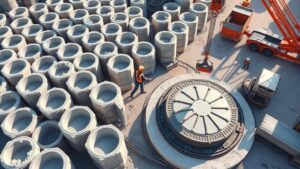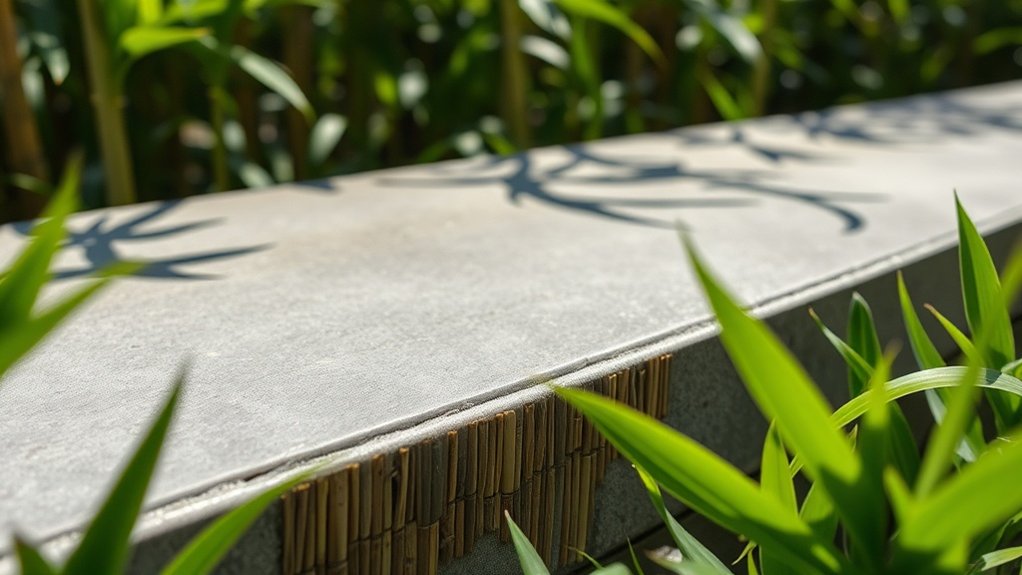
Bamboo-reinforced concrete is an eco-friendly alternative for construction, leveraging bamboo’s rapid growth and remarkable ability to absorb carbon. Bamboo can capture up to six times more CO2 than traditional timber, making it a valuable resource for tackling climate change. Its strength also allows it to replace steel in many applications, which can lower costs and reduce environmental impact. By embracing bamboo, we can transform building practices and promote sustainability for future developments.
Key Takeaways
Bamboo grows quickly and absorbs a substantial amount of carbon, making it an excellent choice for sustainable construction. Its lightweight properties not only cut transportation costs but also reduce energy consumption, leading to a smaller environmental footprint.
With impressive tensile strength, bamboo can serve as an alternative to steel in structural applications and can absorb energy effectively during seismic events. Using locally sourced bamboo bolsters community development and diminishes reliance on imported materials, benefiting regional economies.
Additionally, bamboo is naturally biodegradable, and with proper treatment methods, it remains sustainable throughout its lifecycle, helping to minimise waste in construction.
The Rapid Regeneration of Bamboo
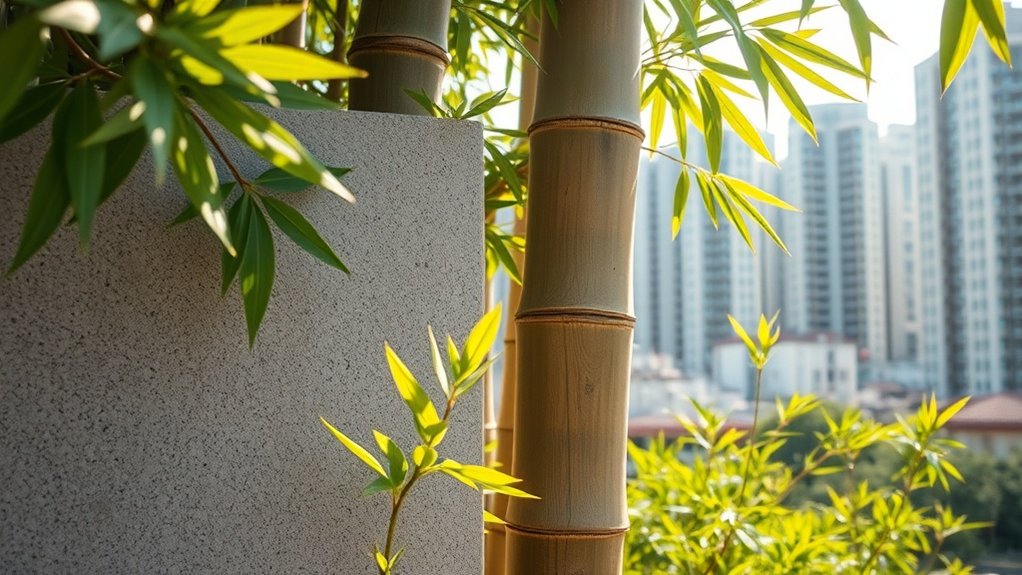
When you look into the benefits of bamboo, its rapid regeneration is a significant advantage for sustainable construction. Some species can grow up to 91 cm in just one day, maturing in as little as 3 to 4 months. This quick growth means bamboo can be a renewable resource, offering an eco-friendly alternative to traditional materials. Within a few years, bamboo can produce numerous new shoots, effectively doubling its population each year. It also thrives in various environmental conditions, making it even more appealing. By choosing bamboo for construction, you’re not just selecting a material; you’re adopting a sustainable practice that helps maintain ecological balance and lowers environmental impact. Additionally, Moso Bamboo is the first timber bamboo to shoot in climate zone 7, demonstrating its adaptability to diverse environments.
Environmental Benefits of Bamboo Cultivation
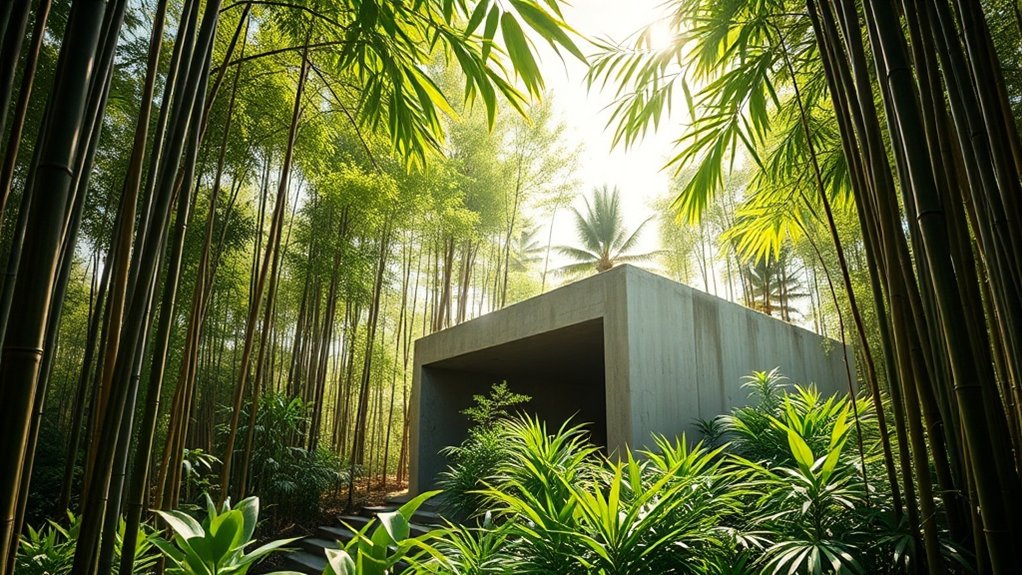
Bamboo grows quickly and regenerates easily, making it a valuable asset for the environment. It can sequester up to 17 tonnes of carbon per hectare each year, helping to combat climate change by absorbing more CO2 than many traditional plants. Additionally, bamboo can absorb pollutants from the air, improving air quality and enhancing overall ecosystem health air quality.
Its extensive root system prevents soil erosion, stabilises slopes, and improves water retention, which are all crucial for sustainable land management. Bamboo also filters pollutants, enhancing water quality and supporting aquatic life.
Moreover, bamboo creates diverse habitats and enriches soil quality, which promotes biodiversity.
Beyond its ecological advantages, bamboo cultivation can drive economic growth and community development by creating jobs and offering sustainable products.
Choosing to cultivate bamboo is a proactive step towards a more sustainable and resilient environment.
Mechanical Strength Compared to Traditional Materials
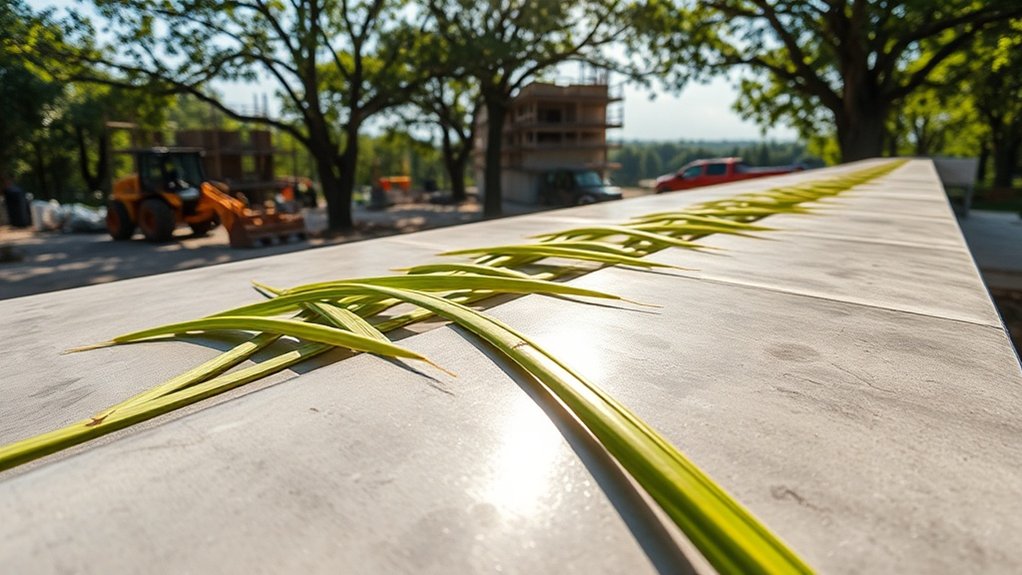
While traditional materials like steel dominate construction due to their impressive mechanical properties, bamboo presents an intriguing alternative worth exploring. Here’s a comparison of bamboo and steel:
- Tensile Strength: Bamboo’s tensile strength ranges from 31 to 69 N/mm², which is significantly lower than steel’s 457 to 712 N/mm².
- Load Capacity: Bamboo-reinforced beams can support about 75% of the load that steel beams can, indicating its potential in certain applications. Additionally, bamboo-concrete composite systems utilize bamboo in tension and concrete in compression, enhancing their overall performance.
- Ductility: Bamboo shows better displacement performance, which improves energy absorption under load, making it resilient during seismic events.
- Bonding: Enhanced surface treatments can improve bamboo’s adhesion to concrete, helping to overcome some mechanical limitations.
Versatile Applications in Sustainable Construction

Bamboo-reinforced concrete offers significant potential for innovative structural frameworks that push the boundaries of traditional design.
This eco-friendly material not only enhances the visual appeal of buildings but also serves practical purposes, such as scaffolding and temporary supports.
Structural Framework Innovations
As the construction industry increasingly seeks sustainable solutions, bamboo-reinforced concrete stands out as an innovative alternative that merges design with environmental efficiency.
This material highlights the versatility of bamboo, transforming traditional frameworks into eco-friendly structures.
Here are some key advantages of using bamboo in construction:
- Renewable Resource: Bamboo grows rapidly, making it a sustainable choice.
- Lightweight: Its low weight reduces transportation costs and energy consumption.
- High Strength: Bamboo’s tensile strength is comparable to that of steel, bolstering structural integrity.
- Diverse Applications: Whether for homes, bridges, or high-rise buildings, bamboo can adapt to various construction needs.
Eco-Friendly Decorative Elements
Bamboo is an excellent choice for eco-friendly decorative elements in sustainable building projects. Its unique look can enhance the appeal of any space while being kind to the environment.
From wall cladding to furniture, bamboo offers a range of decorative options that lower your carbon footprint and serve as a cost-effective alternative to traditional materials. By choosing bamboo, you support renewable resources and achieve striking designs.
Its natural beauty and durability allow for innovative spaces that align with sustainability goals. Opting for bamboo means you’re not just improving aesthetics but also contributing to a greener future.
Scaffolding and Temporary Supports
The use of bamboo in decorative elements highlights its beauty, but its true potential lies in scaffolding and temporary supports.
Here are some reasons why bamboo is a compelling choice for sustainable construction, especially in scaffolding:
- Rapid renewability: Bamboo grows back in just 3–5 years, making it a more sustainable option compared to steel.
- High strength-to-weight ratio: Its tensile strength is comparable to mild steel, providing reliable temporary support.
- Low carbon footprint: Producing bamboo generates fewer greenhouse gases than steel, supporting environmentally friendly building practices.
- Biodegradability: Once its purpose is fulfilled, bamboo scaffolding breaks down naturally, reducing landfill waste.
Overcoming Challenges in Bamboo Utilization

When using bamboo for concrete reinforcement, it’s crucial to focus on effective treatment methods that improve its durability against moisture and pests.
Standardising engineering practices will also be essential to maximise bamboo’s potential while addressing its limitations.
Treatment Techniques for Durability
While bamboo is known for its sustainability, its durability can be significantly improved through various treatment techniques. Here are four effective methods:
- Chemical Treatments: Use boron-based solutions or environmentally friendly alternatives to protect against fungi and moisture.
- Surface Modifications: Apply epoxy resin coatings to create moisture barriers and enhance bonding. Adding sand can also improve mechanical interlock.
- Thermal Treatments: Employ smoke curing or controlled heat to reduce moisture content and increase stability without harming bamboo fibres.
- Mechanical Reinforcement: Strengthen bamboo with steel wire wrapping or fibre-reinforced polymer overlays to boost tensile strength and structural integrity.
These techniques enhance bamboo’s durability, making it a practical choice for eco-friendly construction.
Standardization in Engineering Practices
As you investigate bamboo-reinforced concrete (BRC), it’s crucial to consider the challenges of standardisation in engineering practices. The variability in bamboo’s material properties makes design methodologies more complex, necessitating the use of conservative estimates for tensile strength and modulus of elasticity.
Currently, there are no universal design codes for BRC, which often leads to relying on principles developed for steel without adequate empirical support. This unpredictability in bond behaviour can compromise structural integrity and increase the risk of failure.
Moreover, standardised harvesting and testing procedures are essential but still underdeveloped, leaving many variables unaddressed.
Research should prioritise the establishment of reliable design parameters and safety factors tailored to local bamboo species. This will help ensure that BRC can realise its potential as a sustainable construction option.
Cost-Effectiveness and Local Availability
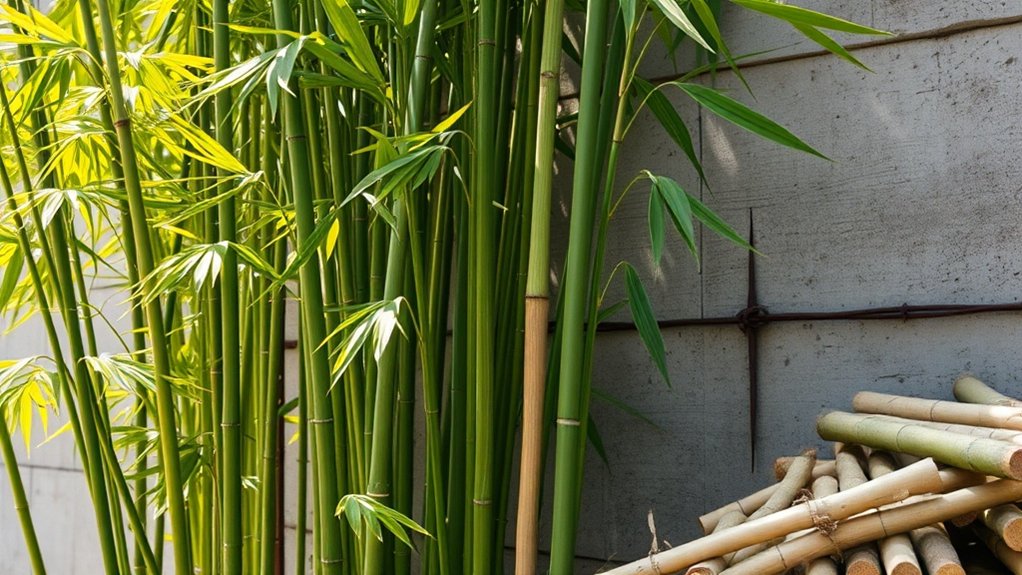
While traditional steel reinforcement can significantly inflate construction costs, bamboo presents a sustainable and cost-effective alternative that can change the way we approach building projects.
Here’s a breakdown of how bamboo’s affordability and local availability offer considerable advantages:
- Cost Savings: Bamboo reduces dependence on expensive steel, leading to lower overall construction costs.
- Support for Local Economies: Using locally sourced bamboo bolsters community development and reduces the need for costly imports.
- Sustainable Supply: Bamboo grows quickly, ensuring a continuous and renewable supply, which helps to decrease transportation expenses.
- Lightweight Advantage: Its lightweight nature not only lowers handling costs but also speeds up construction timelines.
Carbon Sequestration Potential of Bamboo
Bamboo’s impressive ability to capture carbon makes it a viable solution for addressing climate change. This fast-growing grass can absorb 4.9 to 6 times more CO2 than traditional wood, particularly during its first 15 years of growth.
By incorporating bamboo into carbon farming practices, we can unlock its potential as a significant carbon sink. Well-managed bamboo plantations not only store carbon but also keep it in products made from the harvested material.
Transitioning to bamboo-based building materials could reduce CO2 emissions by over 23 gigatonnes in the next century. With its versatility across different environments, bamboo offers a promising opportunity for sustainable land use and effective carbon sequestration.
Biodegradability and Lifecycle Considerations
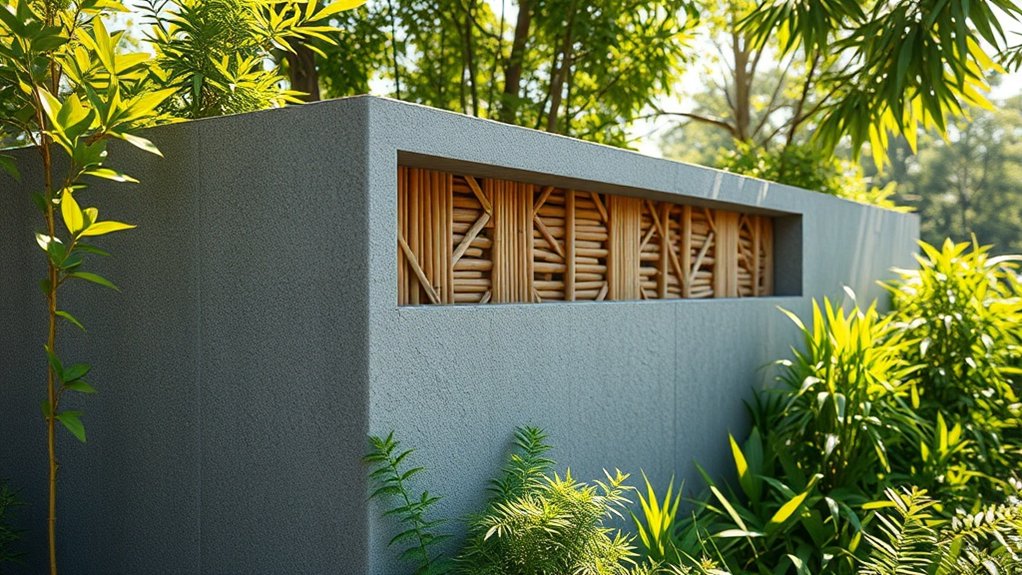
When considering bamboo-reinforced concrete, its natural decomposition process offers a clear advantage for sustainability.
Unlike steel, bamboo breaks down without leaving harmful residues, providing eco-friendly end-of-life options that support circular economy principles.
Assessing the lifecycle environmental impact helps you see how bamboo can reduce waste and improve performance throughout its lifespan.
Natural Decomposition Process
As bamboo fibres naturally decompose within concrete, their biodegradability presents both challenges and opportunities for sustainable construction.
It’s important to grasp this balance to fully harness bamboo’s potential in eco-friendly building.
- Bamboo biodegradation occurs in slightly alkaline conditions, indicating it can break down effectively over time.
- While bamboo fibres initially enhance concrete durability, this benefit decreases as biodegradation occurs.
- Treatments like epoxy can extend the service life of bamboo, but they may hinder biodegradation after use.
- Moisture levels affect the bond between bamboo and concrete, influencing overall durability and degradation rates.
Understanding these factors is crucial for optimising the use of bamboo in construction.
End-of-Life Options
The lifecycle of bamboo-reinforced concrete (BRC) goes beyond its initial use, raising important questions about end-of-life options.
When it comes to bamboo recycling, intact bamboo can be repurposed into a variety of products, promoting material reuse. Crushed concrete fragments can also be used as aggregate in new mixes, which enhances sustainability in concrete production.
However, if BRC is sent to landfill, it leads to energy-intensive transport and a loss of valuable resources. The biodegradability of bamboo is limited when it’s encased in concrete, which hinders natural breakdown.
Innovations such as low permeability concrete and specialised recycling methods can significantly enhance the lifecycle performance of BRC, helping bamboo retain its strength while minimising waste.
Lifecycle Environmental Impact
When assessing the lifecycle environmental impact of bamboo-reinforced concrete (BRC), it’s important to highlight its sustainability benefits.
A comprehensive lifecycle assessment shows several advantages:
- Lower Carbon Emissions: Bamboo serves as a natural carbon sink, helping to reduce greenhouse gas emissions compared to traditional materials.
- Sustainable Resource: Bamboo grows quickly and requires little water, making it an environmentally friendly option.
- Biodegradable: Bamboo decomposes naturally, enriching soil and reducing landfill waste.
- Chemical-Free: The cultivation of bamboo typically involves fewer chemicals, enhancing its environmental benefits.
The Future of Bamboo in Construction Standards
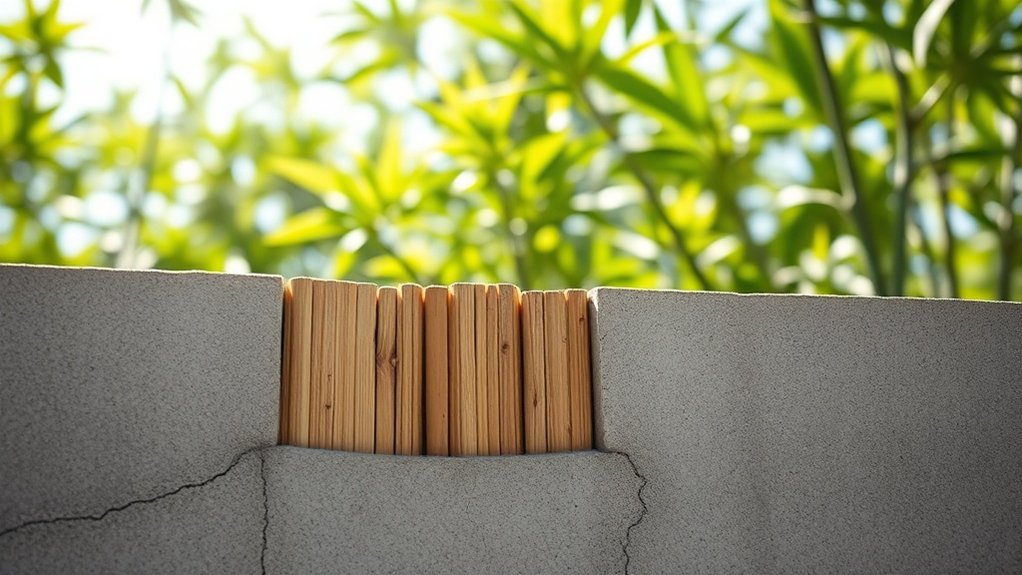
While many construction standards currently prioritise traditional materials such as steel, the future of bamboo in construction is changing rapidly. Research institutions are now developing specific design methodologies for bamboo-reinforced concrete (BRC), leading to a shift towards more inclusive regulations.
Countries abundant in bamboo are already establishing guidelines that highlight the material’s unique properties, particularly its tensile strength and flexural capacity.
To ensure durability and consistent mechanical performance, standardisation of treatment protocols is crucial. Additionally, international bodies are examining data to recommend important reinforcement ratios and structural performance criteria.
This evolving landscape not only promotes eco-friendly construction but also aligns with sustainability goals, positioning bamboo as a viable alternative in future building practices.
Creating Jobs Through Bamboo Industry Growth
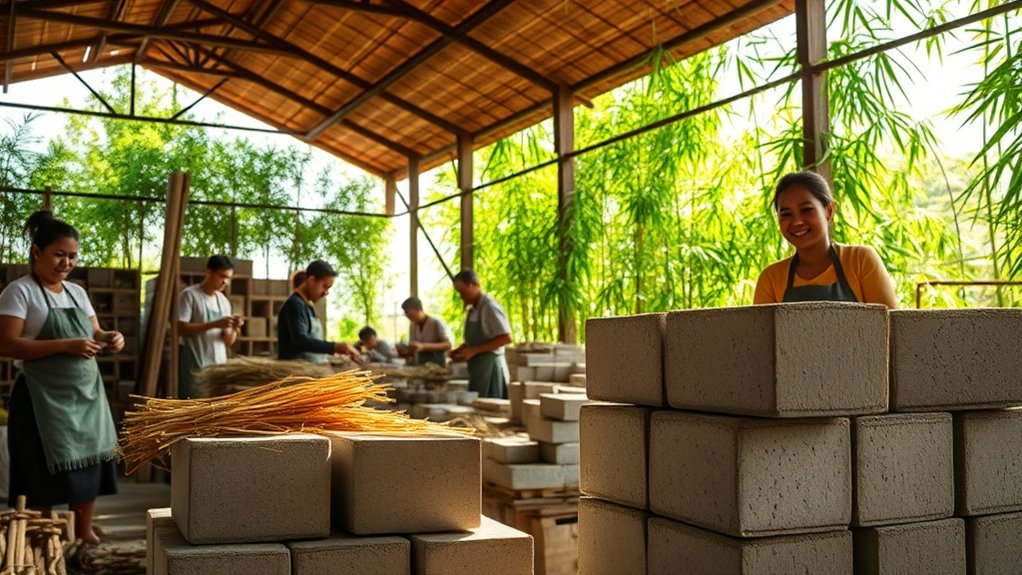
Bamboo’s increasing role in building practices not only marks a move towards sustainable materials but also presents considerable economic prospects.
As the bamboo industry grows, job opportunities expand across multiple sectors, benefiting local economies.
Here are four key areas contributing to job creation:
- Cultivation and Harvesting: The rising demand for bamboo requires more farmers and labourers.
- Processing and Manufacturing: Skilled positions are emerging in textiles, furniture production, and bioenergy.
- Logistics and Distribution: Expanding markets need professionals in marketing and supply chain management.
- Research and Development: Innovation in bamboo uses creates roles in engineering and sustainable practices.
Frequently Asked Questions
How Does Bamboo Compare to Other Renewable Materials in Construction?
Bamboo is a highly sustainable material due to its rapid growth and exceptional strength. It boasts a lower carbon footprint compared to many other renewable materials, making it an eco-friendly option for construction. Its resilience further enhances its appeal, positioning bamboo as a forward-thinking choice for environmentally conscious building projects. For instance, unlike traditional timber, bamboo can be harvested every few years without harming the plant, making it a more sustainable alternative.
What Types of Bamboo Are Best for Construction Purposes?
Guadua and Dendrocalamus species of bamboo are top choices for construction. Their impressive strength and sustainable properties make them perfect for eco-friendly building projects. For example, Guadua is often used in structures like homes and bridges in South America, showcasing its durability and versatility.
Can Bamboo-Reinforced Concrete Be Used in Earthquake-Prone Areas?
Yes, bamboo-reinforced concrete can improve earthquake resilience while preserving structural integrity. Its tensile strength and flexibility help absorb seismic forces, making it an effective and environmentally friendly option for construction in earthquake-prone regions.
What Maintenance Is Required for Bamboo-Reinforced Structures?
To ensure bamboo-reinforced structures remain robust, regular bamboo preservation techniques are essential. Keep an eye out for moisture and decay, striking a balance between maintenance and environmental impact. This approach will help guarantee the longevity and sustainability of your projects.
Are There Certifications for Bamboo Construction Materials?
Yes, there are certifications for bamboo construction materials. Various standards support certification programmes such as LEED and BREEAM, promoting environmentally friendly practices in building while improving structural integrity and safety for innovative construction solutions.
Conclusion
If you’re looking to build your dream home and want to be environmentally conscious, consider using bamboo-reinforced concrete. It’s a sustainable choice that benefits the planet. While traditional materials may seem easier, opting for bamboo allows you to contribute to a greener future with every brick laid. It’s a practical and stylish way to make a positive impact on the environment.

Learn about the diverse types of concrete used in construction and discover which mix can transform your next project.

For a long-lasting driveway that laughs in the face of the UK's unpredictable weather, the C20 concrete mix is your Read more

In the UK, you've got a a lot of lightweight concrete types to choose from, each with its unique perks. Read more