Using concrete in large shopping malls provides remarkable durability, structural strength, and energy efficiency. Its ability to bear heavy loads and resist fire ensures safety and longevity. Concrete also promotes sustainability, reducing maintenance costs and improving energy savings. With its design versatility, it accommodates intricate architectural features and attractive aesthetics. Furthermore, it stimulates economic growth and community involvement. These benefits can significantly enhance your development strategy for successful outcomes.
Key Takeaways
- Concrete boasts a high load-bearing capacity, making it perfect for the structural demands of large shopping malls and multi-storey designs.
- Its fire resistance enhances safety by maintaining structural integrity during fires and facilitating efficient evacuation.
- The energy-efficient properties of concrete can significantly reduce heating and cooling costs, resulting in long-term savings for mall operators.
- The durability of concrete means less maintenance is required, which lowers repair costs and extends the lifespan of the shopping mall.
- Including residential units in mall redevelopments fosters a mixed-use environment, improving livability and creating new revenue streams for local businesses.
Durability and Structural Strength
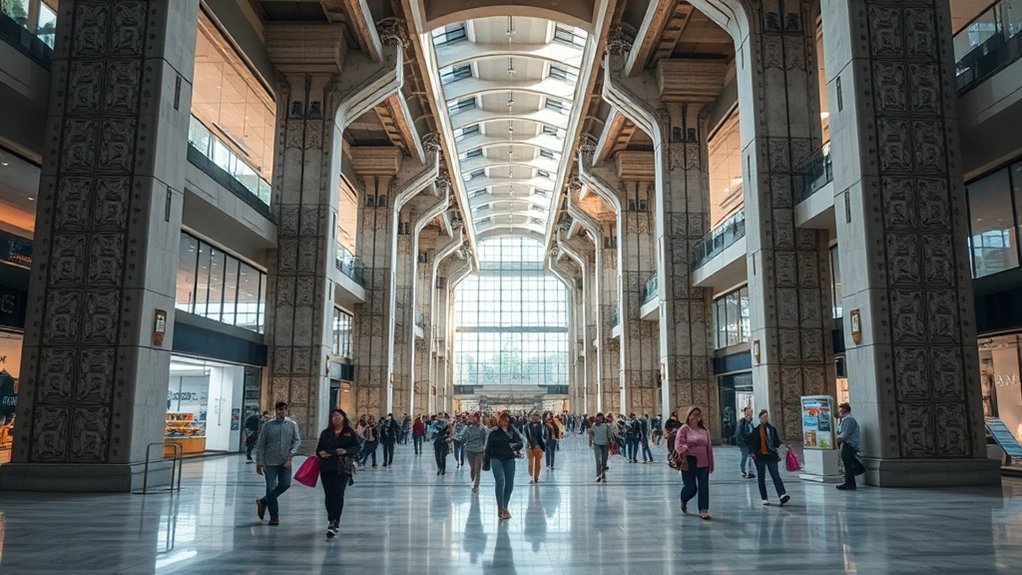
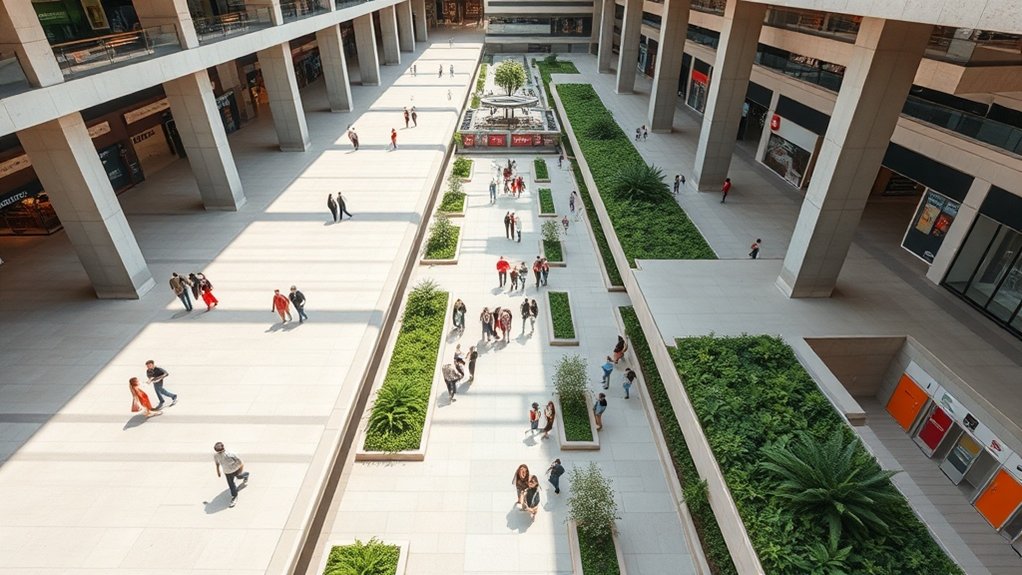
When building shopping centres, the durability and structural strength of concrete are crucial for long-term performance and safety.
Concrete’s impressive load-bearing capacity enables it to withstand the heavy demands of multi-storey buildings and busy public areas. Its high compressive strength ensures that even with significant foot traffic and heavy equipment, the building’s integrity remains secure. Additionally, the compressive strength of concrete is essential for preventing issues such as cracking and settlement, which can jeopardize the safety of the structure over time.
Moreover, concrete’s weather resistance shields against environmental factors like moisture and extreme temperatures, preventing deterioration over time. This resilience not only maintains structural integrity but also reduces maintenance needs, ultimately lowering repair costs.
Energy Efficiency and Sustainability
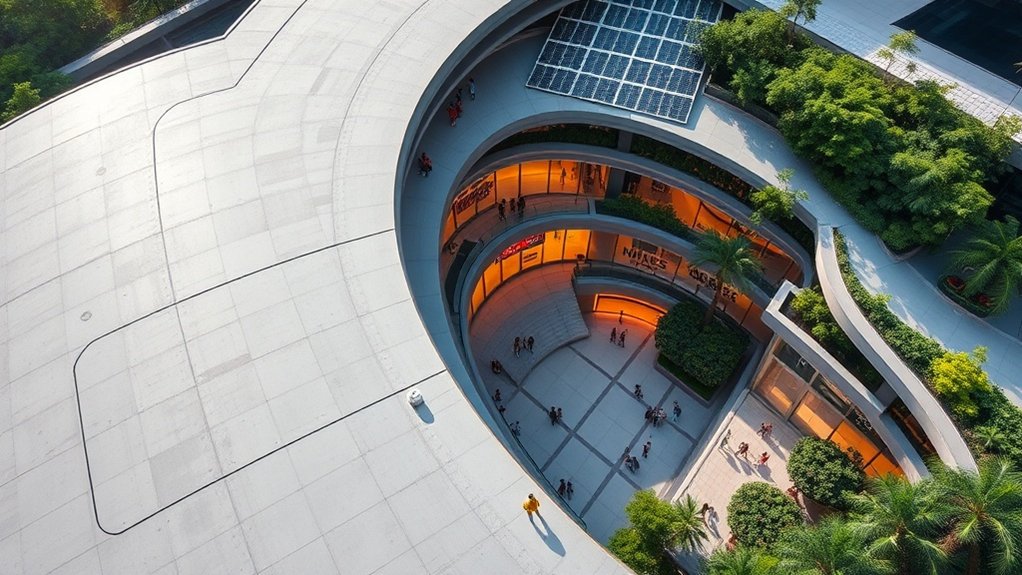
Using concrete in shopping malls harnesses thermal mass benefits, helping to regulate indoor temperatures and reduce heating and cooling demands. This not only boosts energy efficiency but also significantly cuts insulation costs over time. Additionally, the integration of energy-efficient strategies can further enhance the overall sustainability of the building.
Thermal Mass Benefits
Concrete’s thermal mass is crucial for improving energy efficiency and sustainability in shopping malls. It absorbs, stores, and releases heat, helping to stabilise indoor temperatures and ensure thermal comfort in large spaces. This capability can reduce heating and cooling demands, leading to energy savings of up to 25% in some cases. During hot weather, concrete absorbs excess heat, and at night, it releases this heat, promoting passive cooling and lessening the need for HVAC systems. For optimal performance, a 12-hour lag in thermal mass operation is ideal, as it maximises energy use and minimises peak demand. Additionally, the exceptional durability of concrete ensures that these energy-efficient designs will last for decades, further contributing to long-term sustainability. However, poor design can undermine these advantages, highlighting the importance of careful planning in shopping mall construction.
Insulation Cost Reduction
Effective insulation is crucial for energy efficiency in shopping malls, and combining advanced insulation methods with concrete construction can significantly cut costs.
By using innovative insulation materials and efficient installation techniques, you can enhance both performance and savings.
- Insulated Concrete Forms (ICFs): Can reduce energy consumption by 30–50%.
- Exterior Wall Insulation: Helps minimise heat transfer and external noise.
- Spray and Injection Foam: Provides high R-values and reduces air leakage.
- Roof and Ceiling Insulation: Controls humidity and protects merchandise.
- Floor Insulation: Enhances thermal comfort and reduces heat loss from the ground.
These strategies not only lower HVAC expenses but also boost operational efficiency, making your shopping mall more sustainable and cost-effective over time.
Cost Efficiency and Lifecycle Savings
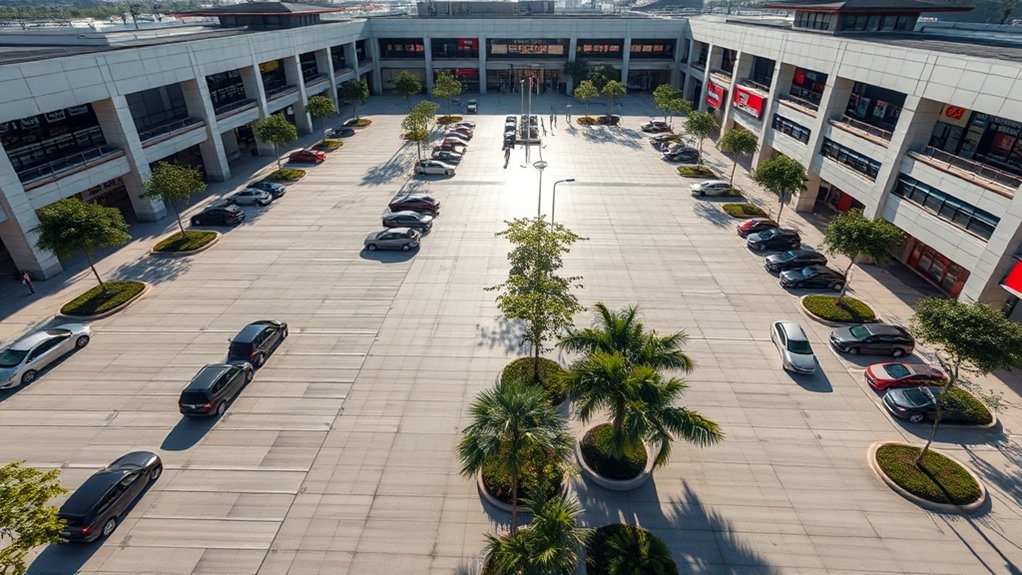
Cost efficiency in shopping mall construction relies on the effective use of concrete materials. Concrete frames typically have initial costs similar to steel, usually within 2% to 7% more favourable towards concrete.
Using precast elements can reduce labour requirements, speed up construction timelines, and help keep costs in check. Modular construction also provides economies of scale, aiding in more accurate budget estimates.
Concrete’s durability means lower maintenance and operational costs, leading to a longer lifespan for structures and fewer refurbishments. This resilience not only supports sustainability by minimising waste but also cuts down on replacement expenses.
Safety and Fire Resistance

When constructing shopping malls, prioritising safety and fire resistance is crucial for protecting both people and property.
Concrete offers significant advantages in fire safety:
- High Fire Resistance: Key structural elements need no additional fire protection.
- Structural Integrity: Concrete maintains its strength during fires, ensuring evacuation routes remain accessible.
- Open Floor Plans: Allows for flexible designs while including fire-resistant barriers.
- Fire Compartmentation: Effectively limits the spread of fire through strategic barriers.
- Non-Combustible Material: Lowers the fuel load, enhancing overall fire safety.
Choosing concrete can help ensure a safer shopping environment for everyone.
Design Flexibility and Aesthetic Appeal
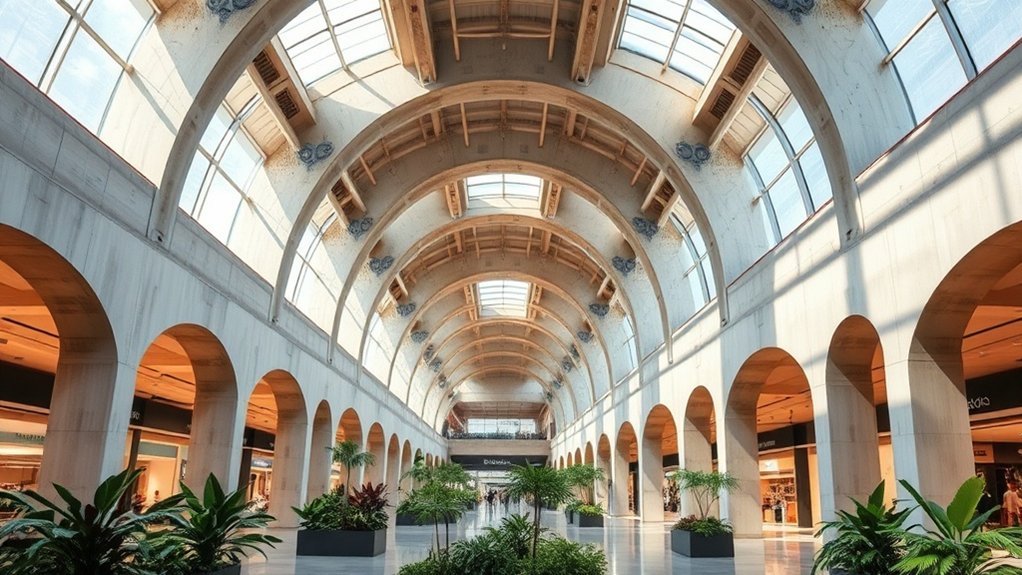
As shopping centres adapt to meet varied consumer demands, the design flexibility and aesthetic appeal of concrete become increasingly important. Concrete’s versatility allows for a range of architectural styles while efficiently utilising space with wide spans. Its potential for aesthetic customisation, such as polished finishes and distinctive textures, aligns well with contemporary design trends.
| Design Feature | Benefit |
|---|---|
| Custom Shaping | Facilitates intricate architectural designs |
| Colour and Texture Options | Provides a wide array of design choices |
| Polished Flooring | Elevates the modern retail look |
| Precast Decorative Elements | Merges functionality with visual appeal |
| Energy Efficiency | Lowers operational costs |
Incorporating these features can significantly enhance the appeal and efficiency of shopping centres, making them more attractive to both retailers and consumers.
Economic and Community Benefits
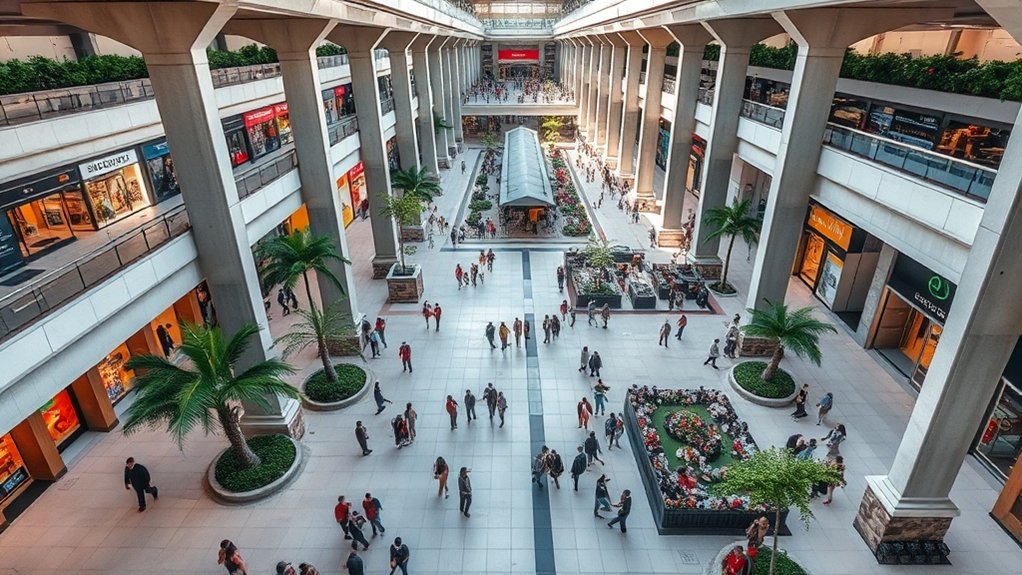
When you consider the economic and community benefits of concrete in shopping centres, it becomes clear that they provide long-term investment stability, drawing in both businesses and residents.
This stability can lead to urban revitalisation, turning struggling areas into lively mixed-use developments. Projects like these promote sustainable community growth, foster social connections, and ultimately enhance the quality of life for local residents.
Long-Term Investment Stability
Investing in concrete for shopping mall construction provides significant long-term stability, both economically and for the local community.
By focusing on long-term strategies, you can enhance investment returns and support a vibrant environment. Here are the main benefits:
- Cost-Effectiveness: Concrete is affordable, which helps keep initial costs down.
- Lower Maintenance Costs: Its durability means less upkeep and more savings over time.
- Energy Efficiency: The thermal properties of concrete help reduce energy bills.
- Long-Term Durability: Concrete structures require fewer renovations, saving time and money.
- Job Creation: Construction projects boost the local economy and create jobs.
These advantages contribute to a stable investment landscape, ensuring that your shopping mall remains a valuable asset for both investors and the surrounding community.
Urban Revitalization Opportunities
Concrete shopping centres act as key drivers for urban revitalisation, revitalising neglected areas and promoting economic and community development.
These centres draw in a range of tenants, boosting local property values and supporting various businesses. The jobs created in construction and retail enhance local spending power and stimulate surrounding economic activity.
Moreover, sturdy concrete buildings provide reliable spaces for small and medium enterprises, adapting to evolving retail demands. Increased footfall in these centres benefits local vendors, nurturing a lively community atmosphere.
Sustainable Community Development
As shopping centres evolve, their role in promoting sustainable community development is becoming clearer. The adaptive reuse of concrete structures not only revitalises urban areas but also encourages community engagement and economic resilience.
Here are some key benefits:
- Supports affordable housing by incorporating residential units into mall redevelopments.
- Generates new revenue streams, boosting local businesses and encouraging growth.
- Creates job opportunities during construction and in ongoing retail operations.
- Enhances community cohesion through public spaces for events and social interactions.
- Utilises existing infrastructure, reducing the need for additional public spending.
Frequently Asked Questions
How Does Concrete Impact Mall Acoustics and Sound Quality?
Concrete influences mall acoustics by improving sound absorption and reducing noise. Its density effectively blocks outside sounds, while thoughtful design helps minimise reverberation. This creates a more enjoyable shopping experience for visitors, enhancing overall sound quality. For instance, a well-designed concrete mall can make conversations clearer and reduce the din of foot traffic, making it easier for shoppers to relax and enjoy their time.
What Maintenance Is Needed for Concrete Mall Surfaces?
What’s the best way to maintain concrete surfaces in shopping malls? Regular cleaning, prompt crack repairs, and the application of suitable sealers can ensure durability. Routine inspections and proactive measures can significantly extend the lifespan of your floors. For instance, addressing small cracks quickly prevents larger issues later on.
Can Concrete Be Recycled After Mall Demolition?
Yes, concrete can be recycled after the demolition of a mall. During the demolition process, the concrete is mechanically crushed, impurities are separated, and recycled concrete aggregate is produced. This aggregate can then be reused in various construction projects, promoting sustainability and making better use of resources.
How Does Weather Affect Concrete During Construction?
Weather significantly influences concrete during construction. Temperature changes can lead to cracking, while humidity levels impact the curing process. Consider a cake left out in heavy rain—excess moisture can spoil it, just as adverse weather can weaken concrete. It’s crucial to monitor conditions to ensure structural integrity.
What Are the Fire Ratings of Concrete Used in Malls?
Concrete used in shopping centres generally has fire resistance ratings of one to two hours, ensuring it meets safety regulations. Its non-combustible properties provide protection for both the building and its occupants during fire emergencies, significantly improving safety in retail spaces.
Conclusion
In summary, using concrete in large shopping malls is a practical decision. Its exceptional durability ensures that your investment stands the test of time and weather. Additionally, its energy efficiency helps reduce costs significantly. With safety features that provide robust protection and design flexibility that allows for creative architectural solutions, concrete helps transform malls into vibrant community spaces. Overall, it’s a beneficial choice for everyone, creating lasting and inspiring environments.

Learn about the diverse types of concrete used in construction and discover which mix can transform your next project.

For a long-lasting driveway that laughs in the face of the UK's unpredictable weather, the C20 concrete mix is your Read more

In the UK, you've got a a lot of lightweight concrete types to choose from, each with its unique perks. Read more