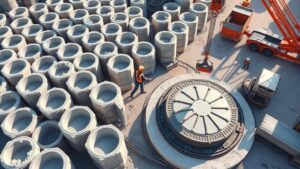
To manage returns and leftover ready-mix concrete effectively, it's crucial to plan your orders to avoid over-ordering. Communicate with suppliers to accurately forecast your material needs. You can reuse returned concrete by mixing it with fresh batches or recycling it into aggregates. For smaller projects, consider using on-site discharge methods. Regular quality checks are vital to ensure the concrete is compliant and usable. These strategies can significantly improve your concrete management practices.
Key Takeaways
- Use precise forecasting and maintain open communication with suppliers to avoid over-ordering ready-mix concrete.
- Combine returned concrete with fresh mixes or convert it into aggregate to encourage recycling and cut disposal costs.
- Carry out regular quality checks to ensure that reused concrete meets industry standards.
- Repurpose any leftover concrete for on-site paving or small projects to maximise resource use and reduce waste.
- Consider selling recycled materials and seeking tax relief to boost the financial advantages of effectively managing returned concrete.
Understanding Returned Concrete and Its Impact on Production

Managing returned concrete may appear to be a minor issue in production, but it actually presents a considerable challenge for concrete suppliers, accounting for around 5% of total ready-mix output each year.
This returned concrete typically arises from over-ordering rather than quality concerns, making it a manageable yet costly problem. If not handled correctly, the environmental impact can be significant, as it contributes to waste. However, sustainable processing of returned concrete can help, reducing the need for new aggregates and lowering resource extraction. Additionally, implementing effective planning and monitoring quality throughout the process can mitigate the volume of returned concrete and enhance overall project efficiency.
To effectively manage returned concrete, it's crucial to adopt proper techniques to address its varying characteristics. This approach will ensure compliance with regulations and help mitigate potential environmental issues.
Effective Methods for Reusing Returned Concrete

You can effectively reuse returned concrete in several ways to reduce waste and cut costs. Mixing it with fresh batches, using it for paving on site, or processing it into aggregate are all practical methods that promote sustainability. These approaches not only lower disposal costs but also aid in conserving valuable resources. Additionally, ensuring that the returned concrete meets proper testing standards can enhance its suitability for reuse in various applications. Implementing concrete recycling practices can further optimize resource management and support environmental goals.
Fresh Batch Integration
To effectively integrate returned concrete into fresh batches, it's crucial to assess the quality and usability of the material as soon as it arrives back. Start by understanding why it was returned, whether due to over-ordering or issues with project specifications. Implement quality checks to ensure the returned concrete meets the necessary standards for reuse. Consider employing advanced mixing techniques to revitalize the material, making it suitable for inclusion in a new batch, as this approach enhances consistent quality assurance. Additionally, leveraging transit mixers can help maintain the quality of returned concrete during transportation back to the plant. Alternatively, think about producing precast products or using the hardened concrete as aggregate.
Site Paving Applications
When considering site paving applications, reusing returned concrete can significantly boost project efficiency and sustainability.
Recycled concrete aggregates (RCA) serve as a strong base material for roads and pavements, thanks to their impressive compressive strength and durability. RCA can also be used for backfill behind retaining walls and for erosion control on slopes.
By incorporating RCA into new concrete paving mixtures, we can optimise resource use and cut down on environmental impacts. This approach not only reduces landfill waste but also conserves natural resources and lowers greenhouse gas emissions associated with aggregate production.
Plus, reusing materials on-site helps lower transport costs and fuel consumption, making your project both economically sound and environmentally friendly.
Aggregate Production Techniques
Returned concrete poses specific challenges, but with effective aggregate production techniques, it can be transformed into valuable recycled concrete aggregates (RCA).
Start by crushing waste concrete using efficient machinery to improve the quality of the aggregates. Use separation methods to divide RCA into coarse and fine fractions, as the coarse fraction generally performs better. Clean and grade these aggregates to remove impurities and ensure they're suitable for reuse.
Innovations in recycling, such as horizontal-axis mixers and flocculating admixtures, can help break down concrete and enhance aggregate properties. To address potential issues like increased water absorption and reduced strength, it's wise to limit the use of fine RCA.
Disposal and Recycling Processes for Leftover Concrete

When dealing with leftover concrete, consider on-site discharge methods to cut down on waste.
Once discharged, crushing the concrete into smaller aggregates allows for reuse in various projects, such as landscaping or road construction.
This method not only conserves resources but also helps lower disposal costs, making it a sensible choice for your projects.
On-Site Discharge Methods
Effective on-site discharge methods for leftover ready-mix concrete not only enhance waste management but also support sustainability.
Here are some straightforward strategies to consider:
- Job Site Use: Utilise leftover concrete for minor projects such as paving paths or enhancing landscaping.
- Designated Deposits: Dispose of small amounts directly at the job site or along the route to the plant, ensuring adherence to local regulations.
- Surface Coverage: Repurpose excess concrete to cover areas like driveways or car parks.
These methods ensure that waste is minimised and resources are used effectively.
Crushing for Reuse
Crushing leftover concrete for reuse is a smart way to manage waste and reclaim valuable materials. By using effective crushing techniques, you can break down concrete into smaller pieces, transforming it into reusable aggregates.
This process reduces landfill waste, conserves natural resources, and saves energy. Crushed concrete can be used in various applications, such as road bases and backfill. The benefits include lower disposal costs and reduced reliance on new materials.
Investing in recycling equipment can offset initial costs by saving on waste disposal and material procurement. By choosing recycling, you promote sustainability while adhering to environmental regulations.
Economic Benefits of Managing Returned Concrete
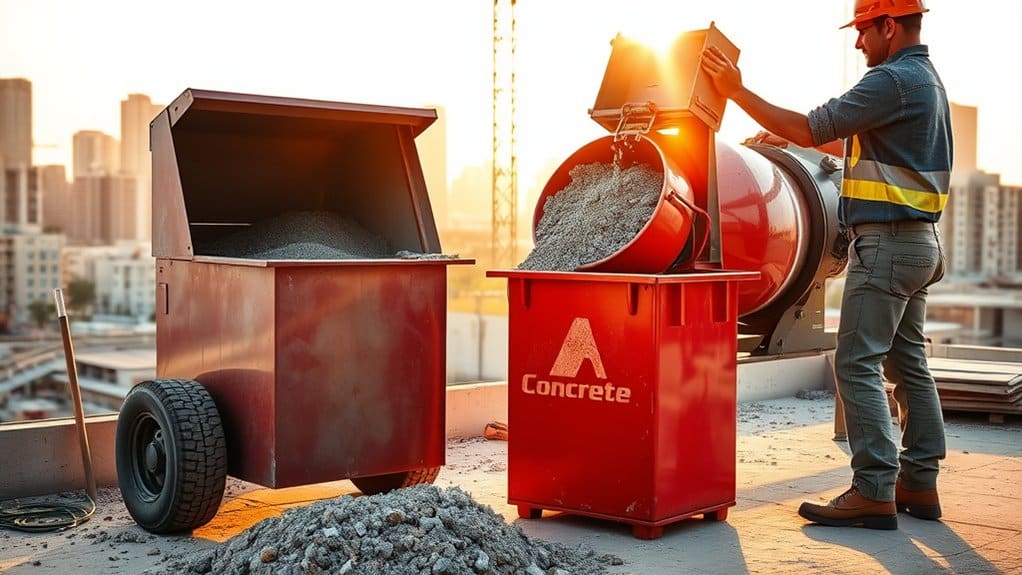
Managing returned concrete isn't just about being environmentally friendly; it brings considerable economic advantages that can improve your financial performance.
By managing returned concrete effectively, you can achieve:
- Cost Savings: Reusing materials reduces the need to buy new ones, enhancing cost efficiency.
- New Revenue Opportunities: Selling recycled materials can generate additional income.
- Improved Brand Reputation: Adopting sustainable practices can enhance your company's image, attracting more clients.
These strategies align with current market trends towards sustainability and help you cut down on waste management and transportation costs.
Furthermore, you may be eligible for tax relief and grants, which can boost your profitability.
Technological Solutions for Extended Usability of Returned Concrete
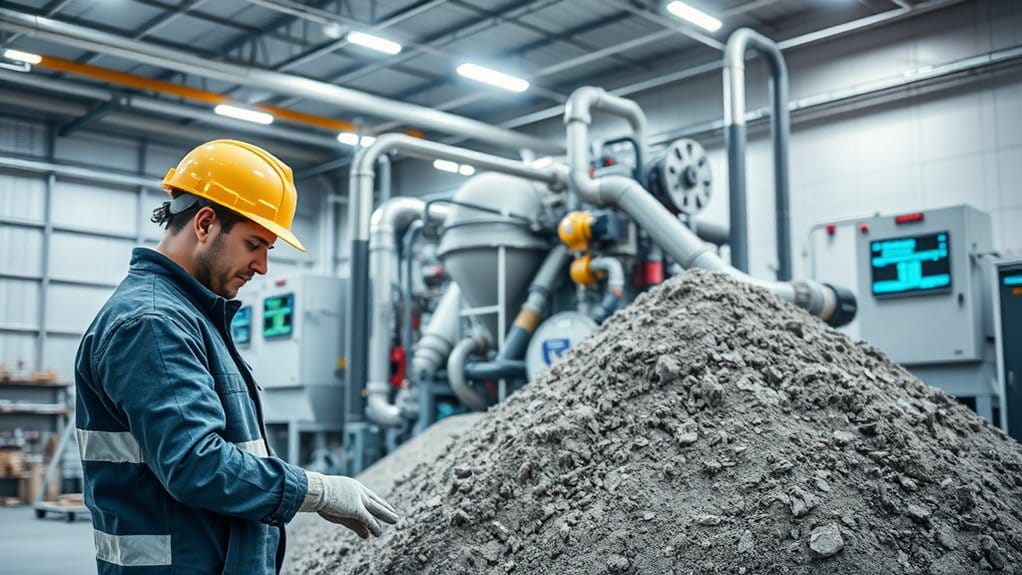
Harnessing technological innovations can significantly improve the usability of returned concrete, helping businesses optimise their investments in sustainable practices.
For instance, Mapei's RE-CON Line and Sika's reCO₂ver Process convert returned concrete into high-quality aggregates, cutting down on waste and conserving raw materials. These methods support circular economy principles by recycling materials and reducing environmental impact.
Moreover, MasterSuna admixtures enhance workability and efficiency, while superabsorbent polymers can transform slurry waste into usable resources.
Industry Practices and Compliance With Regulations
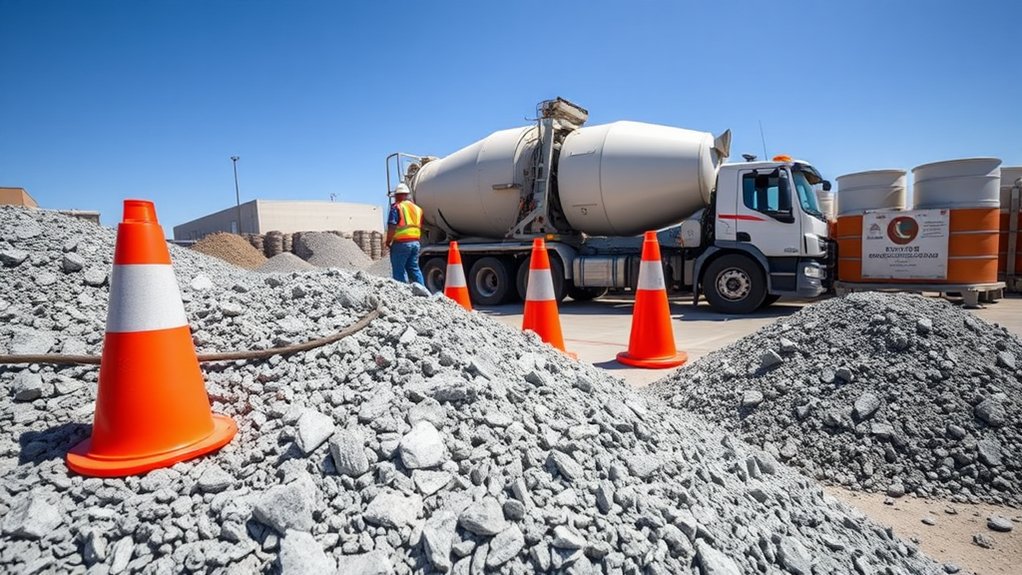
While optimising your concrete production processes, it's crucial to understand industry practices and regulations regarding returned concrete.
Compliance not only ensures quality but also supports sustainability.
- Get acquainted with the British Standard BS EN 206 for guidelines on reusing returned concrete.
- Conduct regular quality checks to ensure compliance and usability.
- Communicate clearly with suppliers to reduce the risk of over-ordering.
Frequently Asked Questions
What Factors Influence the Volume of Returned Concrete?
Weather conditions and project planning significantly affect the volume of returned concrete. For instance, if estimates are inaccurate or if the weather turns adverse, you may end up with surplus concrete. This not only hampers project efficiency but also increases waste. To minimise returns, always plan meticulously and keep a close eye on progress.
How Can I Determine the Best Reuse Option for Returned Concrete?
To find the best reuse option for returned concrete, first, evaluate its quality. Consider using it for road base materials or precast products. It's important to weigh the cost-effectiveness and environmental advantages of recycling concrete. For instance, using returned concrete as aggregate in new mixes can reduce waste and lower material costs.
What Are the Environmental Impacts of Disposing of Returned Concrete?
Recycling concrete can cut greenhouse gas emissions by as much as 30%. Disposing of it improperly not only damages ecosystems but also breaches environmental regulations. Responsible recycling is essential to safeguard our planet. For instance, reusing concrete in new construction helps conserve natural resources and reduces landfill waste. It's a straightforward way to make a positive impact.
Can Returned Concrete Be Reused in Cold Weather Conditions?
Yes, returned concrete can be reused in cold weather, but you need to keep its temperature above -3°C (27°F). Be aware that colder conditions can speed up setting times and affect workability. For example, if you're working on a project outdoors in winter, ensure the concrete is properly insulated to maintain its temperature.
What Are the Common Challenges in Managing Returned Concrete On-Site?
Did you know that approximately 20% of ready-mix concrete is returned? Managing these returns on-site requires strict return policies and effective disposal methods. This ensures compliance with environmental regulations while also addressing challenges related to space and costs. For instance, having designated areas for concrete storage can help minimise clutter and make operations smoother.
Conclusion
Handling returns in the concrete industry can feel like navigating a tricky maze. However, by reusing, recycling, and disposing of leftover concrete properly, you can not only improve your profits but also support environmental sustainability. For instance, crushed concrete can be repurposed as aggregate for new mixes, reducing waste and costs.
Utilising modern technology and following industry guidelines will keep your operations efficient and compliant. By implementing these strategies, you can transform what might seem like waste into valuable resources that benefit both your business and the planet.

Learn about the diverse types of concrete used in construction and discover which mix can transform your next project.

For a long-lasting driveway that laughs in the face of the UK's unpredictable weather, the C20 concrete mix is your Read more

In the UK, you've got a a lot of lightweight concrete types to choose from, each with its unique perks. Read more