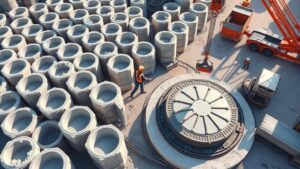
Pervious concrete is an effective solution for tackling urban flooding and heat islands. By allowing rainwater to seep through its surface, it significantly reduces stormwater runoff, easing the burden on drainage systems. This process also aids in replenishing groundwater and filtering out pollutants, which improves water quality. Furthermore, pervious concrete helps cool urban areas by supporting vegetation and absorbing heat. It can also lead to cost savings for infrastructure. Explore its applications and benefits in urban planning for a more sustainable future.
Key Takeaways
- Pervious concrete allows rainwater to soak through, which helps reduce stormwater runoff and combats urban flooding by storing and gradually releasing water.
- It filters pollutants as rainwater passes through, improving water quality and supporting local ecosystems.
- By enhancing groundwater recharge, pervious concrete restores natural water infiltration processes, maintaining healthy water cycles in urban areas.
- This material helps lower surface temperatures, aiding in the mitigation of urban heat islands by retaining moisture and promoting cooling through vegetation.
- Pervious concrete also decreases the need for extensive drainage systems, which lowers infrastructure costs and frees up urban land for parks and development.
The Role of Permeable Pavements in Stormwater Management

Traditional pavements can worsen stormwater runoff, but permeable pavements provide a practical alternative by allowing rainwater to seep through their surfaces.
Well-designed permeable pavements use stormwater infiltration techniques that can significantly reduce runoff—by as much as 25% to 100%, depending on local conditions. These pavements are built to cope with heavy rainfall, reducing overflow and improving stormwater management. Water quality is improved through pollutant removal via stormwater runoff infiltration. Additionally, permeable pavements can achieve 15%-25% voids in hardened concrete, enhancing their stormwater management capability.
Beneath the surface, special layers can store and gradually release stormwater, helping to restore a natural water cycle. As water filters through these layers, pollutants are removed, enhancing water quality.
Furthermore, permeable pavements promote groundwater recharge, which is vital for creating sustainable urban environments. Integrating these systems is crucial for effective stormwater management in towns and cities across the UK.
Benefits of Green Infrastructure for Urban Resilience
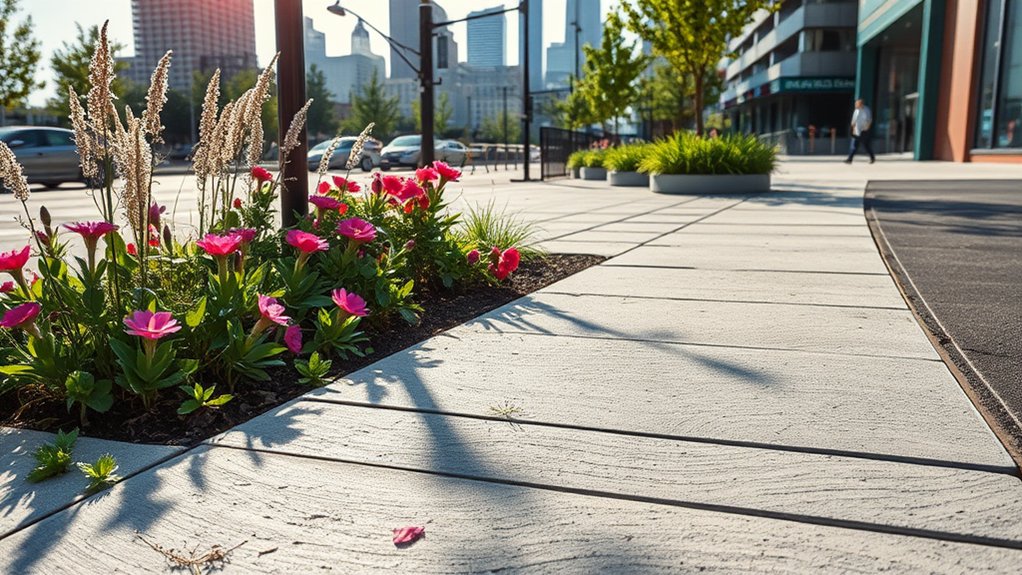
Green infrastructure significantly improves stormwater management by enhancing the absorption and filtration of rainfall, which helps to reduce the risk of flooding. It also plays a vital role in cutting pollution by capturing contaminants before they reach rivers and streams. Furthermore, these solutions help to alleviate the urban heat island effect, resulting in cooler and more comfortable environments in crowded urban areas. For example, green roofs and permeable pavements not only manage rainwater but also provide recreational spaces and improve air quality. This approach supports urban biodiversity by creating habitats for various species, contributing to a healthier ecosystem within cities. Additionally, implementing sustainable practices in construction, such as using recycled aggregates, can enhance the environmental benefits of these green infrastructure solutions.
Enhanced Stormwater Management
Urban areas are becoming increasingly susceptible to flooding and the heat island effect, making enhanced stormwater management vital for resilience.
Using pervious concrete can significantly reduce stormwater runoff, allowing water to seep directly into the ground. This helps to alleviate pressure on drainage systems and reduces the need for large retention ponds. Furthermore, pervious pavement acts as a detention area, which lowers expenses related to skimmers, pumps, and drainage pipes.
Improved groundwater recharge is essential for sustainable development, as it replenishes local aquifers and maintains soil moisture, which is important for urban greenery.
Furthermore, effective stormwater management reduces flood risk by increasing storage capacity and acting as a buffer during peak flow events. This approach aligns well with modern urban planning, enabling cities to adapt to climate change without relying heavily on expensive engineered solutions.
Pollution Reduction Benefits
As cities face the pressing issue of pollution, using pervious concrete offers a practical solution to tackle urban runoff. This innovative material effectively filters stormwater, trapping pollutants such as heavy metals, oils, and suspended solids before they can enter waterways. By allowing water to seep through its porous structure, pervious concrete reduces surface runoff and lessens the amount of contaminants that flow into drains and, ultimately, into rivers and lakes.
Moreover, the natural filtration from the soil and microorganisms beneath the surface further aids in retaining these pollutants. This dual-action approach not only captures contaminants at the source but also enhances the overall quality of urban water.
Pervious concrete thus serves as a vital component of sustainable urban infrastructure, helping cities work towards cleaner, healthier environments.
Urban Heat Mitigation
As cities grow and temperatures increase, it’s essential to adopt effective strategies for urban heat mitigation. One of the most impactful approaches is enhancing vegetation, which significantly cools the air.
Plants cool their surroundings through evaporation and transpiration, while tree canopies and green spaces offer vital shade, reducing temperatures by 1–4°C. Green roofs can lower surface temperatures by as much as 14% compared to conventional roofs.
Additionally, water features like ponds and wetlands help absorb heat, further cooling the area. Engineered green infrastructure, such as permeable concrete, aids moisture retention and reduces runoff, contributing to a cooler urban environment. The use of ready-mix concrete in conjunction with these green technologies can significantly enhance urban resilience against heat and flooding.
These strategies not only combat heat but also boost urban resilience, decrease energy demand, and improve public health during heatwaves.
Mitigating the Urban Heat Island Effect
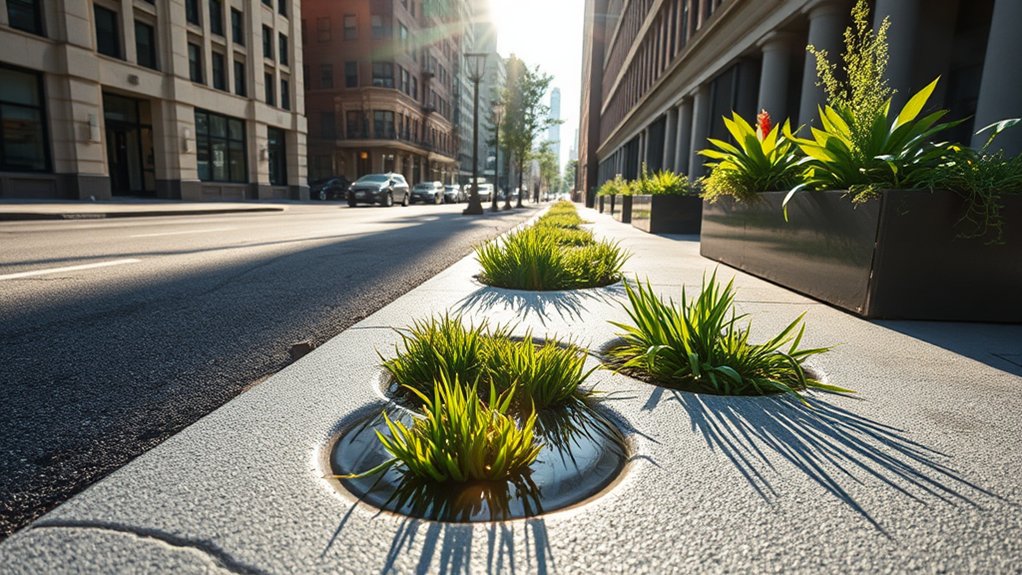
To effectively tackle the urban heat island effect, using pervious concrete is an effective solution that helps with both heat absorption and surface cooling.
Pervious concrete has a higher albedo, meaning it reflects more sunlight than traditional asphalt, which significantly reduces heat absorption and surface temperatures. Its porous nature allows for moisture retention, enhancing evaporative cooling and further reducing heat build-up.
By replacing dark, heat-absorbing surfaces with lighter pervious concrete, we can lower the overall urban heat footprint. This material also works well with urban green infrastructure, supporting vegetation that cools the area through shading and transpiration.
Innovations in Permeable Concrete Technology
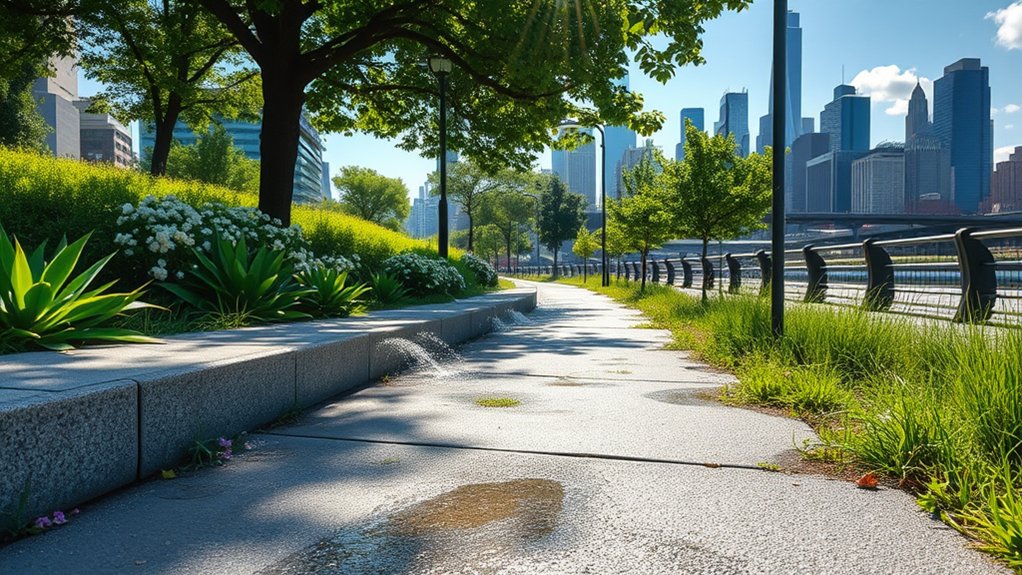
Innovations in permeable concrete technology are reshaping urban infrastructure by improving water management and sustainability. By incorporating sustainable materials like slag and class F fly ash, this concrete reduces environmental impact while allowing effective water infiltration through its porous structure.
The design focuses on minimising fine aggregates and maximising interconnected voids for optimal drainage.
Nanotechnology advancements, such as using graphene oxide in cement-free geopolymer binders, significantly enhance durability and performance, enabling 100% cement replacement. This not only lowers carbon footprints but also boosts the material’s resilience.
These innovations play a crucial role in creating stronger urban environments, effectively managing stormwater and promoting sustainable urban development.
Enhancing Urban Flood Resilience Through Infiltration
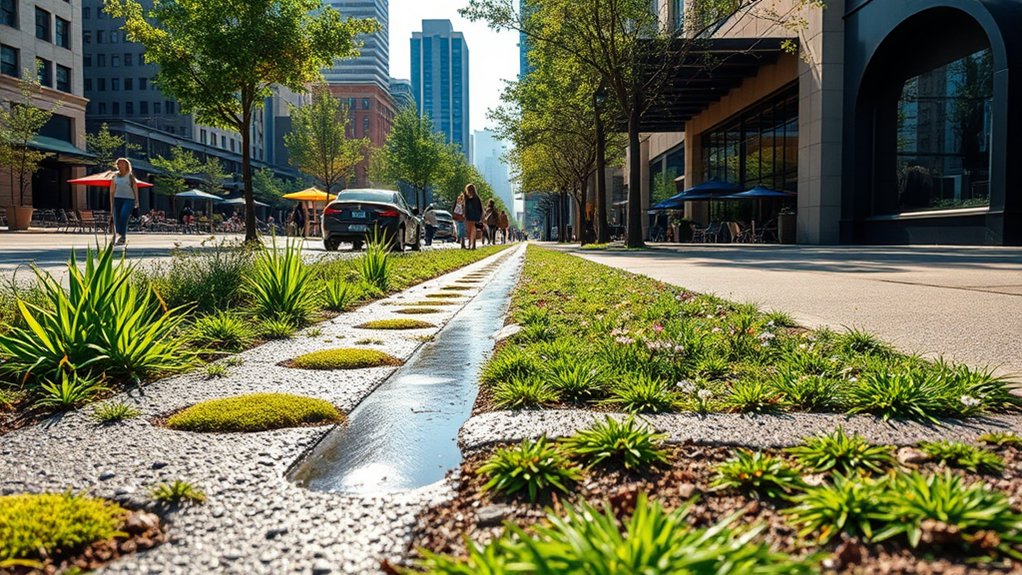
To improve urban flood resilience, effective stormwater management that prioritises infiltration is essential.
Implementing these strategies can significantly lower infrastructure costs linked to flood mitigation. This approach not only reduces surface runoff but also fosters sustainable urban spaces.
For example, using permeable paving in car parks allows rainwater to seep through, reducing the risk of flooding and enhancing the local environment.
Stormwater Management Solutions
Effective stormwater management is crucial for improving urban flood resilience, and pervious concrete is a valuable solution. It encourages stormwater harvesting and infiltration, reducing surface runoff and helping to restore the natural water cycle. By capturing rainfall, pervious concrete provides natural filtration that decreases pollutants entering water bodies. This method not only promotes urban sustainability but also enhances groundwater recharge, which is vital for local ecosystems.
| Benefits | Mechanism | Urban Impact |
|---|---|---|
| Reduces surface runoff | Allows water to seep through | Helps prevent urban flooding |
| Enhances water quality | Naturally filters pollutants | Benefits aquatic ecosystems |
| Recharges groundwater | Restores natural infiltration | Keeps groundwater levels stable |
| Attenuates peak flows | Temporarily stores stormwater | Prolongs infrastructure lifespan |
Infrastructure Cost Reduction
Reducing infrastructure costs is a key benefit of using pervious concrete to improve urban flood resilience through infiltration. By cutting stormwater runoff by up to 75%, you’ll lessen the strain on traditional drainage systems, leading to significant savings.
Pervious concrete removes the need for large stormwater retention ponds and detention basins, allowing urban land to be used for more valuable purposes, such as parks or mixed-use developments.
Additionally, maintenance costs are lower, as there’s less frequent need for clearing blocked drains and repairing damaged systems.
Over time, you’ll save on costly infrastructure upgrades, making pervious concrete a smart and sustainable choice for modern urban challenges.
Economic and Environmental Advantages of Pervious Concrete
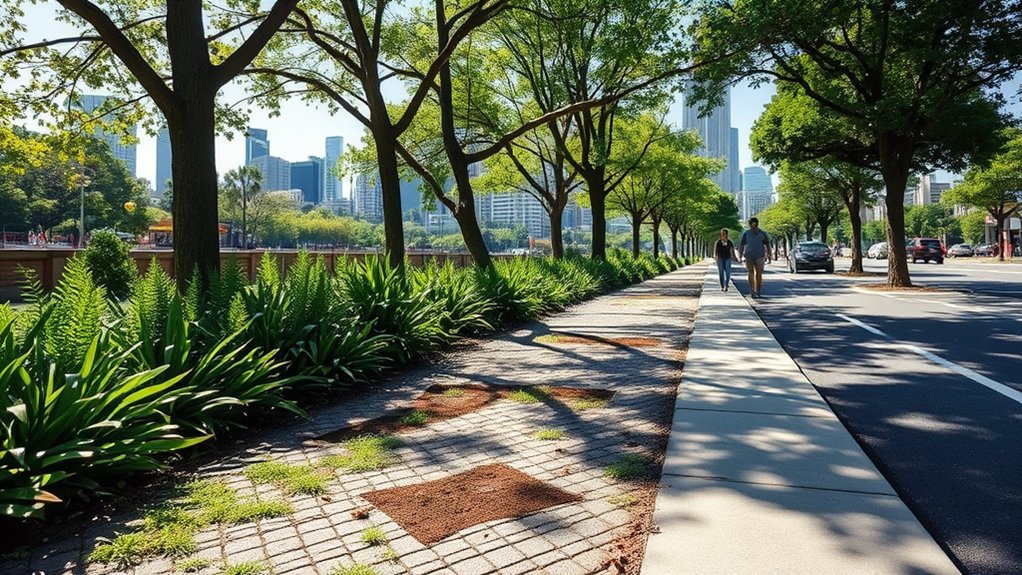
As urban areas grapple with issues like flooding and heat islands, pervious concrete emerges as an effective solution, offering both economic and environmental benefits.
It’s a cost-effective alternative to traditional pavements, reducing initial expenditure. Pervious concrete also eliminates the need for storm drains and retention basins, which further enhances cost efficiency. With a lifespan of up to 40 years and minimal upkeep, it helps keep long-term costs down.
On the environmental front, pervious concrete plays a crucial role in sustainability. It effectively manages stormwater, promotes groundwater recharge, and filters pollutants, thereby improving water quality.
Additionally, it helps combat the heat island effect, contributing to cooler urban spaces. By incorporating pervious concrete into urban planning, we can achieve a balance of economic efficiency and environmental sustainability, leading to more resilient urban ecosystems.
Case Studies: Successful Implementation in Urban Areas
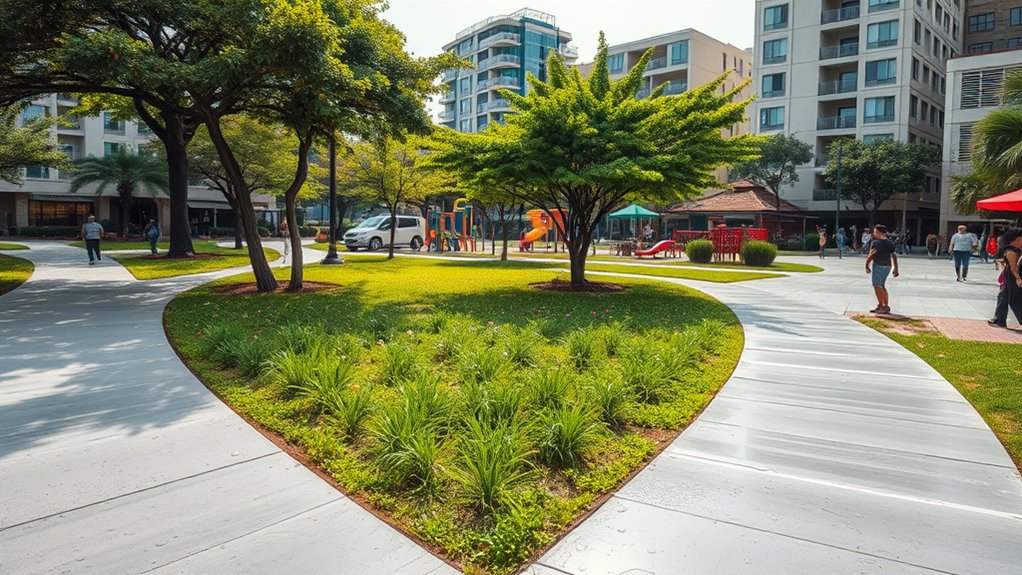
Various case studies in urban areas demonstrate the effective use of pervious concrete to tackle flooding and heat island effects.
For example, New Orleans employs this material in parking lots to significantly reduce stormwater runoff. In China, sponge cities have integrated pervious concrete into their infrastructure to manage urban flooding effectively.
In India, case studies show its versatility in different projects, even amid some challenges regarding expertise. Key examples include the permeable parking lot at LSU and the Mary Bird Perkins Cancer Centre in Louisiana.
These instances highlight pervious concrete’s advantages, such as enhanced runoff filtration and temperature regulation, making it a strong choice for sustainable urban development.
Frequently Asked Questions
How Does Pervious Concrete Differ From Traditional Concrete?
Pervious concrete differs from traditional concrete mainly in its ability to allow water to pass through. With a high void content, pervious concrete enables water infiltration, making it effective for managing stormwater. In contrast, traditional concrete is denser and restricts water flow, which can lead to issues like flooding and pollution. This permeability offers significant environmental benefits, such as reducing runoff and promoting groundwater recharge. Overall, pervious concrete is a practical choice for sustainable construction and landscaping.
What Maintenance Is Required for Pervious Concrete Surfaces?
Picture a rain-drenched street where proper maintenance ensures efficient drainage. Regular checks, surface repairs, and clearing debris are essential for keeping pervious concrete in top condition. This helps prevent blockages and maintains its unique ability to manage stormwater effectively.
Can Pervious Concrete Be Used in All Climates?
Pervious concrete isn’t suitable for every climate; its effectiveness hinges on specific mix designs and seasonal conditions. In severe winters, tailored methods ensure its durability. Conversely, in tropical areas, it excels at managing stormwater.
What Are the Installation Costs for Pervious Concrete?
When looking at the installation costs for pervious concrete, you’ll notice it can be more expensive than traditional concrete options. Factors such as site complexity and local labour rates can affect your total costs, which typically range from £1,200 to £4,800 for driveways.
How Long Does Pervious Concrete Last Compared to Regular Concrete?
When comparing durability, pervious concrete generally lasts between 20 to 30 years, whereas regular concrete can last from 20 to 40 years. Factors such as the quality of installation, maintenance, and environmental conditions can significantly affect the longevity and performance of both materials. For instance, if pervious concrete is laid properly and maintained, it can serve well in areas prone to heavy rainfall, helping to manage water runoff effectively.
Conclusion
Incorporating pervious concrete into urban areas is akin to planting a tree in a concrete environment—it’s both transformative and necessary. This material helps manage stormwater effectively and cools urban heat islands, providing relief to areas suffering from high temperatures. By adopting pervious concrete, you’re not just laying down surfaces; you’re enhancing resilience against flooding and climate change. The economic and environmental advantages extend beyond immediate benefits, fostering a sustainable future where cities coexist better with nature.
Incredible advancements in geopolymer concrete are paving the way for sustainable construction, but what challenges lie ahead in this eco-friendly Read more

Uncover how concrete shapes urban landscapes and supports sustainable growth, paving the way for resilient cities of the future. What Read more

Just how much can lightweight concrete transform sustainable construction and reduce environmental impact? Discover the surprising benefits that await.