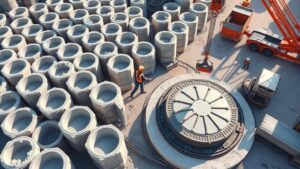
Concrete plays a vital role in encapsulating underwater pipelines, providing stability and protection against corrosion. It helps prevent buoyancy issues and shields the pipelines from physical damage. By utilising specialised concrete mixes with additives such as anti-washout agents and watertight compounds, the material can withstand challenging conditions in turbulent waters. Engineering considerations further enhance its performance in these environments. The methods of application significantly affect the durability of the encapsulation. By exploring innovative techniques, we can improve both efficiency and longevity in underwater projects.
Key Takeaways
Concrete encapsulation provides the necessary negative buoyancy to stabilise pipelines, preventing them from floating in turbulent underwater conditions. Using specialised concrete mixes enhances durability, resists corrosion, and ensures the structural integrity of the pipes in marine environments.
The tremie concrete placement technique is effective in minimising washout and ensuring even distribution around the pipelines when applied underwater. Additionally, anti-washout and integral watertight admixtures significantly improve concrete performance by enhancing strength and reducing permeability.
Innovations such as self-healing concrete and robotics are improving the efficiency and sustainability of underwater pipeline encapsulation methods, making them more reliable and environmentally friendly.
Purpose and Benefits of Concrete Encapsulation
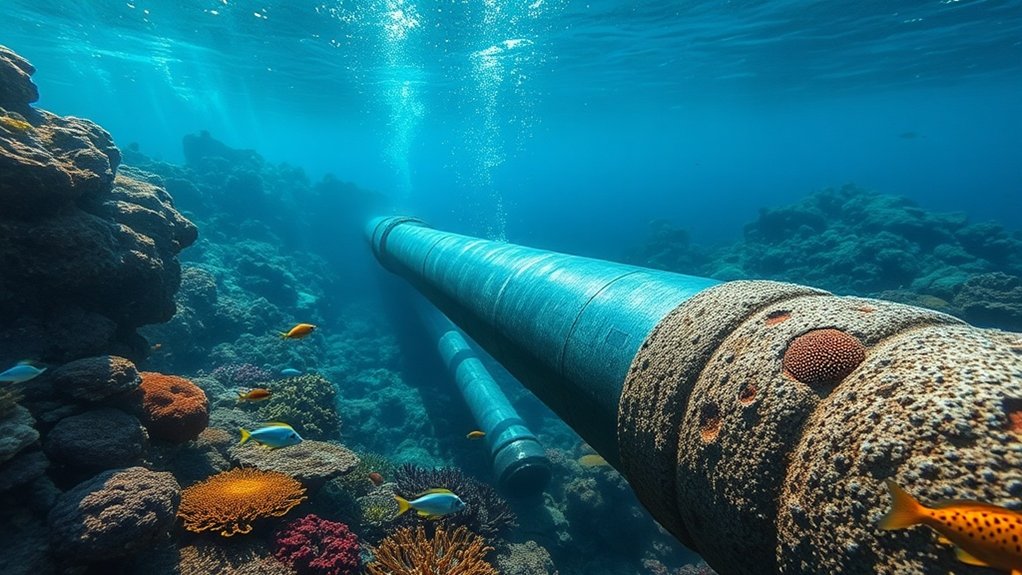
Concrete encapsulation plays a vital role in ensuring the stability and protection of underwater pipelines. By adding significant weight, it ensures negative buoyancy, preventing the pipeline from floating away due to marine currents or storm surges. This is crucial for pipeline safety, as it reduces the risk of displacement and lessens the need for costly external anchoring systems. The thick layer of concrete also offers essential mechanical protection, safeguarding the steel pipe from physical damage and wear. Moreover, it acts as a barrier against corrosion, limiting exposure to seawater. Its insulating properties help maintain fluid temperatures, which is important for preventing hydrate formation. Additionally, the weight of concrete anchors pipelines to the seabed, providing structural stability against movement in harsh underwater conditions.
Methods of Applying Concrete Encapsulation Underwater
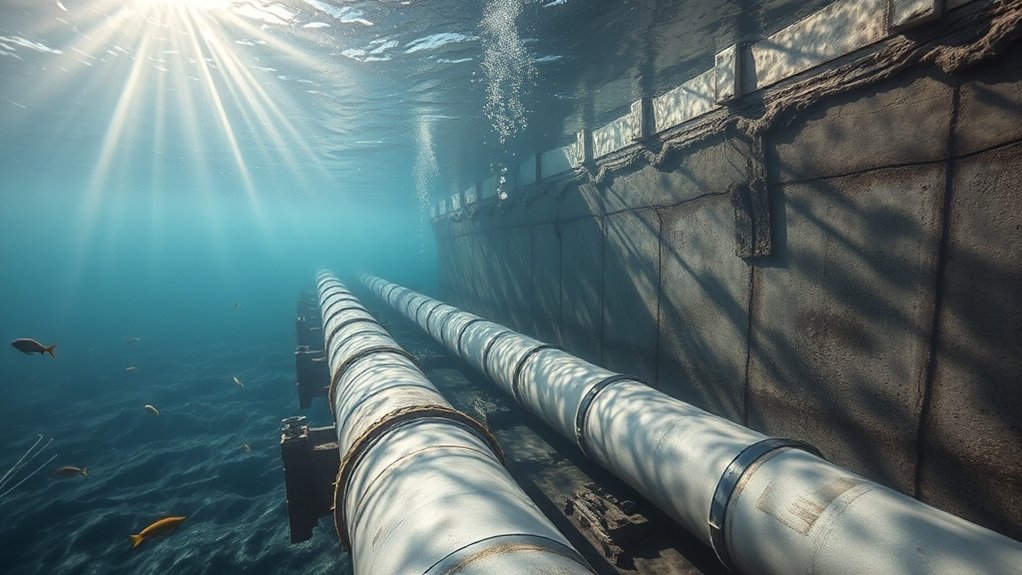
When applying concrete encapsulation underwater, methods such as tremie concrete placement and the installation of encapsulation collars are effective.
Tremie tubes ensure consistent delivery of concrete, while collars add structural integrity and protection.
Familiarising yourself with these techniques will improve your ability to secure underwater pipelines effectively.
Tremie Concrete Placement
To effectively apply concrete encapsulation underwater, the tremie method is a reliable technique that minimises cement washout and preserves the concrete mix’s integrity.
By using a tremie pipe, you ensure controlled concrete flow while displacing water without causing turbulence. Key aspects of this method include:
- Watertight seal: The lower end of the tremie pipe remains submerged in fresh concrete.
- Continuous pour: Concrete flows from the hopper, effectively displacing water.
- Bottom-up placement: This technique fills voids evenly, preventing segregation.
- Monitoring flow rate: Keeping an eye on the flow rate helps prevent premature setting inside the pipe.
Additionally, the tremie pipe consists of short sections that can be adjusted in length during the pour without removing the bottom end from the concrete.
Using tremie placement improves the quality of underwater encapsulation, which is crucial for maintaining pipeline integrity.
Encapsulation Collars Installation
When installing encapsulation collars underwater, it’s crucial to follow specific methods to ensure the concrete encapsulation is both effective and secure.
Start by preparing the pipeline, making sure the surface is clean for proper collar adhesion. Use sleeper blocks for underwater stability, which helps with accurate collar alignment before applying the concrete. It’s important to consider using high-quality repair collars that are specifically designed for effective sealing during this process.
Utilise grout injection systems or mechanical methods to embed the concrete around the collar. Specialised nozzles can help control the pouring process, reducing environmental disruption.
Remember to vent air and drain water through the collar outlets to avoid pockets that could compromise the encapsulation’s strength.
Keep a close eye on the alignment of the pipe sections to maintain structural integrity throughout the installation.
Materials and Composition of Concrete for Underwater Encapsulation
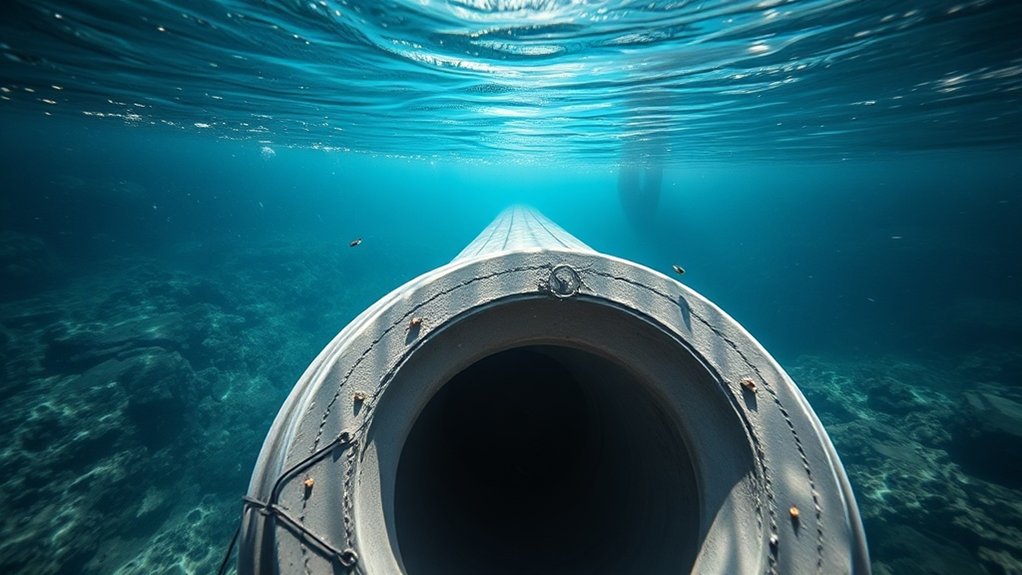
When choosing materials for underwater pipeline encapsulation, it’s vital to select concrete mixes designed for durability in challenging marine conditions.
Using additives can significantly enhance the concrete’s resistance to seawater and boost its overall performance.
Additionally, selecting the appropriate reinforcement materials is crucial for maintaining structural integrity and reducing the likelihood of damage over time.
Specialized Concrete Mixes
Specialised concrete mixes for underwater pipeline encapsulation are carefully designed to perform optimally in challenging aquatic conditions.
These mixes tackle underwater issues by using specific additives and selected materials. Key components include:
- Portland cement for strong hydraulic properties.
- Fine aggregates to improve workability and minimise voids.
- Coarse aggregates for enhanced density and strength.
- Non-shrink cementitious materials to prevent gaps after curing.
A low water-cement ratio ensures sufficient strength while maintaining fluidity for placement.
Adjustments in aggregate gradation and the use of viscosity-modifying agents boost the mix’s stability during underwater application.
Additives for Durability
To improve the durability of underwater concrete for pipeline encapsulation, it’s essential to include specific additives. These additives enhance the effectiveness of the mix by lowering permeability and boosting resistance to degradation.
| Additive Type | Benefits | Applications |
|---|---|---|
| Anti-Washout Admixtures | Reduces water-cement ratio, increases strength | Ideal for underwater placements |
| Anti-Leaching Additives | Prevents washout, maintains structural integrity | Used in submerged pipelines and marine structures |
| Integral Watertight Admixtures | Minimises water ingress, protects reinforcing steel | Suitable for rapid construction and freeze-thaw conditions |
Incorporating these additives enhances workability and consolidation, while ensuring a longer service life by resisting erosion and chemical damage in challenging underwater environments.
Reinforcement Materials Selection
Choosing the right reinforcement materials is crucial for ensuring the durability and integrity of underwater concrete structures.
Here are the key options to consider:
- Steel Mesh: This provides essential tensile strength and helps control cracking.
- Galvanised or Stainless Steel: These materials are excellent for preventing corrosion in harsh marine conditions.
- Spiral or Helical Reinforcement: This type enhances strength against pressure fluctuations.
- Proper Placement: Ensuring the correct cover depth is vital to protect against corrosion and maintain a strong bond with the concrete.
Engineering Considerations and Design Factors
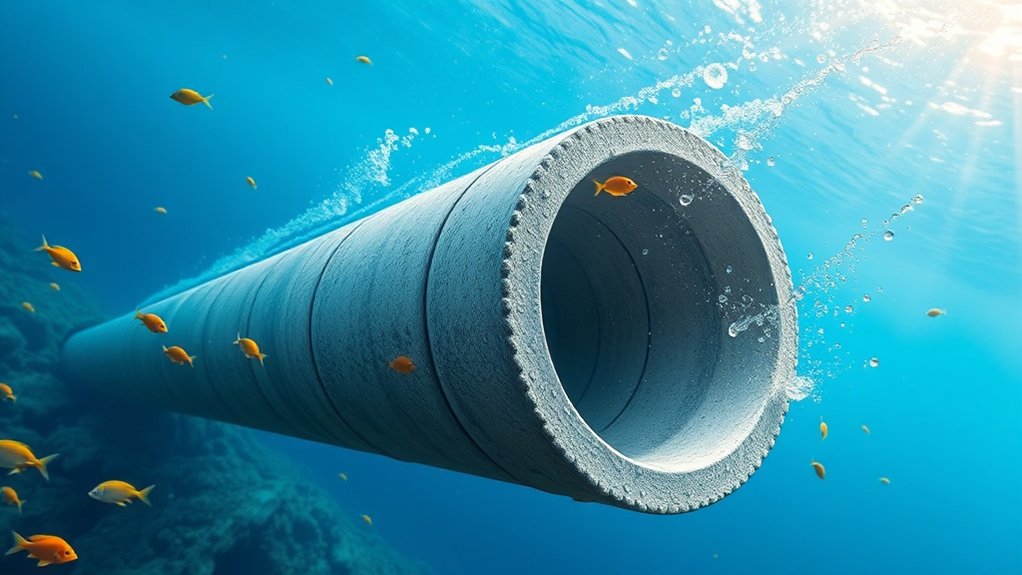
When designing underwater pipeline encapsulation, several key engineering considerations and design factors are crucial for ensuring performance and safety.
Firstly, selecting specialised cement formulations that improve corrosion resistance is vital for the longevity of the pipeline. It’s also essential to ensure material compatibility; using mismatched materials can weaken structural integrity.
Incorporating cement-based protective layers helps reduce corrosion and shields the pipeline from mechanical damage during installation and operation.
It’s important to assess the weight coating to enhance stability and avoid buoyancy problems. Additionally, designing for buckling resistance and allowing for thermal expansion can significantly alleviate stress on the encapsulated pipelines.
Lastly, considering environmental factors such as seabed conditions and marine activity is essential to ensure that the design meets operational safety standards while optimising performance.
Construction and Installation Challenges

When working with concrete for underwater pipeline encapsulation, you’ll encounter challenges in achieving consistent concrete placement due to varying pipeline sizes and environmental factors.
Additionally, you’ll require specialised equipment to manage the increased weight and dimensions of coated pipes, complicating logistics.
It’s crucial to address these environmental constraints to ensure the concrete’s integrity and the safety of the installation process.
Uniform Concrete Placement Issues
Despite advancements in underwater construction methods, achieving uniform concrete placement around pipelines remains a considerable challenge. Several factors can hinder effective placement and compromise the flow of concrete:
- Turbulent water currents may cause washout or segregation of the concrete mix.
- Variations in mix consistency can lead to uneven thickness around pipelines.
- Poor control over placement rates can result in voids or premature setting.
- Hydrodynamic forces may distort concrete layers, affecting their coverage.
These challenges require careful monitoring and adjustments during installation to ensure uniformity.
If not addressed, you risk creating weak spots that could undermine the integrity and longevity of the pipeline encapsulation.
Specialized Equipment Requirements
Successful underwater pipeline encapsulation relies on specialised equipment designed to tackle specific construction and installation challenges. Key machinery includes concrete mixing equipment to ensure a consistent concrete blend and coating application machines that allow for precise application.
Formwork systems are crucial for shaping the concrete around the pipe, while inspection tools are necessary for identifying defects and maintaining quality control. Curing equipment is also important as it helps create the right conditions for the concrete to set properly.
Moreover, managing water pressure resistance and corrosion protection presents additional challenges. Therefore, using robust materials and effective coatings is essential to protect against seawater environments.
These equipment requirements are vital for ensuring both the successful installation and long-term durability of underwater pipelines.
Environmental Constraint Management
Effectively managing environmental constraints during the construction and installation of underwater pipelines is crucial for protecting marine ecosystems. Several challenges must be navigated to minimise environmental impact, including:
- Direct physical disturbance to seabed sediments, which can harm benthic communities.
- Temporary increases in turbidity, potentially smothering filter feeders and disrupting the settlement of larvae.
- Coastal habitat fragmentation caused by construction methods, posing risks to terrestrial species.
- Long-term effects of pipeline materials, such as corrosion that may release trace metals into the environment.
Addressing these issues is vital for sustainable development and the protection of our underwater habitats.
Applications of Underwater Concrete Encapsulation

Underwater concrete encapsulation plays a crucial role in ensuring the integrity and longevity of pipelines.
Concrete weight coating (CWC) adds necessary mass to counteract buoyancy, helping to stabilise pipelines in turbulent waters. It also absorbs mechanical impacts from anchors and marine debris, significantly reducing the risk of ruptures and leaks, which is vital for environmental protection against potential spills.
Moreover, cement-based shells help prevent corrosion by limiting seawater exposure, thus extending the lifespan of pipelines.
Customised encapsulation designs, including thermal insulation and void-filling solutions, further optimise performance in challenging marine conditions.
Case Study: Rehabilitation of Asbestos Concrete Pipes
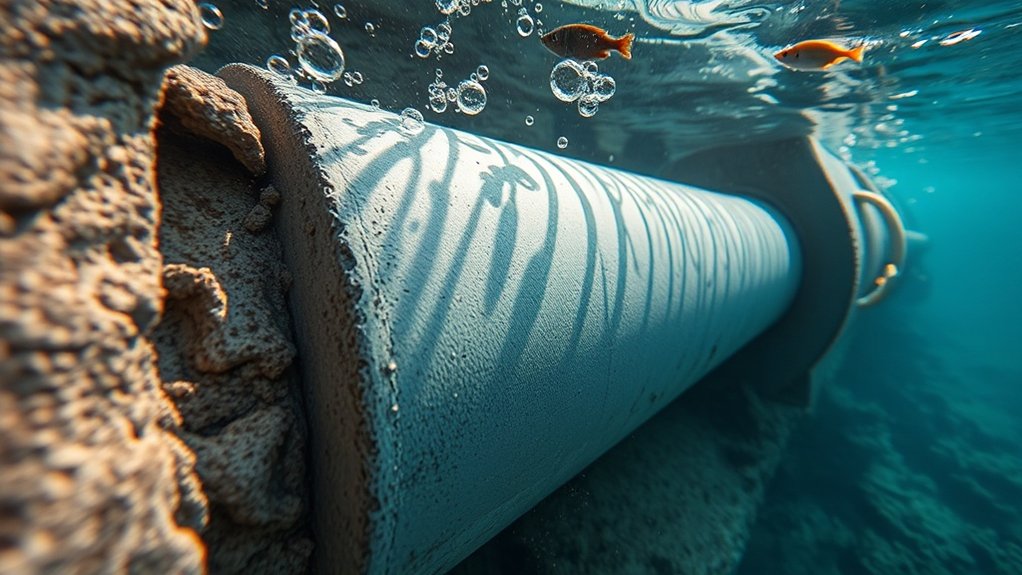
As ageing asbestos concrete pipes present serious risks to water quality and infrastructure, rehabilitation is crucial for ensuring safe and reliable water distribution systems.
Effectively addressing asbestos risks is essential in these projects to ensure pipeline safety.
Here are key considerations for rehabilitation:
- Condition Assessment: Check the pipe’s integrity to determine whether rehabilitation or replacement is the better option.
- Cost-Effectiveness: Use trenchless technologies, which can often lead to lower overall costs.
- Environmental Impact: Employ methods like Cured-In-Place Pipe (CIPP) that reduce disruption to the environment.
- Regulatory Compliance: Adhere to strict regulations to manage asbestos exposure during the rehabilitation process.
Localized Repair With Encapsulation Collars
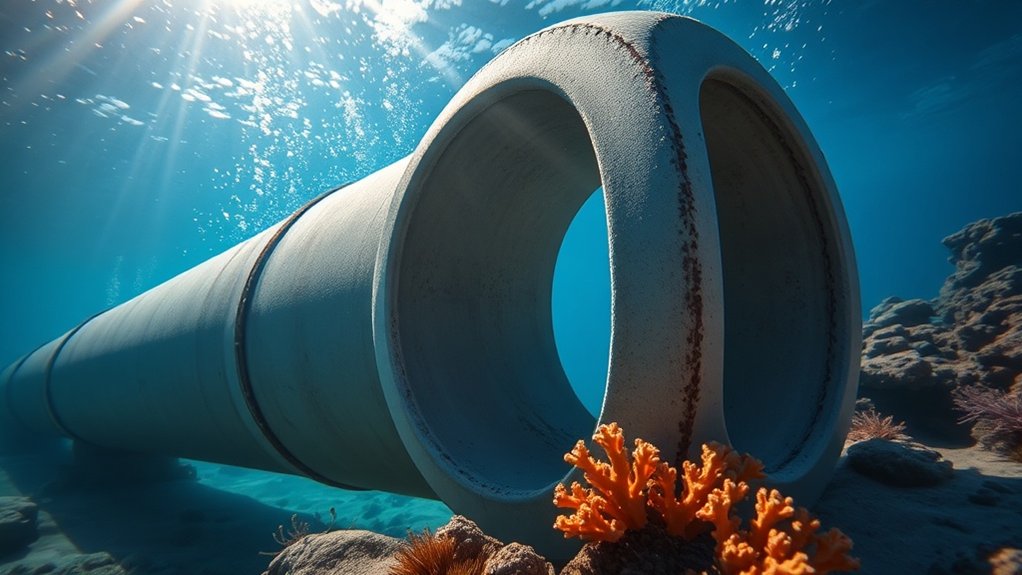
In rehabilitating ageing pipeline systems, localized repairs can effectively address specific damage without needing full replacements.
Encapsulation collar designs are crucial in these repairs, providing structural support and protection against external loads. Typically made from metal or composite materials, these collars may also include concrete for added stability.
Installation methods, whether using remotely operated vehicles (ROVs) or diver-assisted techniques, must ensure a precise fit to prevent leaks.
Key considerations include selecting durable materials, accurately dimensioning to match pipeline diameters, and employing effective sealing mechanisms.
Post-installation inspections confirm the collar’s integrity, ensuring long-term performance and restoring pressure in damaged sections.
Enhancing Pipeline Integrity With Concrete Jackets
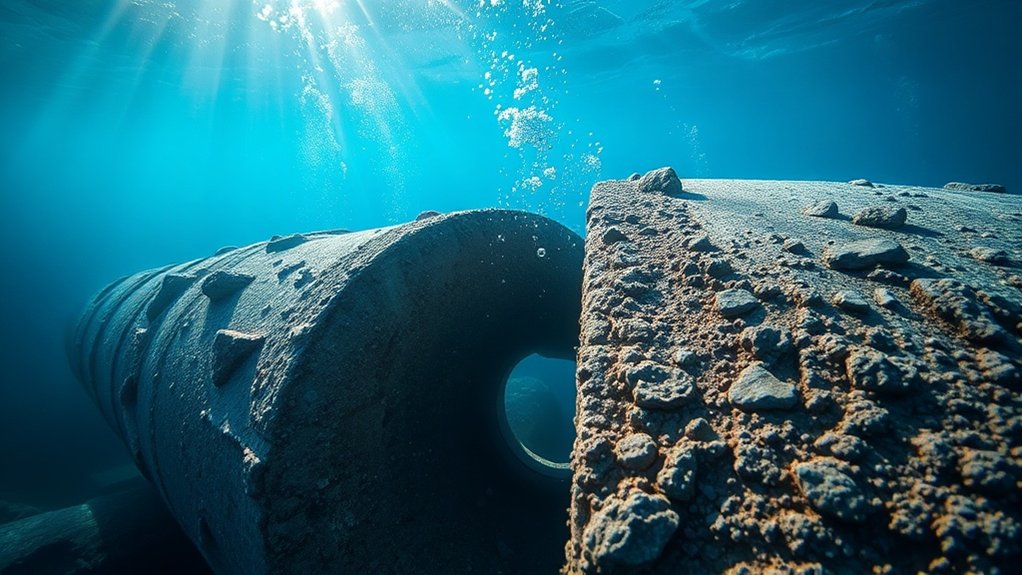
Concrete jackets are vital for improving pipeline integrity, especially in challenging underwater environments. They provide strong protection against corrosion and mechanical damage, ensuring the pipeline can withstand external pressures.
The main advantages of concrete jackets include:
- Corrosion Resistance: They effectively protect pipelines from chloride-induced corrosion, which is common in marine settings.
- Protection from Marine Life: Jackets prevent marine organisms from damaging the pipeline’s structure.
- Extended Service Life: Their durability contributes to longer operational lifespans for pipelines.
- Lower Maintenance Requirements: With a solid protective layer, there are fewer repairs and inspections needed.
In short, concrete jackets are a smart investment for safeguarding pipelines.
Innovations in Self-Healing Concrete Technologies
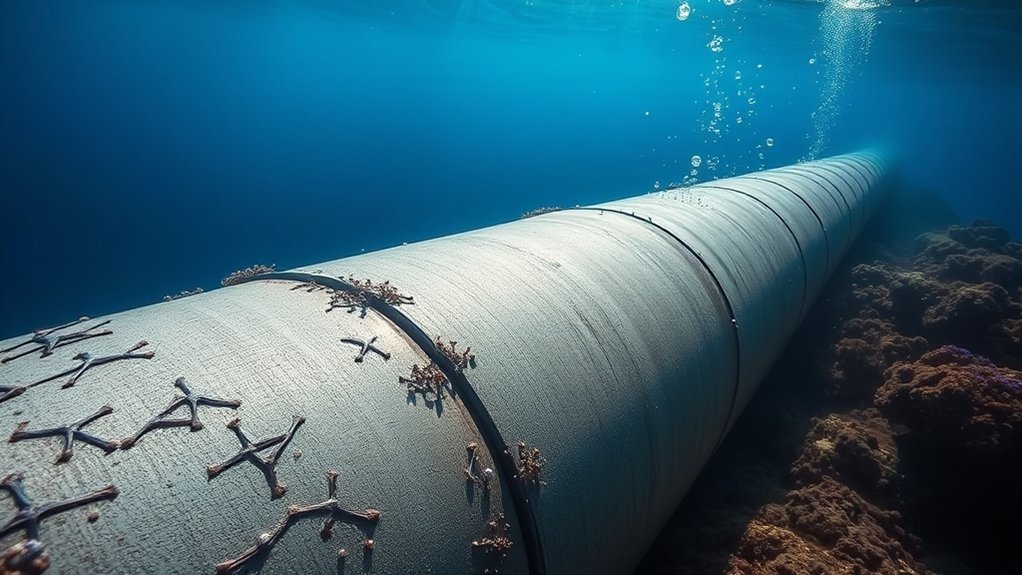
Advancements in self-healing concrete technologies significantly benefit underwater pipeline systems by enhancing durability and reducing maintenance costs.
One method, known as bacterial healing, involves dormant bacteria that activate when cracks form. These bacteria convert nutrients into calcium carbonate, effectively sealing leaks and prolonging the service life of marine concrete structures.
Another approach uses crystalline additives that react with water to create needle-shaped crystals, which fill cracks and strengthen the overall structure.
These innovations not only improve the performance of underwater pipelines but also address environmental concerns by reducing the need for repairs and extending lifespan.
As these technologies develop, they’ve the potential to transform underwater infrastructure, ensuring reliability and sustainability in demanding marine environments.
Future Trends in Underwater Pipeline Encapsulation
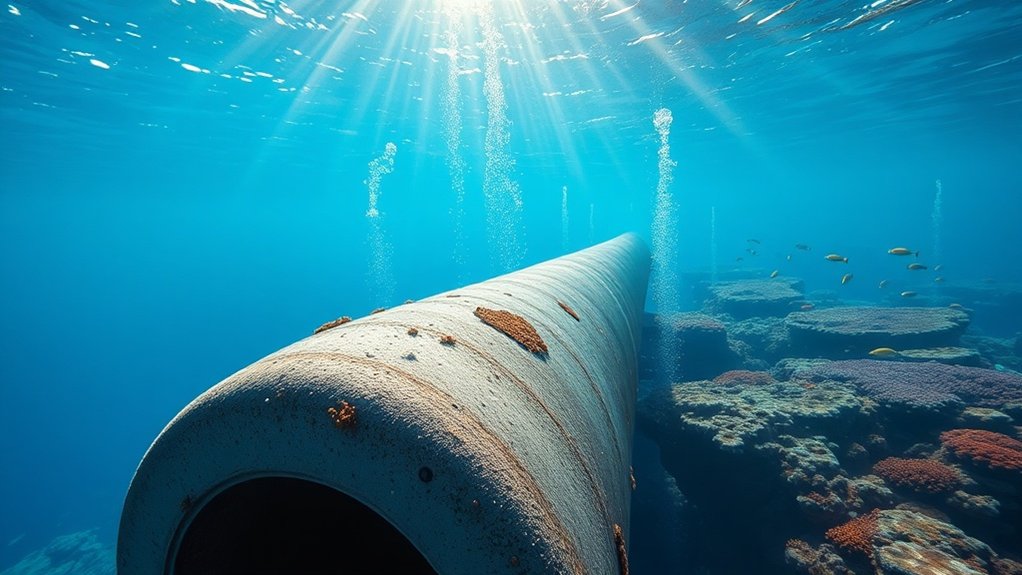
As materials and technology advance, the future of underwater pipeline encapsulation is looking bright. Key trends driving growth include:
- Enhanced concrete blends designed for challenging underwater conditions.
- The use of robotics and remote operations to boost safety and efficiency.
- Stricter environmental regulations encouraging low-impact encapsulation methods.
- Rising demand from offshore renewable energy and deep-sea mining sectors.
These developments point towards more efficient and environmentally friendly practices.
For instance, using nanocomposite concretes alongside unmanned underwater vehicles will allow for precise application and inspection.
Additionally, geopolymer concretes reduce carbon emissions, making them a more sustainable choice.
Collectively, these innovations are set to transform pipeline encapsulation strategies in the near future.
Frequently Asked Questions
How Does Underwater Concrete Encapsulation Affect Marine Life?
Underwater concrete encapsulation significantly changes the marine ecosystem, providing new habitats that can boost biodiversity. For instance, sunken structures can become artificial reefs, attracting fish and other marine creatures. However, it can also disrupt existing communities and alter food chains, which are crucial for the stability of marine life. It’s a complex balance between fostering new growth and protecting established ecosystems.
What Is the Typical Lifespan of Encapsulated Underwater Pipelines?
Encapsulated underwater pipelines usually last between 25 to 50 years. This lifespan balances the durability of the pipeline and its encapsulation. Regular inspections and maintenance are crucial to ensure they can handle environmental challenges and potentially extend their operational life beyond initial expectations.
Can Concrete Encapsulation Be Used for All Types of Pipelines?
No, concrete encapsulation isn’t suitable for all types of pipelines. The characteristics of each pipeline material determine the best encapsulation methods to ensure compatibility and effectiveness. For instance, while it may work well for steel pipes, it may not be suitable for plastic ones. Always evaluate the specific properties of the material before opting for encapsulation to ensure optimal performance.
How Is the Quality of Underwater Concrete Monitored During Application?
To ensure quality during underwater concrete application, employ techniques like visual inspections, rebound hammer tests, and robotic systems. These methods help confirm the durability and structural integrity of the concrete beneath the water. For instance, visual inspections can identify surface defects, while rebound hammer tests measure hardness, ensuring the mix has set properly. Using advanced technology like robotic systems can also enhance precision in challenging underwater environments.
What Certifications Are Required for Underwater Encapsulation Projects?
For underwater encapsulation projects, specific certification requirements are essential to ensure compliance with regulations. This includes API 1169, adherence to PHMSA regulations, and certifications from organisations such as ABS and DNV, which focus on safety and operational standards. These certifications help guarantee that projects are conducted safely and effectively, minimising risks associated with underwater work.
Conclusion
In conclusion, using concrete encapsulation for underwater pipelines offers remarkable durability, akin to the Great Wall of China, built to endure the elements over time. By adopting advanced techniques and materials, you can significantly improve the integrity and lifespan of these pipelines. As the industry progresses, embracing innovations like self-healing concrete will help tackle emerging challenges effectively. Ultimately, investing in strong encapsulation methods ensures the reliability and safety of vital underwater infrastructure for future generations.

Learn about the diverse types of concrete used in construction and discover which mix can transform your next project.

For a long-lasting driveway that laughs in the face of the UK's unpredictable weather, the C20 concrete mix is your Read more

In the UK, you've got a a lot of lightweight concrete types to choose from, each with its unique perks. Read more