Concrete’s non-combustibility makes it an ideal choice for fire-resistant buildings. It maintains its strength even in extreme heat and has low thermal expansion, which reduces the risk of cracking. Its dense structure limits oxygen flow, helping to slow the spread of fire. Compared to wood and steel, concrete offers better structural integrity, making it safer and more durable. Moreover, Insulated Concrete Form (ICF) systems improve energy efficiency and extend the lifespan of structures. There’s a lot to discover about its advantages and its role in enhancing safety in construction.
Key Takeaways
- Concrete is non-combustible and recognised as fireproof, which greatly enhances fire resistance in buildings.
- Its low heat transmission rate and thermal mass help maintain stability during extreme heat and temperature changes.
- Unlike wood and steel, concrete retains its strength under high temperatures, making it a superior choice in fire conditions.
- Insulated Concrete Form (ICF) systems provide excellent insulation, boosting energy efficiency and lowering fire-related energy costs.
- Durable concrete structures can be restored quickly after fires, which supports community resilience and safety.
Exceptional Fire Resistance Properties of Concrete
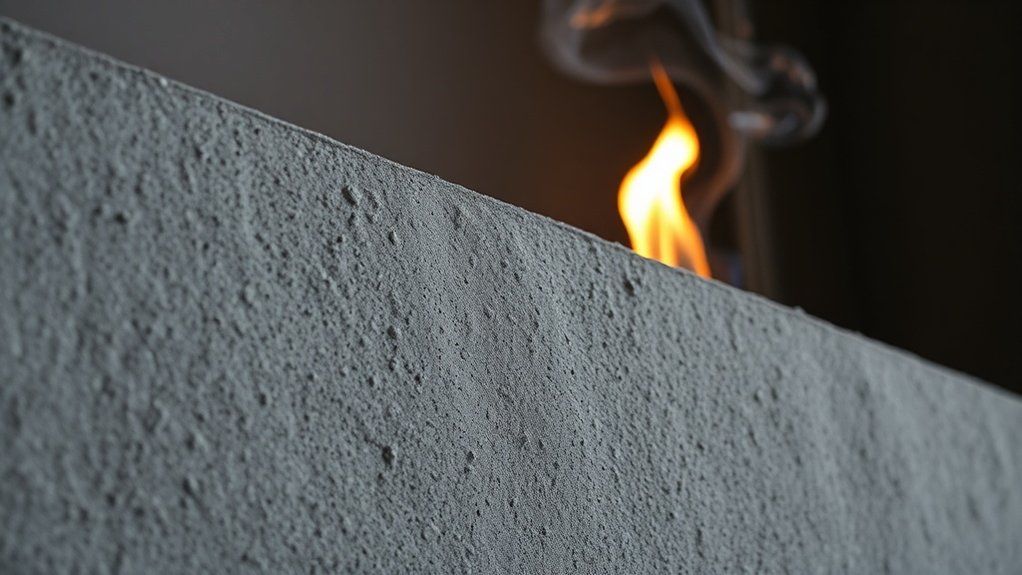
Concrete is renowned for its exceptional fire resistance properties. Unlike many materials that falter under extreme heat, concrete is non-combustible, making it virtually fireproof and highly durable in fires.
For instance, Portland cement mortars have a low heat transmission rate, which helps limit heat transfer during fire exposure. Additionally, concrete’s low permeability restricts oxygen flow, thereby slowing down combustion processes and enhancing safety. This is supported by its classification as class A1 under EN13501-1:2018, signifying that concrete requires no testing to confirm its non-combustibility.
Dense concrete mixes, especially those with quality aggregates like limestone, provide even greater fire resistance by minimising heat penetration. Thicker sections of concrete further delay heat transfer to any materials embedded within, offering added protection.
Thermal and Structural Stability in Extreme Heat

When assessing concrete’s performance in extreme heat, it’s clear that different types of aggregate exhibit varying levels of heat resistance. It’s crucial to understand how these materials preserve their structural integrity under intense thermal conditions, especially when designing fire-resistant buildings. By examining how they behave and degrade, you can tailor concrete mixes for better fire resilience. For instance, using aggregates like granite or basalt can enhance the heat resistance of your concrete, making it more suitable for high-risk environments. Additionally, the composition of heat resistant concrete includes special aggregates like volcanic materials or refractory bricks that further improve its ability to withstand extreme temperatures.
Heat Resistance Comparison
How does concrete perform under extreme heat compared to other materials? Concrete shows excellent heat resistance due to its low thermal conductivity and high heat capacity, enabling it to absorb and store heat efficiently.
Its thermal inertia helps maintain stable interior temperatures, reducing the effects of outside temperature changes. Additionally, the coefficient of thermal expansion of concrete is relatively low, which minimizes the risk of thermal cracking during rapid temperature shifts.
- The type of aggregates used can significantly affect thermal performance.
- Refractory aggregates can improve heat resistance and stability.
- Using aggregates like brick can enhance heat retention due to their higher specific heat.
While extreme heat can cause microstructural changes that weaken materials, concrete’s natural properties help it withstand rapid temperature shifts.
Structural Integrity Maintenance
As concrete is exposed to extreme heat, its thermal mass is crucial for maintaining structural integrity. This characteristic enables concrete to absorb and release heat, providing stability during temperature fluctuations.
Heat-resistant concrete, made with specialised aggregates, can endure temperatures over 1000°C while keeping its structural strength. Its low thermal expansion reduces the risk of cracking, ensuring durability under thermal stress.
Moreover, the chemical resistance of heat-resistant concrete is vital for structures in harsh environments, preventing deterioration. The choice of aggregates significantly affects thermal conductivity and diffusivity, which in turn influences how concrete reacts to thermal changes.
Understanding Fire Resistance Ratings and Standards
Fire resistance ratings are crucial for ensuring the safety and durability of buildings during a fire. These ratings indicate how long a structure can endure standard fire conditions while maintaining its integrity.
It’s important to grasp fire testing methods and rating standards to ensure compliance and safety.
- Ratings are expressed in hours (e.g., 1-hour, 2-hour).
- They focus on preventing structural collapse, maintaining integrity, and providing insulation.
- Key testing standards include BS 476, EN 1363, and EN 13501.
- Compliance often requires calculations and reference to prescriptive tables in the Building Regulations.
Understanding these elements helps ensure that buildings are safe and compliant in the event of a fire.
Advantages of Concrete Over Other Building Materials
When it comes to fire-resistant buildings, concrete is a top choice due to its strong structure and non-combustible properties.
Unlike wood and steel, concrete retains its strength even in extreme heat, which is crucial in fire situations.
Furthermore, it produces fewer harmful emissions during fires, making it a more environmentally friendly option for sustainable construction.
Superior Structural Integrity
Concrete offers superior structural integrity compared to other building materials, especially in extreme fire conditions. This ensures better performance and enhanced fire safety, making it a top choice for fire-resistant constructions.
- It maintains its load-bearing capacity longer than steel, even at temperatures over 1000°C.
- Concrete resists deformation and cracking, which helps to preserve compartmentation and delay structural failure.
- Insulated Concrete Form (ICF) walls can withstand high heat for longer periods without losing their integrity.
- The use of fire-resistant aggregates and supplementary materials boosts microstructural stability.
Non-Combustible Material
Concrete stands out for its exceptional structural integrity and non-combustibility, making it an ideal material for fire-resistant buildings. Unlike timber or steel, concrete does not ignite or burn, significantly enhancing fire safety and ensuring compliance with strict building regulations. Its inorganic nature results in low flame spread and minimal smoke production, as evidenced by its Class A fire rating.
| Material | Fire Resistance | Additional Notes |
|---|---|---|
| Concrete | Class A | No VOCs, high thermal mass |
| Timber | FRT needed | Requires chemical treatments |
| Steel | Loses strength | Needs fireproofing |
| Mineral Wool | Non-combustible | Provides no structural support |
| Synthetic Cladding | Combustible | High potential for flame spread |
Concrete’s non-combustible properties ensure safer and more dependable structures.
Reduced Environmental Impact
Concrete stands out in construction for its durability and sustainability, making it a practical choice amidst environmental concerns.
Here are some key benefits:
- Sourcing aggregates locally reduces transportation emissions.
- Concrete structures can last between 50 and 100 years, minimising the need for frequent rebuilding.
- Recycling concrete into new aggregate helps cut down landfill waste and conserves resources.
- Lifecycle assessments reveal that concrete’s long lifespan offsets initial carbon emissions over time.
The Benefits of Insulated Concrete Form (ICF) Systems
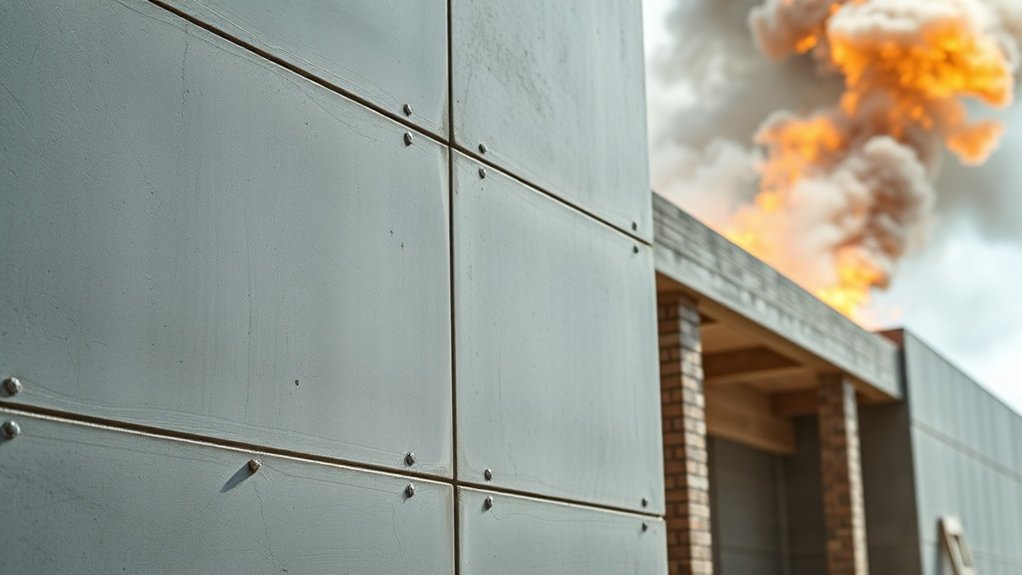
Insulated Concrete Form (ICF) systems provide significant benefits in contemporary construction, particularly regarding energy efficiency and durability.
With insulation values ranging from R-17 to R-26, ICF walls outperform traditional timber-frame structures, enhancing overall energy efficiency. The continuous insulation layers help to minimise thermal bridging, improving the building envelope’s performance.
Additionally, the use of closed-cell foam ensures excellent moisture resistance, preventing mould growth and maintaining insulation effectiveness over time. This combination of high thermal mass concrete and superior insulation leads to reduced heating and cooling system sizes and lower energy bills.
ICF’s durability also means resistance to mould, mildew, and pest damage, resulting in a long-lasting structure that requires minimal maintenance.
Enhancing Fire Resilience and Community Safety
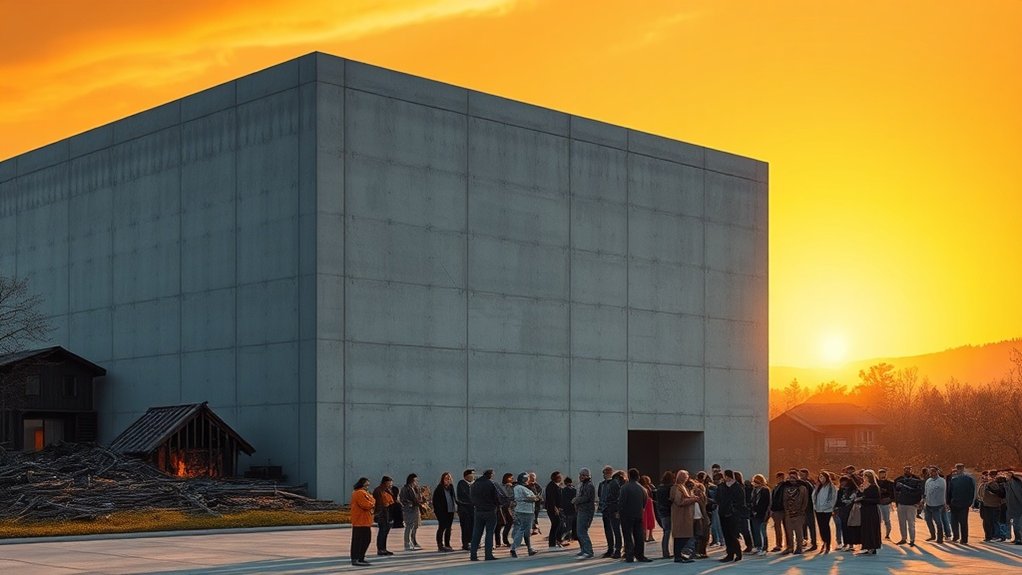
As communities place greater emphasis on safety and resilience, enhancing fire resistance through concrete construction is essential.
Concrete offers several advantages that contribute to fire safety and community resilience:
- Being non-combustible, concrete reduces the release of toxic gases during fires.
- Its thermal properties slow down heat transfer, helping to protect the structure.
- Concrete maintains its strength longer than steel, which can prevent collapses and facilitate safe evacuation.
- The quick restoration of concrete buildings reduces disruption and aids in community recovery.
In short, using concrete can significantly enhance fire safety and ensure communities bounce back more quickly after incidents.
Frequently Asked Questions
How Does Concrete Compare in Cost for Fire-Resistant Construction?
Concrete pricing for fire-resistant construction generally raises initial costs by about 4-24%, depending on the materials used. However, opting for fireproof materials can result in long-term savings through reduced maintenance and improved durability compared to traditional timber framing. For example, while the upfront investment may be higher, the longevity of concrete can offset future repair costs, making it a more economical choice in the long run.
Can Concrete Structures Be Retrofitted for Improved Fire Resistance?
Concrete structures can indeed be retrofitted to improve fire resistance. Techniques such as steel jacketing or applying fire-resistant coatings can enhance structural integrity and protect against heat damage. For example, adding a layer of fireproof material can help prevent structural failure during a fire, ensuring safety and compliance with regulations.
What Maintenance Do Concrete Fire-Resistant Structures Require?
Regularly inspect for cracks and ensure prompt repairs. Sealing surfaces is crucial to prevent water ingress, which helps maintain the fire-resistance of concrete structures. Keep a record of all maintenance activities for compliance and performance tracking.
Does Concrete Insulation Impact Fire Resistance?
Concrete insulation acts like a cosy blanket in winter; it improves fire resistance by enhancing thermal performance. Various types of insulation, such as foam or mineral wool, significantly bolster heat protection, ensuring the structural integrity remains intact during a fire.
Are There Specific Codes for Concrete in Wildfire-Prone Areas?
Yes, wildfire regulations often reference concrete standards, especially in high-risk areas. These codes require non-combustible materials for external walls, and concrete consistently meets these criteria, improving structural integrity and safety in fire-prone regions. For instance, using concrete in building facades can significantly reduce the risk of fire spread compared to traditional wooden structures.
Conclusion
In conclusion, concrete is a robust barrier against fire, providing exceptional strength and stability. Its thermal properties ensure that structures can withstand extreme heat without compromising integrity, and its fire resistance ratings clearly show it outperforms many other materials. With the advantages of Insulated Concrete Form systems, you’re not just constructing a building; you’re enhancing safety for your community. Choosing concrete is an investment in lasting security, especially when faced with the threat of fire.

Learn about the diverse types of concrete used in construction and discover which mix can transform your next project.

For a long-lasting driveway that laughs in the face of the UK's unpredictable weather, the C20 concrete mix is your Read more

In the UK, you've got a a lot of lightweight concrete types to choose from, each with its unique perks. Read more