When working with concrete, one must prioritise health and safety due to its potential hazards.
It is vital to wear proper protective equipment, including alkali-resistant gloves, long sleeves, waterproof boots, and safety goggles.
One needs to be aware of respiratory risks from silica dust and implement controls like ventilation and water suppression.
Proper handling techniques, such as correct lifting postures, are essential to prevent injuries.
Clear emergency procedures for skin contact, eye exposure, and dust inhalation should be established.
By following these guidelines and maintaining a well-managed worksite, one can greatly reduce the risks associated with concrete work.
Exploring further safety measures can enhance protection for all workers involved.
Key Takeaways
- Wear appropriate Personal Protective Equipment (PPE), including gloves, boots, goggles and respiratory protection.
- Implement proper handling techniques to prevent muscle strain and minimise skin exposure to alkaline materials.
- Establish clear access routes and designated mixing areas to prevent accidents during concrete delivery and pouring.
- Provide training on hazard recognition, PPE use and safe lifting techniques to enhance worker safety awareness.
- Follow emergency response procedures for skin contact, eye exposure and dust inhalation, including immediate washing and medical attention.
Understanding Concrete Composition
To understand concrete composition, we must first recognise its fundamental ingredients. Concrete is a composite material comprising natural and lightweight aggregates, cement, pulverised fuel ash (PFA), and water. These components combine to create a robust and durable building material widely used in construction.
Concrete's ability to naturally absorb CO₂ throughout its lifetime contributes to its role as a carbon sink, enhancing its environmental profile.
The proportions of these ingredients can be adjusted to achieve different concrete grades and strengths, allowing for customisation based on specific project requirements. We can further modify concrete's properties by incorporating admixtures, which are additives that enhance performance for particular applications. Common admixture types include water reducers, accelerators, and air entrainers.
It's vital to note that concrete's alkaline nature poses potential health risks. The mixture can cause chemical burns, necessitating careful handling and appropriate protective equipment.
Additionally, both concrete and mortar are abrasive materials, which can lead to skin irritation and other health concerns. When working with concrete, we must always prioritise safety by wearing protective clothing and following proper handling procedures to mitigate these risks and guarantee a safe working environment.
Essential Protective Equipment

When it comes to working with concrete, proper protective equipment is non-negotiable. We must prioritise our safety by using the right gear for every job.
Let's start with our hands: alkali-resistant gloves are vital to prevent skin burns and irritations caused by highly alkaline wet concrete. Glove selection is critical; confirm they're designed specifically for concrete work.
Reinforced concrete structures offer superior strength and durability, but working with them requires extra caution due to the presence of rebar and increased load-bearing capacity.
For eye protection, we'll need safety goggles or glasses to shield against concrete splashes that can cause chemical burns and irritation. Our skin requires full coverage, so we'll wear long sleeves and full-length trousers to minimise direct contact with wet concrete, reducing the risk of dermatitis and chemical burns.
We can't forget about our feet. Waterproof boots are essential, and proper boot maintenance will guarantee they continue to protect us from wet concrete that can lead to skin damage.
Finally, we'll use respiratory protection meeting HSE standards to prevent inhalation of dust containing respirable crystalline silica, which poses serious health risks.
Proper Handling Techniques

Proper handling techniques are essential for guaranteeing safety when working with concrete. We must prioritise correct lifting techniques to prevent muscle strain when transporting heavy bags of concrete or mortar. This involves bending at the knees and keeping the load close to our bodies.
Load positioning is critical; we should maintain proper posture and balance throughout the lifting process. Slump tests for workability should be conducted to verify the concrete mix is safe to handle and pour. Proper mixing techniques are also important to prevent segregation and maintain consistent concrete properties.
To minimise the risk of trips and falls, we must confirm our work area is clear of obstacles and hazards. Utilising wheelbarrows or volumetric lorries designed for concrete transport can greatly reduce physical strain and the likelihood of spills on-site.
When mixing or handling cement, we should opt for longer handled tools to maintain a safe distance from the alkaline material, thereby reducing skin exposure.
It's imperative that we always wear appropriate personal protective equipment (PPE), including alkali-resistant gloves, long-sleeved clothing, and safety goggles.
Respiratory Hazards and Prevention

Concrete dust poses significant respiratory hazards that we cannot ignore. When cutting or breaking concrete, we release respirable crystalline silica (RCS) into the air, which can lead to silicosis, a chronic and potentially fatal lung disease. The occupational exposure limit for RCS is set at 0.1 mg/m³, highlighting the critical need for effective dust control measures in our work environments.
To protect ourselves and our colleagues, we must implement robust strategies to minimise silica exposure:
| Control Measure | Description |
|---|---|
| Engineering Controls | Local exhaust ventilation, water suppression techniques |
| Administrative Controls | Job rotation, limiting exposure time |
| Work Practices | Proper cleaning methods, wet sweeping |
| PPE | HSE-approved respiratory protection |
| Training | Education on silica hazards and prevention |
Skin and Eye Safety

Safety gear is our first line of defence against the caustic nature of wet concrete. When working with this material, we must prioritise skin and eye protection to prevent serious injuries. Direct contact with wet concrete can lead to irritant and allergic contact dermatitis, as well as chemical burns due to its alkaline properties. To mitigate these risks, we should always wear alkali-resistant gloves, long sleeves, and safety goggles.
Should concrete come into contact with our skin, we must wash it off immediately. Prolonged exposure can exacerbate skin irritation and lead to severe reactions.
Eye exposure is equally dangerous, potentially causing transient irritation or, in severe cases, requiring immediate irrigation and medical attention to prevent lasting damage.
We can't overstate the importance of personal protective equipment (PPE) in our safety protocols. Proper use of PPE greatly reduces the risk of skin burns and eye injuries associated with handling cement-based products.
Emergency Response Procedures

Responding swiftly and effectively to concrete-related emergencies is vital for minimising potential harm.
We've established thorough emergency response procedures to address various scenarios that may occur when working with concrete. These procedures are essential for injury prevention and prompt first aid.
In case of skin contact with wet concrete, we immediately wash the affected area with clean water. If irritation persists, we seek medical attention.
For eye splashes, we flush the eyes thoroughly with water for at least 15 minutes and promptly seek medical assistance.
When dealing with inhalation of airborne dust, we move the affected individual to fresh air and monitor for respiratory distress, seeking medical help if symptoms develop.
Although ingestion of concrete or mortar is unlikely to cause harm, we ensure the individual receives fresh air and seek immediate medical advice.
To facilitate these emergency responses, we always maintain readily available first aid supplies on-site, including eye wash stations and emergency wash facilities for skin exposure.
Site Management for Safety

We shall now examine vital aspects of site management for concrete safety.
Maintaining clear pathways and access routes is essential for preventing accidents during concrete delivery and pouring.
It's important to establish designated mixing areas away from high-traffic zones and to implement well-defined emergency response protocols with which all workers are familiar.
Clear Pathways and Access
On any concrete construction site, clear pathways and access routes are vital for ensuring worker safety and operational efficiency. We must plan our access routes meticulously to avoid bottlenecks, especially when using volumetric mixing lorries or concrete pumps. This planning allows for safe movement of both equipment and personnel.
Regular inspections of pathways are essential. We need to be vigilant for potential obstacles and hazards, such as unstable ground or electrical wires. Implementing proper site management practices, including sufficient space for manoeuvring wheelbarrows and other equipment, greatly reduces the risk of accidents and injuries.
Clear pathway signage and consistent access maintenance are fundamental components of our safety strategy. We've found that the following table highlights key areas to focus on:
| Area | Action | Frequency |
|---|---|---|
| Pathways | Clear debris | Daily |
| Signage | Check visibility | Weekly |
| Ground stability | Assess conditions | Before each pour |
| Equipment clearance | Verify space | Before operations |
| Communication | Update team | Ongoing |
Designated Mixing Areas
Building upon our commitment to safe site operations, designated mixing areas play a key role in maintaining health and safety standards on concrete construction sites.
When planning the mixing area layout, we must establish these spaces away from pedestrian traffic to minimise accident risks and guarantee safe worker access. We shall implement local exhaust ventilation to control airborne dust and reduce respirable silica exposure, adhering to occupational limits.
It is vital that we equip mixing areas with appropriate washing facilities for immediate skin decontamination in case of concrete contact.
We shall conduct regular inspections to identify hazards and verify the availability and functionality of safety equipment, including PPE and spill containment measures.
Clear signage is essential for effective worker communication, displaying safety guidelines and emergency procedures.
Emergency Response Protocols
Emergency Response Protocols
Effective emergency response protocols are essential for managing concrete-related incidents on construction sites. We've established clear procedures for various scenarios, ensuring all workers know exactly what to do in case of skin contact, eye exposure, or dust inhalation. Our first aid kits are specifically equipped for concrete-related injuries, with eye wash stations readily accessible for immediate use.
We conduct regular safety drills to familiarise our team with response protocols, promoting quick action during real emergencies. A designated safety officer, trained in first aid and concrete-specific hazards, oversees site emergencies. Incident reporting is vital; we maintain detailed records of all incidents and near misses, reviewing them periodically to improve our strategies.
| Emergency Protocol | Action | Responsible Party |
|---|---|---|
| Skin Contact | Wash affected area | Worker & First Aider |
| Eye Exposure | Use eye wash station | Worker & Safety Officer |
| Dust Inhalation | Move to fresh air | Worker & Supervisor |
| Major Incident | Activate site alarm | Anyone on site |
Training and Awareness Programs

Recognising the critical role of education in workplace safety, extensive training and awareness programmes form the cornerstone of health and safety practices in concrete work. We emphasise hazard recognition as a vital component of these programmes, ensuring workers can identify risks associated with wet concrete, including dermatitis and chemical burns.
Our training efficacy is enhanced by regular safety sessions that cover proper use of personal protective equipment (PPE), such as alkali-resistant gloves, goggles, and long-sleeved clothing.
We've integrated education on respirable crystalline silica exposure risks into our awareness initiatives, focusing on dust control measures during concrete cutting or breaking.
We've also incorporated instruction on safe transporting and lifting techniques to mitigate physical strain from handling heavy materials.
To maintain the highest standards of safety, we continuously evaluate and update our training materials. This approach keeps our workforce informed about the latest safety protocols and health regulations relevant to concrete work.
Legal Compliance and Regulations
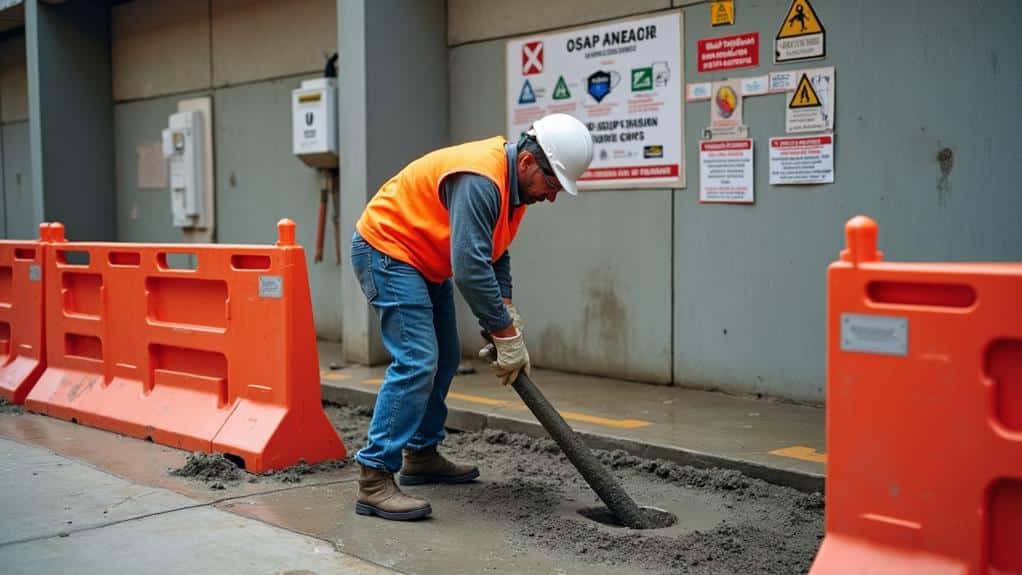
Whilst training programmes lay the groundwork for safety, adherence to legal requirements forms the backbone of health and safety practices in concrete work.
We must comply with the Health & Safety at Work Act 1974 and COSHH 2002 when handling concrete and cement-based products. These legal obligations are non-negotiable and essential for protecting our workforce.
Our compliance strategies must include adherence to Occupational Exposure Limits (OELs) for total inhalable dust (10 mg/m³), respirable dust (4 mg/m³), and respirable silica (0.1 mg/m³).
We're also bound by the Consumer Protection Act 1987 and the Environmental Protection Act 1990, which govern the safe use and environmental impact of concrete materials.
To meet our legal obligations, we must conduct thorough risk assessments and implement the Assess, Control, and Review model. This approach helps us effectively manage risks associated with cement-based products.
Additionally, we're required to follow local authority regulations for concrete waste disposal, even though it's not classified as hazardous under UK law.
Frequently Asked Questions
What Are the Safety Precautions When Working With Concrete?
When working with concrete, one must prioritise safety. One should wear protective gear, use proper mixing techniques, and implement controls for dust. One ought to avoid skin contact, dispose of waste correctly, and conduct regular assessments to mitigate concrete hazards.
What Are the Safe Work Procedures for Concrete Work?
We're pouring a foundation today. Let's review safe work procedures: Use proper mixing techniques, follow curing protocols, wear PPE, control dust exposure, lift safely, inspect site hazards, and wash immediately if concrete contacts skin. Always prioritise safety.
What Are the Safety Requirements for Pouring Concrete?
We must ensure proper PPE usage, site inspection, and safe equipment operation. We shall maintain clear paths, utilise volumetric mixers, and implement proper lifting techniques. We shall also focus on concrete curing processes and regular equipment maintenance to guarantee ideal safety and quality.
What PPE Is Required for Working With Concrete?
We're on the same page regarding PPE for concrete work. We'll need alkali-resistant gloves, long sleeves, trousers, safety goggles, wellington boots, and respiratory protection. Regular PPE maintenance ensures optimal protection against concrete hazards.
Conclusion
We've covered the essential aspects of concrete safety, from understanding its composition to compliance with regulations. By implementing these practices, we're not just following rules—we're cementing a culture of safety. Remember, when it comes to concrete work, cutting corners can set like cement, creating long-lasting problems. Let's stay vigilant, use proper equipment, and prioritise training to guarantee everyone goes home safely. Together, we'll build a stronger foundation for workplace safety in the concrete industry.

Learn about the diverse types of concrete used in construction and discover which mix can transform your next project.

For a long-lasting driveway that laughs in the face of the UK's unpredictable weather, the C20 concrete mix is your Read more

In the UK, you've got a a lot of lightweight concrete types to choose from, each with its unique perks. Read more