Concrete Pumping & Concrete Pump Hire in Manchester
Efficient solutions for precise placement – pumping concrete exactly where you need it.

Efficient Solutions for Precise Placement
Concrete Pumping by Barrow Mix Concrete. We can supply specialist equipment to pump concrete exactly where you need it. Cleaner, quicker and easier – perfect for sites with difficult access.
Awkward locations, multi-level properties, Conservatories, patios, driveways, paths, footings, bases, floors, garages, cellars – you name it – we can pump it!
When it comes to construction and concrete placement, efficiency and precision are paramount. That’s where concrete pumping comes into play. Concrete pumping is a method that revolutionises the way concrete is delivered and placed on construction sites, offering numerous advantages over traditional pouring methods.
What is Pumped Concrete/Concrete Pumping?
Concrete pumping is the process of using specialised equipment, known as concrete pumps, to transport freshly mixed concrete from a mixing truck to its final destination on a construction site. These pumps are designed to handle a wide range of concrete mixes and can reach even the most challenging and hard-to-access areas.
Why Choose Pumped Concrete/Concrete Pumping?
1. Speed and Efficiency
Concrete pumping significantly speeds up the construction process. The ability to place concrete precisely where it’s needed reduces the need for manual labour, saving time and resources. Whether you’re working on a high-rise building or a residential foundation, concrete pumping ensures a rapid and efficient pour.
2. Precision and Accuracy
With concrete pumps, you have better control over the placement of concrete. The articulated booms and flexible hoses allow for pinpoint accuracy in delivering the concrete mix to its intended location. This precision minimises waste and the need for costly corrections.
3. Access to Challenging Areas
Construction sites often present challenges such as tight spaces, elevated locations, or areas with restricted access. Concrete pumps can easily reach these areas, eliminating the need for wheelbarrows or cumbersome chutes.
4. Reduced labour Requirements
Using a concrete pump reduces the labour required for concrete placement. This not only cuts down on costs but also enhances worker safety by minimising heavy lifting and manual handling.
5. Consistency in Quality
Concrete pumping helps maintain the consistency of the concrete mix. The uniform flow and placement reduce the risk of segregation and ensure that the concrete reaches its desired strength and durability.
Overcoming Challenges in Concrete Pumping
While concrete pumping offers numerous benefits, it’s essential to address potential challenges. Proper mix design, equipment maintenance, and skilled operators are crucial to preventing issues like clogs and blockages during the pumping process.
In the world of construction, time is money, and precision is key. Concrete pumping offers a solution that combines both, making it a valuable asset for any construction project. Whether you’re working on a small residential project or a large-scale commercial development, consider the advantages of concrete pumping for efficient, accurate, and hassle-free concrete placement.
If you’re interested in learning more about concrete pumping services and concrete pump hire, or want to discuss why would you need a concrete pump, feel free to contact us. Our team of experts is ready to provide you with the best solutions for your concrete placement needs.
Some Of Our Most Asked Questions
What is concrete pumping?
Concrete pumping is a construction method that involves the use of specialised equipment, known as concrete pumps, to transport and deliver concrete from a mixing truck to its final placement location at a construction site. This concrete pump line process enables precise and efficient placement of concrete, especially in hard-to-reach or elevated areas.
Is pumping concrete better than pouring?
Concrete pumping is often preferred over traditional pouring methods because it offers several advantages. It allows for faster and more accurate placement, reduces labour requirements, minimises the risk of concrete segregation, and can reach inaccessible or elevated areas. However, the choice depends on the specific project requirements and site conditions.
Why use a concrete pump?
Cement pumps are used to improve the efficiency, accuracy, and reach of concrete placement. They are particularly valuable for large or complex construction projects, where manual pouring may be impractical or time-consuming.
What is the main problem in concrete pumping?
The main challenge in concrete pumping is managing the flow and consistency of the concrete mix to prevent clogs, blockages, or segregation. Ensuring the right mix design and maintaining equipment properly are crucial to avoid these issues.
Is concrete pumping hard work?
Operating a concrete pump can be physically demanding, requiring skill and coordination. It involves controlling the pump, managing the concrete flow, and positioning the boom or hose. However, it is less labour-intensive compared to manual pouring.
What are the disadvantages of concrete pumps?
Disadvantages of concrete pumps include initial equipment costs, maintenance expenses, and the need for skilled operators. Additionally, in some cases, pumps may not be suitable for very small or remote construction sites.
Do I need a concrete pump?
The need for a concrete pump depends on your project’s scale, location, and requirements. For large or complex projects, elevated placements, or when efficiency is crucial, a concrete pump is often a valuable tool.
Does pumping concrete add air?
Concrete pumping can introduce a small amount of air into the mix due to the pumping action, but this is usually minimal and can be managed through proper mix design and pumping techniques.
Is pumped concrete weaker?
Pumped concrete can have the same strength as conventionally poured concrete when the mix design, placement techniques, and curing processes are properly managed.
Does pumping concrete change slump?
The slump of concrete can change slightly during pumping due to the pressure and flow, but experienced operators can adjust the mix and pumping process to maintain the desired slump.
What is the pressure of a concrete pump?
Concrete pumps typically exert pressures ranging from 1,000 to 1,500 psi (pounds per square inch) to transport concrete efficiently through hoses or booms.
How far can you pump concrete?
The maximum pumping distance depends on factors like the pump’s capacity, the mix’s consistency, and the pipeline configuration. It can range from a few meters to over 100 meters.
What is the best slump for pumping concrete?
The ideal slump for pumped concrete varies based on the equipment and placement requirements, but a range of 4 to 6 inches (100 to 150 mm) is often recommended.
How much does a concrete pump cost per hour in the UK?
Concrete pump rental costs in the UK can vary widely depending on factors like pump type, location, and duration. On average, hourly rates can range from £100 to £200 or more.
What is the difference between a boom pump and a concrete pump?
A concrete pump typically refers to both trailer-mounted pumps and truck-mounted boom pumps. The main difference is that boom pumps have an articulated, extendable arm (boom) for precise placement, while other pumps rely on hoses.
Can you pump dry concrete?
Dry concrete, or low-slump mixes, can be pumped with specialised equipment designed to handle such mixes, but it requires careful planning and control to prevent clogs.
Can you pump 3000 PSI concrete?
Yes, concrete pumps are capable of handling concrete mixes with strengths exceeding 3000 psi, provided the equipment is appropriately sized and maintained.
How fast is a concrete pump?
The pumping rate of a concrete pump depends on its capacity and the specific mix being used. It can vary from 10 to 100 cubic yards per hour or more.
Is pumping concrete better than pouring?
The preference for pumping or pouring concrete depends on project requirements. Pumping is often preferred for its speed, precision, and versatility, while pouring may still be suitable for smaller, straightforward jobs.
How much concrete can you pump in an hour?
The amount of concrete that can be pumped in an hour depends on the pump’s capacity and the project’s requirements. It can range from a few cubic yards to over 100 cubic yards per hour.
Only Pay for what you use
Pumping Service
Concrete Pump Hire Across Greater Manchester & Cheshire
Need to hire a concrete pump? Barrow Mix provides fully-operated concrete pump hire right across Greater Manchester, Cheshire, Bolton and Wigan — both line pumps for tight domestic access and boom pumps for reach over buildings and across larger sites. Every pump comes with our own trained operator, so you’re not hiring bare kit — you get the pump, the crew and, if you need it, the concrete, from one supplier.
Because we mix our own volumetric concrete on site, we can pump and supply in a single visit — no coordinating a separate pump company and concrete plant, and no part-load waste.
How Much Does Concrete Pump Hire Cost?
Concrete pump hire is priced per job rather than off a fixed list, because the cost depends on a few things:
- Line pump vs boom pump — boom pumps reach further and cost more to run than a compact line pump.
- Half day vs full day — a short pour costs less than a full day on site.
- Volume of concrete — how many cubic metres you’re pumping.
- Access & distance — how far the concrete has to travel and how involved the setup is.
The quickest way to get an accurate figure is to tell us about the job — postcode, rough volume and access — and we’ll give you a fixed, no-obligation quote. For a fuller breakdown, see our guide: How much does concrete pumping cost?
Recent Pumping Jobs
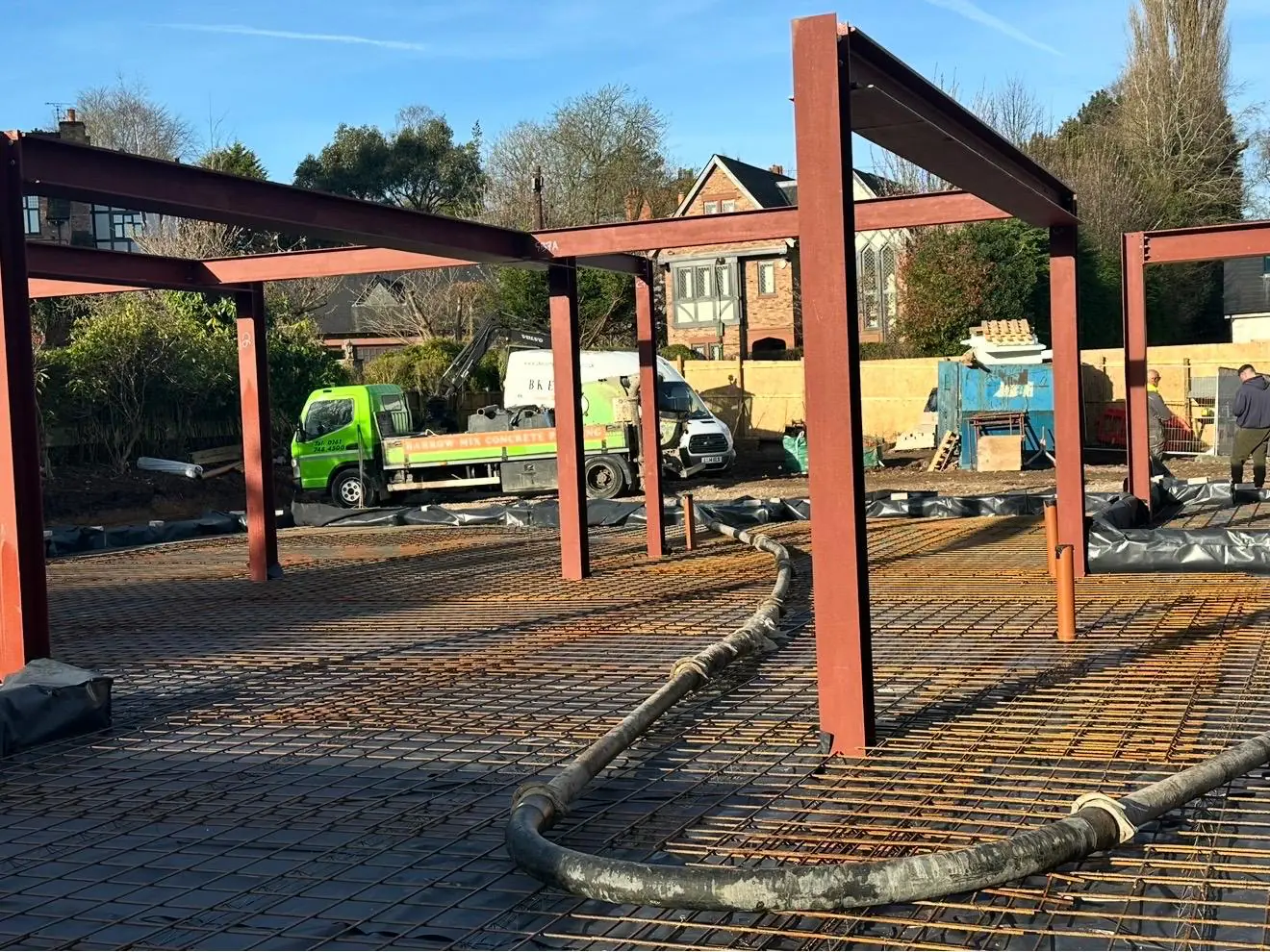 95m³ Pumped New-Build Slab, Bowdon95m³ pumped across the steel mesh for a new-build slab, all in and finished by 2pm. View project →
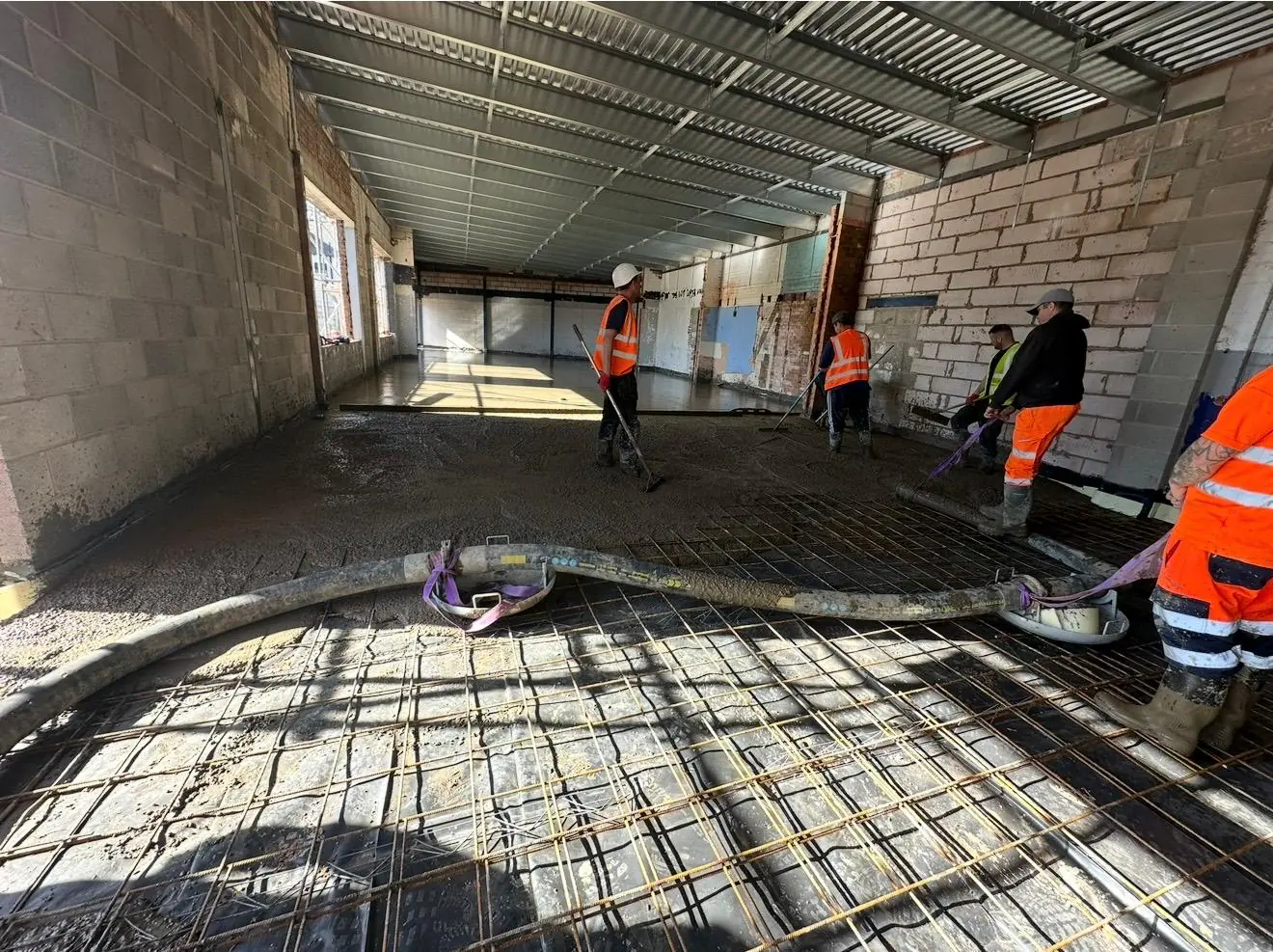 65m³ Pumped Shop Floor, CadisheadEvery bit of a new Tesco Express floor pumped in on a Saturday morning, from 8:00 to 11:30. View project →
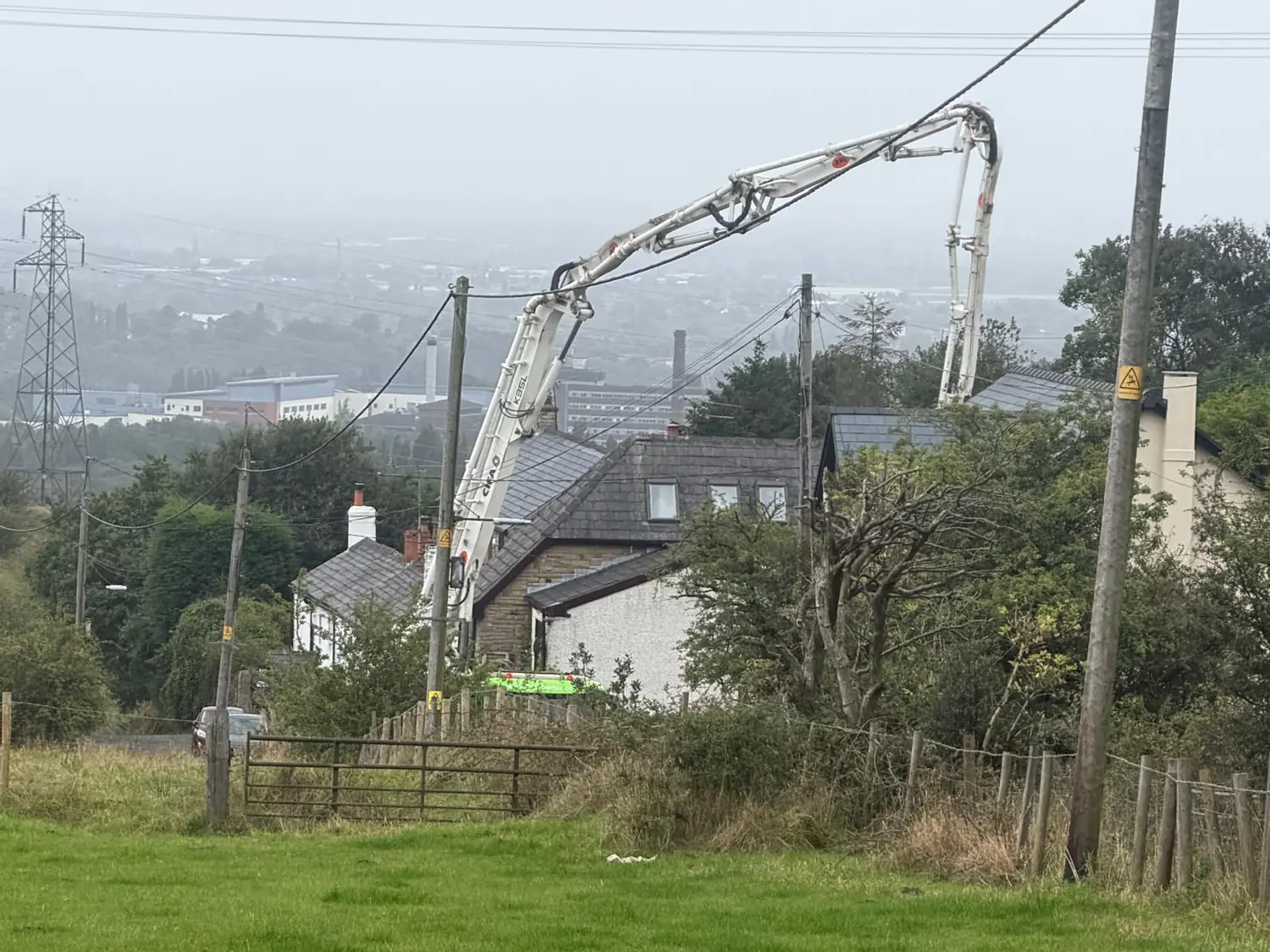 Boom-Pumped Footings, Oldham55m³ boom-pumped into the footings for two new builds on a piled site with a ring beam. View project →
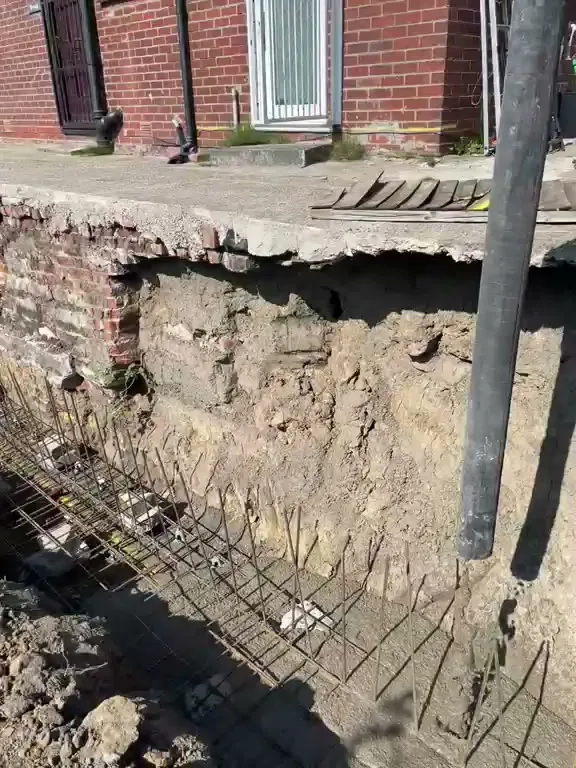 Boom-Pumping a Reinforced FootingSite visit: barrow or pump? A deep reinforced footing where the boom pump was the only way to reach it. View project →
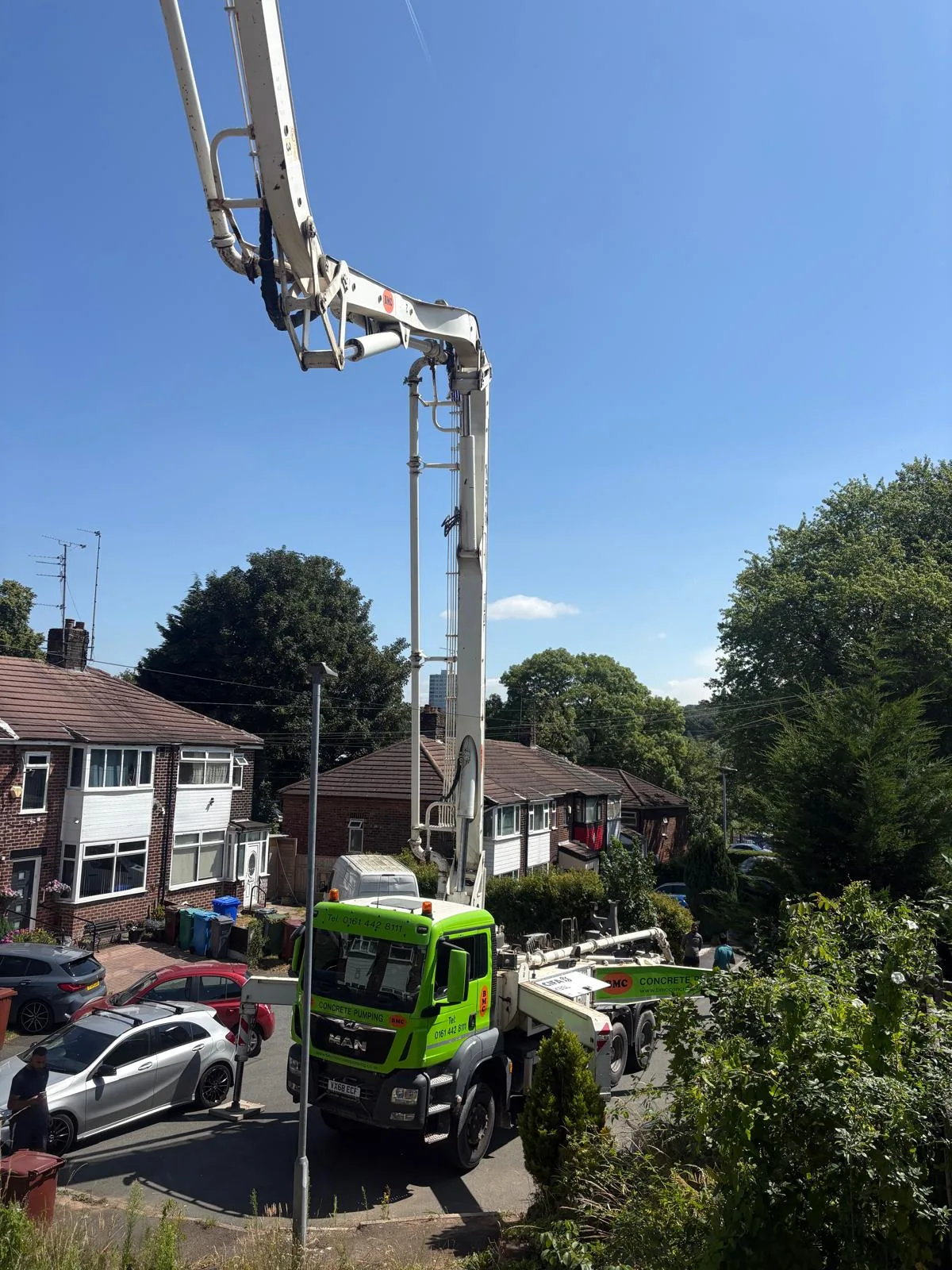 Boom Pump to a Retaining WallBoom-pumped a retaining wall between two houses with an inch to spare — precision from our driver. View project →
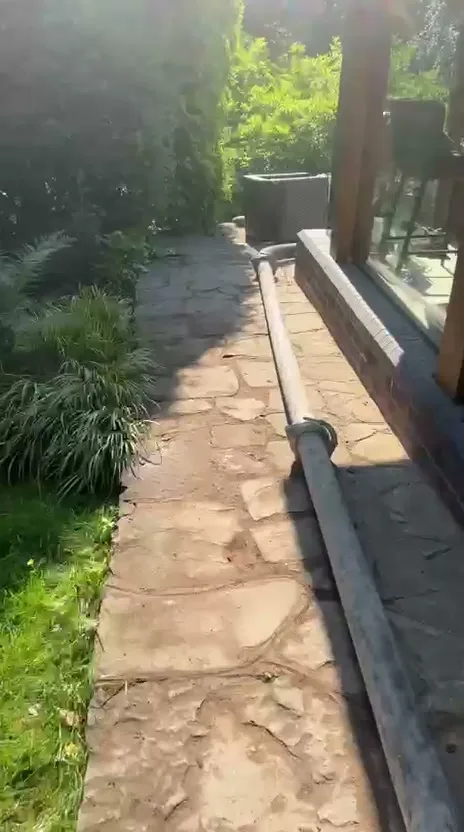 Pumped Concrete Base, WilmslowPumped to a base at the back of the garden, past the house where a barrow couldn’t reach. View project →
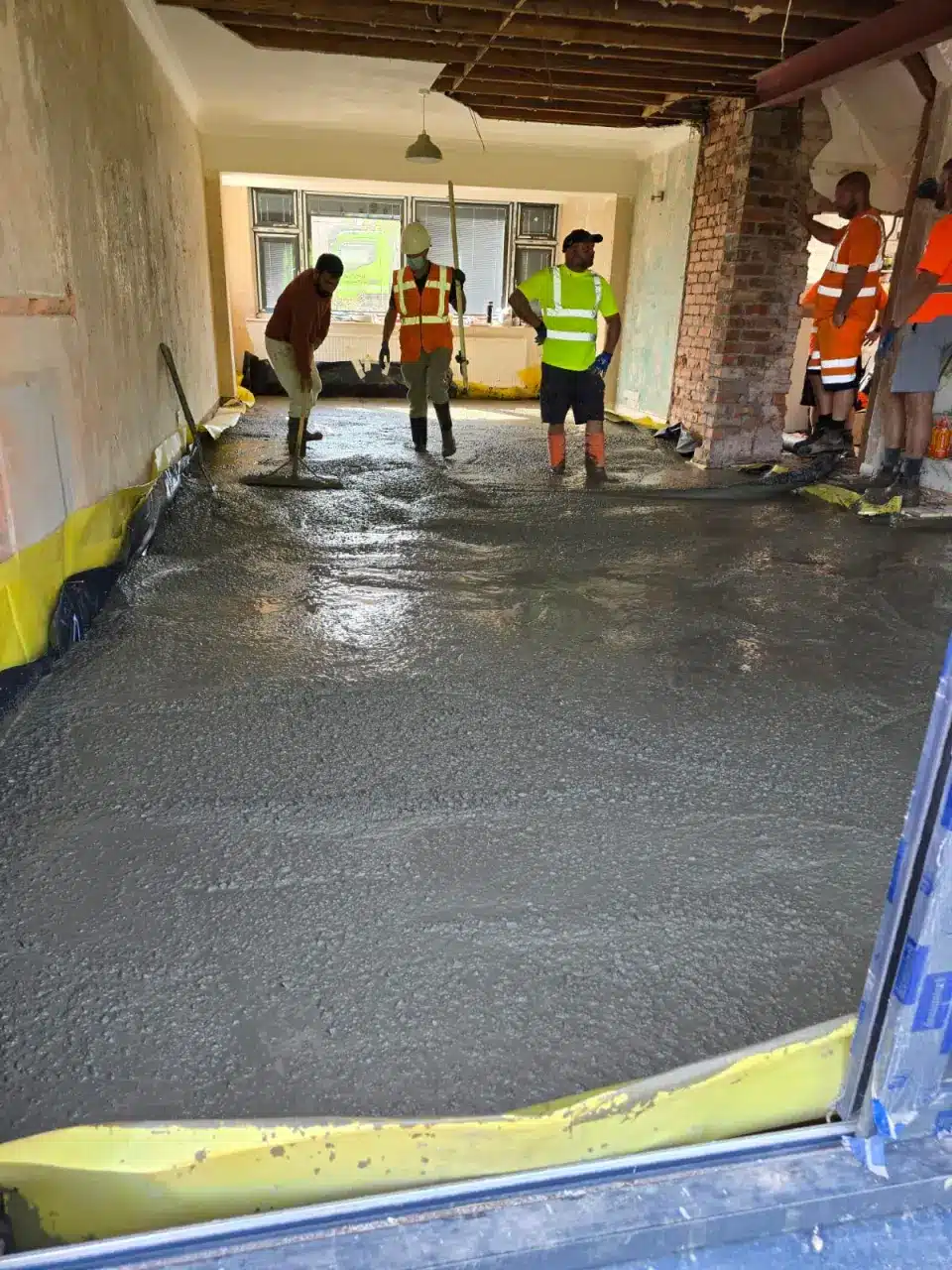 Pumped House Floors, Bolton15m³ pumped right through the house to reach every room, then laid and levelled floor by floor. View project →
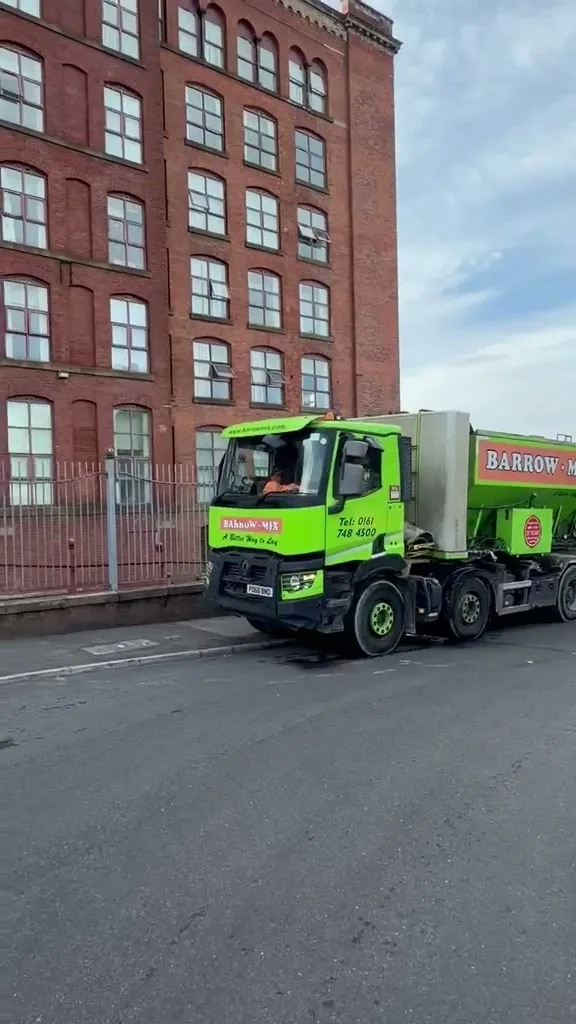 Basement Floor Pump, Victoria MillConcrete pumped down into the basement to lay all the floors — reaching where no wagon could. View project →
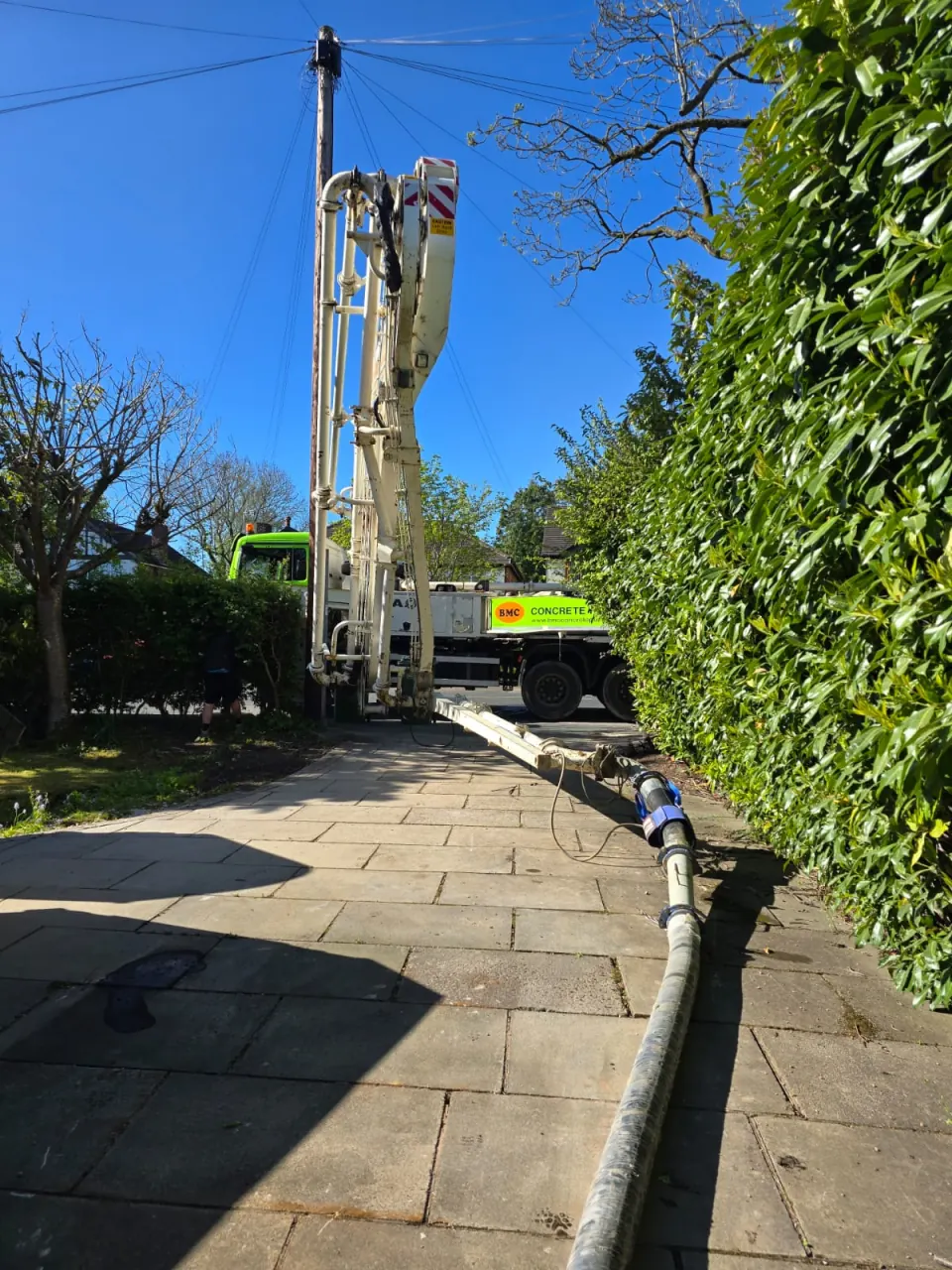 Pumped Extension Base, BramhallNo route to the back of the house for a mixer, so the pump took the concrete over the property to a reinforced extension base. View project →
Need concrete fast? Get in touch now…
Get a free, no-obligation quote for our concrete pumping service across Greater Manchester, Cheshire and the North West.