To use concrete vibrating screeds effectively, begin by grasping how they work to consolidate and level concrete through high-frequency vibrations. Select the right type for your project, whether a manual or powered screed, depending on the scale of your job. It’s crucial to maintain the correct speed and height during use to achieve optimal results. Regular maintenance and adhering to safety precautions are vital. With these basics, you can improve surface finishes and lower labour costs, resulting in impressive concrete work. Take the time to refine your technique for the best outcomes.
Key Takeaways
- Select the appropriate type of vibrating screed based on the project’s size: use a manual screed for smaller jobs and a powered one for larger areas.
- Maintain the screed by cleaning it thoroughly after each use and regularly checking for wear and tear on components.
- Get to grips with how to operate it, including choosing vibration settings and keeping a consistent speed while working.
- Put safety first by wearing the necessary protective gear and completing any required safety training before using the screed.
- Begin vibrating the concrete as soon as it’s placed to ensure optimal compaction and achieve a smooth finish.
Understanding Concrete Vibrating Screeds

When working with freshly poured concrete, understanding how vibrating screeds operate can significantly improve your project results.
These tools use high-frequency vibrations to consolidate and level the concrete, ensuring proper density by minimising air pockets. The screed bar, powered by an engine, spans the width of the slab, while oscillating mechanisms generate vibrations that penetrate up to 18 cm deep. This process enhances surface finishes by eliminating excess water and air, creating a thin slurry layer that hardens quickly. Vibratory concrete screeds are essential for ensuring even spreading and compacting of concrete, enhancing durability and strength. Additionally, the use of these tools can lead to improved project quality through more consistent concrete placement.
Using a vibrating screed offers benefits such as faster levelling, reduced labour, and improved strength and durability.
Ultimately, incorporating a vibrating screed can lead to smoother, more resilient concrete surfaces.
Different Types of Vibrating Screeds

Vibrating screeds come in various types, tailored to meet specific project requirements.
The most common include the vibrating truss screed, which is ideal for large-scale projects such as motorways and bridges, and the vibrating roller screed, suited for road construction and paving. For smaller tasks, a manual vibratory screed is lightweight and easy to handle. If you’re looking for efficiency, a powered vibratory screed improves precision and speeds up the levelling process. Lastly, surface vibrator screeds are great for finishing touches, effectively consolidating the top layer of concrete. Each type offers different material options, allowing you to choose the best fit for your project. Additionally, the use of vibrating screeds densifies the concrete mass, enhancing its compressive strength and overall durability.
How Vibrating Screeds Operate

To achieve optimal concrete levelling, a vibrating screed utilises a motor-driven mechanism that produces rapid vibrations. These vibrations operate at frequencies between 3,000 and 4,000 times per minute, penetrating the concrete up to 18 cm (7 inches) deep. This process increases concrete density by settling the mix, effectively eliminating air pockets and excess water.
- The screed moves smoothly, ensuring an even distribution of concrete.
- You can maintain control by holding the handle, which prevents bouncing.
- The vibrations help level the surface, filling in low spots and smoothing out high areas. Additionally, proper moisture management is crucial to ensure that the concrete achieves its optimal strength during the screeding process.
- A thin layer of slurry forms on top, hardening to prevent water from rising. This layer typically consists of cement and fine sand particles, contributing to a matte finish as it hardens.
Using a vibrating screed results in a denser, stronger slab that’s ready for finishing.
Best Practices for Effective Use
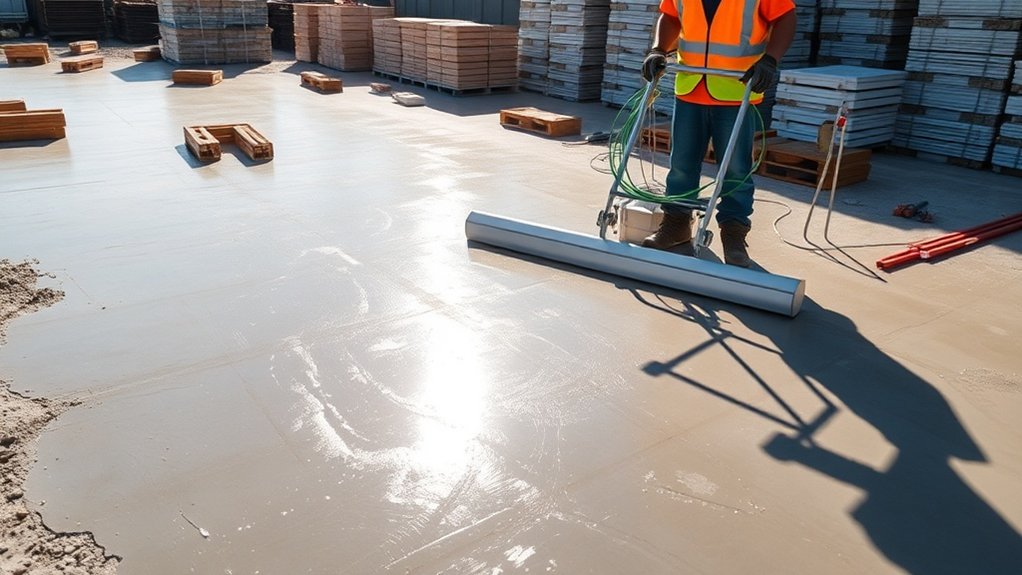
Effective use of a vibrating screed relies on key best practices to ensure optimal results.
Begin by checking all components to confirm that guards and safety switches are operational. Select the right length of screed and vibration settings suitable for your slab. Ensure the screed is stabilised on firm ground, and briefly warm up the engine before use.
When screeding, maintain a steady speed and height, ensuring both ends of the screed lightly score the concrete. Use minimal effort and manage throttle control for better balance.
Work in manageable sections to enhance accuracy and avoid staying in one spot for too long. Start vibrating the concrete promptly after placement, adjusting your timing and intensity based on the conditions to achieve proper compaction and a smooth surface finish. Additionally, the use of advanced vibration technology can significantly enhance compaction, leading to stronger slabs.
Advantages of Using Vibrating Screeds

Using vibrating screeds brings key benefits that improve the efficiency and quality of concrete placement.
Here are the main advantages:
- Speed: Complete jobs 30–50% quicker than traditional methods, leading to faster project completion.
- Compaction: Achieve denser concrete with fewer air voids, resulting in stronger slabs.
- Surface Finish: Create uniform, flatter surfaces that need less rework, ensuring a professional finish.
- Labour Savings: Cut labour costs by up to 75%, while reducing operator fatigue and the risk of injury.
These benefits make vibrating screeds an invaluable tool for projects of all sizes, enhancing workflow and improving the durability and appearance of the final product.
Limitations and Considerations
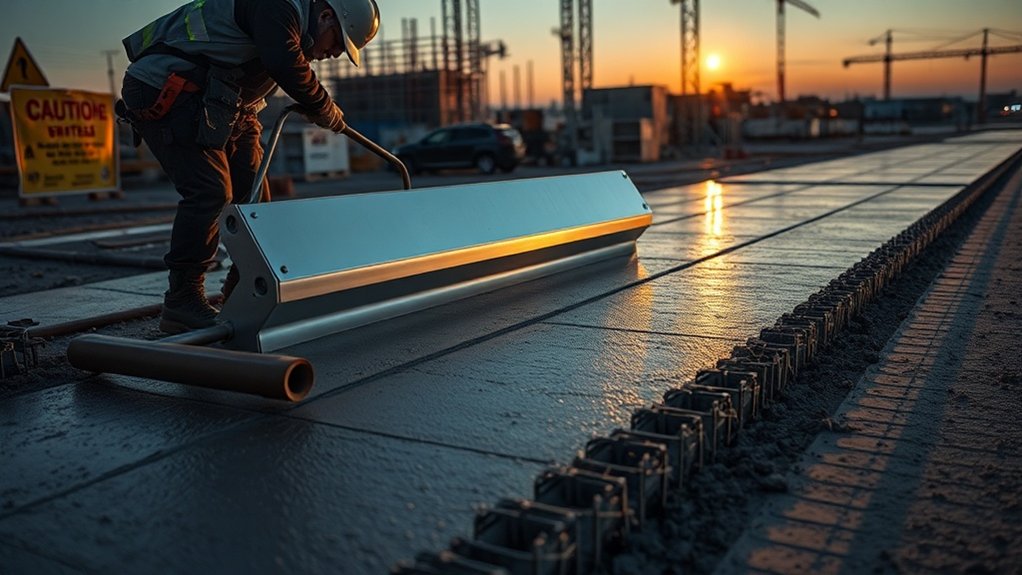
When using vibrating screeds, there are certain limitations to keep in mind.
For example, high slump concrete can be problematic, as it may not compact properly, resulting in a poor surface finish and potential structural issues.
Additionally, the noise produced during operation can be a concern for the operator and those nearby, so it’s important to consider your working environment.
Cleaning the equipment can also be a hassle, which might slow down your project.
High Slump Concrete Issues
High slump concrete can improve workability, but it has several important drawbacks that need to be considered:
- High slump mixes are at risk of segregation, which can lead to uneven material distribution.
- Increased water content can weaken the concrete, reducing durability.
- Excessive bleeding can result in porous surfaces, increasing permeability and shortening lifespan.
- Higher water content during drying raises the likelihood of shrinkage and cracking.
To achieve optimal performance, it’s crucial to monitor slump values carefully and consider using water-reducing admixtures.
Striking the right balance between workability and strength is vital for maintaining structural integrity when using high slump concrete.
Cleaning Challenges
Cleaning vibrating screeds can be quite challenging, affecting both their performance and lifespan. If you don’t use effective cleaning techniques, you could face maintenance issues.
For instance, concrete residue can accumulate, increasing weight and impairing vibration, which leads to subpar compaction and finish quality. To avoid this, it’s crucial to perform regular spot cleaning during lengthy jobs to stop concrete from hardening and becoming difficult to remove.
After screeding, using water and brushes immediately can help neutralise reactions and minimise buildup. While power washers can be useful, take care to avoid damaging electrical components with excess water.
Keep in mind that thorough cleaning may require disassembly, so plan ahead to prevent delays in your project schedule. Regular inspections alongside your cleaning routine will help ensure your equipment remains functional and safe.
Noise Concerns
Proper maintenance of vibrating screeds is essential not just for performance, but also for managing noise levels during operation. High noise can cause operator fatigue and complicate adherence to noise regulations.
- Gas-powered models tend to be noisier than battery-powered ones.
- Some screeds can exceed 100 dB(A), making hearing protection essential.
- In urban areas, there may be restrictions on when you can use screeds because of noise.
- Quieter models improve comfort for operators and foster better relations with the surrounding community.
When choosing a screed, pay attention to its noise output to ensure safety and compliance.
Opting for battery or eco-friendly models can significantly reduce noise pollution, benefiting both your team and overall productivity on site.
Selecting the Right Screed for Your Project
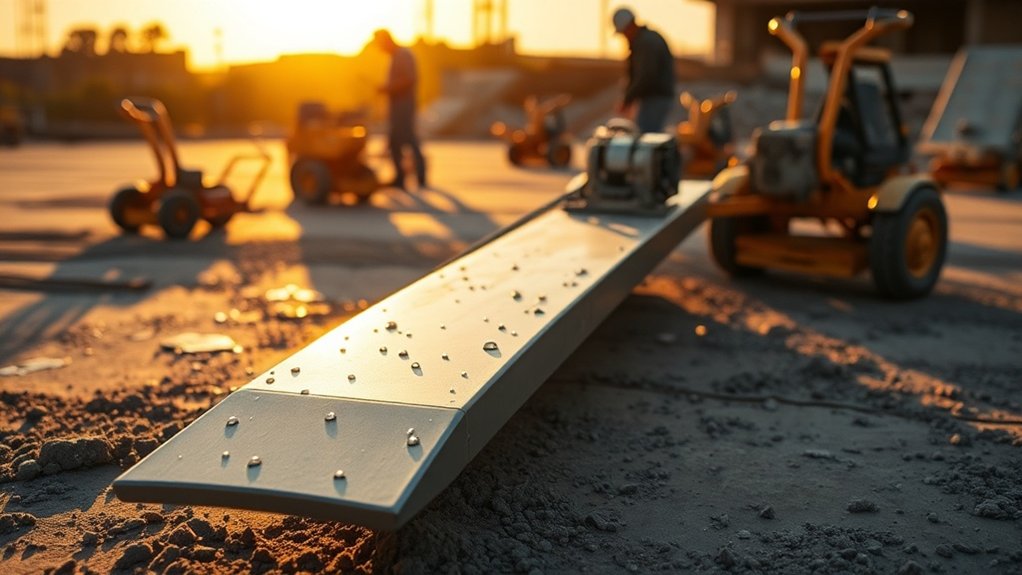
When choosing the right screed for your project, consider factors such as the size of the job, the type of concrete mix, and the environmental conditions.
For smaller jobs, manual screeds typically work well, while larger areas benefit from powered screeds for greater efficiency.
If you’re dealing with a lower slump mix (up to 75mm), vibrating screeds are ideal for ensuring proper compaction and a high-quality surface finish.
For a superior finish in one go, powered vibratory screeds are the way to go.
Budget is also a key factor; although powered screeds may have a higher initial cost, they can save on labour and improve the overall quality of the work.
Finally, make sure the screed you choose is compatible with the environmental conditions of your project to ensure durability and performance.
Maintenance Tips for Longevity
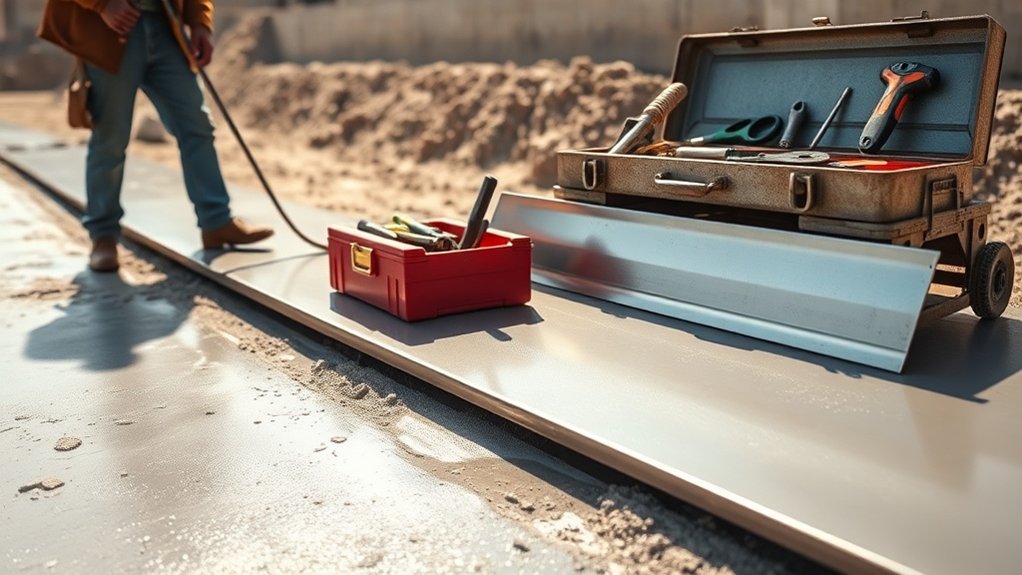
To ensure your concrete vibrating screed lasts, regular cleaning and inspections are vital.
After each use, rinse the screed to remove any concrete build-up and check for wear on key components.
Frequent inspections can help you spot potential issues early, keeping your equipment in top condition.
For instance, a quick look at the blades can prevent costly repairs later on.
Regular Cleaning Procedures
Regular cleaning procedures are crucial for the upkeep and performance of concrete vibrating screeds. Keeping to a regular cleaning schedule ensures your equipment stays in excellent condition.
Here are some essential practices to follow:
- Clear away fresh and partially set concrete immediately after use.
- Use stiff-bristled brushes and pressure washers with care, avoiding any delicate components.
- Lubricate bearings as per the manufacturer’s instructions to prevent wear and tear.
- Store the screed in a dry, sheltered place to protect it from corrosion.
Routine Inspection Guidelines
Routine inspections are crucial for ensuring your concrete vibrating screed performs well and lasts longer.
Begin each inspection by checking all bolts and hardware for looseness after every use. Ensure all components are secure and look out for any missing or damaged parts.
Inspect the vibrating bar and motor for any signs of wear or cracks. Make sure that guards and safety switches are functioning correctly.
Use a maintenance checklist to verify that the blade is level according to the manufacturer’s specifications. Remember to grease the bearings after each use and check fluid levels before starting.
Regularly look for leaks and replace worn components to keep your screed in top condition. Consistent inspections reduce the need for repairs and extend the life of your screed.
Safety Precautions When Operating Screeds

When operating concrete vibrating screeds, following safety precautions is crucial for your safety and the quality of the work.
Before you begin, ensure you have completed safety training and performed a thorough risk assessment. Here are some key precautions to keep in mind:
- Wear steel-toed safety boots and hard hats compliant with UK standards.
- Use gloves to minimise vibration and prevent contact with wet concrete.
- Always wear protective eyewear and hearing protection.
- Inspect your equipment before each use, looking for any signs of wear or damage.
Frequently Asked Questions
Can Vibrating Screeds Be Used on Uneven Surfaces?
Vibrating screeds can be used on uneven surfaces, but they need to be adjusted properly to ensure they maintain contact with the ground. For large inconsistencies, it may be better to use manual techniques or specialised equipment to achieve the best results and finish quality.
What Is the Best Concrete Mix for Vibrating Screeds?
For vibrating screeds, aim for a low slump concrete consistency of 25 to 50 mm. Adjust the mix ratios to ensure workability without segregation. It’s important to balance the aggregate size for optimal vibration and a smooth surface finish.
How Do I Troubleshoot a Vibrating Screed That Won’t Start?
Troubleshoot your vibrating screed like a detective on a case. Start by checking the fuel levels, spark plugs, and battery connections. Regular maintenance is key to preventing power issues and ensuring smooth operation. Inspect everything carefully and address any problems you find.
Can I Rent a Vibrating Screed Instead of Buying One?
Yes, you can rent a vibrating screed rather than purchasing one. Renting can be more economical, particularly for occasional projects, and you won’t have to deal with the upkeep and storage that comes with owning the equipment. For instance, if you’re only laying concrete once or twice a year, renting is a sensible choice.
What Protective Gear Should I Wear While Using a Vibrating Screed?
When using a vibrating screed, it’s important to wear the right protective gear. This includes a hard hat, safety goggles, vibration-reducing gloves, slip-resistant boots, and a dust mask. These items are crucial for protecting yourself from concrete-related hazards and injuries. For instance, gloves can reduce the impact of vibrations on your hands, while safety goggles shield your eyes from debris. Prioritising safety ensures a smoother and safer working experience.
Conclusion
In summary, using concrete vibrating screeds can significantly boost the efficiency and quality of your projects. Research indicates that proper use of vibrating screeds can cut concrete curing time by as much as 30%. This not only speeds up your schedule but also enhances the finish of your work. By familiarising yourself with the operation and maintenance of these tools, you can ensure optimal results and durability. Equip yourself with this knowledge, and watch your concrete projects thrive!

Want to ensure your concrete projects stand out? Discover the top 10 essential tools every contractor needs for success!

Unlock the secrets to perfecting your concrete screeding technique for flawless results, but beware of common pitfalls that could undermine Read more

Get expert tips on maintaining your concrete mixer for lasting performance and discover essential practices that could transform your mixing Read more