When working with concrete, you’ll need essential finishing tools like bull floats, trowels, and rakes for efficient levelling and smoothing.
Select equipment based on material composition, ergonomic design, and specific features to enhance productivity and reduce operator fatigue.
Prioritise safety by using proper PPE and implementing dust control measures.
Regular maintenance, including cleaning and rust prevention, extends tool lifespan.
Innovative technologies, such as advanced vibration systems and smart sensors, are improving concrete work efficiency.
Consider the environmental impact of your tools and practices, opting for eco-friendly alternatives when possible.
Exploring these aspects further will reveal the complexities of concrete construction equipment.
Key Takeaways
- Essential concrete finishing tools include bull floats, trowels, rakes and hand floats for smoothing and levelling surfaces.
- Ergonomic design in concrete tools reduces operator fatigue and enhances workplace safety and efficiency.
- Proper maintenance, including regular cleaning and rust prevention, extends the lifespan of concrete tools and equipment.
- Innovative technologies like advanced vibration systems and smart sensors improve concrete compaction and curing processes.
- Environmental considerations in concrete work include using eco-friendly materials and energy-efficient manufacturing for tools and equipment.
Essential Concrete Finishing Tools
In order to achieve professional-grade concrete finishes, you’ll need a specific set of essential tools. Bull floats are paramount for smoothing and levelling large surfaces of freshly poured concrete. Typically crafted from aluminium or magnesium for enhanced equipment durability, these tools are indispensable for initial surface levelling.
Smooth finishes require specialised tools and skills, with proper curing time affecting the uniformity of the result. This emphasises the significance of using the right tools for each specific finish.
For achieving smooth, professional results, you’ll want to include the Big Blue Concrete Trowel in your arsenal. Available with or without a Knucklehead gearbox for pitch variation, this versatile tool is essential for perfecting your concrete finish.
When it comes to creating textured finishes, Fresno brooms are specifically designed for this purpose. They provide a consistent, grip-enhancing texture after bull floating.
Before finishing, concrete rakes play a key role in grading and spreading concrete efficiently. Their toothed blades help you achieve the desired thickness and contour.
To round out your toolkit, incorporate hand floats and professional finishing trowels. These tools are fundamental for tackling a variety of concrete finishing tasks and ensuring high-quality outcomes.
Selecting the Right Equipment
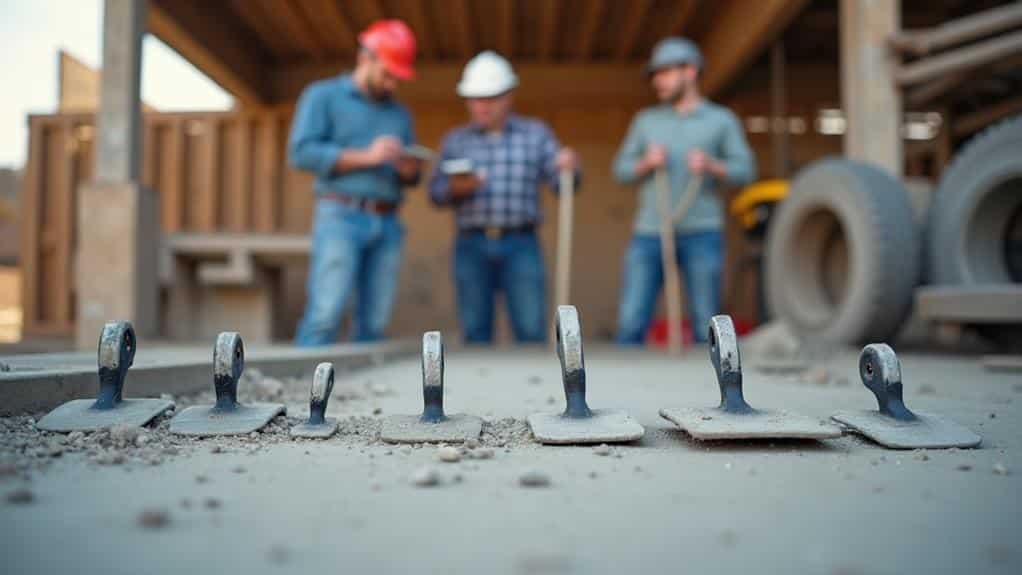
Having established the importance of essential concrete finishing tools, it’s imperative to focus on selecting the right equipment for your specific needs. Implement effective tool selection strategies by prioritising essential items like bull floats, trowels, and concrete rakes. These tools guarantee efficient finishing and levelling of surfaces, essential for professional results.
Concrete pumps can greatly enhance efficiency and quality in larger projects, offering precise control and faster completion times.
When evaluating equipment options, consider the following factors:
- Material composition: Opt for magnesium or aluminium tools for durability and lightweight handling during extensive use on large slabs.
- Specific features: Assess trowel designs, such as the Big Blue Concrete Trowel’s versatility or the Kraft Elite Series’ improved flexibility.
- Ergonomic design: Choose tools that enhance comfort and reduce fatigue during prolonged concrete finishing tasks.
Equipment compatibility considerations are important for maximising efficiency and productivity. Confirm your selected tools integrate seamlessly with existing machinery, such as Texas placers with free screeding machines.
This compatibility will streamline your workflow and improve overall project outcomes.
Safety Considerations for Concrete Work

Three critical safety considerations must be prioritised when undertaking concrete work.
First, guarantee proper PPE compliance by wearing gloves, safety goggles, and knee pads to protect against injuries whilst handling tools and materials.
Second, implement effective dust control measures, including the use of dust masks or respirators during mixing and cutting processes to safeguard respiratory health.
Third, maintain and regularly inspect all tools and equipment to prevent malfunctions that could lead to accidents on the job site.
When working with concrete pumps, be aware of the environmental impact associated with long-distance pumping, including increased fuel consumption and carbon emissions.
To further enhance safety, you should focus on thorough training for all personnel involved in concrete work.
This training should cover the correct use of tools and equipment, as well as established safety protocols and guidelines.
Emphasise proper lifting techniques and situational awareness to minimise workplace accidents.
By adhering to these safety considerations, you’ll greatly reduce the risks associated with concrete work.
Remember that safety is an ongoing process.
Continuously assess and update your safety practices to guarantee they remain effective and relevant.
Maintenance of Concrete Tools
Maintaining your concrete tools is essential for guaranteeing their longevity and ideal performance. Regular tool cleaning is vital to prevent the build-up of dried concrete, which can compromise their functionality. Implement a routine that includes wire brushing or soaking tools in water after each use. For metal tools, apply oil or grease regularly to prevent rust and maintain their operational integrity.
To effectively maintain your concrete tools, follow these key steps:
- Scrape off stubborn residues using chisels and brushes to preserve the tools’ effectiveness.
- Store tools in a dry environment to prevent corrosion and damage.
- Conduct regular inspections to identify wear and tear, facilitating timely repairs or replacements.
Proper maintenance not only extends the lifespan of your tools but also guarantees consistent quality in concrete work. By implementing these practices, you’ll optimise tool performance and minimise the need for premature replacements.
Remember that rust prevention is critical for metal tools, as it directly impacts their functionality and longevity. Establish a systematic approach to tool maintenance, incorporating cleaning, lubrication, and storage protocols to safeguard your investment and maintain the high standards required in concrete work.
Innovative Technologies in Concrete Equipment
Revolutionising the concrete industry, innovative technologies are transforming traditional equipment and practices.
You’ll find that advanced vibration technology, such as concrete vibrators, now enhances compaction and eliminates air pockets, resulting in stronger and more durable slabs. This improvement in concrete quality is a significant advancement in construction techniques.
The integration of smart technology, including sensors and IoT capabilities, allows you to monitor concrete curing conditions in real time.
This smart integration guarantees ideal results and reduces waste, providing you with more control over the curing process.
You’ll appreciate the convenience of cordless battery-powered tools, like mixers and saws, which improve mobility on job sites.
These tools eliminate the need for electric leads, enhancing your efficiency and safety.
Robotic systems are being developed for concrete finishing and placement, offering increased precision and reducing physical strain on workers.
Additionally, the use of advanced materials in tool manufacturing, such as high-carbon steel and lightweight alloys, provides you with more durable and less fatiguing equipment for prolonged use.
Environmental Impact and Sustainability

You’ll find that the concrete industry is rapidly adopting eco-friendly material alternatives, such as recycled aggregates and industrial by-products, to reduce its carbon footprint.
Energy-efficient manufacturing processes for concrete tools and equipment are being implemented, including the use of renewable energy sources and optimised production techniques.
To minimise waste, you can employ strategies like precise mixing ratios, efficient application methods, and the utilisation of recyclable or biodegradable formwork materials.
Eco-Friendly Material Alternatives
In the domain of concrete production, eco-friendly material alternatives are gaining traction as the industry seeks to reduce its environmental impact and enhance sustainability. Recycled aggregates and fly ash can greatly reduce the carbon footprint of concrete production, cutting emissions by up to 30% compared to traditional materials.
Sustainable admixtures, including bio-based curing agents and recycled water, not only improve concrete durability but also minimise environmental impacts.
To further enhance sustainability in concrete production, you can:
- Incorporate industrial by-products like slag and silica fume
- Utilise geopolymer concrete made from fly ash and slag
- Implement practices such as using local materials and optimising mix designs
These approaches offer multiple benefits, including diverting waste from landfills, improving mechanical properties, and reducing transportation emissions.
Geopolymer concrete, in particular, has shown promise with its lower environmental impact and performance that matches or exceeds conventional concrete.
Energy-Efficient Manufacturing Processes
Concrete tool manufacturers are increasingly adopting energy-efficient processes to reduce their environmental impact and enhance sustainability. By incorporating recycled materials into their production methods, they’ve managed to decrease their carbon footprint by up to 30% compared to traditional manufacturing techniques. This significant reduction demonstrates the potential for sustainable practices in the industry.
The integration of renewable energy sources, such as solar and wind power, in manufacturing facilities has further contributed to lowering greenhouse gas emissions associated with concrete tool production.
Additionally, the implementation of lean manufacturing principles has improved productivity whilst minimising waste, aligning with sustainability goals.
Advanced technologies like 3D printing are being explored for concrete tool creation, offering the potential to reduce material waste and energy consumption during production.
These innovative approaches, combined with a focus on designing tools for easy repair and recycling, promote a circular economy within the concrete industry.
Waste Reduction Strategies
Recognising the environmental impact of concrete production and usage, industry leaders have implemented various waste reduction strategies to enhance sustainability. By adopting precise mixing techniques and utilising advanced tools like concrete mixers, you can markedly reduce material waste. These methods guarantee accurate proportioning of ingredients, minimising excess and improving overall efficiency.
To further reduce waste in concrete operations, consider:
- Investing in high-quality, durable tools to decrease replacement frequency
- Utilising reusable forms and moulds for concrete shapes
- Implementing advanced screeding methods for peak surface finishes
By employing these strategies, you’ll minimise the environmental impact associated with manufacturing and disposing of tools while reducing the need for excessive grinding and finishing processes.
Recycling methods play a vital role in waste reduction. Crushing and repurposing leftover concrete can divert substantial amounts of waste from landfills, contributing to sustainable construction practices.
Ergonomics in Concrete Tool Design

You’ll find that ergonomic design in concrete tools considerably reduces operator fatigue and enhances workplace safety.
By incorporating adjustable handles, padded grips, and lightweight materials, manufacturers have created tools that minimise strain and reduce the risk of musculoskeletal disorders.
These ergonomic considerations not only improve user comfort and efficiency but also contribute to more precise finishing results and increased productivity on concrete job sites.
Reducing Operator Fatigue
Ergonomics in concrete tool design has emerged as an essential factor in reducing operator fatigue. The implementation of ergonomic features in concrete tools greatly enhances operator comfort and facilitates effective fatigue management. Adjustable handles, lightweight materials and padded grips contribute to minimising strain during prolonged use, allowing workers to maintain productivity without compromising their well-being.
Tools like the Big Blue float exemplify innovative design principles that reduce the effort required for smoothing large surfaces. This approach to tool engineering directly impacts fatigue management by lowering the physical exertion needed for finishing tasks. Additionally, professional finishing trowels with balanced weight distribution further decrease hand and wrist fatigue during extended operation.
To maximise operator comfort and reduce fatigue, consider implementing the following:
- Utilise ergonomically designed tools with adjustable features
- Employ lightweight materials in tool construction
- Incorporate knee protection solutions, such as EZ Kneeler knee pads
Research indicates that the adoption of ergonomic tools in the concrete industry can lead to a reduction in work-related musculoskeletal disorders. This not only enhances overall productivity but also contributes to improved worker health, demonstrating the critical role of ergonomics in concrete tool design for reducing operator fatigue.
Enhancing Workplace Safety
Workplace safety in concrete operations extends beyond fatigue reduction, encompassing a broader range of ergonomic considerations in tool design. Risk assessment plays an essential role in identifying potential hazards, leading to the development of specialised tools that mitigate these risks.
For instance, ergonomically designed concrete tools with adjustable handles and lightweight materials considerably reduce the likelihood of repetitive strain injuries during prolonged use.
Safety training emphasises the importance of proper equipment usage, including the adoption of padded knee protection like EZ Kneeler knee pads. These provide vital support and comfort, minimising impact on knees during concrete finishing tasks.
Non-slip grips on tools enhance operator control and stability, reducing accident risks on job sites. Incorporating bubble levels in screed bars guarantees accurate levelling, promoting safer working conditions by preventing slips and falls due to uneven surfaces.
Regular tool maintenance, including cleaning and lubrication, is integral to workplace safety. This practice not only extends tool life but also guarantees peak performance, preventing malfunctions that could compromise operator safety.
Frequently Asked Questions
What Tools Do You Need for Concrete?
You’ll need a concrete mixer for proper mixing techniques. For surface finishing, use bull floats, trowels, and rakes. Don’t forget screed bars for levelling, and Fresno brooms for texturing. Protect your knees with EZ Kneeler pads during extended work.
What Equipment Is Used to Pour Concrete?
Immerse yourself in the world of concrete pouring techniques with essential equipment. You’ll need concrete mixers, rakes, screed bars, bull floats, and vibrators. These tools are vital for proper concrete finishing methods, ensuring a smooth, durable surface.
What Are Four Tools That May Be Used During a Typical Concrete Pour?
You’ll typically use a concrete rake, bull float, finishing trowel, and screed bar during a concrete pour. These tools are essential for various mixing techniques and finishing methods, ensuring proper levelling, smoothing, and texturing of the concrete surface.
What Are Concrete Tools Called?
Concrete artisans wield a symphony of instruments. You’ll find that concrete tools are called finishing tools. They’re essential for concrete finishing and mixing processes. These specialised implements include trowels, floats, screeds, and mixers for precise surface manipulation.
Conclusion
You’ve now gained a thorough understanding of concrete tools and equipment. As you navigate this field, remember that selecting the right gear is paramount to your success. Like a conductor’s baton, your tools orchestrate the symphony of concrete work. Stay abreast of technological advancements, prioritise safety, and consider ergonomics. By maintaining your equipment and embracing sustainable practices, you’ll optimise performance and minimise environmental impact. The concrete industry evolves; make certain your toolkit evolves with it.

Learn about the diverse types of concrete used in construction and discover which mix can transform your next project.

For a long-lasting driveway that laughs in the face of the UK's unpredictable weather, the C20 concrete mix is your Read more

In the UK, you've got a a lot of lightweight concrete types to choose from, each with its unique perks. Read more