When comparing stamped concrete to traditional concrete, there are notable cost differences. Stamped concrete typically costs between £6 and £22.50 per square metre, while traditional concrete ranges from £2.50 to £6. The installation of stamped concrete is more intricate, requiring skilled labour and extra materials, which drives up the price. However, the attractive designs of stamped concrete can increase your property’s value. It’s also important to consider factors like maintenance and durability as you make your decision.
Key Takeaways
- Stamped concrete typically costs between £6 and £22.50 per square metre, in contrast to traditional concrete, which ranges from £2.50 to £6 per square metre.
- Installing stamped concrete is more intricate, requiring skilled labour and taking longer compared to the simpler process of laying traditional concrete.
- Stamped concrete needs resealing every 2 to 3 years for maintenance, while traditional concrete needs sealing less often.
- The materials for stamped concrete are pricier due to the inclusion of colouring agents, making it less budget-friendly than traditional concrete.
- Stamped concrete can boost property value with its attractive designs, whereas traditional concrete usually lacks decorative elements.
Cost per Square Foot Comparison
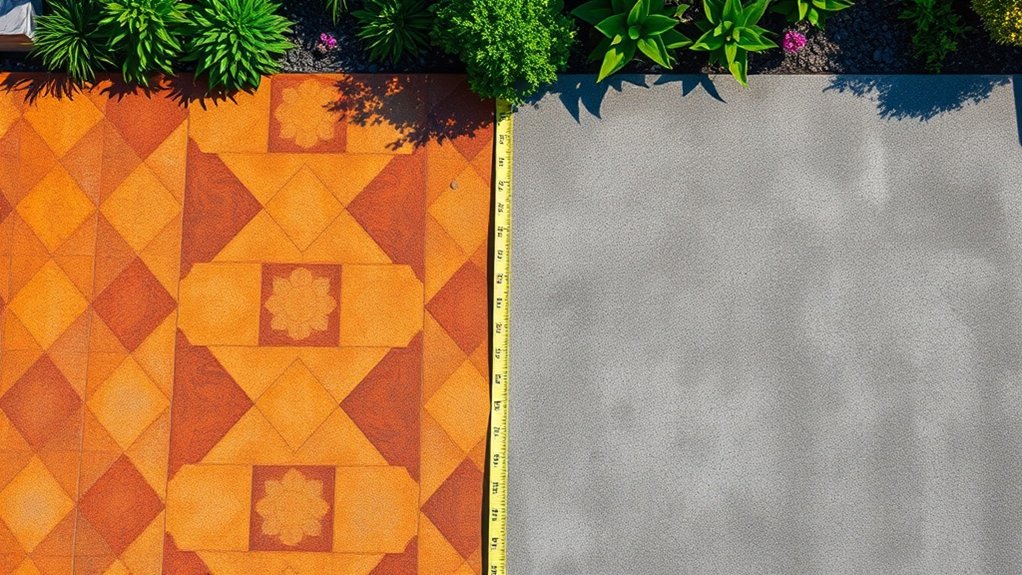
When comparing the cost per square metre of stamped versus traditional concrete, you’ll notice significant differences that can impact your choice.
Stamped concrete generally ranges from £6 to £22.50 per square metre, depending on the complexity of the pattern and colour options. Basic designs start around £6 to £8, while more intricate styles can exceed £18. Notably, stamped concrete can mimic various paver materials, including natural stone, wood, and brick, which adds to its appeal. Additionally, its low-maintenance nature makes it a practical investment over time.
In comparison, traditional concrete is more budget-friendly, costing between £2.50 and £6 per square metre.
This cost comparison shows that while stamped concrete is more expensive, it can enhance the visual appeal of your property and potentially increase its value.
Understanding these pricing trends will help you make informed decisions based on your project’s design needs and budget.
Labor and Installation Complexity
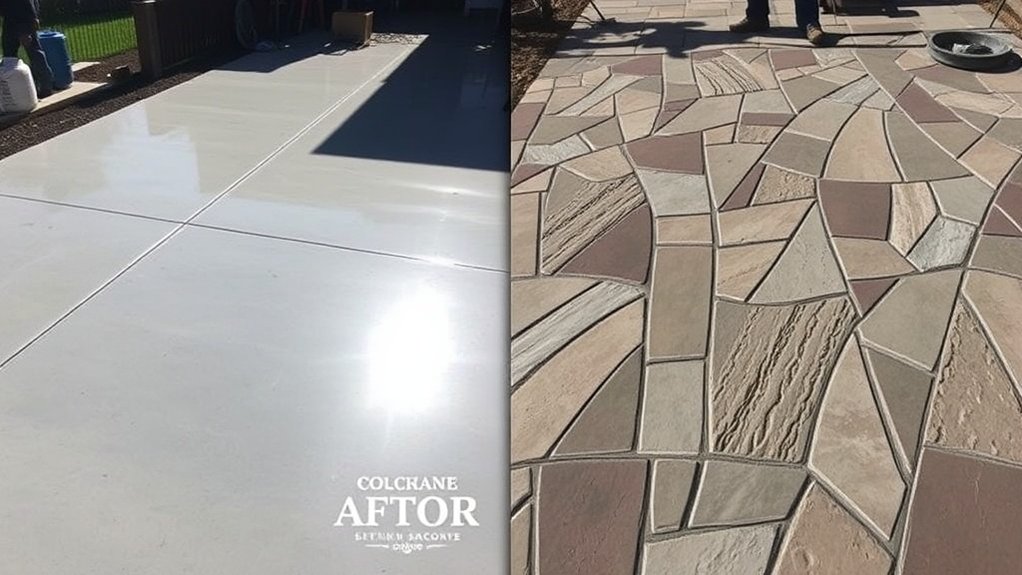
When considering labour and installation complexity, stamped concrete poses distinct challenges compared to traditional concrete. The stamping process demands precision and skilled labour to achieve the desired look, which can significantly drive up costs. High visual appeal is often sought after in stamped concrete, further complicating the installation as it requires careful attention to detail. On the other hand, the straightforward installation of traditional concrete allows for quicker project completion and lower expenses, making it a more practical choice for many projects.
Stamping Process Challenges
The stamping process can produce impressive results, but it also presents significant challenges in terms of labour and installation that need careful management.
Timing is crucial; any delays or rushing can result in uneven depths in patterns. Proper surface preparation is vital; uneven surfaces can lead to misaligned patterns and visual flaws.
When applying colour, ensure an even blend to avoid blotches, as repairs after installation are difficult. Skilled operators are necessary for accurate pattern alignment; misalignment can create unsightly seams. Additionally, environmental factors like temperature and humidity can impact curing time and scheduling.
To mitigate these issues, proper installation of expansion joints can significantly reduce the risk of cracking, further complicating the overall installation process.
These complexities not only complicate the installation but also heighten the risk of costly errors, highlighting the importance of thorough planning and execution.
Labor Cost Differences
Stamped concrete is visually appealing but comes with higher labour costs compared to traditional concrete due to its complexity and skill requirements.
Installing stamped concrete requires a high level of craftsmanship, as workers must skillfully apply patterns and colours, often involving artistic detail. In contrast, traditional concrete mainly focuses on pouring and levelling, which requires less specialised training.
Moreover, the installation of stamped concrete generally takes longer, involving multiple steps like imprinting and sealing, which extends the overall time required for the job.
This complexity results in higher labour rates, with costs ranging from £6 to £22+ per square metre. Ultimately, the skill and intricacy involved in stamped concrete significantly affect its labour costs when compared to traditional options. Additionally, the use of ready-mix concrete ensures consistent quality and compliance with stringent standards, which can further impact overall installation costs.
Material and Supplies Cost Differences
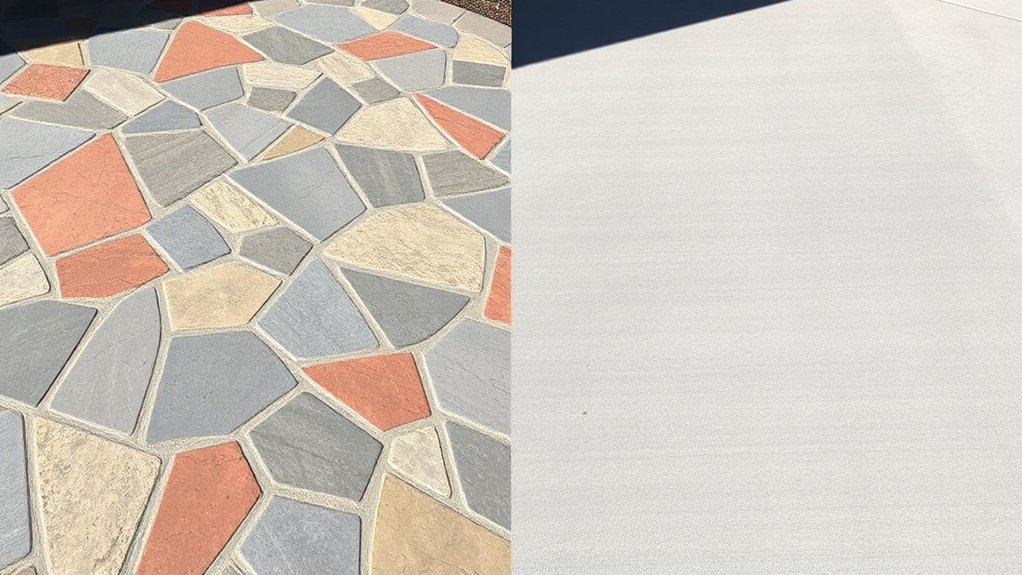
Stamped concrete usually costs between £9 and £20 per square metre, depending on the level of customisation and design. This higher price is due to extra materials like colouring agents, release agents, and specialised stamps.
In contrast, traditional concrete is more budget-friendly, as it only requires a basic mix, making it a suitable option for cost-conscious projects.
Additionally, stamped concrete often needs more labour and specialised equipment, which contributes to higher supply costs.
While stamped concrete allows for greater design flexibility, it also requires ongoing expenses for sealants and maintenance that traditional concrete typically doesn’t need. Understanding delivery fees is essential when budgeting for both types of concrete, as they can significantly impact overall project costs.
Longevity, Maintenance, and Durability Considerations
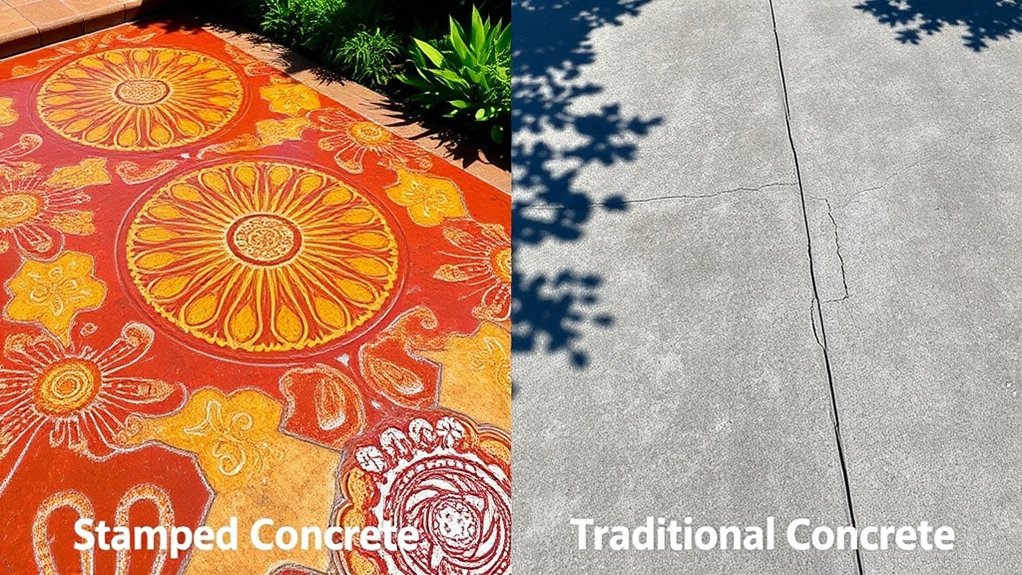
When considering longevity and maintenance, the sealing frequency of stamped concrete is crucial; you’ll need to reseal it every 2–3 years to keep it looking good and to maintain its integrity.
In contrast, traditional concrete requires sealing less often but can lead to higher repair costs due to its propensity to crack under pressure.
Being aware of these differences can help you assess the long-term costs of each option more effectively.
Sealing Frequency Requirements
To ensure the longevity and durability of stamped concrete, regular sealing is crucial. This protects the surface from environmental stresses and enhances its appearance.
Generally, it’s recommended to reseal every 2 to 3 years, but this can vary depending on factors like climate, foot traffic, and the type of sealer used. In areas with heavy use or extreme weather, you may need to reseal every 1 to 2 years. On the other hand, if the concrete is in a sheltered spot, you might stretch this interval to 4 to 5 years.
It’s wise to carry out annual inspections to check for signs of wear, which will help you determine when resealing is necessary.
Choosing the right type of sealer, such as polyurethane or penetrating sealers, can significantly enhance the protective layer of your stamped concrete.
Repair Cost Differences
Regular sealing is just one part of maintaining stamped concrete, which comes with unique repair cost considerations compared to standard concrete.
The decorative layer of stamped concrete can chip, making repairs more complicated and costly, as you’ll need specialised techniques to match patterns and colours.
In contrast, visible cracks in traditional concrete often lead to simpler repairs, like patching.
Stamped concrete requires resealing every 2–3 years, leading to higher long-term maintenance costs, while traditional concrete generally needs less frequent upkeep.
Although the initial costs for stamped concrete are higher, ongoing repair expenses can rise due to the need for specialised labour.
Understanding these repair techniques is crucial for effective budgeting for both materials.
Design and Aesthetic Factors Affecting Price
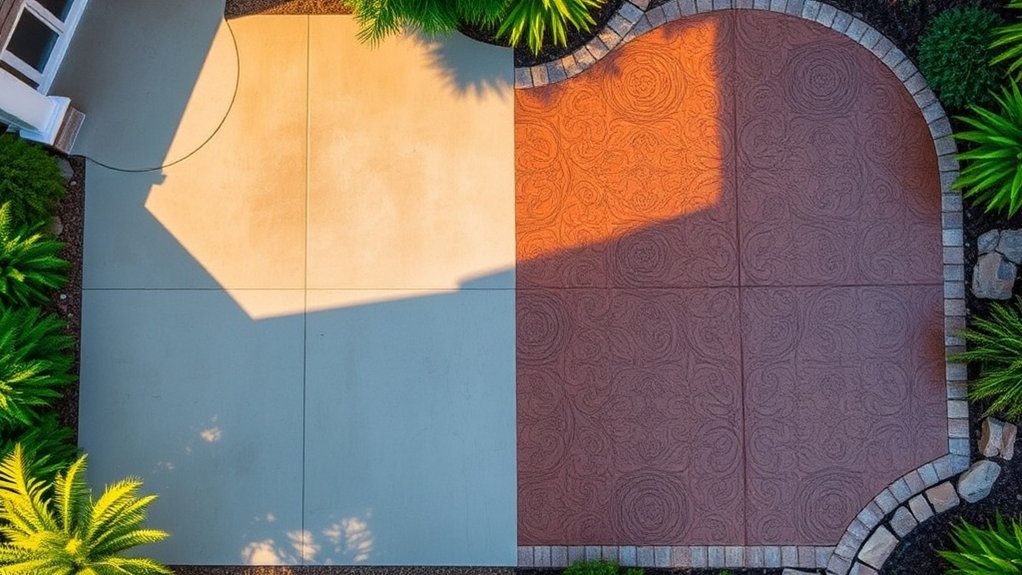
How do design and aesthetic choices impact the cost of concrete installations? Choosing stamped concrete, known for its design versatility and visual appeal, comes with a higher price tag.
Here are three main factors that influence costs:
- Patterns and Textures: Stamped concrete can mimic materials like stone or wood, while standard concrete offers a plain finish. The more intricate the design, the higher the labour and material costs.
- Colour Options: Stamped concrete can feature a variety of colours through pigments, enhancing its attractiveness. In contrast, traditional concrete is often limited to grey, which can keep costs down.
- Design Complexity: Custom designs in stamped concrete require skilled craftsmanship, leading to higher total costs compared to simpler finishes found in traditional concrete.
Site Preparation and Additional Cost Factors
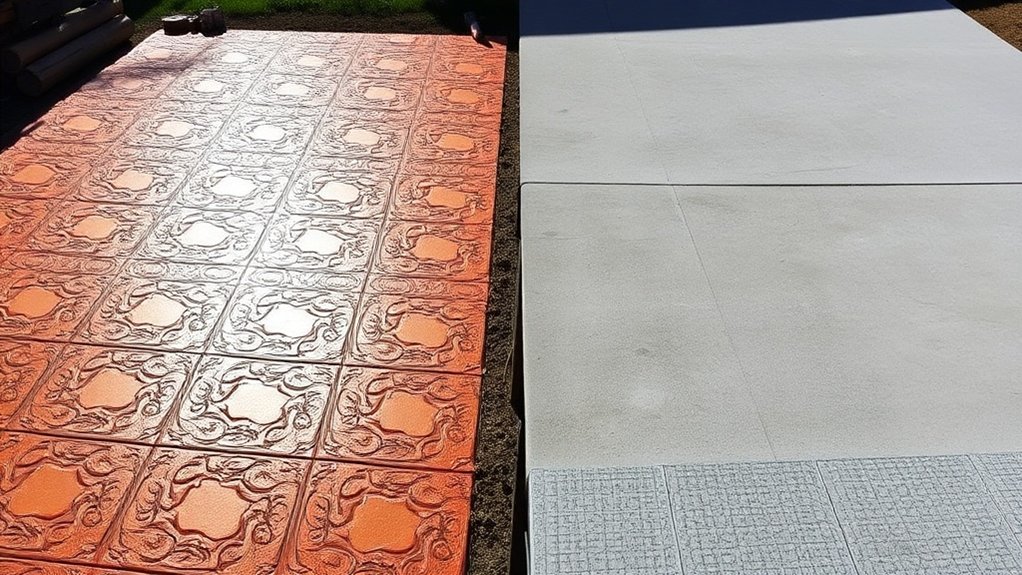
Design choices significantly affect overall costs, but proper groundwork for any concrete installation, particularly stamped options, is crucial. Factors like site accessibility and soil stability can directly impact your expenses. Stamped concrete generally requires more extensive site preparation than traditional concrete due to its detailed design and finishing requirements.
| Cost Factor | Stamped Concrete | Traditional Concrete |
|---|---|---|
| Excavation (per cubic yard) | £2.50 – £15.00 | Lower range |
| Labour (per square metre) | £6 – £22 | Lower end |
| Soil Leveling (per square metre) | £0.40 – £2.00 | Generally lower |
The higher costs for labour and materials associated with stamped installations can accumulate quickly, especially when considering additional tasks such as sealing and removing old concrete.
Frequently Asked Questions
How Long Does Stamped Concrete Last Compared to Traditional Concrete?
Stamped concrete generally lasts between 15 and 30 years, much like traditional concrete, depending on how well it’s maintained. Both types are durable, but stamped concrete may need more frequent sealing and occasional repairs to reach its full lifespan. For instance, if you have a stamped concrete patio, you might find yourself resealing it every few years to keep it looking good, whereas traditional concrete could require less upkeep.
Can I Install Stamped Concrete Myself?
You can install stamped concrete yourself, but be mindful of the costs associated with tools, materials, and possible errors. Careful planning and technique are crucial for a successful DIY installation, ensuring both durability and visual appeal. For instance, consider renting a concrete mixer and investing in high-quality stamps to achieve the best results.
What Colors Are Available for Stamped Concrete?
When choosing colours for stamped concrete, you’ll come across earthy tones, bright shades, and contrasting colours. This variety enables you to achieve beautiful designs that enhance your outdoor areas while ensuring durability and style. For instance, a warm terracotta can complement a garden, while a cool grey might suit a modern patio.
How Does Weather Affect the Installation of Concrete Types?
Weather conditions significantly affect the timing of your concrete installation. Cold temperatures slow down curing, while hot weather can speed it up, increasing the risk of cracks. Rain can weaken the surface, so it’s essential to keep an eye on the forecast and adjust your schedule accordingly. This approach ensures optimal results for both types of concrete.
Are There Environmentally Friendly Options for Stamped Concrete?
Certainly, while traditional methods are an option, consider the sustainability of stamped concrete. It uses eco-friendly materials and techniques that not only replicate natural surfaces but also conserve resources, minimise waste, and improve your project’s environmental footprint. For instance, opting for recycled aggregates or low-VOC sealers can enhance the sustainability of your stamped concrete.
Conclusion
In summary, when comparing the costs of stamped concrete to traditional concrete, be aware that stamped options typically range from £6 to £15 per square foot, depending on the design complexity. Although the upfront costs for stamped concrete may be higher, its attractive appearance and durability can result in long-term savings. With proper maintenance, stamped concrete can last up to 25 years, making it a valuable investment for enhancing both the aesthetic and value of your outdoor areas.

Perfect for enhancing outdoor spaces, stamped concrete offers durability and style—discover how it can transform your patios and pathways today!

Find out how polished concrete floors can elevate your commercial interiors, enhancing style and durability in ways you never imagined. Read more

Breathe new life into your interiors with concrete overlays, but discover the secrets to achieving stunning results that will leave Read more