To keep your concrete mixer performing well over the long term, clean the drum every day and carry out a thorough deep clean weekly using a mild detergent. Regularly check the drum and blades for any signs of wear or damage, ensuring the blade angles remain between 30° and 35°. Inspect the hydraulic system for leaks and replace any clogged filters without delay. Stick to a maintenance schedule for lubricating parts and swapping out worn components. Following these steps will help boost reliability and efficiency, giving you a smoother operation overall.
Key Takeaways
- Clean the drum daily by rinsing it out and removing any concrete residue to keep mixing efficient and avoid build-up.
- Carry out a thorough clean each week using a mild detergent or vinegar to tackle hardened cement, while also checking for any signs of wear or damage.
- Regularly check the hydraulic system for leaks, fluid levels, and the state of hoses and filters to maintain peak performance.
- Stick to a maintenance schedule that includes daily, weekly, and monthly tasks to extend the mixer’s life and prevent unexpected issues.
- Train operators to spot mechanical problems during inspections and encourage them to report any concerns promptly for timely maintenance and parts replacement.
Regular Cleaning Procedures
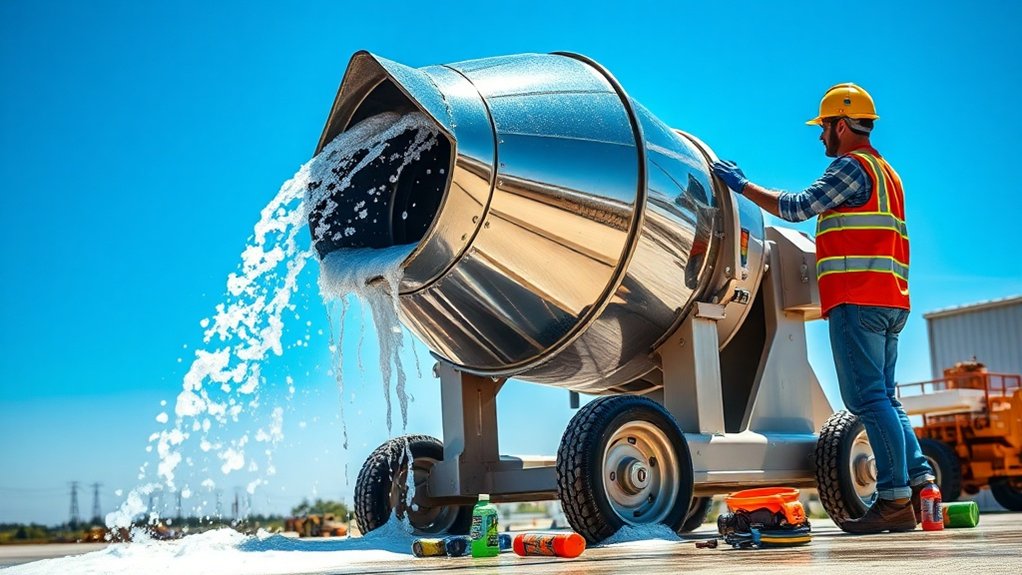
To keep your concrete mixer in top condition, it’s vital to establish regular cleaning routines.
Start with daily rinsing: after each use, run the mixer while rinsing the drum with clean water for 10-15 minutes to loosen any fresh cement residue. Once rinsed, empty the drum and check for any remaining bits. For stubborn spots, use a stiff brush or sponge to scrub away any thin layers.
At least once a week, carry out a deep clean using a mixture of water with mild detergent or vinegar. Routine maintenance is essential to prevent buildup and ensure efficiency. Additionally, maintaining the mixer can extend its lifespan, contributing to quality assurance in your concrete projects. Allow this solution to sit for 10-15 minutes, then scrape away the softened cement, rinse thoroughly, and let it air dry to prevent rust and ensure optimal performance.
Routine Inspections and Damage Checks

To ensure your concrete mixer runs efficiently, carry out regular inspections of the drum, blades, and hydraulic system. Check the drum for signs of wear and damage, assess the blades to ensure they’re in good condition for effective mixing, and inspect the hydraulic components for any leaks or issues. These routine checks are vital for maintaining performance and avoiding expensive repairs. Additionally, conducting comprehensive inspections enhances safety and operational reliability, making it easier to catch potential issues before they escalate. Regularly reviewing performance data can also help identify areas for enhancement in your mixer’s operation.
Regular Drum Inspections
Regular drum inspections are vital for ensuring the longevity and efficiency of your concrete mixer. They help spot potential issues before they worsen.
Start with an exterior check; look for cracks, dents, or corrosion that may weaken the drum. Examine the paint for peeling or rust, and inspect welded seams for signs of fatigue. Remove any dried concrete build-up to keep the drum balanced. Additionally, ensure that the general condition of the mixer is satisfactory to prevent further complications. Regular inspections can significantly reduce the risk of structural failure due to unnoticed damage.
Next, turn your attention to the interior. Look for cracks or hardened concrete that could hinder mixing efficiency. Ensure internal surfaces are smooth and free from foreign objects.
Regularly check the drum attachment bolts and hydraulic connections for stability. By routinely carrying out these checks, you’ll avoid serious damage and keep your concrete mixer performing at its best.
Blade Wear Assessment
When monitoring the blades of your concrete mixer, it’s essential to conduct regular inspections and check for damage to ensure optimal performance.
Start by assessing the blade material; cast irons with higher chromium content tend to have better wear resistance.
Employ wear measurement techniques like optical non-contact 3D scanning to accurately measure material loss and identify worn areas.
Pay particular attention to any dimensional changes in blade profiles, especially at key installation angles.
Maintaining angles between 30° and 35° can significantly minimise wear and prolong the life of the blades.
Regular monitoring will help you determine the right time for replacements, keeping your mixer running efficiently and extending its operational lifespan.
Hydraulic System Checks
Maintaining the hydraulic system of your concrete mixer is crucial for optimal performance and to prevent expensive breakdowns.
Regularly check hydraulic hoses for signs of wear, leaks, or cracks, and ensure fittings are secure to maintain system pressure. Monitor fluid levels and quality, changing the hydraulic fluid according to the manufacturer’s guidelines to improve efficiency.
Replace clogged filters promptly to avoid performance issues, and inspect hydraulic cylinder rods for any corrosion or misalignment.
Conduct routine checks by testing controls and ensuring all valves function smoothly. Address any seal leaks immediately to prevent fluid loss, and keep an eye on pump performance for any irregularities.
Lubrication and Mechanical Maintenance
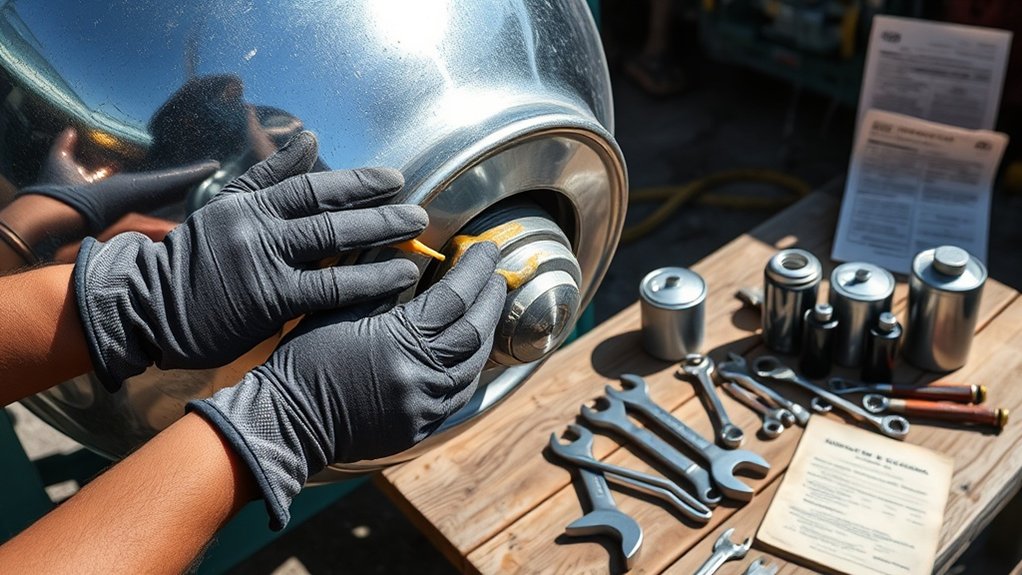
To ensure your concrete mixer runs smoothly, establish a regular lubrication schedule for all moving parts.
Check fluid levels daily and replace components such as hydraulic filters and chains when necessary to avoid breakdowns.
Following these practices will enhance performance and prolong the lifespan of your equipment.
Routine Lubrication Practices
Routine lubrication practices are crucial for the smooth operation and longevity of your concrete mixer. Each day, lubricate all moving mechanical parts as per the manufacturer’s instructions to reduce friction and wear.
Use a lubrication gun to apply grease at designated points, ensuring you select the correct type—grease for bearings and oil for gears.
Once a week, grease the support roller bearings and check lubricant points for any build-up to keep everything running efficiently.
Pay attention to any unusual noises or vibrations, as these may indicate that lubrication is lacking.
For hydraulic systems, use the recommended oils and replace filters every three months.
Fluid Level Monitoring
Regular fluid level monitoring is crucial for the optimal operation and durability of your concrete mixer. Inspect the hydraulic fluid to ensure it’s clear and free from cloudiness, as this is vital for the system’s effectiveness.
Check fluid levels frequently to prevent low conditions that can hinder performance. If you spot any contamination, replace the fluid immediately to keep the machinery running efficiently. Always follow the manufacturer’s guidelines for the correct type and quantity of fluid to avoid malfunctions.
Implementing pressure monitoring is also important to identify leaks or inefficiencies; stable pressure typically indicates healthy fluid levels.
Regularly check hydraulic hoses and seals for wear and ensure all connections are secure. By carrying out these checks, you’ll protect your mixer from potential problems and enhance its operational lifespan.
Component Replacement Timing
When maintaining your concrete mixer, it’s crucial to know when to replace components to ensure efficiency and longevity.
Regularly inspect roller chains, sprockets, and hydraulic seals for signs of wear or leaks. Keep critical parts lubricated to prevent early failure.
For pins and bushings, check for dirt and concrete accumulation; replace them promptly to maintain top performance.
Change gear reducer oil and hydraulic fluids annually, or follow the manufacturer’s recommendations.
During inspections, pay attention to bearings, rollers, and support rollers; replace them if you notice any unusual wear or damage.
Being proactive with these replacements can help you avoid costly repairs and downtime.
Scheduled Preventive Maintenance

To ensure your concrete mixer operates efficiently and reliably, scheduled preventive maintenance is crucial. Keeping track of usage and maintaining detailed logs can help avoid unexpected breakdowns and prolong your mixer’s lifespan. Daily, weekly, and monthly tasks need to be carried out consistently.
| Frequency | Tasks | Notes |
|---|---|---|
| Daily | Clean drum, inspect for damage | Remove any residual concrete |
| Weekly | Lubricate moving parts, check hydraulics | Look out for leaks |
| Monthly | Inspect engine systems, calibrate mixer | Ensure compliance with manufacturer guidelines |
Following this maintenance schedule will ensure that all components function effectively. Adjust your plans based on manufacturer recommendations and real-time data from equipment sensors to achieve optimal performance.
Parts Replacement Strategy
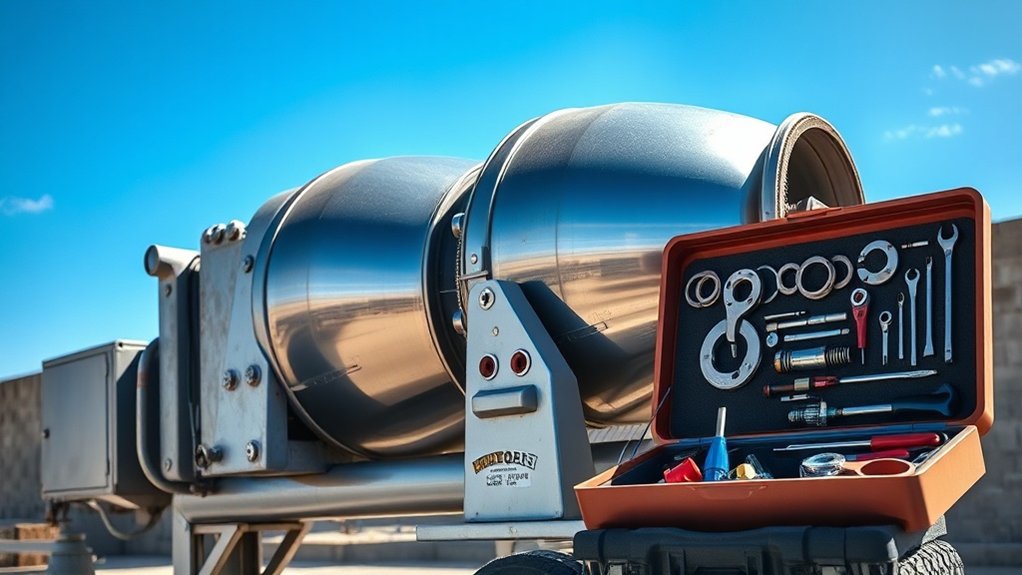
An effective parts replacement strategy is vital for keeping your concrete mixer running smoothly and reliably. To establish a solid approach, consider the following key elements:
- Replacement Scheduling: Regularly check essential components such as mixer blades, seals, and bearings. Plan replacements according to their wear rates and the manufacturer’s recommendations to prevent unexpected breakdowns.
- Parts Inventory: Keep a well-stocked supply of crucial spare parts. This reduces downtime and ensures you can swiftly tackle wear issues when they occur.
- Monitoring and Reporting: Train operators to spot any mechanical irregularities during their inspections. Quick reporting allows for timely replacements, aligning with your replacement schedule and improving overall efficiency.
Operational Best Practices

Maintaining optimal operational practices for your concrete mixer is vital to ensure efficiency and safety during use. Follow safety protocols and employ effective mixing techniques to enhance performance.
| Best Practices | Description |
|---|---|
| Pre-Operational Checks | Inspect for leaks, loose components, and test emergency stops. |
| Accurate Material Loading | Measure materials accurately to prevent overloading. |
| Control and Monitor Operations | Regulate drum speed and direction for consistent mixing. |
| Safety During Mixing and Pouring | Wear personal protective equipment (PPE) and keep the area free of hazards. |
| Post-Operation Clean-Up | Clear residue and clean the mixer thoroughly. |
Frequently Asked Questions
How Often Should I Clean My Concrete Mixer?
You should clean your concrete mixer before and after each shift, immediately after use, weekly for a thorough clean, and arrange for professional cleaning every three months. This routine helps ensure optimal performance.
What Types of Cleaning Agents Are Safe for Mixers?
Consider your mixer as an artist’s canvas. Using eco-friendly cleaning options like vinegar or dedicated cleaning solutions ensures it remains in top condition. These agents effectively eliminate residues without harming the equipment, keeping your mixer running smoothly.
Can I Use a Power Washer for Cleaning?
Yes, you can use a power washer for cleaning. It effectively removes dirt and grime, saving you time and effort. For the best results, combine it with proper techniques, such as using gravel, to ensure thorough cleaning, particularly for items like patios or driveways.
What Are Signs of a Worn-Out Mixer Drum?
If your mixer drum looks like it has survived a medieval battle, look out for cracks, excessive wear, corrosion, and hardened concrete. These signs indicate that immediate maintenance is needed to prevent further problems.
How Do I Store My Mixer During Winter Months?
To store your mixer during the winter months, ensure it’s properly insulated. Cover it with a weather-resistant tarp and elevate it on blocks to prevent dampness. Don’t forget to disconnect any water lines. Regularly check for moisture and inspect for any damage while it’s in storage.
Conclusion
To ensure your concrete mixer performs well for years, follow these maintenance tips. Regular cleaning, thorough inspections, and proper lubrication are essential to keep your mixer in prime condition. Preventive maintenance is crucial in avoiding unexpected breakdowns. By adopting best operational practices, you’ll not only extend the lifespan of your mixer but also improve the quality of your work, leading to successful pours every time.

Want to ensure your concrete projects stand out? Discover the top 10 essential tools every contractor needs for success!

Unlock the secrets to perfecting your concrete screeding technique for flawless results, but beware of common pitfalls that could undermine Read more

Begin your journey with concrete vibrating screeds and discover essential tips that can transform your projects into stunning works of Read more