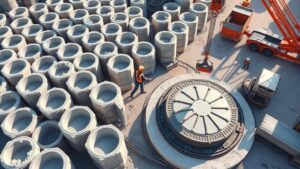
Concrete has a fascinating history that began in ancient Rome, where clever mixtures of lime, water, and volcanic ash resulted in robust and enduring structures. This knowledge waned during the Middle Ages but saw a revival in the Renaissance with the re-emergence of Roman techniques. The Industrial Revolution then transformed concrete production through machinery, paving the way for modern practices that prioritise sustainability and reinforcement techniques. As you delve deeper, you’ll discover contemporary trends that are shaping the future of concrete construction.
Key Takeaways
Concrete has its roots over two thousand years ago, primarily in ancient civilisations like the Romans, who advanced its mixture and engineering techniques. Roman concrete, crafted from volcanic ash, lime, and water, proved incredibly durable and set the groundwork for contemporary construction methods.
Following the fall of the Roman Empire, the use of concrete declined during the Middle Ages, with builders opting for timber and stone instead. However, the Renaissance sparked a renewed interest in concrete, as architects revisited ancient techniques and refined the mixtures to enhance strength and durability.
Today, modern innovations include eco-friendly practices, 3D printing, and self-healing concrete, all of which prioritise sustainability and introduce novel applications in construction.
The Origins of Concrete in Ancient Civilizations

Concrete is a crucial material in modern construction, with its origins tracing back over two thousand years to ancient civilisations. The earliest known use of concrete emerged from the Romans and Greeks, who mixed lime, water, and aggregates to create strong, durable building materials.
Iconic structures like the Pantheon and various aqueducts exemplify the strength and versatility of concrete. Its impact on culture is significant, as it enabled architectural innovation and urban development, leading to the creation of public spaces that encouraged community interaction.
Recognising these origins helps us appreciate how concrete not only transformed ancient landscapes but also set the stage for ongoing advancements in building techniques that we still use today.
Innovations in Roman Concrete Engineering

When you look into Roman concrete engineering, you’ll find its distinctive material composition that distinguished it from earlier methods.
The Romans skillfully mixed volcanic ash with lime and water, producing a sturdy blend that has endured through the ages.
This innovative technique, along with their advanced engineering practices, enabled the construction of remarkable structures that continue to inspire admiration today.
Unique Material Composition
While many ancient civilisations experimented with building materials, Roman engineers stood out for their innovative use of concrete. They developed unique mixtures of volcanic ash, lime, and seawater, creating a remarkably durable and resilient material.
This alternative composition not only improved structural integrity but also lessened the environmental impact associated with other building materials. By using local resources and adapting to various environments, they pioneered sustainable practices long before modern concepts took shape. Their methods also reflect early principles of resource extraction that prioritize local sourcing and conservation.
The Romans’ expertise in concrete laid the foundation for future advancements, showcasing how careful material choices can lead to lasting structures. Their achievements encourage us to rethink our contemporary practices and explore the potential of innovative materials in tackling today’s construction challenges.
Engineering Techniques Employed
Building on their innovative material composition, Roman engineers employed a variety of techniques that transformed construction practices. Their expertise in structural analysis and knowledge of material properties led to the creation of enduring structures.
Here are four key techniques they used:
- Arch Construction: Romans skilfully utilised arches to distribute weight effectively, enhancing stability in their buildings.
- Domes: Advances in dome design allowed for expansive interior spaces, exemplified by the Pantheon.
- Formwork: They developed sophisticated formwork systems that enabled intricate shapes and designs in concrete.
- Hydraulic Setting: By incorporating pozzolanic materials, they achieved quick setting times, even underwater, broadening construction possibilities.
These techniques not only demonstrated their engineering skill but also laid the foundation for modern construction methods.
The Decline of Concrete Use in the Middle Ages

As the Roman Empire declined in the 5th century, the use of concrete significantly decreased across Europe.
The transition to medieval architecture brought about a notable change in building practices. With the collapse of central authority, knowledge of durable concrete construction faded.
Material shortages became a major issue; local builders often turned to timber and stone, which were more readily available. This reliance on simpler methods prioritised practicality over the impressive scale of Roman concrete structures.
As cities fragmented and communities focused on survival, the advanced engineering of concrete was largely abandoned in favour of more accessible materials.
As a result, there was a marked decline in the innovation and use of concrete during this period.
The Renaissance and the Revival of Concrete Techniques

As you delve into the Renaissance, you’ll observe a significant revival in concrete techniques, primarily due to the rediscovery of Roman methods.
This era not only introduced new mixture compositions but also led to the construction of iconic structures that shaped the architectural landscape.
Recognising this revival allows you to appreciate how concrete regained its status as a vital building material.
Rediscovery of Roman Techniques
The Renaissance was a pivotal time for cultural renewal in Europe, particularly in the rediscovery of ancient Roman construction techniques, especially regarding concrete. Architects and builders sought to unearth ancient recipes that prioritized durability and structural strength, paving the way for modern concrete practices.
Here are four key points about this revival:
- Study of Ancient Structures: Investigating Roman buildings offered valuable insights into effective construction methods.
- Manuscript Translations: Scholars translated ancient texts that outlined concrete formulations, making this knowledge accessible.
- Material Innovation: Experimenting with local materials allowed builders to adapt and improve upon Roman techniques.
- Artistic Influence: The aesthetic principles of Roman architecture inspired Renaissance designs, fusing beauty with strength.
This combination of historical knowledge and innovative practices transformed construction during this dynamic period.
Innovations in Mixture Composition
Building on the ancient Roman techniques, the Renaissance brought significant innovations in concrete mixture composition.
During this time, architects and engineers began to experiment with alternative binders, such as pozzolanic materials, which improved the strength and durability of concrete. Rather than relying solely on traditional lime, they incorporated volcanic ash and other local materials to create more robust mixtures.
Furthermore, advancements in admixtures played a crucial role in enhancing concrete properties. By adding substances like sugar or animal fats, they improved workability and reduced setting times. These early innovations can be seen as precursors to the use of superplasticizers and fibers in modern high-performance concrete applications.
This experimentation laid the groundwork for modern concrete, blending artistry and engineering that characterised Renaissance construction practices.
Iconic Structures of Renaissance
The Renaissance was a key period in architectural history, marked by iconic structures that showcased the revival of concrete techniques.
Architects of this era blended functionality with beauty, resulting in remarkable designs. Here are four notable examples of Renaissance architecture that illustrate these advancements:
- St. Peter’s Basilica – An engineering marvel, its grand dome epitomises the era’s ambition.
- Palazzo Medici – This building combines sturdy concrete with elegant proportions, reflecting the Medici family’s influence.
- Ponte Santa Trinita – A stunning bridge that exemplifies the seamless blend of form and function.
- The Tempietto – A small but significant structure that represents the harmony between classical ideals and modern concrete.
These examples highlight how concrete transformed architectural practices during the Renaissance.
The Industrial Revolution: Advancements in Concrete Production

During the Industrial Revolution, concrete production saw remarkable advancements that transformed construction.
The introduction of machinery streamlined the mixing and transportation of materials, greatly improving efficiency. This period prioritised quality control, ensuring that concrete mixtures had a consistent composition and strength.
Innovations like steam curing sped up the setting time, allowing larger projects to move forward more quickly. The creation of standardised components, such as concrete blocks, revolutionised building methods and made construction more accessible to a wider audience.
Increased understanding of chemical reactions in concrete also enhanced its durability. Furthermore, mixing time became a critical factor in achieving the desired homogeneity of concrete mixes.
Together, these advancements not only facilitated the construction of monumental structures but also paved the way for future innovations in concrete technology, shaping modern construction practices.
Modern Concrete: Reinforcement and Sustainability
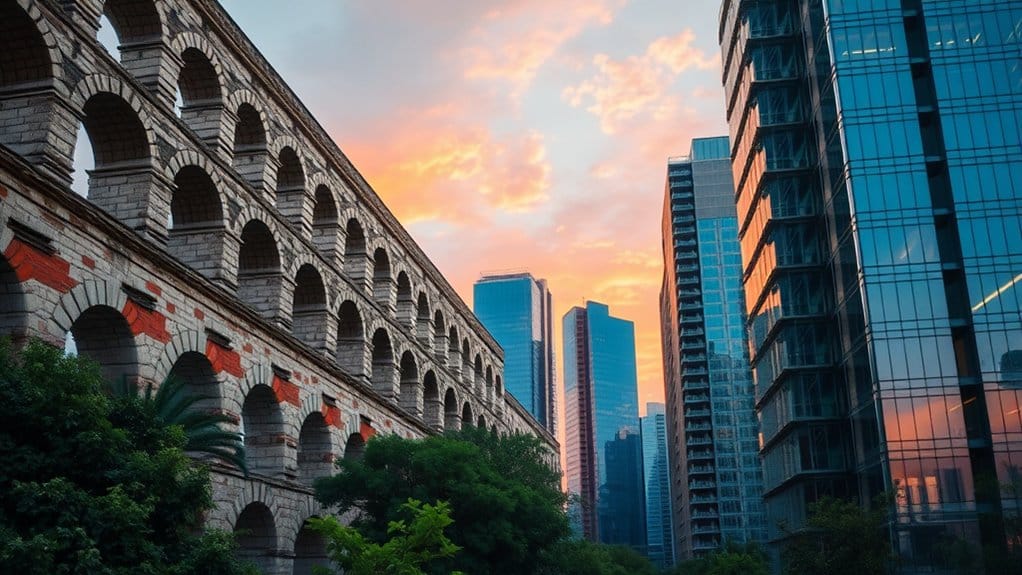
As concrete technology advances, the integration of reinforcement and sustainability has become essential in modern construction.
Today’s concrete solutions not only enhance performance but also aim to reduce environmental impact. Here are some key elements:
- Fibre Reinforcement: This approach boosts tensile strength and diminishes cracking, resulting in more durable structures.
- Green Concrete: By using recycled materials and lowering carbon emissions, green concrete promotes environmentally friendly building practices.
- High-Performance Mixes: These mixes offer increased durability and longevity, which helps minimise repair needs.
- Sustainable Practices: Adopting methods that cut waste and energy usage ensures a reduced ecological footprint.
Incorporating these practices into construction can lead to more resilient and sustainable buildings.
Future Trends in Concrete Technology and Applications
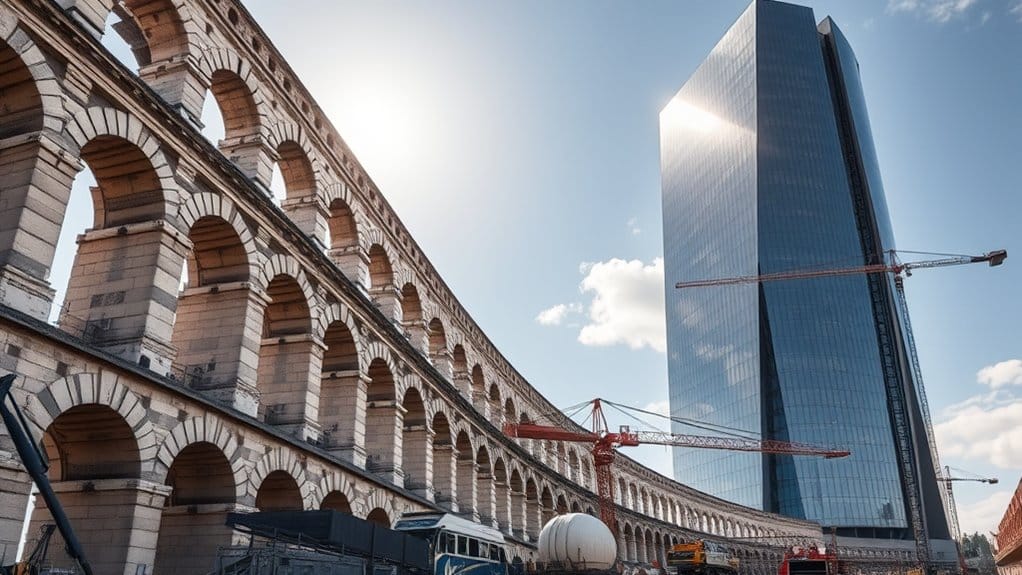
Emerging innovations in concrete technology are set to transform the construction industry, especially as the need for sustainable and efficient building practices grows. Advancements such as 3D printing and digital fabrication are enabling the creation of intricate designs with minimal waste. Meanwhile, smart materials and advanced composites are improving structural integrity, and self-healing concrete provides a groundbreaking solution for repairs. These eco-friendly alternatives not only lessen environmental impact but also support urban infrastructure development.
| Innovation | Benefits | Applications |
|---|---|---|
| 3D Printing | Reduced waste | Complex structures |
| Smart Materials | Enhanced durability | High-performance buildings |
| Self-Healing Concrete | Long-lasting repairs | Infrastructure maintenance |
As these technologies progress, there will be an increased focus on sustainable practices shaping the future of construction.
Frequently Asked Questions
What Are the Main Ingredients of Modern Concrete?
Modern concrete primarily consists of cement, water, aggregates, and sometimes additives. Sustainable options, such as recycled materials, are increasingly used to improve strength and lessen environmental impact. This makes concrete a vital part of today’s construction practices.
How Does Concrete Compare to Other Building Materials?
When comparing concrete to other building materials, its durability and versatility stand out. However, sustainability practices highlight that some alternatives can lessen environmental impact. This prompts a reassessment of the balance between strength, longevity, and ecological responsibility in construction. For instance, timber can be a sustainable choice if sourced responsibly, while recycled materials offer innovative options. It’s crucial to weigh these factors when deciding on building materials.
What Are Common Uses for Concrete Today?
Did you know that concrete makes up around 70% of all construction materials? It’s commonly used in foundations, roads, and bridges. Today, its applications are advancing with sustainable practices, which improve durability while lessening environmental impact.
How Has Climate Change Impacted Concrete Production?
Climate change has led to a reassessment of concrete production, as conventional methods produce significant carbon emissions. This has sparked interest in sustainable alternatives, such as using recycled materials and innovative binders. These approaches aim to minimise environmental impact while ensuring the structural integrity of concrete. For instance, incorporating recycled aggregates from construction waste can reduce the need for new raw materials, helping to lower carbon footprints.
What Safety Concerns Are Associated With Concrete Construction?
Did you know that dust exposure during concrete construction can increase respiratory problems by 40%? Prioritising safety is essential for ensuring structural integrity. Neglecting safety measures can lead to serious accidents, putting workers at risk and compromising the durability of the structures.
Conclusion
The journey of concrete showcases its remarkable evolution from ancient Rome to modern times. Once viewed as just a basic building material, concrete now represents a powerful mix of strength and sustainability. Although it faced periods of neglect, recent advancements suggest a promising future. By combining traditional methods with innovative practices, concrete continues to play a crucial role in our lives, supporting the structures that shape our communities and aspirations.

Leveraging cutting-edge technologies and sustainability trends, the future of ready-mix concrete promises groundbreaking innovations that could transform the industry forever. Read more

In exploring the historical milestone of Portland cement, discover how this innovation transformed construction and reshaped urban landscapes forever. What Read more
Incredible advancements in geopolymer concrete are paving the way for sustainable construction, but what challenges lie ahead in this eco-friendly Read more