To excel in concrete work, you’ll need essential tools such as a concrete mixer for consistent mixing, a bull float for smoothing surfaces, and various trowels for finishing touches. A screed board ensures level surfaces, while a concrete vibrator compacts the mix effectively. Don’t overlook measuring tools for precision, as well as chisels and hammers for shaping. It’s also vital to equip yourself with quality safety gear and curing blankets to enhance durability and protect your work. Explore how to optimise your toolset for better results.
Key Takeaways
- Concrete Mixer: Ensures consistent mixing of materials, which is crucial for achieving high-quality concrete results.
- Bull Float: Levels and smooths the surface while controlling aggregate for a refined finish.
- Screed Board: Vital for creating an even, flat concrete surface; available in wood, aluminium, or composite materials.
- Concrete Vibrator: Eliminates air pockets and improves compaction, resulting in stronger, more durable concrete finishes.
- Safety Gear: Essential for protecting workers from hazards; includes safety glasses, steel-toed boots, and hearing protection.
Concrete Mixer

When working with concrete, having the right tools is crucial, and a concrete mixer is essential. A well-maintained mixer ensures consistent mixing, which is vital for achieving the desired quality. Regular maintenance involves checking the paddles for wear, cleaning the drum after each use, and inspecting the motor for issues. Using proper mixing techniques is just as important. Start by adding water, then aggregates and cement, mixing thoroughly to prevent clumps. Adjusting the mixing time based on the batch size can enhance workability. By focusing on both maintenance and effective mixing, you can produce high-quality concrete for successful projects. Additionally, understanding the importance of proportioning of materials is key to achieving the desired strength and durability in your concrete mixes.
Bull Float

After mixing your concrete, the next step is to finish the surface, and a bull float is crucial for this.
Using a bull float helps to smooth the surface and remove imperfections. Typically, bull floats are made from durable yet lightweight materials like aluminium or magnesium.
When using the float, work it back and forth across the surface at a slight angle. This allows it to glide, pushing the aggregate down and bringing the cream up.
This technique levels the surface and prepares it for further finishing. Mastering the use of a bull float will significantly improve the quality of your concrete work, especially when paired with proper screeding techniques that ensure a level foundation.
Trowel

A trowel is a vital tool for achieving a smooth, professional finish on your concrete surface. Mastering trowel techniques can significantly improve the quality of your work.
Depending on your project, you’ll come across various trowel materials, each designed for specific tasks.
Here are three types of trowels worth considering:
- Finishing Trowel: Best for smoothing and finishing surfaces to ensure an even texture.
- Margin Trowel: Ideal for corners and edges, helping you reach tight spaces that larger trowels can’t access.
- Notched Trowel: Used for applying adhesive or mortar, it creates grooves for better bonding.
Investing in the right trowel and refining your techniques can elevate your concrete work significantly. Additionally, understanding the importance of proper mixing ratios can further enhance the durability and strength of your finished surface.
Screed Board

To achieve a level concrete surface, using a screed board is essential. This tool helps create a smooth finish by effectively levelling the concrete mix. When choosing a screed board, consider materials like wood, aluminium, or composite, each with its own benefits for different techniques.
Here’s a quick comparison of common screed board materials:
| Material | Advantages | Disadvantages |
|---|---|---|
| Wood | Affordable, lightweight | Can warp over time |
| Aluminium | Durable, precise levelling | Higher cost |
| Composite | Resistant to warping | Heavier than wood |
Mastering screed board techniques will improve your efficiency and ensure a professional finish in your concrete projects.
Concrete Vibrator

In concrete work, using a vibrator is crucial for achieving optimal compaction and removing air pockets. Familiarising yourself with the various types of vibrators and their correct usage can significantly improve your results.
For instance, a handheld vibrator is ideal for smaller jobs, while a poker vibrator is better suited for larger pours. Understanding how vibration affects concrete quality will help you apply these tools effectively and ensure a strong, durable finish.
Importance of Vibration
While pouring concrete may seem simple, the significance of vibration—achieved with a concrete vibrator—should not be underestimated. Proper vibration enhances the quality of your concrete, leading to a strong and durable finish.
Here are three key benefits of vibration:
- Removes Air Pockets: Vibration helps release trapped air, minimising voids that can weaken the structure.
- Boosts Density: Achieving the right vibration frequency increases the mix’s density, which enhances strength and longevity.
- Improves Surface Finish: A well-vibrated mix results in a smoother surface, enhancing aesthetics and reducing finishing time.
Incorporating vibration into your concrete process is vital for achieving top-quality results.
Types of Vibrators
Concrete vibrators come in different types, each suited to specific project requirements. The main types include internal, external, and surface vibrators.
Internal vibrators, also known as immersion vibrators, are ideal for consolidating concrete in thick sections. In contrast, external vibrators attach to forms and are more effective for thinner applications. Surface vibrators are best for finishing surfaces and preventing air pockets.
For example, if you’re pouring a slab, a surface vibrator will do the job well. However, if you’re working on poured walls or columns, an internal vibrator will provide better results.
Choosing the right type of vibrator is essential for achieving high-quality concrete work.
Proper Usage Techniques
Choosing the right type of vibrator is just the first step; knowing how to use it properly is crucial for achieving the best results. Here are some essential techniques to improve your mixing and finishing processes:
- Depth Control: Insert the vibrator vertically into the concrete, ensuring it reaches the bottom. This helps achieve an even distribution of aggregates.
- Timing: Activate the vibrator for 5-15 seconds in each area, but avoid using it for too long to prevent material segregation.
- Movement: Move the vibrator slowly through the mix, overlapping each pass slightly to ensure thorough vibration without leaving any voids.
Edger
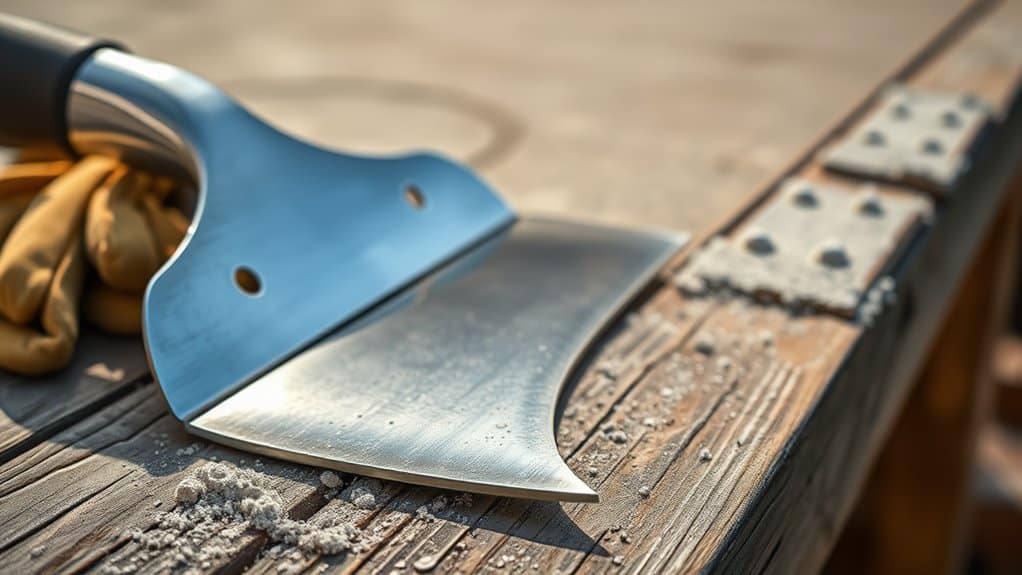
An edger is a vital tool for achieving clean, smooth edges on concrete surfaces. When choosing an edger, you’ll encounter various types, including hand edgers and power edgers, each designed for specific tasks.
| Edger Type | Best For | Key Features |
|---|---|---|
| Hand Edger | Small projects | Manual control, precision |
| Power Edger | Large areas | Speed, efficiency |
| Curved Edger | Decorative edges | Smooth curves |
| Steel Edger | Durability | Long-lasting materials |
Mastering different edging techniques will help you achieve the finish you desire. Whether you’re rounding corners or creating straight lines, using the appropriate edger will significantly improve the quality of your concrete work.
Measuring Tools
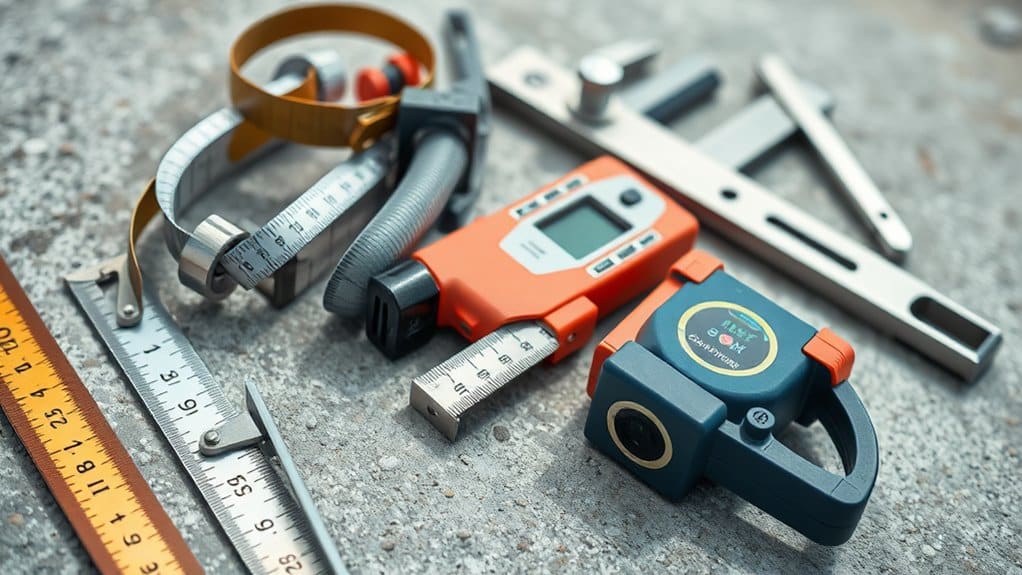
To ensure accuracy in your concrete projects, having the right measuring tools is crucial. Proper measurements can be the difference between a successful pour and expensive errors.
Here are three essential measuring tools for your toolkit:
- Tape Measures: A reliable tape measure enables you to quickly and accurately measure distances, ensuring your forms are the right size.
- Laser Levels: These tools provide precise levelling over long distances, removing guesswork and improving the quality of your project.
- Square Tools: Ideal for checking right angles, square tools help maintain consistency in your layouts.
Investing in these measuring tools will streamline your workflow and boost the precision of your concrete work, resulting in better outcomes and greater efficiency.
Chisel and Hammer

Once you’ve ensured accurate measurements, the next step in concrete work is using the right tools, particularly chisels and hammers.
Chisels are vital for shaping and finishing concrete surfaces. You’ll encounter various types, including flat, pointed, and bolt chisels, each suited for specific tasks. For instance, a flat chisel is ideal for smoothing edges, whereas a pointed chisel excels at breaking up tough spots.
When choosing a hammer, think about the materials; steel hammers are robust, while those with fiberglass handles offer better shock absorption and comfort.
The right combination of chisel and hammer not only boosts efficiency but also ensures precision in your concrete work. Select tools that align with your project’s requirements for the best results.
Safety Gear
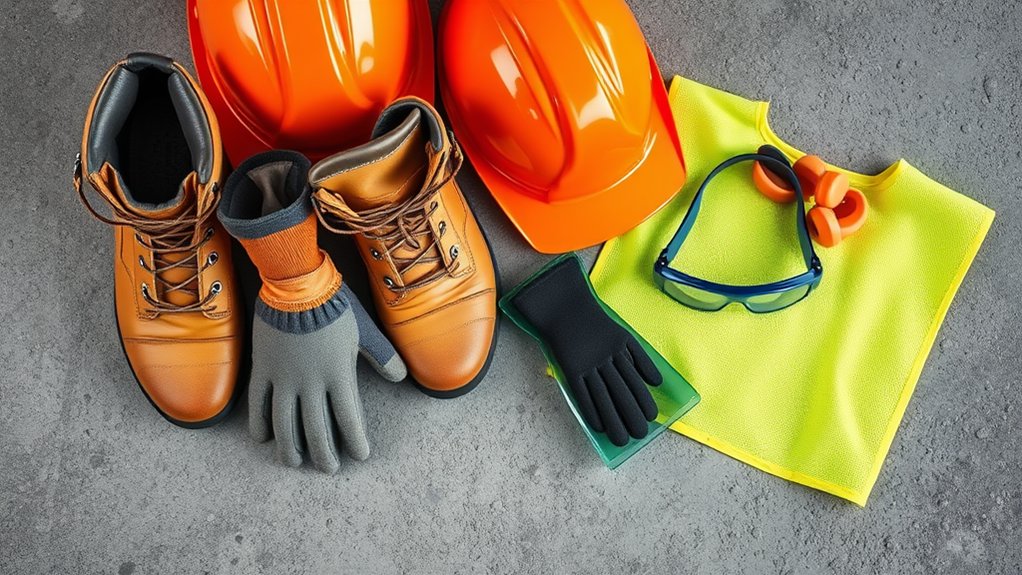
Safety gear is crucial for anyone working with concrete, as it helps protect against various hazards.
Following safety standards ensures not just your safety but also that of your colleagues. Always choose high-quality protective equipment to reduce risks on-site.
Here are three essential items:
- Safety Glasses: Shield your eyes from concrete splashes and flying debris.
- Steel-Toed Boots: Protect your feet from heavy tools and materials that could fall.
- Hearing Protection: Guard against loud machinery noise to prevent long-term hearing loss.
Using these vital safety tools helps create a secure working environment, allowing you to concentrate on your tasks without the worry of injuries.
Prioritising safety can boost both productivity and well-being on the job site.
Curing Blanket

A curing blanket is a vital tool for ensuring the best conditions for curing concrete. It helps maintain the ideal temperature during the curing process, which is crucial for the strength and durability of your concrete.
By covering fresh concrete with a curing blanket, you can protect it from temperature changes, moisture loss, and harsh weather. These blankets are usually insulated, designed to retain heat, which speeds up hydration and reduces the risk of cracking.
Choose a blanket that suits your local climate and specific project needs. Using a curing blanket not only improves the quality of your concrete but also leads to better project outcomes.
Frequently Asked Questions
How Do I Choose the Right Concrete Mixer Size?
To select the right size of concrete mixer, assess the capacity required for your project. For larger jobs, such as building extensions or driveways, a bigger mixer is more suitable. Conversely, for smaller tasks like garden paths or repairs, a compact mixer will suffice. Aim for a balance between efficiency and practicality to achieve the best results.
What Type of Trowel Is Best for Finishing?
Did you know that using the right trowel can enhance your finish quality by as much as 30%? For finishing work, stainless steel trowels are ideal due to their durability and precision. In contrast, wooden trowels can be beneficial for certain techniques, providing unique textures to your surfaces.
How Often Should I Replace My Safety Gear?
You should replace your safety gear every 1-3 years, depending on how often you use it and its condition. Regular maintenance of your safety equipment ensures it performs at its best. Understanding the lifespan of your protective gear is essential for prioritising safety and compliance at work. For instance, if you work in construction and wear helmets and gloves daily, you might need to replace them more frequently than someone who only uses them occasionally.
Can I Use a Bull Float for Small Projects?
Yes, you can definitely use a bull float for small projects. It effectively smooths the surface, improving the finish. The advantages of a bull float include better consolidation and levelling, making it perfect for various small tasks, like patios or garden paths.
What Are the Best Practices for Curing Concrete?
To ensure proper curing of concrete, employ methods such as water misting, wet hessian, or curing compounds. Keep the concrete moist for at least seven days to prevent cracking and improve strength. Regularly monitor the temperature to achieve the best results.
Conclusion
In summary, having the right tools is crucial for effective concrete work. For example, a contractor who completed a large driveway project with a concrete mixer, bull float, and vibrator managed to achieve a smooth finish and cut labour time by 30%. Investing in these essential tools not only improves the quality of your work but also enhances productivity. Equip yourself with these must-haves to approach any concrete job with confidence and precision.

Unlock the secrets to perfecting your concrete screeding technique for flawless results, but beware of common pitfalls that could undermine Read more

Get expert tips on maintaining your concrete mixer for lasting performance and discover essential practices that could transform your mixing Read more

Begin your journey with concrete vibrating screeds and discover essential tips that can transform your projects into stunning works of Read more