For a perfect concrete finish, using the right tools is essential. Start with screeds to level the surface; power screeds can save time and effort. Bull floats are excellent for smoothing larger areas, while magnesium floats are ideal for achieving fine details. Hand trowels are perfect for precise work on edges, and broom finishing tools add necessary texture and traction.
To prevent cracking, incorporate control joints and edgers to maintain the structure's integrity. Finally, polishing and sealing techniques will enhance both durability and appearance. Master these tools, and you'll elevate your concrete finishing skills significantly.
Key Takeaways
- Use power trowels for efficient finishing on large areas, ensuring a smooth and durable concrete surface.
- Opt for the right float materials, like magnesium or bull floats, to refine edges and achieve a polished finish.
- Incorporate screeds to guarantee proper levelling, which is essential for the overall quality of the finished concrete.
- Apply broom finishing techniques with suitable bristle types to improve traction and create the desired surface texture.
- Regularly maintain with sealants and polishing tools to prolong the life and enhance the appearance of the concrete finish.
Leveling and Smoothing Tools
When working with concrete, having the right levelling and smoothing tools is essential for achieving a flat, professional finish.
Start with screeds, which range from simple 2 x 4 straightedges to lightweight aluminium versions. These tools help level your concrete, ensuring a smooth base. For larger areas, consider a petrol-powered pavement leveller screed or a vibratory power screed, which efficiently pulls excess concrete and improves surface smoothness. Regular maintenance of these tools is crucial for their longevity and performance, as improper care can lead to rust prevention issues.
Once levelled, you'll need various float materials to refine the finish. Bull floats are perfect for levelling ridges and filling voids, while handheld darbies are useful for working the edges. Timing of tool application is crucial to achieve optimal results.
Hand floats, whether made of wood, magnesium, or resin, are crucial for consolidating aggregates and bringing the cream to the surface. Each material has its advantages; for instance, magnesium floats work well with air-entraining mixes but should be used at the appropriate time. Utilizing ergonomic designs in tools can significantly reduce operator fatigue.
Finally, power trowels provide a smooth finish to your slab, significantly enhancing surface quality.
With the right combination of levelling and smoothing tools, you can achieve a flawless concrete finish that endures over time.
Crack Prevention Tools
Achieving a smooth concrete finish is only part of the job; preventing cracks is vital for the longevity of your slab. To effectively manage crack control, start with a solid subgrade that's well-compacted. Use a concrete mix with a low water-to-cement ratio, and consider fibre reinforcement for added strength. In addition, integrating concrete crack locks can provide a reliable solution for repairing existing cracks and preventing future ones. Proper curing techniques are also crucial in maintaining the integrity of your concrete and minimizing the risk of cracking.
For joint placement, install control joints using a concrete grooving tool while the mix is still workable. This helps dictate where cracks may occur, reducing their impact. Once the slab has set, you can make additional control joints with a circular saw fitted with a concrete blade if necessary.
An edger is essential for rounding the edges of your slab, helping to prevent chipping that can lead to cracks. You should also think about applying a penetrating sealer to protect against water and salts. Utilizing proper sealing techniques can significantly enhance the durability of your concrete surface.
Regularly inspect your slab and seal any cracks promptly to prevent them from worsening. By using these crack prevention tools and techniques, you can enhance the lifespan and durability of your concrete.
Finishing Trowels

Finishing trowels are crucial for achieving a smooth finish on concrete slabs. Choosing the right material for your trowel is important for your specific project. Here's a brief overview of common finishing trowels:
| Trowel Type | Key Features | Best For |
|---|---|---|
| Blue Steel Trowels | Lightweight, flexible | General finishing tasks |
| Stainless Steel Trowels | Durable, corrosion-resistant | High-quality finish projects |
| High-Carbon Steel Trowels | Strong, heavy-duty | Heavy-duty projects |
| Magnesium/Aluminium Trowels | Smooth gliding, easy to handle | Final smoothing, detailing |
| Fresno Trowels | Long handle, reduces drag marks | Trowelling without stepping on slab |
Proper maintenance is key to extending the life of your trowels. Timing is crucial for effective concrete finishing, so be sure to judge the right moment to start troweling. Clean them after use to stop concrete from hardening on the surface, and store them in a dry place to prevent rust, especially with steel trowels. By understanding the different types and maintaining them well, you'll enhance your finishing results and achieve a professional-quality surface.
Broom Finishing Tools
Broom finishing tools are essential for creating textured surfaces on concrete, improving both appearance and safety. When choosing a broom, consider the following factors:
- Bristle Material: Opt for either stiff synthetic (nylon) or natural (horsehair) bristles based on your needs.
- Bristle Length: Common lengths include 2.5 inches and 3 inches, depending on your application.
- Head Width: Wider broom heads, such as 24, 30, or 36 inches, provide better coverage.
Timing is crucial for effective broom finishing; wait until the concrete is firm enough to walk on yet still soft enough for impressions.
Apply even pressure and pull the broom in one direction to create a uniform pattern. Overlapping strokes slightly ensures complete coverage and a consistent finish.
To achieve different textures, try various broom bristle types. For a slip-resistant surface, use medium-stiff bristles; softer bristles will give a finer finish. A rough texture can be achieved with steel brooms or stiffer bristles.
Proper cleaning and storage are vital for prolonging the life of your broom finishing tools.
Additional Hand Tools

When working with concrete, having the right hand tools is crucial for achieving a quality finish and durability. Key tools include screeds, bull floats, and darbies, which are essential for levelling the surface. Screeds level the concrete, bull floats fill voids and smooth out ridges, and darbies make smaller adjustments.
For smoothing, magnesium floats and resin floats are ideal for creating innovative textures without sealing the surface. Hand trowels and finishing trowels are vital for refining edges and corners, ensuring a polished appearance. Additionally, using high-quality hand tools ensures that you have the right tool for every concrete job, whether you are a professional or a DIY enthusiast.
To prevent cracking, use edgers and jointers to score the surface and control cracks, while tamping tools help remove air pockets. Maintaining an even slab with these levelling tools reduces stress points.
Don't forget about specialty trowels and finishing brushes for those final touches. With various trowel materials available, you can choose the right tools for your specific finishing needs. Each tool you select plays a part in the overall quality and longevity of your concrete project.
Specialized Tools
Specialised tools are vital for achieving a professional finish on concrete surfaces. Using the right tools not only boosts efficiency but also enhances the quality of your work.
Here are some key specialised tools you'll need:
- Power Trowels: Ideal for quickly smoothing large areas, available in both ride-on and walk-behind models.
- Mechanical Tube Finishers: Perfect for creating smooth finishes in pavements, using rotating tubes for effective results.
- Vibratory Screed Finishers: These tools utilise mechanical vibrators to efficiently consolidate concrete, which is essential for achieving the right concrete properties in your projects.
When choosing your tools, consider features like ergonomic handle designs to minimise fatigue and durable blade materials. High-quality stainless steel or blue steel trowels will give you excellent finishes. Additionally, investing in concrete finishing trowels can further enhance the quality of your concrete surfaces.
Also, think about the bristles of your brooms to achieve the desired surface texture.
By incorporating these specialised power tools into your finishing process, you'll streamline your workflow and improve the overall appearance of your concrete projects.
Investing in the right tools and understanding their uses will help you achieve standout, long-lasting results.
Choosing the Right Screed

When selecting the right screed for your project, it's important to know the different types available, such as wooden, roller, mechanical, and laser screeds. Each type is suited to specific tasks, so think about your project's size, the level of flatness required, and the type of concrete you'll be using. Using the right screeding technique will ensure you achieve a smooth, professional finish that meets your project's specifications. For instance, laser screeds are ideal for large areas where precision is crucial, while wooden screeds are great for smaller jobs or DIY projects. Additionally, investing in the appropriate screed can significantly affect your project's overall quality and cost.
Types of Screeds
Choosing the right screed for your project is crucial, as different types offer specific benefits suited to your construction needs. Understanding the various types can help you make an informed choice.
Here are three common types of screeds to consider:
- Bonded Screeds: These screeds are fully adhered to the substrate with a bonding agent, making them ideal for heavy-duty areas like car parks. They typically range from 25 to 40 mm in thickness using cement and sand.
- Unbonded Screeds: Laid over a damp proof membrane (DPM), these screeds help prevent rising damp. They generally require a minimum thickness of 50 mm with cement and sand.
- Liquid or Flow Screeds: Known for their self-levelling properties, these screeds create a smooth finish without extensive finishing work.
When selecting a screed, consider the specific requirements of your project. Each type has unique characteristics that influence its performance and suitability for different environments.
Assess your needs carefully to choose the right screed for your task.
Proper Screed Techniques
Proper screed techniques are crucial for achieving a level and smooth concrete surface, ensuring the longevity and performance of your project. Start with solid preparation: clear the area of debris and set up your formwork, checking it's level with a laser level or mason's line. Pre-tamp the foundation for added stability before pouring the concrete.
When selecting tools, choose the right screed for your requirements. Wooden 2x4s, magnesium straightedges, and power screeds each have their benefits. Ensure any wooden straightedges are straight and free from warping. Magnesium and aluminium options are lighter and easier to clean, while power screeds are ideal for larger projects, as they efficiently vibrate the concrete for optimal results.
During the screeding process, rest the screed on top of the forms to maintain levelness. Use a back-and-forth motion to skim the surface, adding concrete to any low spots as needed. Keep an eye on the screed to ensure it stays level throughout.
Benefits of Magnesium Floats
Using magnesium floats gives your concrete a noticeably smoother surface, making it stand out.
Their design enhances air-entraining properties, which is crucial for durability across different concrete mixes.
This not only improves the quality of your finish but also helps with the evaporation process.
Enhanced Surface Smoothness
Using magnesium floats significantly improves the surface smoothness of fresh concrete, making them a top choice for professionals in the UK. The benefits of magnesium floats include their lightweight design, which allows for easier handling compared to heavier aluminium floats, and their ability to smooth surfaces without dragging, unlike wood or resin tools. This makes them particularly effective for various concrete finishing techniques.
Here are some key advantages of magnesium floats:
- Lightweight: Easier to manoeuvre than aluminium floats.
- Surface Opening: They help open the surface pores, allowing for evaporation and preventing premature sealing.
- Versatile: Suitable for all types of concrete, provided they're used at the right time.
To achieve the best results, wait for bleed water to evaporate before using the float. Hold it at a 45° angle and apply light pressure with sweeping motions. This technique ensures a smooth finish without damaging the surface.
Keep in mind that while magnesium floats excel in providing smoothness, they aren't ideal for applying shake-on colour hardeners. For optimal results, incorporate these floats into your concrete finishing process, adhering to the recommended timing and technique.
Improved Air-Entraining Properties
How do magnesium floats improve the air-entraining properties of concrete? They enhance the stability of air bubbles while boosting surface durability, making them a popular choice among professionals. Magnesium floats effectively control the air-entraining effects in concrete mixes, ensuring that small, stable air bubbles form without sealing the surface too soon. This facilitates proper evaporation of bleed water and prevents disruption of the finish.
Here's a comparison of various float types in terms of air-entraining properties:
| Float Type | Air Bubble Stability | Surface Durability |
|---|---|---|
| Magnesium | High | Excellent |
| Wood | Moderate | Good |
| Aluminium | Low | Very Good |
| Resin | Moderate | Good |
Importance of Edging Techniques
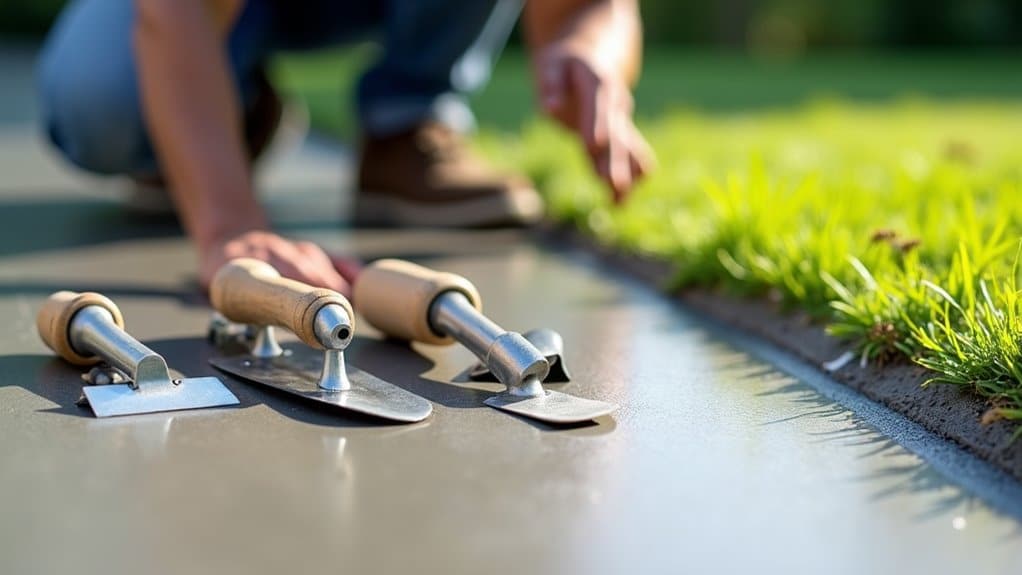
Utilising effective edging techniques is essential for enhancing the durability and appearance of concrete surfaces. By using these methods, you can significantly improve both the lifespan and visual appeal of your concrete projects. Proper edging not only reinforces the edges of the concrete but also guards against damage from nearby plants.
Here are some key benefits of mastering edging techniques:
- Improves Appearance: Well-defined edges enhance the overall look of your outdoor area.
- Prevents Damage: Edging serves as a barrier, protecting your concrete from root damage.
- Reduces Maintenance: Minimising weed growth makes upkeep easier.
Techniques such as chamfering can prevent chipping and ensure that concrete edges remain intact for years. Tools like edgers and chamfer tools are vital for achieving smooth, beveled edges that enhance safety by removing sharp corners.
Consistent application of proper formwork and selecting robust materials will also contribute to the longevity of your concrete edging.
Incorporating these techniques not only extends your concrete's lifespan but also improves the overall aesthetic of your property.
Take the time to perfect these methods for better outcomes.
Tips for a Flawless Finish
Achieving a flawless finish on concrete surfaces starts with effective edging techniques. To refine your surface texture, begin with proper floating methods. Use bull floats for larger areas and magnesium floats for the edges, ensuring you float before moisture appears. This smooths and levels the concrete while eliminating air bubbles.
Next, choose troweling methods suited to your project's size. For smaller areas, hand troweling provides precise control, while power troweling efficiently covers larger surfaces. Both methods compress the concrete, enhancing the finish.
Broom finishing is crucial for creating a non-slip surface. Simply drag a broom across the concrete while it's still plastic but not shiny to improve traction and reduce slip hazards. Select the appropriate broom type for your desired texture.
Finally, consider polishing and sealing your concrete. Use grinders with diamond abrasives for a smooth finish, and apply sealants to boost durability and protect against stains.
These finishing techniques work together to create a flawless concrete surface, ensuring it lasts and looks great.
Frequently Asked Questions
What Type of Concrete Mix Is Best for Finishing?
For finishing, a crack-resistant concrete mix is ideal. It reduces surface cracking through specific additives. Using proper drying techniques also ensures a smooth, long-lasting surface, enhancing the overall look and durability of your project. For instance, if you're paving a patio, this mix will help maintain its appearance over time.
How Long Should I Wait Before Finishing Concrete?
You should wait 2-4 hours before finishing concrete, allowing any surface bleed water to evaporate. Use proper curing techniques and finishing methods during this period to avoid overworking the surface and to achieve the best results. For instance, if it's a warm day, you might find the bleed water disappears more quickly, so keep an eye on it.
Can Weather Conditions Affect Concrete Finishing?
Did you know that humidity can slow down curing by as much as 50%? Weather conditions play a significant role in concrete finishing. For instance, high temperatures can lead to rapid evaporation of moisture, while cooler temperatures can prolong curing and may result in defects. It's essential to consider these factors to ensure a successful finish.
What Safety Gear Should I Use When Finishing Concrete?
When finishing concrete, always wear protective eyewear to protect your eyes from splashes and dust. Use a respiratory mask to prevent inhaling harmful particles. Ensure your safety gear complies with UK safety standards for optimal protection during the task.
How Do I Clean and Maintain My Concrete Tools?
To clean and maintain your concrete tools, use suitable cleaning solutions right after use. Storing your tools properly helps prevent rust; apply a light oil and think about using protective coatings to prolong their lifespan and ensure optimal performance.
Conclusion
In the realm of concrete finishing, choosing the right tools and techniques is crucial. As the saying goes, "A good start is half the battle." By implementing effective leveling, smoothing, and edging methods, along with suitable tools, you can achieve a flawless finish that endures. Invest in quality equipment and take the time to learn how to use it properly. This will not only improve the visual appeal of your project but also ensure its long-lasting durability.

Learn about the diverse types of concrete used in construction and discover which mix can transform your next project.

For a long-lasting driveway that laughs in the face of the UK's unpredictable weather, the C20 concrete mix is your Read more

In the UK, you've got a a lot of lightweight concrete types to choose from, each with its unique perks. Read more