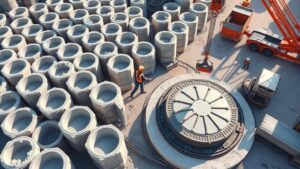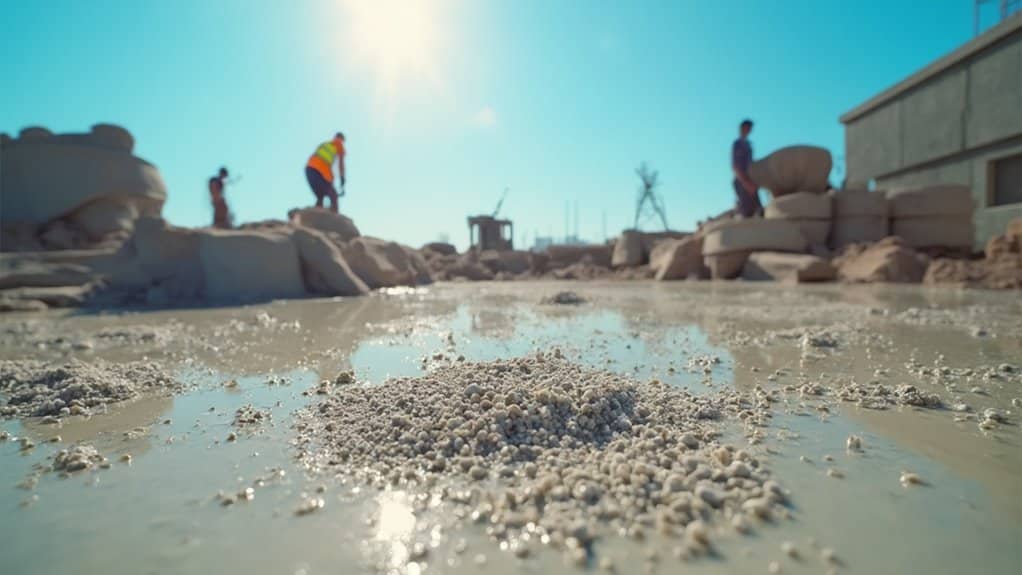
Lightweight ready-mix concrete is a type of concrete with a density ranging from 1440 to 1840 kg/m³. This reduced weight makes it easier to handle and improves structural efficiency. It also enhances thermal insulation and seismic performance. By incorporating lightweight aggregates such as pumice or expanded shale, it provides excellent sound absorption. This concrete is particularly suitable for high-rise buildings and projects that require thermal efficiency. There's plenty more to learn about its properties and specific applications that can benefit your construction projects.
Key Takeaways
Lightweight ready-mix concrete has a density ranging from 1440 to 1840 kg/m³, which helps to minimise structural loads in high-rise buildings and roofing applications. This type of concrete also provides excellent thermal insulation and sound absorption, enhancing energy efficiency and creating quieter spaces.
The incorporation of lightweight aggregates, such as pumice and expanded shale, affects moisture retention, workability, and overall performance. Custom mix designs enable specific strength and durability, making it suitable for a variety of construction projects.
Common applications include high-rise buildings, long-span structures, and any projects that benefit from reduced weight and improved seismic performance.
Definition of Lightweight Ready-Mix Concrete
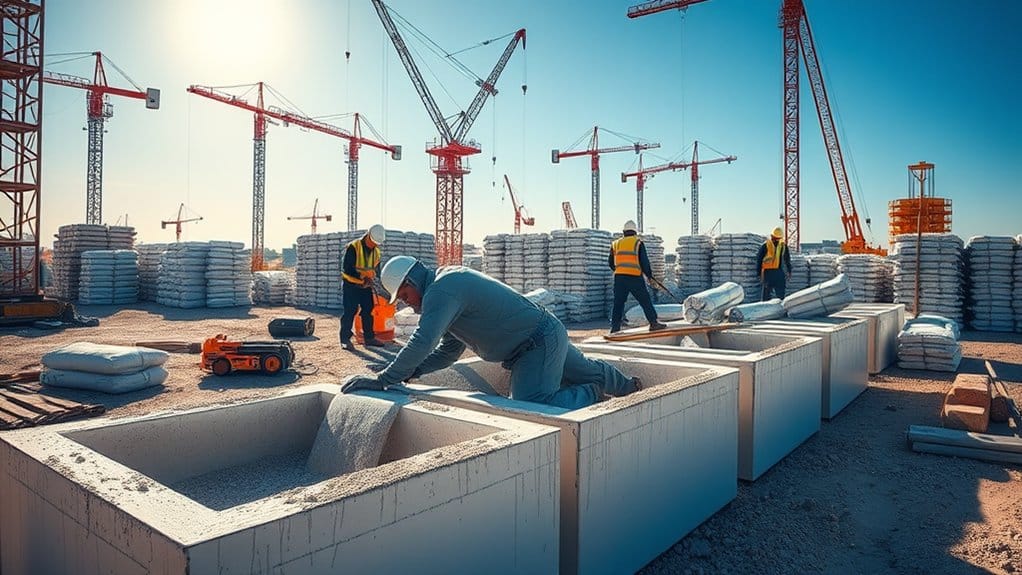
Lightweight ready-mix concrete is a specific type of concrete known for its reduced density, typically between 1440 to 1840 kg/m³ (90 to 115 lb/ft³). This lightweight feature significantly lessens the load on structural components, making it particularly beneficial for high-rise buildings and roofing applications. The reduced weight improves workability, making it easier to handle and place on-site. Furthermore, lightweight concrete offers enhanced thermal insulation, which boosts the energy efficiency of buildings. By allowing for smaller structural elements, it can also help lower material costs while still providing compressive strength comparable to standard concrete. Understanding these advantages can aid you in selecting the right materials for your construction projects. Additionally, lightweight concrete's increased moisture retention can lead to longer drying times, which is crucial to consider during project planning. Its sustainability benefits stem from utilizing natural or recycled materials, making it an eco-friendly choice for modern construction.
Aggregate Materials Used in Lightweight Concrete

Aggregate materials are crucial in making lightweight concrete, affecting both its performance and uses.
There are three primary types of aggregates: natural, processed, and synthetic. Natural aggregates like pumice and scoria are excellent for insulation due to their porous nature. Processed aggregates, such as expanded shale, improve durability through heat treatment. Synthetic options like fly ash provide sustainability benefits. The choice of aggregates impacts moisture retention, which can influence drying times and overall durability. Additionally, the types of lightweight concrete vary based on the aggregates used, which contribute to its lower density.
Mixing Process and Customization
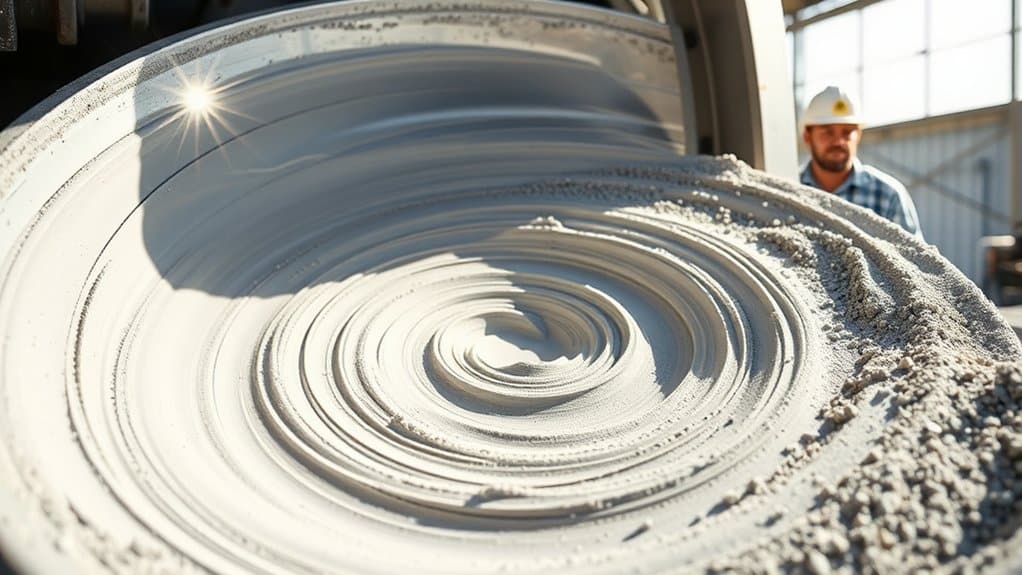
In the mixing process of lightweight ready-mix concrete, choosing the right aggregates is crucial for achieving the desired strength and weight. It's important to manage the water-cement ratio carefully to ensure optimal workability without compromising the integrity of the mix. Customising your mix designs to meet specific project requirements can significantly enhance performance and efficiency, making this an essential part of the production process. Additionally, mixing on-site can further improve control over the process and reduce time pressures associated with ready-mix deliveries. The use of lightweight aggregates not only reduces the dead load but also contributes to enhanced thermal performance and energy efficiency in building designs.
Aggregate Selection Importance
Choosing the right aggregates is crucial for optimal performance in lightweight ready-mix concrete, particularly when considering your project's specific needs.
The selection of aggregates significantly affects their performance and must meet project specifications. For example, lightweight aggregates such as LWIC improve thermal insulation and fire resistance, making them ideal for various uses.
It's important to assess the required compressive strength and density for structural integrity. Different aggregates provide distinct properties, allowing for tailored solutions that cater to both aesthetic and practical requirements.
Moreover, consider the cost implications, as the type and availability of aggregates can impact overall project expenses. A well-selected aggregate not only enhances durability but also supports energy efficiency and sustainability. Additionally, the water-cement ratio plays a key role in determining the strength of the final concrete mix.
Water-Cement Ratio Management
Effective management of the water-cement ratio is crucial for optimal concrete performance. Keeping a precise control over this ratio directly affects hydration efficiency, which is vital for strength and durability.
Generally, a ratio of between 0.4 and 0.6 is ideal, but adjustments may be needed depending on project requirements. Lower ratios can improve strength but might compromise workability, while higher ratios enhance workability at the risk of structural integrity.
When mixing, ensure uniformity by calibrating equipment and following recommended mixing times. Temperature also significantly impacts hydration rates, so it's important to monitor it closely.
Customising the water-cement ratio allows for tailored mixes for specific applications, enhancing performance and minimising waste.
Tailored Mix Designs
When designing tailored mix designs for lightweight ready-mix concrete, several factors ensure the final product meets specific project requirements. Key considerations include composition flexibility, material selection, and performance targets. By optimising performance, you can achieve the desired strength and durability while also addressing environmental impacts through the use of recycled materials.
| Mix Design Aspect | Customisation Options | Performance Benefits |
|---|---|---|
| Aggregate Type | Lightweight aggregates | Reduced weight, improved insulation |
| Additives | Chemical admixtures | Enhanced workability, adjusted setting time |
| Specialty Mixes | Fibre-reinforced, self-compacting | Increased strength, reduced cracking |
This level of customisation not only meets your concrete needs but also ensures consistent quality through precise batching and controlled mixing processes.
Key Advantages of Lightweight Ready-Mix Concrete

Lightweight ready-mix concrete offers several benefits that improve construction efficiency and performance. Its reduced weight makes it easier to handle and transport, helping to speed up project timelines.
Often made with recycled or sustainable aggregates, this concrete type also provides environmental benefits and lowers the carbon footprint. Because it requires less material for the same volume, you can save on foundation costs and reduce the need for extra insulation.
Additionally, its properties enhance seismic performance and sound absorption, making it suitable for lightweight applications. By opting for lightweight ready-mix concrete, you streamline construction while supporting sustainable building practices.
Structural and Insulation Applications

Many construction materials find it challenging to balance strength and weight, but lightweight ready-mix concrete stands out in both structural and insulation applications. Its reduced dead load boosts structural efficiency, allowing for smaller foundations and less reinforcing steel, which can lead to cost savings.
This lightweight option supports longer spans and enhances seismic performance, making it ideal for high-rise buildings and bridge decks.
In terms of insulation, lightweight concrete provides excellent thermal properties, significantly lowering heat transfer and energy consumption. It also offers superior sound insulation, creating quieter environments.
By maintaining stable interior temperatures in roofs and walls, it improves overall energy efficiency while ensuring fire resistance through thinner fire-rated slabs.
Lightweight ready-mix concrete is a versatile solution for contemporary construction challenges.
Physical Properties of Lightweight Ready-Mix Concrete

When assessing lightweight ready-mix concrete, it's important to note its density, which usually ranges from 1440 to 1840 kg/m³.
This reduced density affects its compressive strength, typically between 17.2 to 41.4 MPa, making it ideal for specific uses such as in non-structural applications or insulating layers.
Moreover, the material's moisture absorption must be managed carefully to ensure optimal performance in different conditions.
Density Range Comparison
Understanding the density range of lightweight ready-mix concrete is vital for optimising its use in construction.
Generally, lightweight concrete has a density of 90 to 115 lb/ft³ (1440 to 1840 kg/m³), which is significantly lower than normal concrete's density of 140 to 155 lb/ft³ (2240 to 2480 kg/m³). This reduced density is achieved by using lightweight aggregates such as expanded clay or shale, which also affect the overall structural load.
Different types of lightweight concrete, including structural and insulating varieties, offer varying densities, allowing for design flexibility.
By choosing the right density, you can improve thermal performance and energy efficiency while fulfilling specific project requirements.
Grasping these details aids in better material selection and application in your construction projects.
Compressive Strength Characteristics
The compressive strength characteristics of lightweight ready-mix concrete are crucial for its effectiveness in various construction projects.
Typically, compressive strength tests show a minimum 28-day strength of 2,500 psi (17 MPa), which is vital for load-bearing structures like bridges and platforms. The strength can vary depending on the type and size of aggregates used, with common design strengths ranging from 3,000 to 5,000 psi.
For higher performance requirements, precast options can surpass 5,000 psi, with some projects achieving strengths of up to 8,700 psi. To enhance compressive strength, water-reducing admixtures can be employed, but it's also important to consider how aggregate absorption affects the mix design.
Understanding these characteristics is key to ensuring successful outcomes in your construction endeavours.
Moisture Absorption Effects
Moisture absorption significantly affects the physical properties of lightweight ready-mix concrete, influencing its workability and long-term performance.
The porous nature of lightweight aggregates enables them to retain considerable moisture, absorbing between 5% and 45% of their weight in water. This can lead to extended drying times compared to standard concrete, which may pose challenges for projects with tight schedules.
To address these issues, pre-saturating aggregates before mixing can improve stability and workability. Using water-reducing admixtures is also effective in managing moisture content.
Understanding how moisture behaves is crucial, especially in projects where drying times impact timelines and flooring readiness. By considering these factors, you can enhance the performance and durability of lightweight ready-mix concrete in your projects.
Durability Concerns and Testing Methods
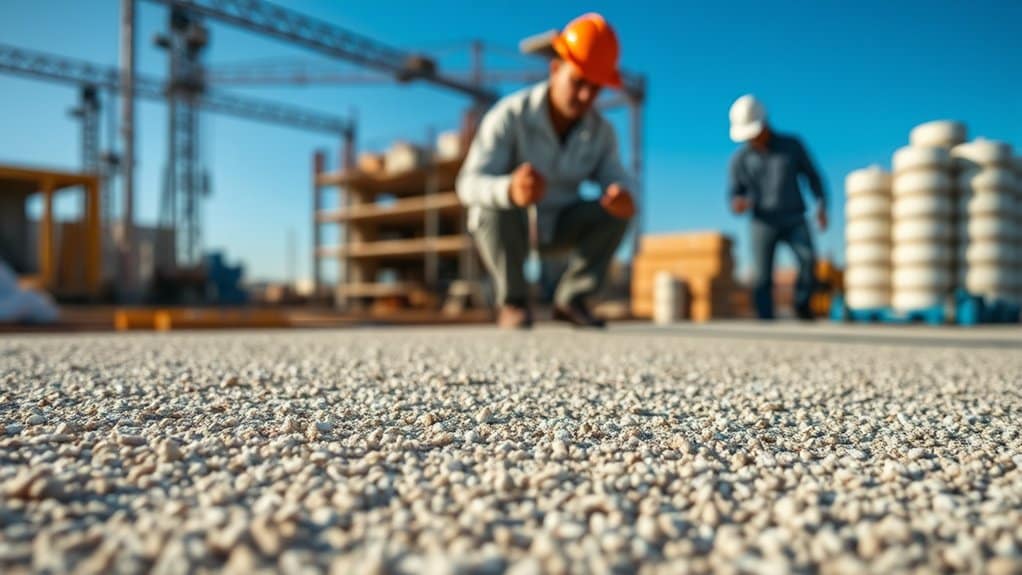
Lightweight concrete has benefits like reduced weight and better insulation, but it often faces durability issues due to higher water absorption and lower strength compared to standard concrete.
Moisture retention can lead to erosion and structural deterioration over time. To mitigate these problems, consider using integral concrete sealers and adding silica fume to the mix for improved mechanical properties.
It's crucial to use accurate testing methods to assess moisture levels; the Rapid RH® method is recommended for compliance with British standards.
Avoid traditional methods like calcium chloride, as they aren't effective with lightweight concrete.
Understanding these factors will help you make better decisions about the use and longevity of lightweight concrete.
Production and Delivery Process of Lightweight Ready-Mix Concrete
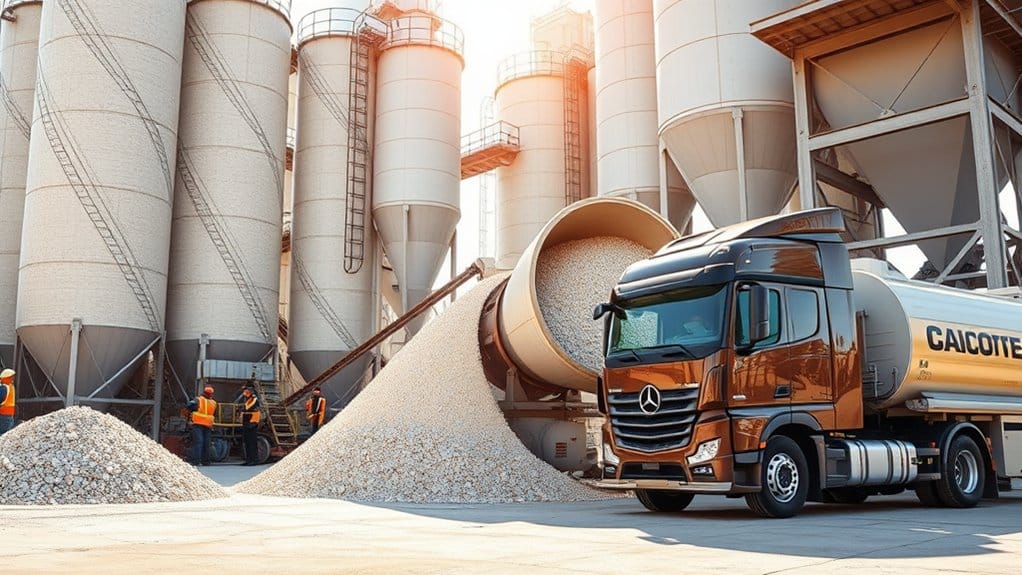
Durability problems in lightweight concrete often arise from its specific composition, necessitating careful management during production and delivery.
Effective production techniques involve selecting lightweight aggregates such as expanded polystyrene, perlite, or expanded clay. Batching plants use electronic weigh hoppers to accurately measure cement, water, and aggregates, ensuring a consistent mix that balances low density with strength.
For transportation, ready-mix concrete is delivered in specially designed transit mixers. It's crucial to coordinate delivery logistics effectively, keeping the concrete workable and ensuring it arrives on site when needed.
Maintaining controlled production conditions and timely delivery is key to preserving the quality and performance of lightweight ready-mix concrete.
Frequently Asked Questions
How Does Lightweight Concrete Compare to Traditional Concrete in Cost?
In your cost analysis, lightweight concrete generally incurs higher initial costs than traditional concrete. However, a detailed price comparison shows potential long-term savings due to reduced structural loads and lower foundation costs, which can be particularly advantageous for larger projects. For instance, using lightweight concrete in multi-storey buildings can significantly decrease the overall structural requirements, ultimately saving money in the long run.
Can Lightweight Concrete Be Used for Outdoor Applications?
Lightweight concrete is remarkably durable for outdoor use. Its lightweight nature and insulation properties make it ideal for applications like marine barriers, roofing, and various structures. It offers strength while maintaining performance in challenging weather conditions, making it a reliable choice for outdoor projects.
What Is the Lifespan of Lightweight Ready-Mix Concrete?
The lifespan of lightweight ready-mix concrete largely hinges on its durability and maintenance. If properly cured and exposed to suitable environmental conditions, you can expect structures to last between 30 to 50 years or even longer, while requiring minimal upkeep. For instance, a well-maintained lightweight concrete driveway can serve you well for decades.
Are There Specific Regulations for Using Lightweight Concrete?
Yes, there are specific regulations for using lightweight concrete in the UK. It's essential to comply with safety standards, such as the relevant British Standards and local building regulations, to ensure quality and structural integrity during both design and production. For instance, ensuring your lightweight concrete meets the required performance criteria can help prevent issues like cracking or inadequate load-bearing capacity.
How Do Climate Conditions Affect Lightweight Concrete Performance?
Climate conditions significantly influence the performance of lightweight concrete. High humidity can boost moisture absorption, which improves thermal insulation. Conversely, extreme temperatures can affect the concrete's strength. Managing these variables is essential to ensure durability and optimal performance across different environments. For example, in a coastal area with high humidity, lightweight concrete might perform better in insulation, whereas in a colder region, it's vital to monitor temperature fluctuations to maintain structural integrity.
Conclusion
In summary, lightweight ready-mix concrete is a significant advancement in construction materials. Its unique properties provide exceptional versatility for various applications, including structural support and insulation. By grasping its composition and production methods, you can effectively leverage its benefits. This innovative solution can enhance your projects, lower costs, and boost energy efficiency, making your construction efforts simpler and more effective.

Learn about the diverse types of concrete used in construction and discover which mix can transform your next project.

For a long-lasting driveway that laughs in the face of the UK's unpredictable weather, the C20 concrete mix is your Read more

In the UK, you've got a a lot of lightweight concrete types to choose from, each with its unique perks. Read more