To select the right strength grade for your ready-mix concrete, start by considering your intended use, whether it's for a residential or commercial project. Assess the load requirements, taking into account both dead loads (the weight of the structure itself) and live loads (the weight of occupants and furnishings).
Next, consider environmental factors such as climate and soil conditions, as these can affect the concrete's durability. It's also essential to review the mix design and ensure it includes high-quality aggregates to achieve optimal performance.
By understanding these factors, you can make a well-informed choice that meets your project's specific needs.
Key Takeaways
- Assess the load requirements of your project, distinguishing between static and dynamic loads to determine the necessary strength.
- Consider the specific application, whether it's a residential or commercial project, to select an appropriate concrete grade (M10-M55).
- Evaluate environmental factors, such as climate and soil conditions, to ensure the durability and performance of the concrete mix.
- Review the recommended slab thickness for your type of structure, as this affects the required concrete strength.
- Factor in your budget, balancing strength needs with cost considerations for both standard and high-strength mixes.
Understanding Concrete Grades and Their Applications

When choosing concrete for your project, it's essential to understand the different grades and their uses. Each type of concrete has a specific purpose, and knowing the grades can help you make better decisions.
Low-grade concrete (M10-M15) is suitable for non-load-bearing applications, such as garden paths or small walls.
Ordinary grade concrete (M20) works well for residential buildings with light load requirements, like single-storey homes. C25 concrete is often utilized in medium-scale construction due to its reliable compressive strength, which is crucial in determining the right application for your project.
For commercial structures needing more strength, standard grades (M25-M55) are appropriate.
High-strength concrete (M60+) is necessary for heavy-duty projects, such as skyscrapers and bridges.
There are also specialty mixes designed for particular conditions, like resisting freeze-thaw cycles.
Assessing Load Requirements for Your Structure

Selecting the appropriate concrete grade is just one part of building a sturdy structure; understanding load requirements is equally crucial. It's important to distinguish between static and dynamic loads, as these will affect the thickness of the slab and the reinforcement needed. Additionally, the load capacities of simply supported concrete slabs vary with slab thickness and span lengths, influencing your design choices. Incorporating rebar in concrete improves tensile strength, helping to prevent cracking under pressure. Be sure to consider both dead loads (the weight of the structure itself) and live loads (the weight of occupants and furniture) in your calculations to ensure structural integrity. Neglecting this can lead to expensive repairs and safety risks.
| Load Type | Typical Capacity (kN/m²) | Recommended Slab Thickness (mm) |
|---|---|---|
| Residential | 1.5 | 100-150 |
| Commercial | 5 | 150-200 |
| Heavy Industrial | 10 | 150-300 |
Evaluating Environmental Factors Impacting Concrete
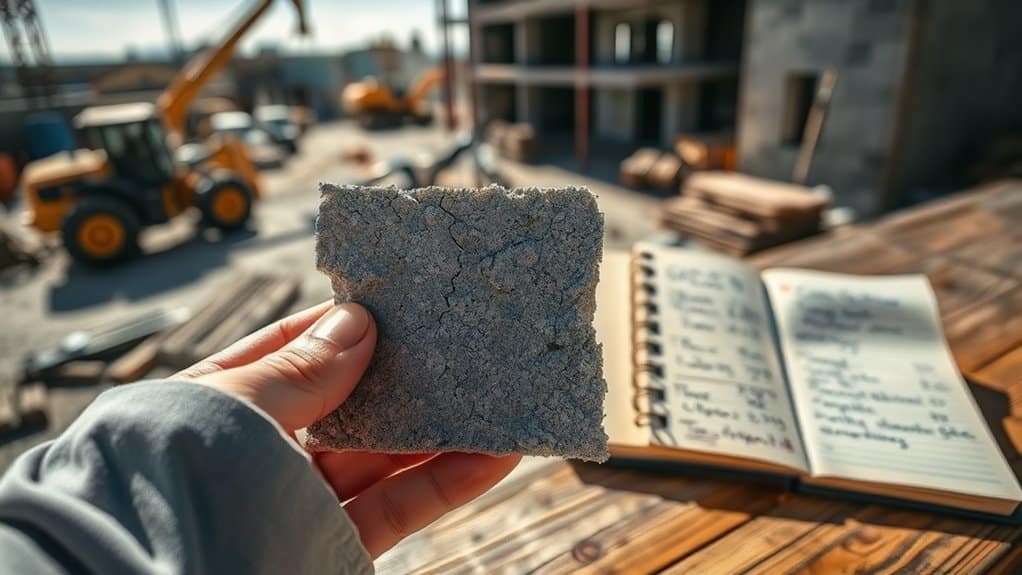
When selecting the appropriate strength grade for ready-mix concrete, it's essential to take into account climate conditions, exposure scenarios, and seasonal variations. These environmental factors significantly impact concrete's performance, influencing its strength and durability. For example, in colder climates, you may need a mix that can withstand freezing temperatures, while in coastal areas, resistance to saltwater is crucial. Additionally, evaluating soil conditions can help ensure the selected concrete mix meets the structural demands of the project. Choosing air-entrained concrete can enhance freeze-thaw cycle resistance, ensuring durability during harsh winter conditions.
Climate Considerations
While environmental factors significantly affect concrete performance, understanding how climate influences strength selection is crucial for optimal results.
Consider these key climate factors:
- Temperature Management: High temperatures can speed up cement setting, which may lead to reduced workability and strength.
- Humidity Control: Maintaining humidity levels between 85-90% is vital for effective hydration and strength development.
- Curing Conditions: The ideal curing temperature ranges from 12 °C to 22 °C; any deviations can compromise concrete integrity.
- Local Weather Patterns: Being aware of local weather extremes, such as freeze-thaw cycles, is essential for ensuring concrete durability.
Exposure Conditions
Understanding how climate factors affect concrete performance is crucial for assessing exposure conditions that impact durability.
Different environments, such as extreme weather or coastal areas, require tailored concrete mixes to mitigate environmental damage. For example, in freeze-thaw regions, using air-entrained concrete improves frost resistance.
In coastal areas, high chloride ion levels call for corrosion inhibitors to safeguard rebar. Urban settings with heavy traffic necessitate stronger mixes to endure loads and vibrations.
Additionally, soil conditions like acidity and sulfate content can weaken concrete over time.
Seasonal Variations
Seasonal variations significantly impact concrete performance, affecting its properties during the curing process. Proper temperature management and humidity control are essential for achieving the desired strength and durability.
Key factors to consider include:
- Temperature Influence: High temperatures can speed up hydration, but they may also compromise overall strength.
- Setting Time: The ambient temperature affects both initial and final setting times, which is crucial for early age development.
- Moisture Management: Keeping moisture levels stable during curing is vital to prevent cracking and ensure long-lasting durability.
- Wind Effects: Increased wind can lead to quicker moisture loss, highlighting the need for effective curing methods.
Understanding these elements can help ensure the best performance of concrete across different seasons.
Selecting the Right Mix Design for Strength and Durability

When choosing the right concrete mix design for strength and durability, it's important to consider your project's specific requirements.
Think about the type of structure and the environmental conditions, as these will guide your mix design. For example, residential projects typically require mixes with strengths of around 20 to 25 N/mm², while commercial applications often need higher strengths.
Pay close attention to the water-cement ratio; a lower ratio can significantly improve both strength and durability.
Adding suitable admixtures can also enhance performance by reducing permeability. It's advisable to conduct performance testing with trial batches to ensure your mix meets the desired specifications.
Lastly, consult with suppliers to ensure compliance with British Standards and local regulations, striking a balance between strength and cost for your project's success.
Importance of Proper Curing and Aggregate Quality

Choosing the right mix design is just one part of achieving optimal concrete performance; proper curing and the quality of aggregates are equally important.
Effective curing helps maintain moisture, prevents cracking, and ensures the structure's strength. Here are some key points to consider:
- Curing duration: Aim for a minimum of 28 days to ensure thorough hydration.
- Curing methods: Techniques like sprinkling, ponding, or using curing membranes yield consistent results.
- Aggregate selection: Opt for high-quality aggregates to improve workability and strength.
- Environmental factors: Be mindful of temperature conditions that could affect the curing process.
Cost Considerations and Budget Constraints
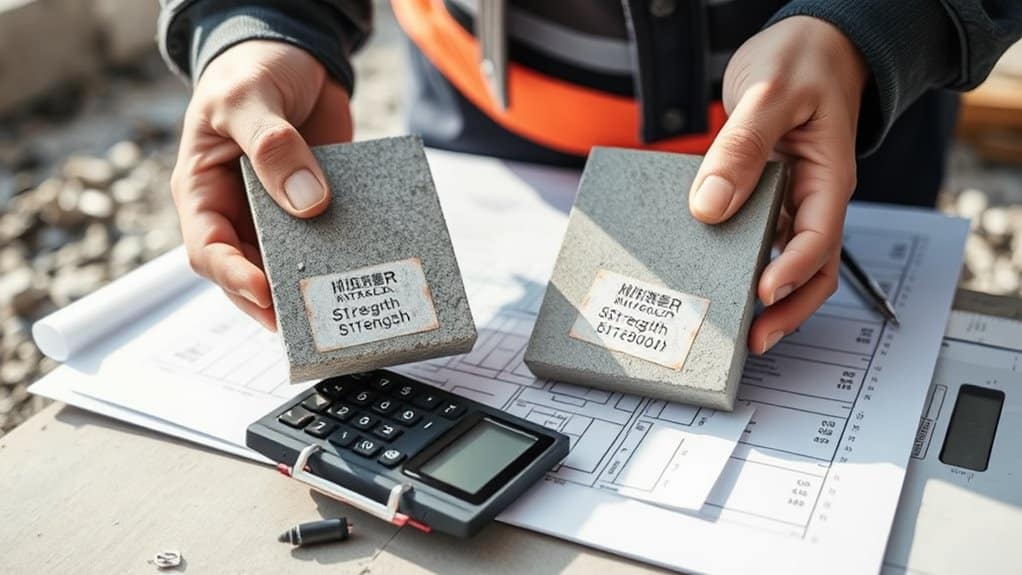
When selecting the appropriate strength grade for ready-mix concrete, it's essential to balance strength with cost.
Local sourcing of materials can significantly influence your budget, as prices fluctuate based on availability and demand. For instance, using locally sourced aggregates may reduce transport costs.
Also, consider long-term durability as a form of investment; opting for a higher strength grade may incur more upfront expense but can prevent costly repairs in the future.
Strength vs. Cost Trade-off
Balancing strength and cost is crucial when selecting ready-mix concrete, as the financial implications of different strength grades can significantly affect your project's budget.
Here are key factors to consider for strength optimisation and cost efficiency:
- General Cost Range: Standard mixes typically range from £95 to £115 per cubic metre.
- Mix Strength Variations: Higher strength mixes, such as 34.5 MPa (5,000 psi), can cost between £150 and £180 per cubic metre.
- Location Impact: Costs may rise in urban areas, reaching between £150 and £220.
- Additional Charges: Be mindful of delivery fees and small load charges, which can add up quickly.
Local Material Sourcing
Choosing the right strength grade for ready-mix concrete isn't just about balancing strength and cost; it also involves the benefits of sourcing materials locally. Working with local suppliers can lead to significant savings and improved project efficiency.
| Advantages of Local Suppliers | Benefits of Regional Materials |
|---|---|
| Lower transportation costs | Materials tailored to local conditions |
| Prompt delivery | Better quality control |
| Reduced inventory needs | Options for customisation |
| Streamlined logistics | Familiarity with local challenges |
| Cost-effective sustainability | Consistency in material performance |
For instance, using a local supplier not only cuts down on transport expenses but also ensures that the materials are suited to the specific climate and soil conditions of your project area. This can lead to better outcomes and a more efficient build process.
Long-term Durability Investment
Investing in long-term durability for ready-mix concrete requires careful consideration of costs and budgets.
It's essential to assess how your choices influence both initial outlay and future maintenance.
- Opting for higher strength grades can provide significant durability advantages.
- Evaluate the specific application to determine the required compressive strength.
- Take into account environmental conditions that could affect the concrete's lifespan.
- Find a balance between budget limitations and material choices to ensure optimal performance.
While the initial expense for durable concrete may seem daunting, such investments can lower lifecycle costs and minimise repairs.
Sustainable Practices in Concrete Selection

Sustainable practices in concrete selection are vital for minimising the environmental impact of construction projects.
Using sustainable materials, such as recycled aggregates and high-volume fly ash, can significantly reduce your carbon footprint and promote waste reduction. Slag cement not only boosts durability but also makes use of waste products.
Sourcing materials locally cuts down on transportation emissions and supports local economies.
Adopting energy-efficient production methods and recycling concrete wash water helps to conserve precious resources.
Additionally, optimising aggregate gradation improves density, which can reduce the amount of material needed.
Incorporating supplementary cementitious materials (SCMs) allows for a decrease in the cement content required, effectively diverting waste.
Together, these practices pave the way for a more sustainable approach to concrete selection, yielding long-term benefits for our environment.
Frequently Asked Questions
Can I Mix Different Concrete Grades on the Same Project?
You can mix different concrete grades in the same project, but it's important to consider the project's requirements. For example, using a higher grade for load-bearing sections and a lower grade for non-structural elements can enhance performance. Just ensure you maintain consistency and adhere to quality control standards throughout the construction process.
How Does Temperature Affect Concrete Strength During Curing?
Curing concrete is like a careful balance; temperature changes can disrupt this process. High temperatures can accelerate the initial strength gain, but they may also weaken long-term durability. On the other hand, cooler conditions tend to promote stronger, more enduring development. For example, pouring concrete during a hot summer can lead to rapid setting, risking cracks later, while cooler weather can help achieve a more resilient finish.
What Are the Signs of Concrete That Is Too Weak?
If you see concrete cracking, scaling, or discolouration, it's a sign that it may be too weak. Perform strength testing to evaluate its integrity and prevent further issues. This ensures that your structure meets safety and durability standards.
How Do I Test Concrete Strength After It Has Cured?
Testing the strength of cured concrete is essential for ensuring it meets required standards. The most common method is compression testing, which evaluates the concrete's ability to withstand loads. This process involves taking samples, usually in the form of cylinders, and applying pressure until they fail.
For example, if you're constructing a building, it's crucial to confirm that the concrete can bear the weight of the structure and any additional loads, such as furniture or occupants. By conducting these tests, you can identify the concrete's true durability and ensure the safety and longevity of your project.
Can I Use Concrete From Previous Projects for New Applications?
Yes, you can recycle concrete from previous projects for new uses, as long as it meets the necessary compatibility standards. Make sure to evaluate its strength and durability to ensure it's fit for your intended purpose. For instance, crushed concrete can be used as a base for roads or as aggregate in new concrete mixes, provided it meets the required specifications.
Conclusion
Selecting the appropriate strength grade for your ready-mix concrete is crucial for the longevity of your structure. Think of it like the foundation of a house; without a strong base, everything else is at risk. Assessing load requirements, environmental conditions, and mix designs is vital to ensure durability and cost-effectiveness. Don't forget about proper curing and the quality of aggregates, as these factors are key to achieving the performance you need. Making the right choice now will lead to a more resilient future.

Learn about the diverse types of concrete used in construction and discover which mix can transform your next project.

For a long-lasting driveway that laughs in the face of the UK's unpredictable weather, the C20 concrete mix is your Read more

In the UK, you've got a a lot of lightweight concrete types to choose from, each with its unique perks. Read more