To repair cracks in ready-mix concrete surfaces, start by cleaning the area with a wire brush and dampening it. Identify the type of crack—whether it's expandable, structural, or non-structural. This will help you select the appropriate materials, such as mortar or polyurethane sealant. For small to medium cracks, a latex-based patch or epoxy works well. For larger cracks, you might need to route the crack, seal it, or use epoxy injection. Using the right techniques ensures a long-lasting repair. Explore methods tailored to different crack sizes and types for best results.
Key Takeaways
- Begin by cleaning the crack thoroughly to remove any debris, ensuring the surface is dry before applying any repair materials.
- Determine the type of crack—whether structural or non-structural—to select the right repair method.
- For minor cracks, a cement patching compound works well; for larger cracks, a polyurethane sealant is more suitable.
- If dealing with significant structural cracks, consider routing and sealing, or epoxy injection for enhanced support and flexibility.
- Once repaired, allow the area to cure completely, then apply a sealant to prevent future water penetration.
Preparing the Area for Repair
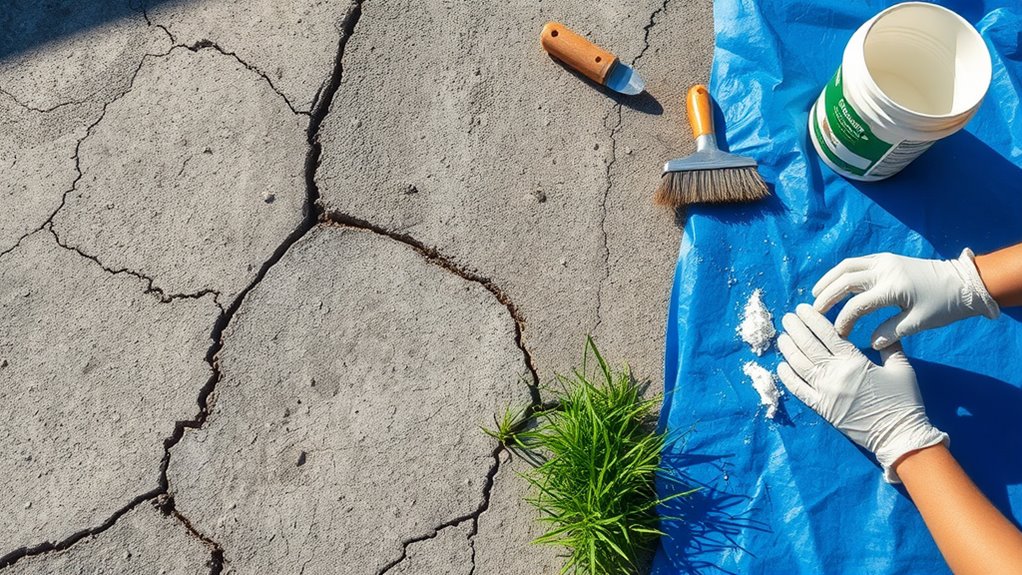
Before repairing cracks in concrete, it's essential to prepare the area properly. Start by cleaning the surface—remove loose debris with a wire brush or broom. For tougher material, you might need to use a pressure washer. Ensure any soft or crumbling concrete is removed to create a solid base for your repair. Once the surface is clean, dampen it with a garden hose, but avoid flooding—just ensure it's moist. Be sure to remove any standing water that could affect the bond. If the cracks are large, widen them into an upside-down "V" shape with a chisel. Lastly, protect surrounding areas with tape or plastic sheeting to prevent damage during the repair. Proper preparation is crucial for effective repairs, as a roughened surface enhances mechanical bonding for the new material. Additionally, ensuring proper curing techniques is essential for optimal performance of the repair material.
Identifying the Type of Crack

How can you determine the type of crack in your concrete? Start by looking at the crack patterns.
Expansion cracks, often due to temperature changes, can be managed with expansion joints. Structural cracks are wider and deeper, suggesting compromised strength, whereas non-structural cracks are usually just superficial. Additionally, proper sub-grade preparation is essential for slab integrity and can help prevent certain types of cracks from forming. Understanding the role of rebar in concrete can also aid in identifying the potential causes of these vulnerabilities.
Surface cracks like plastic shrinkage and crazing may not affect safety but can look unsightly. Subsurface cracks, such as those from settlement or heaving, point to underlying problems that need addressing.
Each type of crack requires different repair methods, so identifying them is crucial. Assess the severity and pattern to select the right approach, ensuring the durability and safety of your concrete surfaces.
Tools and Materials for Repairing Concrete Cracks

Repairing concrete cracks requires the right tools and materials to ensure a proper and lasting fix.
Start by assessing the cracks and gathering these essential items:
- Chisel and Hammer Set: Use these to widen or undercut cracks, which helps the fillers adhere better.
- Cement Patching Compound: Ideal for small hairline cracks, this provides a strong repair once set. SealGreen Concrete Patch Repair is an excellent option as it is specifically designed for grouting small hairline cracks. Additionally, using a compressive strength analysis can help determine if the surrounding concrete can withstand repairs.
- Polyurethane Sealant: Suitable for larger cracks, it offers durability and flexibility for long-lasting results.
Using these tools effectively, along with proper repair techniques, will improve your concrete repairs.
Remember to wear protective gear throughout the process for safety.
Step-by-Step Guide to Repairing Small to Medium Cracks

Once you've gathered the necessary tools and materials for your concrete repair, it's time to address the cracks. Begin with a thorough assessment: clean the crack, remove any grease, and ensure the area is dry. Use the following table to determine the appropriate repair techniques based on the crack size:
| Crack Size | Recommended Material | Additional Notes |
|---|---|---|
| Less than 6mm | Epoxy | Provides a strong bond, easy to apply |
| 6mm to 12mm | Latex-based patch | Flexible, accommodates movement |
| 12mm to 25mm | Mortar | May require multiple layers |
| Deeper cracks | Specialist epoxy injections | It's advisable to consult a professional |
| Surface finishing | Texturing or painting | Adds an aesthetic touch after curing |
Finish by feathering the edges and allow the patch to cure completely.
Addressing Large and Structural Cracks
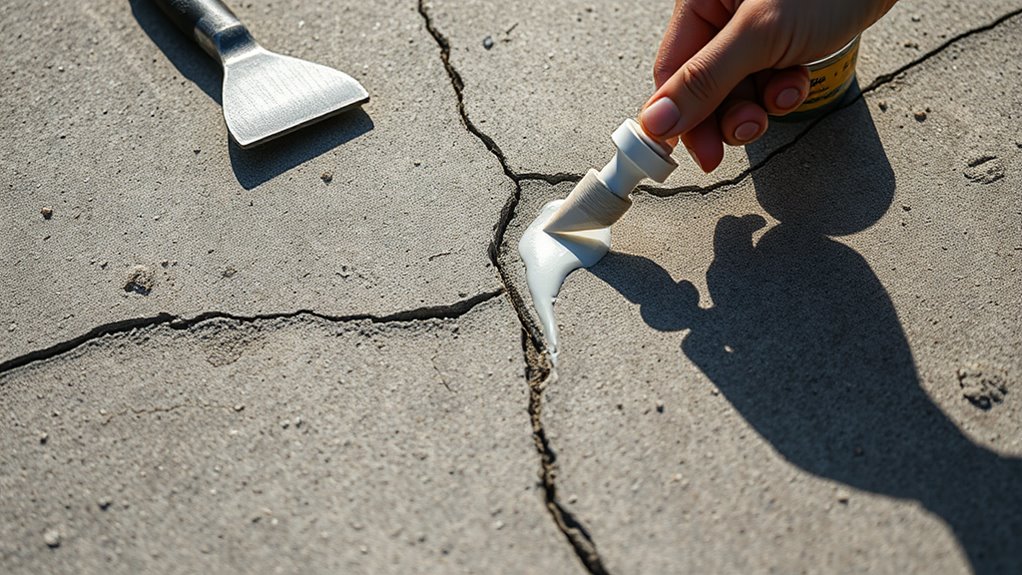
Addressing large and structural cracks in concrete requires careful evaluation, as these issues often signify underlying problems with the material's integrity.
Here's a straightforward guide to tackle such cracks:
- Assess the crack: Measure its width and depth to determine the appropriate repair method.
- Choose a technique: Common options include routing and sealing for waterproofing, or epoxy injection for structural support.
- Prepare and repair: Clear away debris with a wire brush, then fill the crack using your chosen method, ensuring the materials used can accommodate movement.
For significant structural damage, it's wise to consult professionals.
Don't forget to apply a sealant afterwards to safeguard against future water penetration.
Frequently Asked Questions
How Long Does It Take for Concrete Patches to Cure?
Curing time for concrete patches usually takes a minimum of 24 hours in ideal conditions. However, various patching techniques can affect this timeframe. Factors such as temperature, humidity, and the depth of the patch can significantly influence the curing process. For example, a patch applied in colder weather may take longer to set than one done on a warm, dry day.
Can I Paint Over Repaired Concrete Cracks?
Painting over repaired concrete cracks is much like applying a final coat to a wall; proper preparation is key. Ensure the area is smooth and select the right paint for good adhesion and durability. These steps are crucial for achieving the best results!
What Weather Conditions Are Best for Concrete Repair?
For concrete repair, the best temperatures are between 10°C and 24°C, with low humidity levels. Avoid extreme weather conditions, as they can hinder hydration and weaken the concrete during curing. For example, repairing concrete on a hot, sunny day may cause it to dry too quickly, while cold or wet conditions can delay the curing process. Stick to the recommended temperature range for optimal results.
How Can I Prevent Future Cracking in Concrete?
To prevent future cracking in concrete, maintain a low water-cement ratio, use quality aggregates, and ensure proper curing methods are followed. Regular inspections and prompt maintenance can significantly help in preventing cracks. For instance, checking for surface wear or moisture issues can save you from bigger problems down the line.
Is It Safe to Walk on Repaired Cracks Immediately?
Walking on repaired cracks straight away isn't safe. For your own safety, it's best to wait at least 24 hours for the repair to fully cure. This helps avoid damaging the patch and ensures your concrete surface lasts longer.
Conclusion
In summary, repairing cracks in ready-mix concrete is crucial for structural integrity, not just appearance. Ignoring these cracks can lead to bigger problems, as untreated gaps can let in moisture and cause further damage. By identifying the type of crack and using the appropriate tools and materials, you can significantly prolong the life of your concrete surface. Timely repairs are essential; even minor cracks should be addressed promptly to prevent escalation.

Learn about the diverse types of concrete used in construction and discover which mix can transform your next project.

For a long-lasting driveway that laughs in the face of the UK's unpredictable weather, the C20 concrete mix is your Read more

In the UK, you've got a a lot of lightweight concrete types to choose from, each with its unique perks. Read more