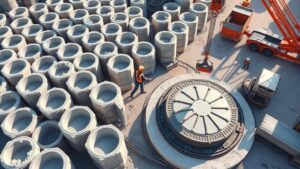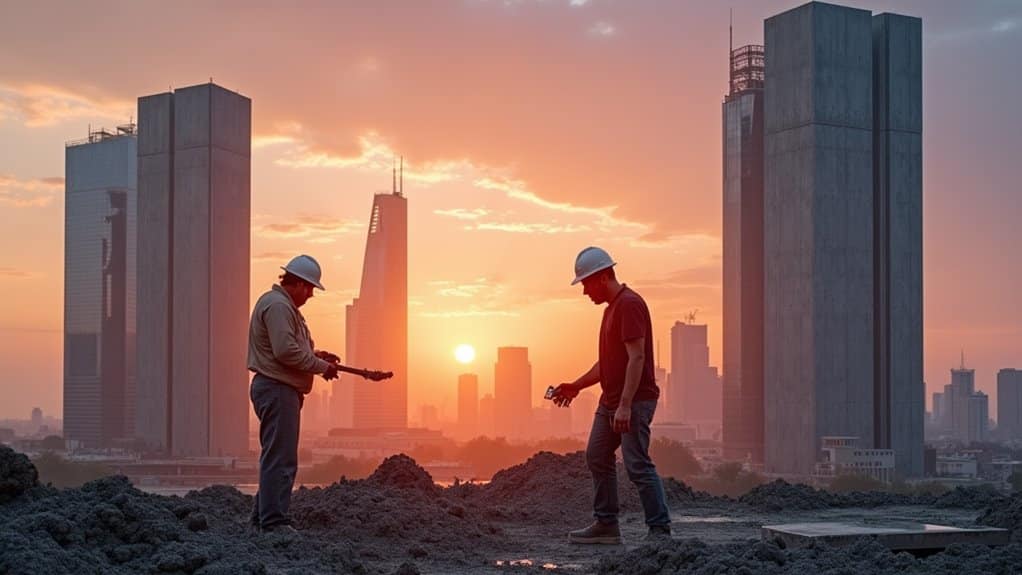
Concrete remains a leading building material in modern construction due to its outstanding durability and cost-effectiveness. It can last over 75 years, reducing the need for replacements and lowering maintenance costs. Its high thermal mass helps with energy efficiency by maintaining stable internal temperatures. Additionally, concrete is fire-resistant, enhancing safety, and its sound insulation properties contribute to comfortable living spaces.
Innovative production methods now incorporate recycled materials, making concrete a more sustainable choice. With concrete, you gain reliable structural integrity and efficient construction processes. Exploring its benefits further reveals why concrete is indispensable for contemporary building projects.
Key Takeaways
- Concrete's durability ensures structures can last over 75 years, reducing the need for replacements and cutting maintenance costs.
- With its high thermal mass, concrete enhances energy efficiency, leading to lower heating and cooling bills and promoting sustainable building practices.
- Innovative methods, such as 3D printing and recycling, improve resource efficiency and lessen concrete's environmental impact.
- Concrete's resistance to fire, mould, and noise enhances health and safety in contemporary buildings.
- Its cost-effectiveness, characterised by low initial production costs and minimal upkeep, leads to significant long-term savings for construction projects.
Unmatched Durability
One of the key advantages of concrete in construction is its unmatched durability. Concrete structures can last over 75 to 100 years, making them a popular choice for builders. Unlike metals and timber, concrete requires minimal maintenance due to its natural resistance to corrosion and rot.
Concrete also withstands environmental challenges well, including freeze-thaw cycles and chemical exposure from substances like sulphates and chlorides. When engineered and mixed correctly, concrete maintains its strength against severe weather, ensuring reliable performance in all conditions. This high durability leads to significant cost savings over time, as lower maintenance and insurance costs contribute to reduced overall expenses. Additionally, the use of specialized types of concrete, such as high-performance concrete, further enhances its resilience.
Using durable concrete also has positive environmental implications. With fewer reconstruction needs, you help lower CO2 emissions and decrease the consumption of raw materials.
The combination of high-quality materials and modern construction techniques enhances both abrasion resistance and longevity, reinforcing concrete's status as a top building material.
Exceptional Versatility
Concrete is remarkably versatile, making it a preferred choice for various construction projects. Its unique properties allow for customisation in both design and composition, catering to specific project requirements. This adaptability enables the creation of structures that are functional and visually appealing.
Here are four key aspects of concrete's versatility:
- Shape and Form Adaptability: Concrete can be moulded into a variety of shapes, accommodating intricate architectural designs.
- Reinforcement Options: You can select from unreinforced, reinforced, or prestressed concrete, ensuring your structure meets the necessary strength standards. This is crucial as concrete's strength ranges from 10MPa to 100MPa, suitable for various loads. Additionally, lightweight concrete is a popular option that offers unique benefits in construction applications.
- Placement Methods: Whether you opt for on-site casting, ready-mixed solutions, or prefabricated components, concrete aligns with your project timeline and logistics.
- Material Customisation: Adjust the composition with different aggregates and reinforcement materials to achieve the desired strength and performance.
This versatility not only boosts the aesthetic appeal of your projects but also enhances construction efficiency.
With concrete, you can confidently address diverse applications, making it a leading choice in contemporary construction.
Cost-Effective Solutions

When considering concrete for your projects, you'll notice its low production costs significantly reduce initial expenses. The material's durability also leads to long-term savings, as it requires little maintenance and fewer replacements. Plus, energy efficiency, especially with insulated concrete forms, can lower your heating and cooling bills, making it a smart choice financially. Additionally, using precast concrete foundations can further enhance speed and quality, contributing to overall cost-effectiveness. Furthermore, ready mixed concrete offers consistent quality due to controlled manufacturing processes, ensuring that your projects meet high-performance standards.
Low Production Expenses
The cost-effectiveness of concrete in modern construction is largely due to its low production expenses, making it a popular choice for builders and developers. Understanding the key factors behind these low costs can help you enhance project efficiency.
Here are four important aspects:
- Raw Material Availability: Concrete is made from easily accessible materials like cement, water, and aggregates, which gives it an edge over specialised materials such as steel and polymers.
- Energy Efficiency: The production of concrete requires less energy compared to steel, resulting in lower operational costs and a reduced environmental impact. Additionally, efficient mixing processes in ready-mix concrete lower energy consumption further.
- Ready-Mix Benefits: Using ready-mix concrete reduces labour costs and waste by ensuring precise batching, which eliminates the inefficiencies often found with on-site mixing.
- Price Stability: While local pricing can be influenced by supply chain changes, concrete generally maintains stable prices across various markets, adapting to trends without significant fluctuations.
These factors make concrete a cost-effective building material, crucial for navigating today's market complexities.
Long-Term Financial Savings
Long-term financial savings in construction projects can significantly boost overall profitability, and reinforced concrete offers several cost-effective advantages.
By applying effective cost reduction strategies, maintenance and repair expenses can be substantially lowered. Reinforced concrete structures demand minimal upkeep due to their durability, resulting in fewer inspections and less frequent repairs. This longevity leads to reduced long-term costs and lower insurance premiums, making your financial forecasting more efficient. Additionally, the reliable structural integrity of reinforced concrete minimizes the risk of damage during adverse events, further contributing to overall cost savings.
Additionally, the fire resistance and resilience of concrete against natural disasters help to minimise potential liabilities and property damage, further driving down insurance costs.
The efficiency of reinforced concrete in construction also plays a crucial role in savings. Quicker construction timelines and the potential for concurrent work can lead to reduced labour costs, boosting overall project efficiency.
Adopting lean design principles and using precast concrete elements optimises material usage, cutting down waste and lowering material expenses. Choosing high-strength concrete can further reduce the amount of material required, allowing for better resource allocation.
Energy Efficiency Benefits
Reinforced concrete provides notable financial benefits and enhances energy efficiency in contemporary construction. Its unique properties support energy conservation, making it a preferred option for sustainable building practices. By utilising thermal mass, significant energy savings can be achieved.
- Stable Internal Temperatures: The high thermal mass of concrete absorbs heat during the day and releases it at night, which helps to reduce temperature swings. This ability to prevent large temperature fluctuations contributes to a more comfortable indoor climate.
- Lower Heating and Cooling Requirements: Buildings made with concrete can lower energy needs by up to 25% due to its low thermal conductivity and minimal air infiltration.
- Enhanced R-Value with Insulation: When paired with insulation, concrete structures can achieve higher R-values, boosting thermal efficiency even further.
- Sustainability: The durability and recyclability of concrete contribute to a reduced carbon footprint over the lifespan of the building.
Opting for reinforced concrete not only fosters energy conservation but also ensures long-term performance and comfort.
Its ability to maintain stable internal temperatures creates a more consistent living environment, ultimately lessening the overall energy demands on communities.
Commitment to Sustainability
In modern construction, your commitment to sustainability relies on choosing eco-friendly materials and innovative production methods.
By using recycled materials and streamlining production processes, you can significantly reduce environmental impact and support sustainable practices throughout a structure's lifecycle. This not only conserves resources but also improves the durability of concrete buildings. The adoption of green concrete innovations can further enhance sustainability by incorporating recycled materials that lower the overall carbon footprint.
Eco-Friendly Material Choices
When considering sustainable construction, choosing eco-friendly materials is crucial for reducing environmental impact and enhancing energy efficiency.
By focusing on sustainable sourcing and thoughtful design, you can make choices that are good for both the environment and your project.
Here are four eco-friendly materials to consider:
- Bamboo: A rapidly growing and lightweight material, bamboo is strong and sustainable, making it suitable for a variety of uses.
- Hempcrete: This material offers excellent insulation and fire resistance, providing a durable solution for green building.
- Recycled Materials: Using recycled steel and glass helps cut down on the demand for new resources while ensuring durability.
- Cork: Sourced from cork oak trees, cork is sustainable, fire-resistant, and hypoallergenic, which can improve indoor air quality.
These materials not only help conserve resources but also enhance energy efficiency through their specific properties.
Innovative Production Techniques
Modern construction is increasingly embracing innovative production techniques that focus on sustainability, significantly reducing the environmental impact of concrete. One major advancement is carbon capture and storage technologies, which capture CO2 emissions from cement production and store them underground. This approach not only decreases greenhouse gas emissions but also supports a more sustainable manufacturing process.
Resource efficiency is another key element of these techniques. By using locally sourced materials, we can cut down on transportation emissions while boosting local economies. Optimising mix designs allows for the use of less virgin material without sacrificing performance, helping to conserve natural resources.
Furthermore, incorporating industrial byproducts, like supplementary cementitious materials (SCMs), fosters a circular economy and lowers the overall carbon footprint of concrete production.
Advanced technologies such as precast concrete and 3D printing also enhance resource efficiency by reducing material waste and minimising on-site work. Combined with efficient kiln operations and alternative materials like plant-based cement, these methods pave the way for sustainable concrete production, ensuring that modern construction meets today's needs while safeguarding the environment for future generations.
Lifecycle Sustainability Practices
Lifecycle sustainability practices in concrete production aim to minimise environmental impacts over the material's lifespan. By adopting effective strategies, you can significantly improve the sustainability of concrete.
1. Material Sourcing: Utilising recycled aggregates and industrial byproducts, such as fly ash, decreases the need for new materials, reduces CO2 emissions, and promotes resource efficiency.
For instance, using waste from power plants can enhance concrete's performance while being kinder to the planet.
2. Efficient Design: Techniques like modular construction and 3D concrete printing make the most of materials and reduce waste.
These innovative methods highlight the importance of smart design in sustainability.
3. Water and Energy Efficiency**: Incorporating water-reducing admixtures and energy-efficient production techniques lowers water and energy consumption, leading to a smaller carbon footprint**.
For example, using less water in the mix can save resources without compromising quality.
4. End-of-Life Options: Establishing effective waste management practices, such as recycling concrete at the end of its life, supports a circular economy and lessens environmental impact.
This not only conserves resources but also reduces landfill use.
Superior Fire Resistance
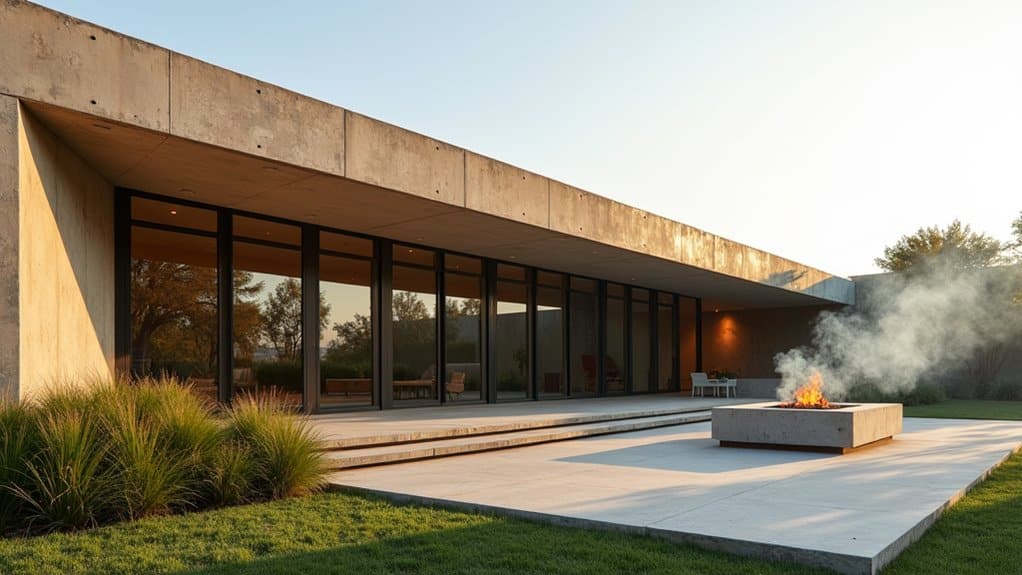
Concrete's natural fire resistance makes it an excellent choice for construction, especially in fire-sensitive areas. Unlike combustible materials such as wood, concrete doesn't burn, melt, or release toxic gases during a fire. This non-combustible property ensures that structures retain their integrity even when exposed to extreme heat. Fire resistance tests show that concrete can endure high temperatures without significant deformation, giving you peace of mind regarding safety.
Moreover, concrete acts as a thermal barrier, limiting heat transfer to adjacent areas and reducing the risk of fire spreading. This means you won't need additional fire protection measures like you'd with steel, which loses strength quickly when heated.
The thickness and density of concrete can enhance its fire resistance, as denser concrete has fewer voids for heat to penetrate, making it even more effective.
Standards such as the International Building Code (IBC) and ACI 216.1/TMS 216 ensure that concrete assemblies meet strict fire resistance ratings, providing confidence in your building's safety.
Enhanced Acoustic Performance
While fire safety is crucial in construction, enhancing acoustic performance is equally vital for comfortable living and working spaces. Concrete has clear advantages in this respect, primarily due to its high mass and density, which provide excellent sound insulation.
Using Insulating Concrete Forms (ICFs) further amplifies these benefits:
- Improved sound absorption from the insulation layers in ICFs helps reduce echo and reverberation.
- Flanking noise reduction is achieved with solid concrete and continuous insulation, stopping sound from travelling through structural elements.
- Enhanced energy efficiency, as the insulation that improves acoustic performance also regulates temperature.
- Versatile applications, making concrete ideal for everything from flats to healthcare facilities.
Concrete's thickness and low porosity are key to effective sound insulation, with thicker slabs producing better results.
Additionally, resilient layers enhance impact sound insulation, making them essential for busy areas with heavy foot traffic.
Health and Safety Benefits
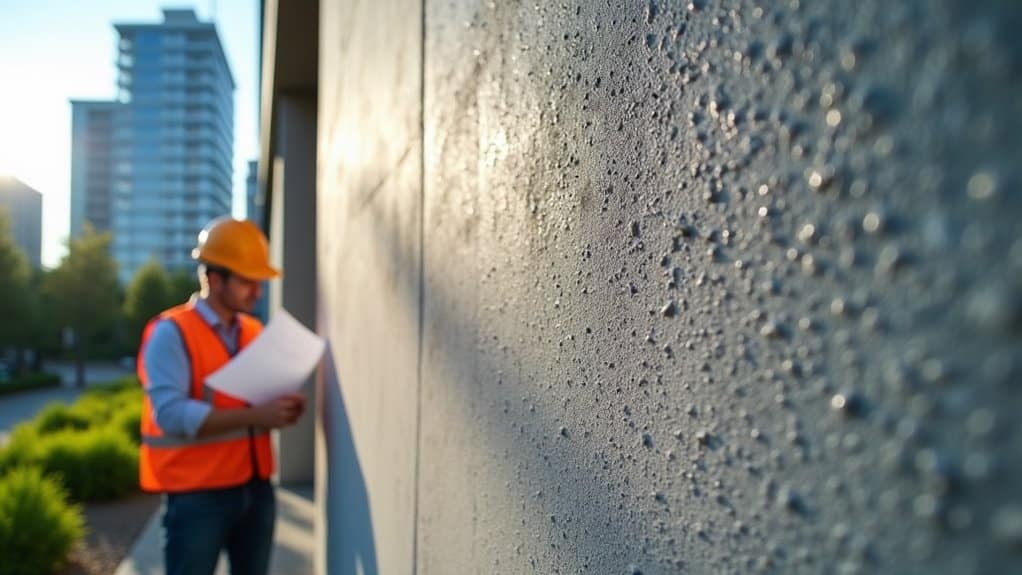
The use of concrete in modern construction significantly improves health and safety standards in buildings. One key health benefit is its resistance to mould, which greatly reduces the risks of respiratory problems and allergies.
Additionally, concrete limits exposure to volatile organic compounds (VOCs) and reduces off-gassing, leading to a healthier indoor atmosphere. Its fire-resistant properties not only protect occupants from fires but also help contain flames, enhancing overall safety.
From a structural perspective, concrete's durability decreases the likelihood of damage during natural disasters, offering peace of mind. Well-maintained concrete surfaces can prevent injuries caused by cracks and uneven flooring, making living spaces safer.
To ensure these benefits, it's vital to follow safety measures during construction. Using protective gear such as goggles, gloves, and masks can help reduce the risk of skin, eye, and respiratory irritations.
Moreover, complying with Health and Safety Executive (HSE) regulations regarding equipment and tools used in concrete work can prevent accidents, reinforcing safety in construction.
Efficient Construction Practices
Effective construction practices are crucial for optimising concrete use in modern building projects. By adopting efficient techniques, you can take advantage of precast methods that speed up construction and improve project outcomes.
Here are four key practices to consider:
- Precast Components: These elements are produced in controlled environments, ensuring consistent quality and minimising delays caused by weather.
- Hybrid and Modular Techniques: By combining precast with traditional construction, you can enhance timelines while reducing on-site labour and material waste.
- 3D Volumetric Construction: This approach involves creating complete building sections off-site, allowing for swift assembly and less waste.
- Twin-Wall Technology: This innovative method utilises two precast panels filled on-site, leading to efficient and robust structures.
These practices not only streamline the construction process but also contribute to sustainability in building.
Frequently Asked Questions
How Does Concrete Compare to Other Building Materials in Terms of Lifespan?
When comparing concrete to other building materials, it's important to consider durability and maintenance. Concrete generally lasts between 30 to 100 years, significantly outlasting asphalt, which has a lifespan of around 15.5 years. Meanwhile, wood and brick can be prone to issues that may shorten their longevity, such as rot or cracking. Overall, concrete stands out as a reliable choice for long-lasting structures.
Can Concrete Be Used in Extreme Weather Conditions?
Yes, concrete can be used in extreme weather conditions. It provides good thermal insulation, is resilient against freeze-thaw cycles, and can withstand strong winds. For instance, in colder climates, using additives can improve its performance during frost. With the right techniques, you can ensure concrete remains reliable even in harsh environments.
Is Concrete Prone to Cracking Over Time?
Yes, concrete is susceptible to cracking over time due to factors like shrinkage and temperature fluctuations. To reduce this risk, you can use repair techniques such as sealing cracks and ensuring proper curing methods during installation. For instance, using a sealant can help protect against moisture, while curing properly helps the concrete maintain its strength.
What Are the Aesthetic Options for Concrete Finishes?
There are plenty of aesthetic options for concrete finishes. Textured surfaces, such as stamped or broom finishes, not only improve safety but also add visual appeal. Decorative overlays offer a chance to personalise your space, allowing for unique patterns and colours that reflect your style.
How Does Concrete Impact Local Ecosystems During Production?
When we look at concrete production, we see a significant carbon footprint, with resource extraction that often harms local ecosystems. This unsustainable approach not only destroys habitats but also disrupts food chains, resulting in a notable loss of biodiversity. For instance, quarrying for aggregates can lead to the destruction of wildlife habitats, affecting species that rely on those areas. It's crucial to recognise the environmental impact of concrete and seek more sustainable alternatives.
Conclusion
In conclusion, while some may claim that concrete is visually unappealing, modern advancements have turned it into a versatile medium for design. With a variety of finishes, colours, and textures now available, concrete can seamlessly fit into any architectural vision. Its exceptional durability, cost-effectiveness, and eco-friendliness make it a prime choice for modern construction. Opting for concrete doesn't mean compromising on aesthetics; rather, it's an investment in a material that boosts both performance and design, ensuring your projects endure over time.

Learn about the diverse types of concrete used in construction and discover which mix can transform your next project.

For a long-lasting driveway that laughs in the face of the UK's unpredictable weather, the C20 concrete mix is your Read more

In the UK, you've got a a lot of lightweight concrete types to choose from, each with its unique perks. Read more