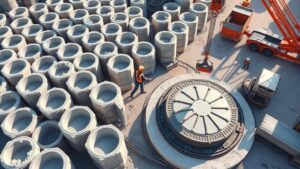
Understanding volumetric concrete means recognising its modern approach to precise, on-site mixing. It combines essential components like cement, water, and aggregates in customised proportions, optimising both strength and workability. Volumetric mixers compartmentalise materials, allowing for real-time adjustments to meet project specifications and reducing waste by up to 30%. This method not only lowers transportation costs but also improves resource management and productivity. Regular quality control ensures compliance with industry standards, making volumetric concrete a practical solution for today’s construction needs. Dive deeper to discover more about this innovative mixing technique.
 To operate a volumetric mixer effectively, it’s essential to grasp the compartmentalisation of materials, which separates the components for optimal mixing. The mixing and dispensing mechanism then combines these materials in precise ratios, ensuring a consistent concrete mix. This volumetric mixer operation is critical for producing repair materials in Rapid Airfield Damage Repair (RADR) operations, enabling timely and efficient airfield repairs.
 To understand concrete composition, it’s essential to know the main ingredients that combine to create this vital material.
Cement, water, aggregates, and admixtures each serve a crucial purpose, with aggregates forming a substantial part of the mixture.
Familiarising yourself with these components and their roles is key to achieving the strength and durability you need for your concrete projects.
For instance, think of aggregates as the backbone of your concrete, providing bulk and stability.
To understand concrete composition, it’s essential to know the main ingredients that combine to create this vital material.
Cement, water, aggregates, and admixtures each serve a crucial purpose, with aggregates forming a substantial part of the mixture.
Familiarising yourself with these components and their roles is key to achieving the strength and durability you need for your concrete projects.
For instance, think of aggregates as the backbone of your concrete, providing bulk and stability.
 Streamlining the production process is vital for improving efficiency in construction projects. Volumetric concrete offers production optimisation, producing precisely what you need and minimising waste. This precision helps reduce overproduction and lowers material costs, leading to better resource management.
By mixing concrete on-site, you can adjust the mix in real time to meet specific project requirements without delays. Automated monitoring systems ensure consistent quality, reducing rework and avoiding disruptions.
Producing only the necessary amount directly contributes to efficient resource usage, cutting transportation and labour costs. This method enhances productivity and speeds up project timelines by eliminating transport delays and minimising idle time.
Furthermore, on-demand production allows for flexible scheduling, adapting to the ever-changing nature of construction projects. This approach not only lowers material expenses but also reduces labour costs, resulting in significant long-term savings.
Streamlining the production process is vital for improving efficiency in construction projects. Volumetric concrete offers production optimisation, producing precisely what you need and minimising waste. This precision helps reduce overproduction and lowers material costs, leading to better resource management.
By mixing concrete on-site, you can adjust the mix in real time to meet specific project requirements without delays. Automated monitoring systems ensure consistent quality, reducing rework and avoiding disruptions.
Producing only the necessary amount directly contributes to efficient resource usage, cutting transportation and labour costs. This method enhances productivity and speeds up project timelines by eliminating transport delays and minimising idle time.
Furthermore, on-demand production allows for flexible scheduling, adapting to the ever-changing nature of construction projects. This approach not only lowers material expenses but also reduces labour costs, resulting in significant long-term savings.
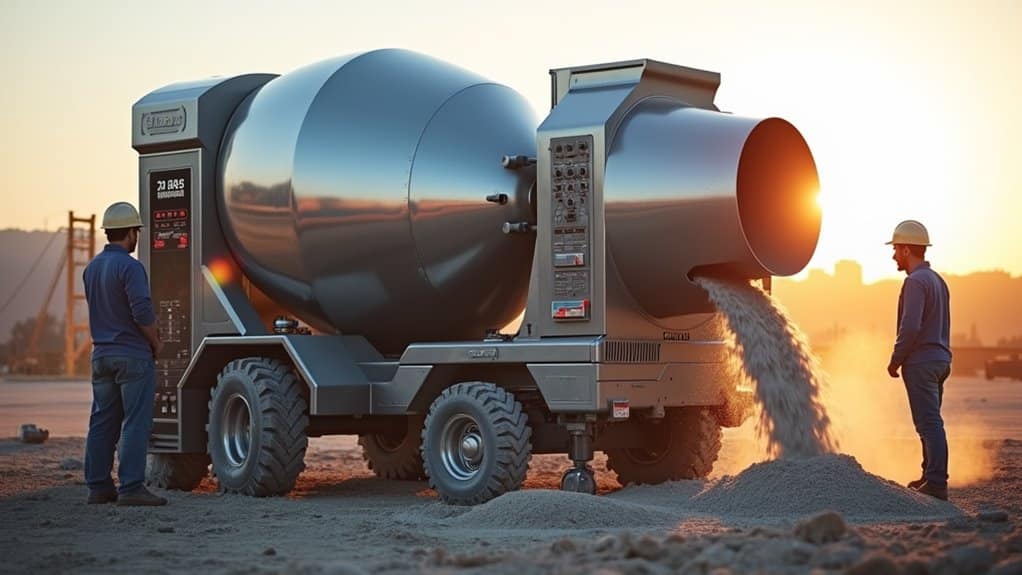 Innovations in concrete mixing are reshaping the construction industry, improving both efficiency and quality. A significant advancement is the use of automated batching systems. These systems rely on computer-controlled processes to accurately measure and combine ingredients, significantly reducing human error. This precision ensures consistent proportions, boosting productivity by minimising manual effort.
Twin-shaft mixers have also revolutionised mixing technology. With their dual rotating shafts, they effectively blend concrete mixtures, cutting down mixing time while delivering consistent, high-quality results. This not only saves time but also enhances the performance of the concrete.
Volumetric mixers play a key role in this progress by enabling on-site storage, mixing, and dispensing of concrete. This flexibility allows for real-time adjustments to mix designs, optimising resource use and reducing waste.
Additionally, advanced mixing techniques highlight the importance of ingredient sequencing. Mixing cement and aggregates before adding water improves homogeneity, while gradually introducing water helps achieve the desired consistency.
Innovations in concrete mixing are reshaping the construction industry, improving both efficiency and quality. A significant advancement is the use of automated batching systems. These systems rely on computer-controlled processes to accurately measure and combine ingredients, significantly reducing human error. This precision ensures consistent proportions, boosting productivity by minimising manual effort.
Twin-shaft mixers have also revolutionised mixing technology. With their dual rotating shafts, they effectively blend concrete mixtures, cutting down mixing time while delivering consistent, high-quality results. This not only saves time but also enhances the performance of the concrete.
Volumetric mixers play a key role in this progress by enabling on-site storage, mixing, and dispensing of concrete. This flexibility allows for real-time adjustments to mix designs, optimising resource use and reducing waste.
Additionally, advanced mixing techniques highlight the importance of ingredient sequencing. Mixing cement and aggregates before adding water improves homogeneity, while gradually introducing water helps achieve the desired consistency.
 Volumetric concrete provides notable environmental benefits, reshaping sustainability in construction. By reducing the need for transporting pre-mixed concrete, it significantly lowers carbon emissions and mitigates your project’s environmental footprint. This method produces only the exact amount of concrete required on-site, cutting material waste by up to 30% compared to traditional methods.
Utilising advanced technology in volumetric mixers ensures precise resource management, aligning construction practices with modern sustainability standards. By preventing over-production and optimising resource use, you not only minimise waste but also decrease energy consumption.
Moreover, on-site mixing eliminates the need for extensive batching plants, leading to reduced fuel use and emissions.
Incorporating recycled materials into volumetric concrete mixes further diminishes the reliance on virgin resources, thereby supporting a circular economy. By adopting these practices, you can lower your carbon footprint and promote responsible waste management.
Ultimately, volumetric concrete offers a sustainable solution that meets green building certifications and enhances your project’s overall environmental performance.
Volumetric concrete provides notable environmental benefits, reshaping sustainability in construction. By reducing the need for transporting pre-mixed concrete, it significantly lowers carbon emissions and mitigates your project’s environmental footprint. This method produces only the exact amount of concrete required on-site, cutting material waste by up to 30% compared to traditional methods.
Utilising advanced technology in volumetric mixers ensures precise resource management, aligning construction practices with modern sustainability standards. By preventing over-production and optimising resource use, you not only minimise waste but also decrease energy consumption.
Moreover, on-site mixing eliminates the need for extensive batching plants, leading to reduced fuel use and emissions.
Incorporating recycled materials into volumetric concrete mixes further diminishes the reliance on virgin resources, thereby supporting a circular economy. By adopting these practices, you can lower your carbon footprint and promote responsible waste management.
Ultimately, volumetric concrete offers a sustainable solution that meets green building certifications and enhances your project’s overall environmental performance.
 Types of Concrete Used in Construction: The Complete Guide
 Top UK Concrete Mixes for Durable Driveways
 Best Lightweight Concrete Types in the UK
Key Takeaways
Volumetric concrete is mixed on-site, allowing for precise control over material ratios and reducing waste by up to 30%. The mixer’s compartments enable real-time adjustments, ensuring the concrete meets specific project requirements efficiently. Automated systems boost production speed and accuracy, enhancing overall quality while reducing human error and labour costs. Adhering to industry standards like BS EN 206 ensures safety and quality in concrete production and mixing processes. Mixing on-site also lowers transportation costs and cuts carbon emissions, promoting sustainable construction practices. This modern approach not only benefits the environment but also provides a more tailored solution for your concrete needs.What Is Volumetric Concrete?
Volumetric concrete is a method of mixing concrete by volume instead of weight, which improves precision and efficiency on construction sites. This approach allows for on-site mixing of materials as needed, ensuring that each batch is fresh and tailored to your specific requirements. A key benefit of volumetric mixing is the reduction of waste, as concrete is produced on-demand, minimising excess that can occur with traditional methods. Additionally, it helps ensure that projects stay within budget by reducing unnecessary expenses related to over-ordering. Volumetric mixers feature separate compartments for sand, stone, cement, and water, providing flexibility in mixing. This means you can adjust the mix design on-site, accommodating any changes in project specifications or weather conditions. It also ensures that precise quantities are delivered, helping to avoid issues with over or under-ordering. Additionally, the use of volumetric mixers allows for greater control over concrete production, enabling adjustments during the mixing process. Calibration of volumetric mixers occurs annually to maintain accuracy. These mixers can produce and store more concrete than traditional drum mixers, making them highly efficient for various projects. This efficiency is further enhanced by the on-site mixing advantages that reduce delays associated with external supply logistics.Key Components of Concrete
When mixing concrete, it’s vital to understand the cement and water ratio to achieve optimal strength and durability. The type and purpose of aggregates are equally important, as they contribute to the bulk and stability of the mix. The quality and type of cement can significantly affect the overall performance of the concrete. Excess cement can lead to poor bonding and decreased workability, making it essential to strike the right balance. By grasping these essential components, you can ensure the quality and performance of your concrete mix. For instance, using the right size and type of aggregate can enhance the overall strength and workability of the concrete.Cement and Water Ratio
The relationship between cement and water in concrete is crucial for achieving the desired structural properties. The water-cement (W/C) ratio significantly affects the strength, durability, and workability of concrete. Here are some key points to consider:- A typical W/C ratio falls between 0.4 and 0.6.
- Lower W/C ratios improve strength and reduce porosity, but can make the mix less workable.
- The quality of water used is important; impurities can negatively impact the cement and overall concrete performance. Additionally, the minimum cement content specified in IS code 456-200 is essential for ensuring adequate strength and durability in concrete structures. Moreover, lowering the W/C ratio can boost compressive strength by up to 20%.
Aggregate Types and Functions
How do aggregate types affect concrete performance? The choice of aggregates significantly influences concrete’s strength, durability, and efficiency. Fine aggregates, such as sand, fill gaps and enhance compaction, while coarse aggregates provide necessary bulk. By selecting the right mix, you can maximise the benefits of aggregates, reduce cement usage, and optimise costs. When sourcing aggregates, consider your project’s specific requirements. Natural aggregates from quarries or riverbeds are dependable, while recycled aggregates support sustainability. Lightweight aggregates are suitable for projects needing reduced weight, and heavyweight aggregates, like magnetite, offer increased density for specialised uses. Aggregates constitute 60-80% of concrete mix volume, highlighting their importance in the overall performance of concrete. Proper grading of aggregates is crucial, as it impacts workability and strength. Well-graded aggregates ensure maximum density and minimise voids, resulting in a stronger concrete mix. Conversely, poorly graded aggregates can compromise structural integrity.How Volumetric Mixers Operate
Material Compartmentalization Process
Volumetric mixers use separate compartments for each ingredient, ensuring precise control over the mixing process. This compartmentalisation allows for accurate measurement and consistent quality in concrete mixes, as each component is stored in designated areas. This not only improves storage efficiency but also reduces the risk of contamination.- Open aggregate bins: Sand and stone are stored in accessible bins for easy loading.
- Closed cement bin: Cement is stored in a watertight compartment, preventing moisture ingress.
- Integrated admixture tanks: Admixtures are contained within the unit, simplifying the mixing process.
Mixing and Dispensing Mechanism
When using a volumetric mixer, the mixing and dispensing mechanisms work together to ensure efficient and precise concrete production. Raw materials are loaded into separate compartments, allowing for quick, on-demand mixing. Advanced technologies calibrate materials like sand, gravel, and cement by weight, achieving accuracy within a one percent margin for each pour. A dual auger system and conveyor belt deliver these materials into a mixing auger, which combines them thoroughly in about 10 seconds. The square-strike-off system for sand and stone sections prevents poorly mixed pockets, while the hydraulically linked cement feed ensures precise dispensing. This continuous flow allows for real-time adjustments to the mix design, optimising production based on specific project needs. Furthermore, systems like BatchPro 3.0 automate setup and maintenance, improving operational efficiency. Mixing accuracy is enhanced through high precision in measuring cement, sand, stone, and water, which contributes to overall concrete quality. Manual proportioning handles provide fine-tuning options, while liquid admixture tanks integrate easily for additive incorporation.Advantages of On-Site Mixing
On-site mixing of concrete presents several advantages that improve project efficiency and cut costs. By creating fresh concrete that meets your specific needs, you can save money and reduce waste. Volumetric mixers offer the flexibility to adjust the mix on-site, ensuring consistent quality. Consider these key benefits:- Waste Reduction: Only mix the amount of concrete you need, which significantly cuts down on waste.
- Cost Savings: Less transportation and fewer excess deliveries lead to considerable financial benefits.
- Control and Precision: You have full control over the mixing process, enabling accurate adjustments as required.
Understanding Concrete Composition
Key Ingredients Overview
A successful concrete mix relies on several key ingredients, each playing a vital role in determining the final product’s properties. Understanding these materials is essential for achieving optimal performance and durability in concrete.- Cement: Typically makes up 10 to 15 per cent of the mix and serves as the primary binding agent. The most common types are Portland cement and portland-limestone cement, each offering specific properties necessary for effective binding.
- Water: Comprising 15 to 20 per cent of the mix, the quality of water is crucial. It triggers the hydration reaction with cement, which affects the strength and workability of the concrete.
Role of Aggregates
After understanding the key ingredients of concrete, it’s crucial to recognise the role of aggregates in the mix. Aggregates, which account for about 60-80% of concrete volume, consist of materials like sand, gravel, and crushed stone. Their characteristics significantly affect the concrete’s overall performance. When choosing aggregates, consider factors such as gradation, shape, and size. Coarse aggregates, typically between 5mm and 50mm, create the bulk of the mix, while fine aggregates fill in the gaps. Rounded aggregates improve workability, whereas angular particles can result in a more challenging mix. Selecting the right aggregates is vital as it influences compressive strength, durability, and shrinkage. For example, aggregates shouldn’t react negatively with the cement, as this could weaken the concrete. Furthermore, a well-balanced gradation helps maximise density and reduce voids, enhancing stability.Benefits of Volumetric Mixing
Volumetric mixing offers substantial benefits for construction projects, merging efficiency with sustainability. By adopting this method, you improve your operational capabilities while also supporting eco-friendly practices. Here are the main advantages:- Reduced Waste: You only create the concrete you need, which cuts down on excess and reduces disposal costs.
- Cost Efficiency: Producing concrete on-site removes transport and delivery fees, leading to significant savings.
- Quality Control: Fresh concrete maintains optimal strength and workability, improving the overall quality of your project.
Efficiency in Production
Applications of Volumetric Concrete
Volumetric concrete has a wide range of applications across different sectors, highlighting its versatility and efficiency in various construction needs. It proves advantageous for residential projects, commercial ventures, and industrial tasks alike. Its adaptable mixing capabilities allow for customisation to meet specific requirements, ensuring it meets project demands effectively. Here are some key applications:- Residential Projects: Perfect for foundations, driveways, and small renovations, volumetric concrete reduces waste and ensures high-quality mixing on-site, which can save costs.
- Commercial Endeavours: Ideal for large projects like road and bridge construction, it helps to minimise delays and adapt to changing specifications, improving overall time efficiency.
- Industrial Uses: Excellent for basement foundations and flooring, it also shines in emergency construction scenarios, providing quick solutions while reducing labour costs.
Innovations in Concrete Mixing
Quality Control Measures
With advanced mixing techniques improving efficiency, maintaining high quality in concrete production is crucial. Effective quality control measures ensure that your volumetric concrete meets required specifications. Implementing strict quality assurance protocols and testing procedures is vital. To achieve consistent results, consider the following:- Equipment Calibration and Maintenance: Regularly calibrate your volumetric-measuring and continuous-mixing (VMCM) equipment to comply with BS EN 206 standards. Ensure cleanliness, proper valve operation, and adherence to the manufacturer’s guidelines.
- On-Site Quality Control Checks: Conduct slump tests, air content tests (BS EN 12350-7 or BS EN 12350-8), and temperature assessments immediately after mixing. These checks confirm that the concrete will perform as intended.
- Mix Design Verification: Use proven methods for verifying mix designs, such as trial batches and annual evaluations. Ensure that all designs meet the minimum requirements for strength, workability, and material specifications.
Environmental Considerations
Frequently Asked Questions
How Does Volumetric Concrete Compare to Traditional Concrete Mixing Methods?
When comparing volumetric concrete to traditional methods, you’ll find notable advantages in speed and cost efficiency. Volumetric mixers enable on-site adjustments, which help to minimise waste and reduce labour costs. For instance, if you need a specific amount for a small garden path, you can mix just the right quantity without over-ordering. This not only ensures consistent quality but also guarantees timely delivery for your projects.Can Volumetric Mixers Handle Specialty Concrete Types?
Volumetric mixers are well-suited for handling specialty concrete types. They allow for customised formulations using specific aggregates, ensuring accurate measurements for tailored solutions in various construction projects. This flexibility boosts both efficiency and quality. For example, if a project requires a unique mix for decorative concrete, a volumetric mixer can create precisely what is needed on-site, reducing waste and downtime.What Are the Maintenance Requirements for Volumetric Mixers?
To maintain volumetric mixers, conduct regular inspections to ensure mixer calibration, hydraulic systems, and moving parts are in good condition. It’s important to clean and lubricate the equipment regularly to ensure optimal performance and extend its lifespan. For example, think of it like servicing a car; regular checks and maintenance can prevent bigger issues down the line.How Do Weather Conditions Affect Volumetric Concrete Mixing?
Weather conditions significantly influence volumetric concrete mixing. Temperature can either speed up or slow down the curing process, while high humidity can result in excess hydration. For instance, on a hot day, concrete may set too quickly, risking cracks and weak spots. Conversely, in cold weather, it might take too long to cure, affecting its strength. It’s essential to keep a close eye on these factors to ensure the concrete achieves the desired strength and durability during mixing.Are Volumetric Mixers Suitable for Large-Scale Construction Projects?
Volumetric mixers are ideal for large-scale construction projects in the UK. They offer cost efficiency and flexibility, allowing you to mix concrete on-site according to specific requirements. This reduces waste and simplifies logistics, ensuring you have the right amount of concrete exactly when and where you need it. For example, if a project requires varying concrete strengths throughout the build, a volumetric mixer can easily accommodate this without excess material.Conclusion
In essence, volumetric concrete is akin to a finely tuned orchestra, where every ingredient contributes to a cohesive final product. Just as a symphony requires precise timing, on-site mixing ensures you achieve the right blend at the right time, boosting quality and efficiency. With advancements in technology and a commitment to sustainability, you’re not merely constructing buildings; you’re creating a lasting legacy. Consider this modern approach for your next project.Need concrete for your project?
Looking to order volumetric ready-mix concrete? Barrow Mix batches it fresh on-site across Greater Manchester & Cheshire — you only pay for what you use.
Get a free quote →Related Posts
Learn about the diverse types of concrete used in construction and discover which mix can transform your next project.
For a long-lasting driveway that laughs in the face of the UK's unpredictable weather, the C20 concrete mix is your Read more
In the UK, you've got a a lot of lightweight concrete types to choose from, each with its unique perks. Read more