Fast-drying screed is a game-changer in construction, offering a quick-curing solution thanks to its unique blend of cement, sand, and additives. This formulation allows it to set in just 1-2 hours and dry at rates of 10-15mm per day. With a low water-to-cement ratio, it reduces shrinkage and boosts strength, making it suitable for both home renovations and commercial projects.
Not only does fast-drying screed help speed up project timelines, it also enhances energy efficiency by providing thermal insulation. As you delve deeper, you'll find a range of applications and its promising future in the construction industry.
Key Takeaways
Fast-drying screed significantly reduces curing times, enabling projects to be completed within just 24 to 48 hours. Made from cement, sand, and special additives, it reduces drying shrinkage and boosts strength.
By optimising drying conditions, such as using underfloor heating and ensuring good airflow, moisture can be removed much quicker. This makes it ideal for both indoor and outdoor settings, especially in areas with heavy foot traffic.
Meeting industry standards guarantees safety and performance, making fast-drying screed a dependable option for contemporary construction projects.
What Is Fast-Drying Screed?
Fast-drying screed is a specially formulated flooring material that speeds up the curing process, allowing for quicker project completion. It consists of a blend of cement, sand, and specific additives that reduce curing and drying times. The use of water-reducing admixtures (WRAs) improves workability while keeping water content low, which is crucial for moisture management during installation.
Several factors affect drying time. A lower water-to-cement ratio leads to faster drying, while the thickness of the screed plays a significant role; thicker layers generally take longer to dry. Additionally, a low water-to-cement ratio is critical for achieving desired screed performance, balancing both strength and drying speed.
Environmental conditions like temperature and humidity are also important—warmer temperatures can speed up drying, whereas high humidity may slow it down. Good airflow and ventilation help remove moisture, enhancing drying efficiency.
Fast-drying screed typically sets within 1-2 hours and can dry at rates of 10-15mm per day.
With the right mix, it's particularly useful in applications that require quick turnarounds, such as underfloor heating systems.
Key Benefits of Fast-Drying Screed
When considering flooring options, the benefits of fast-drying screed are clear. This innovative technology significantly boosts efficiency, with drying times as short as 24 hours. This means you can apply floor finishes sooner and move on to other construction phases without delay.
Fast-drying screeds use specialised additives, like calcium sulphate hemihydrate, which enhance both compressive and flexural strength, making them stronger than traditional alternatives. The low water-to-cement ratio also helps reduce drying shrinkage and promotes quick strength development. Additionally, the chemical reactions involved in fast-drying screeds further accelerate the hydration process, ensuring rapid curing. Moreover, the incorporation of a damp-proof membrane can enhance moisture protection, crucial for optimal performance.
These screeds are versatile; suitable for both indoor and outdoor use, and work exceptionally well with underfloor heating systems, ensuring optimal heat distribution. This makes them ideal for everything from home renovations to large housing developments.
By minimising the risk of moisture damage and allowing early access to treated areas, fast-drying screeds help reduce disruptions and lower labour costs.
Drying Time Influencing Factors
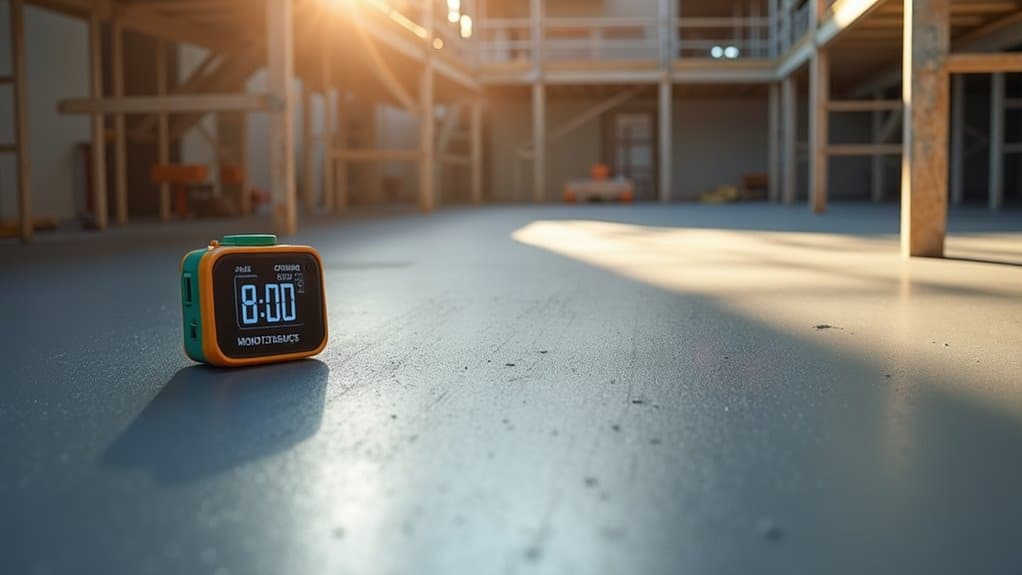
Drying times for screeds can significantly affect project timelines and overall efficiency. Key factors include environmental conditions; for example, higher temperatures and lower humidity accelerate evaporation, leading to faster drying.
Good airflow is crucial too; stagnant, humid air can slow the process. If you use underfloor heating, it can further speed up moisture evaporation, making it a smart choice for quicker drying. Additionally, proper curing techniques are essential for achieving optimal strength and performance during the drying process.
The type of screed also impacts drying times. Fast-drying screeds can dry within 24 hours, while traditional ones may take up to 28 days.
Thicker screeds or those with higher moisture content will naturally take longer to dry. Additives that reduce moisture retention can help speed things up. Traditional screed (75mm) requires up to 110 days to dry at 20˚C and 50% RH, highlighting the importance of selecting the right product.
External factors, such as rain or a damp subfloor, can delay progress, while controlled site conditions ensure more consistent results.
It's important to choose the right screed based on project requirements. By understanding these drying time influences, you can better plan your flooring installation and minimise potential delays.
Keeping an eye on these variables helps optimise your project's efficiency.
Techniques to Optimize Drying
To enhance the efficiency of screed drying, several practical techniques can be employed to improve moisture removal.
Firstly, increasing air circulation is crucial; ensuring a consistent airflow over the surface encourages evaporation, significantly boosting drying efficiency. Additionally, the use of controlled environments can further optimize the drying process.
Applying thinner layers of screed is another effective method, as it reduces moisture retention and speeds up the drying process.
Proper trowel techniques can also enhance evaporation by increasing the exposed surface area.
It's important to maintain ideal environmental conditions, such as the right temperature and humidity, to facilitate moisture removal.
Mechanical drying methods like forced air circulation, controlled heating, and dehumidification can yield impressive results too.
Incorporating rapid drying additives into your screed mix can cut down on overall drying time.
Opting for faster-drying screed types, such as anhydrite or liquid options, allows for thinner applications that dry more quickly.
Lastly, installing a moisture barrier beneath the screed helps prevent external moisture from hindering the drying process.
Residential Applications of Screed
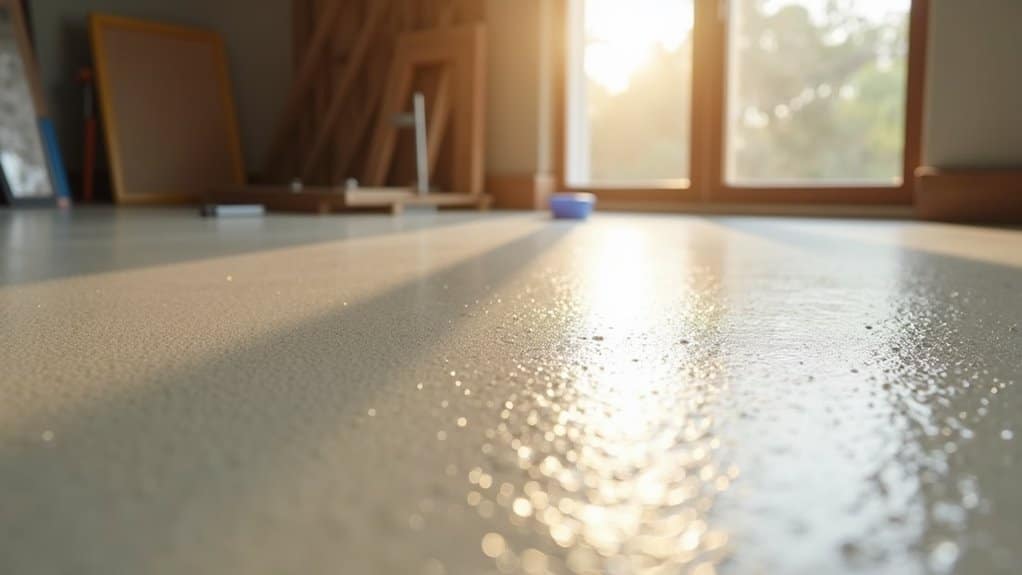
Fast-drying screeds have become a popular choice in residential building and renovation projects due to their many benefits. They not only speed up project timelines but also minimise disruption for homeowners.
Here are three key applications where fast-drying screeds shine:
- Home Extensions: They allow for quick completion, so you can enjoy your new space sooner.
- Renovations: Ideal for rapid floor installations, they help keep your renovation on track.
- Underfloor Heating: Their compatibility ensures effective heat distribution, boosting comfort in your home. Additionally, these screeds are designed for high point loading, making them suitable for areas with heavy furniture.
Fast-drying screeds also reduce moisture risks, promoting a healthier living environment, and can save costs by lowering labour and material waste.
They support various floor coverings, from ceramic tiles to natural stone, giving you plenty of design options.
Additionally, the smooth finish they provide enhances different styles, ensuring a durable and attractive result.
With proper installation, you can swiftly transform your spaces, changing how you experience home improvements.
Commercial Applications of Screed
In commercial settings, screed is vital for creating robust and level surfaces that can withstand high foot traffic. In warehouses and retail spaces, it provides a solid foundation, ensuring both safety and functionality. Fast-drying screed is particularly beneficial, allowing foot traffic after just two days and enabling final flooring installations within five days. This quick turnaround is crucial for businesses facing tight deadlines. Screed is also versatile, supporting various flooring finishes such as ceramic tiles, carpets, and epoxy coatings. When combined with underfloor heating systems, it can enhance thermal efficiency, adding to the comfort of commercial buildings. Additionally, screed provides thermal and acoustic insulation, which contributes to improved energy efficiency and comfort in spaces. Proper preparation of the subgrade and subbase ensures the durability and stability of the screed layer. Adhering to standards like BS EN 13813 ensures that the flooring meets quality and reliability requirements.
There are different types of commercial screed, including bonded and fibre-reinforced options, tailored for specific needs like heavy traffic or moisture-prone areas. As self-levelling concrete becomes more popular, fast-drying screed remains a cost-effective solution that balances speed and durability to meet the demands of the commercial sector.
Large-Scale Project Considerations

Large-scale projects require careful planning and execution, making the choice of screed vital for success. Fast-drying screeds offer valuable benefits for project management, improving cost efficiency and shortening timelines.
Here are three key considerations:
- Reduced Project Timelines: Fast-drying screeds can be ready for floor coverings in as little as 5 days, which helps to complete projects more swiftly.
- Increased Efficiency: These screeds minimise downtime, allowing you to keep progress on track and avoid unnecessary delays.
- Rapid Early Strength Development: This is crucial for large projects, ensuring structural integrity is achieved early on. Implementing specific mix designs is essential to fully leverage the advantages of fast-drying screeds.
When using fast-drying screeds, it's important to pay attention to specific mix designs and environmental controls.
Thinner applications and mechanical drying methods can amplify the advantages, helping you meet industry standards like BS EN 13813 more easily.
Versatility of Fast-Drying Screed
The versatility of fast-drying screed makes it a key element in various construction projects, whether for commercial buildings or residential renovations.
It's suitable for both bonded and unbonded applications, such as floating screeds over insulation or underfloor heating systems. In industrial settings like warehouses and factories, it performs well under high-traffic conditions.
Fast-drying screeds work with a range of floor finishes—tiles, hardwood, and carpet—without causing issues for modern flooring systems. They efficiently distribute heat when used with underfloor heating, enhancing comfort and energy efficiency.
This adaptability is particularly beneficial in schools and healthcare facilities where quick installations are vital.
Additionally, fast-drying screeds can handle different ambient conditions, including high humidity, which helps speed up project timelines. Thinner layers can be applied to further reduce drying times, allowing for greater flexibility in construction schedules.
Compliance and Standards

Understanding compliance and standards is crucial when working with fast-drying screeds. Familiarise yourself with important regulations such as CE marking and EN 13813, which ensure your materials meet safety and performance criteria.
Following these standards guarantees quality and boosts the durability and functionality of your flooring solutions. For instance, using a CE-marked screed means it's been tested for reliability, giving you peace of mind in your project.
Regulatory Compliance Requirements
Ensuring compliance with regulatory standards is crucial for the effective use of fast-drying screed. Here are the key requirements to keep in mind:
- Material Specifications: Fast-drying screeds must meet British Standards (BS 8204-1). For traditional screeds, this includes using the correct mix, such as a 1:4 ratio of sand to cement.
- Installation Guidelines: Proper surface preparation is vital. Surfaces should be sound and free from contaminants. Always apply a bonding coat before the screed sets to ensure a strong bond.
- Drying Protocols: Fast-drying screeds generally dry at a rate of 10-15 mm per day. It's essential to check moisture levels and ensure they're below 75% relative humidity before laying any flooring products.
Following these guidelines will help you achieve a successful installation while remaining compliant with regulatory standards.
Industry Standards Overview
Meeting industry standards for fast-drying screed is crucial for ensuring optimal performance and compliance with regulations. According to British Standard 8203, the recommended drying time is one day for each millimetre of thickness up to 40mm, with additional time required for thicker applications.
Fast-drying screed allows for light foot traffic within 24 to 48 hours, significantly improving project timelines.
When installing screed, it's important to integrate moisture control measures to avoid potential issues. Using additives such as calcium sulphate hemihydrate and dehydrated gypsum powder can speed up drying, reduce water usage, and enhance strength.
These fast-drying screeds can achieve high compressive strength and low moisture levels within 24 hours, making them perfect for quick projects like hospitals or schools.
Furthermore, adhering to these standards not only ensures structural integrity but also helps prevent expensive delays. High-quality products like Sikafloor-215 Rapid Screed are designed to meet these strict requirements, giving you confidence in their performance.
Market Growth and Trends
The fast-drying screed market is growing rapidly, driven by key factors such as urbanisation and population growth, which are increasing the demand for construction and renovation projects worldwide.
Contractors are particularly interested in self-levelling and fast-drying screeds for their time-saving benefits. There's also a significant shift towards eco-friendly options, as sustainable practices become increasingly important.
Key drivers of this market growth include:
- Reinforcing Fibres: These screeds provide improved strength and minimise cracking.
- Energy Efficiency: The push for energy-efficient buildings is driving interest in fast-drying screeds.
- Regional Trends: North America, Europe, and Asia-Pacific are leading the way in investments and sustainable building initiatives.
Market segmentation reveals different needs across regions. For instance, North America leans towards durable, eco-friendly solutions, while Europe prioritises sustainability.
However, challenges like high material costs and labour shortages may impede growth. Understanding these factors will be crucial for navigating the fast-drying screed market successfully.
Future Outlook in Construction
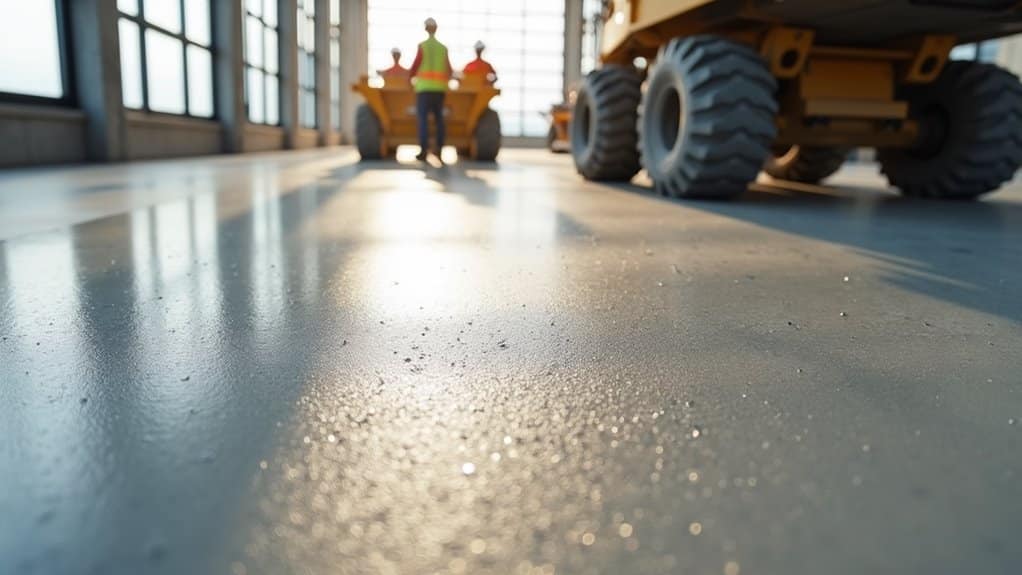
The fast-drying screed market is set for significant growth, bringing notable changes to the construction industry in the coming years. A key trend will be the increased emphasis on sustainability, as clients and regulators demand greener building practices.
Fast-drying screed reduces downtime, enabling projects to stick to tighter schedules while minimising the environmental impact of prolonged drying times.
Additionally, as the construction sector recovers from the pandemic, there will be a greater focus on workforce development. Companies that adopt advanced materials like fast-drying screed can attract skilled workers who are looking for innovative workplaces.
This approach not only addresses the ongoing skills shortage but also enhances the industry's appeal to newcomers.
Technological advancements, such as Building Information Modelling (BIM) and augmented reality, will improve project management and efficiency.
As the industry evolves, the combination of sustainability and workforce development will be crucial. By embracing these changes, you can position yourself and your projects at the forefront of a rapidly changing construction landscape, ready to tackle the challenges and seize the opportunities ahead.
Summary of Advantages
Fast-drying screed offers substantial time-saving benefits, allowing projects to be completed in just 24 to 48 hours.
This efficiency not only speeds up your workflow but also improves teamwork between trades.
Moreover, its durability ensures a strong flooring system that can withstand moisture and wear, making it a dependable choice for various applications.
Time-Saving Benefits
Accelerated drying times in fast-drying screeds significantly enhance project efficiency and shorten construction timelines.
By employing advanced installation techniques, you can streamline your workflow, allowing for quicker transitions between construction phases.
Here are three key benefits:
- Quick Foot Traffic Access: Fast-drying screeds can be ready for foot traffic in just 24 to 48 hours, enabling you to move forward without delay.
- Faster Final Coverings: Certain screeds permit floor coverings to be laid in as little as 4 hours, hastening the final stages of your project.
- Reduced Project Delays: With quicker drying times, other trades can commence their work sooner, keeping your project on schedule and minimising the risk of costly holdups.
These advantages not only help you meet deadlines but also reduce the chance of subfloor damage, ensuring a smoother workflow.
Enhanced Durability Features
Achieving enhanced durability with fast-drying screeds is crucial for ensuring long-lasting performance in your construction projects. These screeds offer excellent moisture resistance, significantly reducing the risks of mould growth and efflorescence.
With special additives that enhance the hydration process, they help prevent cracking and improve strength. This results in quicker early strength development, allowing for load-bearing activities sooner and leading to more efficient project timelines.
Fast-drying screeds are versatile, suitable for various applications such as bonded, unbonded, or floating systems over insulation. They're compatible with a range of floor coverings, including tiles and vinyl, catering to diverse project needs.
Moreover, the reduced drying time not only boosts surface durability but also improves safety by minimising slippery surfaces, thereby lowering accident risks.
With faster installation of final floor coverings, other trades can start work earlier, reducing downtime. Overall, fast-drying screeds simplify your construction processes while providing robust, durable surfaces that withstand heavy traffic and environmental challenges.
Frequently Asked Questions
Can Fast-Drying Screed Be Used Outdoors?
Yes, fast-drying screed can be used outdoors as it is designed to withstand various weather conditions. It sets quickly, providing a strong and durable surface while reducing the risk of moisture problems. This makes it suitable for applications like patios, driveways, and outdoor flooring.
How Does Fast-Drying Screed Compare With Traditional Screed?
When comparing fast-drying screed to traditional screed, you'll notice advantages such as significantly quicker drying times and more consistent finishes. For instance, while traditional screed might take several weeks to cure fully, fast-drying options can be ready for flooring in just a couple of days. This efficiency allows projects to move forward without unnecessary delays, making it a practical choice for builders and homeowners alike.
What Is the Cost Difference Between Fast-Drying and Standard Screed?
When looking at costs, fast-drying screed usually falls between £15 and £30 per m², whereas standard screed is priced from £10 to £20 per m². This shows a notable price difference, often reflecting the quicker drying times and efficiency of fast-drying options, which can be crucial for tight project deadlines.
Are There Any Environmental Concerns With Fast-Drying Screed?
When looking at environmental concerns with fast-drying screed, it's important to consider its material composition and sustainability practices. Many products aim to reduce emissions and energy consumption, but it's crucial to choose eco-friendly options. For instance, some screeds use recycled materials, which can help lessen their environmental impact. In short, being mindful of what you select can make a significant difference.
How Long Should I Wait Before Applying Floor Coverings?
When walking on freshly laid screed, it's important to wait 24 to 48 hours before applying any flooring materials. This waiting period ensures proper adhesion and performance, helping to avoid potential problems with your flooring later on. For instance, if you lay carpet or vinyl too soon, it may not stick properly, leading to costly repairs down the line.
Conclusion
In summary, fast-drying screed is a significant advancement in construction. It can reduce project timelines from months to just days, which is incredibly beneficial. With its impressive advantages and versatility, this screed becomes an essential tool for achieving high-quality floors quickly. As the construction industry adopts this innovation, you're not just keeping up; you're leading the way. Get ready to enhance your projects and see your efficiency improve!

Learn about the diverse types of concrete used in construction and discover which mix can transform your next project.

For a long-lasting driveway that laughs in the face of the UK's unpredictable weather, the C20 concrete mix is your Read more

In the UK, you've got a a lot of lightweight concrete types to choose from, each with its unique perks. Read more