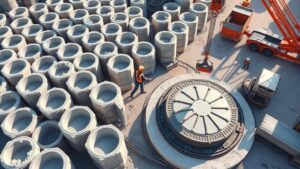
Fibre Reinforced Concrete (FRC) enhances building projects by combining distributed fibres with standard concrete, creating a robust three-dimensional reinforcement structure that stops cracks from spreading.
The material delivers higher tensile strength, better flexibility and longer-lasting performance than traditional concrete. Projects using FRC typically see a 30% reduction in maintenance costs throughout the structure’s life, whilst supporting greener construction through less material waste and lower carbon emissions.
FRC proves especially valuable in heavy-duty applications like factory floors, motorway bridges and other high-stress environments where ordinary concrete would struggle.
The technology continues to advance, particularly through integration with modern monitoring systems, making it increasingly vital to UK construction projects.
Key Takeaways
Concrete reinforced with fibres transforms standard building practices in five key ways:
- A 3D mesh of fibres throughout the concrete dramatically boosts its strength and stops cracks from spreading – much like how steel rods strengthen a building’s foundation.
- The higher upfront cost pays off, as fibre-reinforced concrete needs a third less maintenance and lasts far longer than regular concrete, saving money over time.
- Better for the environment, using up to 20% less concrete overall. Many fibres come from recycled materials, supporting the UK’s push towards sustainable construction.
- Exceptional strength makes it perfect for tough jobs – think warehouse floors that handle heavy forklift traffic or machine foundations in factories.
- Whether it’s steel for maximum strength, polypropylene for flexibility, or glass for corrosion resistance, different fibres suit different building needs across British construction projects.
Understanding Fibre Reinforced Concrete Fundamentals
Fibre reinforced concrete (FRC) is a modern construction material that combines standard concrete with distributed fibres to create a stronger composite. The addition of steel, polypropylene or glass fibres tackles the typical weaknesses of traditional concrete, resulting in a more robust building material.
The key benefit of FRC lies in its enhanced tensile strength and durability. Think of the fibres as a three-dimensional reinforcement network throughout the concrete – much like the steel bars in reinforced concrete, but spread evenly throughout the mixture. When cracks begin to form, these fibres act like countless tiny bridges, holding the concrete together and preventing the cracks from spreading.
FRC proves particularly useful in British construction projects, from motorway bridges to warehouse floors. Its practical advantages include better crack resistance, less frequent maintenance and improved load-bearing capacity.
For instance, a typical industrial floor made with FRC can withstand heavy machinery and frequent traffic better than standard concrete, making it ideal for factories and distribution centres across the UK.
Key Performance Benefits
Key Performance Benefits
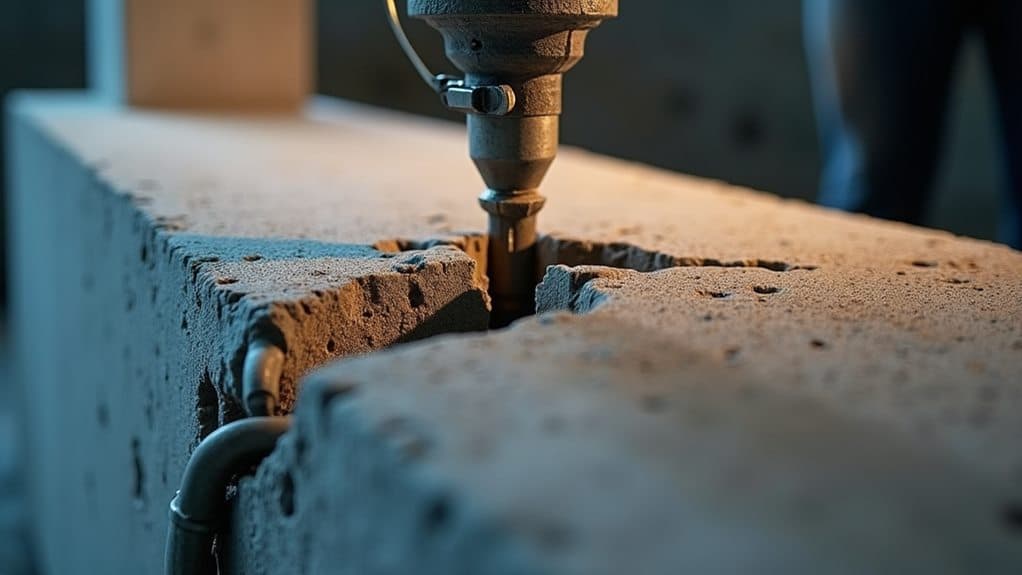
Reinforced concrete with fibre additives offers five crucial advantages for structural performance. Fibre-reinforced concrete significantly improves tensile strength, addressing concrete’s natural weakness and allowing structures to handle heavier loads and impacts compared to standard options.
Recent developments in microbial healing through hydrogel sheaths containing bacterial endospores have enhanced the material’s self-repairing abilities, particularly for structural cracks. The material’s crack resistance stands out, effectively spreading tensile stress and creating bridges at microcrack level – much like a microscopic safety net.
Its improved flexural performance prevents sudden failure whilst maintaining aggregate interlock under stress. This means better load distribution across the structure, with controlled crack development rather than catastrophic failure.
Perhaps most valuable is the material’s lasting durability and lower maintenance costs. Building owners spend less on repairs throughout the structure’s life, making fibre-reinforced concrete a practical choice for construction projects.
For example, a typical motorway bridge built with this material might need significantly fewer repairs over its 50-year lifespan compared to traditional concrete. These benefits result in stronger, more resilient structures that maintain their integrity under various loads whilst offering substantial cost savings.
Types of Construction Fibres

Modern construction uses five main fibre types for concrete reinforcement.
Steel fibres provide excellent tensile strength, making them ideal for industrial flooring that needs high load-bearing capacity and crack resistance.
Polypropylene fibres offer cost-effective shrinkage control and improve concrete durability.
Glass fibres excel in architectural projects where lightweight yet strong structures are essential, such as thin panels and countertops.
Carbon fibre reinforcement delivers outstanding strength-to-weight ratios and resists chemicals well, though it comes at a higher cost.
Natural fibres from plant materials present a sustainable choice, enhancing concrete’s mechanical properties whilst remaining cost-effective.
Each fibre type suits different construction needs, from warehouse floors to decorative features.
The best choice depends on specific project requirements, budget and performance needs.
Durability and Strength Characteristics
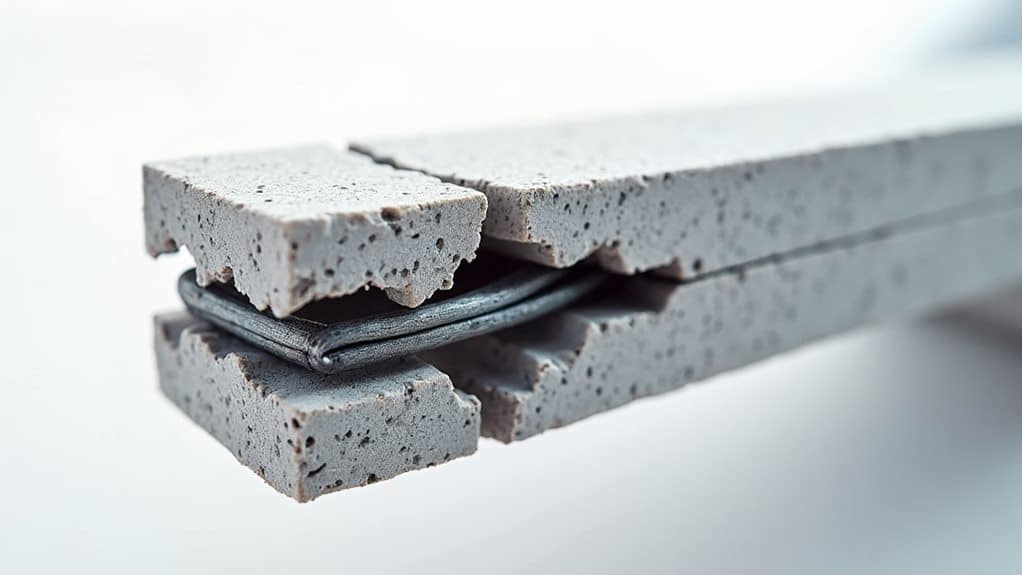
The structural integrity of fibre-reinforced concrete comes from its exceptional durability and strength. The addition of microfibres significantly improves crack resistance by spreading tensile stress throughout the material.
Similar to ultra-high performance concrete, it shows remarkable strength through advanced bridging mechanisms, preventing brittle failure and ensuring solid structural performance under various loads.
Key durability and strength benefits include:
- Better flexural strength to handle higher loads and impacts – particularly useful in warehouse floors and bridges where standard concrete might crack.
- Greater fatigue resistance against repeated loads, reducing failures in busy areas like car parks and extending service life.
- Strong environmental protection against harsh weather, including frost damage, ensuring lasting performance across British weather conditions.
The material’s natural crack resistance means far less maintenance throughout its service life.
These properties create a tougher building material that performs better than traditional concrete in challenging settings, whilst offering significant cost savings through fewer repairs.
Environmental Impact and Sustainability
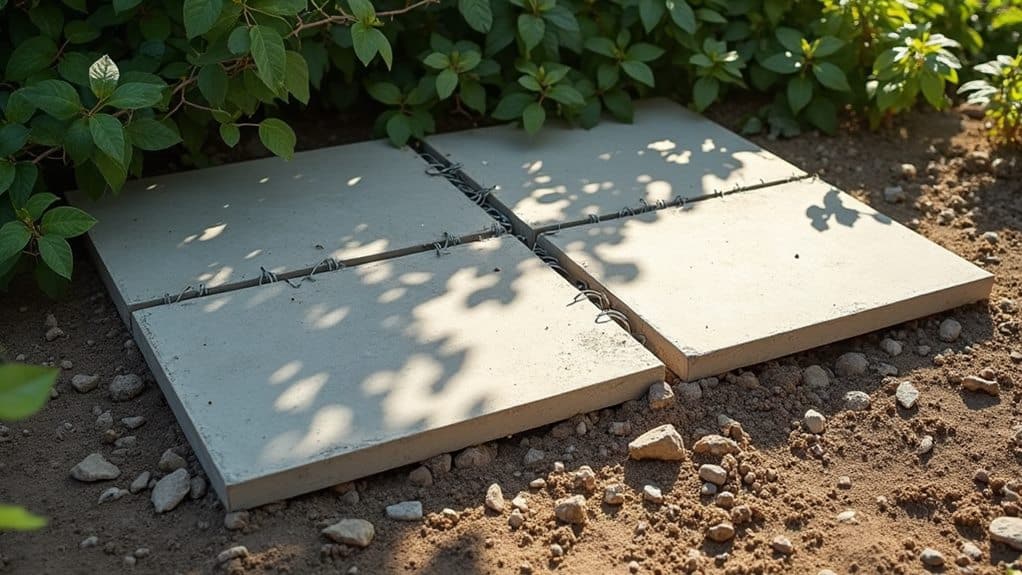
Fibre-reinforced concrete offers strong environmental benefits by significantly reducing construction carbon footprints through less material use and slimmer structural elements.
The material supports circular economy practices, much like innovative concrete solutions that use recycled materials. Its enhanced durability leads to longer-lasting structures, meaning fewer replacements and less maintenance-related carbon emissions.
The concrete’s robust performance allows for optimised designs that create less waste, particularly when incorporating recycled fibres.
This efficiency, combined with reduced repair needs throughout the structure’s lifetime, makes it a practical choice for sustainable construction in the UK market.
Reduced Carbon Construction Footprint
Carbon reduction benefits come from using fibre reinforced concrete (FRC) in construction. FRC’s superior strength allows for thinner, lighter designs whilst maintaining structural integrity, which means less concrete usage overall.
The material delivers environmental advantages through:
- Less maintenance work, cutting emissions from repairs and transport
- Longer structural life, reducing the need for demolition and rebuilding
- Fewer chemical treatments needed in harsh conditions
FRC supports sustainable building by incorporating recycled materials, particularly in steel and synthetic fibres, supporting the circular economy and waste reduction.
Its enhanced performance means structures need less concrete overall, shrinking the carbon footprint across the build lifecycle.
For example, a typical commercial building using FRC might require 15-20% less concrete than traditional methods, whilst lasting decades longer.
This practical approach helps UK builders meet increasingly strict environmental regulations whilst delivering durable structures.
Longer Structural Life Cycle
Fibre-reinforced concrete (FRC) structures last significantly longer than standard concrete, withstanding decades of weather and wear whilst maintaining strength.
The material drastically cuts maintenance needs and boosts durability, leading to substantial cost savings throughout its life.
FRC’s robust resistance to cracking and environmental damage proves particularly valuable in tough conditions.
Its enhanced strength and impact resistance mean fewer repairs and replacements.
This makes it ideal for critical UK infrastructure like motorway bridges and railway tunnels, where any closure or maintenance proves both expensive and inconvenient to the public.
Less Material Waste
Less Material Waste
FRC (fibre-reinforced concrete) delivers significant environmental benefits alongside its durability advantages. The material enables more efficient designs with less waste through optimised concrete mixtures, allowing for thinner structures whilst maintaining strength.
The material’s enhanced tensile strength and crack resistance cut waste in three ways:
- Reduced concrete volume needed – slimmer structural elements achieve the same performance
- Less traditional reinforcement required – smaller overall material footprint
- Fewer repairs and replacements throughout lifespan – lower long-term resource use
Think of it like building with advanced Lego bricks – you need fewer pieces to create an equally strong structure, and it lasts longer without breaking.
This practical approach means less material ends up in landfills whilst delivering robust construction results.
Cost Analysis and Economic Advantages
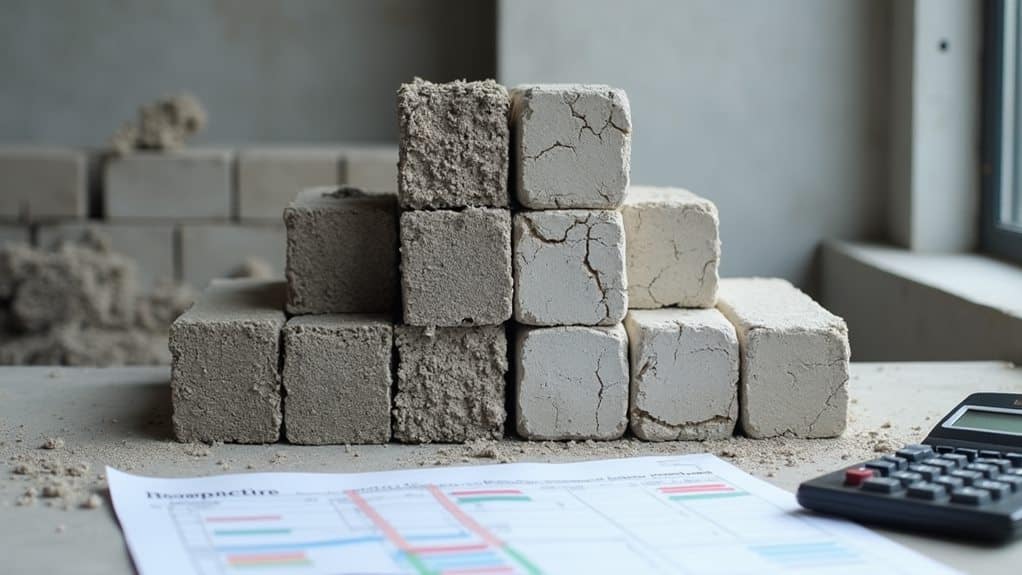
The economic advantages of fibre-reinforced concrete (FRC) make a strong business case, despite costing 10-15% more initially.
Long-term savings offset these upfront costs significantly, with maintenance costs dropping by up to 30% throughout its lifespan thanks to superior durability and crack resistance.
Like other low-carbon concrete innovations, FRC marks a major step forward in construction materials that deliver both performance and sustainability.
FRC’s enhanced load-bearing capacity enables the design of thinner, lighter structural elements, cutting material costs and reducing foundation requirements.
This structural efficiency delivers direct cost savings, whilst the material’s resilience to harsh weather minimises repair and replacement needs.
From an economic perspective, FRC’s sustainable qualities can help secure valuable green building certifications.
These credentials boost property market value and attract environmentally conscious investors.
Choosing FRC means investing in a solution that delivers immediate structural benefits alongside long-term financial gains through lower lifecycle costs and increased asset value.
Construction Applications and Uses
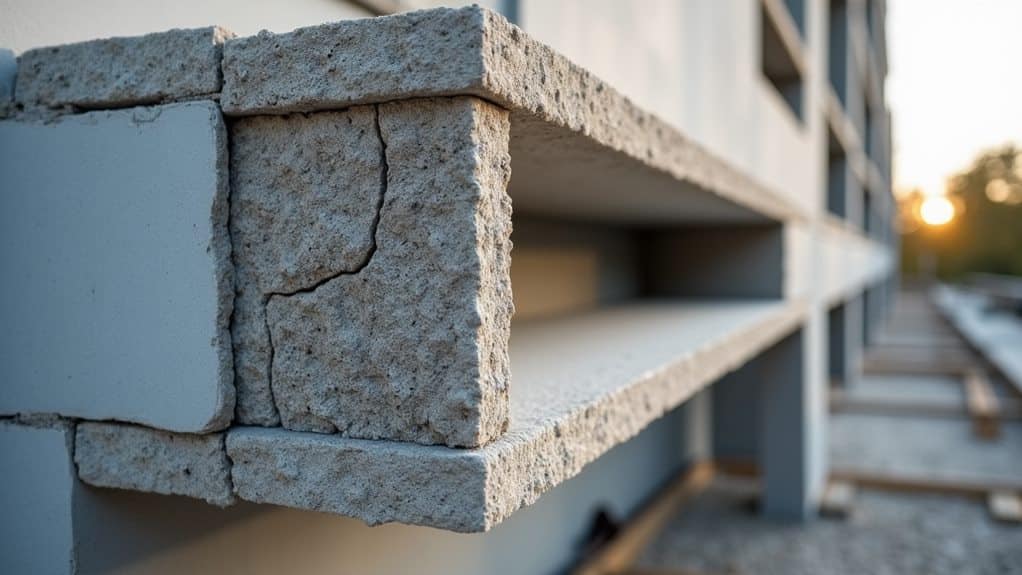
Fibre-reinforced concrete offers clear economic benefits across modern construction projects. The material proves particularly valuable in infrastructure works where enhanced durability and crack resistance are vital for managing heavy loads and weather conditions.
In factories and warehouses, its superior impact resistance makes it ideal for industrial flooring, cutting down on maintenance costs. The material’s ability to take a polished finish suits both practical and visual requirements in commercial buildings.
The uses of fibre-reinforced concrete stretch across various sectors, combining design flexibility with structural strength:
- Infrastructure: Motorways, bridges and transport structures rely on FRC’s capacity to handle heavy traffic and weather exposure.
- Underground Works: Tunnels and below-ground structures benefit from FRC’s resistance to chemicals and water damage.
- Architectural Features: Precast elements use FRC’s strength to achieve slimmer, lighter designs whilst maintaining structural integrity.
Each application maximises FRC’s core strengths, from improved tensile strength to better crack resistance. This versatility has made it increasingly popular in British construction, particularly where standard concrete might struggle to meet performance needs.
Mixing and Installation Guidelines
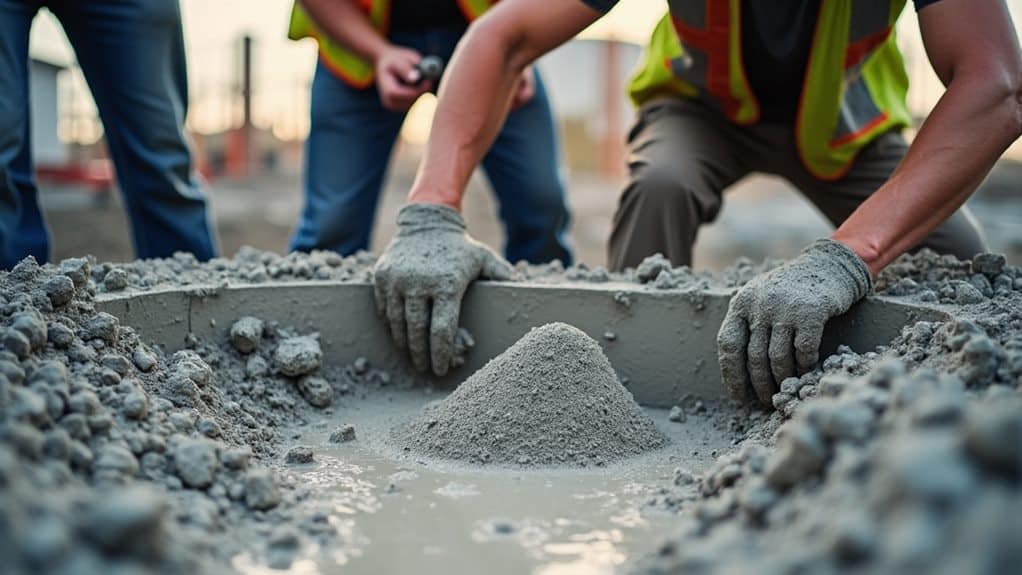
Mixing and Installing Fibre-Reinforced Concrete
Proper mixing and installation are crucial for fibre-reinforced concrete’s success. The process requires precise control of fibre, cement and aggregate ratios to ensure even distribution. Much like standard steel reinforcement, correct mixing and placement directly affect the final strength and durability. A high-shear mixer is essential for creating a uniform blend that delivers optimal mechanical properties.
Add fibres gradually whilst mixing to prevent clumping – think of adding flour to cake batter to avoid lumps. This method ensures the fibres spread evenly throughout the concrete matrix.
The mixture will be thicker than standard concrete, so adjust your pouring technique to ensure proper flow and complete filling of forms.
The curing stage is critical. Maintain strict temperature and humidity levels throughout to avoid early drying. Poor control can lead to cracking and reduced performance – similar to a cake that’s taken out of the oven too soon.
Following these guidelines carefully will ensure you achieve the full structural benefits of fibre-reinforced concrete.
Maintenance and Long-Term Performance
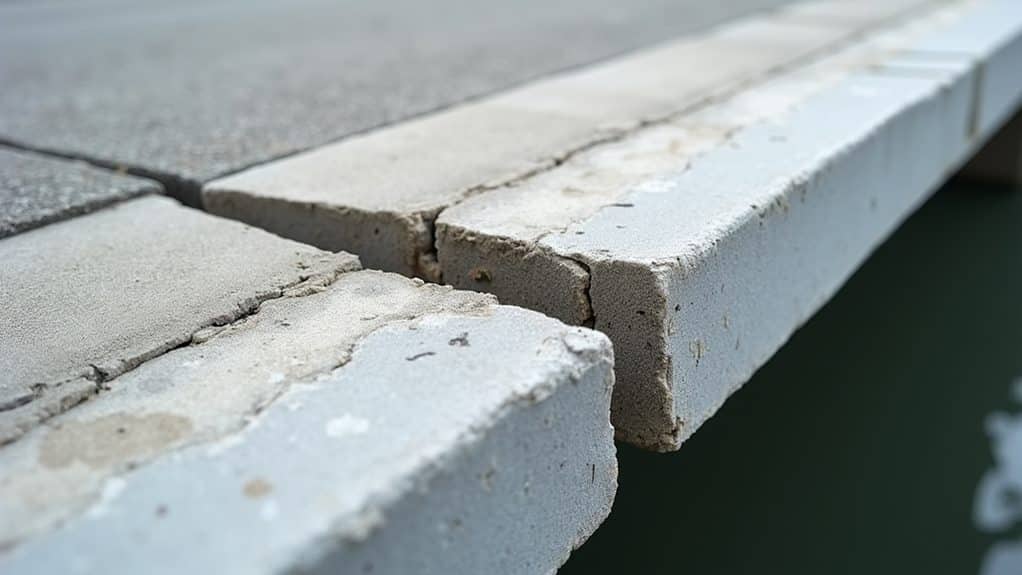
Maintaining fibre-reinforced concrete structures is straightforward, thanks to their built-in durability advantages. FRC structures require less upkeep throughout their service life, mainly because they resist cracks better and last longer than standard concrete.
FRC delivers three main long-term benefits:
- Better flexural strength – handles heavier loads and impacts, similar to how a reinforced plastic shopping bag withstands more weight than a standard one.
- Reduced cracking from tension and temperature changes – much like how a flexible phone case prevents damage better than a rigid one.
- Improved behaviour after cracking – maintains structural integrity rather than failing suddenly.
These advantages lead to clear cost savings over time. The need for repairs drops significantly, cutting down ongoing expenses.
Choosing FRC means investing in a material that not only performs well from day one but keeps its structural strength throughout its longer lifespan.
Future Developments and Innovations
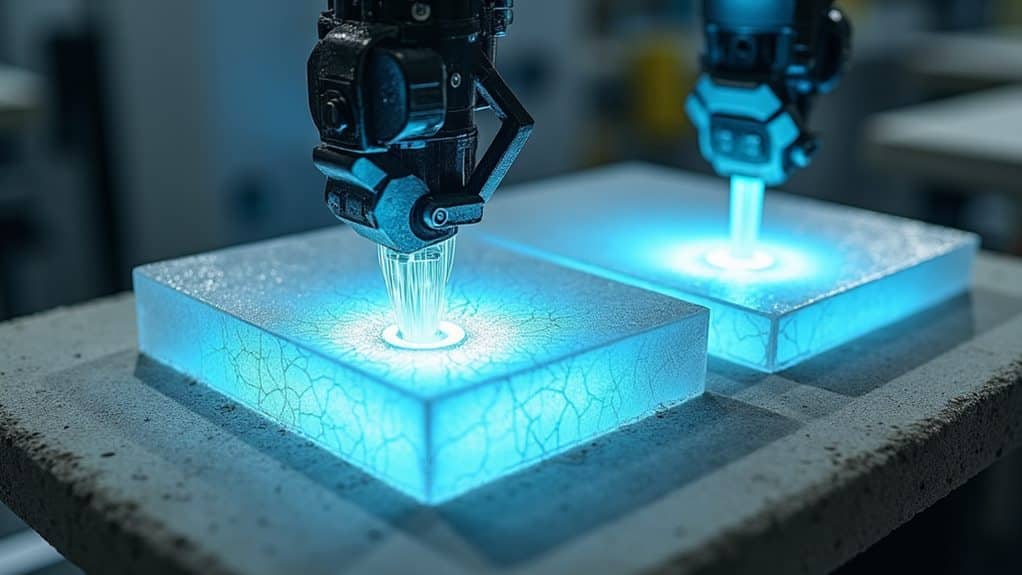
Emerging bio-based and recycled fibres are reshaping FRC’s environmental impact, whilst new polymer technologies deliver exceptional structural performance in harsh conditions.
Modern FRC systems now incorporate smart sensors that monitor structural health in real time, much like a building’s vital signs, allowing maintenance teams to spot and fix issues before they become serious problems.
The marriage of material science and 3D printing has opened doors to complex FRC designs previously impossible with standard building methods – think intricate support structures that use less material whilst maintaining strength.
Emerging Material Technologies
The future of fibre-reinforced concrete is changing rapidly through advances in technology and materials science. Fresh developments are reshaping construction practices with more sustainable and better-performing solutions. Notably, nanotechnology has improved how fibres bond with concrete, making structures more durable and less prone to water damage.
Major breakthroughs include:
- Bio-based and recycled fibres offering eco-friendly alternatives whilst maintaining strength
- Smart fibres that monitor concrete conditions in real time
- Hybrid fibre systems that combine different materials for optimal performance
3D printing has transformed how we use fibre-reinforced concrete. Buildings and structures can now be printed with precise fibre placement, much like laying down rows of icing on a cake. This approach cuts waste and improves structural efficiency significantly.
The most promising development is hybrid fibre technology. By mixing different types of fibres – think of it as combining steel and plastic fibres – builders can create concrete that’s both incredibly strong and flexible.
These innovations are particularly valuable for UK construction projects, where varying weather conditions demand robust building materials.
Smart Sensing Applications
Smart sensing capabilities have transformed the monitoring and maintenance of fibre-reinforced concrete structures across the UK. Integrated sensors within FRC enable real-time structural health monitoring, detecting vital changes in stress, strain and temperature that might signal potential failures. This monitoring system delivers immediate feedback about structural performance, ensuring timely maintenance.
Smart sensing technology in FRC projects offers comprehensive performance data throughout a structure’s life. Engineers can monitor durability and plan maintenance based on actual structural behaviour.
New self-sensing materials, using conductive fibres, create data networks that function without external power – particularly useful for remote installations and motorway bridges.
The technology supports sustainable construction and smart city projects common in British urban development. These systems provide early warnings about moisture damage and chemical exposure, particularly relevant in the UK’s varied climate.
Smart sensing in FRC structures represents an investment in infrastructure that’s more robust, intelligent and sustainable, from council buildings to railway infrastructure.
Frequently Asked Questions
What Are the Advantages of Fibre Reinforced Concrete?
FRC delivers better durability, stronger crack resistance and greater impact strength compared to standard concrete. The fibres improve workability during installation and reduce both shrinkage and thermal movement once set. Think of it like adding reinforcing strands throughout the concrete, similar to steel bars but on a much smaller scale. This enhanced strength means lower maintenance costs and longer-lasting structures – particularly useful for British construction projects exposed to our varied weather conditions.
What Are the Five 5 Advantages of Reinforced Concrete?
Reinforced concrete delivers five key benefits for UK construction: exceptional durability against British weather conditions, superior bending strength for structural stability, effective resistance to cracking (particularly useful in areas with ground movement), versatile workability for various architectural designs, and long-term cost savings compared to traditional building materials. Common examples include its use in motorway bridges, high-rise flats and underground car parks across Britain.
What Are the Advantages of Fibre Reinforced Composite?
Fibre reinforced composites deliver exceptional strength and crack resistance whilst distributing loads effectively across structures. The materials enhance durability, improve thermal performance and remain workable during installation. These practical benefits, combined with reasonable costs and lower environmental impact, make them ideal for UK construction and manufacturing projects.
What Are the Advantages of Natural Fiber in Concrete?
Natural fibres enhance concrete’s tensile strength and durability whilst offering environmental advantages. These cost-effective materials provide excellent moisture resistance and sustainability, proving ideal for improving structural integrity in British construction projects.
Conclusion
Fibre reinforced concrete (FRC) represents a significant leap forward in British construction methods. From small-scale home projects to major motorway bridges, FRC enhances traditional concrete’s performance through its integrated fibre network. The material’s robust strength and eco-friendly qualities make it ideal for modern building needs, whilst its versatility proves valuable across residential, commercial and industrial applications. FRC stands as a practical solution for today’s construction challenges, delivering better crack resistance and durability than standard concrete.

Learn about the diverse types of concrete used in construction and discover which mix can transform your next project.

For a long-lasting driveway that laughs in the face of the UK's unpredictable weather, the C20 concrete mix is your Read more

In the UK, you've got a a lot of lightweight concrete types to choose from, each with its unique perks. Read more