Breaking up and disposing of concrete mix needn’t be a hassle. Start by splitting the material into manageable chunks of 60-90 cm using power tools – it’s far easier than doing it by hand.
Most UK recycling centres charge roughly £85 per tonne and will ensure proper disposal. To keep costs down, split your load into smaller batches and look for local recycling facilities that reuse the material.
For safety and legal compliance, always wear protective gear and, for bigger jobs, hire a licensed waste management firm.
These practical steps will help you dispose of concrete mix properly without breaking the bank or your back.
Key Takeaways
- Book a council-approved waste management firm to handle collection and disposal, sorting all permits and heavy lifting.
- Cut concrete into smaller chunks of 60-90 cm using power tools – much easier than breaking it by hand.
- Check local recycling centres that take concrete waste – you’ll save on transport costs and backache.
- Order a skip from a nearby firm – they’ll drop it off and collect it once full, dead simple.
- For big jobs, look into hiring concrete crushing kit – it’s worth it to avoid the manual graft.
Planning Your Concrete Disposal Strategy
Proper Concrete Disposal Planning
Disposing of concrete mix requires careful planning and compliance with local council regulations to avoid hefty fines. Before starting, check with your local authority for specific guidelines on concrete disposal in your area.
While concrete remains widely used, many UK construction projects now favour sustainable materials like timber and bamboo. First, weigh your concrete waste to determine disposal costs – most recycling centres charge by weight, typically around £85 per tonne. Breaking the disposal into smaller loads can help manage these costs more effectively.
Look for local recycling facilities that specialise in concrete processing. These centres crush and repurpose old concrete for new construction projects, making them an environmentally sound choice. Alternatively, consider donating unused concrete mix to local community projects or charitable organisations.
Keep thorough records of your disposal method to prove compliance with regulations. This documentation is particularly important for commercial projects and helps demonstrate responsible waste management practices.
Tips for disposal:
- Contact your local council for approved disposal sites
- Break large amounts into manageable loads
- Consider recycling centres over landfill
- Save disposal receipts for your records
- Check if any local projects could use surplus material
Environmental Impact and Recycling Options
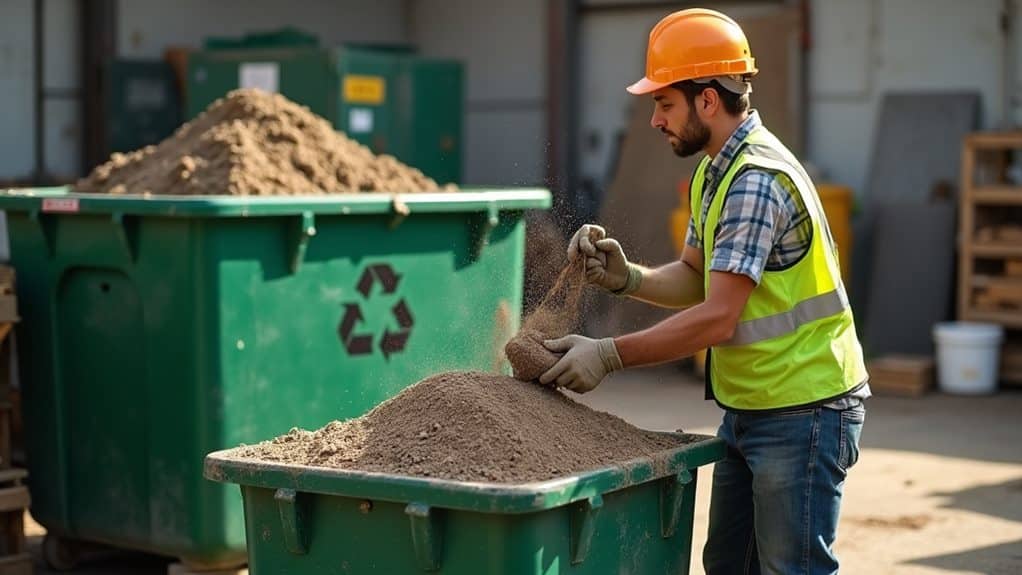
Concrete disposal requires proper recycling to minimise environmental impact. Every tonne of recycled concrete saves roughly 1,500 pounds of aggregate and cuts greenhouse gas emissions by up to 80% compared to producing new concrete.
| Disposal Method | Environmental Impact | Best Practices |
|---|---|---|
| Recycling | Low emissions | Contact council authorities |
| Landfill | High impact | Avoid when possible |
| Reuse as aggregate | Resource efficient | Check quality standards |
| Improper disposal | Environmental hazard | Never attempt |
The UK leads in concrete recycling, with 80% of waste concrete recycled yearly. Local councils and waste management firms offer various recycling programmes, turning old concrete into aggregate for new mixes or road base materials.
Responsible concrete disposal isn’t optional – it’s crucial for sustainable construction. Taking part in recycling schemes supports the circular economy whilst significantly reducing your project’s carbon footprint.
Tips for proper disposal:
- Ring your local council about recycling options
- Ensure material meets quality requirements
- Avoid landfill disposal where possible
- Never dump concrete illegally
Breaking Down Large Concrete Pieces
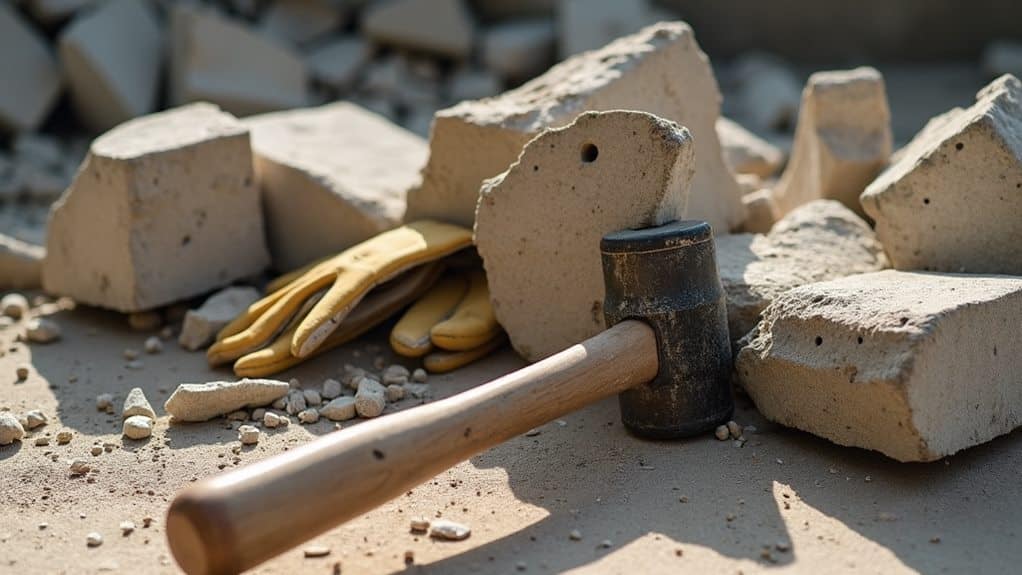
Breaking down large concrete pieces requires proper safety measures and equipment for efficient disposal. Modern concrete repair methods have evolved significantly, but disposal still demands careful handling of all types.
You’ll need a sledgehammer or jackhammer to break the concrete into manageable chunks, whilst wearing protective gear to shield against flying debris and hazardous materials.
Break concrete into sections no larger than 60-90 centimetres. This makes waste easier to handle and transport to recycling facilities. On-site crushing equipment can reduce transport costs and labour needs. For bigger projects, consider hiring specialists with heavy machinery to handle the task efficiently.
Check your local council regulations on concrete disposal before starting. Many areas have strict rules about construction waste disposal.
Locate approved recycling centres or waste facilities nearby to ensure compliance and avoid fines. Recycling concrete is typically more environmentally sound than sending it to landfill.
Transportation and Handling Methods
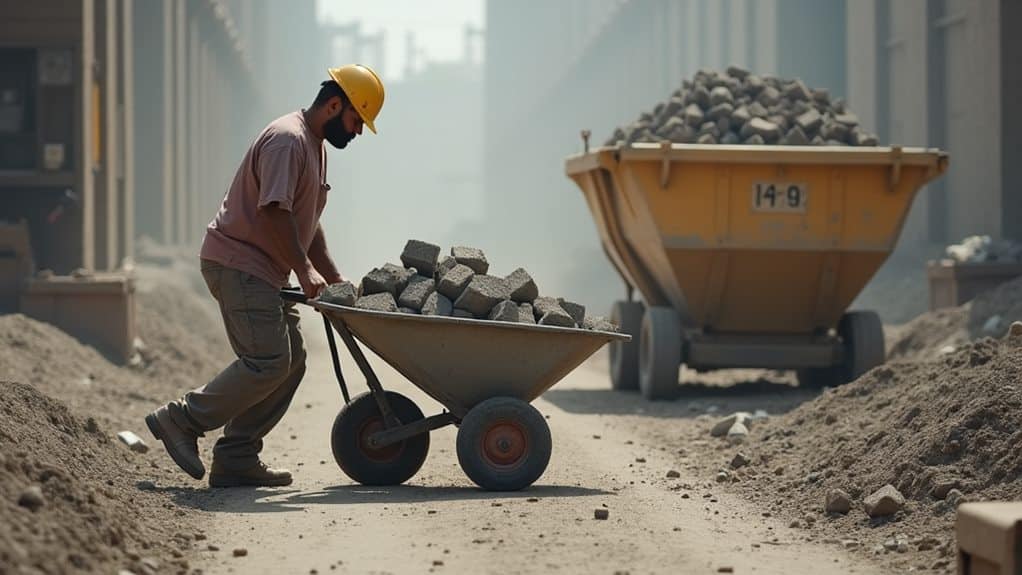
Transport and Handling Methods
Proper transport and handling of concrete waste is essential for safety and legal compliance in the UK. Whether you’re clearing construction site waste or removing old concrete, careful planning is crucial for successful disposal.
For large quantities, hire a licensed waste management company. They possess the right equipment and know-how to handle heavy loads safely whilst meeting environmental standards.
If managing transport yourself, ensure your vehicle can handle the weight safely. Breaking concrete into smaller chunks makes handling easier and reduces load weight per journey.
Use your nearest concrete recycling centre to cut transport costs and distance. Check your vehicle’s weight limits and local council regulations on load sizes before starting.
You’ll need proper permits and should understand disposal fees upfront. Most UK landfills don’t accept concrete waste, making recycling centres your best choice.
Sound planning of transport method and disposal location ensures a smooth, compliant process.
Local Disposal Facilities and Requirements
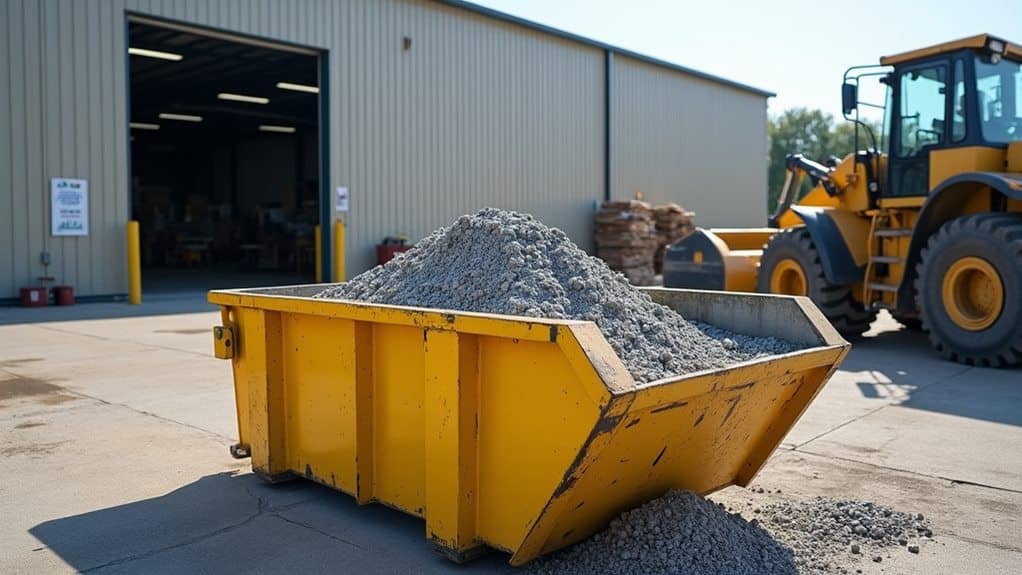
Finding suitable disposal sites near you must comply with UK regulations and facility guidelines. Working with licensed waste centres is essential to avoid environmental breaches and fines.
Concrete disposal requires specific handling methods that align with local council rules. Proper disposal supports sustainability and helps boost recycling in the building trade.
Contact your local tips or waste centres to check their requirements and costs. Most charge by weight, so weighing your load beforehand helps with budgeting.
While skips and tips are common options, recycling centres often offer better value. These facilities can crush old concrete into useful aggregate for new building projects.
For bigger loads, you might need permits from your local council. Work with established waste firms who know the proper channels. They can verify whether your concrete is suitable for disposal and point you to the nearest construction waste facilities.
Bear in mind that rules differ across councils – what’s allowed in Manchester mightn’t be in Bristol.
Frequently Asked Questions
What to Do With Old Concrete Mix?
Test your old mix’s viability before taking action. Usable concrete suits garden projects like stepping stones or pathway borders. Local DIY groups and charitable organisations often welcome concrete donations. For disposal, take hardened concrete to your nearest recycling centre – most council tips accept building materials. If it’s fully set, break it into manageable chunks first.
How to Dispose of Cement Powder in the UK?
Cement powder requires proper disposal through licensed waste facilities in the UK. Contact your local council’s waste management team or visit your nearest household waste recycling centre (HWRC) that accepts construction materials. Always keep the powder in its original sealed container and clearly label it as cement waste. For trade quantities, use a registered waste carrier or skip hire service that handles construction waste. Never pour cement powder down drains or mix it with regular household rubbish, as it’s considered hazardous waste under UK regulations.
How Do You Get Rid of Small Amounts of Concrete?
Small amounts of concrete can be disposed of through household waste collection, local recycling centres or reused for garden projects. Contact your council first to check local disposal guidelines, as rules vary by area. Common reuse options include garden path bases, drainage fill or creating decorative borders.
Can You Stop Concrete From Sweating?
Several practical methods can prevent concrete sweating: maintain indoor humidity control, regulate room temperature, use proper curing methods, apply quality surface treatments and mix in suitable concrete additives. Good air circulation and careful monitoring of conditions during installation are essential.
For best results in the British climate, ensure your space has proper ventilation, particularly in damp winter months when indoor-outdoor temperature differences are most pronounced. A dehumidifier can help in areas prone to moisture build-up, like basements or garages.
Conclusion
Disposing of concrete mix needn’t be complicated in the UK. Check your local council’s waste guidelines first, as requirements vary by region. Most recycling centres accept unused mix, whilst some builders’ merchants offer collection services. For small amounts, let the mix harden in a container, then take it to your nearest household waste site. Larger quantities may require a skip hire or specialist removal. Breaking down the material for garden projects is another practical option – it works brilliantly as sub-base for patios or paths. Just avoid letting any concrete mix enter drains or waterways, as it’s harmful to the environment.

Learn about the diverse types of concrete used in construction and discover which mix can transform your next project.

For a long-lasting driveway that laughs in the face of the UK's unpredictable weather, the C20 concrete mix is your Read more

In the UK, you've got a a lot of lightweight concrete types to choose from, each with its unique perks. Read more