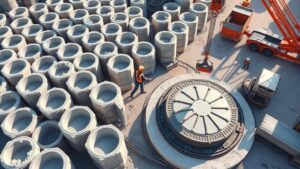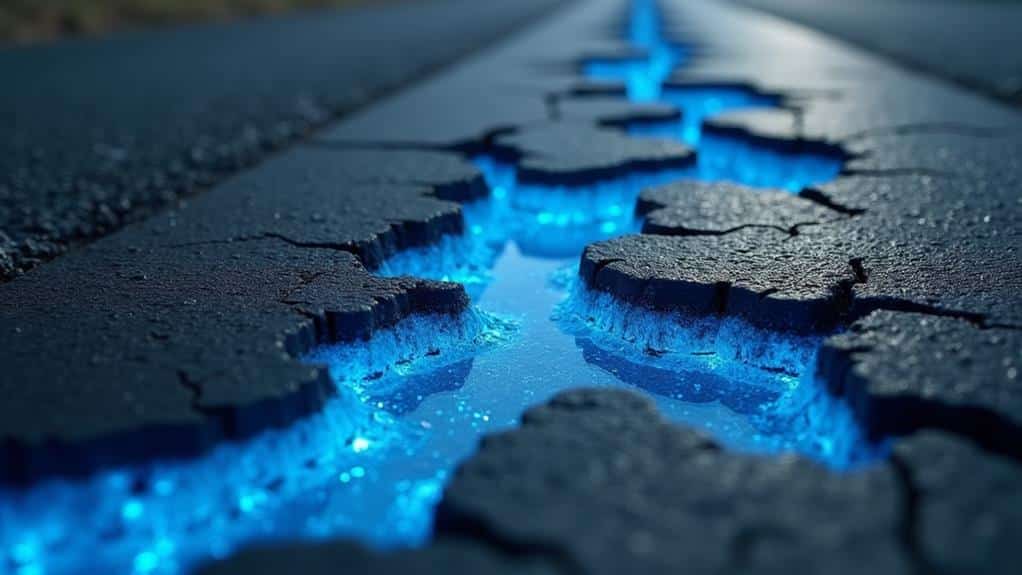
UK scientists have developed a groundbreaking self-healing concrete that could eliminate the plague of potholes. This innovative material incorporates bacteria-filled capsules that activate when exposed to water, producing limestone to seal cracks autonomously.
We're looking at a potential game-changer for road maintenance, with the ability to double the lifespan of surfaces and cut repair costs by up to 50%. It's not just about saving money; this technology promises improved safety for road users and significant environmental benefits by reducing CO2 emissions from frequent repairs.
The implications of this discovery extend far beyond our borders, potentially revolutionising global infrastructure strategies.
Key Takeaways
- British scientists have developed self-healing concrete incorporating bacteria-filled capsules that repair cracks autonomously.
- The concrete mimics human skin healing, producing limestone to seal cracks when exposed to water.
- Self-healing concrete could double road surface lifespan and reduce pothole formation significantly.
- Implementation may lead to a 50% reduction in road maintenance costs for local councils and taxpayers.
- The technology addresses the UK's pothole crisis, potentially eliminating 630,000 reported potholes annually.
The Pothole Plague
Addressing the pothole plague has become an urgent priority for UK infrastructure. The severity of this issue is evident in the staggering pothole statistics: over 630,000 potholes were reported from January to November 2023 alone.
This epidemic not only compromises road safety but also imposes a significant financial burden on drivers and taxpayers alike. The advent of self-healing concrete could revolutionise road maintenance, potentially reducing the frequency and cost of repairs. This innovative material utilises bacteria to generate calcium carbonate, effectively sealing cracks within days.
We're witnessing an annual expenditure exceeding £500 million on pothole-related vehicle repairs, with the actual figure likely much higher due to underreporting. The surge in compensation claims, surpassing 40,000 in the last year, further underscores the scale of the problem.
These numbers reflect a growing safety concern that extends beyond motorists to vulnerable road users such as cyclists. The UK's climate exacerbates the situation, accelerating road wear and increasing maintenance costs.
This persistent cycle of damage and repair strains public resources and poses a continuous threat to road safety. As we analyse these trends, it's clear that conventional repair methods are insufficient. The pothole plague demands innovative solutions to guarantee safer, more durable road infrastructure and mitigate the substantial economic impact on individuals and the nation.
Self-Healing Concrete Breakthrough
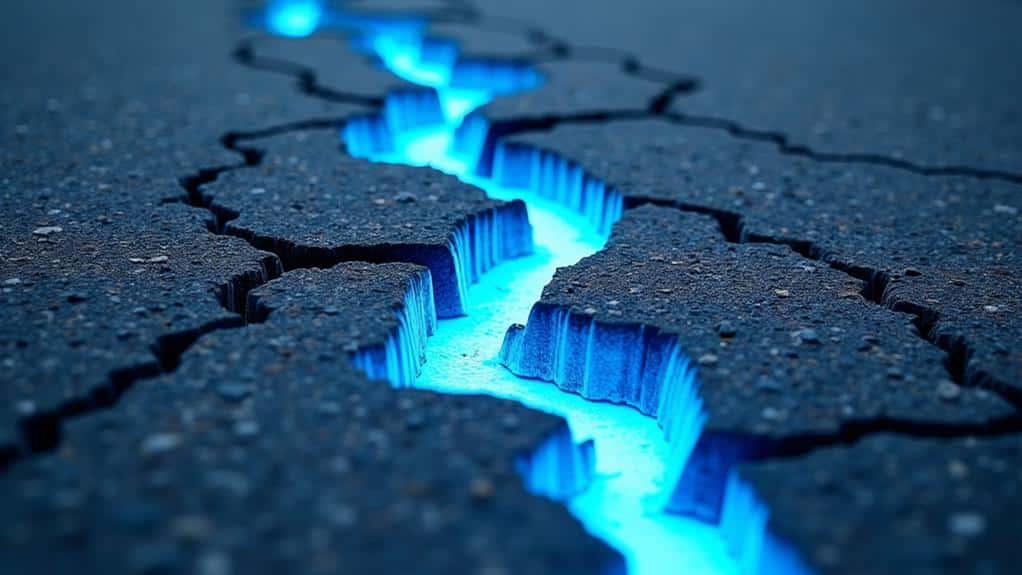
Pioneering a revolution in road maintenance, self-healing concrete has emerged as a groundbreaking solution to the persistent pothole problem. This innovative material, developed by researchers from the Universities of Bath, Cardiff and Cambridge, incorporates specialised capsules containing bacteria. When cracks form and expose these capsules to water, the bacteria are activated, producing limestone that effectively seals the fissures.
Similar to the BioFiber technology developed by Drexel University, this self-healing concrete mimics the human skin healing process in response to damage. The mechanism relies on microbial-induced calcium carbonate precipitation to fill cracks and restore structural integrity.
We've observed remarkable results in laboratory studies, demonstrating the efficacy of this self-healing technology. As we continue to explore real-world applications, we're addressing common road maintenance challenges head-on.
The potential impact is considerable: self-healing properties could double the lifespan of road surfaces, notably reducing pothole formation.
The economic implications are equally impressive. Implementation of this innovative concrete could lead to a 50% reduction in repair costs, alleviating the financial burden on local councils and taxpayers.
Furthermore, we're witnessing a shift towards sustainable infrastructure. By decreasing the need for traditional concrete production and maintenance, we're minimising environmental impact.
As we refine this technology, we're paving the way for a future where potholes may indeed become a relic of the past.
How It Works
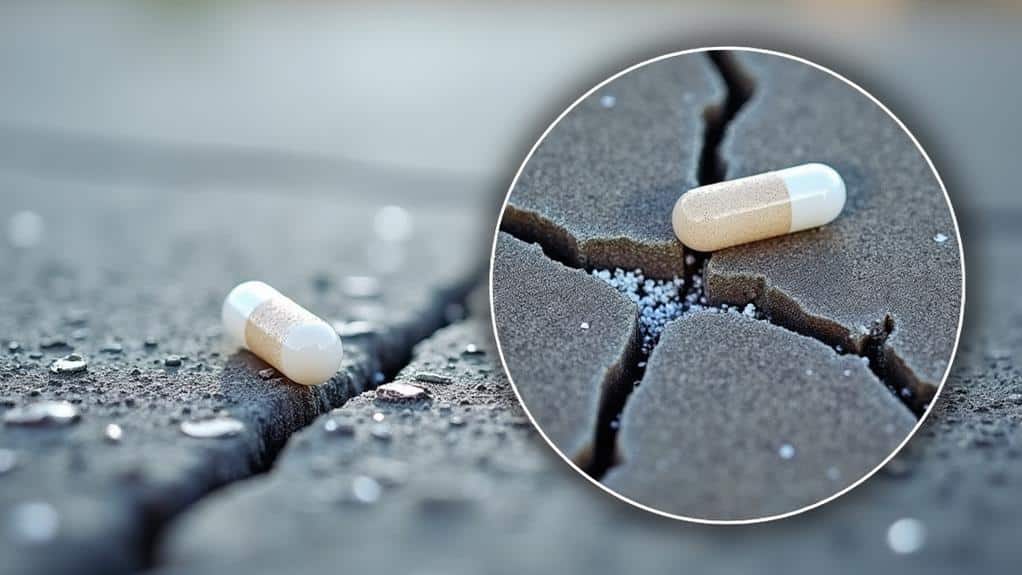
We shall examine the core mechanism of self-healing concrete, which relies on bacteria-infused capsules embedded within the material.
This innovative approach, akin to 3D-printed concrete technology, aims to enhance durability and reduce maintenance costs in construction.
When water infiltrates cracks in the concrete, it activates these capsules, triggering the bacteria to produce limestone.
This limestone-producing process effectively seals the cracks, demonstrating the concrete's autonomous repair capabilities.
Bacteria-Infused Concrete Capsules
Researchers have zeroed in on a groundbreaking solution for concrete durability: bacteria-infused capsules. This innovative approach to concrete longevity involves bacterial encapsulation within tiny capsules embedded in the concrete matrix. When cracks form and water infiltrates the structure, these capsules rupture, releasing the dormant bacteria.
Upon activation, the microorganisms begin producing limestone, effectively sealing the cracks and restoring the concrete's integrity. This self-healing mechanism greatly enhances the material's durability and lifespan, potentially rendering potholes obsolete and drastically reducing maintenance requirements.
We've found that this technology offers substantial benefits beyond structural integrity. Studies indicate a potential 50% reduction in repair costs, coupled with environmental advantages through waste minimisation.
By maintaining road integrity for extended periods, we're also improving safety for all road users and mitigating traffic disruptions caused by frequent repairs.
The implications of this breakthrough are far-reaching. We're not just fixing cracks; we're revolutionising infrastructure maintenance.
As we continue to refine this technology, we're moving closer to a future where our concrete structures possess an intrinsic ability to self-repair, fundamentally altering our approach to construction and maintenance.
Water-Activated Limestone Production
At the heart of self-healing concrete's functionality lies the water-activated limestone production process. This innovative mechanism is triggered when rainwater penetrates cracks in the concrete surface, initiating a remarkable self-repair cycle.
As water seeps into the material, it activates specialised bacteria encapsulated within the concrete matrix. These bacterial agents, once exposed to moisture, begin to produce limestone through a natural biochemical reaction. The resulting limestone formation fills the gaps and fissures in the concrete, effectively sealing them and preventing further deterioration.
This process mimics nature's own healing methods, adapting them for our infrastructure needs.
We've found that this water-activated limestone production considerably extends the lifespan of road surfaces, potentially doubling their durability. By continuously repairing minor damage, the concrete maintains its structural integrity, reducing the frequency of required maintenance and the formation of potholes.
The implementation of this self-healing technology promises to revolutionise road infrastructure maintenance. By harnessing the power of water absorption and bacterial limestone formation, we're creating more resilient and cost-effective road surfaces that can withstand the test of time and traffic.
Crack-Sealing Capabilities Demonstrated
Numerous laboratory studies have demonstrated the remarkable crack-sealing capabilities of self-healing concrete. We've observed that when water breaches the surface of this innovative material, it activates specialised capsules containing bacteria. These microorganisms then produce limestone, effectively filling cracks and gaps as they occur. This autonomous crack prevention mechanism greatly reduces pothole formation, addressing a major issue in road maintenance.
The durability enhancement provided by self-healing concrete is substantial. Our research collaborations, involving universities like Bath, Cardiff, and Cambridge, have shown that this technology maintains structural integrity over time, extending the lifespan of road surfaces.
We've found that the material's ability to autonomously seal cracks as they appear leads to smoother roads, which in turn enhances safety for all road users.
Our studies indicate that successful implementation of self-healing concrete could potentially cut road maintenance costs by up to 50%. This reduction in expenses, coupled with the material's ability to reduce vehicle-related accidents through improved road conditions, makes it a promising solution for future infrastructure development.
We're confident that this technology represents a considerable advancement in concrete engineering and road maintenance strategies.
Economic Benefits
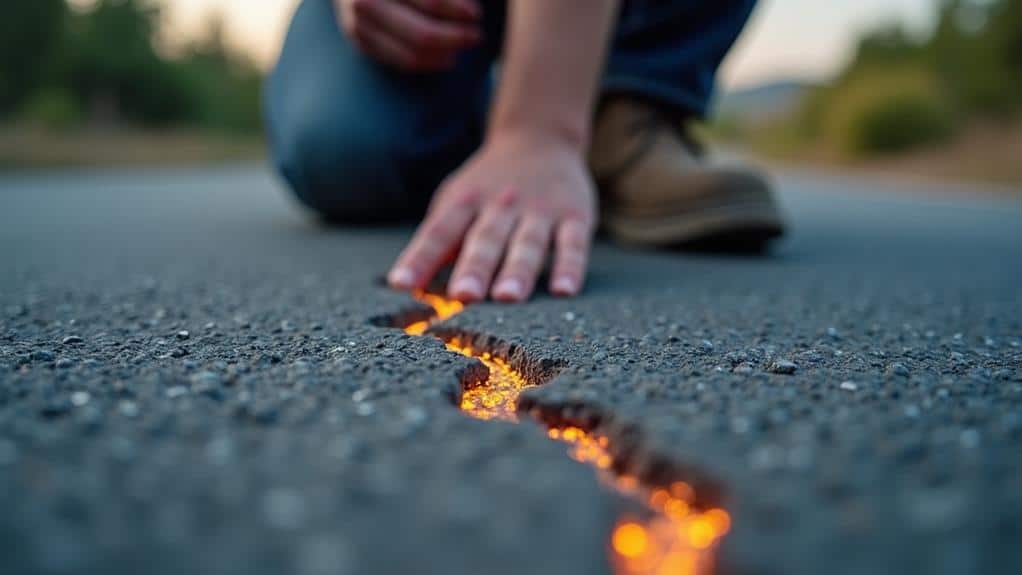
From a fiscal perspective, self-healing concrete presents a compelling case for widespread adoption in infrastructure projects. We're looking at potential cost savings of up to 50% for councils on repair expenditures, which translates to substantial taxpayer relief. The implementation of this technology in road infrastructure could yield a double benefit: reduced emissions from decreased vehicle repairs and fewer traffic disruptions.
Let's examine the economic implications more closely:
| Economic Factor | Current Situation | With Self-Healing Concrete |
|---|---|---|
| Repair Costs | High, recurring | Reduced by up to 50% |
| Compensation Claims | >40,000 annually (UK) | Significant reduction |
| Job Market | Traditional | New roles in production |
| Infrastructure Quality | Frequent repairs | Enhanced longevity |
We anticipate a marked reduction in pothole-related vehicle damage, potentially leading to fewer compensation claims. This, coupled with the long-term enhancement of infrastructure quality, could substantially decrease the economic burden of frequent road repairs. Additionally, the innovative nature of self-healing concrete may stimulate economic growth through job creation in new material production and attract funding for advanced infrastructure projects. The technology's potential to revolutionise construction practices makes it a prime candidate for investment in future-proofing our infrastructure.
Environmental Impact
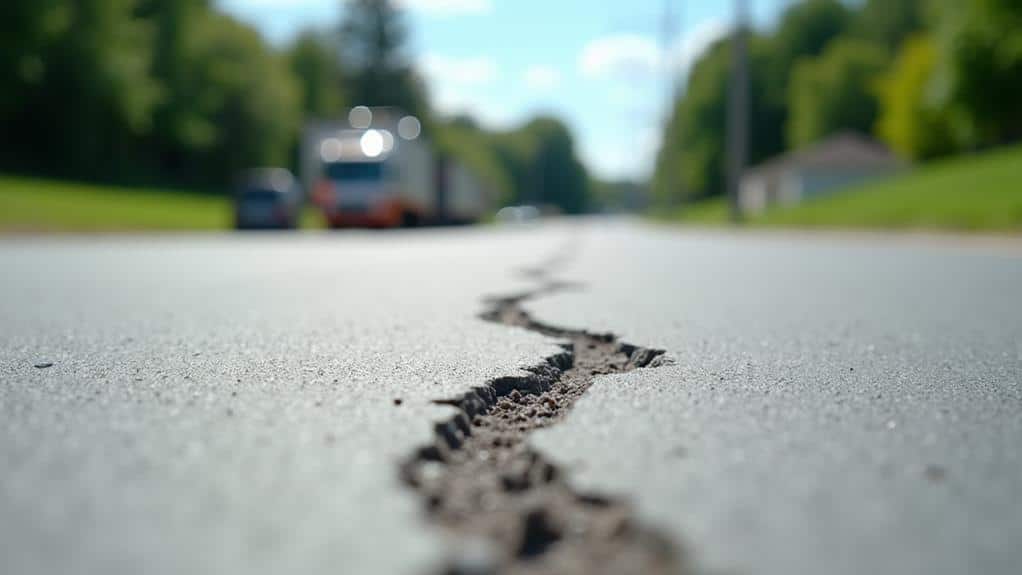
We shall now examine the environmental impact of self-healing concrete, focusing on reduced CO2 emissions and less material waste.
The potential for significant reduction in CO2 emissions stems from the concrete's ability to decrease the need for traditional cement production, which currently accounts for over 7% of global CO2 emissions.
Reduced CO2 Emissions
The environmental impact of self-healing concrete extends far beyond its immediate applications, particularly in the area of reduced CO2 emissions.
We're looking at a potential game-changer in sustainability initiatives, as this technology could considerably decrease the cement industry's carbon footprint. With the industry currently responsible for over 7% of global CO2 emissions, self-healing concrete's ability to reduce repair frequency and lower cement production needs is vital.
We're not just talking about direct emissions reductions. By potentially cutting repair costs by up to 50%, self-healing concrete could lead to a decreased demand for traditional concrete materials, further curbing CO2 output.
This ripple effect extends to waste reduction, as less frequent repairs mean fewer materials end up in landfills. We're fundamentally creating a more sustainable construction cycle.
The long-term implications are even more promising. As we advance self-healing technology, we're paving the way for more durable materials.
This durability translates to lower emissions associated with road network construction and maintenance. We're not only enhancing road longevity but also supporting long-term reductions in carbon footprints tied to infrastructure upkeep.
Less Material Waste
Turning our attention to material waste reduction, self-healing concrete emerges as a pivotal innovation in sustainable construction. This technology's ability to autonomously fill cracks considerably minimises the need for frequent repairs and replacements, leading to substantial improvements in material efficiency.
We're witnessing a paradigm shift in how we approach infrastructure development, with self-healing concrete at the forefront of sustainable practices. By implementing this advanced concrete, we're poised to decrease the long-term demand for raw materials, fostering a more sustainable approach to construction.
Studies indicate that repair costs could be slashed by up to 50%, which translates to less resource consumption in maintenance activities. This reduction in material waste extends beyond immediate construction needs, impacting the entire lifecycle of infrastructure projects.
We're also seeing a positive ripple effect on waste generation from deteriorating infrastructure. As self-healing concrete enhances the durability and lifespan of road surfaces, we're effectively mitigating the need for frequent replacements and repairs.
This proactive approach to material conservation aligns with our goals of reducing environmental impact and promoting sustainable construction practices.
Safety Improvements
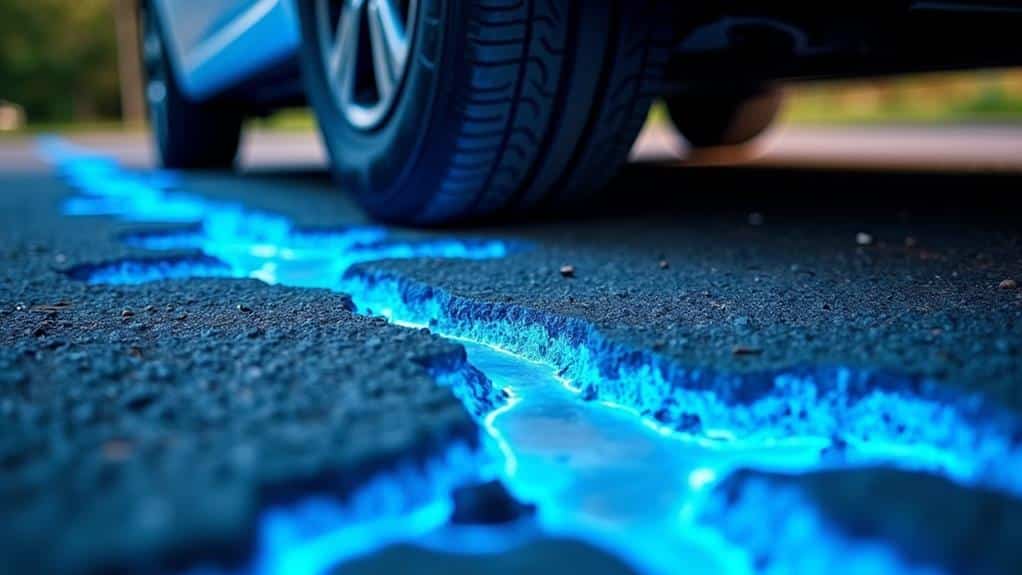
Numerous safety improvements are expected to result from the implementation of self-healing concrete in road infrastructure. This innovative technology addresses a vital issue in road user safety by autonomously filling cracks, greatly reducing the risk of pothole formation.
We've observed that deep cracks in roads are linked to multiple injuries and fatalities, making this development essential for all road users.
The impact on cycling hazards is particularly remarkable. With over 75% of British Cycling members citing unsafe road surfaces as a top concern, self-healing concrete offers a promising solution to enhance cyclist safety.
By maintaining road integrity and minimising the need for frequent repairs, we'll see a reduction in traffic disruptions and associated dangers for both motorists and cyclists.
We anticipate that the enhanced road safety provided by self-healing concrete will lead to a decrease in road-related claims and accidents.
This improvement will have far-reaching effects on public health and safety. By addressing the root cause of many road hazards, we aren't just patching problems but creating a more resilient and safer transportation infrastructure for all users.
Future Road Technologies
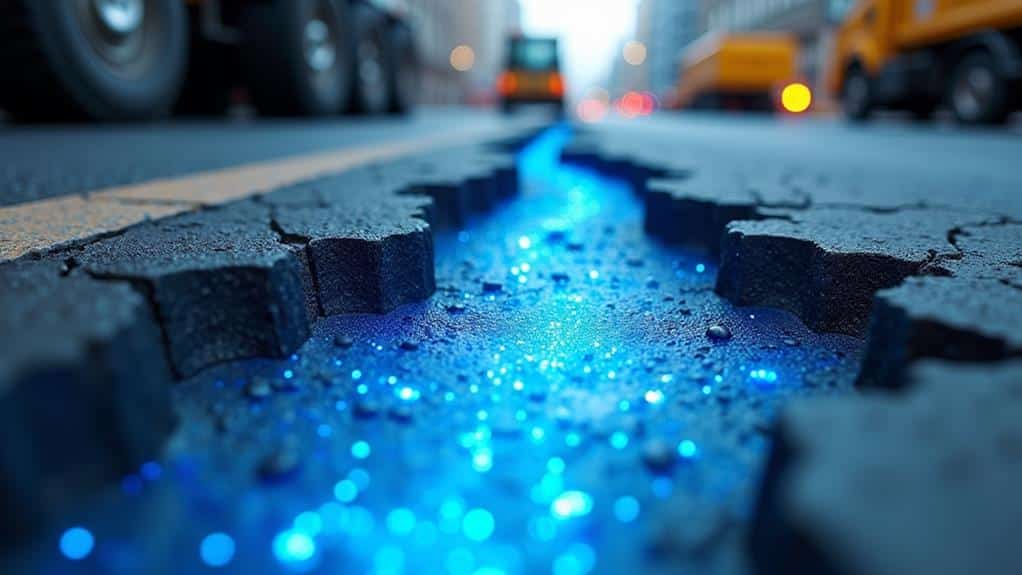
Advancements in road technologies are poised to revolutionise our transport infrastructure, complementing self-healing concrete with a suite of innovative solutions.
We're witnessing the emergence of smart infrastructure that integrates cutting-edge materials and intelligent systems to enhance functionality, safety, and sustainability.
Solar panel road surfaces represent a significant leap forward, offering the dual benefits of charging electric vehicles and melting snow. This technology aligns with the push for renewable energy and addresses winter road hazards.
Temperature-sensitive paint, another innovative material, provides real-time warnings about icy conditions, improving driver awareness and reducing accidents.
Intelligent traffic systems are set to transform road management, working in tandem with advanced materials like self-healing concrete. These systems will optimise traffic flow and respond dynamically to changing conditions.
We're also exploring the replacement of conventional road surfaces with more durable, low-maintenance alternatives. Robotic road repair systems and real-time monitoring technologies promise to revolutionise motorway maintenance, reducing costs and improving safety.
As we continue to develop these future road technologies, we're moving towards a more efficient, safer, and sustainable transport network.
Implementation Challenges
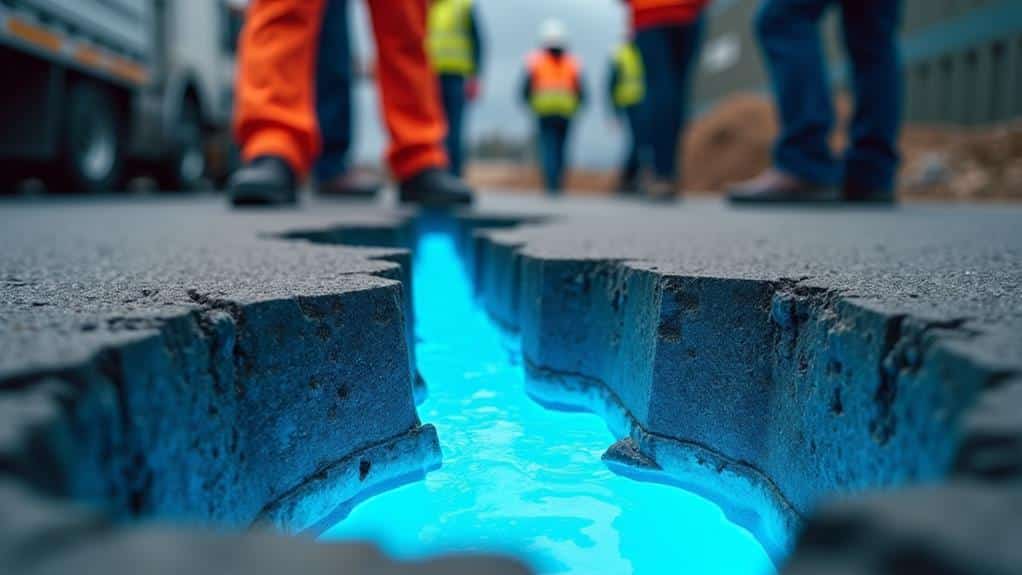
Several significant challenges stand in the way of widespread implementation of self-healing concrete technology. The most immediate obstacle is the financial hurdle posed by higher initial investment costs compared to traditional materials. This economic barrier may deter councils and governments from adopting the technology on a large scale, despite its potential long-term benefits.
We must also consider the need for regulatory updates to accommodate this innovative material. Existing frameworks may require revision to guarantee self-healing concrete meets safety and quality standards for road construction.
Additionally, public scepticism about new materials can hinder implementation, emphasising the importance of raising awareness and fostering acceptance.
Continuous research and real-world testing are vital to validate the performance of self-healing concrete before widespread adoption.
We'll need to address logistical challenges through collaboration between scientists, construction firms, and government entities. This partnership is essential for successful integration into existing infrastructure.
Global Implications
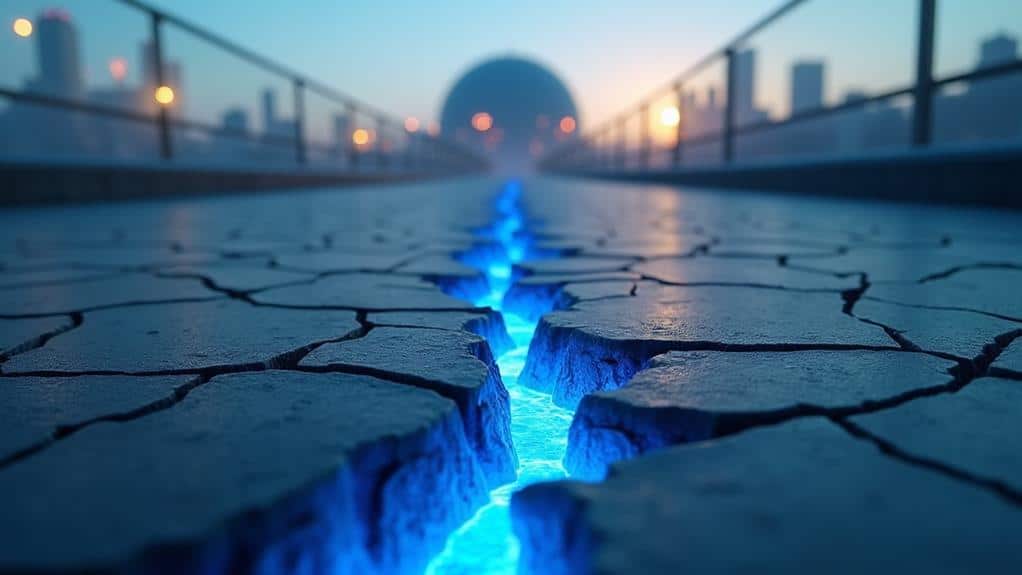
We're witnessing a potential global transformation in infrastructure maintenance with the advent of self-healing concrete. This infrastructure innovation could revolutionise road maintenance worldwide, addressing the staggering 630,000 potholes reported in the UK alone. By reducing repair frequency, we're looking at a 50% decrease in maintenance costs, alleviating economic pressures on councils globally.
The implications extend beyond cost savings:
| Impact Area | Current Issue | Potential Improvement |
|---|---|---|
| Safety | 40,000 damage claims | Reduced accidents, claims |
| Environment | 7% global CO2 emissions | Lower repair-related emissions |
| Urban Development | Frequent disruptions | Sustainable infrastructure |
As we adopt this technology, we're setting new global standards for road quality and safety. The reduction in potholes and associated damage claims will likely influence insurance processes worldwide. Additionally, by decreasing the need for frequent repairs, we're indirectly tackling the cement industry's substantial carbon footprint. This shift towards sustainable urban development could catalyse a global rethinking of infrastructure strategies, promoting longevity and resilience in our built environment. The ripple effects of self-healing concrete may well redefine our approach to construction and maintenance on a global scale.
Frequently Asked Questions
How Was Self-Healing Concrete Invented?
We developed self-healing concrete through collaborative research, integrating self-repairing technology and innovative materials. We've engineered capsules containing bacteria that produce limestone when exposed to water, autonomously sealing cracks and enhancing the concrete's durability and longevity.
Is There Such Thing as Self-Healing Concrete?
Imagine concrete healing itself like living skin. We've developed self-healing concrete with embedded self-repair mechanisms. It's not science fiction; it's a real innovation enhancing concrete durability. We're actively researching and refining this technology for practical applications.
Why Are Potholes so Bad in the UK?
We're facing ruddy awful pothole problems in the UK due to a right mess of factors: ghastly weather conditions, shoddy infrastructure maintenance, and chronic underfunding. These blighters collectively contribute to rapid road deterioration, overwhelming our current repair capacities. It's a proper shambles, I tell you.
Is Self-Healing Concrete Bad for the Environment?
We're paving the way to sustainability with self-healing concrete. It's not an environmental villain, but rather a hero. Its reduced maintenance requirements and longer lifespan substantially decrease the environmental impact, aligning with sustainable construction practices and lowering overall resource consumption. This innovative material is a boon for British infrastructure, offering a more eco-friendly solution to our nation's building needs.
Conclusion
We've reached a pivotal juncture in road infrastructure evolution. Self-healing concrete stands as a beacon of innovation, promising to pave the way for smoother, safer and more sustainable transport networks. Whilst implementation hurdles loom, the potential benefits are a siren call to policymakers and engineers alike. As we navigate the complex terrain of global infrastructure needs, this technology may well be the keystone in bridging the gap between current limitations and future aspirations.

Learn about the diverse types of concrete used in construction and discover which mix can transform your next project.

For a long-lasting driveway that laughs in the face of the UK's unpredictable weather, the C20 concrete mix is your Read more

In the UK, you've got a a lot of lightweight concrete types to choose from, each with its unique perks. Read more