When choosing between gravel, tarmac, or concrete for your new driveway, one must consider several key factors.
Gravel offers affordability and excellent drainage but requires regular maintenance.
Tarmac provides a cost-effective, quick-to-install option with a smooth finish, though it needs periodic sealing.
Concrete, whilst more expensive initially, boasts superior durability and extensive customisation possibilities.
Your decision should account for your budget, aesthetic preferences, local climate, and long-term maintenance requirements.
One would also want to weigh each material's environmental impact and installation complexity.
By examining these aspects in detail, you'll be better equipped to make an informed choice for your property.
Key Takeaways
- Consider your budget: Gravel is most affordable, tarmac is moderately priced, and concrete is the most expensive option.
- Evaluate durability: Gravel lasts up to 100 years, tarmac averages 20 years, and concrete exceeds 40 years with proper maintenance.
- Assess maintenance requirements: Gravel needs periodic replenishment, tarmac requires regular sealing, and concrete demands minimal upkeep.
- Factor in aesthetics: Gravel offers a natural look, tarmac provides a smooth finish, and concrete allows for extensive customisation options.
- Consider climate and drainage: Gravel excels in drainage, tarmac may need additional drainage solutions, and concrete reflects heat in hot climates.
Gravel
Gravel driveways offer a distinctive and practical option for property owners seeking durability and visual appeal. We've found that these installations can greatly enhance a property's kerb appeal, setting it apart from neighbouring homes.
The installation process is remarkably quicker than concrete or tarmac alternatives, allowing for rapid completion of your driveway project. Unlike concrete, gravel driveways don't require extensive surface preparation and offer enhanced slip resistance in various weather conditions.
When considering gravel maintenance, you'll be pleased to know it's minimal. Occasional weed control and levelling are typically all that's required to keep your driveway in top condition.
The durability of gravel is impressive, withstanding heavy machinery and traffic for up to a century with proper replenishment.
Cost-effectiveness is a key advantage, though it's important to acknowledge potential washout during heavy rainfall and the need for periodic levelling due to vehicle weight displacement.
Gravel aesthetics contribute positively to a property's overall appearance. The bright, natural look of gravel can be visually striking, although some may prefer the uniformity of tarmac or concrete.
Concrete
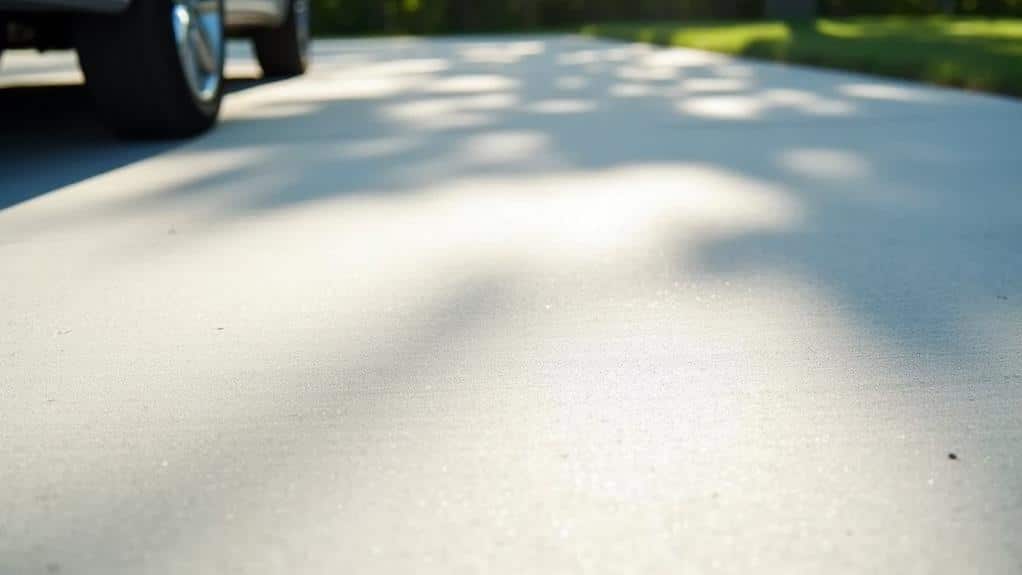
Whilst gravel offers unique advantages, concrete driveways present a formidable alternative for homeowners seeking longevity and versatility.
We've found that concrete's durability is unparalleled, with a lifespan exceeding 30 to 40 years, making it a sound long-term investment. This material's resilience translates to significant maintenance benefits, as it resists chipping and pothole formation, reducing upkeep requirements compared to other options. The use of high-performance concrete can further enhance these benefits, offering superior strength and durability for driveways subjected to extreme conditions or heavy loads.
Concrete's customisation options are extensive, allowing for a wide array of patterns, colours, and finishes. This adaptability guarantees that the driveway can complement both modern and traditional architectural styles.
We must note, however, that this versatility comes at a cost. Concrete installation typically ranges from £60 to £80 per square metre, approximately 45-50% higher than asphalt alternatives.
An often-overlooked advantage is concrete's heat-reflective properties. In hot climates, this characteristic can contribute to reduced heat absorption, potentially lowering cooling costs for adjacent structures.
Given these factors, we conclude that concrete driveways offer a compelling blend of durability, aesthetic flexibility, and climate adaptability, despite the higher initial investment.
Tarmac/Asphalt
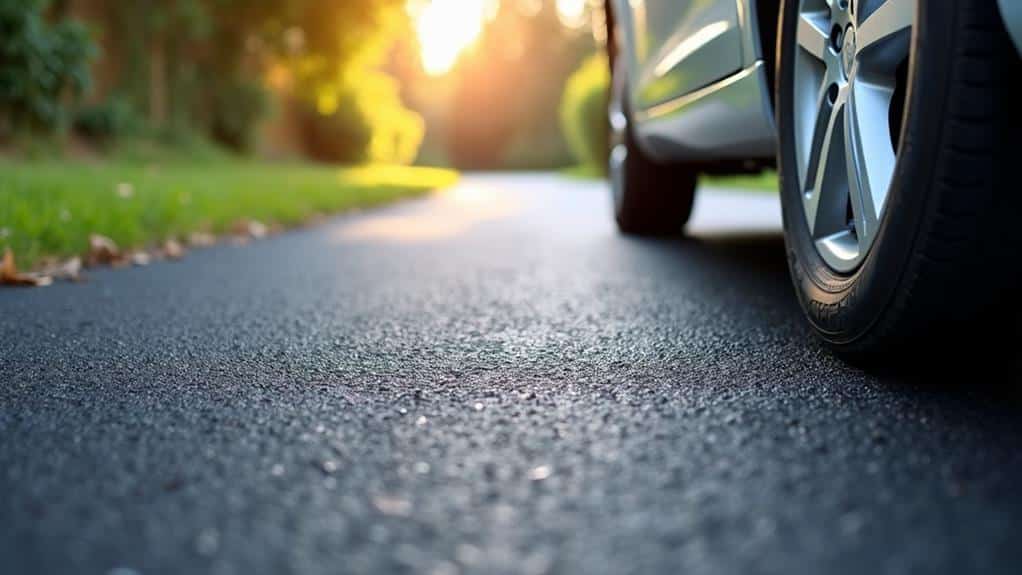
Tarmac and asphalt driveways stand out as cost-effective alternatives to concrete, offering a balance of durability and affordability. With an average lifespan of 20 years, these surfaces provide a robust solution for homeowners seeking longevity.
The installation process is particularly efficient, with curing times of mere hours and full usability within 24 hours. Unlike ready-mix concrete, which requires specialised delivery and longer setting times, tarmac can be applied more quickly and with less equipment on-site.
However, we must consider the drawbacks. Tarmac's reduced porosity compared to gravel can lead to water pooling during heavy rainfall, necessitating additional drainage solutions.
Whilst the initial outlay is lower, ranging from £80 to £112 per square metre, tarmac maintenance requirements are higher. Regular sealing is essential to prevent cracking and wear, which can impact long-term costs.
Tarmac aesthetics offer a smooth, sleek finish that many find appealing. Yet, it's important to observe that customisation options are limited compared to concrete or block paving.
This constraint may influence decision-making for those prioritising design flexibility. When weighing the pros and cons, we must consider the balance between upfront costs, maintenance needs, and aesthetic preferences to determine if tarmac is the ideal choice for a driveway material.
Comparing Driveway Materials

When comparing driveway materials, three primary contenders emerge: gravel, tarmac, and concrete. We shall analyse these options based on cost-effectiveness, durability, and performance in various conditions.
Gravel stands out for its affordability and longevity, potentially lasting up to a century with proper maintenance. It excels in drainage, making it ideal for flood-prone areas. However, it's susceptible to washing out during heavy rainfall.
Tarmac offers a smooth surface and better performance in adverse weather, with a lifespan of about 20 years. It requires more frequent maintenance and sealing to prevent chipping and potholes. Its non-porous nature may lead to water pooling issues.
Concrete boasts exceptional durability, lasting over 40 years, and allows for customisable driveway aesthetics. With concrete finishes ranging from smooth to textured, it offers versatility in both appearance and functionality. Concrete's durability and low maintenance requirements make it an attractive option for many homeowners.
When selecting a driveway material, we must consider multiple factors. Maintenance requirements vary greatly among these options, with gravel needing periodic replenishment, tarmac requiring regular sealing, and concrete demanding minimal upkeep.
Local climate conditions, budget constraints, and personal preferences for driveway aesthetics should all influence the final decision to guarantee ideal performance and longevity.
Choosing the Right Option
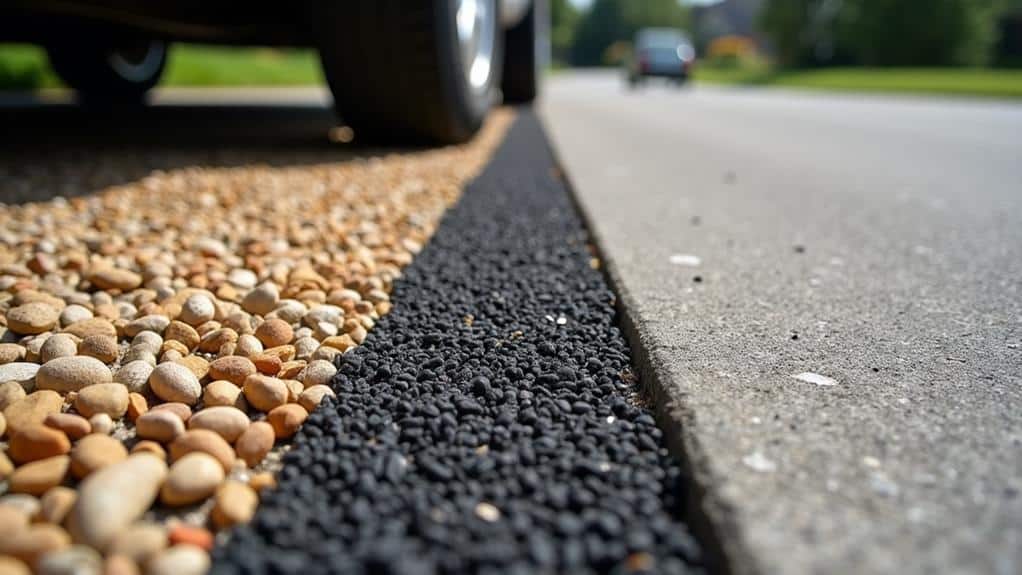
Selecting the ideal driveway material requires a careful analysis of several key factors. We must consider aesthetic preferences, durability, cost, maintenance requirements, and drainage performance. Each option – gravel, tarmac, and concrete – presents unique advantages and challenges.
To make an informed decision, we should evaluate:
- Environmental impact and permeability
- Installation process complexity
- Long-term cost-effectiveness
Gravel offers superior drainage and longevity, potentially lasting up to 100 years with proper care. It's the most cost-effective option at £50-£70 per m², but requires periodic levelling.
Tarmac provides a sleek appearance and moderate lifespan of 20 years, averaging £80-£112 per m². However, it needs regular sealing and may pool water due to its non-porous surface.
Concrete balances customisability with durability, lasting over 40 years with low maintenance. At £75-£85 per m², it offers a middle-ground regarding cost.
The installation process varies considerably between materials. Gravel installation is relatively straightforward, whilst tarmac and concrete require more complex procedures.
Consider your local climate, property characteristics, and personal preferences when weighing these options to determine the most suitable driveway material for your specific needs.
Frequently Asked Questions
Is Tarmac or Concrete Better for a Driveway?
When considering tarmac's durability versus concrete's maintenance needs, we must weigh our options carefully. Whilst tarmac offers swifter installation and lower upfront costs, concrete provides superior longevity and customisation options. Our choice ultimately depends on the climate, budget, and aesthetic preferences for optimal driveway performance in the UK.
What Is the Best Material for a New Driveway?
We recommend evaluating your specific requirements when choosing a driveway material. Consider factors such as climate, usage, budget and gradient. Assess long-term driveway maintenance needs and desired aesthetic appeal. Each material offers unique advantages and limitations for optimal performance.
Is a Gravel Driveway Cheaper Than a Tarmac?
We're delving into driveway economics here. Gravel's initial cost is easier on the pocket, typically 30-40% cheaper than tarmac. Factor in gravel maintenance and gravel aesthetics, and we're looking at a cost-effective, visually appealing option for discerning property owners.
What Is the Best Surface for a Driveway?
Whilst we cannot definitively state a single "best" driveway surface, the ideal choice depends on factors such as climate, budget and aesthetics. One must consider surface durability and driveway maintenance requirements to determine the most suitable option for specific circumstances.
Conclusion
We've analysed the merits of gravel, concrete, and tarmac for driveways. Each material paints a unique picture: gravel's crunching texture, concrete's sleek uniformity, and tarmac's smooth, dark expanse. Our technical comparison has illuminated the pros and cons regarding cost, durability, and maintenance. We've dissected the factors to evaluate, from climate to aesthetics. Ultimately, the best choice hinges on a precise assessment of your specific needs, budget constraints, and long-term objectives for your property.
Looking to order ready-mix concrete for driveways? Barrow Mix supplies the right grade for vehicle loads, barrowed to the drive across Greater Manchester & Cheshire.
Get a free quote →
Learn about the diverse types of concrete used in construction and discover which mix can transform your next project.

For a long-lasting driveway that laughs in the face of the UK's unpredictable weather, the C20 concrete mix is your Read more

In the UK, you've got a a lot of lightweight concrete types to choose from, each with its unique perks. Read more