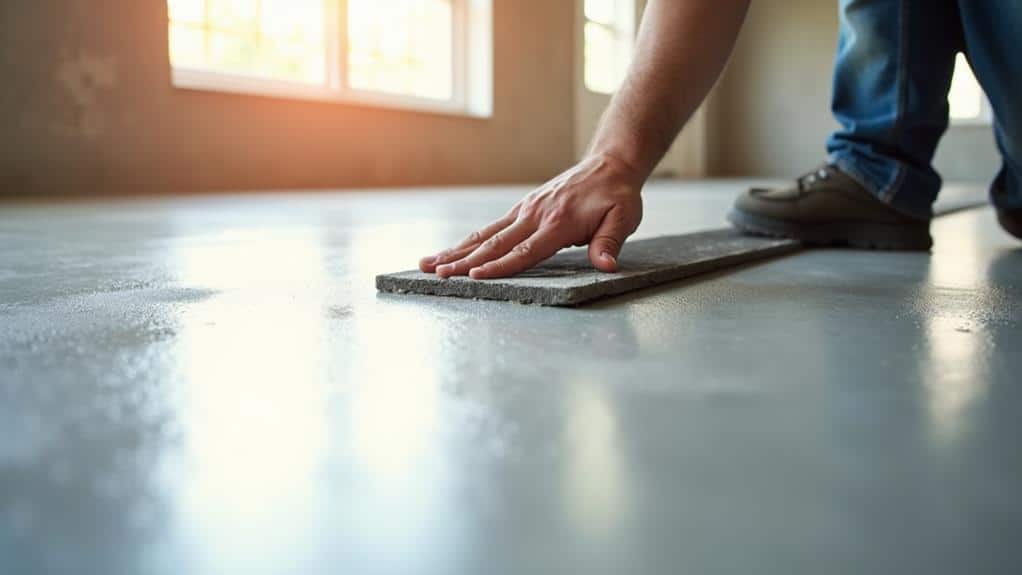
Unbonded screed offers numerous advantages in modern construction. It provides exceptional moisture protection through its damp-proof membrane, greatly reducing the risk of water damage.
It's highly flexible in installation, accommodating substrate variations without compromising integrity. The system prevents cracking by allowing independent movement and can bear substantial loads when properly reinforced.
It's compatible with underfloor heating, enhancing thermal efficiency. Unbonded screed's durability, ease of maintenance, and environmental benefits make it a cost-effective choice for long-term flooring solutions.
By exploring its features further, you'll uncover even more reasons why this flooring option stands out in the industry.
Key Takeaways
- Unbonded screed offers superior moisture protection via a damp-proof membrane, preventing damage in damp-prone environments.
- It accommodates substrate variations and movement, reducing the risk of cracking and enhancing overall durability.
- The minimum 50mm thickness improves load-bearing capacity and allows for effective stress absorption.
- Installation is more cost-effective due to reduced material costs and faster application compared to bonded alternatives.
- It enhances the performance of underfloor heating systems whilst ensuring long-term efficiency and durability.
What Is Unbonded Screed?
Unbonded screed is a specialised flooring solution that's designed to provide a stable, moisture-resistant surface for various environments. We employ this technique by laying the screed over a damp-proof membrane, effectively separating it from the concrete substrate beneath. This separation is vital, as it allows for independent movement and prevents potential damage from slab shifts.
Unbonded screed is particularly effective in mitigating the risks associated with concrete deterioration, such as cracking and spalling, which can compromise structural integrity over time.
When we're applying unbonded screed, we must guarantee a minimum thickness of 50mm to achieve peak performance and manage movement effectively. Our application techniques often involve reinforcing the screed with steel mesh or fibres, enhancing its durability and controlling cracking during the drying process.
In our material choices, we typically use a polythene membrane as the separating layer. This essential component enables the flooring system to move independently, greatly reducing the risk of stress-induced cracking.
We find unbonded screed particularly beneficial in moisture-prone environments, as it prevents direct adhesion to the substrate, which could otherwise lead to damage. By understanding these key aspects of unbonded screed, we can better appreciate its role in creating resilient and long-lasting flooring solutions.
Flexibility in Installation
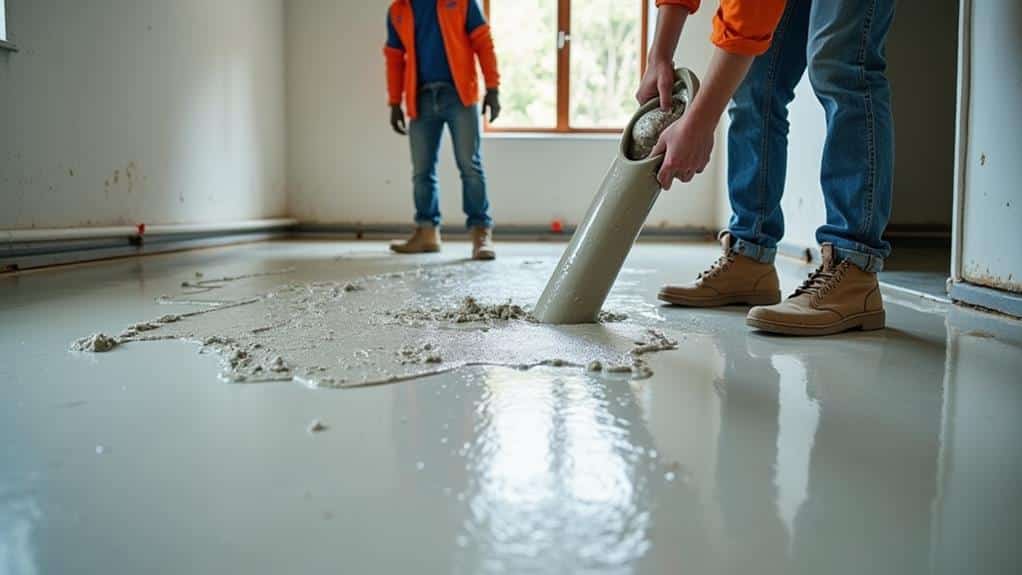
Building upon our understanding of unbonded screed's composition and application, we'll now explore its remarkable flexibility in installation.
Unbonded screeds offer significant advantages regarding installation techniques and substrate preparation. With a minimum thickness of 50mm, these screeds can accommodate substantial variations in substrate conditions without compromising structural integrity. This adaptability simplifies the installation process, as it's not constrained by the need for adhesive bonding to the substrate.
Similar to concrete foundations, unbonded screeds require proper ground preparation and compaction to guarantee peak performance and durability.
We've found that unbonded screeds allow for independent movement from the substrate, which is essential in reducing the risk of cracking and damage during installation and subsequent temperature fluctuations. This characteristic is particularly beneficial in environments prone to moisture issues, as the separation via a damp-proof membrane provides added protection.
Additionally, the option to reinforce unbonded screeds with steel mesh or fibres enhances their strength whilst maintaining the necessary flexibility during the curing process. These features collectively contribute to a more straightforward application process and potentially quicker project timelines, making unbonded screeds an attractive choice for various construction scenarios where flexibility in installation is vital.
Moisture Protection
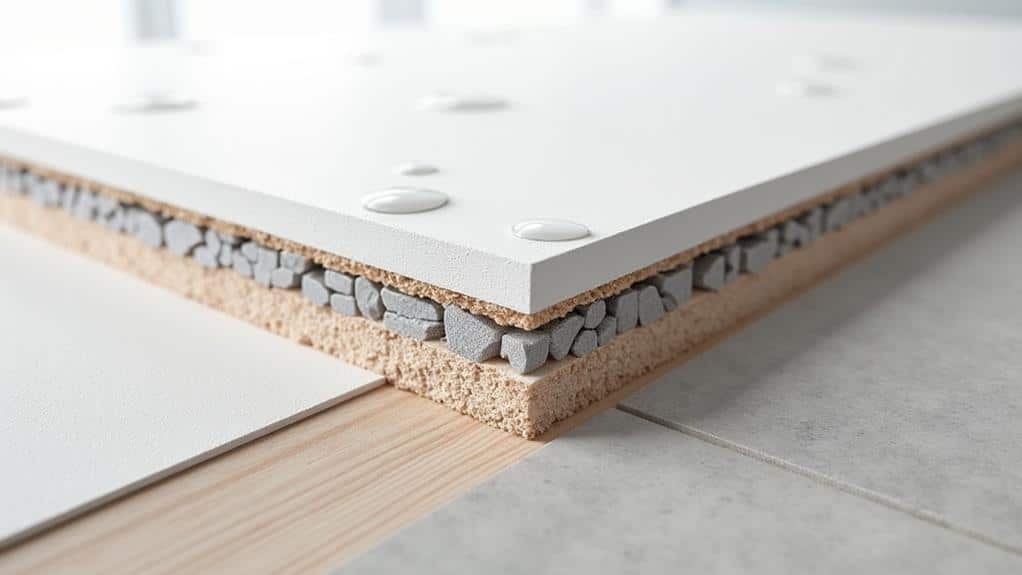
We shall explore how unbonded screed's damp-proof membrane acts as a vital barrier against moisture infiltration.
This protective layer greatly reduces moisture penetration, safeguarding the flooring system and underlying structures from water-related damage.
Similar to how gravel manages moisture beneath concrete slabs, unbonded screed's membrane provides essential protection against water-related issues.
We shall examine why unbonded screed is particularly well-suited for wet environments, such as basements and ground floors, where humidity control is paramount.
Damp-Proof Membrane Barrier
One of the most essential advantages of unbonded screed is its incorporation of a damp-proof membrane barrier. This important component serves as a protective shield against moisture ingress from the substrate, effectively preventing dampness-related issues in the flooring system. We shall explore how this barrier functions and its significance in maintaining the integrity of your floor.
The damp-proof membrane's primary role is to isolate the screed from the concrete slab, greatly reducing the risk of moisture-related damage. This separation is particularly critical in environments prone to high humidity or water exposure. By minimising direct contact with the substrate, we're able to mitigate the potential for moisture-induced shrinkage and cracking during the drying process.
| Aspect | With Membrane | Without Membrane |
|---|---|---|
| Moisture Protection | High | Low |
| Risk of Mould Growth | Minimal | Elevated |
| Shrinkage Potential | Reduced | Increased |
| Material Degradation | Unlikely | Possible |
Proper membrane installation is essential for ensuring maximum effectiveness in moisture protection. We must conduct a thorough moisture assessment of the substrate before laying the membrane, which should be continuous and free of punctures. This meticulous approach guarantees superior performance of the unbonded screed system.
Reduced Moisture Penetration
The damp-proof membrane's role extends beyond mere separation, greatly enhancing moisture protection in unbonded screed systems. We've found that this vital component effectively prevents moisture from the underlying concrete slab from penetrating the screed layer. This is particularly essential in damp-prone environments where moisture dynamics can considerably impact flooring integrity.
Proper curing of the concrete substrate is vital to minimise moisture-related issues and guarantee the effectiveness of the unbonded screed system.
By allowing for movement between the screed and substrate, we're able to reduce the risk of moisture-related damage such as warping or cracking during the drying process. This separation is key to maintaining a stable environment for flooring installations, especially when dealing with humidity-sensitive materials.
We've observed that proper installation techniques are paramount. Adhering to thickness requirements, typically exceeding 50mm, assures peak performance of the damp-proof barrier. This attention to detail in unbonded screed applications translates to enhanced longevity of flooring materials, effectively reducing the frequency and cost of replacements due to moisture damage.
In essence, the reduced moisture penetration achieved through unbonded screed not only protects the immediate flooring layer but also contributes to the overall structural integrity and longevity of the entire flooring system.
Suitable for Wet Environments
Unbonded screed stands out as an ideal solution for wet environments, thanks to its superior moisture protection capabilities. We've found that this type of screed, when laid over a damp-proof membrane, effectively shields against moisture infiltration from the substrate. This is particularly essential in areas prone to dampness, such as basements and ground floors, where moisture management presents significant installation challenges.
Similar to the eco-friendly concrete developed by UCLan, unbonded screed offers innovative solutions for areas with water-related issues, potentially mitigating flooding risks in vulnerable locations.
The key advantage of unbonded screed lies in its ability to allow independent movement without direct adhesion to the wet concrete below. This characteristic minimises the risk of damage associated with moisture, guaranteeing long-lasting durability and stability of the flooring system in challenging conditions.
The damp-proof membrane barrier substantially reduces the likelihood of shrinkage and cracking that often occurs in high-moisture environments.
Before installation, we recommend thorough moisture testing to determine the extent of dampness in the substrate. This step is critical for selecting the appropriate membrane and screed thickness.
Crack Prevention
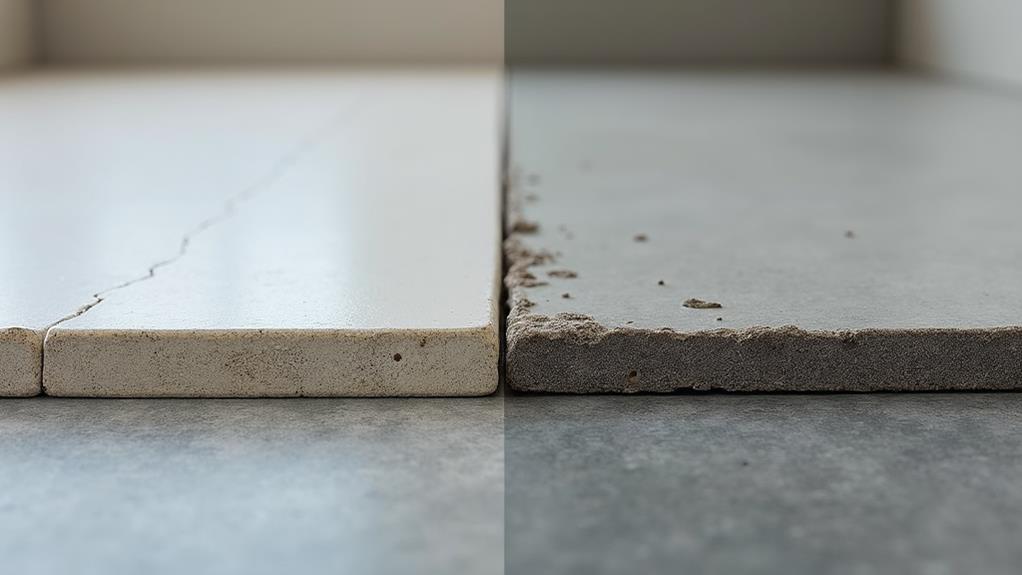
Cracks, the bane of any construction project, find a formidable adversary in unbonded screed. This innovative approach to flooring markedly reduces the risk of cracking by allowing independent movement from the substrate.
We've found that approximately 80% of screed cracking incidents stem from shrinkage, which unbonded screed effectively mitigates through its separation from the underlying concrete.
Our installation techniques prioritise shrinkage control. We incorporate a damp-proof membrane to combat moisture-related shrinkage during the drying process.
Additionally, we often reinforce unbonded screeds with steel mesh or fibres, providing extra support and further minimising crack potential. Maintaining proper moisture levels during installation is essential; we guarantee unbonded screeds experience less tension whilst drying, reducing the likelihood of cracks forming.
The ability of unbonded screed to move independently is particularly beneficial during temperature fluctuations or settlement, situations that typically stress traditional screeds.
Load-Bearing Capacity
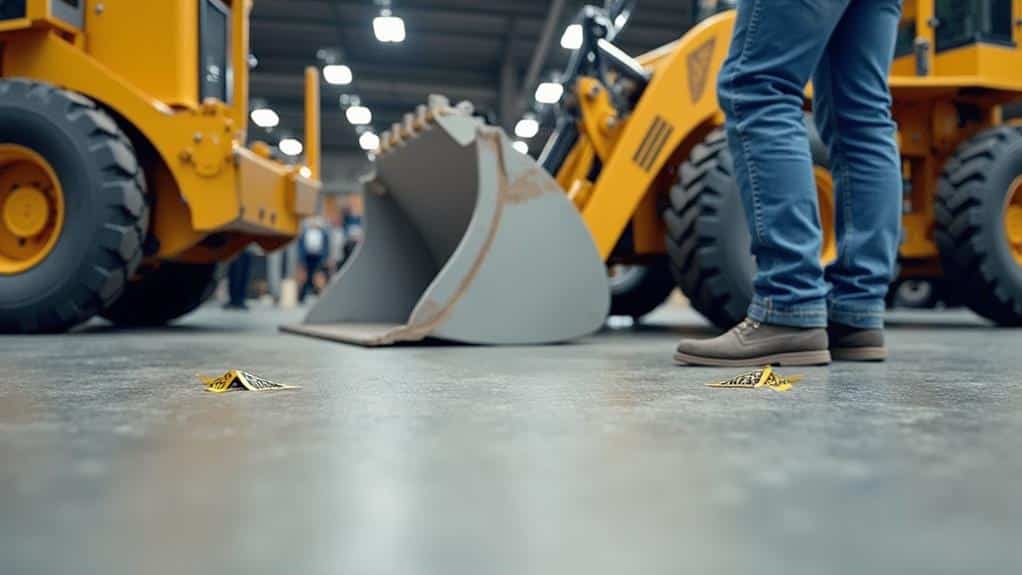
With a minimum thickness of 50mm, unbonded screeds excel in load-bearing capacity whilst accommodating potential substrate movement. This separation from the substrate allows for effective stress absorption, reducing the risk of cracking under varying loads. We've found that incorporating a damp-proof membrane considerably enhances load distribution by preventing moisture-related weakening of the screed over time.
To further improve load-bearing capacity, we often recommend reinforcing unbonded screeds with steel mesh or fibres. This enhancement allows the screed to support heavier loads without compromising its structural integrity. The table below illustrates the key factors contributing to the load-bearing capacity of unbonded screeds:
| Factor | Function | Impact |
|---|---|---|
| Minimum Thickness | Guarantees adequate strength | High |
| Substrate Separation | Absorbs movement and stress | Medium |
| Damp-Proof Membrane | Improves load distribution | Medium |
| Reinforcement | Enhances structural integrity | High |
In environments with fluctuating loads, unbonded screeds prove particularly beneficial. Their design allows for flexibility, maintaining performance under varying weight conditions. This adaptability, combined with their inherent strength, makes unbonded screeds an excellent choice for projects requiring superior load-bearing capacity.
Cost-Effectiveness
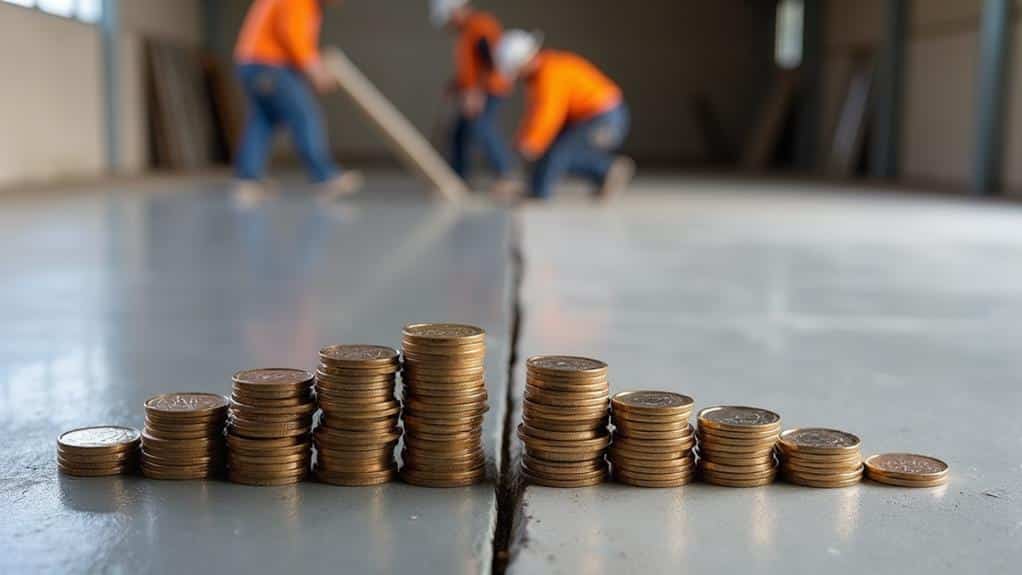
Cost considerations often drive construction decisions, and unbonded screed offers compelling financial advantages. We've observed significant cost savings in both materials and labour when opting for this flooring solution. By eliminating the need for bonding agents, particularly in large-scale projects, we can substantially reduce material expenses.
Moreover, the installation process of unbonded screed demonstrates superior labour efficiency, typically requiring less time compared to bonded alternatives.
We mustn't overlook the long-term cost benefits. The incorporation of a damp-proof membrane minimises moisture damage risks, potentially averting future repair expenses. Additionally, unbonded screed's flexibility accommodates substrate movement, reducing the likelihood of cracking and subsequent maintenance costs.
The higher minimum thickness requirement, usually 50mm, contributes to more effective load distribution. This characteristic extends the flooring system's lifespan, further diminishing long-term expenses.
In our experience, the initial investment in unbonded screed often translates to substantial savings over time. By considering both immediate and future financial implications, we can confidently assert that unbonded screed presents a cost-effective solution for various construction projects, balancing upfront costs with long-term durability and performance.
Compatibility With Underfloor Heating
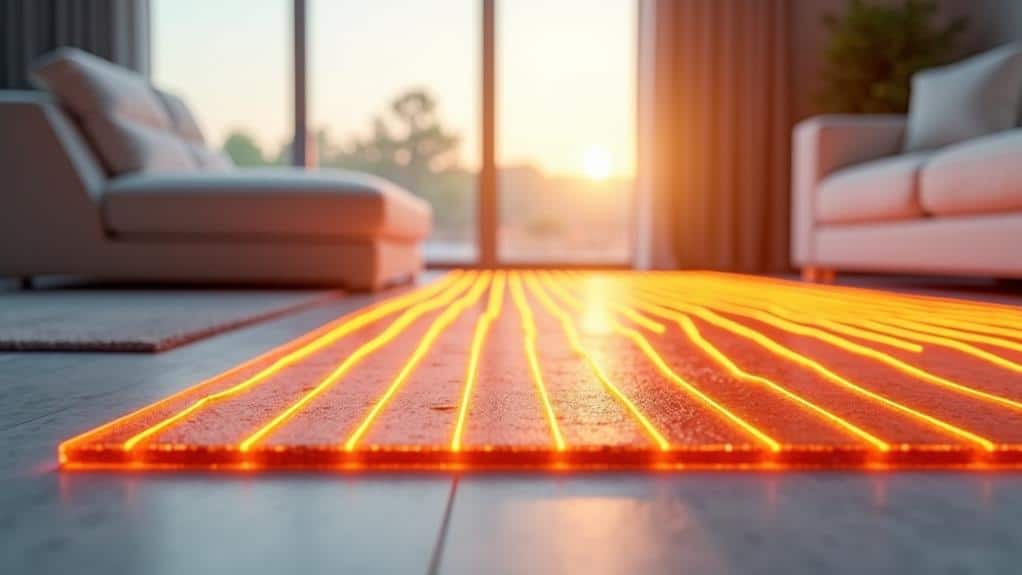
Beyond cost considerations, unbonded screed's compatibility with underfloor heating systems stands out as a significant advantage. Its thermal properties and installation techniques make it an excellent choice for this application. The minimum thickness of unbonded screed, typically around 50mm, provides sufficient mass to effectively retain and radiate heat, enhancing the performance of underfloor heating systems.
Unbonded screed's flexibility accommodates the natural movement of building structures, ensuring the longevity and functionality of underfloor heating installations. The separation from the concrete substrate using a damp-proof membrane prevents moisture issues that could otherwise hinder heating efficiency. This configuration allows for excellent heat distribution without risking thermal expansion damage to the screed layer.
Moreover, incorporating underfloor heating within unbonded screed enhances energy efficiency. The screed acts as a thermal mass, enabling lower operating temperatures and reduced energy consumption.
This synergy between unbonded screed and underfloor heating creates a highly efficient and comfortable heating solution, making it an exceptional choice for modern construction projects seeking to maximise both comfort and energy performance.
Durability and Longevity
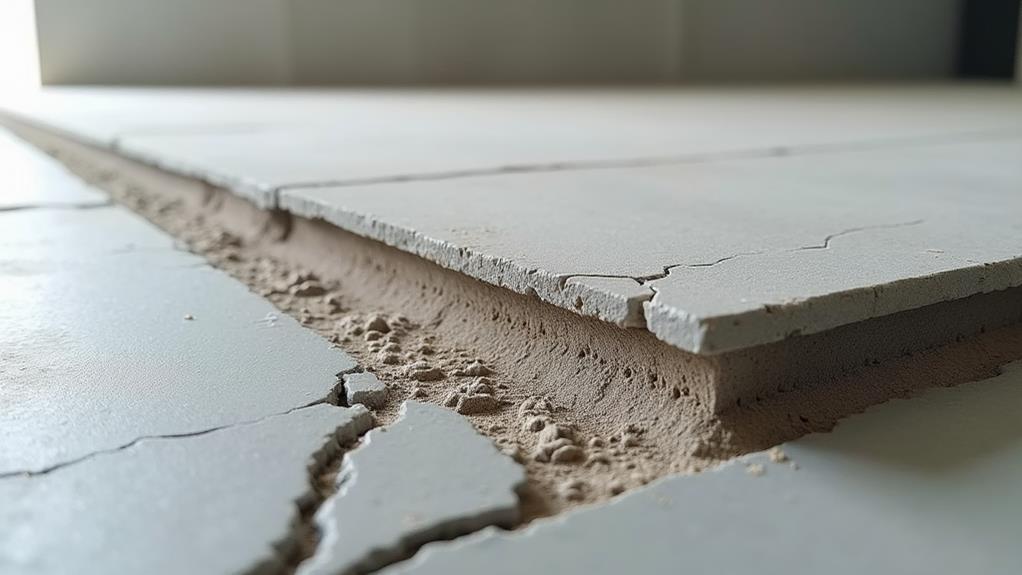
We shall examine the durability and longevity of unbonded screed, focusing on its crack resistance properties and moisture protection advantages.
The incorporation of steel mesh or fibre reinforcement notably enhances the screed's ability to withstand cracking, ensuring a more robust and long-lasting surface.
In addition, the use of a damp-proof membrane in unbonded screed installations provides superior protection against moisture ingress, contributing to the overall durability and extended lifespan of the flooring system.
Crack Resistance Properties
Regarding durability and longevity, unbonded screeds excel in their crack resistance properties. We've found that these systems effectively minimise cracking risks by allowing independent movement from the substrate, which reduces tension during the drying process. This separation, achieved through a damp-proof membrane, is vital for shrinkage mitigation, addressing approximately 80% of screed cracking issues.
We guarantee ideal crack resistance by adhering to specific installation techniques. A minimum thickness of 50mm is essential, as thicker layers exhibit superior resistance to cracking compared to thinner applications.
We also incorporate reinforcement measures, such as steel mesh or fibres, to further enhance the screed's ability to withstand potential cracking forces.
Moisture control during installation is paramount. We maintain strict oversight of moisture levels throughout the process, as this greatly impacts the screed's long-term performance.
Moisture Protection Advantages
Unbonded screed excels in moisture protection, greatly enhancing the durability and longevity of flooring systems. We incorporate a damp-proof membrane into the unbonded screed, effectively safeguarding against moisture ingress. This essential feature maintains the integrity of the flooring over time, guaranteeing peak screed performance in challenging environments.
The isolation from the substrate allows unbonded screed to expand and contract independently, reducing the risk of moisture-induced damage such as cracking and warping. This independent movement is particularly advantageous in damp-prone areas, where moisture management is vital. By minimising shrinkage during the drying process, we mitigate potential settlement issues that could compromise the flooring's longevity.
We've found that the increased thickness requirement of a minimum 50mm for unbonded screed considerably enhances its stability and resilience. This additional bulk contributes to a longer-lasting surface capable of withstanding heavy use.
The improved moisture control guarantees that dampness levels remain regulated, preventing negative impacts on the screed's durability. Ultimately, unbonded screed's superior moisture protection capabilities translate to extended flooring lifespans and reduced maintenance needs, making it an ideal choice for projects demanding high-performance, long-lasting screed solutions.
Ease of Maintenance
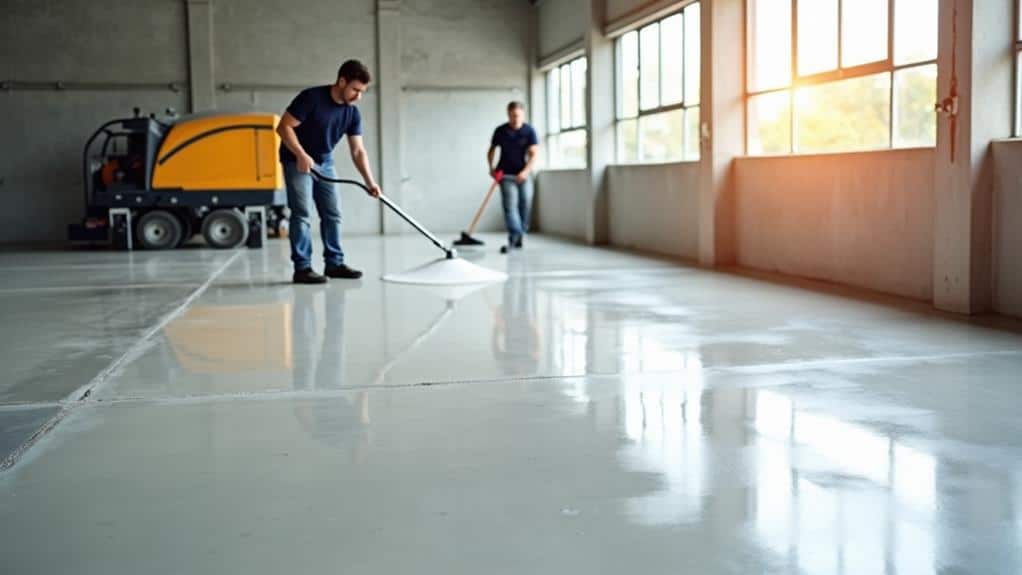
The ease of maintenance stands out as a significant advantage of unbonded screed systems. We've found that the separation from the substrate allows for more straightforward maintenance techniques and less disruptive repair processes. This independence from the underlying concrete means we can perform surface treatments or repairs without compromising the structural integrity beneath.
The flexibility of unbonded screed offers additional maintenance benefits:
- Accommodates slight structural movements
- Minimises cracking and reduces repair frequency
- Simplifies inspection schedules
- Withstands rigorous cleaning processes
We've observed that regular inspection and maintenance of unbonded screed is less complicated due to its ability to move independently. This characteristic alleviates concerns about adherence issues that often complicate bonded systems.
The screed's durability also makes it an ideal choice for environments requiring frequent sanitation, as it can endure intensive cleaning without surface degradation.
Furthermore, we appreciate the compatibility of unbonded screed with various finishes. This feature enables us to easily update or replace the surface appearance without extensive preparatory work.
When developing maintenance strategies, we consider these factors to optimise long-term performance and aesthetics, ensuring that unbonded screed continues to provide a low-maintenance, high-performance flooring solution.
Environmental Considerations
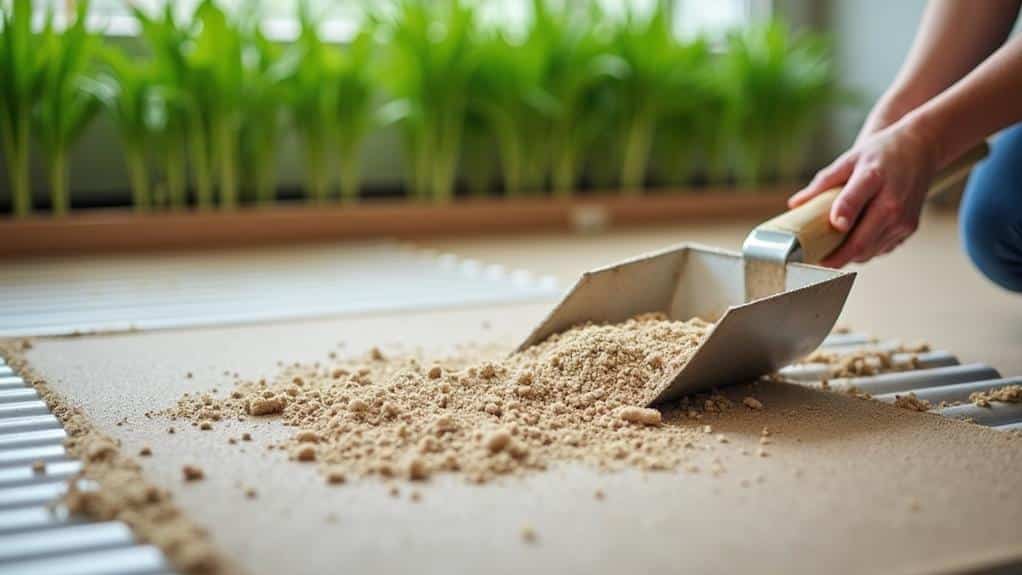
When considering the environmental impact of unbonded screed, we shall focus on three key aspects: reduced material waste, energy-efficient installation, and recyclability of components.
Unbonded screeds contribute to reduced material waste through their longevity and resistance to cracking, minimising the need for frequent replacements.
The installation process is energy-efficient, particularly when used with underfloor heating systems, as the screed layer helps maintain consistent temperatures and reduces overall energy consumption.
Reduced Material Waste
As environmental considerations become increasingly important in construction, unbonded screeds offer significant advantages in reducing material waste. This approach aligns with modern sustainability practices and waste management strategies in the building industry.
We've identified several key ways unbonded screeds contribute to material conservation:
- Thicker application without bonding agents
- No removal required for substrate repairs
- Longer lifespan due to moisture damage prevention
- Less preparation needed for irregular slabs
Unbonded screeds allow for a more efficient use of resources by enabling thicker applications without the need for bonding agents. This not only saves materials but also reduces costs associated with additional products.
The separation from the substrate means that any adjustments or repairs to the underlying concrete can be made without removing the screed, further minimising waste.
The incorporation of a damp-proof membrane in unbonded screeds effectively prevents moisture-related damage, extending the installation's lifespan and reducing the need for premature replacement.
Additionally, these screeds can be installed on contaminated or irregular slabs without extensive preparation, eliminating the need for remediation materials.
The independent movement of unbonded screeds also helps reduce cracking, minimising repair needs and overall material consumption throughout the flooring system's lifespan.
Energy-Efficient Installation Process
In light of growing environmental concerns, unbonded screed installations offer a more energy-efficient process compared to traditional bonded alternatives.
We've observed that these installation techniques contribute considerably to energy savings throughout the construction and operational phases of a building.
The use of lightweight aggregates in unbonded screed applications reduces energy consumption during transportation and installation. This reduction in material weight translates to lower fuel costs and decreased carbon emissions associated with logistics.
Moreover, the independent movement of unbonded screeds allows for efficient installation over existing substrates without additional adhesives, streamlining the process and minimising energy expenditure.
We've found that unbonded screed's damp-proof membrane plays a vital role in energy efficiency. By effectively minimising moisture ingress, it reduces the energy loss typically associated with heating systems.
This feature contributes to long-term energy savings in building operation. Additionally, the screed's ability to accommodate building movements and temperature fluctuations extends the lifespan of flooring systems, thereby conserving resources and energy that would otherwise be spent on frequent replacements.
These combined factors make unbonded screed installations a more sustainable and energy-efficient choice for modern construction projects.
Recyclability of Components
One of the most significant environmental benefits of unbonded screed lies in its recyclability. We've found that the components used in unbonded screed systems, including cement and aggregates, can be effectively recycled, reducing waste and minimising environmental impact.
By incorporating recycled aggregates into screed formulations, we're able to lower the carbon footprint associated with material extraction and processing.
Our commitment to sustainable practices extends to the moisture barriers used in unbonded screed systems. Polyethylene membranes, for instance, can often be recycled or reused in future projects, further enhancing the system's overall sustainability.
To illustrate the recyclability of unbonded screed components, consider the following:
- Cement can be ground and reused as a raw material in new cement production
- Aggregates can be crushed and repurposed for various construction applications
- Moisture barriers can be reprocessed into new plastic products
- Metal components, such as reinforcement mesh, can be melted down and recycled
Frequently Asked Questions
What Is the Difference Between Bonded and Nonbonded Screed?
We distinguish bonded and unbonded screeds by their installation techniques and screed applications. Bonded screeds adhere directly to substrates, requiring thinner layers. Unbonded screeds utilise a membrane, allowing independent movement and thicker applications. Each suits different load-bearing and environmental needs.
What Is the Difference Between Structural Screed and Non Structural Screed?
We distinguish structural and non-structural screeds by their applications and materials. Structural screeds bear loads, integrating with the building's structure, often exceeding 50mm thickness with reinforcement. Non-structural screeds primarily level and finish, starting from 10mm without load-bearing capabilities. These distinctions are particularly relevant for UK construction practices, where both types of screed are commonly utilised in residential and commercial projects.
What Are the Benefits of Anhydrite Screed?
We shall witness marvellous advantages with anhydrite screed. Its properties provide quick drying, self-levelling surfaces, and superior thermal conductivity. Anhydrite applications excel in moisture resistance, accommodate underfloor heating, and allow thinner layers for larger areas without cracking concerns.
Where Is Bonded Screed Used?
We utilise bonded screed in various applications requiring strong substrate adhesion. It's ideal for heavy-load areas such as driveways and commercial spaces. Our installation techniques guarantee a thin, durable layer that's perfect for quick-setting projects and floor levelling.
Conclusion
We've explored the myriad benefits of unbonded screed, a versatile flooring solution that's as adaptable as a chameleon. From its flexibility in installation to its superior moisture protection and crack prevention, unbonded screed offers significant advantages. It's compatible with underfloor heating, boasts impressive load-bearing capacity, and guarantees durability. We mustn't overlook its ease of maintenance and environmental considerations. For those seeking a high-performance flooring system, unbonded screed is an option we shall continue to recommend and study.

Learn about the diverse types of concrete used in construction and discover which mix can transform your next project.

For a long-lasting driveway that laughs in the face of the UK's unpredictable weather, the C20 concrete mix is your Read more

In the UK, you've got a a lot of lightweight concrete types to choose from, each with its unique perks. Read more