When deciding whether to mix your own concrete or buy ready mix, consider your project’s size and requirements. Mixing your own concrete can save you money initially and allows for mix customization. However, it requires more labor and can vary in quality. On the other hand, ready mix offers convenience, consistent quality, and saves time, though it’s typically more expensive, especially for small projects. If you’re tackling a large project, the higher cost of ready mix might be justified by its efficiency and quality assurance. There’s a lot to weigh in, and each project presents unique challenges and opportunities.
Key Takeaways
- Mixing your own concrete is cost-effective for small projects due to lower material costs and no delivery fees.
- Ready mix concrete offers consistent quality and eliminates the need for on-site mixing equipment and labor, which can reduce overall project costs.
- Self-mixing requires investment in mixing equipment, storage facilities, and labor, which can increase costs for larger projects.
- Ready mix concrete is priced higher initially but can be more cost-effective for medium to large projects due to scalability and reduced waste.
- Factors like project size, complexity, and local material costs should guide the decision between mixing your own concrete and buying ready mix.
Introduction
When you’re planning a construction project, choosing the right method for mixing concrete is essential.
You can mix your own or opt for ready-mix concrete, each with its own set of benefits and considerations.
Understanding these differences will help you make an informed decision that could greatly impact your project’s cost and efficiency.
Importance of choosing the right concrete mixing method
Choosing the appropriate concrete mixing method can greatly influence both the quality and cost of your construction project. Whether you opt for ready mix concrete or decide to mix it yourself onsite, understanding the pros and cons of each method is vital. Here’s why your choice matters:
- Concrete mix design: The specific needs of your project dictate the mix design. Each method offers different flexibilities in formulation.
- Concrete cost analysis: The choice affects not just the initial material costs but also long-term expenses related to durability and maintenance.
- Concrete material costs: Ready mix might seem pricier upfront, but reducing waste and time could save you money in the long run.
- Logistics and timing: Site-mixed concrete allows for adjustments on the fly, which is great for unpredictable conditions.
You’ve got to weigh these factors based on your project’s scale, timeline, and budget. Ready mix concrete, being pre-mixed under controlled conditions, generally offers consistency and convenience, especially for larger projects. On the other hand, site-mixed concrete might reduce costs for smaller or more customized jobs.
Careful consideration of these aspects will ensure that you don’t just go with the most straightforward option but the most efficient and cost-effective one for your needs.
Brief overview of mixing your own concrete vs. ready mix
You’ll find that mixing your own concrete and purchasing ready mix serve different needs and come with distinct advantages and drawbacks. When you opt for mixing your own concrete, you gain control over the proportions and timing. This approach often involves lower concrete costs per cubic yard since you’re bypassing the premium for pre-mixed convenience. However, you’ll need to invest in or rent concrete mixing equipment, which can add up, especially for larger projects.
On the other hand, buying ready mix guarantees consistency and quality, managed under stringent concrete quality control measures at the plant. This option eliminates the need for you to handle the raw materials directly, saving time and potentially reducing waste. Yet, you must consider concrete delivery costs, which can fluctuate based on the distance from the mixing plant to your site.
Here’s a quick comparison to help you weigh these options:
| Aspect | Mixing Your Own | Buying Ready Mix |
|---|---|---|
| Initial Cost | Lower | Higher |
| Equipment Needed | Yes | No |
| Quality Control | Self-managed | Professionally Managed |
Choosing between these methods depends largely on your project size, budget, and quality requirements.
Factors to consider when deciding between the two
Before deciding between mixing your own concrete or opting for ready mix, consider several key factors that influence both cost efficiency and project outcome. Understanding these aspects will help you determine the best approach for your specific needs.
- Concrete Project Planning: How complex is your project? Larger, more intricate projects might benefit from ready-mixed concrete to guarantee consistency and quality.
- Concrete Mixing Techniques: Do you have the expertise to mix your own concrete? Proper mixing is essential for the strength and durability of the structure. If you’re new to this, ready mix might save you from costly mistakes.
- Concrete Labor Costs: Consider the manpower required for both options. Mixing your own concrete can be labor-intensive. If you don’t have enough hands on deck, ready mix could be more cost-effective, especially when you factor in the time saved.
- Concrete Equipment Costs and Short Load Fees: Do you have the necessary tools and machines? Buying or renting concrete mixers and other equipment can add up. Also, if you’re not ordering a full truckload, ready mix companies often charge short load fees, which can inflate costs unexpectedly.
Each option has its pros and cons, so weigh these factors carefully to make the most informed decision for your concrete needs.
Understanding Concrete Basics
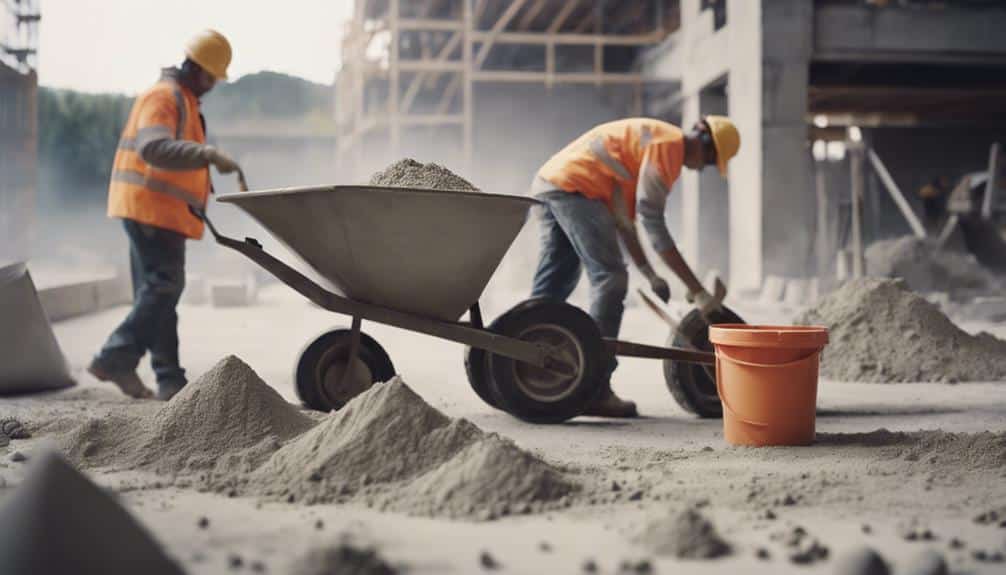
Before you decide between mixing your own concrete or opting for ready mix, it’s essential to understand the basics. You’ll need to know the key components like cement, aggregates, water, and additives, and why their proportions matter.
This knowledge will help you grasp the importance of mixing techniques and how they affect concrete’s strength and durability for different projects.
Key components of concrete (cement, aggregates, water, additives)
Understanding the basic components of concrete—cement, aggregates, water, and additives—is essential for deciding whether to mix your own or purchase ready-mix. Each component plays a vital role in the final properties of the concrete, and understanding their functions can aid in concrete mix design optimization.
Cement: It’s the binder that holds your concrete together. When mixed with water, cement undergoes a chemical reaction called hydration, forming a hard matrix that binds other components.
Aggregates: These are the sand and gravel or crushed stone that provide strength and bulk to the concrete. Their size and quality affect the concrete’s overall durability and performance.
Water: It’s not just for making your mix workable. The amount of water relative to cement (water-cement ratio) critically impacts the concrete’s strength and durability.
Concrete Additives: These can include colors, accelerators, retarders, and air-entraining agents, each serving specific purposes to enhance performance, aesthetic appeal, or adaptability to environmental conditions.
Importance of proper proportions and mixing techniques
While understanding the key components of concrete is essential, mastering the correct proportions and mixing techniques is equally vital for ensuring the strength and durability of your final product.
When you’re mixing your own concrete, getting the concrete proportions right is essential. Too much water weakens the concrete, while too little can make it unworkable.
It’s all about finding that sweet spot where the concrete consistency is just right—manageable enough to pour but stiff enough to hold its shape.
Don’t underestimate the importance of thorough mixing either. Inadequate mixing can lead to weak spots and inconsistent coloring in your hardened concrete.
You’ll need to mix until you achieve a uniform texture and color, indicating that the cement has fully coated the aggregates and the chemical reaction necessary for concrete strength is distributed evenly.
Concrete strength and durability requirements for various applications
You’ve mastered the art of mixing; now let’s explore how concrete strength and durability vary depending on the application. Depending on what you’re building, the required concrete compressive strength and concrete durability can differ greatly.
For projects like driveways or patios, you’ll need a concrete with high durability to withstand weather changes and heavy use. In contrast, indoor projects such as countertops may not require the same level of durability but focus more on aesthetics.
The key to achieving the desired strength and longevity lies in understanding several critical factors:
- Concrete Water-Cement Ratio: The lower the water-cement ratio, the stronger and more durable the concrete becomes. This ratio profoundly impacts the final concrete compressive strength.
- Concrete Aggregate Gradation: Properly graded aggregates provide a tighter packing of materials, reducing the cement paste required and enhancing the concrete’s strength.
- Concrete Supplementary Cementitious Materials: Adding materials like fly ash or slag can improve durability and workability.
- Curing Conditions: Proper curing significantly affects durability. It secures that the concrete continues to gain strength and resist weathering and stress.
Mixing Your Own Concrete

When you decide to mix your own concrete, you’re taking control of both the quality and the timing of your project. You’ll need to weigh the advantages of customizability and potential cost savings against the downsides, such as labor intensity and the need for technical know-how.
Let’s walk through the step-by-step process to see if this DIY approach suits your needs.
Advantages
When you mix your own concrete, you’ll notice significant cost savings, especially for smaller projects where the quantity needed doesn’t justify a ready mix purchase.
You have the flexibility to adjust the mix to your exact specifications, which is essential when you’re aiming for specific strength or texture.
Additionally, you can produce just the right amount needed for the task at hand, ensuring no material is wasted and you can work at a pace that suits you.
Cost savings on materials for small projects
For small projects, mixing your own concrete can greatly reduce material costs. You’ll find that the benefits of concrete DIY and concrete mixing are significant for your budget.
When you handle concrete materials for concrete small projects, consider:
- Buying raw materials in bulk
- Minimizing waste
- Avoiding delivery fees
- No minimum purchase requirement
This approach helps keep the concrete cost manageable.
Flexibility in customizing mix ratios and adding admixtures
Mixing your own concrete allows you to tailor the mix ratios and incorporate admixtures based on specific project needs.
You’re free to adjust concrete mix ratios or add various concrete admixtures like concrete chemical admixtures, concrete water-reducing admixtures, and concrete superplasticizers.
This customization enhances performance for different applications, ensuring you achieve exactly the strength and durability required without compromise.
Ability to make small batches as needed and work at your own pace
In addition to customizing mix ratios, you can also make small batches of concrete as needed and set your own pace for the project. This flexibility enhances:
- Concrete mixing precision
- Concrete placing efficiency
- Concrete project management control
- Concrete construction sustainability
You’re not just saving time; you’re also ensuring that every aspect of your work aligns perfectly with your specific construction needs and sustainability goals.
Disadvantages
Mixing your own concrete isn’t always the time-saver you might hope for; it demands significant labor and time, especially when it comes to transporting and placing the material.
You’ll also face challenges in maintaining consistent quality and precise proportions, which can affect the strength and durability of your structure.
Additionally, you must have the right equipment and sufficient storage space, not to mention a solid understanding of mixing techniques.
Time and labor required for mixing, transporting, and placing concrete
You’ll find that manually mixing your own concrete demands significant time and labor, especially during transport and placement tasks. Here’s why:
- Concrete Mixing: Requires continuous effort and monitoring.
- Concrete Transportation: Moving mixed concrete to site can be logistically challenging.
- Concrete Placement: Needs precision and speed to avoid premature setting.
- Concrete Labor Cost: Higher due to intensive manpower needs.
Choosing ready mix might save you these headaches.
Challenges in achieving consistent quality and proper proportions
Besides the time and labor involved, another drawback of mixing your own concrete is the difficulty in maintaining consistent quality and accurate proportions. You’ll find that concrete quality assurance becomes a significant challenge. Concrete testing is important but often overlooked in DIY projects, and ensuring the right concrete proportions and additives requires precise knowledge and practice.
| Factor | Importance | Challenge Level |
|---|---|---|
| Concrete Quality | High | Difficult |
| Proportions | Critical | Complex |
| Additives | Variable | Tricky |
Need for proper equipment, storage space, and knowledge of mixing techniques
While you might save money initially, you’ll need specialized equipment, ample storage space, and a thorough understanding of mixing techniques when you opt to mix your own concrete.
Here are key requirements:
- Thorough concrete training
- Advanced concrete equipment
- Adequate concrete storage facilities
- Expertise from experienced concrete contractors
These essentials guarantee you’re prepared to tackle the complexities of DIY concrete mixing effectively.
Step-by-step guide to mixing your own concrete
Now that you’re ready to mix your own concrete, you’ll first need to figure out the correct mix proportions specific to your project.
Next, you’ll gather all necessary materials—cement, aggregates, water, and any additives—and make sure they’re properly stored to maintain quality.
Determining the right mix proportions for your project
To determine the right mix proportions for your project, you’ll first need to understand the basic components of concrete: cement, sand, aggregate, and water.
Consider these factors:
- Concrete Cement Types: Choose based on environmental exposure and strength requirements.
- Concrete Aggregate Size: Match to the job’s load demands.
- Concrete Additives: Include for enhanced properties.
- Concrete Slump: Adjust water to achieve desired workability.
Gathering and storing materials (cement, aggregates, water, additives)
Before you start mixing your own concrete, gather and properly store all necessary materials: cement, aggregates, water, and any additives. Here’s a quick guide:
| Material | Storage Tips |
|---|---|
| Cement | Dry, sealed, away from humidity |
| Aggregates | Keep dry, prevent contamination |
| Water | Accessible, clean |
| Additives | Labelled, secure, according to type |
Prioritize reducing concrete waste and consider concrete recycling to lessen environmental impact.
Mixing process and equipment needed
Once you’ve gathered your materials, you’ll need the right equipment to start mixing your own concrete. Here’s what you’ll need:
- A sturdy concrete mixer
- Reliable measuring tools for consistent concrete specifications
- A thorough concrete quality control plan
- Tools for concrete troubleshooting
These essentials guarantee a smooth concrete mixing process and help maintain high standards, avoiding common pitfalls.
Best practices for placing, finishing, and curing concrete
After mixing your own concrete, it’s important to properly place, finish, and cure it to guarantee maximum strength and durability.
You’ll need to monitor concrete setting time closely, apply precise concrete finishing techniques, and adhere to effective concrete curing methods.
This promotes ideal concrete flexural strength and simplifies future concrete maintenance.
Careful handling at each step is vital for long-term resilience and performance.
Ready-Mix Concrete

Switching gears to Ready-Mix Concrete, you’ll find it comes with its own set of pros and cons.
While it simplifies the task, you need to meticulously choose a supplier to guarantee quality and cost-efficiency.
Let’s examine the advantages and disadvantages, and discuss how to select the right supplier for your needs.
Advantages
When you opt for ready-mix concrete, you’re not just buying material; you’re also buying convenience and significant time savings, especially crucial for large projects. This choice guarantees you get a consistent, high-quality mix that’s been precisely controlled during the batching process.
Additionally, it’s ideal for big pours and complex constructions that demand specialized mixes, while also minimizing waste and lessening environmental impact.
Convenience and time savings, especially for large projects
For large projects, you’ll find that ready-mix concrete greatly reduces preparation time and enhances workflow efficiency.
The concrete industry has tailored ready-mix solutions for:
- Concrete pavements
- Concrete slabs
- Concrete foundations
- Concrete ready-mix
These applications demonstrate the convenience of using pre-mixed concrete, allowing you to focus on construction without the hassle of on-site mixing.
Consistent, high-quality mix from a controlled batching process
Ready-mix concrete guarantees a consistent, high-quality mix due to its precise, controlled batching process.
When you opt for ready mix concrete, you’re leveraging advanced concrete batching and concrete quality control techniques. This guarantees that every batch meets high standards, simplifying your concrete cost comparison.
You don’t have to worry about the variables that typically affect concrete mixing outcomes.
Suitable for large pours and complex projects requiring specialty mixes
Large-scale projects and specialized concrete needs are best served by ready-mix concrete, guaranteeing efficiency and quality.
When you’re tackling concrete infrastructure, here’s why ready-mix is ideal:
- Optimized concrete mix design for performance
- Precise concrete batching enhances consistency
- Advanced concrete additives improve durability
- Rigorous concrete quality control guarantees standards
You’ll find that ready-mix helps meet complex requirements more reliably than mixing on your own.
Reduced waste and environmental impact compared to over-ordering materials
In addition, using ready-mix concrete reduces waste and lessens environmental impact by preventing the over-ordering of materials. It aligns with concrete environmental regulations and supports sustainability metrics.
Concrete recycling facilities benefit from a more predictable stream of waste, enhancing concrete waste management. Moreover, ready-mix aligns with concrete life cycle assessment, ensuring each batch meets exact needs without excess, promoting a more sustainable construction environment.
Disadvantages
In addition to ready-mix concrete offering convenience, it often comes at a higher cost, particularly for smaller projects where you mightn’t need large quantities.
You’ll also find less flexibility to adjust the mix on-site if unexpected needs arise.
Additionally, relying on delivery can introduce potential delays and logistical challenges, impacting your project timeline.
Higher cost compared to mixing yourself, especially for small projects
You’ll find that ready-mix concrete tends to be more expensive, particularly for smaller projects, when compared to mixing your own. Here are the main reasons:
- Higher material costs
- Delivery fees
- Minimum order quantities
- Waste for unused concrete
For concrete DIY enthusiasts, managing concrete mixing and concrete cost on small projects often makes more financial sense than opting for ready-mix solutions.
Less flexibility in customizing the mix on-site
Another disadvantage of ready-mix concrete is its lack of flexibility in adjusting the mixture once it’s on-site. You can’t tweak concrete additives or admixtures as easily, limiting your ability to refine the performance according to specific project needs.
This constraint in concrete customization can be a significant drawback, especially when unexpected changes in environmental conditions or project specifications arise.
Potential for delays or issues with delivery timing and logistics
Delays in delivery and logistical complications can disrupt your construction schedule when using ready-mix concrete. You’re left managing these issues:
- Unpredictable concrete delivery times
- Coordinating complex concrete logistics
- Limited flexibility in concrete timing
- Dependence on external concrete problem-solving
Such scenarios demand concrete innovation to mitigate risks and guarantee your project remains on track, despite the unpredictable nature of concrete delivery services.
Choosing a ready-mix supplier
When you’re selecting a ready-mix concrete supplier, it’s essential to evaluate their reputation, quality control measures, the size and condition of their delivery fleet, and their pricing strategies.
Understanding how to order and schedule deliveries can streamline your construction project and prevent costly delays.
Make sure you’re well-informed about each supplier’s capabilities and service quality to guarantee you make the best choice for your needs.
Factors to consider (reputation, quality control, delivery fleet, pricing)
Choosing the right ready-mix concrete supplier involves evaluating their reputation, quality control measures, delivery fleet, and pricing structures. Here are key aspects you should weigh:
- Concrete Quality Control: Guarantees adherence to concrete standards.
- Concrete Pricing: Competitive yet reflective of quality.
- Concrete Delivery: Reliability and fleet efficiency.
- Concrete Customer Service: Responsiveness and support quality.
These factors greatly impact the success of your project.
Understanding ready-mix concrete ordering and delivery process
To guarantee a smooth process, you’ll need to understand how to order and schedule the delivery of ready-mix concrete from your chosen supplier.
Specify your project—be it concrete buildings, bridges, tanks, pipes, or precast elements. Accurate details help your supplier prepares the correct mix and quantity, preventing costly delays or mismatches, especially when timing and precise formulations are essential for your construction success.
Cost Comparison: Mixing Your Own vs. Ready Mix

Now, let’s weigh the costs between mixing your own concrete and opting for ready-mix. You’ll need to take into account various factors impacting each option, which can greatly influence your decision depending on the size of your project.
We’ll look at the financial implications for both small DIY tasks and larger construction projects to see which method offers the best value.
Factors affecting the cost of mixing your own concrete
When you’re contemplating mixing your own concrete, it’s essential to comprehend the various costs involved.
You’ll need to account for the expenses of raw materials like cement and aggregates, as well as any additives.
Additionally, don’t overlook the costs of equipment, storage, and the labor and time required to mix the concrete properly.
Raw material costs (cement, aggregates, additives)
Understanding the costs of cement, aggregates, and additives is essential when you’re deciding whether to mix your own concrete or opt for ready mix. Consider the variety of additives impacting your budget:
- Concrete pigments – for color
- Concrete fibers – for strength
- Concrete air-entraining admixtures – for durability
- Concrete retarding admixtures – for workability
Each choice affects the final cost and quality of your project.
Equipment and storage costs
Evaluating the cost of equipment and storage is essential if you’re considering mixing your own concrete. Investing in concrete equipment and proper storage facilities directly impacts your overall concrete cost.
From concrete batching systems to mixers, upfront expenses can be significant. Additionally, maintaining these systems guarantees efficiency but adds ongoing costs.
Weigh these factors carefully against the convenience of ready-mix options.
Labor and time costs
Apart from the initial investment in equipment, you’ll also need to take into account the labor and time costs associated with mixing your own concrete.
Consider these factors:
- Concrete labor cost: Manpower expenses can add up.
- Concrete time efficiency: Time is money, especially on larger projects.
- Concrete delivery: Skipping it saves on costs.
- Concrete cost savings: DIY mixing can be cheaper, but at what time expense?
Factors affecting the cost of ready-mix concrete
When you’re considering ready-mix concrete, several factors will influence the cost. The volume of concrete you need and the batch size can have a notable impact on pricing, especially when considering delivery fees and fuel surcharges.
Additionally, if you’re ordering smaller quantities, you may face short load fees, which can add up.
Volume of concrete needed and batch size
You’ll find that the volume of concrete you need and the batch size greatly influence whether it’s more cost-effective to mix your own concrete or purchase ready-mix. Utilize concrete calculators to make informed decisions:
- Estimate concrete volume.
- Compare concrete batching costs.
- Assess concrete mixing options.
- Conduct a concrete cost comparison.
Smart planning saves money and guarantees the right approach for your project.
Delivery fees and fuel surcharges
Delivery fees and fuel surcharges frequently elevate the total cost of ready-mix concrete.
When you’re exploring concrete delivery options, consider the impact of these extra charges on your overall concrete costs.
Buying through concrete e-commerce platforms might offer more transparency and potentially better concrete fuel efficiency.
Always check how these factors play into the final price before finalizing any concrete sales.
Short load fees for small quantities
Considering small quantities, you’ll often face short load fees with ready-mix concrete, greatly impacting your overall expenses. Here’s how these fees affect your concrete cost comparison:
- Increased per cubic yard cost
- Higher overall project expenses
- Incentive to order larger quantities
- Potential waste if excess concrete isn’t needed
Always weigh the benefits of concrete mixing versus the convenience and concrete delivery costs of ready mix concrete.
Cost comparison scenarios for different project sizes
Let’s examine the cost implications of mixing your own concrete versus purchasing ready mix for different project sizes. When you’re planning a small concrete project, like a garden path or a patio, the volume of concrete needed may not justify the expense of ready-mix delivery. In these cases, mixing your own concrete can save you a bundle. You’ll avoid minimum load fees and only pay for the materials you use.
However, as the size of your project increases, so do the benefits of buying ready mix. For medium to large projects, such as driveways or foundations, the sheer volume of concrete required can make self-mixing impractical and exhausting. Here, purchasing ready mix not only cuts down on labor but also ensures consistency and quality. The cost of ready mix might seem higher at first glance, but when you factor in the time saved and the reduction of potential errors, it often turns out to be more cost-effective.
Moreover, consider the logistics of concrete delivery. For large projects, managing the timely delivery of multiple batches can become a complex coordination effort if you’re mixing yourself. Ready mix companies handle these logistics, allowing you to focus on other aspects of your project.
Conclusion

As you weigh the options between mixing your own concrete and purchasing ready mix, remember the key considerations such as project size, budget, and timeline.
Each method has its unique advantages and drawbacks that’ll impact your decision. Proper planning and execution are essential, no matter which route you choose.
Recap of key advantages and disadvantages of each method
Summarizing the key points:
Mixing your own concrete offers cost savings and customization, while buying ready mix provides convenience and consistency. When you mix your own, you’re in control of the concrete mix, ensuring it meets the specific needs of your project. This can lead to better concrete performance and durability if done correctly. However, it’s important to bear in mind that the initial lower concrete cost might be offset by the need for specialized equipment and potential waste.
On the other hand, opting for ready mix concrete means you won’t have to deal with the complexities of concrete mixing yourself. The concrete delivery comes consistent and ready to pour, which reduces the labor involved and minimizes the chance of errors in mixing. This can be especially beneficial in larger projects where the volume and quality standards are beyond simple DIY capabilities.
To emphasize the trade-offs between these two options:
- Cost Efficiency: DIY mixing may reduce upfront costs.
- Customization: Mixing yourself allows adjusting the mix for better performance.
- Convenience: Ready mix eliminates the need for equipment and material handling.
- Consistency: Ready mix offers uniform quality and durability.
Choosing the right approach depends on your specific project requirements, skill level, and the importance of either saving money or saving time.
Decision-making framework based on project size, budget, timeline, and quality requirements
To choose between mixing your own concrete or buying ready mix, consider your project’s size, budget, timeline, and quality demands. Smaller projects might benefit from the hands-on control of concrete mixing, allowing you to adjust the mix for specific needs, which can save on concrete budgeting.
However, for larger projects, the scale often makes ready mix more practical. This option reduces the labor involved and can streamline your concrete timelines considerably.
Concrete quality control is another important factor. If you’re mixing your own, you’ll need a solid understanding of the components and their proportions. Mistakes here can lead to subpar results, potentially increasing costs if corrections are needed. With ready mix, the quality is assured by the supplier, and you’ll have consistency across your project.
Then, consider the logistics of concrete delivery. Ready mix offers the convenience of delivery to the site at a scheduled time, which is essential for keeping larger projects on track. Managing your own delivery for mixing on-site might present challenges, especially if you’re tight on space or resources.
Importance of proper planning and execution regardless of mixing method chosen
Regardless of whether you choose to mix your own concrete or buy ready mix, thorough planning and meticulous execution are key to the success of your project. Both methods have their pros and cons, but without solid concrete planning and execution, you’re setting yourself up for potential failure.
Concrete cost comparison isn’t just about the upfront prices; it’s about evaluating the long-term value and making sure that every step of the concrete delivery or mixing process is optimized for efficiency and quality.
Here’s what you need to focus on to guarantee that your concrete project runs smoothly:
- Timeline Planning: Make sure you have a clear schedule for when the concrete needs to be mixed or delivered. Timing is essential, especially with concrete that has a limited workable lifespan.
- Resource Allocation: Whether it’s ensuring the mixer is available or that the ready mix truck has clear access to your site, resource planning can’t be overlooked.
- Quality Control: Regularly check the consistency and quality of your concrete, whether mixed on-site or pre-mixed.
- Contingency Planning: Always have a backup plan in case of equipment failure or delays in delivery.
Frequently Asked Questions
What Is the Typical Shelf Life of Bagged Concrete Mix?
You’re wondering about the shelf life of bagged concrete mix. It typically lasts up to one year if stored properly in a dry place. After that, the quality can start to degrade.
How Does Weather Affect Concrete Setting Times?
Weather greatly impacts your concrete setting times. Hot, dry conditions speed it up, while cold, damp weather slows it down. You’ll need to adjust your work pace and protection strategies accordingly.
What Are the Environmental Impacts of Concrete Production?
Every cloud has a silver lining, but the environmental impacts of concrete production are significant. You’ll find it consumes vast resources, emits high levels of CO2, and disrupts natural habitats during extraction processes.
Can Old Concrete Be Recycled for New Construction Projects?
Yes, you can recycle old concrete for new construction projects. It’s crushed into aggregate and used in new concrete, reducing landfill waste and conserving natural resources like gravel and sand.
Are There Alternative Materials to Traditional Concrete for DIY Projects?
Yes, you can use alternative materials like hempcrete, which captures more CO2 than it emits. It’s lightweight, sustainable, and offers excellent insulation, perfect for your DIY projects that require less structural strength.
Conclusion
As you stand at the crossroads of cost and convenience, remember that choosing between mixing your own concrete and opting for ready-mix is like deciding between hand-kneading dough and buying pre-made bread.
Both paths lead to sturdy foundations, but your specific project size, budget, and time constraints will dictate the best route.
Embrace the method that aligns with your needs, ensuring your project stands solid, like a well-crafted fortress against the tides of time.
Related Articles
Looking to order volumetric ready-mix concrete? Barrow Mix batches it fresh on-site across Greater Manchester & Cheshire — you only pay for what you use.
Get a free quote →Need concrete mixed & delivered?
Barrow Mix delivers volumetric ready-mix concrete across Greater Manchester & Cheshire — mixed fresh on site, barrowed or pumped to the pour, from as little as ½m³. You only pay for what you use.
Ordering concrete in Greater Manchester or Cheshire? Doing the sums? Our concrete calculator gives your volume, and volumetric mixing means you only pay for exactly what you use — no wasted part-load.

Reliable Ready Mix Concrete When searching for a reliable ready mix concrete supplier in the Manchester area, Barrowmix Concrete stands Read more

Maximize efficiency and cost savings by mastering the calculation of ready mix concrete coverage and quantity needed for your project—discover Read more

Navigating the complexities of dam construction reveals how concrete's unique properties ensure stability and longevity—discover the innovations shaping its future.