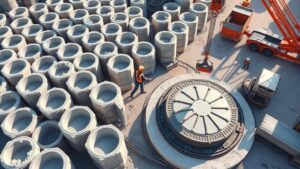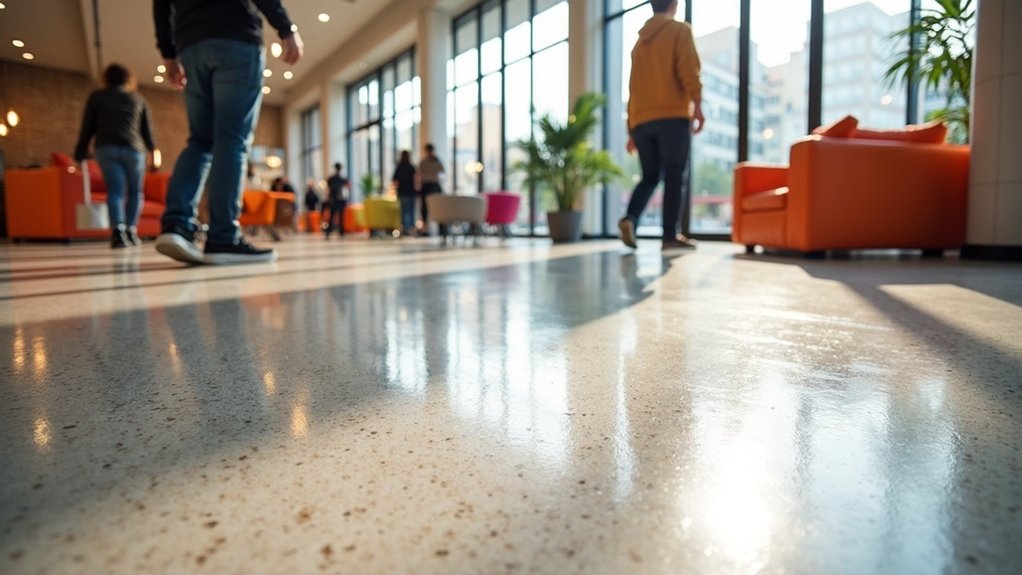
Concrete is an excellent choice for high-traffic commercial flooring due to its remarkable durability and longevity. It easily withstands heavy loads without cracking, making it ideal for busy environments. Furthermore, its low maintenance requirements and cost-effectiveness translate to significant savings in the long run.
Concrete also supports sustainability efforts by incorporating recycled materials and minimising waste. With a variety of design options and excellent health and safety features, it proves to be a wise investment for any facility. Consider how these advantages can improve your commercial space.
Key Takeaways
Concrete flooring is an excellent choice for high-traffic commercial spaces due to its remarkable durability. It can handle heavy loads and constant foot traffic without cracking or losing its structural integrity.
Another advantage is its minimal maintenance and low repair costs, making it a cost-effective solution for businesses over time. For example, a well-installed concrete floor can last for decades with little upkeep.
Concrete is also an environmentally friendly option. It can be made from recycled materials and contributes to waste reduction, aligning with green building practices that many businesses prioritise today.
Moreover, the versatility of concrete allows for a range of design possibilities. It can be customised with different finishes, colours, and textures, ensuring it meets specific aesthetic requirements.
Lastly, safety features like anti-slip sealers and non-porous surfaces improve health and safety in busy environments, making concrete a practical choice for any commercial setting.
Durability and Longevity of Concrete Floors
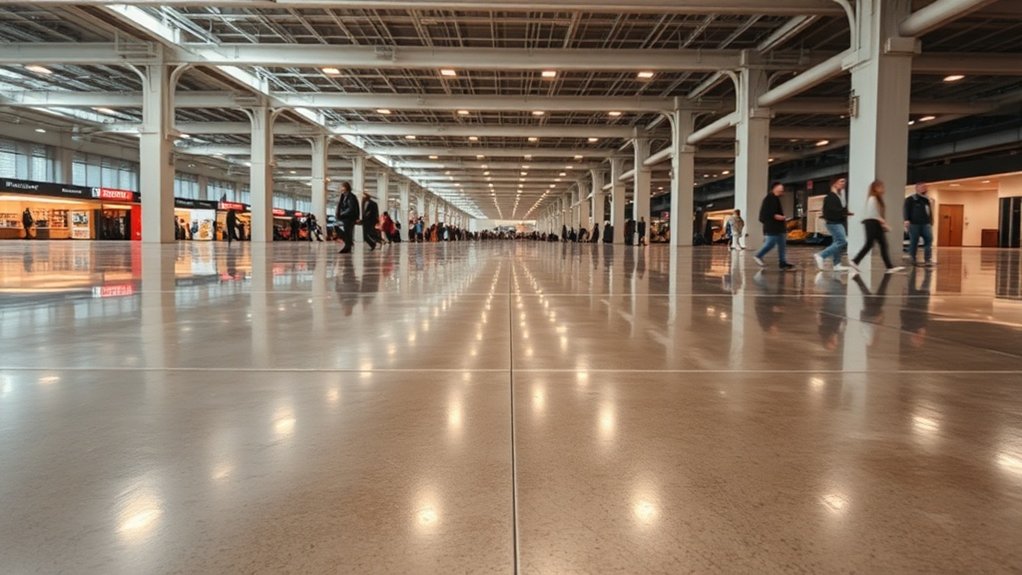
Choosing concrete flooring for high-traffic areas is a smart investment, as it provides outstanding durability and longevity.
Concrete can handle heavy loads from machinery and vehicles without cracking, making it perfect for industrial environments where heavy equipment is common. Its wear resistance means that polished concrete can withstand scratches, stains, and scuff marks, keeping its appearance intact longer than other flooring options. Additionally, polished concrete floors can endure heavy foot traffic without losing integrity, ensuring long-lasting performance. This type of flooring is known for its cost-effectiveness, as it tends to be more affordable over time due to its durability and low maintenance needs.
With a lifespan of several decades and low maintenance needs, concrete minimises the chances of costly repairs or replacements, saving you both time and money.
In demanding settings, this blend of durability and longevity ensures that your flooring remains functional and attractive for years to come.
Environmental Sustainability Benefits
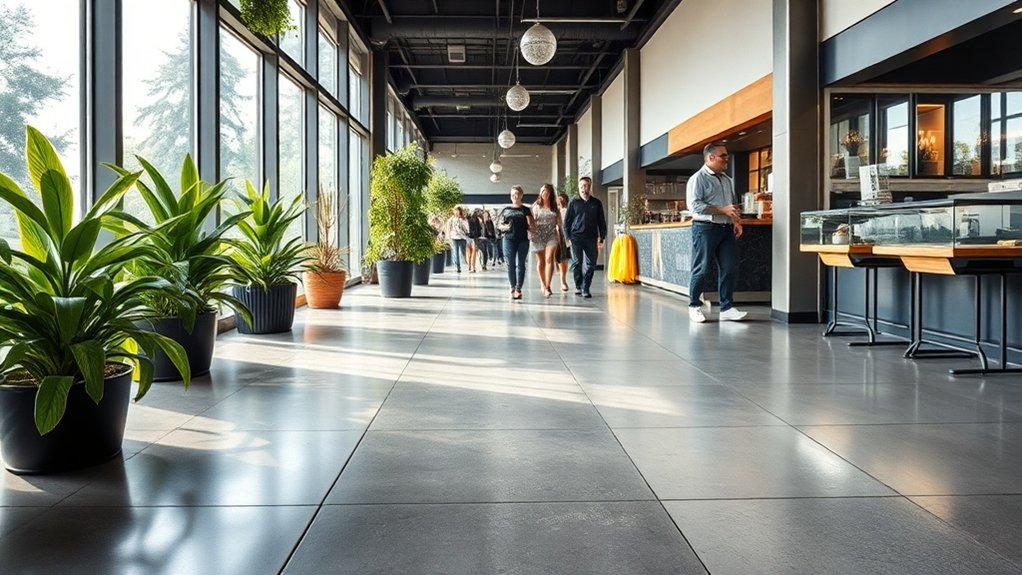
Concrete flooring isn’t only durable and long-lasting, but it also brings notable environmental sustainability benefits. By incorporating sustainable materials like plentiful limestone and industrial by-products such as fly ash, concrete reduces the need for virgin resources and promotes effective waste management. Unlike timber, concrete production doesn’t contribute to deforestation, which helps protect our forests. Polished concrete can often be applied over existing slabs, cutting down on construction waste and extending its lifespan, which leads to fewer replacements and reduced landfill impact. Its thermal mass properties also improve energy efficiency, contributing to a lower carbon footprint. Additionally, its recycling and waste management potential ensures that discarded concrete can be repurposed, further supporting sustainable practices. The use of supplementary cementitious materials in concrete can significantly lower CO2 emissions during production, making it an even more environmentally friendly option. With minimal upkeep and the potential for reuse, concrete flooring is a practical and eco-friendly choice for busy commercial spaces, fitting well with contemporary sustainability aims.
Cost Efficiency and Low Maintenance
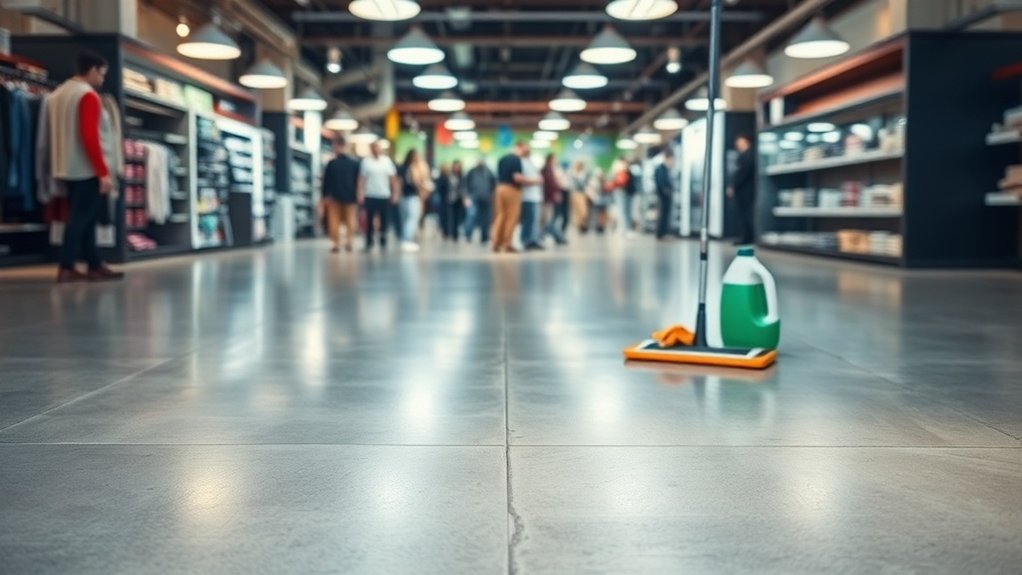
Choosing concrete for high-traffic flooring means investing in long-term savings and minimal upkeep.
With simple cleaning and straightforward repairs, concrete outshines many traditional flooring options, helping to lower your overall costs. This practicality not only keeps your floors in excellent condition but also boosts your finances over time. Additionally, the proper curing of concrete enhances its resistance to wear and tear, ensuring longevity in high-traffic areas. The controlled production of ready-mix concrete guarantees a consistent quality that is crucial for sustaining performance in demanding environments.
Long-Term Cost Savings
Choosing polished concrete for high-traffic flooring can result in substantial long-term cost savings, making it a wise investment for any business. Its installation costs are generally lower than alternatives such as carpets and tiles, allowing you to stretch your budget further from the outset.
The durability of polished concrete means you’ll face fewer repairs and replacements over time, which directly reduces operational downtime. Unlike other flooring types that may need frequent updating, polished concrete withstands heavy footfall without cracking or peeling.
This longevity leads to fewer interruptions in your business and lower maintenance costs. By selecting polished concrete, you ensure a sustainable solution that keeps expenses down over time and improves your facility’s overall efficiency.
Minimal Maintenance Requirements
Investing in polished concrete not only provides long-term cost savings but also significantly reduces maintenance needs, making it a perfect choice for busy environments. With minimal effort, you can keep your space clean and safe.
| Maintenance Task | Frequency |
|---|---|
| Sweeping/Dust Mopping | Daily |
| Mopping with Warm Water | Weekly |
| Sealing | Annually or Every Few Years |
| Preventive Inspections | Quarterly |
Easy Repair Process
Repair issues can occur in busy environments, but handling them is simple and cost-effective. You can opt for various repair methods, such as epoxy injection and crack stitching, to keep your flooring intact.
Using efficient materials like epoxy fillers allows for quick curing times, reducing downtime and disruption to your business. Surface repairs, such as patching and resurfacing, can be done without needing a full floor replacement, saving you time and money.
A modular approach enables targeted fixes, which helps cut down on labour costs and operational impact. By investing in durable repair solutions, you’ll extend the lifespan of your flooring and lower future maintenance costs, ensuring your commercial space remains functional and attractive.
Versatility in Design and Aesthetic Options
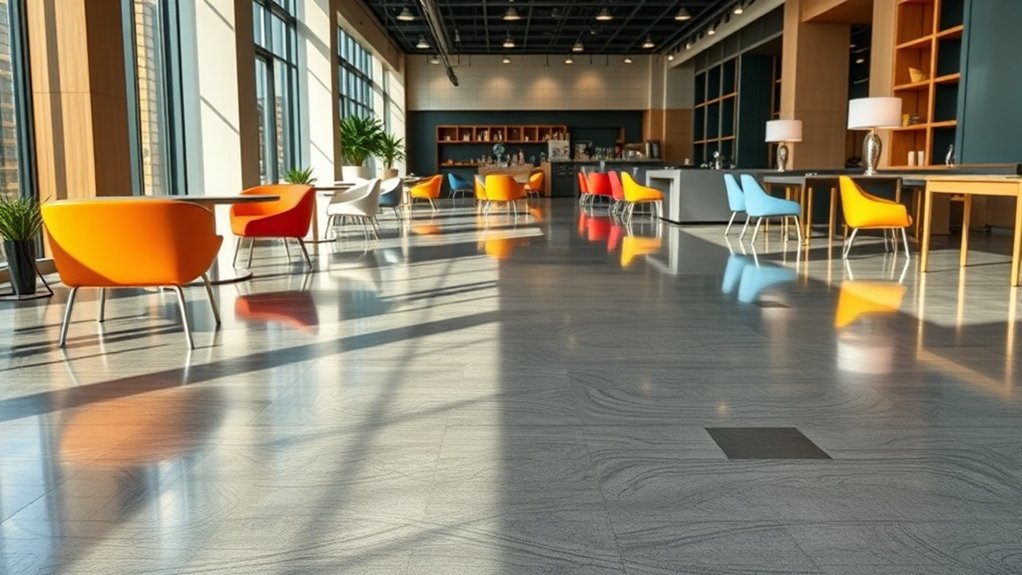
When it comes to concrete flooring, the options for customization are virtually endless, allowing you to personalise the look for both indoor and outdoor areas.
You can select from a variety of finishes, colours, and textures to create the desired appearance for any setting. This flexibility not only enhances your design but also ensures the flooring meets practical needs, especially in busy spaces.
For instance, a polished concrete finish can add a sleek modern touch to a living room, while a textured surface can provide better grip in an outdoor patio.
Customization Options Available
Concrete flooring provides an impressive array of customisation options that boost both design flexibility and aesthetic appeal.
You can personalise your floors to reflect your brand while ensuring they remain durable. Here are some key features:
- Colour blending: Use integral colours, stains, or dyes for vibrant, long-lasting shades that match your brand’s colour scheme.
- Pattern stamping: Imitate materials such as wood or stone, enhancing the visual texture without the added expense.
- Logo integration: Embed your company logo directly into the flooring for a lasting emphasis on brand identity.
- Finishes and sheens: Select from high-gloss to matte finishes, affecting both the look and maintenance requirements.
These options enable you to create a distinctive environment that stands out while fulfilling practical needs.
Indoor and Outdoor Use
Whether you’re creating a busy commercial interior or a welcoming outdoor area, concrete flooring is a versatile choice for both settings.
Inside, its durability can handle heavy foot traffic, and finishes like polished or stained concrete can enhance the look of spaces like reception areas and break rooms.
For outdoors, polyaspartic coatings provide protection against UV rays and weather, while stamped or exposed aggregate concrete adds texture and can mimic more expensive materials, boosting curb appeal.
With low maintenance and a range of custom designs, concrete delivers both practicality and style, making it ideal for any high-traffic commercial space, whether indoors or outdoors.
Health and Safety Advantages
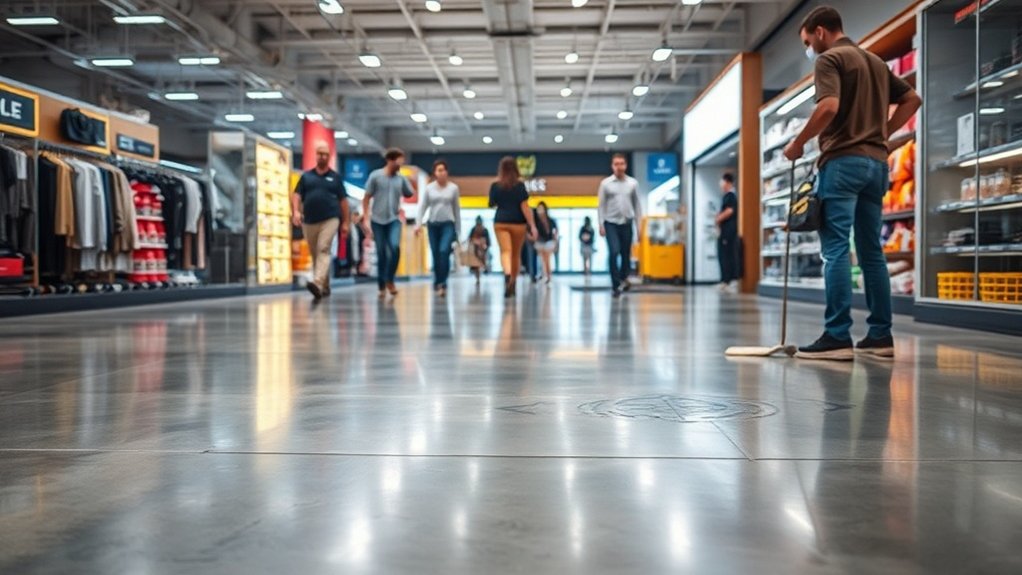
Polished concrete is an excellent flooring choice that prioritises health and safety, especially in high-traffic commercial environments.
Here are some key advantages:
- Customisable anti-slip sealers provide enhanced traction, reducing the risk of slips and falls.
- The non-porous surface resists stains and bacteria, making cleaning straightforward and promoting hygiene.
- Smooth finishes eliminate tripping hazards, creating safer walking conditions.
- Its durability means it withstands damage, reducing injury risks from worn surfaces.
Choosing polished concrete not only creates a safer environment but also fosters a healthier workplace, meeting stringent safety standards and improving overall efficiency.
Thermal Performance and Energy Efficiency
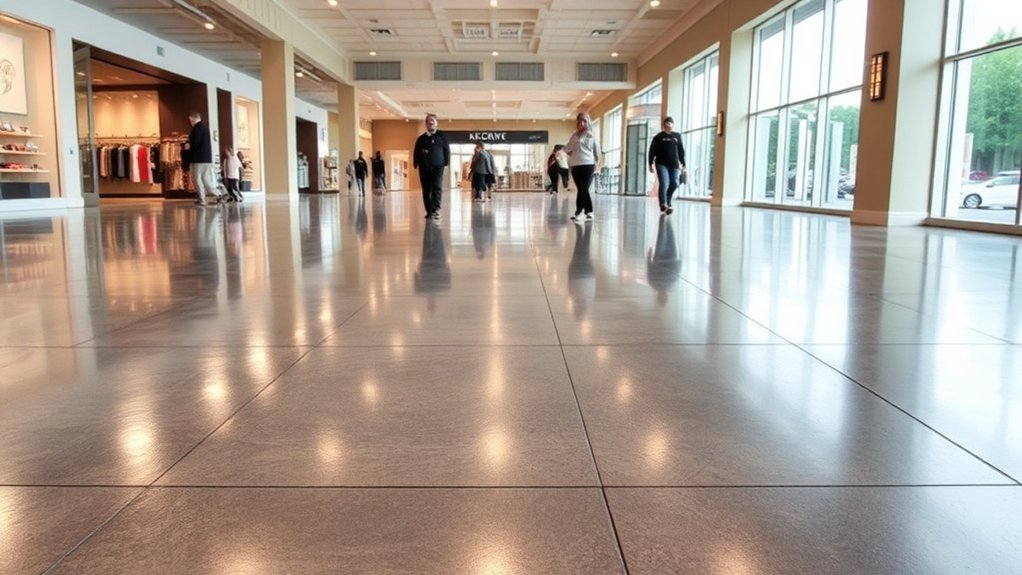
In busy environments, polished concrete offers more than just health and safety benefits; it also delivers excellent thermal performance and energy efficiency.
Concrete’s high thermal mass allows it to absorb and retain heat, helping to stabilise indoor temperatures and reduce fluctuations. During the day, it gathers heat and gradually releases it at night, leading to significant energy savings. This natural regulation decreases reliance on HVAC systems, which lowers operational costs.
In multi-storey buildings, suspended concrete floors further enhance thermal performance, optimising energy use. By pairing concrete’s thermal properties with effective insulation, you can boost efficiency and support sustainability goals.
Choosing concrete isn’t just a smart decision; it’s a long-term investment in energy efficiency and cost-effectiveness.
Frequently Asked Questions
How Long Does the Installation Process Typically Take?
The installation process usually takes a few days, which includes essential preparation such as surface grinding and applying the epoxy. It’s advisable to allow 2-3 days for the flooring to fully cure before allowing foot traffic. This ensures the best durability and performance for your flooring.
Can Concrete Floors Be Repaired if Damaged?
Yes, damaged concrete floors can be repaired effectively. Methods such as crack filling and surface restoration ensure longevity and durability, protecting your investment. This maintains a smooth, functional surface that’s perfect for busy areas. For instance, if you have cracks in your garage floor, filling them not only improves appearance but also prevents further damage.
Are There Any Color Limitations for Concrete Flooring?
Concrete flooring provides a wide range of colour options, but there are some limitations. Dye techniques can produce striking shades, but expect slight variations due to the surface texture and porosity. For this reason, it’s crucial to see physical samples before making your final choice.
How Does Humidity Affect Concrete Flooring?
Humidity impacts concrete flooring by raising moisture levels, potentially causing adhesive failures, surface blisters, and decreased strength. For instance, if you install flooring in a damp environment without proper moisture control, you might find it peeling or bubbling over time. It’s crucial to manage moisture effectively during installation and throughout the flooring’s lifespan to ensure its performance and durability.
Is Sealing Necessary for All Concrete Floors?
Sealing is not essential for all concrete floors, but research indicates that sealed surfaces can last up to 50% longer. The advantages of sealing, such as improved stain resistance and enhanced durability, often justify the minimal cost of various sealing methods. For instance, a sealed concrete floor in a busy kitchen can withstand spills and stains much better than an unsealed one. Overall, sealing is a worthwhile investment in most cases.
Conclusion
In high-traffic commercial settings, concrete flooring is a top choice. Its exceptional durability means it can withstand heavy footfall without wear and tear, making it ideal for busy shops, restaurants, and offices. Maintenance is minimal—just a simple sweep and occasional mop will do.
Concrete also offers a range of design options, from polished finishes to decorative patterns, allowing businesses to create an attractive environment without sacrificing functionality. Moreover, concrete is environmentally friendly and energy-efficient, contributing to a sustainable future.
By choosing concrete, you’re not merely installing a floor; you’re investing in a long-lasting solution that supports your business’s success. Don’t overlook the benefits concrete brings!

Just dive into the world of ready-mix concrete and uncover its benefits, uses, and potential challenges waiting for your next Read more

Astonishingly versatile, concrete is essential in commercial construction; discover ten innovative ways it transforms projects and boosts efficiency. Explore the Read more