Hydraulic cement, primarily made from limestone and clay, is indispensable in construction due to its rapid setting and hardening with water. You’ll find it used in underwater structures, foundations, and sewage systems where durability and waterproofing are critical. This cement is perfect for repairing water leaks and cracks in concrete, ensuring the longevity of structures against moisture intrusion. It’s also ideal for marine constructions like piers and seawalls, where its high compressive strength and ability to set underwater are essential. Exploring further will reveal a wider range of applications and techniques that enhance its effectiveness in various construction scenarios.
Key Takeaways
- Used in underwater and marine construction to ensure long-term durability against water exposure.
- Ideal for constructing foundations, roads, and bridges due to its high compressive strength.
- Employed in the repair of concrete cracks, water leaks, and for rapid setting needs in maintenance.
- Applied in building sewage systems, dams, and hydraulic structures to leverage its waterproof properties.
- Utilized in sealing joints and cracks in various construction settings to prevent water ingress and structural damage.
Introduction
You’re about to explore the world of hydraulic cement, a critical material in modern construction. First, you’ll understand its definition and the chemical reactions that set it apart from other cements.
Then, you’ll examine its historical evolution and the unique properties that make it indispensable for water-resistant construction projects.
Definition of hydraulic cement
Hydraulic cement, a critical material in the construction industry, sets and hardens when combined with water due to chemical reactions that occur independently of the water’s content. You’ll find it indispensable for projects demanding durable and waterproof materials, especially in environments prone to moisture.
Its unique properties make it ideal for repair work as it offers rapid setting times and a strong bond that resists further water ingress. Unlike other cements, hydraulic cement expands slightly during the setting process, ensuring a tight, waterproof seal. This makes it perfect for fixing leaks in basements, swimming pools, and other submerged applications.
Brief history and development of hydraulic cement
The exploration of hydraulic cement traces back to ancient civilizations, who first discovered its water-resistant properties and used it extensively in their constructions. As you investigate its history, you’ll find that these early formulations were pivotal in the creation of hydraulic structures that have stood the test of time.
Over centuries, the composition and performance characteristics of hydraulic cement were enhanced greatly. Innovators refined the blend of limestone and clay, understanding that precise calcination and the addition of specific materials could improve its durability and setting time. These advancements have allowed modern hydraulic cement to meet diverse construction demands, ensuring structures aren’t only robust but also capable of withstanding harsh environmental conditions.
Key properties that make it unique
Building on its historical evolution, let’s examine the unique properties that set hydraulic cement apart in modern construction. Its distinct characteristics make it invaluable in various construction scenarios. Here are the key properties:
- High Strength: Hydraulic cement achieves high compressive strength quickly, ensuring structures are durable and robust.
- Versatile: It’s suitable for a wide range of applications, from underwater construction to repairing cracks and crevices.
- Short Working Time: It sets and hardens rapidly, which is critical in situations requiring quick turnaround.
- Heat Generation: During the curing process, it generates heat, which can be a consideration in large volume applications.
- Low Tensile Strength: While strong under compression, it has relatively low tensile strength; reinforcements are often needed for load-bearing applications.
Composition and Types of Hydraulic Cement

You’ll find that hydraulic cement contains key components such as limestone, clay, and gypsum, each serving critical roles in its hardening process and durability.
There are various types of hydraulic cement, including Portland and masonry cement, tailored for different construction needs and environments.
Understanding how these materials compare to regular cement will aid you in choosing the right type for your specific project requirements.
Main ingredients and their roles
Understanding the main ingredients of hydraulic cement and their specific roles is crucial for optimizing its use in construction projects. Each component contributes to the unique properties and functionalities that are essential in various building contexts.
Here’s a look at the key ingredients:
- Portland Cement: Acts as the primary binder, providing strength and durability.
- Slag Cement: Enhances workability and long-term strength, reducing permeability.
- Pozzolan Cement: Improves resistance to chemical attacks and reduces the risk of efflorescence.
- Limestone: Modifies the setting time and enhances color consistency.
- Gypsum: Regulates the setting time, preventing premature hardening.
Each ingredient’s specific role ensures that you’re using the right mix for your specific construction needs.
Different types of hydraulic cement
You’ll encounter various types of hydraulic cement used in construction, each with distinct properties and applications.
Portland cement, the most common type, features a mix of calcium, silicon, aluminum, and iron, and sets quickly when exposed to water.
Slag and Pozzolan cements incorporate industrial by-products to enhance durability and reduce environmental impact.
Portland
Portland cement, a fundamental type of hydraulic cement, is composed primarily of clinker that’s ground with gypsum to achieve the desired setting properties.
- Strength: Exceptional compression strength for structural reliability.
- Durability: Withstands harsh weather and chemical exposure.
- Versatility: Suitable for various constructions from roads to buildings.
- Setting Time: Adjustable setting times for different construction needs.
- Economic: Cost-effective material for large scale projects.
Slag
Slag, a by-product of steel production, plays a pivotal role in certain types of hydraulic cement, enhancing durability and resistance to chemical attack. When you incorporate slag into cement, it improves performance in marine environments, making it ideal for constructing seawalls, dams, and bridges.
| Feature | Benefit | Applications |
|---|---|---|
| Enhanced Durability | Resists chemical attacks | Dams, Bridges |
| Improved Strength | Withstands harsh conditions | Seawalls |
| Reduced Permeability | Prevents water ingress | Marine Structures |
Pozzolan
Pozzolan, a volcanic ash used in hydraulic cement, greatly enhances the material’s durability and environmental resistance. Here’s how it’s pivotal in construction:
- Foundations: Increases load-bearing capacity.
- Walls: Enhances moisture resistance.
- Sewers: Improves chemical resistance.
- Drainage: Aids in preventing erosion.
- Masonry: Boosts bond strength and longevity.
Utilize pozzolan to make sure your structures are robust and resilient!
Comparison with regular cement
Hydraulic cement, distinct from regular cement, incorporates specific materials that react with water to form a water-resistant product. In comparison, regular cement doesn’t set and harden when exposed to water, making hydraulic cement superior in damp environments.
You’ll find advantages in using hydraulic cement, such as its quick setting time and strong resistance to chemical attacks. This makes it ideal for repairing water leaks and underwater structures.
However, there are limitations. The rapid setting time can be a drawback as it requires quick mixing and application. You’ll need to work efficiently to avoid premature hardening. Understanding these differences helps in choosing the right cement type for your construction needs, ensuring durability and effectiveness in your projects.
Major Applications in Construction

You’ll find hydraulic cement essential in various construction scenarios, particularly in environments exposed to water. Its unique properties make it ideal for underwater projects, dams, and other hydraulic structures where durability against moisture is critical.
Additionally, its robustness supports the construction of durable roads, foundations, and sewage systems, ensuring long-term structural integrity.
Underwater and marine construction
In underwater and marine construction, hydraulic cement is essential for building durable piers, tunnels, and seawalls. Its unique properties guarantee that structures withstand the demanding aquatic environment, preventing water ingress and corrosion.
You must select the appropriate cement grade to meet specific structural demands and environmental conditions.
Piers
Piers, critical for underwater and marine construction, rely heavily on hydraulic cement due to its superior water-resistant properties. You’ll find it indispensable for:
- Anchoring: Secures structural stability.
- Bolts: Guarantees robust connections.
- Grout: Fills voids, providing watertight seals.
- Maintenance: Extends pier longevity.
- Setting Times: Quick hardening supports faster construction schedules.
Hydraulic cement’s unique qualities make it pivotal in building durable, reliable piers.
Tunnels
Hydraulic cement proves vital for constructing tunnels, particularly in ensuring structural integrity and water resistance under marine conditions.
You’ll focus on meticulous surface preparation and systematic curing processes to optimize the material’s properties.
Always adhere to strict safety precautions, including the use of appropriate personal protective equipment (PPE), to mitigate risks during the construction phases.
These steps are essential for the longevity and safety of tunnel structures.
Seawalls
Seawalls, essential for coastal defense, employ hydraulic cement to withstand the relentless assault of ocean waves. You’ll find this robust material vital for:
- Fixing damage in existing seawalls
- Constructing durable piers
- Building ponds resistant to water seepage
- Creating long-lasting fountains
- Reinforcing pools to prevent leaks
Each application benefits from hydraulic cement’s water-resistant properties, ensuring structures remain effective and intact against marine environments.
Dams, bridges, and hydraulic structures
Hydraulic cement is essential in constructing durable dams, robust bridges, and other water-retaining structures due to its strong water-resistant properties. When you’re tackling projects involving hydraulic structures, the unique characteristics of hydraulic cement, such as its low temperature sensitivity and quick setting time, make it indispensable. It reacts with water to form a water-resistant seal, which prevents the deterioration of structures like dams and bridges over time.
| Structure Type | Key Benefit | Practical Use |
|---|---|---|
| Dams | Water resistance | Prevents seepage and structural damage |
| Bridges | Durability | Maintains integrity against weathering |
| Hydraulic Structures | Quick setting | Suitable for rapid construction schedules |
Utilizing hydraulic cement in these applications guarantees longevity and functionality, minimizing future repair needs and maintaining structural integrity even under challenging environmental conditions.
Foundations, walls, and floors
When constructing foundations, walls, and floors, you’ll find that hydraulic cement’s rapid curing time and exceptional durability are key to preventing moisture penetration and ensuring structural longevity. Its unique properties make it ideal for various construction needs where water resistance and strength are critical.
Here’s how you can use hydraulic cement effectively in these areas:
- Foundations: Ensures a solid base for buildings, resisting water ingress.
- Walls: Provides robust, moisture-resistant barriers.
- Floors: Creates durable, resilient surfaces ideal for heavy traffic.
- Manholes: Seals and protects against groundwater infiltration.
- Base Plates: Secures structural components with a strong, impermeable bond.
Road foundations and paving
In road construction, hydraulic cement is essential for establishing strong, durable foundations and paving that withstand various weather conditions and heavy traffic. You’ll find that the application techniques for hydraulic cement in road foundations require precision.
Proper mixing and curing are imperative to achieve the desired strength and durability. Using the right machinery, such as pavers and compactors, guarantees that the cement is evenly distributed and thoroughly compacted, which is key for longevity.
Adhering to best practices, it’s important you monitor the hydration process to prevent premature drying, which can lead to cracks. Additionally, ensuring a proper grade and thickness of the cement layer guarantees excellent performance of the road paving, making it resistant to the stresses of daily traffic and environmental factors.
Sewers and drainage systems
For sewer and drainage system construction, you must select hydraulic cement that guarantees water-tightness and corrosion resistance. This choice ensures the longevity and efficiency of your infrastructure, particularly in areas prone to heavy rainfall or high industrial activity.
Key considerations include:
- Durability: Hydraulic cement offers superior resistance to chemical attacks, essential for sewers exposed to industrial waste.
- Sealing Properties: Excellent for preventing leaks, especially in underground and submerged applications.
- Eco-friendly: Supports sustainable construction practices by minimizing environmental impact.
- Cost-effective Maintenance: Reduces the need for frequent repairs and cleaning.
- Compatibility: Works well with diverse construction materials used in roads and urban infrastructure.
These features make hydraulic cement an indispensable material in constructing reliable and efficient sewer and drainage systems.
Repair and Maintenance Uses
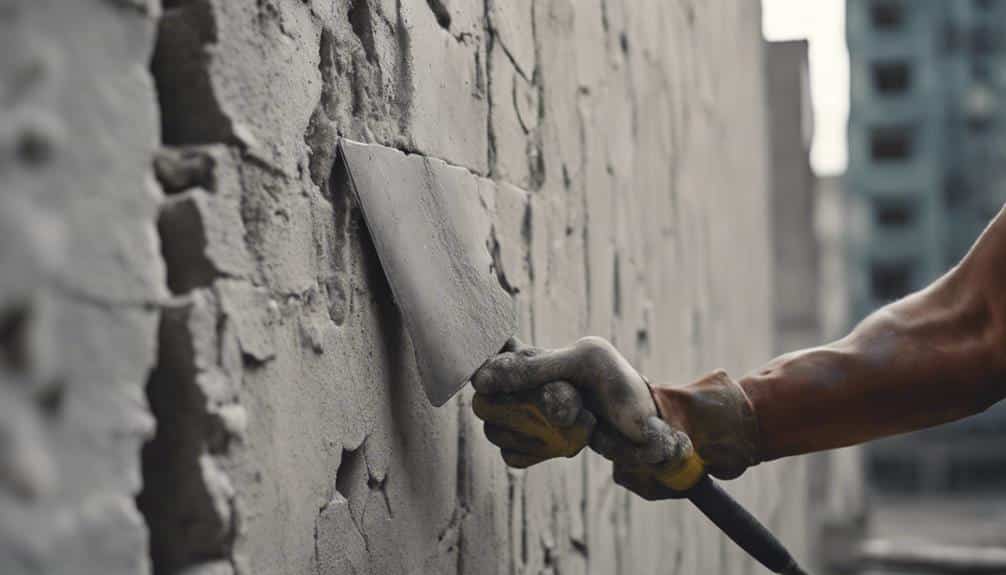
In your construction projects, you’ll find hydraulic cement indispensable for repairing concrete cracks and sealing leaks in basements and masonry.
It’s also essential for tasks like manhole and sewer repairs or anchoring bolts and ornamental iron, where durability and rapid setting are required.
For rapid repairs in industrial settings, this cement provides a quick, robust solution to maintain structural integrity and prevent downtime.
Fixing cracks in concrete structures
When you’re repairing cracks in concrete, whether in foundations, sidewalks, or walls, it’s important to select the right type of hydraulic cement. You’ll need a product that not only fills the gaps effectively but also bonds durably to the existing concrete surfaces.
Make sure the application method you choose prevents further moisture ingress, which is essential for maintaining the integrity of the structure.
Foundations
Many construction projects utilize hydraulic cement to effectively repair foundational cracks and enhance structural integrity. You’ll find its specialized formulations essential for durable repairs. Here’s why it’s preferred:
- Rapid Setting: Sets quickly to reduce downtime.
- Moisture Resistance: Withstands water penetration.
- Shrinkage Compensation: Minimizes cracking after application.
- High Durability: Resists chemical attacks.
- Versatility: Adapts to various environmental conditions.
Stay tuned for new applications and niche future developments.
Sidewalks
Hydraulic cement proves invaluable for repairing sidewalk cracks, ensuring quick, resilient fixes to common pavement issues. Your research into this material’s versatility enhances both practical and decorative projects.
It’s not just about filling gaps; it’s an artistic endeavor to maintain the aesthetic integrity of sidewalks. Choose hydraulic cement for its rapid-setting properties and durability, essential for the long-term maintenance of urban walkways.
Walls
Similarly, hydraulic cement is highly effective for mending fractures in concrete walls, offering robust and swift solutions for structural integrity. Here’s how you’ll benefit:
- Quick Setting: Rapidly seals cracks, preventing further damage.
- Durability: Withstands extreme conditions, akin to essential pulp therapy in durability.
- Versatility: Ideal for ornamental iron and sculptures.
- Waterproof: Effectively blocks moisture infiltration.
- Specialized Applications: Useful in root canal obturation and forming apical plugs.
Sealing leaks in basements and masonry
To effectively seal leaks in basements and masonry, you’ll need to apply hydraulic cement, which quickly sets and blocks water ingress. Just as dental cement is used in endodontics to fill root canals and prevent decay, hydraulic cement fills and seals cracks in concrete and masonry, protecting against further deterioration.
First, clean the crack thoroughly to remove any loose material or debris. Mix the hydraulic cement to a dense consistency, similar to putty. Apply it firmly into the crack, ensuring it’s packed tightly. This cement sets in about 3 to 5 minutes, so work swiftly and efficiently.
Once cured, it forms a watertight seal that withstands further exposure to moisture, preserving the structural integrity of your basement or masonry work.
Manhole and sewer repair
While hydraulic cement effectively seals basement leaks, it’s also indispensable for repairing manholes and sewers. In these environments, you’ll find it’s particularly useful due to its rapid setting time and durability against water pressure.
Here’s how you can apply hydraulic cement in manhole and sewer repairs:
- Crack Sealing: Fill and seal cracks in sewer pipes and manhole walls to prevent water ingress.
- Joint Repair: Strengthen and waterproof joints between precast sections.
- Corrosion Resistance: Apply to areas susceptible to erosion from sewage.
- Inflow Prevention: Address water infiltration points in manhole covers and surrounding concrete.
- Surface Restoration: Rebuild eroded or damaged concrete surfaces inside sewers or manholes to maintain structural integrity.
These applications secure long-lasting repairs in challenging environments.
Anchoring bolts and ornamental iron
Hydraulic cement excels in anchoring bolts and securing ornamental iron, providing a robust solution for both repair and maintenance tasks. When you’re dealing with the installation of heavy-duty fixtures in structures, the rapid-setting nature of hydraulic cement guarantees that bolts stay firmly in place. Its expansive properties help fill voids and grip the iron securely, reducing the risk of structural weaknesses.
To apply, you’ll clean and dampen the surface area, mix the hydraulic cement to a stiff consistency, and then pack it tightly around the base of the bolt or ironwork. This method prevents water infiltration and enhances durability against environmental stresses. Always make sure the mixture is homogeneous to avoid weak spots that could compromise the anchoring.
Rapid repairs in industrial settings
Beyond securing bolts and ironwork, hydraulic cement also excels in facilitating rapid repairs in industrial settings, where downtime must be minimized. You’ll find its quick-setting properties essential when tackling:
- Pipe Leakages: Seals cracks and joints swiftly, preventing costly water damage or chemical spills.
- Foundation Fixes: Stabilizes and strengthens infrastructure foundations against further deterioration.
- Cooling Tower Maintenance: Addresses wear and tear in harsh environments to guarantee operational continuity.
- Loading Dock Repairs: Quickly mends surface damages caused by heavy machinery and frequent traffic.
- Wastewater Tanks: Effectively patches imperfections to maintain the integrity of containment units.
Leveraging hydraulic cement in these scenarios not only cuts down on repair time but also enhances durability, ensuring that your facilities are less prone to future disruptions.
Specialized and Niche Applications
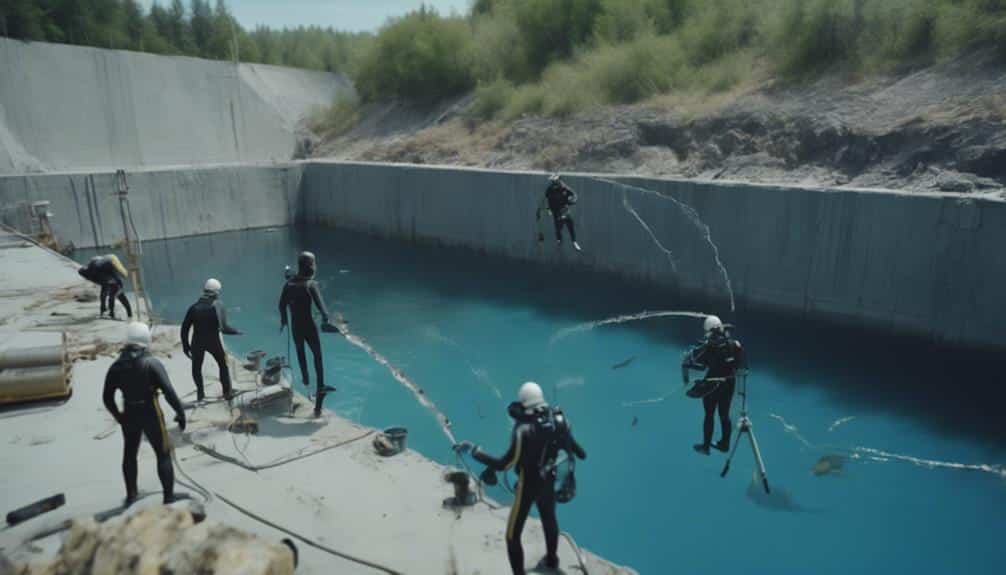
In exploring the specialized and niche applications of hydraulic cement, you’ll find its utility extends beyond standard construction tasks. Its formulation is essential in applications such as rapid-setting grout for securing base plates and heavy machinery.
It plays a key role in the dental and endodontic fields for durable moldings. Additionally, hydraulic cement’s water-resistant properties make it ideal for lining ponds, fountains, and pools, ensuring long-term integrity and leakage prevention.
Dental and endodontic uses
In the domain of dentistry, hydraulic cement plays a pivotal role in essential pulp therapy. It is used to promote healing and maintain pulp vitality.
For root canal obturation, hydraulic cement effectively seals the canal to prevent bacterial reentry and future infections.
Hydraulic cement is also essential for forming apical plugs during endodontic treatments. This ensures a tight seal at the root tip to support tissue regeneration.
Vital pulp therapy
While hydraulic cement is commonly associated with construction, it’s also important in essential pulp therapy, a dental procedure aimed at preserving the health of a tooth’s pulp tissue.
- Biocompatibility: Guarantees minimal irritation to surrounding tissues.
- Sealing Properties: Prevents bacterial infiltration.
- Structural Stability: Supports the tooth’s integrity.
- Fast Setting: Reduces treatment time.
- Radiopacity: Allows for easy monitoring via X-rays.
Root canal obturation
Building on its role in essential pulp therapy, hydraulic cement also serves as an effective material for root canal obturation, ensuring a hermetic seal to prevent bacterial re-entry.
You’ll find its biocompatibility and dimensional stability critical for maintaining tooth integrity.
Its rapid setting time and resistance to dissolution contribute to long-term success in endodontic treatments, effectively safeguarding the periapical tissues from pathogenic invasion.
Apical plugs
Hydraulic cement is also utilized to create apical plugs during endodontic surgeries, providing a durable barrier against microbial penetration at the root tip. Here’s why it’s indispensable:
- Biocompatibility: Guarantees minimal irritation to surrounding tissues.
- Setting Time: Rapid hardening facilitates quicker procedure completion.
- Seal Quality: Offers superior sealing properties.
- Cost-Effective: Reduces overall treatment expenses.
- Ease of Use: Simplifies the application process for endodontists.
Lining ponds, fountains, and pools
You’ll find hydraulic cement essential for waterproofing and structuring when lining ponds, fountains, and pools. Its unique properties make it ideal for these applications where exposure to water is constant.
Hydraulic cement undergoes a hydration reaction, setting rapidly even under water, which prevents the seepage that could weaken structures over time. When you’re applying it, make sure that the surface is clean and moistened before application to enhance bonding.
This cement fills cracks and voids efficiently, creating a solid, impermeable barrier. It’s important to mix only the amount you can use within a few minutes, as its quick-setting nature means it hardens fast, reducing working time but ensuring early water resistance in your construction projects.
Rapid setting grout for base plates and machinery
While hydraulic cement proves essential in water-related structures, it’s also highly effective for rapid setting grout used in securing base plates and machinery. When you’re setting heavy equipment or anchoring structural components, the fast-curing properties of hydraulic cement guarantee minimal downtime and robust support.
Consider these key uses:
- Machinery Installation: Guarantees a stable and level base for heavy machines.
- Anchor Bolts: Fastens bolts securely in concrete for structural stability.
- Base Plates: Provides a solid foundation for columns and beams in construction.
- Equipment Bases: Ideal for setting pumps, compressors, and turbines.
- Repair Work: Quick patching and reinforcement of existing bases or structures.
You’ll find hydraulic cement indispensable for tasks requiring quick, strong setting and lasting durability.
Artistic and decorative uses
In the domain of artistic and decorative applications, you’ll find hydraulic cement‘s unique properties highly beneficial for crafting sculptures and creating detailed molds. Its rapid setting time and superior durability guarantee that your artistic creations withstand environmental stresses while maintaining fine details.
Whether you’re sculpting large-scale public art or intricate decorative pieces, hydraulic cement offers a robust medium that enhances both aesthetic appeal and structural integrity.
Sculptures
Hydraulic cement’s robust and moisture-resistant properties make it an ideal material for crafting durable sculptures exposed to various environmental conditions.
- Weather Resistance: Stands up to rain, snow, and sun.
- Durability: Long-lasting with minimal erosion.
- Versatility: Adaptable to complex shapes.
- Aesthetic Quality: Provides a smooth finish.
- Low Maintenance: Requires little upkeep once cured.
Molds
Specialized molds are essential for achieving precise and intricate designs when using hydraulic cement for artistic and decorative applications. These molds guarantee uniformity and detail, vital for aesthetic projects. Here’s a breakdown:
| Mold Type | Use Case |
|---|---|
| Silicone | Highly detailed figures |
| Plastic | Larger decorative items |
| Rubber | Flexible, complex molds |
Choose the right mold based on the complexity and scale of your project.
Advantages and Limitations

When you utilize hydraulic cement in your construction projects, you’re leveraging its rapid setting time and excellent water-resistant properties.
However, you must also consider its limitations, such as the potential for shrinkage and lower long-term strength compared to other cement types.
Understanding these trade-offs is essential for optimizing your material selection and application techniques.
Advantages
You’ll find that hydraulic cement provides significant advantages in construction projects due to its rapid setting times. Its high strength and waterproof properties guarantee durability and resilience in various building applications.
Additionally, its versatility makes it suitable for repair works as well as new constructions.
Rapid setting
One significant advantage of rapid-setting hydraulic cement is its ability to quickly develop high strength, allowing for expedited construction timelines.
- Minimal Downtime: Resumes operations faster.
- Decreased Labor Costs: Reduces time onsite.
- Early Formwork Removal: Accelerates subsequent phases.
- Weather Resilience: Less vulnerable to climatic delays.
- Patchwork Efficiency: Ideal for urgent repairs.
High strength
High-strength hydraulic cement offers exceptional load-bearing capacity, essential for structural integrity in construction projects.
You’ll find it invaluable for infrastructure that demands durability, like bridges and high-rise buildings.
Its composition enhances tensile strength, reducing the risk of cracks under stress.
This guarantees longevity and stability, making it a top choice for critical structures where failure isn’t an option.
Waterproof
Hydraulic cement’s waterproof properties greatly enhance its effectiveness in environments exposed to moisture and water. Here’s why you’ll find it invaluable:
- *Prevents water penetration*: Ideal for sealing leaks.
- *Reduces dampness*: Protects internal structures.
- *Enhances durability*: Mitigates water-induced deterioration.
- *Minimizes maintenance costs*: Less frequent repairs needed.
- *Improves structural integrity*: Shields buildings from water damage.
Rely on hydraulic cement for robust, waterproof construction solutions.
Versatile
Building on its waterproof capabilities, hydraulic cement also offers remarkable versatility in various construction applications. You’ll find it ideal for sealing joints and cracks in concrete structures where flexibility and strength are paramount.
Whether you’re repairing foundations or patching water-retaining structures, hydraulic cement’s rapid setting time and durability guarantee a reliable solution. It adheres well to old concrete, enhancing structural integrity and prolonging service life.
Limitations
While you appreciate the quick-setting benefits of hydraulic cement in your construction projects, you must also consider its relatively short working time, which can limit adjustments during application.
This material generates significant heat during curing, posing risks of thermal cracking if not managed properly.
Additionally, its low tensile strength and sensitivity to temperature fluctuations necessitate careful use in environments prone to extreme weather conditions.
Short working time
Short working time can complicate project scheduling, as you’ll need precise coordination to avoid premature setting. Here’s what you should consider:
- Rapid curing demands timely application.
- Increased risk of errors in fast-paced settings.
- Necessitates experienced labor for efficient use.
- Limited time for adjustments during application.
- Potential for higher costs due to accelerated work pace.
Heat generation
Hydraulic cement’s significant heat generation during curing can lead to thermal stresses and potential cracking in the structure. You’ll need to monitor temperature gradients closely to mitigate this issue.
Implementing cooling strategies like post-cooling pipes or using materials with lower heat profiles can be effective. Be mindful that large volumes exacerbate this problem, necessitating more complex management techniques to guarantee structural integrity and longevity.
Low tensile strength
Despite its robustness, hydraulic cement has low tensile strength, making it more susceptible to cracking under tension. Here’s what you need to take into account:
- *Reinforcement necessity*: Requires additional materials.
- *Cracking potential*: Higher risk in load-bearing applications.
- *Repair frequency*: May increase maintenance costs.
- *Structural limitations*: Not suitable for all construction types.
- *Flexibility issues*: Less adaptable to dynamic loads.
Temperature sensitivity
Hydraulic cement’s effectiveness diminishes with extreme temperature variations, posing significant challenges during application and curing stages.
You’ll find that low temperatures can drastically slow the curing process, potentially leading to compromised strength. Conversely, high temperatures may cause too rapid setting, risking shrinkage and cracking.
It’s essential that you monitor and manage ambient and substrate temperatures to guarantee peak performance and durability of the cement.
Best Practices for Using Hydraulic Cement

Before applying hydraulic cement, make sure the surface is thoroughly prepped and cleaned to enhance adhesion and efficacy.
You must mix the cement accurately according to manufacturer guidelines to achieve the best consistency and effectiveness.
It’s important to monitor the curing and setting times closely and adhere to recommended safety precautions, including the use of appropriate personal protective equipment (PPE).
Surface preparation and cleaning
To guarantee strong adhesion of hydraulic cement, always start by thoroughly cleaning the surface to remove all dust, debris, and oils. Proper surface preparation guarantees that the hydraulic cement bonds effectively and provides the desired durability and strength.
Here’s a concise checklist to help you prepare the surface correctly:
- Sweeping: Use a stiff-bristled broom to sweep away loose particles.
- Washing: Rinse the area with clean water to remove any remaining dust.
- Drying: Allow the surface to fully dry before applying hydraulic cement.
- Inspecting: Check for cracks or damage that needs repair prior to application.
- Degreasing: Apply a suitable degreaser to remove oil or grease stains effectively.
Following these steps will enhance the performance of the hydraulic cement in your construction project.
Mixing and application techniques
Mixing hydraulic cement correctly is vital for achieving the best consistency and strength in your construction projects. You’ll need to carefully measure the cement and water ratio and blend them thoroughly to avoid any lumps. It’s important to use clean water and tools to prevent contamination that could weaken the mixture. Here’s a quick guide to proper mixing ratios:
| Material | Quantity | Purpose |
|---|---|---|
| Cement | 1 part | Binder |
| Water | 0.25 part | Activator |
| Aggregate | 3 parts | Bulk |
Make sure the mix is homogeneous and use it quickly after preparation to maintain its reactive properties. Apply with firm pressure into the prepped area to ensure good adhesion and fill.
Curing and setting times
After applying hydraulic cement, it’s critical to manage the curing process to optimize the material’s strength and durability. Here are the key points you’ll need to focus on:
- Maintain Moisture: Don’t let the cement dry out too quickly. Continuous curing is crucial for the first few days after application.
- Control Temperature: Keep the curing temperature stable, ideally between 50°F and 70°F, to prevent rapid drying and uneven curing.
- Use Curing Compounds: If maintaining moisture is challenging, apply a curing compound to help retain moisture.
- Timing is Key: Wait at least 24 hours before applying any stress or additional layers.
- Monitor Regularly: Check the material regularly during the curing period to make sure no cracks or improper curing occurs.
Safety precautions and PPE
While focusing on the best curing process, it’s equally important to prioritize your safety by adhering to specific precautions and using the correct personal protective equipment (PPE) when handling hydraulic cement. You must wear long sleeves and pants to prevent skin exposure.
Always use gloves, ideally nitrile or rubber, to protect your hands from chemical burns. Safety goggles are essential to shield your eyes from harmful dust particles.
Considering the alkaline nature of hydraulic cement, which can cause serious eye irritation or skin burns, a dust mask or respirator is also vital to prevent inhalation of fine particles.
Remember to wash your exposed skin thoroughly after handling to remove any cement residue.
Future Developments and Research

As you look toward future developments in hydraulic cement, consider how sustainable and eco-friendly formulations can reduce environmental impact while maintaining material integrity.
You’ll find that improved performance characteristics, such as enhanced durability and reduced curing time, are pivotal for modern construction demands.
Additionally, exploring potential new applications will broaden the scope of hydraulic cement in innovative building techniques.
Sustainable and eco-friendly formulations
Numerous research initiatives are exploring sustainable and eco-friendly formulations of hydraulic cement to reduce environmental impact and enhance durability. As you explore sustainable construction, consider these key innovations:
- Low-Carbon Clinker Alternatives: Researchers are developing clinkers that emit much less CO2.
- Supplementary Cementitious Materials (SCMs): Utilization of industrial by-products like fly ash and slag.
- Alkali-Activated Materials: These require less limestone and lower temperatures during production.
- Calcined Clays: Leveraging locally available clays as SCMs to reduce emissions.
- Carbon Capture and Utilization: Techniques to capture and reuse CO2 in the cement manufacturing process.
These advancements help you contribute to a greener planet while maintaining the structural integrity required in modern construction.
Improved performance characteristics
Building on sustainable innovations, future research in hydraulic cement is now focusing on enhancing performance characteristics such as strength, durability, and resistance to environmental stressors. You’ll see advancements targeting the microstructure of hydraulic cement, aiming to optimize particle size distribution and increase density. This modification reduces porosity, enhancing the impermeability and, ultimately, the durability of structures against corrosive agents.
Additionally, the incorporation of nano-materials is under investigation to further improve the mechanical properties and crack resistance. These enhancements are vital in environments exposed to severe weather conditions and chemical aggressions. By improving these characteristics, you’re not just extending the lifespan of your constructions but also reducing maintenance costs and increasing safety and reliability.
Potential new applications
Exploring new applications for hydraulic cement, researchers are now investigating its potential in creating more resilient infrastructure for coastal areas prone to flooding and erosion. The focus is on tailoring the material properties to withstand harsh environmental conditions, enhancing both durability and sustainability.
Here’s how this innovative approach could transform construction:
- Enhanced Permeability Resistance: Improves the material’s ability to resist water ingress, important for flood-prone zones.
- Increased Erosion Resistance: Strengthens structures against the abrasive action of water and sediment.
- Quicker Set Times: Facilitates faster construction cycles in critical weather windows.
- Lower Carbon Footprint: Develops compositions that reduce greenhouse gas emissions during production.
- Bio-receptive Qualities: Enables the growth of protective microorganisms on surfaces to increase longevity.
These advancements suggest a promising horizon for hydraulic cement in addressing future environmental challenges.
Conclusion

As you reflect on hydraulic cement’s role in construction, consider its versatility and unique properties that enhance building durability and water resistance. Its importance stretches beyond everyday construction to include critical repair and specialized applications where strength and longevity are paramount.
These attributes underscore its indispensable value in modern construction techniques and materials science.
Recap of the versatility and unique properties of hydraulic cement
Hydraulic cement’s ability to set and harden underwater distinguishes it as a critical material for modern construction projects. Its unique properties make it indispensable, particularly where durability and resistance against moisture are required.
Here’s why you should consider it for your next project:
- Rapid Setting Time: Achieves initial set in a few minutes, fully curing within hours.
- Moisture Resistance: Impermeable once set, preventing water ingress.
- Chemical Stability: Resists sulfates and other harsh chemicals.
- Thermal Tolerance: Maintains integrity in varying temperatures.
- Compressive Strength: Offers high load-bearing capacity.
Understanding these attributes, you’re better equipped to leverage hydraulic cement’s benefits effectively, ensuring robust and long-lasting structures in environments where other materials might fail.
Importance in construction, repair, and specialized applications
Given the unique properties of hydraulic cement, it’s invaluable in construction, repair, and specialized applications where traditional materials fall short. You’ll find it essential for structures exposed to water and severe weather because it sets and hardens fast, even underwater.
Its superior bonding strength and reduced shrinkage make it ideal for sealing leaks in concrete and masonry. In restoration projects, hydraulic cement’s compatibility with existing materials guarantees minimal structural disturbance and long-lasting repairs.
Its rapid setting time is vital for time-sensitive repairs, preventing further damage and reducing downtime. In specialized applications such as tunnels and dams, its durability and resistance to chemical attack safeguard structural integrity against harsh conditions.
Frequently Asked Questions
How Does Hydraulic Cement React to Extremely Low Temperatures?
Hydraulic cement rapidly sets and hardens by reacting with water, even at low temperatures. However, its curing speed and effectiveness can decrease in extremely cold conditions, potentially compromising the structural integrity.
Can Hydraulic Cement Be Used Underwater Without Special Treatments?
You can indeed throw hydraulic cement into deep water; it sets and hardens without any special treatments, effectively sealing leaks and cracks in submerged structures due to its unique chemical properties that react with water.
Is Hydraulic Cement Suitable for DIY Projects by Beginners?
Yes, hydraulic cement is suitable for DIY projects by beginners. It’s easy to mix and sets quickly, making it ideal for repairing leaks or cracks in concrete and masonry at home.
What Are the Environmental Impacts of Producing Hydraulic Cement?
Producing hydraulic cement casts a long shadow on the environment, emitting significant CO2 and consuming vast energy. It also depletes natural resources, leading to habitat destruction and increased pollution from mining activities.
Are There Any Health Risks Associated With Using Hydraulic Cement?
Yes, you should be aware of health risks when using hydraulic cement. It can cause skin irritation and, if inhaled, respiratory issues. Always wear protective gear like gloves and masks during handling.
Conclusion
To wrap up, hydraulic cement is essential in modern construction, skilled at setting and curing underwater and in damp conditions. Impressively, it contributes to over 60% of structures worldwide, highlighting its critical role.
Keep in mind, while its rapid setting time is advantageous, it requires precise application. Future innovations promise improved properties and sustainability. As you continue to use hydraulic cement, stay updated on best practices to leverage its full potential efficiently and effectively.
Related Articles

Are you ready to learn the secret of efficient concrete transportation? In this article, we will delve into the intriguing Read more

Is it more cost-effective to mix your own concrete or have it delivered? This article examines the factors to consider Read more

Do you want to ensure the structural integrity of your concrete construction project? Then, rebar is a crucial component you Read more