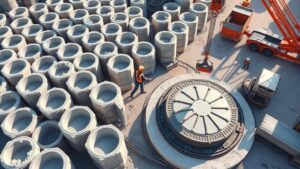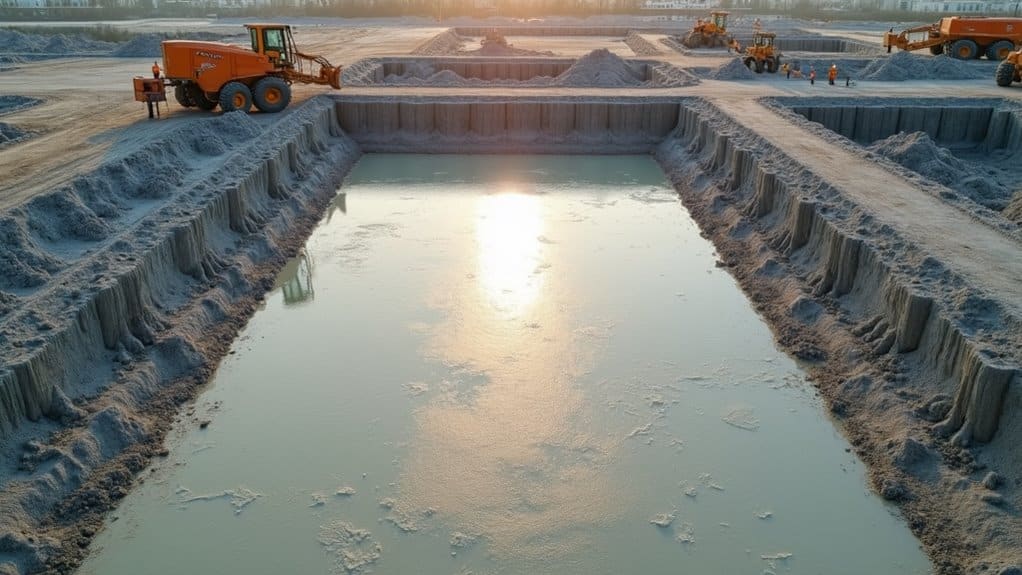
Foamed concrete is sufficiently durable for large commercial projects, thanks to its strong mechanical properties and effective reinforcement methods. With a compressive strength that ranges from 1.0 to 15 MPa, it can support substantial loads when designed correctly. Higher density versions enhance fire resistance and perform well in tough conditions. Innovations like synthetic fibres increase strength, while its lightweight nature simplifies transport and installation.
While some durability factors, such as resistance to freeze-thaw cycles, require further investigation, the benefits of foamed concrete make it a practical choice for significant construction applications. For instance, it can be used in flooring systems or as infill for walls, demonstrating its versatility in various projects.
Key Takeaways
Foamed concrete has a compressive strength ranging from 1.0 to 15 MPa, making it suitable for various structural applications in commercial projects. Higher density foamed concrete enhances compressive strength and fire resistance, making it a practical choice for large-scale constructions.
Incorporating reinforcement techniques, such as steel and fibre, improves load-bearing capacity and impact strength, boosting durability for commercial use. It's essential to focus on proper mix design and curing conditions to achieve the best mechanical performance, ensuring longevity in large commercial applications.
Research is ongoing to enhance durability against freeze-thaw cycles and high temperatures, addressing vital concerns for large commercial projects.
Overview of Foamed Concrete
Foamed concrete, also known as aircrete, is a lightweight and versatile building material. It's made from a mix of water, cement, and foam, with optional additives like sand, Portland cement, limestone, or pulverised fly ash. Its low density affects its mechanical and physical properties, making it ideal for applications such as wall panels, roof insulation, and void filling.
In terms of sustainability, foamed concrete has a lower embodied carbon footprint, making it a more eco-friendly choice compared to traditional materials. It can be easily pumped and self-levelled on-site, which simplifies the construction process. Additionally, its high strength-to-weight ratio makes it suitable for various construction applications while maintaining performance standards. The incorporation of waste materials like soda-lime glass enhances the mechanical properties and sustainability of foamed concrete applications.
However, it's important to note that its compressive strength and elastic modulus are lower than standard concrete, which might restrict its use in high-load-bearing situations. Careful structural design and reinforcement are necessary to ensure it meets the required performance standards.
Moreover, foamed concrete offers good thermal insulation and acoustic performance, enhancing overall building efficiency.
Elevated Temperature Resistance
Elevated temperature resistance is an essential property for foamed concrete, particularly in commercial settings where fire safety is crucial. Interestingly, foamed concrete with a lower density, around 930 kg/m³, offers better fire resistance than denser alternatives like 1250 kg/m³. This is mainly due to how its pore structure responds to high temperatures.
Additionally, foamed concrete that incorporates fly ash as a partial cement replacement maintains its temperature stability across densities from 600 to 1400 kg/m³. The use of additives, such as pozzolanic materials, can further enhance strength at elevated temperatures. Notably, a SiO2/CaO ratio above 2 ensures that the foam concrete doesn't suffer from spalling or explosive behaviour, even at temperatures as high as 1450 °C.
The porous nature of foamed concrete provides excellent thermal insulation, effectively preventing heat transfer. Unlike traditional concrete, it doesn't spall or explode in intense flames. Furthermore, lower density foam concrete is generally more effective at withstanding fire, which is critical for large commercial applications.
However, while it shows strong fire resistance, the effects of high temperatures on its durability, especially in relation to destructive chemical reactions, need further investigation.
Mechanical Properties Assessment
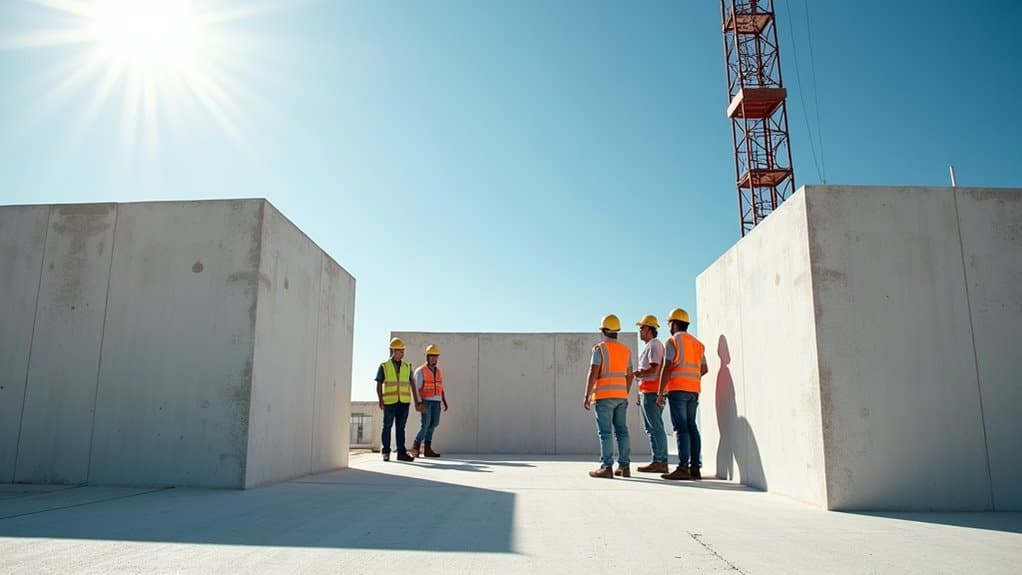
The mechanical properties of foamed concrete are essential for its performance in commercial applications. Compressive tests show that foamed concrete generally has a strength between 1.0 and 15 MPa, depending on the mix design and foam content. Its tensile strength is typically lower than that of standard concrete, but it can vary significantly with the volume of foam used. Adding synthetic fibres can enhance flexural strength, improving its bending performance. Additionally, the use of high-performance concrete in combination with foamed concrete can significantly improve durability in demanding applications.
Standardised test methods are used to evaluate these properties. Compression tests are conducted on cubes measuring 100 × 100 × 100 mm, while flexural strength is tested using prisms of 100 × 100 × 500 mm. For tensile strength, cylinders with a 100 mm diameter and 200 mm height are assessed. Testing is usually carried out at 7, 28, and 56 days, with results based on the average of three specimens.
Factors such as foam content, type of cement, and overall mix design significantly impact mechanical properties. The incorporation of synthetic fibres can enhance these traits, and proper curing conditions can further improve performance. This enhancement is particularly crucial as synthetic fibers (SF) have been shown to improve flexural and tensile strengths, making foamed concrete more suitable for structural applications.
Understanding these factors is crucial for ensuring the reliability of foamed concrete in large commercial projects.
Thermal Performance Advantages
Foamed concrete offers excellent thermal insulation due to its low thermal conductivity, which ranges from 0.05 to 0.2 W/m·K. This effective insulation helps regulate temperatures, leading to significant savings on heating and cooling costs in commercial buildings. Its thermal resistance of 0.4 m·K/W for a thickness of 20 cm ensures effective thermal management in hot and dry climates, making it an ideal choice for sustainable construction. Additionally, using foamed concrete can contribute to energy-efficient manufacturing processes by reducing the overall material volume needed for insulation applications.
Thermal Insulation Benefits
When selecting insulation materials for commercial projects, foamed concrete is a standout due to its excellent thermal performance. With a low thermal conductivity between 0.1 and 0.3 W/m·K, it outperforms many traditional insulation options. For example, a density of 600 kg/m³ achieves around 0.14 W/m·K, significantly boosting energy efficiency.
In applications such as exterior walls and facades, foamed concrete helps maintain stable indoor temperatures, essential for comfort and operational efficiency. In tropical climates, businesses can expect up to a 50% reduction in air conditioning costs, while those in colder regions may see heating load reductions of up to 30%. This adaptability makes it a versatile choice. Additionally, the cellular structure of foamed concrete provides enhanced thermal insulation by trapping air, further improving its efficiency.
Unlike polystyrene foam, which can have low heat resistance and may degrade over time, foamed concrete provides high heat resistance and strong load-bearing capabilities. This combination enhances durability and promotes cost-effectiveness, making it an appealing option for large commercial projects.
Energy Efficiency Contribution
One of the main benefits of using foamed concrete in commercial projects is its excellent energy efficiency. With a low thermal conductivity of 0.1 to 0.3 W/m·K, it significantly reduces heat transfer, which helps lower operational costs. Insulating buildings with foamed concrete can lead to energy savings of up to 50% on air conditioning, especially in warmer climates.
This impressive thermal performance ensures a stable indoor environment, maintaining comfortable temperatures regardless of outside conditions. As a result, you'll need to rely less on heating and cooling systems, further improving energy efficiency. Additionally, the growing emphasis on sustainability in the foam concrete market supports the use of this material, as it aligns with the increasing demand for green building initiatives.
Furthermore, the lightweight properties of foamed concrete reduce structural loads, enabling energy-efficient designs without sacrificing safety or functionality.
Foamed concrete also meets green building standards, ensuring compliance with energy performance regulations for new builds and renovations. Its production uses fewer raw materials, resulting in a smaller carbon footprint and supporting sustainable development goals.
Acoustic Insulation Benefits
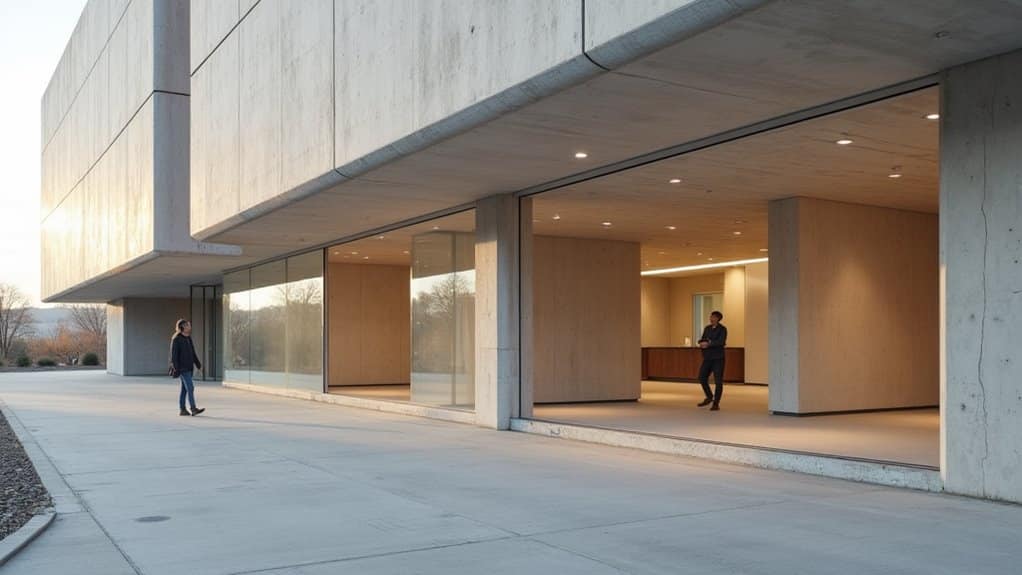
Incorporating foamed concrete into your projects offers excellent sound absorption, effectively minimising unwanted noise. Its flexible design enables you to create customised acoustic solutions tailored to your specific needs. Additionally, foamed concrete can enhance acoustic comfort by acting as a soundproofing material, reducing both impact and airborne sound transmission between spaces.
Exceptional Sound Absorption
Foamed concrete, with its unique cellular structure, offers outstanding sound absorption, making it an excellent choice for both commercial and residential projects. It efficiently absorbs sound, particularly at lower frequencies, without reflecting it, which enhances acoustic comfort in any space.
Using foamed concrete in your sound insulation strategies can significantly boost your project's acoustic design. It outperforms traditional organic insulation materials, providing superior soundproofing for floors and walls. This makes it ideal for creating quieter environments, whether in busy commercial areas or peaceful residential settings.
Additionally, foamed concrete can be easily integrated into various designs, ensuring consistent sound insulation throughout your building. Its durability means these acoustic benefits will endure for years.
Design Flexibility Advantages
Foamed concrete offers significant design flexibility, enabling architects and builders to create innovative acoustic insulation solutions across various environments.
Its distinctive properties allow for exceptional adaptability in both residential and commercial projects.
Here are some key advantages:
- Versatile Applications: Foamed concrete is suitable for a variety of uses, such as walls, roofs, and void filling.
- Lightweight Structure: Its lightweight composition makes it ideal for non-load-bearing walls and low-rise constructions.
- Effective Insulation: The cellular structure ensures excellent acoustic insulation, significantly reducing noise transfer between areas.
- Enhanced Performance: Over time, foamed concrete enhances its thermal and mechanical properties, providing enduring benefits.
Environmental Sustainability Factors
Sustainability in construction is crucial for reducing environmental impacts, and foamed concrete offers several advantages. A key benefit is its reduced carbon footprint. By using less cement, you can significantly lower CO2 emissions during production.
The lightweight nature of foamed concrete also makes transportation and installation more energy-efficient, further enhancing sustainability.
Foamed concrete's lack of coarse aggregates not only cuts down on construction waste but also lessens the demand for natural resources. Its thermal insulation properties help keep indoor temperatures stable, lowering heating and cooling energy consumption.
Plus, incorporating recycled materials as fillers supports circular economy practices and aligns with various environmental certifications.
While foam glass granules can contribute to CO2 emissions, conducting a thorough Life Cycle Assessment (LCA) can help identify and mitigate these impacts. By focusing on the materials used and their emissions, you can ensure that foamed concrete remains a strong contender compared to alternatives like aerated concrete.
Ultimately, choosing foamed concrete for your projects supports sustainable construction practices, conserves resources, and reduces your ecological footprint.
Commercial Applications of Foamed Concrete

Foamed concrete is a versatile material that's increasingly popular in various commercial applications, particularly in construction and infrastructure. Its lightweight properties and unique characteristics align well with market trends, making it a viable option for many projects.
Here are some practical uses:
- Void Filling and Insulation: Ideal for filling trenches and providing both thermal and sound insulation.
- Self-Levelling Construction: It can easily fill complex spaces without the need for vibration equipment, thanks to its self-compacting nature.
- Fire-Resistant Solutions: Suitable for use in fire-prevention facilities, enhancing safety in commercial buildings.
- Cost-Effective Transport: Its lightweight nature allows for easy pumping over long distances, which can significantly reduce transport costs.
These examples show how foamed concrete can be effectively utilised across various sectors.
However, it's important to note that it has a lower compressive strength compared to traditional concrete, which can limit its application in heavy-load situations.
When used in the right contexts, though, foamed concrete can meet structural needs while offering considerable cost savings and efficiency.
As the demand for innovative construction materials rises, foamed concrete is likely to play a growing role in the commercial market.
Load-Bearing Capacity Considerations
When assessing the load-bearing capacity of foamed concrete, it's important to know its strength limitations, which usually fall between 1 and 10 N/mm².
Using the right reinforcement methods can significantly improve its performance in structural applications, particularly in terms of stiffness and resistance to lateral loads.
Strength Limitations Overview
Understanding the strength limitations of foamed concrete is vital for ensuring its suitability in various construction applications. The link between density and compressive strength is key to determining where this material can be effectively used.
Key points to consider include:
- Density and Strength Relationship: Generally, higher density leads to better compressive strength, making density an important factor to consider.
- Typical Compressive Strength: Foamed concrete typically has lower compressive strength than traditional concrete, which may limit its use in heavy-load scenarios.
- Structural Needs Assessment: Engineers must evaluate the specific structural requirements of a project to determine if foamed concrete is appropriate.
- Challenges in High-Rise Construction: Given its lower compressive strength, foamed concrete may not be suitable for high-rise buildings or applications that involve significant loads.
While foamed concrete has advantages such as insulation and lightweight characteristics, its strength limitations should be carefully weighed.
It's crucial to assess these factors alongside your project's needs to ensure that foamed concrete can meet the necessary performance standards.
Reinforcement Techniques Benefits
Effective reinforcement techniques significantly improve the load-bearing capacity of foamed concrete, making it ideal for various commercial projects. By selecting the right types of fibre, you can enhance the material's overall performance.
For example, adding PVA fibres at a concentration of 0.25% can increase compressive strength by 154%, while polypropylene (PP) fibres can boost impact strength by 300% at the same level. Basalt fibres are more efficient than carbon fibres, especially at a volume of 0.1%.
Mixing fibre types can result in even greater advantages. For instance, combining PP and carbon fibres can improve performance by up to 36% with a 1.5% addition of carbon fibres. Additionally, incorporating steel reinforcement can further enhance load-bearing capacity, ensuring that foamed concrete meets the structural requirements of commercial applications.
It's essential to assess the structural design and specific needs of your project. By understanding the benefits of foamed concrete and choosing the appropriate reinforcement techniques, you can leverage its lightweight and insulating properties, making it a suitable option for both load-bearing and non-load-bearing applications.
Impact of Density on Durability
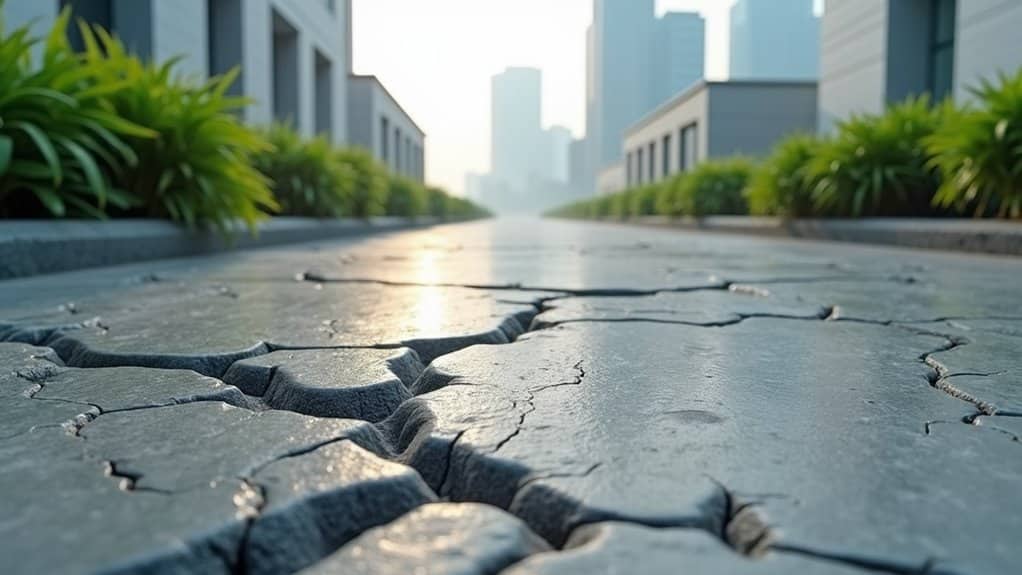
The density of foamed concrete is crucial for its durability as it affects important properties like mechanical strength and thermal insulation. When choosing foamed concrete for large commercial projects, understanding these density effects is essential.
Generally, higher density foamed concrete has better mechanical properties, making it suitable for structural uses. Here are key points regarding density and durability:
- Compressive Strength: Increased density leads to higher compressive strength, improving resistance to applied forces.
- Thermal Insulation: While lower density variants offer superior thermal insulation due to greater air content, they may compromise structural integrity.
- Fire Resistance: Foamed concrete with a density around 1300 kg/m³ demonstrates significantly better fire resistance compared to lower density options.
- Environmental Resistance: Higher density foamed concrete performs more effectively in sulfate environments and withstands freeze-thaw cycles better.
Importance of Reinforcement Techniques
Incorporating reinforcement techniques into foamed concrete significantly improves its mechanical properties, making it more suitable for various commercial applications.
Consider using normal steel reinforcement, Glass Fibre Reinforced Polymer (GFRP), or fibre alternatives like polyvinyl alcohol (PVA) or polypropylene (PP). These strategies enhance material properties, such as compressive strength and impact resistance.
For example, adding Lightweight Expanded Clay Aggregate (LECA) can increase compressive strength by 16.19%, while fibre reinforcement can boost it by up to 154%.
The load capacity of foamed concrete slabs is closely linked to the reinforcement ratio; higher ratios lead to greater capacity and reduced deflection. Moreover, basalt fibre outperforms carbon fibre, particularly at a volume content of 0.1%.
It's crucial to assess structural requirements and design efficiency when applying these reinforcement techniques.
Research Gaps in Durability
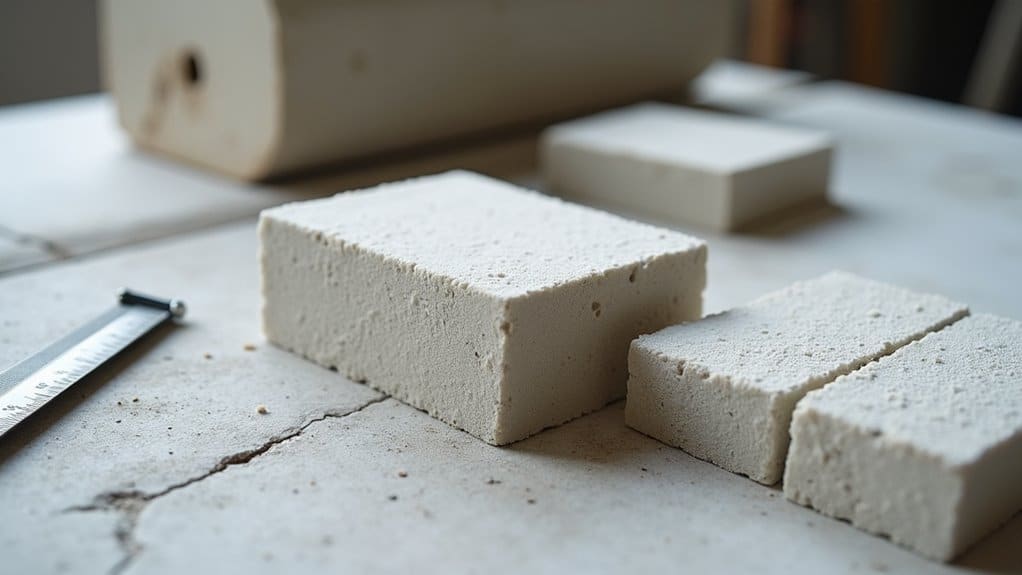
Identifying research gaps in the durability of foamed concrete is crucial for enhancing its use in commercial projects. While existing studies offer useful insights, several key areas need further investigation to ensure its long-term performance.
- Freeze-thaw cycle resistance: There's a lack of research on how the addition of fibres and supplementary materials influences this property.
- Elevated temperature resistance: It's important to understand how density and the use of supplementary cementitious materials behave under high temperatures.
- Carbonation resistance: A significant gap exists in understanding how pore structure and fibre addition affect carbonation rates in foamed concrete.
- General durability: There's a need for standardised testing methods, and long-term durability under various environmental conditions isn't well researched.
Addressing these gaps will be essential for optimising foamed concrete's performance in real-world applications.
Innovations in Foamed Concrete
Innovations in foamed concrete are transforming construction practices, enhancing its versatility and performance for various uses. Notably, the introduction of synthetic-enzyme-based foaming agents has significantly improved foam stability. This advancement allows for the production of lower density foamed concrete without sacrificing structural integrity.
Moreover, new equipment for generating and mixing foam has emerged, facilitating the creation of lighter densities and expanding material scalability for large projects.
In terms of properties, these innovations have led to better thermal insulation and fire resistance, making foamed concrete suitable for diverse environments, including high-risk areas. Its improved strength-to-weight ratio supports structural applications, while its acoustic insulation capabilities help reduce noise pollution, contributing to enhanced indoor quality.
Sustainability is another important aspect of foamed concrete. It has a lower environmental impact, consumes less energy, and can incorporate recycled materials, making it a cost-effective construction solution.
The combination of improved workability and waste reduction makes foamed concrete particularly appealing for applications such as disaster rehabilitation and geotechnical engineering. These advancements are setting the stage for future developments in the construction industry.
Future of Foamed Concrete in Construction
The future of foamed concrete in construction is promising, driven by its adaptability to industry demands while improving structural performance and sustainability. Here are some key advantages:
- Lightweight Properties: This reduces transportation costs and makes on-site handling easier.
- Enhanced Thermal Insulation: It helps create energy-efficient buildings, decreasing heating and cooling costs.
- Versatility: Foamed concrete is suitable for a range of applications, such as non-load-bearing walls and insulation layers.
- Eco-Friendly: It requires fewer raw materials, resulting in a smaller carbon footprint and supporting sustainable construction methods.
However, durability remains a concern. While foamed concrete performs well against freeze-thaw cycles, further research is essential to enhance its resistance to carbonation and chemical exposure.
Strategies like incorporating fibres could improve its structural integrity, making it more suitable for larger projects. By investing in these innovations, the construction industry can fully leverage foamed concrete's potential, ensuring it meets future demands while upholding sustainability and performance.
Frequently Asked Questions
How Does Foamed Concrete Compare to Traditional Concrete in Durability?
Foamed concrete has distinct properties, such as lower density and compressive strength, which set it apart from traditional concrete. While traditional concrete excels in durability and resistance to environmental stressors—making it ideal for structural applications—foamed concrete is often chosen for its lightweight and insulating qualities. For instance, if you're building non-load-bearing walls or need sound insulation, foamed concrete might be the better option. Understanding these differences is crucial for selecting the right material for your projects.
What Are the Best Practices for Maintaining Foamed Concrete?
When handling foamed concrete, it's essential to focus on its qualities and uses. Start by choosing suitable materials, ensuring proper mixing and curing, and conducting regular inspections to maintain its integrity and boost long-term performance. For example, using high-quality foaming agents can significantly improve the material's insulation properties.
Can Foamed Concrete Be Recycled After Use?
Yes, foamed concrete can be recycled after use. A lifecycle assessment shows its potential for recycling, which helps reduce waste and conserve resources. For example, recycled foamed concrete can be used in new construction projects, making it a sustainable choice for building materials.
What Environmental Certifications Can Foamed Concrete Achieve?
When considering environmental certifications, foamed concrete can meet sustainability standards such as LEED v4 and Environmental Product Declarations (EPD). These certifications not only enhance its attractiveness but also effectively address environmental impact and performance criteria. For example, using foamed concrete in construction can contribute to a building's energy efficiency, making it a smart choice for eco-conscious projects.
How Does Weather Impact the Curing Process of Foamed Concrete?
Weather significantly affects the curing of foamed concrete. High temperatures and fluctuating humidity can change the hydration rates, which may result in varying strength and a higher risk of cracking. It's crucial to monitor these conditions to ensure optimal curing results. For instance, on a hot, dry day, the concrete may cure too quickly, leading to potential issues. Keeping an eye on the weather can help you achieve the best outcomes.
Conclusion
In conclusion, foamed concrete offers a promising option for large commercial projects, combining durability with innovative features. It provides notable thermal and acoustic advantages, but its mechanical strength and reinforcement techniques need further investigation. By embracing new developments and addressing research gaps, foamed concrete can become even more attractive for construction. When considering foamed concrete for your next project, you're not just selecting a material—you're investing in a sustainable approach to building.

Learn about the diverse types of concrete used in construction and discover which mix can transform your next project.

For a long-lasting driveway that laughs in the face of the UK's unpredictable weather, the C20 concrete mix is your Read more

In the UK, you've got a a lot of lightweight concrete types to choose from, each with its unique perks. Read more