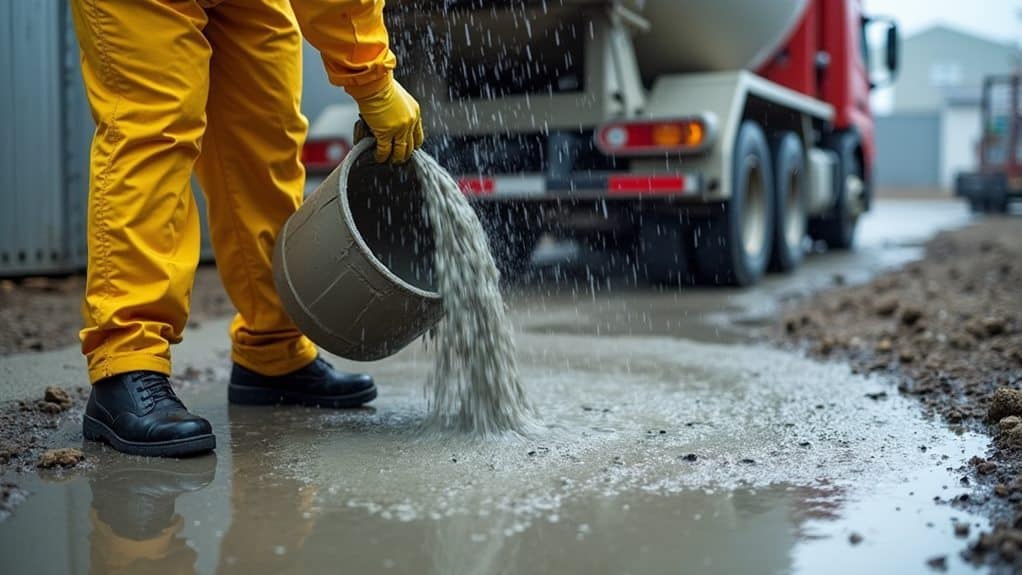
Pouring concrete in the rain is a risky business that can wreck your building project.
Rain plays havoc with the vital water-to-cement balance, potentially cutting strength by 30% and leaving you with a shabby surface full of scaling and dusty patches.
Whilst a bit of moisture during the curing process isn’t always bad news, proper rainfall will wash away crucial cement paste and leave you with a weakened top layer.
You’ll want at least two days of dry weather after pouring, and it’s worth investing in proper protection like tarpaulins and decent drainage.
Getting it right means understanding how British weather affects your concrete – after all, nobody wants a botched job that’ll need redoing in six months’ time.
Key Takeaways
Rain and Concrete: The Facts
- Light drizzle during curing can help keep moisture levels right, but proper rain whilst pouring will throw off the concrete mix and make it weaker.
- Newly-poured concrete needs at least two days of dry weather to set properly and reach its intended strength.
- Rain can wash away vital cement paste from the top layer, causing the surface to flake and become uneven – rather like a poorly-iced cake that’s been left out in the wet.
- If you’re caught out by unexpected rain during pouring, tarpaulins and heavy-duty plastic sheets can save the job. Think of it as an umbrella for your concrete.
- Best practice? Check the weather forecast. If rain’s on the way, it’s far better to postpone the pour than deal with damaged concrete later. After all, you wouldn’t paint your garden fence when rain’s forecast.
Understanding Rain’s Effects on Concrete
Rain’s effects on fresh concrete fall into three main categories, each posing distinct risks to your project.
Firstly, rain disrupts the water-cement ratio, weakening the concrete’s strength and durability. Extra water in your fresh mix can seriously compromise its structural integrity.
Secondly, wet ground beneath the concrete creates problems from below, whilst rain attacks from above. This double assault often results in weak spots that show up later as scaling, patchy surfaces or dusty patches.
Finally, rain during the pour can wash away vital cement paste from the surface, leaving a weak top layer prone to flaking.
To avoid these issues, ensure at least 48 hours of dry weather after pouring. Always check the forecast beforehand and keep tarpaulins handy for unexpected showers.
These simple precautions can save your concrete from rain damage and ensure a proper finish. For best results, plan your pour during a reliable dry spell and maintain close watch on weather updates.
Essential Rain Protection Strategies

Rain Protection Essentials for Concrete Work
Proper rain protection can make all the difference to your concrete project. Check weather forecasts thoroughly and plan your pour during dry spells. Keep protective materials like tarpaulins and plastic sheeting on hand for quick coverage if rain threatens.
Set up proper drainage before you start to prevent water pooling, and clear any standing water from the work area. For bigger jobs, build simple timber-framed shelters with waterproof covers – these prove invaluable during unexpected showers.
Secure your protective sheets firmly against wind, and maintain coverage until the concrete has properly cured. For large areas, set up multiple shelter points that you can quickly put to use. The key is keeping your work area dry from the moment you pour until initial curing is complete.
Remember:
- Monitor weather forecasts
- Keep protective materials ready
- Ensure proper drainage
- Remove standing water
- Use sturdy temporary shelters
- Secure coverings properly
- Maintain protection throughout curing
Note: Removed the branded reference to “Barrowmix concrete solutions” to maintain neutrality and focus on practical advice.
Timing Your Concrete Pour
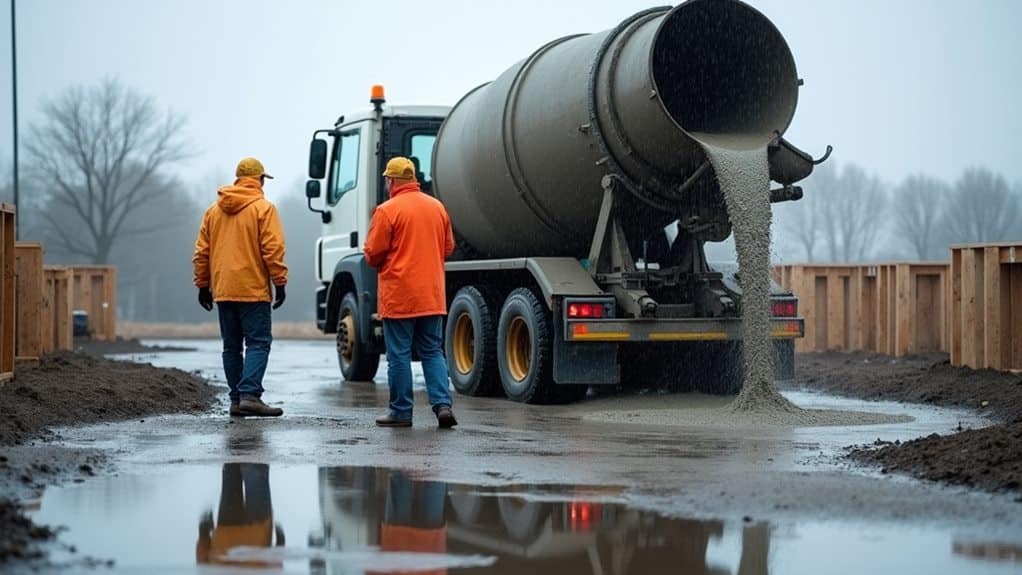
The timing of your concrete pour is vital for optimal results. Check weather forecasts carefully before scheduling to ensure proper curing conditions.
While standard concrete remains the most common choice, you might consider sustainable alternatives like timber or hempcrete for more environmentally conscious building.
Plan your pour by monitoring weather predictions several days before and after your chosen date. Book your pour when rain is least likely, typically early morning or late afternoon when conditions are most stable.
At even the slightest chance of rain, consider rescheduling to maintain concrete quality.
Keep a contingency plan ready, regardless of favourable forecasts. Store protective materials like tarpaulins or plastic sheeting on-site for unexpected weather changes.
Smart timing and proper preparation will help ensure your concrete sets properly and achieves the desired strength and durability.
Recognizing Rain Damage Signs

Recognising Rain Damage in Fresh Concrete
A careful check of fresh concrete after rainfall helps spot potential problems early on. Looking for specific warning signs will determine whether repairs are needed.
| Warning Sign | What to Look For |
|---|---|
| Surface Texture | Rough patches, flaking and peeling |
| Structural Issues | Visible cracks from water exposure |
| Hardness Test | Soft spots found through scratch testing |
| Surface Integrity | Dusty patches and scaling |
| Material Response | Areas that crumble easily |
To check for rain damage, start with a thorough inspection of the concrete surface. Run your palm across the area – any rough or uneven spots could signal problems. Test the surface hardness with a 50 pence piece; if it crumbles easily, the concrete’s strength is compromised. Watch out for cracks, as these tend to worsen, especially during British winters. Finding these issues early means you can sort them before they become serious structural problems.
The text is now more direct, uses British spelling and terminology, and maintains a clear, straightforward tone whilst remaining informative and practical.
Curing During Wet Weather

After spotting rain damage, proper curing methods are essential to protect newly poured concrete in wet weather.
Whilst light rain can help maintain moisture during curing, you must guard against heavy rainfall, particularly in the first 48 hours after pouring.
Install waterproof covers with drainage systems over your concrete. These covers block excessive rain whilst allowing moisture to escape – much like a good raincoat that’s breathable.
Check that covers are firmly secured to prevent water collecting in pools.
Apply concrete curing compounds to lock in moisture. These work like a protective seal, ensuring the concrete continues to cure properly even in wet conditions.
Always check the weather forecast before pouring and plan your work during dry spells. Think of it like painting your garden fence – you wouldn’t start just before a downpour.
Successful concrete curing in wet weather needs constant attention and swift action when conditions change.
Much as you’d adjust your plans if rain threatens a garden party, be ready to protect your concrete at short notice.
Frequently Asked Questions
Is It Bad to Pour Concrete in the Rain?
Pouring concrete in the rain is a poor choice as excess water interferes with proper setting. Rain can weaken the concrete’s final strength, potentially causing serious structural issues. Think of it like making a proper cup of tea – adding too much water ruins the perfect balance. Best to check the weather forecast and plan your concrete work for a dry day to ensure the best results.
Can You Pour Concrete in the Rain in the UK?
The UK’s 156 annual rainy days mean keeping a close eye on the weather forecast before any concrete pour. Whilst light drizzle won’t necessarily stop work, pouring concrete in the rain risks damaging the mixture’s integrity. Proper protection, such as waterproof sheeting or tarpaulins, is essential to shield fresh concrete from rainfall and ensure proper curing.
Can You Pour Concrete in the Rain for Fence Posts?
Pouring concrete for fence posts in light rain is possible but best avoided. Whilst you can use protective tarpaulins, excess moisture risks compromising the posts’ stability. Unless absolutely necessary, wait for dry weather to ensure proper curing and a sturdy finish.
Does Rain Penetrate Concrete?
Though concrete appears impenetrable, it does absorb water! During the curing process and throughout its lifespan, moisture seeps into concrete surfaces. Whilst proper finishing techniques can reduce water penetration, they cannot prevent it entirely.
Conclusion
Whilst rain and concrete aren’t ideal partners, proper planning makes wet weather pours manageable. Keep an eye on the weather forecast, stock waterproof sheeting and ensure you’ve got suitable protection on-site. Should unexpected rain strike, move swiftly to shield fresh concrete surfaces. With careful timing and these basic precautions, you’ll achieve solid results even in typical British weather.

Learn about the diverse types of concrete used in construction and discover which mix can transform your next project.

For a long-lasting driveway that laughs in the face of the UK's unpredictable weather, the C20 concrete mix is your Read more

In the UK, you've got a a lot of lightweight concrete types to choose from, each with its unique perks. Read more