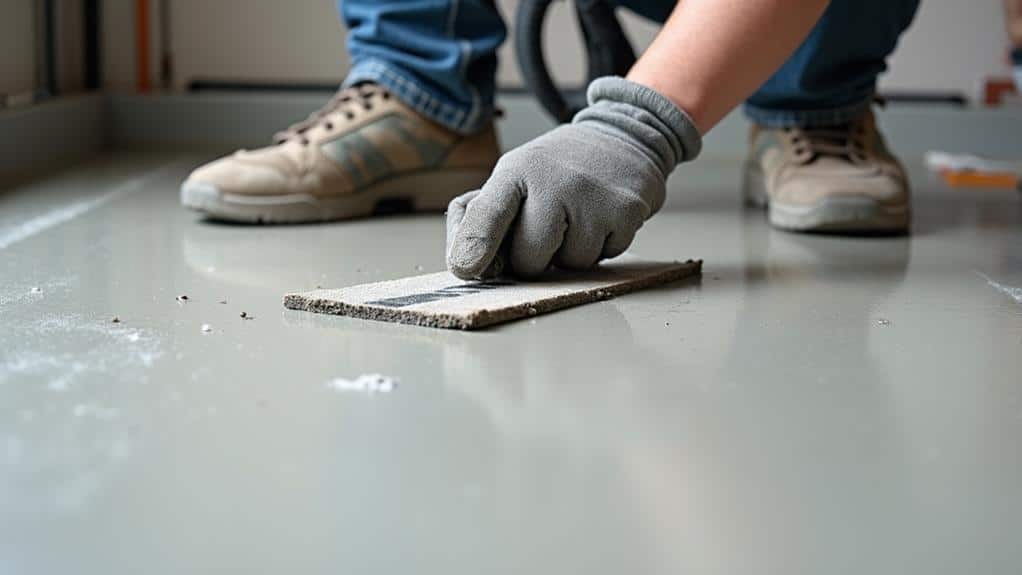
Screeding and underfloor heating are fundamental components of modern flooring systems.
We'll explore the basics of screed types, composition, and installation techniques. You'll learn about the importance of proper screed depth, which ranges from 50-75mm depending on the type used.
We'll cover thermal efficiency, insulation requirements, and common issues like cracking and long drying times. Understanding the impact of screed quality on heat distribution is essential for peak performance.
We'll also discuss maintenance tips and how to choose the right screed for your project. Immerse yourself to master the intricacies of this critical flooring technology.
Key Takeaways
- Screed is a cementitious layer crucial for even heat distribution in underfloor heating systems.
- Proper screed depth is essential: 65-75mm for traditional screed, 50-55mm for liquid screed.
- Insulation beneath heating pipes prevents heat loss and improves overall system efficiency.
- Drying times vary: traditional screed takes about 80 days, whilst liquid screed dries in about 4 weeks.
- Regular maintenance, including leak checks and performance monitoring, ensures long-term functionality of underfloor heating systems.
Understanding Screed Basics
Within the realm of construction and flooring, understanding screed basics is vital for achieving a high-quality foundation. We're dealing with a cementitious layer composed of cement, sand, and water, which plays a critical role in creating a level finish over concrete floors before installing flooring materials.
Sustainable practices in concrete and screed production can greatly reduce environmental impact, with alternative materials like fly ash and slag cement replacing up to 30% of traditional Portland cement. This not only reduces carbon emissions but can also enhance concrete performance.In screed applications, we primarily encounter two types: traditional sand/cement and liquid screed. Each offers distinct advantages. Traditional screed, typically applied at a thickness of 65-75mm, provides a robust base for various flooring options. Liquid screed, on the other hand, boasts faster drying times and self-levelling properties, allowing for thinner applications of 50-55mm.
The screed advantages extend beyond mere levelling. When properly mixed and applied, screed prevents issues like cracking and guarantees even heat distribution in underfloor heating systems.
It's important to note that the quality and composition of the screed mix greatly influence thermal efficiency and overall performance of underfloor heating installations. By mastering screed basics, we can guarantee ideal results in flooring projects, particularly those involving underfloor heating systems.
Types of Underfloor Heating Systems
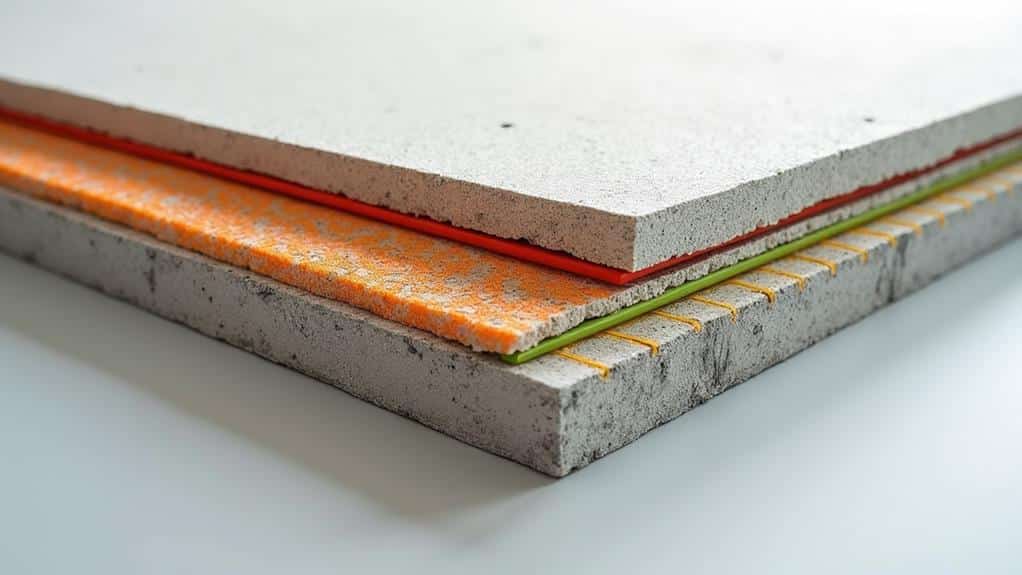
Underfloor heating systems come in two main varieties: electric and water-based. Electric systems utilise heating cables for direct heat, whilst water systems circulate pumped heated water for efficient distribution. Each type offers distinct benefits depending on the project's requirements.
Recent innovations in eco-friendly concrete have shown potential for enhancing water drainage in underfloor heating installations, which could help mitigate flooding risks in prone areas.
Electric systems are typically quicker to install and are often preferred for smaller spaces or as supplementary heating. They're ideal for retrofitting options in existing homes without major renovations.
Water systems, on the other hand, excel in larger areas and can provide significant energy efficiency through even heat distribution.
When considering installation benefits, electric systems generally offer easier implementation, especially in retrofit scenarios. Water systems, whilst more complex to install, can yield greater long-term energy savings.
Space considerations also play a role; electric systems have minimal impact on floor height, whereas water systems may require more vertical space.
Cost comparisons should factor in both initial installation and long-term operational expenses. Smart technology can enhance both types, allowing for programmed optimisation and improved energy efficiency.
We recommend carefully evaluating your specific needs, space constraints, and budget when choosing between these underfloor heating options.
Screed Composition and Properties

We shall explore the composition and properties of screed, an essential component in underfloor heating systems.
Screed typically consists of cement, sand and water, with traditional mixes using a 4:1 sand-to-cement ratio, whilst liquid screeds incorporate finer aggregates.
Recent advancements in concrete technology, such as concrete nitrogenation, have shown potential for reducing environmental impact and improving air quality in urban areas.
The physical characteristics of screed, including its thermal mass properties and recommended thicknesses, play a significant role in the efficiency and performance of underfloor heating installations.
Screed Mixture Components
The foundation of a high-quality screed lies in its carefully balanced mixture of components. We shall explore the key elements that make up an effective screed formulation, focusing on the traditional sand/cement mixture and the more modern liquid screed options.
In traditional screed, we typically use a 4:1 ratio of sand to cement, with water added to achieve the desired consistency. The sand acts as the primary aggregate, whilst cement serves as the binding agent.
For liquid screed, we utilise finer aggregates to create a self-levelling mixture that's faster to install and allows for thinner applications.
When considering screed formulation techniques and aggregate selection criteria, we must prioritise:
- Thermal conductivity for ideal heat distribution
- Minimal drying shrinkage to prevent cracking
- Appropriate thickness for the intended application
The thermal properties of our screed mixture are essential, especially when used with underfloor heating systems. A well-mixed screed enhances heat retention and distribution, improving overall energy efficiency.
Physical Characteristics
Building upon our understanding of screed mixture components, let's examine the physical characteristics that define screed composition and properties. Traditional screed typically employs a 4:1 sand-to-cement ratio, ensuring strength and durability. This composition, however, affects its application thickness, which ranges from 65mm to 75mm for underfloor heating systems.
In contrast, liquid screed offers enhanced workability and can be applied at a minimum depth of 50mm or 55mm. This difference in thickness impacts both thermal conductivity and screed aesthetics. The self-levelling nature of liquid screed contributes to a smoother finish and potentially improved heat distribution.
Both types of screed serve as effective heat stores, essential for even thermal energy distribution in underfloor heating systems. However, their drying times differ markedly. Traditional screed requires approximately one day per millimetre thickness for the first 50mm, whilst liquid screed can dry within days.
These physical characteristics directly influence the screed's performance in underfloor heating applications. By understanding these properties, we can make informed decisions about which type of screed best suits specific project requirements, balancing factors such as installation speed, drying time, and thermal efficiency.
Installation Process and Techniques

Successful installation of underfloor heating and screeding begins with meticulous preparation of the subfloor. We must confirm it's clean, dry and level before laying insulation boards to direct heat upwards. This initial step is vital for maximising heating efficiency and avoiding installation challenges down the line.
Next, we'll evenly install the underfloor heating pipes, avoiding sharp bends and securing them with clips. Arranging the pipes in loops enhances heat distribution.
We'll then apply the screed, verifying it completely covers all heating pipes to prevent cold spots and improve heat transfer.
Proper screed depth is important:
- Traditional screed: 65mm to 75mm thickness
- Liquid screed: 50mm to 55mm thickness
- Depth variation: Depends on installation method
We can't overlook drying time. For liquid screed, we'll expedite post-application drying by gradually increasing the water temperature of the underfloor heating system after the first week.
This process requires patience and precision to achieve the best results.
Screed Depth Considerations

We shall now examine the crucial aspects of screed depth in underfloor heating systems.
Ideal thickness ranges vary between traditional hand-mixed screed (minimum 65mm) and liquid screed (minimum 50mm), with thicker layers offering increased heat retention but longer warm-up times.
It's essential to balance these factors whilst ensuring complete coverage of heating pipes and adhering to maximum depth recommendations to maintain energy efficiency and SAP ratings.
Optimal Thickness Ranges
When considering screed depth for underfloor heating systems, it's vital to strike a balance between heat retention and system responsiveness. The ideal thickness range typically falls between 40mm and 75mm, depending on the installation method and insulation type.
For traditional hand-mixed screed, we recommend a minimum depth of 65mm, whilst liquid screed can be applied as thin as 50mm.
Thicker screeds offer better heat retention but may compromise heating efficiency due to slower warm-up times. Conversely, thinner screeds heat up faster but mightn't provide adequate coverage for heating pipes.
We must carefully consider the trade-offs to maximise screed performance and overall system efficiency.
To enhance your underfloor heating system:
- Analyse your specific insulation and pipe configuration
- Calculate the ideal screed depth for your project's requirements
- Consider the impact on SAP ratings and energy consumption
It's important to note that excessive screed thickness can negatively impact energy efficiency, requiring more power to heat the space.
By selecting the appropriate screed depth, we can guarantee effective heat distribution, superior heating efficiency, and improved system responsiveness.
This careful consideration will result in a well-balanced underfloor heating system that meets both comfort and energy-saving goals.
Impact on Heat Distribution
Three key factors influence heat distribution in underfloor heating systems: screed depth, thermal conductivity, and floor covering. We'll focus on how screed depth impacts heat distribution and system performance.
The minimum recommended screed depth guarantees effective heat distribution and pipe coverage. However, thicker screeds can affect system responsiveness:
| Screed Type | Minimum Depth | Heat Retention | Warm-up Time |
|---|---|---|---|
| Liquid | 50mm | Lower | Faster |
| Traditional | 65mm | Higher | Slower |
| Thicker | >65mm | Highest | Slowest |
Thicker screeds retain heat longer but increase warm-up time, impacting the system's overall responsiveness. It's essential to balance heat retention with desired response times when selecting screed depth.
Screed temperature is directly affected by depth. Thinner screeds heat up faster, allowing for quicker adjustments to room temperature. Conversely, thicker screeds maintain a more stable screed temperature over time.
We must ensure all heating pipes are fully covered by the screed to prevent cold spots and uneven heat distribution. The screed's thermal conductivity also plays an important role, with liquid screed offering superior heat transfer compared to traditional options.
Drying Times and Curing
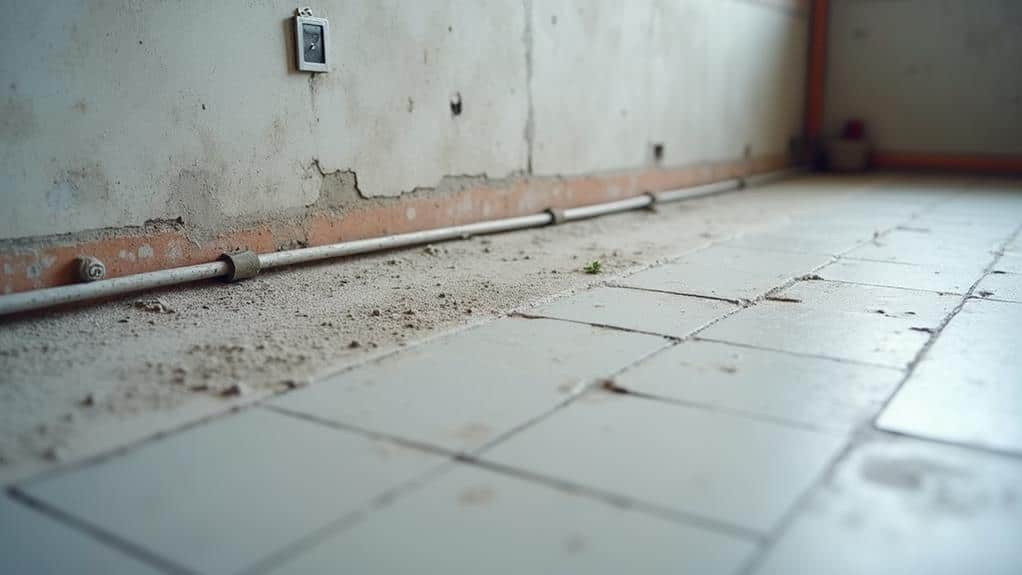
The drying times and curing process for screed are vital factors in guaranteeing a successful underfloor heating installation. We must consider the type of screed used, as hand mixed screed requires considerably longer drying times compared to liquid screed. For a 65mm hand mixed screed, we're looking at approximately 80 days of drying time, whilst liquid screed can reduce this to about 4 weeks under ideal conditions.
Key drying factors and curing techniques include:
- Proper ventilation to prevent moisture damage
- Utilisation of dehumidifiers to accelerate drying
- Controlled heating commissioning to expedite the process
We can begin the initial commissioning of underfloor heating at 25°C after the first week of drying. It's essential to gradually increase the temperature by 5°C daily until reaching a maximum of 50°C. This technique helps expedite the drying process whilst guaranteeing the screed cures properly.
For those seeking mastery in screeding and underfloor heating installation, understanding these drying times and curing techniques is critical. By carefully managing these factors, we can considerably reduce project timelines and guarantee peak performance of the underfloor heating system.
Common Issues and Solutions
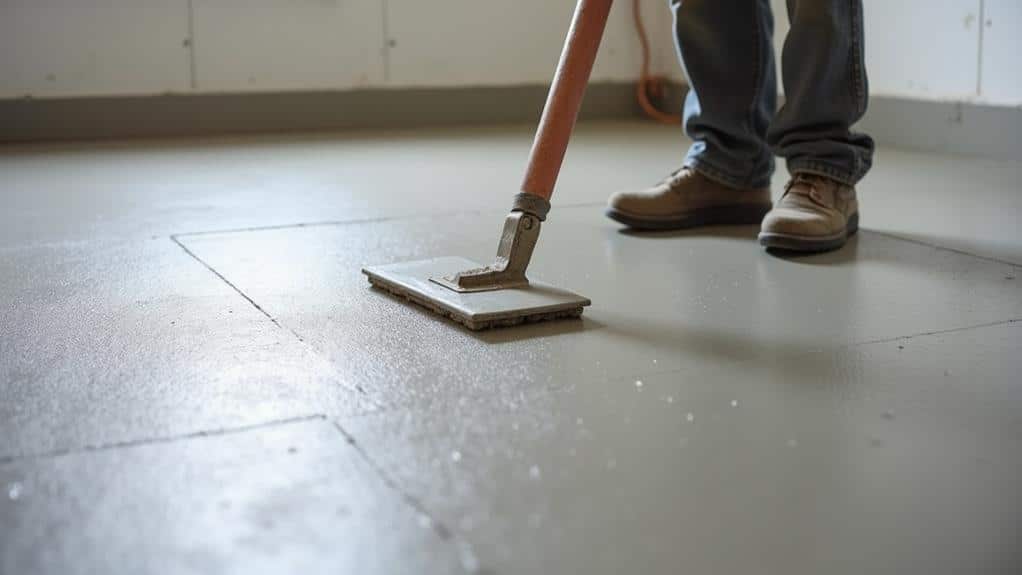
Despite careful planning and execution, several common issues can arise during the installation and operation of underfloor heating systems with screed. One of the most prevalent problems we encounter is screed cracking, which can result from improper mixing or application techniques. To prevent this, we must meticulously adhere to specified mixing ratios and follow proper application methods.
Another significant concern is insufficient drying time, particularly for traditional screed, which requires a minimum of 28 days to cure properly. Rushing this process can damage both the screed and heating elements, compromising the system's integrity. We can mitigate this by opting for liquid screed, which dries faster and offers superior thermal efficiency.
To address thermal movement and prevent cracking during heating cycles, we must install expansion joints and perimeter foam. These components are vital for maintaining the screed's structural integrity and guaranteeing peak heating efficiency.
Regular maintenance checks and performance monitoring are essential for identifying and resolving issues such as leaks and uneven heating. By implementing these preventive measures and promptly addressing any problems that arise, we can secure the long-term functionality and efficiency of underfloor heating systems with screed.
Insulation and Thermal Efficiency
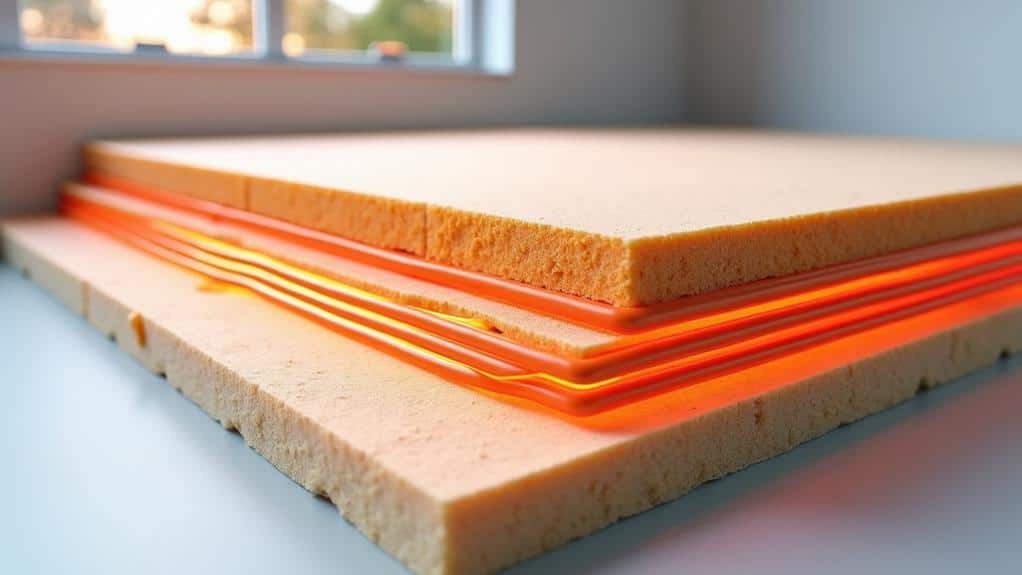
Let's examine the crucial role of insulation in underfloor heating systems.
We shall focus on selecting suitable insulation materials to maximise thermal efficiency and prevent heat loss.
Our discussion will cover recommended insulation thicknesses for different floor types and the importance of insulating external walls to enhance overall system performance.
Insulation Material Selection
Selecting appropriate insulation materials is vital for maximising the thermal efficiency of underfloor heating systems. We recommend using PIR (Polyisocyanurate) boards, known for their high thermal resistance. For ground floors, a thickness of 70mm is ideal, whilst floors over heated areas require 30mm.
Proper insulation placement beneath the heating pipes is imperative, as it prevents heat loss into the subfloor and directs warmth upwards, enhancing overall energy efficiency.
When choosing insulation materials, consider their thermal resistance, or R-value. Higher R-values contribute to better heat retention and distribution, resulting in quicker warm-up times and reduced energy consumption. We advise placing insulation below the heating pipes to maximise these benefits.
To further optimise your underfloor heating system's performance:
- Invest in high-quality insulation types with proven thermal properties
- Ensure precise installation to eliminate thermal bridges
- Consider additional insulation for external walls to reduce overall heating demand
Heat Loss Prevention
Building upon the importance of insulation material selection, we'll now focus on preventing heat loss to maximise thermal efficiency in underfloor heating systems. Proper insulation is vital for directing heat upwards and enhancing energy efficiency.
For ground floors, we recommend using 70mm PIR insulation, whilst 30mm suffices for floors over heated areas.
The thickness and type of insulation greatly impact the system's performance. Inadequate insulation leads to considerable heat losses and increased energy bills. To prevent thermal bridging and maintain consistent temperatures, we must install insulation boards beneath the heating elements. This placement is essential for maximising heat retention and optimising the heating process.
A well-insulated subfloor guarantees the system operates at its peak efficiency, reducing energy consumption and minimising cold spots within the heated area.
By focusing on proper insulation techniques, we can create a more comfortable living environment whilst lowering operating costs. Remember, the goal is to create a thermal barrier that directs heat where it's needed most – into the living space above.
This approach not only improves comfort but also contributes to long-term energy savings and system longevity.
Maintenance and Longevity
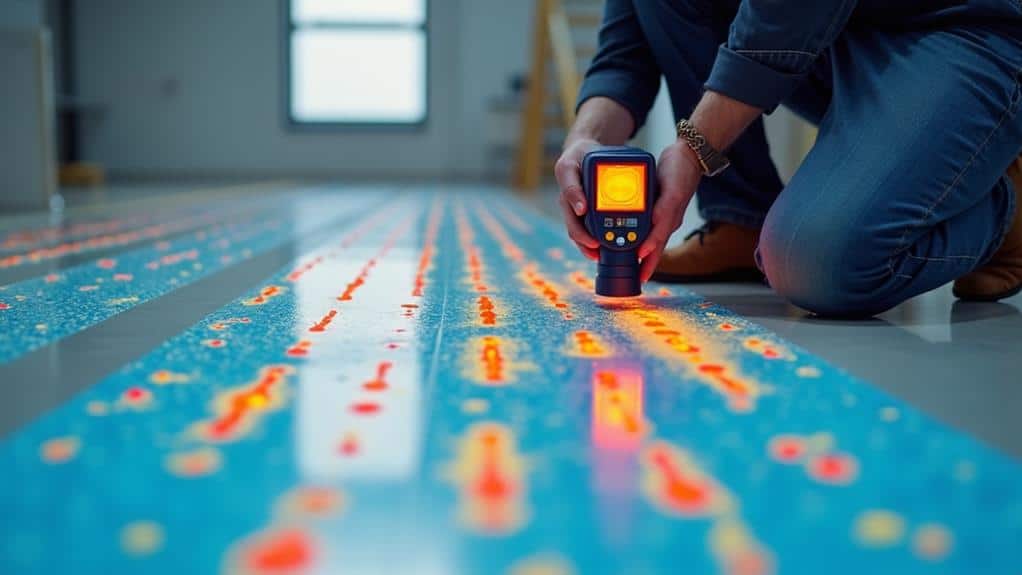
For underfloor heating systems and their associated screeds, maintenance and longevity go hand in hand. Regular maintenance checks are essential for identifying issues like leaks and uneven heating, ensuring peak system efficiency throughout the system's lifespan, which can exceed 30 years with proper care.
We recommend implementing preventive measures, such as insulating primary pipework and manifold assemblies, to enhance energy efficiency. It's also important to ensure these components are easily accessible for future maintenance and repairs.
Seasonal adjustments to heating settings are crucial for adapting to varying weather conditions and user preferences, further improving system performance. We must also monitor maximum floor surface temperatures to prevent overheating, which could damage both the screed and flooring materials.
To maximise the longevity of your underfloor heating system and associated screed, consider the following:
- Schedule annual professional inspections to catch potential issues early.
- Implement a thorough maintenance plan, including regular cleaning and calibration.
- Document all maintenance activities and system performance to track long-term trends.
Choosing the Right Screed

Three vital factors come into play when choosing the right screed for underfloor heating systems: thickness, drying time, and material composition.
When considering thickness, we must account for the amount of pipework. Traditional screed typically requires 65-75mm, whilst liquid screed allows for a minimum of 50-55mm. This reduction in thickness can be advantageous in certain construction scenarios.
Drying time is another important aspect of screed selection. Liquid screed offers a faster drying period compared to traditional options, potentially reducing project timelines. We can expect an initial drying period of about 7 days for liquid screed, after which we can gradually commission the underfloor heating to expedite the process.
The quality of the screed mix, including the sand-to-cement ratio and aggregate size, directly impacts the system's performance and finish.
To guarantee heating compatibility and maximise thermal efficiency, it's essential to consult experts. They can help us select a screed type that's compatible with both the heating system and the intended floor covering.
Frequently Asked Questions
Do You Put Underfloor Heating Under a Screed?
We don't put underfloor heating under screed; we install it on insulation boards first. Then, we apply screed over the heating pipes. This method maximises screed benefits and heating efficiency, ensuring ideal heat distribution throughout the floor surface.
What Is the Screed Specification for Underfloor Heating?
For underfloor heating, we recommend a screed thickness of 50-75mm, depending on the type utilised. Liquid screed permits thinner layers, whilst traditional screed necessitates greater thickness. Proper depth ensures maximum heating efficiency and uniform heat distribution across the floor surface.
How Long to Leave Screed Before Underfloor Heating?
We've waited ages for our screed to dry! Jokes aside, screed drying time varies. For hand-mixed screed, we'll wait about 80 days for a 65mm thickness. Liquid screed types are quicker, requiring only 4 weeks before turning on underfloor heating.
Do I Need to Pressurise Underfloor Heating Before Screed?
Yes, one must pressurise underfloor heating before screeding. It's essential for detecting leaks and ensuring proper pipe positioning. This step also impacts screed thickness and heating efficiency, contributing to the system's overall performance and longevity.
Conclusion
We've delved into the intricate world of screeding and underfloor heating, yet ironically, the smooth surface we've created is anything but straightforward. We've pored over types, compositions and techniques, only to discover that the real challenge lies beneath our feet. As we warm our homes, we're cooling our wallets, balancing comfort with efficiency. In the end, we're left standing on a solid foundation of knowledge, ready to make informed decisions about our flooring future.
Looking to order ready-mix screed? Barrow Mix supplies flowing and traditional screed, mixed fresh across Greater Manchester & Cheshire.
Get a free quote →
Learn about the diverse types of concrete used in construction and discover which mix can transform your next project.

For a long-lasting driveway that laughs in the face of the UK's unpredictable weather, the C20 concrete mix is your Read more

In the UK, you've got a a lot of lightweight concrete types to choose from, each with its unique perks. Read more