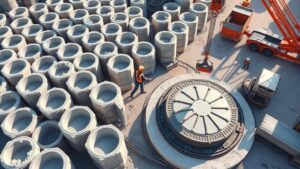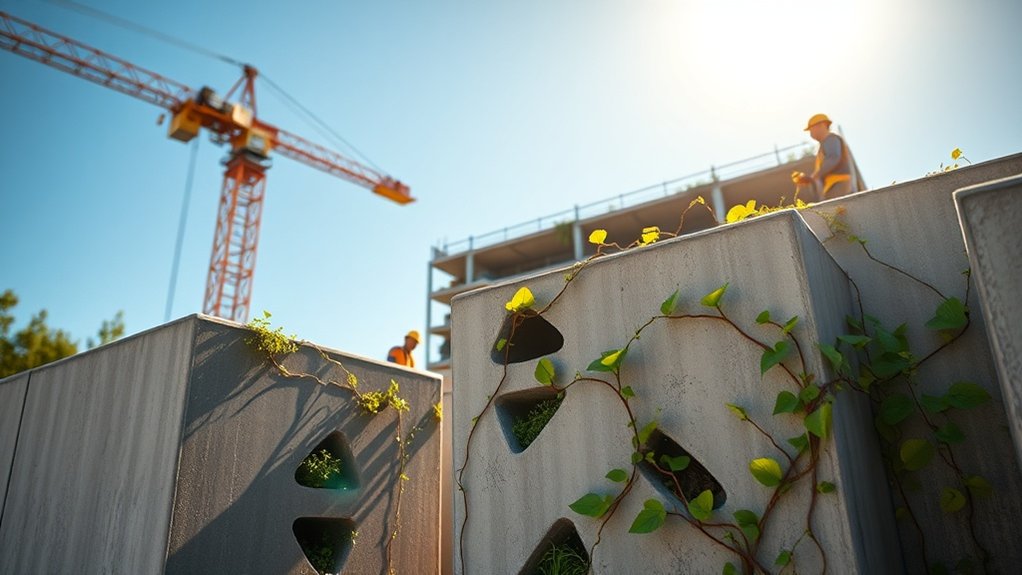
Sustainable concrete solutions are effectively reducing carbon footprints through innovative methods like Supplementary Cementitious Materials (SCMs) and CarbonCure technology. SCMs can cut emissions by as much as 38%, while CarbonCure captures CO₂, which not only strengthens the concrete but also reduces material costs. Companies are adopting eco-friendly practices, and new materials are being developed. Although there are challenges in scaling these solutions, regulatory measures are encouraging low-carbon options, promoting sustainability in construction. These advancements have significant implications for the industry.
Key Takeaways
- Supplementary Cementitious Materials (SCMs) can cut greenhouse gas emissions by up to 38% while enhancing concrete durability and lowering energy usage during production.
- CarbonCure technology captures CO₂, boosting concrete strength and permanently embedding carbon in the concrete mix, which helps reduce raw material costs.
- Using high-performance clinker alternatives and sourcing raw materials locally are crucial for creating reliable low-carbon concrete solutions and minimising emissions.
- Regulatory measures and green certifications are increasing demand for sustainable materials, encouraging the use of low-carbon concrete in construction projects.
- Innovations such as fibre-reinforced concrete, self-healing concrete, and geopolymer technology significantly reduce carbon emissions and improve material efficiency in construction.
The Cement Industry’s Role in Global Carbon Emissions
The cement industry is responsible for around 8% of global man-made CO2 emissions, making it crucial to assess its role in climate change and consider possible solutions. A significant portion of these emissions comes from energy-intensive processes and chemical reactions, particularly limestone calcination, which accounts for about half of the total emissions. Concrete production accounts for nearly 8% of global carbon dioxide emissions, underscoring the urgency of addressing these challenges. If we continue with current methods, emissions could soar to 3.8 billion tonnes a year by mid-century, worsening environmental issues.
Moreover, the industry releases harmful air pollutants that pose health risks, particularly to vulnerable communities living near cement plants. Tackling these challenges requires innovative technologies and sustainable practices that can reduce emissions and enhance air quality.
Decarbonization Pathways for Cement Production
To effectively reduce carbon emissions in cement production, focus on using low-carbon materials and implementing carbon capture technologies. By replacing traditional feedstocks with alternatives such as basalt and industrial waste, you can significantly lower your carbon footprint. Moreover, adopting carbon capture and storage (CCS) will help capture any emissions that still occur, making your operations more sustainable. The global carbon emissions from cement production have more than doubled since 2000, highlighting the urgent need for these sustainable practices.
Low-Carbon Materials Utilization
The cement industry faces considerable challenges in cutting its carbon emissions, but low-carbon materials present viable solutions for decarbonisation. By adopting low-carbon innovations, you can reduce the use of clinker through supplementary cementitious materials (SCMs) such as fly ash and slag. This sustainable approach not only cuts emissions but also ensures high-quality performance in blended cements. Recent funding from the DOE for low-carbon cement projects underscores the growing commitment to reducing the cement sector’s carbon footprint.
| Method | Impact on Emissions |
|---|---|
| Clinker Substitution | Reduces CO2 by incorporating SCMs |
| Alternative Raw Materials | Utilises carbon-free feedstocks |
| Fuel Switching | Decreases energy-related emissions |
Carbon Capture Technologies
Carbon capture technologies are vital for reducing greenhouse gas emissions in cement production. Here are some key methods currently in use:
- Post-combustion capture: This method employs amine-based solvents and can achieve up to 95% capture efficiency.
- Oxyfuel combustion: By using pure oxygen instead of air, this technique simplifies the separation of CO2.
- Integrated carbon utilisation: This innovative approach captures CO2 and utilises it to produce methanol using hydrogen.
- Emerging pre-combustion techniques: While these methods target energy-related emissions, their application in cement production is currently limited.
- Energy considerations: Each of these methods demands extra energy for processes such as regenerating solvents or producing oxygen.
Understanding these technologies is crucial as we move towards more sustainable cement production.
Benefits of Supplementary Cementitious Materials
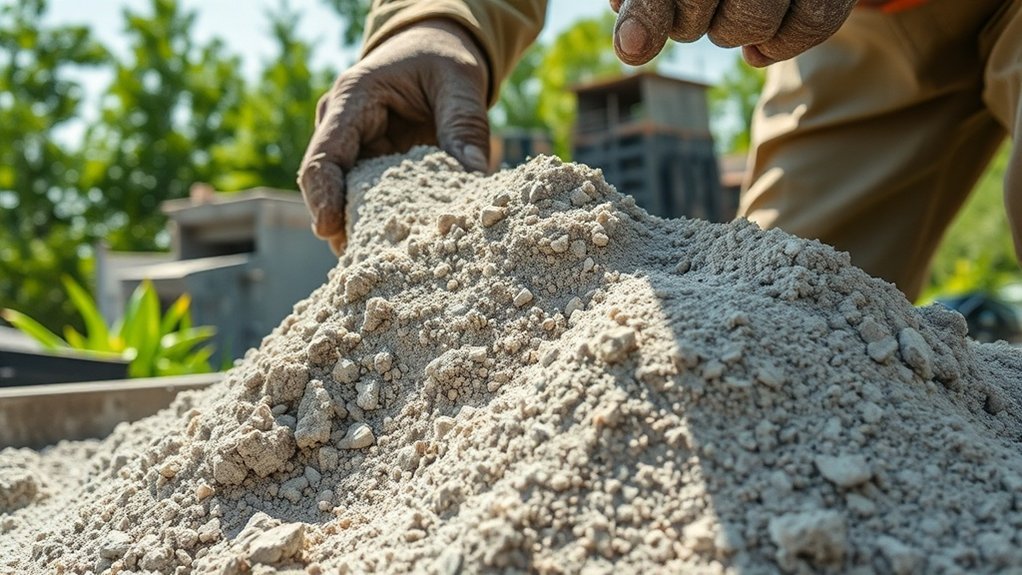
Supplementary Cementitious Materials (SCMs) provide key benefits for making concrete more sustainable and efficient.
By using SCMs, you can cut greenhouse gas emissions by up to 38% and reduce energy consumption in production by 29%.
These materials improve durability through secondary pozzolanic reactions, resulting in increased strength and lower permeability.
Additionally, they help save costs by reducing raw material expenses and enhancing material efficiency.
SCMs also promote waste reduction by repurposing industrial byproducts like fly ash and slag.
Advancements in CarbonCure Technology
In the pursuit of sustainable concrete solutions, advancements in CarbonCure technology are significantly reducing carbon emissions during concrete production.
This innovative approach utilises captured CO₂ to improve concrete mineralisation, offering several key benefits:
- Injected CO₂ creates nano-scale calcium carbonate, boosting strength.
- Carbon is permanently trapped within the concrete matrix.
- Reduces cement content by 3–6%, lowering raw material costs.
- Complies with ASTM C494 and ACI 211 standards.
- Enables real-time monitoring of CO₂ savings.
These advancements not only help the environment but also make economic sense for the construction industry.
Structural Optimization for Lower Carbon Footprints
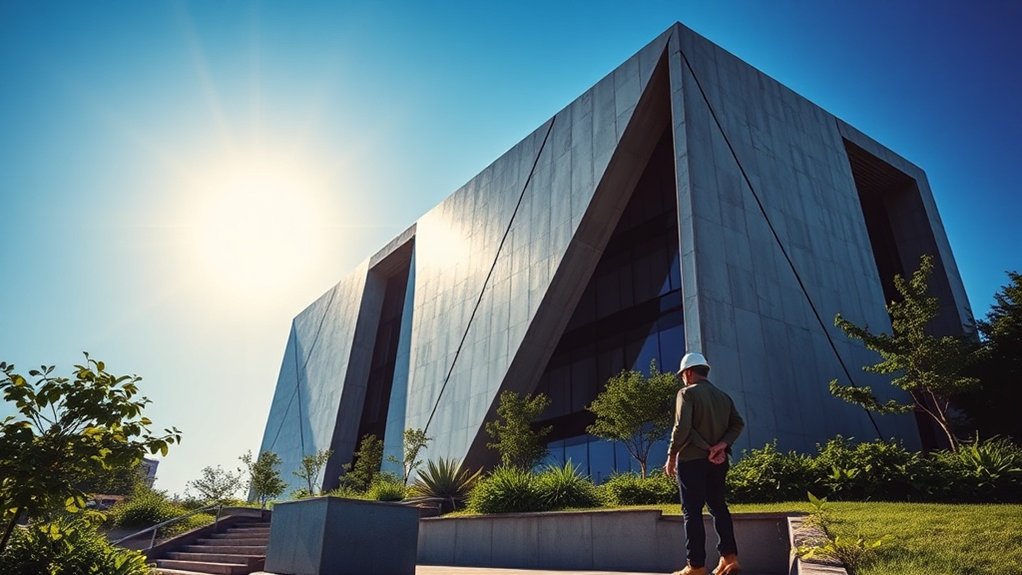
Optimising structural design is crucial for reducing carbon footprints in concrete construction, and it requires a strategic approach that balances material efficiency with strength. You can significantly lower emissions by collaborating with suppliers and teams to focus on structural efficiency. This includes using optimised mix designs that reduce concrete volume by 10-15% while enhancing strength. Additionally, incorporating supplementary cementitious materials (SCMs) and lighter materials can further boost efficiency.
Here’s a summary of key strategies:
| Strategy | Impact on Emissions | Benefits |
|---|---|---|
| Optimised Mix Designs | -10-15% volume | Reduced material usage |
| Recycled Aggregates | Lowers carbon footprint | Decreases waste |
| Smart Structural Systems | Up to 22% reduction | Enhanced performance |
| Modular Construction | Reduces waste | Higher efficiency |
| Carbon Sequestration Techniques | Captures CO2 | Sustainable lifecycle |
Challenges in Scaling Low-Carbon Concrete Solutions
Scaling low-carbon concrete solutions involves tackling significant supply chain issues that can affect availability and drive up costs.
It’s also crucial to validate the technical feasibility of these alternatives, as inconsistent performance may hinder their acceptance in the construction sector.
To overcome these challenges, the industry must engage in strategic planning and collaboration to ensure a reliable supply and effective implementation.
Material Supply Chain Issues
Addressing material supply chain issues is crucial for scaling low-carbon concrete solutions. Here are the key challenges affecting raw material availability and supply chain resilience:
- High-performance clinker production requires reactive calcium, which limits scalability.
- Current cement supply chains face constrained availability, resulting in unreliable imports.
- Local sourcing of alternative raw materials, such as industrial by-products, is essential.
- Logistics costs and infrastructure gaps hinder the adoption of low-carbon materials.
- Upgrading plants for new low-carbon binders necessitates considerable investment.
To tackle these challenges, focus on enhancing local processing capabilities and improving collaboration among stakeholders.
Technical Feasibility Validation
Material supply chain issues pose challenges for assessing the technical feasibility of scaling low-carbon concrete solutions. Key concerns include performance testing and material compatibility, which are vital for maintaining structural integrity.
Low-carbon concrete can suffer from delamination and inconsistent surface finishes, particularly in high-traffic areas. While adapting mixing and curing techniques may reduce these risks, it demands a certain level of expertise.
Moreover, gaps in carbon footprint measurement complicate evaluations, as many existing software tools lack accuracy. The lack of standardised definitions and outdated building codes further complicate compliance.
To effectively scale these solutions, it’s essential to tackle these technical challenges through thorough testing and foster collaboration among stakeholders, ensuring that low-carbon options meet industry standards without compromising on performance.
Industry Leadership in Sustainable Concrete Practices

As the concrete industry faces mounting pressure to cut its carbon footprint, leading companies are rising to the challenge with innovative solutions that support global sustainability goals.
Through strategic partnerships and industry advancements, these organisations are setting a high standard for others to emulate.
- Holcim’s ECOPact and alternative raw materials significantly reduce emissions.
- Cemex’s Vertua integrates renewable energy and efficient processes.
- Solidia Technologies employs CO₂ curing to produce stronger, more durable concrete.
- SCG’s LC3 Structural Cement achieves a 30–40% reduction in CO₂ emissions.
- New companies are developing closed-loop systems and sustainable materials.
These initiatives demonstrate a commitment to sustainability within the concrete sector and pave the way for a greener future.
Market Trends in Green Building Materials
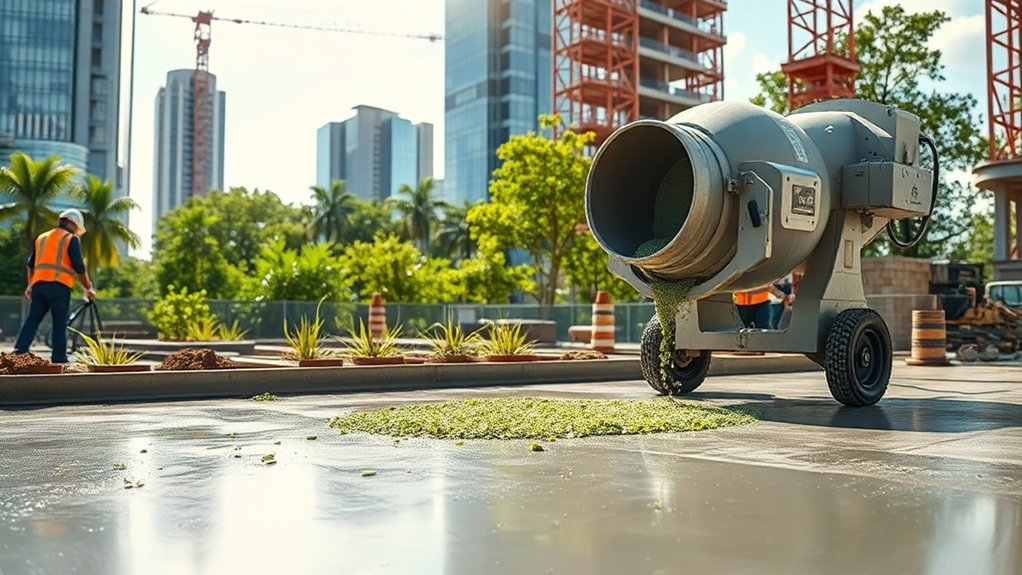
What’s driving the rapid growth of the green building materials market today? The rising consumer demand for sustainability is reshaping market dynamics, with projections estimating it to reach £1.2 trillion by 2034.
Structural materials will account for 39% of the market in 2025, showing a strong 11.5% annual growth rate, largely due to urban development and investments in environmental, social, and governance (ESG) criteria.
North America currently leads this sector, while the Asia Pacific region is quickly becoming the fastest-growing market, influenced by government regulations and increased public awareness.
Innovations such as fly ash-based cement and mass timber panels are improving efficiency and lowering carbon emissions.
Regulatory measures, including Buy Clean policies and various green certifications, are also driving demand for verified low-carbon materials, ensuring that your projects meet evolving sustainability standards.
Future Innovations in Concrete Sustainability
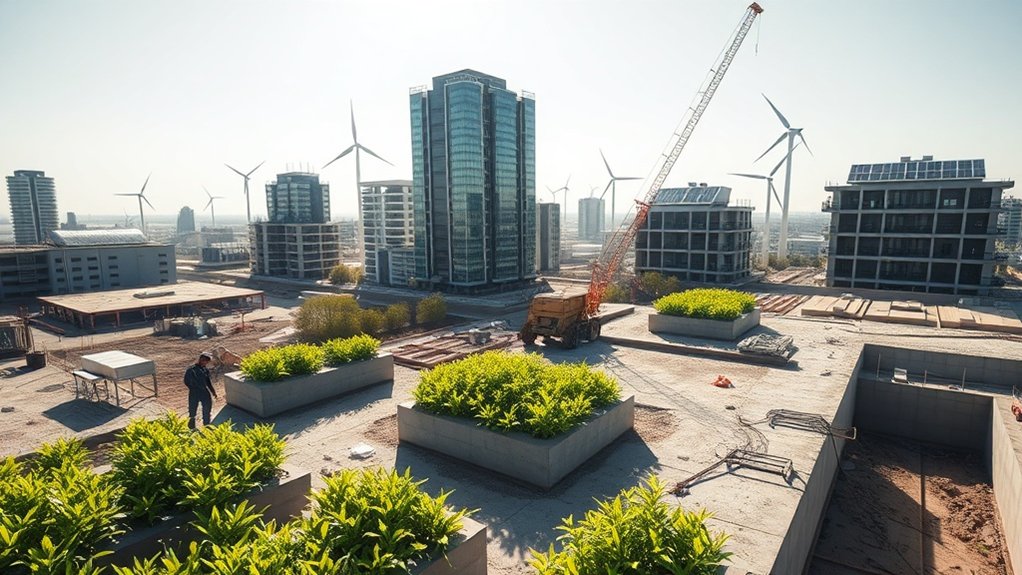
The concrete industry is grappling with significant sustainability challenges, but innovative solutions are on the horizon that could transform concrete production and usage.
Future advancements will focus on novel additives and sustainable design principles. Here are some key innovations to keep an eye on:
- Fibre-reinforced concrete reduces the need for steel, leading to lower emissions.
- Supplementary cementitious materials, such as fly ash, decrease cement demand and cut CO2 emissions.
- Self-healing concrete enhances durability by enabling automatic repairs.
- Geopolymer technology can reduce carbon emissions by up to 90% compared to traditional cement.
- 3D printing facilitates intricate designs while minimising material waste.
These innovations not only improve the sustainability of concrete but also enhance its performance, paving the way for more environmentally friendly construction practices.
Frequently Asked Questions
What Are the Costs Associated With Low-Carbon Concrete Alternatives?
Low-carbon concrete alternatives generally come with a cost premium ranging from 60% to 140%. While initial expenses are higher, market trends suggest that there could be long-term savings due to lower emissions and more efficient mix designs. For instance, using a low-carbon option might reduce your carbon footprint significantly, which could be beneficial for businesses looking to enhance their sustainability credentials.
How Do Local Regulations Impact Sustainable Concrete Practices?
Local regulations are crucial for sustainable concrete practices in the UK. They help ensure compliance with environmental standards and encourage the use of low-carbon mixtures. For instance, building codes might require a certain percentage of recycled materials in concrete, which not only reduces waste but also lowers carbon emissions. By incentivising these practices, regulations play a key role in fostering a more sustainable construction industry.
What Is the Lifespan of Low-Carbon Concrete Compared to Traditional Concrete?
Low-carbon concrete generally matches or even surpasses the durability of traditional concrete. Its longevity benefits come from improved resistance to environmental stressors and carefully designed mix ratios, leading to a longer service life and less need for maintenance. For example, structures made with low-carbon concrete may require fewer repairs over time, making it a sensible choice for sustainable building projects.
Can Low-Carbon Concrete Be Used in All Climate Conditions?
Low-carbon concrete is highly adaptable to various climates, offering excellent strength and moisture resistance. Its advanced properties make it suitable for construction in both hot and cold conditions, ensuring durability and reliability. For instance, it performs well in the damp winters of the UK as well as in hotter regions, making it a versatile option for builders.
How Can Consumers Support Sustainable Concrete Initiatives?
You can support sustainable concrete initiatives by opting for eco-friendly options, requesting certified low-carbon products, and promoting transparency in carbon disclosures. For instance, when renovating your home, choose suppliers that offer sustainable concrete solutions. Your choices help create demand, encouraging suppliers to adopt environmentally responsible practices and innovations.
Conclusion
The cement industry is at a pivotal moment in its journey towards sustainable construction. By adopting innovative solutions such as carbon capture technologies and alternative materials, we can significantly lower carbon emissions. This commitment to decarbonisation not only meets environmental objectives but also creates new market opportunities. By embracing these advancements, we’re not just constructing buildings; we’re building a sustainable future for the next generation.

Learn about the diverse types of concrete used in construction and discover which mix can transform your next project.

For a long-lasting driveway that laughs in the face of the UK's unpredictable weather, the C20 concrete mix is your Read more

In the UK, you've got a a lot of lightweight concrete types to choose from, each with its unique perks. Read more