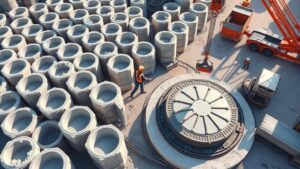
Polypropylene fibre reinforcement is set to transform the strength and durability of concrete in construction. Its lightweight and water-resistant properties effectively reduce cracking, improve load distribution, and extend the material’s lifespan. This makes it particularly suitable for infrastructure projects, where controlling shrinkage and enhancing durability are crucial. Although there are some challenges with bonding and handling, the performance benefits are significant, indicating a promising future for modern concrete applications. Discover how this innovation is changing concrete technology and contributing to sustainability.
Key Takeaways
Polypropylene fibres enhance the toughness of concrete, improving crack resistance and extending its lifespan across various environmental conditions. They provide enhanced flexural and compressive strength, making concrete suitable for heavier loads and demanding applications like bridges and industrial floors.
These lightweight fibres reduce the overall density of concrete without compromising performance, making them ideal for modern construction projects. Their hydrophobic properties ensure stability in wet conditions, which is crucial for infrastructure exposed to challenging weather.
Incorporating polypropylene fibre reinforcement can lead to lower maintenance costs and a reduced environmental impact, supporting sustainable construction practices.
Understanding Polypropylene Fibers

When considering options for reinforcing concrete, polypropylene fibres are worth noting for their distinct chemical and physical properties.
These synthetic fibres are lightweight, highly stable under thermal and chemical conditions, and non-magnetic. Their smooth surface helps reduce friction, which improves the flow of concrete compared to steel fibres.
Macro-polypropylene fibres have surface irregularities that aid in bonding effectively within the concrete mix. The length of these fibres, typically 12mm and 19mm, plays a role in how they reinforce the concrete, with volume fractions of 0.1% to 0.5% influencing overall performance.
Using these fibres not only helps distribute tensile loads more evenly but also boosts the toughness of the concrete without significantly increasing its density. Different lengths and volumes of polypropylene fibres significantly influence performance, making it essential to grasp these features for optimising concrete formulations.
Performance Benefits of Fiber Reinforcement
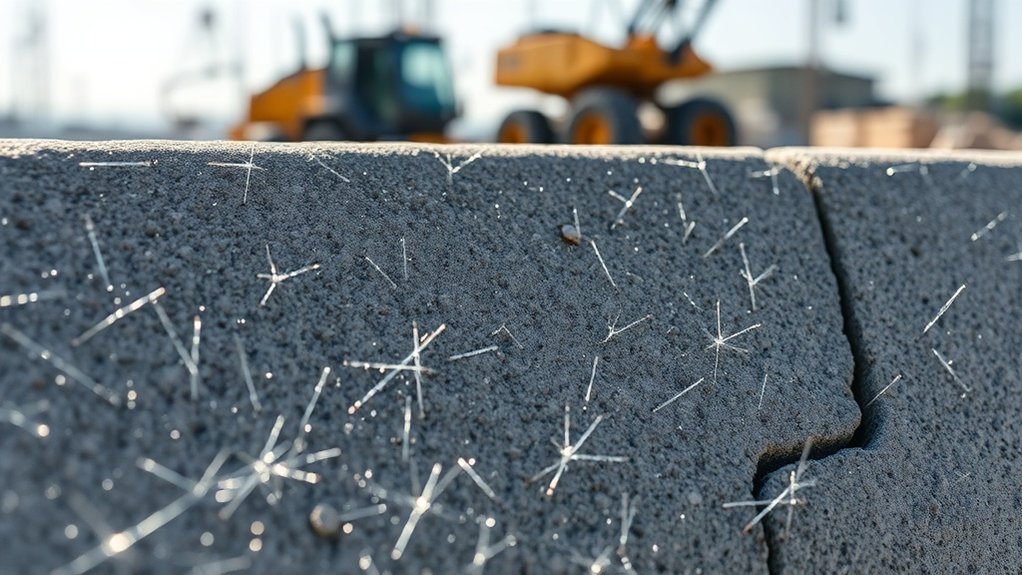
When considering the performance benefits of fibre reinforcement in concrete, polypropylene fibres stand out for their ability to enhance several key areas. One of the main advantages is improved crack resistance; these fibres significantly reduce cracking caused by plastic and drying shrinkage, leading to a more stable structure. Furthermore, durability is another crucial benefit, as polypropylene fibres extend the lifespan of concrete, making it more resistant to environmental factors. The addition of these fibres also boosts both compressive and flexural strength, enabling the concrete to bear heavier loads. Additionally, polypropylene fibres efficiently absorb energy and distribute concrete load, enhancing overall performance. With better tensile and impact resistance, fibre-reinforced concrete not only performs more effectively but also cuts down on maintenance costs, making it a smart and economical choice for contemporary construction projects.
Material Properties of Polypropylene

Polypropylene’s distinctive material properties make it an effective choice for fibre reinforcement in concrete.
With a low density of 0.895 to 0.93 g/cm³, it offers substantial bulk without adding unnecessary weight, being 34% lighter than polyester, which simplifies handling. Its specific gravity contributes to its lightweight yet strong structure.
Its tensile strength of around 520 MPa and a modulus of elasticity of 7.5 GPa ensure high durability, providing resistance against fatigue and wear.
Additionally, polypropylene is hydrophobic, meaning it remains stable in wet conditions, making it a reliable option for concrete uses.
Its thermal resistance and flexibility, even at low temperatures, further enhance its performance, confirming its value in future concrete reinforcement strategies.
Key Application Areas
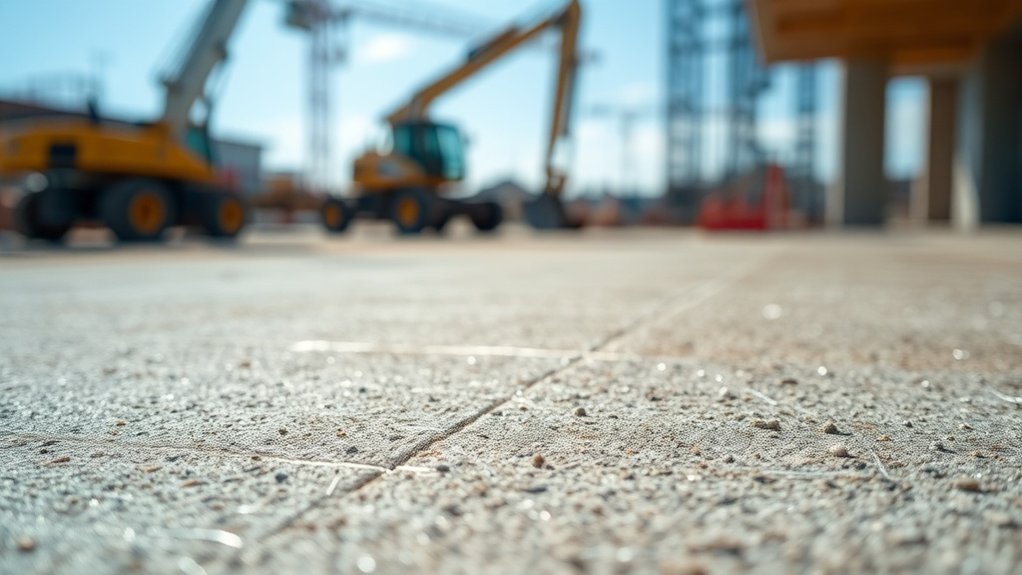
Polypropylene fibre reinforcement in concrete offers significant advantages across various key application areas, enhancing performance and durability.
In industrial settings, fibres improve impact resistance and help control shrinkage cracks, which is crucial for flooring that supports heavy machinery.
For precast concrete components, the addition of fibres increases flexural strength and reduces cracking, ensuring they remain stable during transportation.
Infrastructure projects, such as roads and bridges, benefit from greater durability against temperature changes and moisture penetration, ultimately extending their lifespan.
In marine environments, polypropylene fibres provide protection against corrosion and alkali-silica reactions.
These benefits demonstrate how effective fibre integration can transform concrete applications, enhancing structural integrity and lowering maintenance costs across diverse projects.
Limitations and Considerations
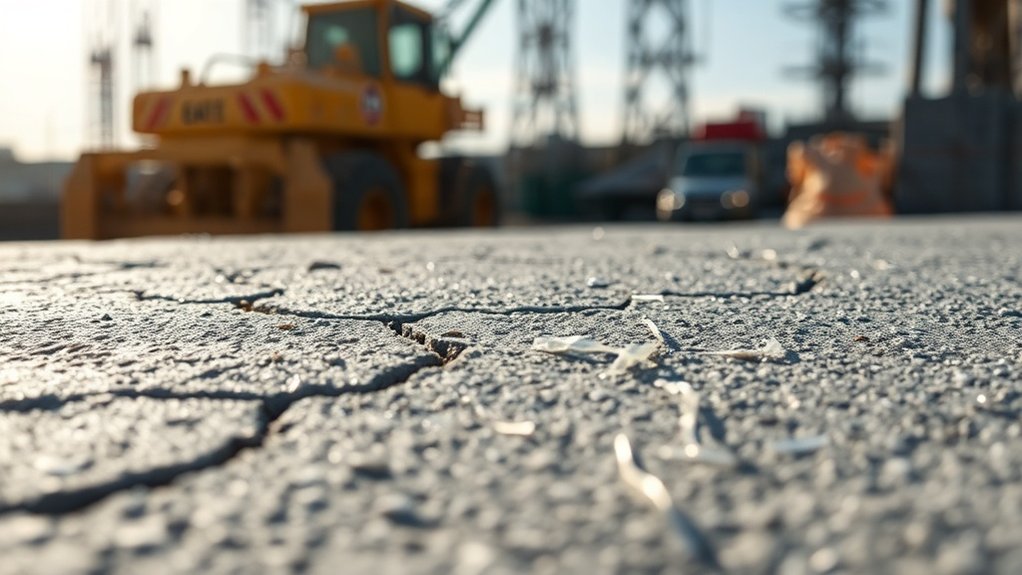
While polypropylene fibre reinforcement can significantly improve concrete applications, it’s important to be aware of its limitations. Here are some key considerations:
- Fibre Bonding: If the bond strength with the cement matrix is weak, fibres can pull out, particularly with smooth fibres. Achieving better bonding often requires specific geometric changes.
- Durability Concerns: Polypropylene fibres can be affected by environmental factors that may compromise performance over time, especially in applications exposed to the elements.
- Mechanical Properties: Although toughness can increase, compressive strength may decrease by 16–36%, and creep can become a significant issue.
- Workability Challenges: The increased internal friction can make handling and finishing more difficult. This often requires specialised techniques and possibly the use of admixtures to maintain fluidity.
Understanding these limitations is crucial for successful concrete projects.
Comparative Analysis With Other Fiber Types
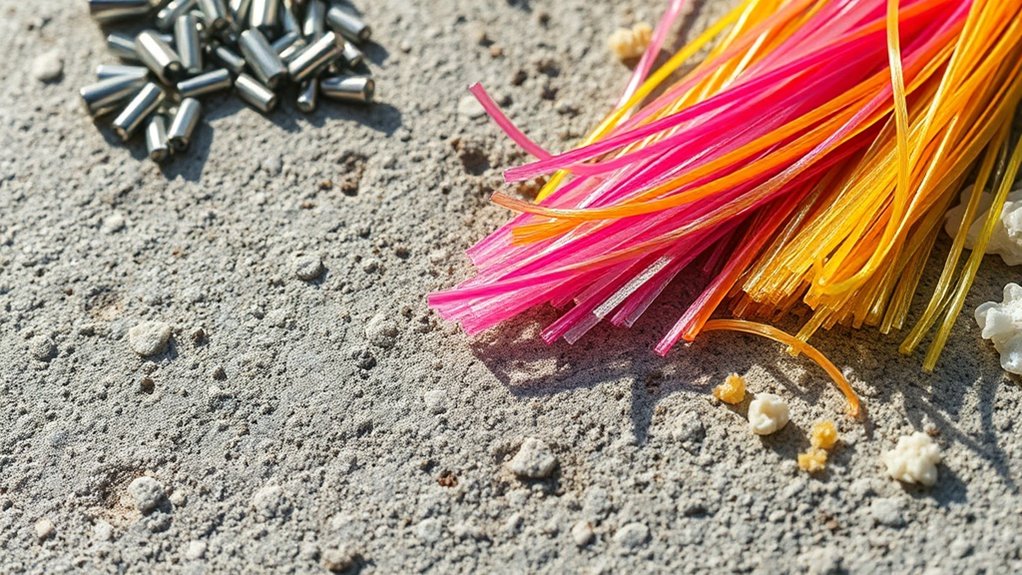
How do polypropylene fibres compare with other reinforcement options in concrete applications? While polypropylene fibres have their advantages, they aren’t the best choice in every scenario.
| Fibre Type | Strength Improvement | Crack Control |
|---|---|---|
| Polypropylene | 17% compressive, 22% tensile | Good at distributing cracks |
| Steel | Superior toughness and residual strength | Excellent at arresting cracks |
| Glass | Minimal strength gains | Less effective at controlling cracks |
| VES-FRC | Outperforms PP in flexural strength | Similar crack control |
Environmental Impact and Sustainability

When selecting reinforcement for concrete, environmental sustainability should be a top consideration alongside performance. Choosing polypropylene fibre reinforcement not only supports sustainable construction but also helps tackle plastic waste.
Here are some key benefits:
- Reduced Carbon Footprint: Polypropylene fibres can cut CO₂ emissions by up to 56% when compared to steel reinforcement.
- Energy Efficiency: Using recycled polypropylene lessens energy consumption during production, which conserves resources.
- Waste Management: By incorporating plastic fibres, we can divert waste from landfills, fostering a circular economy.
- Durability: Increased resistance to environmental factors ensures longer-lasting structures, which reduces maintenance needs in the long run.
Opting for polypropylene fibres is a practical step towards more sustainable construction practices.
Economic Advantages of Fiber-Reinforced Concrete
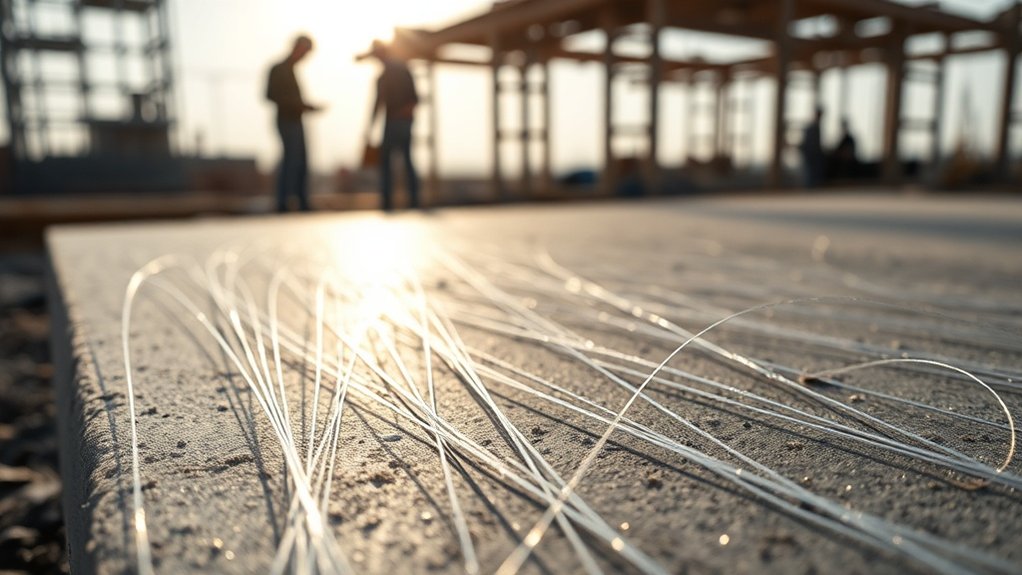
When it comes to construction materials, fibre-reinforced concrete (FRC) offers notable economic benefits that appeal to both contractors and project owners. FRC improves cost efficiency by reducing material weight and lowering maintenance costs, resulting in savings over the lifecycle of the project. Its straightforward installation process speeds up project timelines and cuts down on labour costs, boosting overall productivity.
| Economic Benefit | Description | Impact |
|---|---|---|
| Cost Savings | Requires less reinforcement, cutting material costs | 20-25% savings |
| Labour Efficiency | Simplified installation reduces labour hours | Faster project completion |
| Enhanced Durability | Increased service life lowers maintenance and repair costs | Significant savings |
Frequently Asked Questions
How Are Polypropylene Fibers Produced and Processed?
Polypropylene fibres are produced by carefully mixing raw materials, followed by melt extrusion and cooling. The manufacturing techniques enhance properties for various applications, improving strength, durability, and performance, particularly in concrete reinforcement.
Can Polypropylene Fibers Be Recycled After Use?
Yes, polypropylene fibres can be recycled after use. Effective recycling methods can significantly reduce environmental impact, but it’s crucial to have proper collection and processing systems in place. This ensures that the fibres are reused rather than ending up in landfill. For example, recycled polypropylene can be transformed into products like outdoor furniture or car parts, giving it a new lease of life.
What Is the Ideal Dosage for Polypropylene Fiber in Concrete?
For optimal mixing, the recommended dosage of polypropylene fibre in concrete generally falls between 0.6 to 2 kg/m³, depending on the specific application. It’s important to adjust these amounts to improve performance while maintaining workability and cost-effectiveness. For instance, using 1 kg/m³ could be suitable for typical flooring applications, while higher doses might be better for industrial surfaces requiring extra durability.
How Do Polypropylene Fibers Affect Concrete’s Aesthetic Properties?
Polypropylene fibres improve the aesthetic qualities of concrete by maintaining its surface texture and enhancing colour. With these fibres, you’ll see fewer surface defects and cracks, helping your concrete stay visually appealing and consistent over time, all while ensuring structural strength is not compromised.
Are There Any Health Concerns Related to Polypropylene Fiber Use?
Yes, there are health concerns linked to polypropylene fibres, mainly from inhaling dust. To minimise these risks during handling and processing, it’s essential to implement safety measures such as adequate ventilation and effective dust control.
Conclusion
Incorporating polypropylene fibre reinforcement into concrete offers a significant opportunity to improve structural integrity. While considering the performance benefits and cost savings, it’s important to also be aware of potential limitations. Will you take advantage of this innovative solution to enhance your projects? As the construction industry evolves, the decisions you make now could set new standards for strength in the future. Are you prepared to unlock the full potential of polypropylene fibres and elevate your concrete applications?

Learn about the diverse types of concrete used in construction and discover which mix can transform your next project.

For a long-lasting driveway that laughs in the face of the UK's unpredictable weather, the C20 concrete mix is your Read more

In the UK, you've got a a lot of lightweight concrete types to choose from, each with its unique perks. Read more