Precast concrete culverts are specially designed structures that effectively manage water flow under roads and railways. They are built for durability and quick installation, using high-strength concrete and steel reinforcement to ensure longevity. Their modular design allows for cost-effective solutions tailored to specific drainage needs.
Installation requires precise alignment and backfilling to ensure watertight connections. For instance, when installing a culvert under a rural road, proper alignment is crucial to prevent water pooling on the surface.
Discover more about the benefits, design considerations, and maintenance tips to optimise your project outcomes.
Key Takeaways
Precast concrete culverts are robust, modular structures designed to manage water flow beneath roads and railways. They come in various shapes and sizes to suit different needs.
These culverts effectively drain stormwater, helping to minimise flood risks and providing safe passages for wildlife beneath infrastructure. Environmentally, they disrupt habitats less, can be installed quickly, and have lower CO2 emissions compared to traditional methods.
Although they may require a higher initial investment, their durability and low maintenance needs make them cost-effective in the long run. It’s advisable to conduct maintenance checks every two years to ensure they remain structurally sound.
Installation involves careful excavation, alignment, and preparation of the bedding to ensure proper function.
Definition of Precast Concrete Culverts
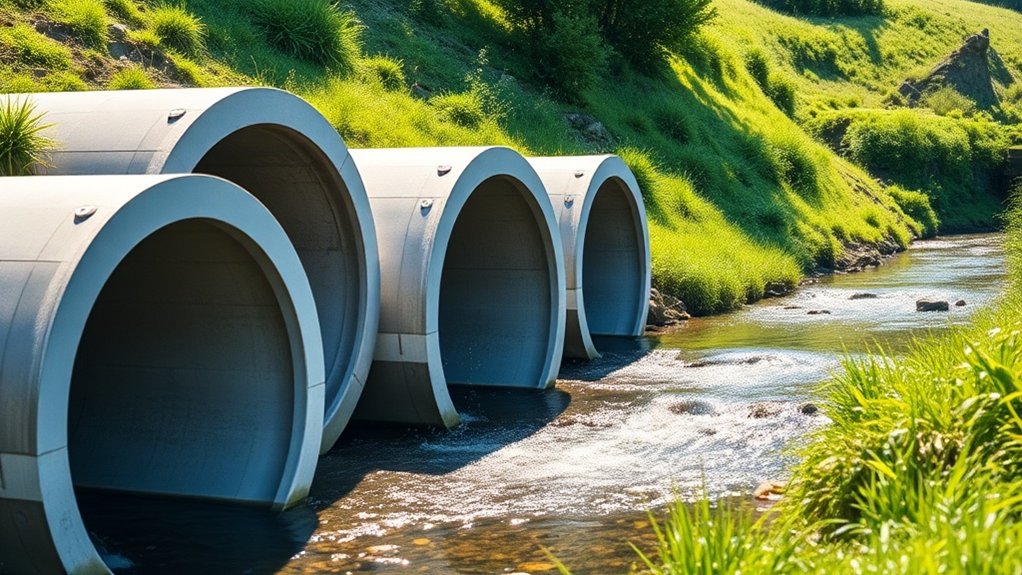
Precast concrete culverts are vital for managing water flow beneath roads, railways, and other structures. These robust, reinforced concrete units typically come in rectangular or box shapes, comprising essential elements such as legs, a crown, and haunches to effectively support and distribute loads. There are various types, including single-cell and multi-cell configurations, designed to meet specific hydraulic needs. Manufactured in controlled environments, these culverts comply with strict quality standards, ensuring consistency and accuracy in dimensions. Using high-strength concrete reinforced with steel enhances their durability against soil pressure and environmental factors. Each part, from the base slab to the top slab, is engineered for structural integrity and water tightness, adhering to industry specifications for reliable performance. Additionally, these culverts offer cost-effectiveness by reducing overall project costs through efficiency and speed of installation. Furthermore, the quality control in precast concrete production ensures that these culverts can withstand harsh environmental conditions without compromising their structural integrity.
Applications of Precast Concrete Culverts
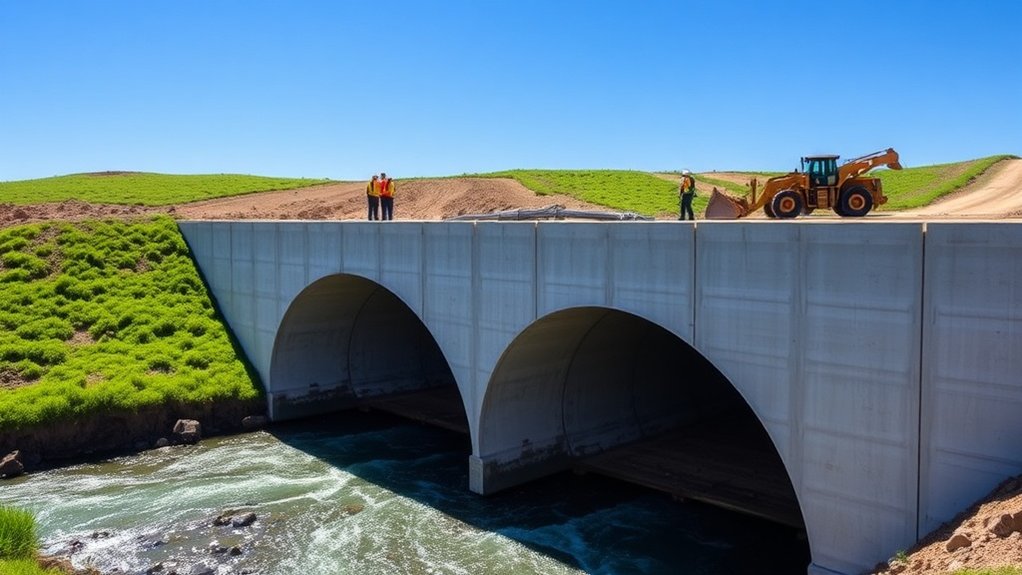
When managing water flow in various infrastructure projects, precast concrete culverts are vital. These structures efficiently channel stormwater beneath roads, significantly reducing the risk of flooding and preventing surface pooling during heavy rain. Designed for stormwater management systems, they incorporate modular components like inlets to effectively capture runoff.
Precast culverts also support wildlife by providing safe passages, helping to preserve ecosystem corridors. Their durability allows them to function as passageways under roads and railways, ensuring the integrity of transport infrastructure. Additionally, they can be customised for housing utilities, allowing for maintenance access with minimal disruption. High-quality construction ensures structural integrity and load-bearing capacity, making precast concrete culverts a preferred solution for public works and private development.
Advantages of Using Precast Concrete Culverts

Using precast concrete culverts offers several key advantages in terms of strength, durability, and efficiency. These culverts are designed to withstand heavy loads and harsh environments, ensuring they last a long time. Since they meet strict quality standards, their robust construction means less maintenance and lower repair costs over time. Additionally, box culverts contribute to sustainable construction practices by mitigating soil erosion and safeguarding water quality. Precast concrete culverts are manufactured in controlled settings, ensuring consistent quality that minimizes defects often seen with traditional cast-in-place methods. The installation of precast culverts is quick and straightforward, significantly speeding up project timelines and reducing labour costs. Moreover, their modular design allows for various customisation options to suit specific hydraulic and structural needs.
Structural Features of Precast Concrete Culverts

The structural features of precast concrete culverts are crafted to meet strict hydraulic and load-bearing standards, making them suitable for a range of project conditions.
These culverts can be built as single-cell or multiple-cell monolithic sections, allowing for efficient hydraulic design. The use of Class 5000 concrete provides robust structural integrity, with a compressive strength of approximately 5000 psi.
Reinforcement includes welded wire and conventional rebar, adhering to rigorous ASTM standards to ensure durability against bending moments and soil pressures.
The foundations consist of prepared aggregate bedding, and where needed, pile support is used to prevent settlement and scour.
These culverts can span up to 24 feet and come in various configurations, ensuring optimal performance for specific site requirements while remaining resilient under both hydraulic and live loads. Additionally, the use of eco-friendly materials in precast concrete supports sustainability efforts in construction.
Design Considerations for Precast Concrete Culverts

Designing precast concrete culverts involves understanding both structural and environmental factors to ensure optimal performance.
It’s important to follow engineering standards and methodologies, particularly the AASHTO LRFD specifications for load and cover requirements. When cover depths are less than 100 mm, pay special attention to reinforcement details, such as using epoxy-coated bars.
Stick to standard dimensions as outlined by OPSS 1821 for a modular approach. For hydraulic efficiency, ensure that culvert slopes don’t exceed 2% and that they align with the natural streambed.
Consider internal water pressure and prepare the base with at least a 150 mm aggregate layer. Additionally, think about incorporating mechanical connections to manage differential settlement effectively.
Installation Process of Precast Concrete Culverts

After establishing sound design considerations, the installation of precast concrete culverts requires meticulous execution to ensure long-term functionality and stability. You will encounter challenges such as verifying trench dimensions and selecting suitable bedding materials. Begin by excavating a trench that accommodates both the culvert and its foundation. Lay a clean, compacted leveling course that corresponds to the dimensions of the culvert. When placing the culvert, ensure the sections are correctly aligned and provide watertight connections. During backfilling, frequently check the alignment and compact each layer thoroughly. Always follow safety regulations and inspect materials before installation to prevent future complications.
| Step | Action Required | Key Considerations |
|---|---|---|
| Excavation | Prepare the trench | Ensure proper dimensions |
| Bedding Preparation | Lay granular material | Maintain a clean, compacted surface |
| Placement | Align and set culvert sections | Ensure watertight connections |
Engineering Requirements for Precast Concrete Culverts

When considering precast concrete culverts, it’s crucial to follow precise engineering requirements to ensure structural integrity and durability. Compliance with recognised design regulations, such as the British Standard BS 8007, is essential.
Precast box culverts must be approved by a Chartered Engineer to confirm that all calculations and fabrication details are up to standard.
Use high-strength concrete, ideally between 28 MPa to 35 MPa, and reinforcing bars that meet industry standards. Ensure the hydraulic design is efficient for water flow and maintains structural stability, considering soil loads and potential water pressures.
Installation should involve suitable bedding material, proper grade control, and effective anchoring methods to support the culvert during and after installation. This approach will help provide a reliable and long-lasting solution for drainage needs.
Versatility of Precast Concrete Culverts
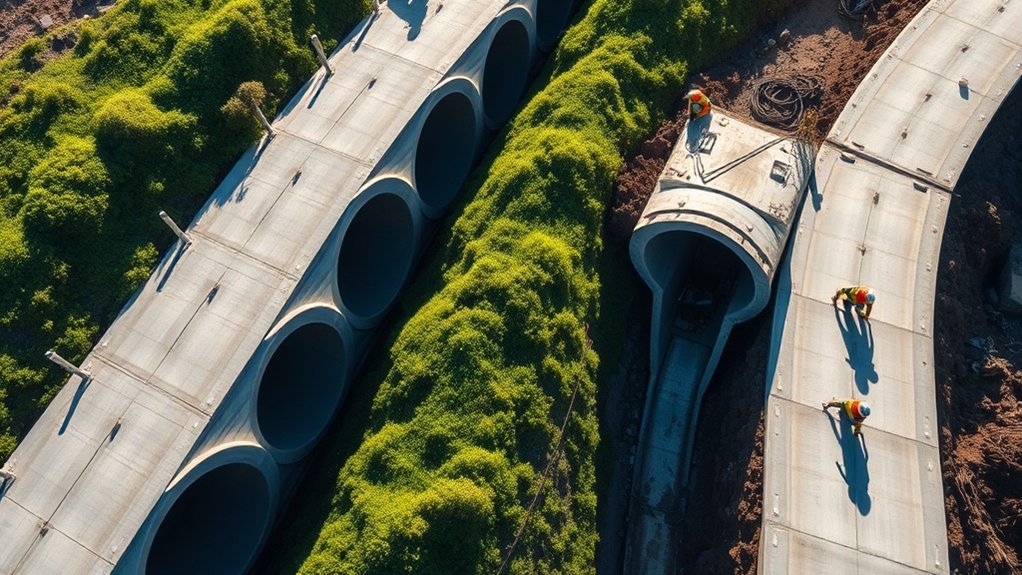
Precast concrete culverts serve a variety of purposes, making them ideal for applications such as stormwater drainage and utility tunnels.
Their ability to adapt to different environments ensures efficient water management while fulfilling project requirements. This flexibility not only improves functionality but also encourages innovative approaches in infrastructure design.
For instance, these culverts can be used in urban areas to manage excess rainwater, helping to prevent flooding and protect property.
Diverse Applications and Uses
Precast concrete culverts are highly adaptable and play a vital role in various applications across multiple sectors.
In urban settings, they act as conduits for utilities, allowing electricity, water, and sewage to pass through without disrupting service. Their sturdy design is perfect for flood management, directing stormwater runoff to minimise flooding and erosion.
Precast culverts also facilitate transportation crossings, supporting heavy loads while ensuring natural water flow. Moreover, their versatility extends to specialised uses, such as secure underground facilities and large subsurface detention tanks.
With options for custom designs and quick installation, these culverts cater to diverse project needs, delivering both functionality and durability in challenging conditions.
Adaptability to Environments
Precast concrete culverts are highly adaptable, making them suitable for a range of climates and geographical conditions. Their effective performance is due to several key features:
- Thermal Adaptability: Their high thermal mass enables them to endure significant temperature fluctuations without cracking.
- Durability: They resist deterioration from moisture and sunlight, ensuring they remain structurally sound over time.
- Hydraulic Flexibility: Tailored designs meet specific water management requirements, improving efficiency and reducing the risk of flooding.
- Sustainability: Using low water-to-cement ratios and sourcing materials locally helps to lessen environmental impact and supports a circular economy.
This adaptability ensures that precast concrete culverts can reliably support infrastructure in various environments, making them an excellent choice for multiple applications.
Environmental Benefits of Precast Concrete Culverts

When planning infrastructure projects, the environmental advantages of precast concrete culverts are clear, especially regarding installation and lifecycle management.
These culverts significantly reduce environmental disruption during installation, which helps minimise habitat disturbance, noise, and dust pollution. Their rapid installation also leads to lower vehicle emissions, improving local air quality.
Precast materials have a considerably smaller carbon footprint—producing up to 95% fewer CO2 emissions compared to other options. Furthermore, the production process generates minimal waste, which supports sustainable practices.
Effective stormwater management with these culverts reduces flood risks and soil erosion, benefiting local ecosystems.
Cost-Effectiveness of Precast Concrete Culverts
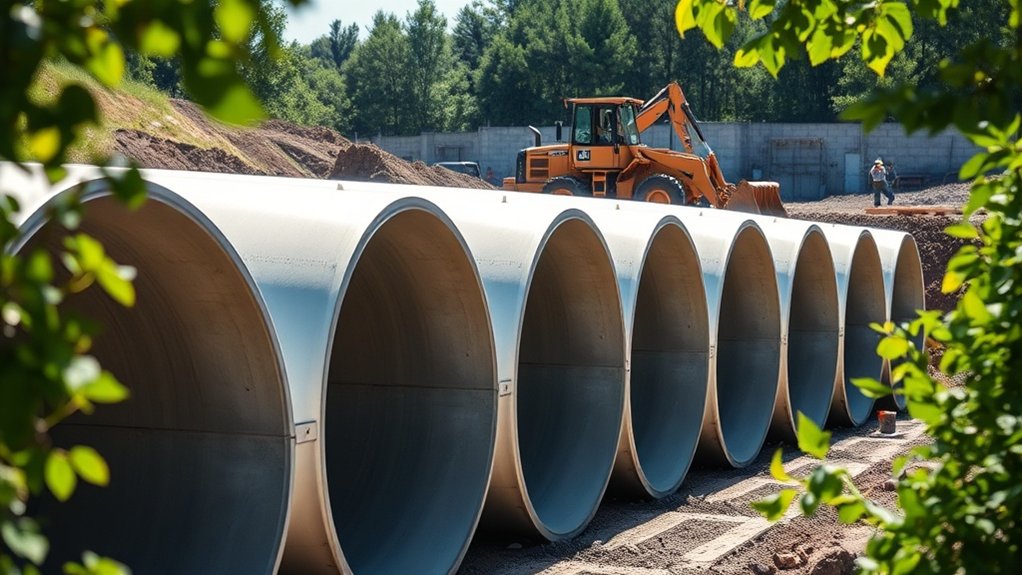
The environmental benefits of precast concrete culverts go hand in hand with their cost-effectiveness for infrastructure projects. A thorough cost analysis reveals that while precast structures may have a higher initial cost, they provide significant long-term savings.
Here are some key factors to consider:
- Installation Efficiency: Quick installation reduces both labour costs and project durations.
- Standardisation: Mass production lowers unit costs and reduces waste.
- Design Flexibility: Modular designs facilitate cost control, minimising the need for custom engineering.
- Durability: Their long lifespan cuts down maintenance and repair expenses, delivering better overall value.
Maintenance Considerations for Precast Concrete Culverts

To ensure optimal performance and longevity of precast concrete culverts, regular maintenance is crucial.
Larger culverts should be inspected every two years, with smaller ones often on the same schedule. During inspections, focus on structural integrity and hydraulic performance. Use both manual visual checks and video methods to spot issues such as cracks or leaks.
For common damage, repair techniques like re-grouting or sealing joints can help maintain water tightness. It’s also important to regularly clear out debris from inlets and outlets to prevent blockages.
Additionally, consider applying protective coatings to exposed steel connections to combat corrosion.
Future Trends in Precast Concrete Culvert Design

Regular maintenance of precast concrete culverts is essential for embracing innovative design trends that are transforming the industry. The future is set to incorporate smart technology and sustainable materials, enhancing both performance and efficiency.
- IoT Integration: Sensors can monitor structural integrity, allowing for predictive maintenance and reducing the risk of failures.
- Sustainable Mix Designs: Low-carbon materials, such as fly ash, are increasingly replacing traditional cement, which helps reduce emissions.
- 3D Printing: This technology enables the creation of complex designs and customised moulds, significantly reducing waste.
- Modular Installation: This approach allows for quicker on-site assembly, cutting down project timelines.
These advancements not only enhance hydraulic and structural performance but also respond to the evolving needs of infrastructure, ensuring that precast concrete culverts meet modern demands effectively.
Keeping up with these trends positions you at the forefront of sustainable construction practices.
Frequently Asked Questions
How Long Do Precast Concrete Culverts Typically Last?
Precast concrete culverts generally last over 100 years, with some lasting up to 200 years in ideal conditions. Their durability is influenced by factors such as environmental conditions and the quality of materials used, which can significantly impact their longevity and performance.
Can Precast Culverts Be Modified After Installation?
Yes, precast culverts can be modified after installation. Options include adding reinforced inverts, extensions, or enhancing joints. However, it’s important to manage challenges such as differential settlement to ensure the structural integrity of the modifications.
What Are the Weight Limits for Precast Concrete Culverts?
The weight limits for precast concrete culverts are determined by their load capacity and structural integrity, which are influenced by their dimensions, materials, and design standards. Generally, larger culverts need more reinforcement to ensure they remain stable under heavy loads. For instance, a culvert designed for road traffic will require more robust construction compared to one used for agricultural drainage. Always consult specific engineering guidelines to ensure safety and compliance.
Are Precast Concrete Culverts Suitable for All Soil Types?
Precast concrete culverts are not universally suitable; soil compatibility is crucial. They perform best in well-drained, granular soils, whereas poor drainage can negatively impact their effectiveness. For optimal stability and longevity, ensure proper drainage is in place, especially in varied soil types.
How Are Precast Culverts Transported to Construction Sites?
Precast culverts are transported on robust trailers, with delivery logistics carefully planned to meet regulations. Cranes are employed to secure the load, and routes are meticulously chosen to avoid obstacles, ensuring safe transit and reducing the risk of damage during delivery.
Conclusion
In summary, precast concrete culverts offer a strong solution for effective water management and infrastructure support. They provide various benefits, including cost-efficiency and positive environmental impact, making them essential in modern construction. When planning future projects, view these culverts as more than just channels; they are vital for sustainable development. By adopting innovative designs, you can ensure your infrastructure remains durable and efficient for years to come.

Narrow your focus on precast concrete and discover how this innovative construction method can revolutionize your building projects. Uncover its Read more

Find out how precast concrete beams revolutionize construction with various types and applications that ensure strength and efficiency; discover their Read more

Pre-tensioned reinforced concrete offers unparalleled strength and efficiency, but what are its key benefits and applications in modern construction? Discover Read more