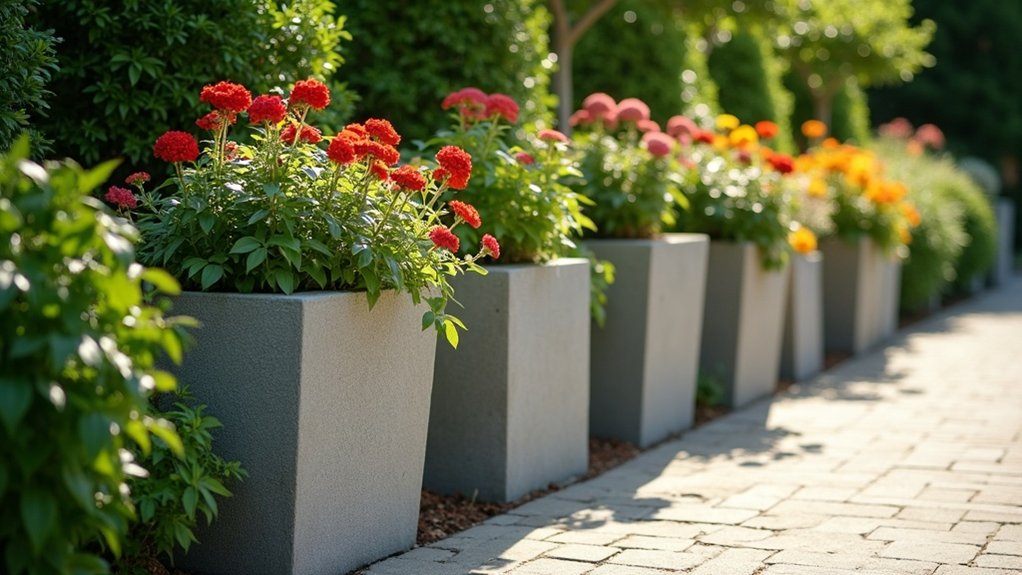
Concrete planters are an excellent choice for outdoor gardens due to their outstanding durability and resistance to the elements. Their solid structure can withstand harsh weather conditions, ensuring they won’t crack or fade over time. Available in a variety of designs and textures, they can easily fit into any garden setting while helping to maintain the ideal soil temperature for your plants. Additionally, they require little maintenance and are fire-resistant, making them both practical and safe. Discover the numerous advantages of concrete planters for your gardening needs.
Key Takeaways
Concrete planters are incredibly durable, able to withstand extreme temperatures without cracking, warping, or fading. Their substantial weight offers stability in windy weather, reducing the chance of them toppling over. The thick walls of these planters provide insulation for the soil, helping to maintain the right temperature and moisture levels for healthy plants.
They require minimal maintenance, which means you can enjoy your garden without the hassle of frequent replacements. Additionally, concrete planters are fire-resistant, making them a safe choice for gardens, particularly in areas prone to wildfires, as they help protect both your plants and the surrounding environment.
Durability and Weather Resistance
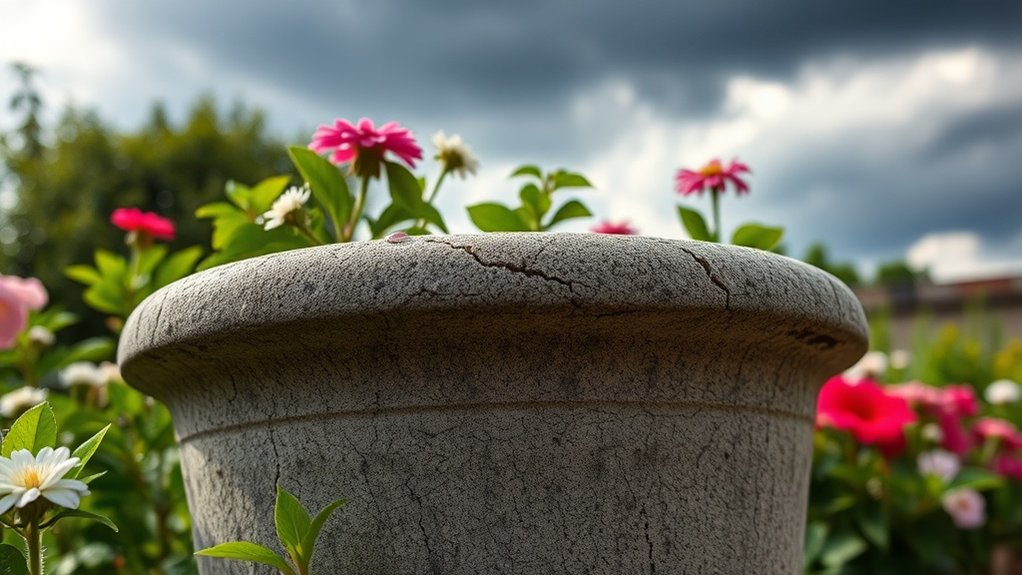
When you choose concrete planters for your outdoor garden, you’re investing in both durability and weather resistance.
Their dense composition can withstand extreme temperatures, so they won’t crack in the scorching heat or freezing cold. Unlike plastic or ceramic, concrete maintains its shape and colour over time, resisting warping and fading. Additionally, high-strength 4000 PSI concrete ensures that these planters are robust enough to endure various environmental conditions without compromising their structural integrity.
It’s also less likely to suffer damage from rain, snow, or UV exposure. The weight of concrete planters provides stability in windy conditions, reducing the risk of tipping over. Additionally, outdoor concrete planters can become lasting fixtures in gardens due to their heirloom quality.
With minimal upkeep, these sturdy planters can last for decades, making them a smart long-term investment for any outdoor space. They truly offer a great combination of strength and functionality.
Design Versatility and Style Options
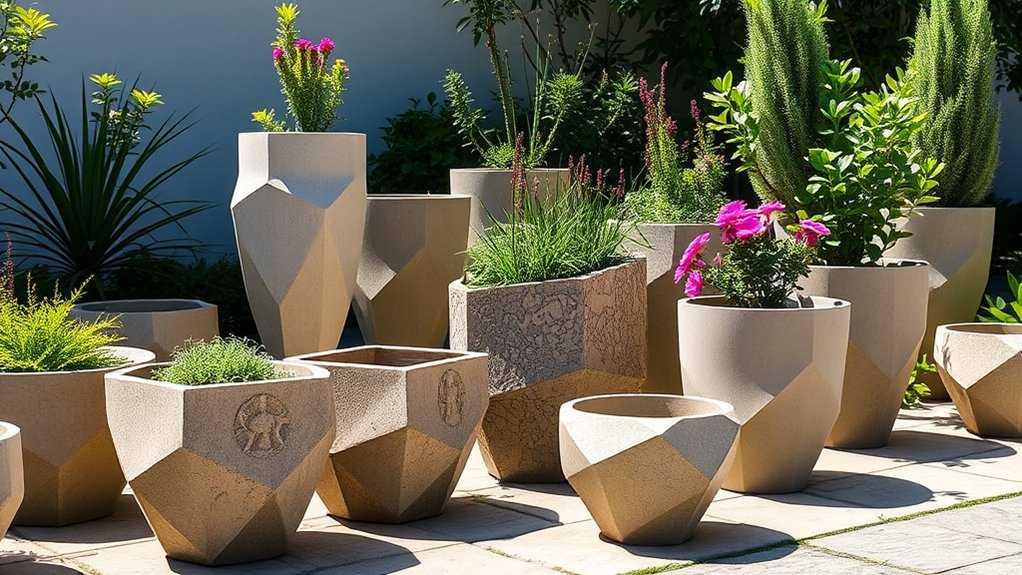
Concrete planters might be seen as practical, but their design flexibility allows them to suit various garden styles.
Here are a few options to enhance your outdoor space:
- Modern: Sleek lines and neutral colours that showcase your plants beautifully.
- Classic: Rustic textures and traditional shapes that bring warmth to your garden.
- Eclectic: Unique shapes and detailed designs that reflect your personal taste.
Concrete planters are in line with current design trends, offering both style and functionality. Their durable construction minimizes the need for frequent replacements, making them a sustainable choice. Moreover, their low maintenance nature allows for easy upkeep in any outdoor environment. Available in different textures and shades, they can easily blend into any garden setting.
Plant Health and Root Protection
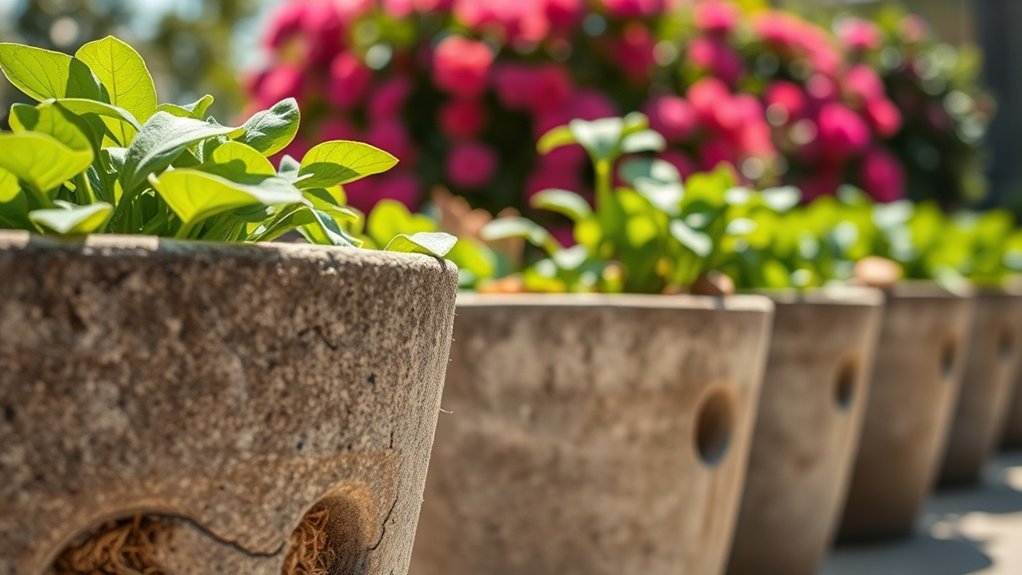
Choosing concrete planters offers more than just a stylish look; they help regulate soil temperature and retain moisture effectively.
The thick walls of concrete act as insulators, keeping roots at a consistent temperature and preventing drastic changes. This creates a supportive environment for your plants, allowing them to flourish without the stress of overheating or drying out. Additionally, the heavy weight of concrete planters helps prevent them from tipping over in strong winds, adding to the stability of your garden. Furthermore, their durability and resource efficiency ensure that they contribute positively to sustainable gardening practices.
Soil Temperature Stabilization
Understanding how soil temperature stabilization impacts plant health is vital for any gardener looking to protect their roots effectively.
Concrete planters are excellent for regulating temperature, helping to minimise fluctuations that can stress plants. Here’s how they can be beneficial:
- Consistent Soil Temperatures: Concrete retains heat and releases it gradually, keeping roots cooler in summer and warmer in winter.
- Reduced Risk of Root Damage: Stable soil conditions help prevent thermal shock, leading to better nutrient uptake.
- Disease Prevention: Smaller temperature variations reduce the risk of root diseases associated with temperature stress.
Moisture Retention Benefits
Moisture retention is essential for healthy plant growth, and concrete planters are particularly effective in this respect. Their porous structure helps maintain an optimal moisture balance, retaining water while allowing for natural evaporation. This prevents roots from drying out, ensuring they can take up nutrients effectively and develop strong systems.
In drier climates, the moisture retained in concrete planters creates a stable microenvironment, shielding roots from extreme temperature fluctuations and reducing plant stress. Moreover, these planters prevent waterlogging by allowing excess water to drain away, which minimises the risk of root rot.
With less frequent watering, you can save time and conserve water, making gardening more manageable. Overall, concrete planters enhance plant health, promoting vibrant growth and resilience in challenging conditions.
Practicality and Maintenance
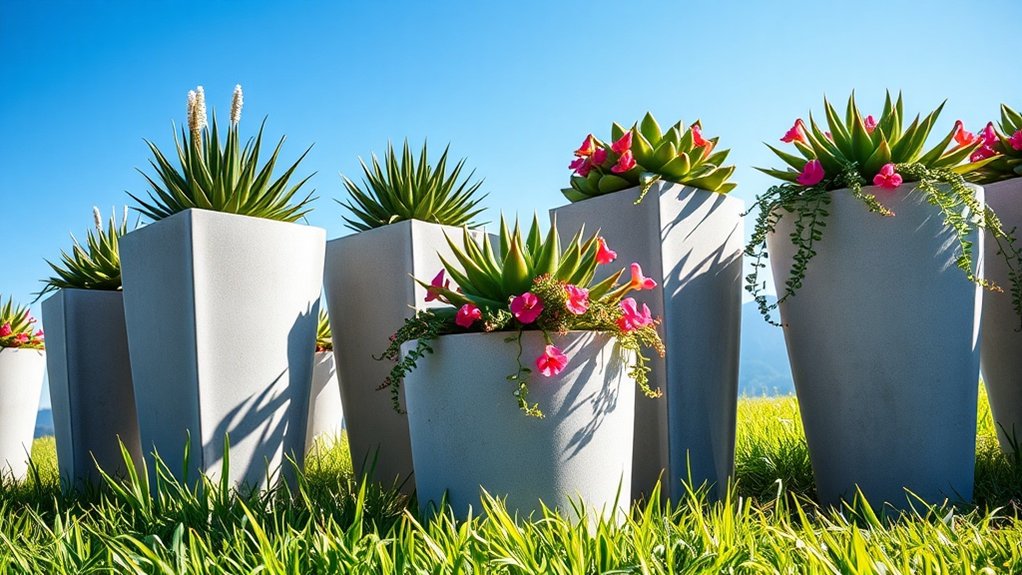
While many garden enthusiasts focus on aesthetics, practicality and maintenance are crucial for the longevity of concrete planters.
These planters require minimal upkeep, making them an excellent choice for your garden. Here are some straightforward maintenance tips for optimal plant care:
- Concrete’s durability withstands the elements, meaning you won’t need to replace them often.
- Their weight ensures stability, reducing the risk of tipping over in windy conditions.
- They’re easy to clean and can be revitalised with minimal effort, helping them maintain a fresh appearance.
Environmental and Sustainability Benefits
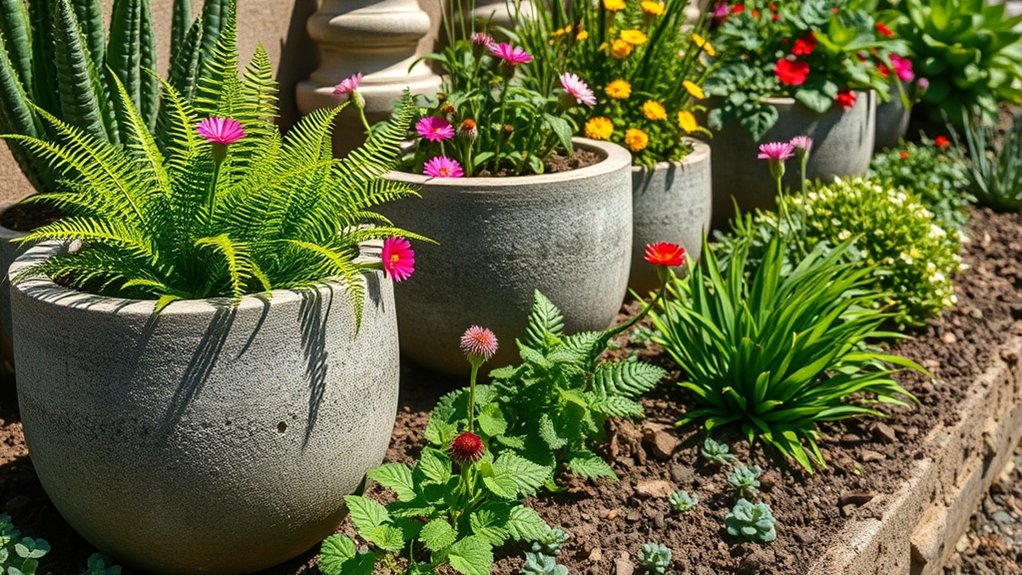
Concrete planters provide notable environmental benefits, mainly due to their durability, which reduces waste and the need for frequent replacements.
They can be recycled, supporting circular economy practices and decreasing the impact of resource extraction.
Furthermore, their thermal mass properties improve water efficiency, helping gardeners maintain stable moisture levels and cut down on water usage.
Long Lifespan Advantages
When considering the longevity of concrete planters, their durability provides notable environmental and sustainability advantages.
Their long lifespan helps to minimise waste and conserve resources, making them a great choice for eco-friendly gardening.
- Larger planters with thicker walls are more durable and last longer.
- Simple maintenance, such as sealing, can prevent cracks and enhance their lifespan.
- Concrete withstands harsh weather conditions, which means fewer replacements are needed.
Recycling Potential
Recycling concrete planters helps reduce landfill waste and promotes sustainable gardening and construction practices. By recycling, you conserve natural resources, lower energy use, and cut emissions. Choosing recycled materials has significant environmental benefits.
| Aspect | Benefits | Impact |
|---|---|---|
| Waste Reduction | Keeps construction and demolition waste from landfills | Extends landfill life |
| Resource Conservation | Reduces need for new aggregates | Protects limited natural resources |
| Energy Efficiency | Uses less energy than new concrete | Lowers carbon emissions |
Using recycled concrete planters not only beautifies your garden but also supports eco-friendly practices that benefit our planet.
Water Efficiency Improvement
Using concrete planters offers significant advantages for enhancing water efficiency in outdoor gardens. Their dense structure aids in water conservation and improves irrigation practices.
- They reduce water evaporation, allowing soil to retain moisture for longer.
- Concrete can feature reservoirs, providing roots with consistent access to water.
- Less water runoff leads to lower overall water loss.
With less frequent soil drying, you’ll notice a decrease in both the frequency and volume of irrigation needed, helping to conserve water.
Additionally, concrete’s thermal mass helps regulate soil temperatures, which can alleviate plant water stress.
Safety and Stability Advantages
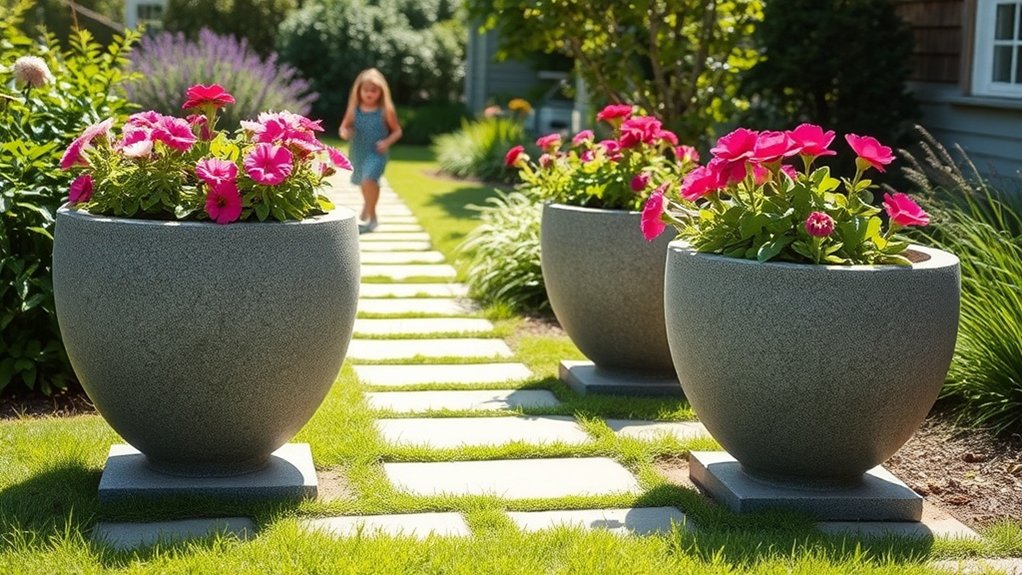
When selecting outdoor planters, safety and stability are essential, particularly in areas vulnerable to wind or high foot traffic. Concrete planters are excellent for weight distribution, providing a stable foundation that reduces the risk of tipping. Their substantial mass ensures resistance to wind, making them suitable for public spaces.
| Feature | Benefit | Impact on Safety |
|---|---|---|
| Heavy Material | Lowers the risk of tipping | Improved stability in windy areas |
| Fire-Resistant | Protects against garden fires | Increased safety for plants and surroundings |
| Minimal Maintenance | Reduces mould and pathogen build-up | Safer for long-term use |
Opting for concrete not only secures your plants but also enhances safety for those around them, making it a sensible choice for any outdoor garden.
Frequently Asked Questions
Can Concrete Planters Be Used Indoors as Well?
Yes, concrete planters are ideal for indoor gardening. They are durable and come in various designs that can enhance your home’s decor. Plus, they provide stability for your plants, making it easier to care for them. For example, if you have a small indoor herb garden, concrete planters can add a stylish touch while helping your herbs thrive with minimal upkeep.
How Do I Clean and Maintain Concrete Planters?
To clean and maintain concrete planters, use gentle cleaning methods. Regularly apply maintenance tips: scrub with mild soap and rinse thoroughly. Elevate the planters to improve airflow and seal them annually to preserve their integrity and prevent damage.
Are There Any Color Options for Concrete Planters?
Yes, there are many colour options for concrete planters. Techniques such as sandblasting or the application of sealants can create a variety of finishes. These methods not only enhance the visual appeal but also ensure that the colour remains consistent and durable throughout the planter.
Can I Drill Drainage Holes in Concrete Planters?
Yes, you can drill drainage holes in concrete planters. To do this effectively, use a masonry bit, apply consistent pressure, and keep the area damp to prevent damage. This will enhance drainage and promote healthy plant growth.
Do Concrete Planters Retain Heat During Hot Weather?
Concrete planters serve as a kind of sunscreen for your plants, absorbing heat during the summer. Their dense material can raise root temperatures, so it’s important to manage moisture and provide shade to prevent your plants from suffering in the heat.
Conclusion
In summary, concrete planters enhance the look of your outdoor garden while providing exceptional durability and stability. Concrete can endure temperatures from -40°F to over 100°F, making it suitable for various climates across the UK. By opting for concrete, you’re choosing a practical and versatile solution that safeguards your plants and supports a sustainable environment. With minimal upkeep needed, you can concentrate on what truly matters—enjoying your thriving garden.

Wonder how concrete can transform your landscape? Discover ten creative uses that will elevate your outdoor space in unexpected ways.

Transform your outdoor space with unique concrete ideas that will inspire your next landscaping project—discover the endless possibilities today!
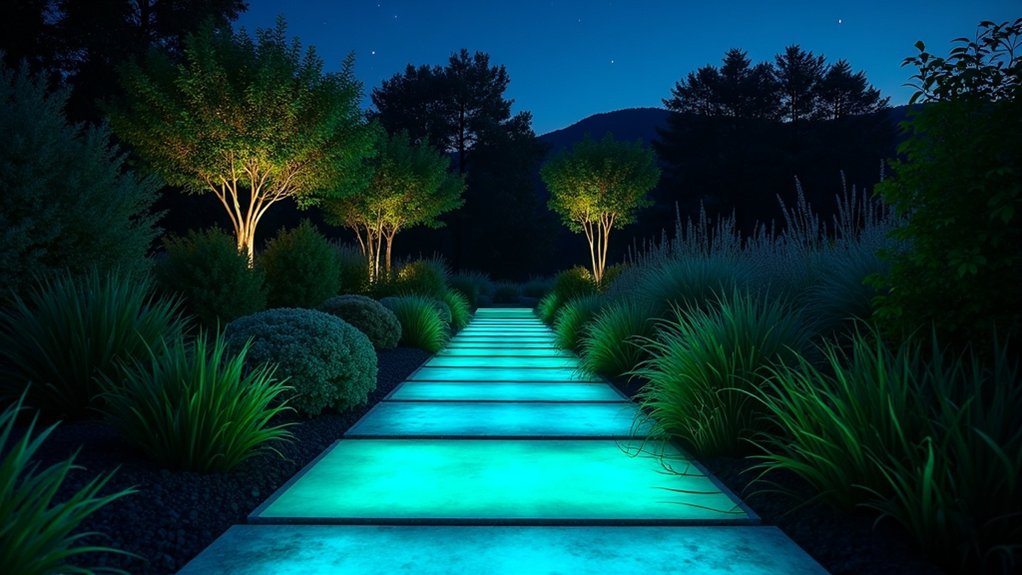
Pioneering a new era in landscape design, glow-in-the-dark concrete enhances safety and beauty—discover how this innovative material can transform your Read more