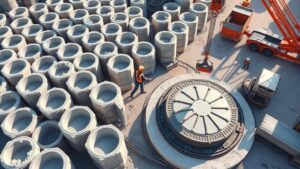
Precast concrete is perfect for modular housing thanks to its impressive durability, fire resistance, and quick construction. Its strong structure can withstand harsh weather, providing lasting performance with little maintenance. Precast units are manufactured off-site, which speeds up assembly and can cut labour costs by as much as 20%. Plus, they have eco-friendly features that align with sustainability goals. For more insights into these benefits and future trends in modular construction, keep reading.
Key Takeaways
- Precast concrete boasts a lifespan of over 50 years and requires far less maintenance than traditional materials such as wood or steel.
- Its inherent fire resistance and moisture protection enhance safety for both residents and emergency services, helping to mitigate risks from fires and mould.
- The impact resistance of precast concrete can endure severe weather, ensuring structures remain intact during storms and minimising flood damage.
- With efficient factory production and rapid onsite assembly, construction timelines can be cut by up to 50%, leading to significant savings in labour costs.
- Additionally, precast concrete promotes sustainability by reducing carbon emissions and optimising resource use, aligning with eco-friendly construction practices and global sustainability goals.
Durability and Longevity of Precast Concrete
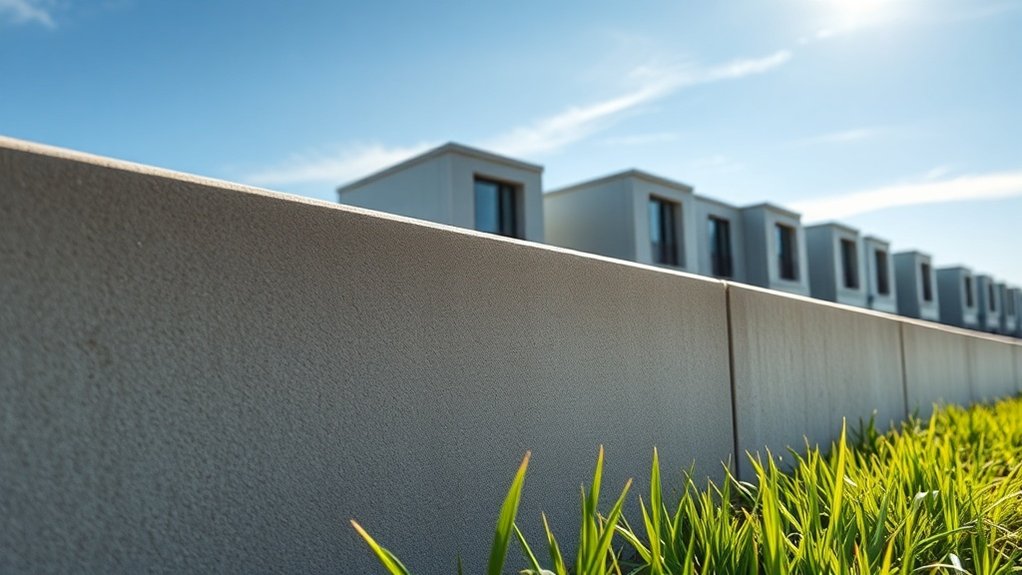
When it comes to construction materials for modular housing, precast concrete really stands out for its durability and longevity. This material boasts a high compressive strength, better than most typical modular options. Made in controlled environments, precast concrete ensures consistent quality, which is vital for long-lasting structures. It naturally resists environmental factors like moisture, fire, and pests, helping to maintain its integrity over time. Additionally, the manufacturing process of precast concrete involves precise techniques that reduce defects, further ensuring its robustness.
Additives, such as fly ash, enhance its durability, while innovative self-healing technology can fix micro-cracks on its own, reducing the risk of damage. Additionally, with proper maintenance and inspection, the lifespan of precast concrete structures can be extended even further. Prefabricated concrete structures often last over 50 years and need minimal maintenance, outlasting wood or steel.
Impact Resistance Against Extreme Weather

Precast concrete is known for its durability and longevity, providing excellent impact resistance against extreme weather. This means your modular home can better withstand severe conditions.
Here are some key advantages:
- Strong structure that can endure heavy winds from storms like hurricanes and tornadoes.
- Maintains integrity against impacts from debris carried by the wind.
- Reinforced with steel rebar for added strength.
- Features custom tie-down inserts designed to cope with cyclonic winds.
- Flood-resistant properties that help prevent water damage and mould growth. Additionally, precast concrete’s high degree of quality control ensures that each panel meets stringent standards for performance and durability. The exceptional durability of precast concrete also contributes to lower maintenance needs over time, enhancing its appeal for long-term housing solutions.
These qualities make precast concrete modular homes effective safe havens, reducing potential damage and ensuring your safety during extreme weather events.
Fire Safety Benefits of Concrete Structures
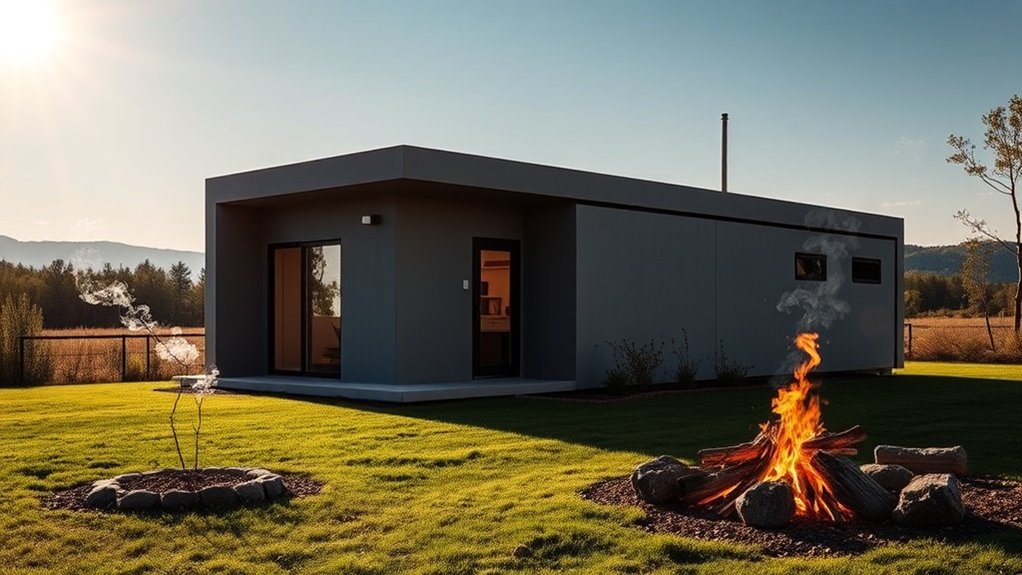
When it comes to fire safety in modular housing, concrete structures provide clear advantages thanks to their fire-resistant properties. Precast concrete is non-combustible, helping to prevent ignition and the spread of flames, which is crucial during wildfires or structural fires. Its fireproofing capabilities act as a strong barrier against external flames, ensuring occupant safety through passive fire protection. Furthermore, the exceptional fire resistance of precast concrete not only enhances safety but also contributes to peace of mind for homeowners. The material’s ability to withstand high heat exposure ensures that it maintains structural integrity during extreme temperatures, while its moisture resistance reduces the risk of mould growth that could compromise fire safety. These fire safety benefits not only protect occupants but also create safer environments for first responders. Given these factors, precast concrete is an excellent choice for modular housing solutions.
Speed of Construction With Modular Units
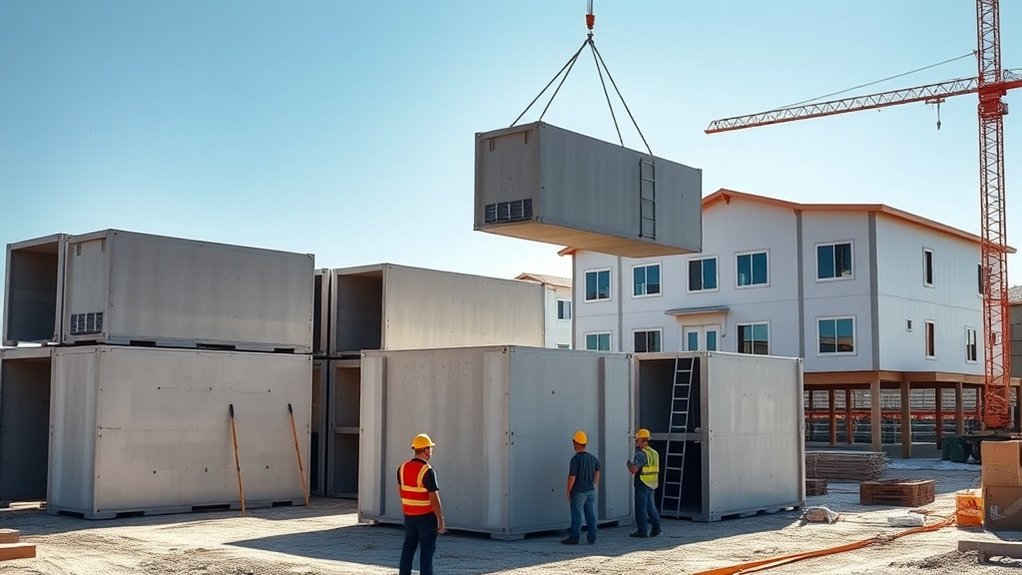
Concrete offers significant fire safety advantages, enhancing protection for occupants and improving the efficiency of modular housing construction.
The use of precast modular units accelerates construction timelines through several key factors:
- Factory-controlled production minimises delays caused by adverse weather.
- Concurrent workflows enable simultaneous site preparation and module manufacturing.
- Quick onsite assembly reduces the complexity of traditional building processes.
- Precast units arrive ready for installation, decreasing the need for adjustments on site.
- Advanced technologies enhance production efficiency and logistics.
These factors collectively lead to quicker project milestones and shorter overall timeframes.
Efficiency in Labor and Cost Savings

In modular construction, there’s a marked reduction in on-site labour, as most tasks are carried out in a controlled factory setting.
This efficient assembly process not only speeds up project timelines but also reduces overall construction costs. By minimising labour needs and optimising resource use, you create a more effective building method that boosts profitability.
For instance, a school built using modular techniques can be completed in months rather than years, allowing communities to benefit sooner.
Reduced On-Site Labor
Using precast concrete for modular housing significantly cuts down on the need for on-site labour, simplifying construction processes and improving cost efficiency.
This reduction has a notable effect on your ability to adapt to the labour market and optimise workforce productivity. Here are some key benefits:
- Fewer on-site workers lead to lower accommodation and supervision expenses.
- Production in factories allows for better skill specialisation.
- You could save up to 20% on labour costs compared to traditional building methods.
- Controlled environments reduce safety risks and boost quality control.
- A decrease in labour demand helps avoid delays caused by local labour shortages.
Fast Assembly Process
The advantages of reduced on-site labour highlight the fast assembly process that precast concrete offers.
With efficient production in a controlled factory setting, multiple modules can be created at once, free from weather-related delays. Precast components arrive on-site ready for installation, significantly cutting down on fabrication time.
Simple connection systems facilitate the quick installation of large modules using cranes. This efficiency reduces disruption and minimises coordination challenges, allowing for tighter scheduling.
Additionally, factory quality control ensures precise dimensions, lowering the risk of rework and ensuring a reliable timeline.
Lower Construction Costs
Cost efficiency is a key benefit of using precast concrete in modular housing, thanks to streamlined labour processes and significant savings. By opting for precast systems, you can achieve:
- Lower labour costs through factory-controlled conditions.
- Standardised components that simplify assembly and require less skilled labour.
- Enhanced labour efficiency with less variability compared to traditional methods.
- Quicker construction timelines that reduce indirect labour and equipment expenses.
- Predictable costs due to bulk purchasing and strong supplier relationships.
These elements work together to improve cost predictability, helping to keep your project within budget.
The savings on labour translate to overall lower expenses, making precast concrete a wise choice for modular housing. This approach not only speeds up project delivery but also maximises your return on investment.
Environmental Sustainability of Precast Concrete
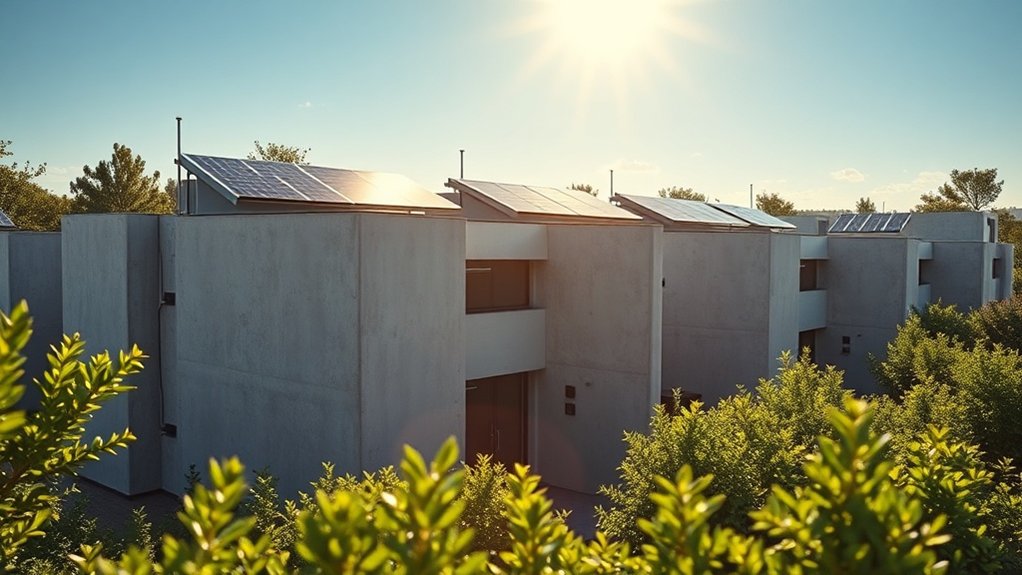
When considering the environmental sustainability of precast concrete, it’s clear that the industry has made strides, achieving a 46% reduction in carbon emissions since 2010.
Its efficient use of resources helps extend the lifespan of precast products, which in turn minimises waste and lowers the overall environmental impact.
Reduced Carbon Emissions
Traditional construction methods often lead to high carbon emissions, but precast concrete offers a more sustainable alternative, reducing embodied carbon by around 10-15.6%. This reduction is crucial for promoting sustainable building practices.
Here’s how precast concrete makes a difference:
- Efficient use of materials reduces waste.
- High rates of prefabrication significantly cut emissions.
- Modular processes minimise greenhouse gas emissions from transport and on-site activities.
- Life Cycle Assessments reveal lower overall greenhouse gas emissions.
- The recycling and reuse of precast elements further lower net embodied carbon.
Resource Efficiency and Longevity
Precast concrete is an excellent choice for modular housing, significantly reducing carbon emissions while enhancing resource efficiency and durability. By incorporating recycled concrete aggregates and steel, it optimises resources and lessens environmental impact.
The manufacturing process has seen improvements in water efficiency, cutting mains water consumption by 14% since 2008. Water-intensive phases are managed through recycling and better curing techniques, leading to substantial waste reduction on construction sites.
Precast components allow for quicker assembly and reduce the need for on-site mixing.
Moreover, precast concrete‘s durability means longer-lasting structures, which ultimately cuts down on repairs and resource use. Its enhanced resistance to environmental factors makes it a sustainable option for modular housing, ensuring longevity and efficiency.
Reduced Carbon Emissions Through Innovative Technologies
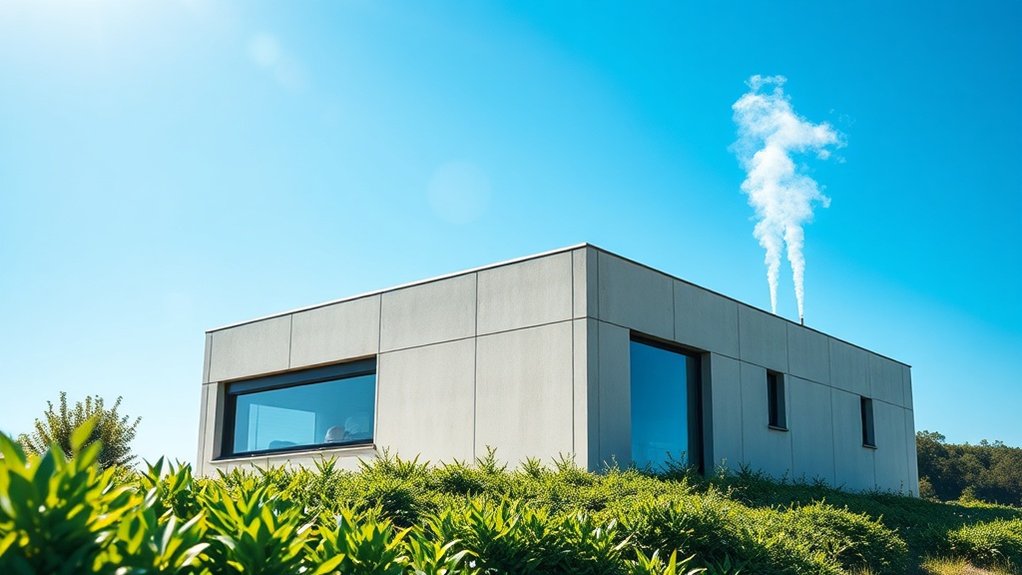
Innovative technologies in precast concrete have significantly reduced carbon emissions compared to traditional building methods. By utilising advancements in carbon tracking and emissions monitoring, substantial reductions can be achieved in your projects.
Here are some key benefits:
- Precast construction emits 10-15% less carbon than traditional in-situ methods.
- Prefabrication rates over 21% can lead to emissions reductions of 6-20%.
- Modular integrated construction results in a 17.6% decrease in total carbon emissions.
- Off-site fabrication reduces transportation and on-site emissions.
- Adopting lean manufacturing techniques helps achieve zero-waste goals.
The use of optimized mix designs and precise moulds in precast production enhances material efficiency and minimises waste.
This approach not only contributes to a more sustainable construction industry but also ensures high-quality standards in your modular housing projects.
Cost-Effectiveness of Precast Housing Solutions
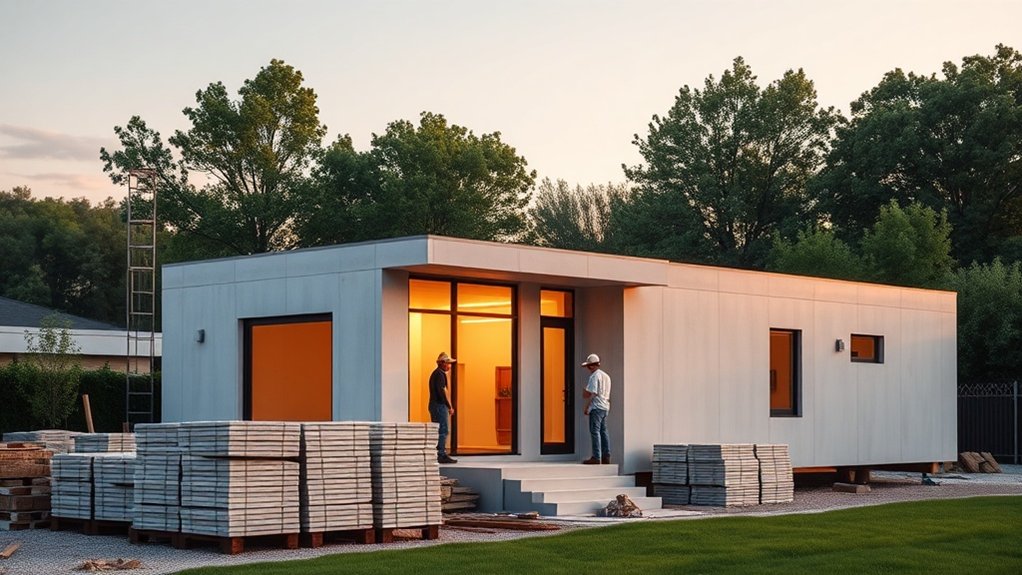
When considering precast housing solutions, you’ll notice significant cost advantages due to mass production and efficient use of materials.
Labour costs are lower because the assembly process is streamlined, requiring less manpower.
These factors lead to considerable long-term savings, making precast concrete a smart choice for modular housing in the UK.
Competitive Pricing Advantages
Using precast concrete for modular housing offers notable competitive pricing advantages that boost cost-effectiveness throughout the construction process.
Here are the key factors to consider:
- Material Cost Efficiency: Factory conditions reduce waste and ensure consistent quality, which helps keep costs down.
- Bulk Purchasing: Buying materials in bulk reduces the cost per unit thanks to economies of scale.
- Speed of Construction: Quick assembly can shorten construction timelines by up to 50%, leading to lower financing costs.
- Transportation Optimisation: Standardised components make logistics simpler, cutting freight costs.
- Predictable Budgeting: Less variability in materials allows for more accurate cost forecasting.
These factors illustrate how optimising the supply chain and sourcing materials strategically can significantly lower overall costs, making precast housing a financially sound option.
Reduced Labor Costs
While competitive pricing is important, the cost-effectiveness of precast concrete housing solutions is significantly improved by lower labour costs.
Precast components are manufactured in controlled factory environments, which automates many labour-intensive tasks, enhancing efficiency and reducing the need for skilled workers on-site. These modules arrive ready for quick installation, cutting down assembly time and the number of workers required.
This efficient method reduces the number of labour shifts and the need for scaffolding, which ultimately lowers overall labour expenses. Additionally, optimised design and planning simplify the assembly process, reducing the complexity and skill level needed on-site.
Consequently, you can better manage payroll budgets, address labour shortages, and complete projects more quickly, all leading to considerable savings during construction.
Long-Term Savings Potential
Long-term savings potential is a significant benefit of precast concrete housing solutions, offering substantial cost-effectiveness over time. By opting for precast housing, you ensure long-term value and financial stability.
Here are some key factors contributing to these savings:
- Reduced construction timelines can save up to £80 per square metre.
- Energy-efficient systems significantly lower ongoing energy bills.
- Waste reduction from factory production decreases material costs.
- Fixed pricing models provide budget certainty, helping to avoid overruns.
- Market trends indicate that prefabricated housing is around 20% cheaper than traditional methods.
These advantages not only boost your project’s profitability but also promote sustainable growth and operational efficiency throughout the building’s lifespan.
Choosing precast housing is a smart decision for future financial success.
Thermal Performance and Energy Efficiency
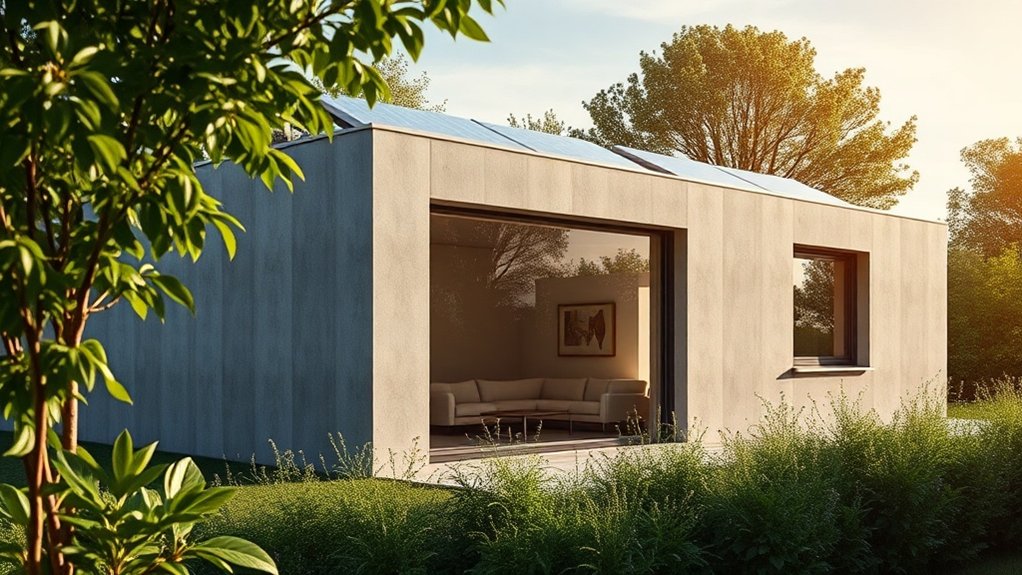
When examining the thermal performance and energy efficiency of precast concrete in modular housing, you’ll notice its design incorporates advanced insulation and air barrier technologies. The factory-installed closed-cell polyurethane foam insulation provides continuous thermal insulation, effectively controlling air infiltration and improving indoor air quality.
| Aspect | Benefit |
|---|---|
| Insulation Thickness | Begins at 1.5 inches |
| Thermal Mass | Helps stabilise indoor temperatures |
| Airtight Construction | Reduces air leakage |
| Thermal Bridging Reduction | Boosts energy efficiency |
| Energy Code Compliance | Adheres to strict standards |
These features enable precast concrete to significantly lower operational energy costs, enhancing occupant comfort while meeting contemporary energy regulations.
Market Growth and Demand for Modular Housing
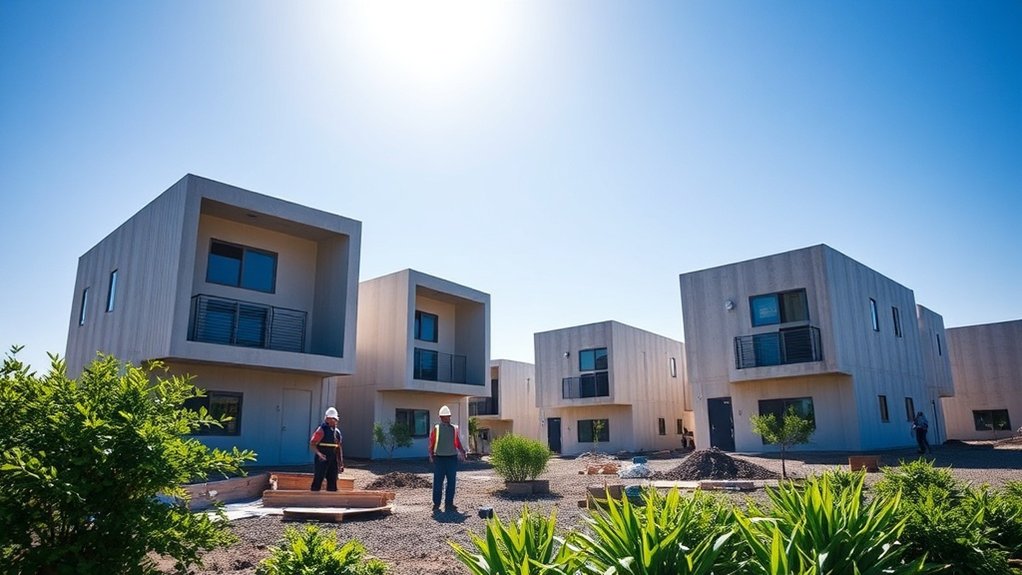
The modular housing sector is witnessing substantial growth, driven by several key factors such as urbanisation, population growth, and economic pressures.
Here are the main drivers of demand:
- Increased urbanisation creating a need for scalable housing solutions
- Growing populations putting strain on housing markets
- Investments from both government and private sectors in affordable housing initiatives
- Labour shortages encouraging off-site construction methods
- Rising sustainability concerns boosting the attractiveness of modular housing
With the global modular construction market expected to expand from around £104.65 billion in 2024 to approximately £214.76 billion by 2034, this sector is crucial for delivering efficient and affordable housing solutions, meeting urgent needs in both residential and commercial markets.
Advancements in Technology Within Precast Production

The rapid growth of modular housing is closely linked to advancements in precast concrete production that boost efficiency, sustainability, and design flexibility.
Integrating IoT technology allows precast elements to act as smart components, enabling real-time monitoring of structural soundness and environmental conditions. This leads to predictive maintenance, cutting costs and enhancing durability.
Additionally, 3D printing is transforming the fabrication process by allowing for intricate shapes and custom designs while reducing material waste. This layer-by-layer approach speeds up production timelines, improving overall project efficiency.
These innovations streamline manufacturing, encourage environmentally friendly practices, and support scalable production to meet the increasing demand for modular housing.
The Future of Precast Concrete in Housing Development
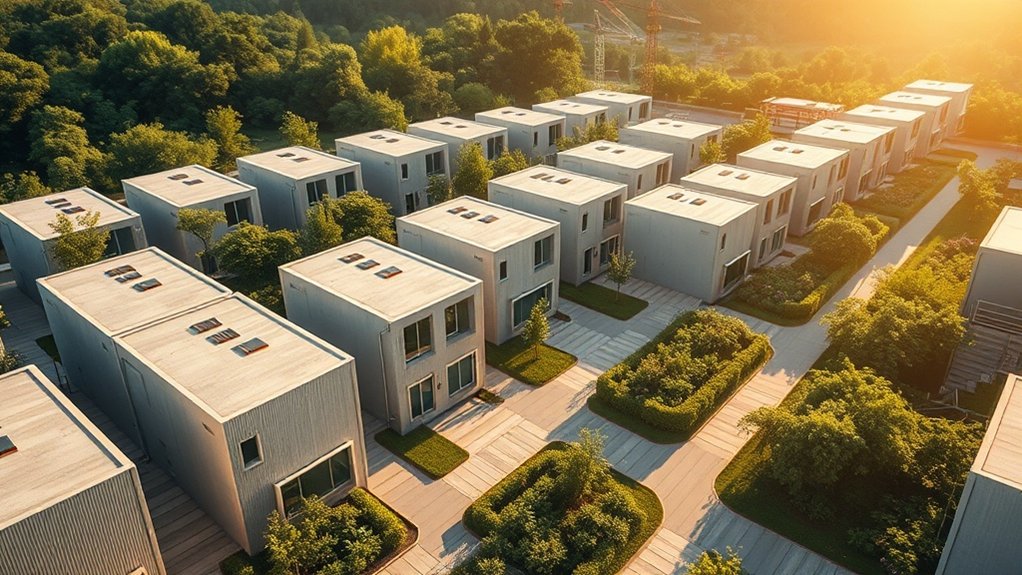
As housing needs and urban environments evolve, precast concrete is set to become a key player in future housing developments.
With growing demand, we can expect significant advancements in this area, driven by:
- Innovations in sustainable materials and construction methods
- Design trends that emphasise aesthetic flexibility
- Improved efficiency through off-site production
- Adaptability for high-density urban living
- Increased government support for modular housing solutions
The precast concrete market is anticipated to grow substantially, fuelled by urbanisation and a shift towards modular construction.
With sustainability taking centre stage, precast housing will likely utilise eco-friendly materials and modern technologies, ensuring that future projects cater to the needs of both communities and the environment.
Frequently Asked Questions
How Do Precast Concrete Homes Compare to Traditional Homes in Resale Value?
Precast concrete homes typically have strong resale potential, often appreciating in value like traditional houses. Current market trends show a growing interest in durable, sustainable properties, which boosts the appeal of precast homes. This can enhance their value retention in a competitive property market. For example, a precast home may attract buyers looking for low maintenance options, making it a solid investment.
What Design Styles Are Available for Precast Concrete Modular Homes?
Precast concrete modular homes come in a range of design styles, from sleek modern looks that focus on minimalism to eco-friendly designs that prioritise energy efficiency. You can personalise layouts, finishes, and features to suit your taste while ensuring the home remains durable and efficient. For instance, opting for large windows can enhance natural light in a contemporary home, while using sustainable materials can support an eco-conscious lifestyle.
Can Precast Concrete Be Adapted for Different Climate Conditions?
Yes, precast concrete can be adapted to suit different climate conditions. Its thermal efficiency allows for tailored mixes and insulation, ensuring optimal performance in both hot and cold environments while reducing energy usage. For instance, in colder climates, adding insulation can help keep buildings warm, while in hotter areas, reflective surfaces can minimise heat absorption.
What Financing Options Are Available for Precast Concrete Housing?
There are several financing options for precast concrete housing in the UK. You can consider traditional construction loans, which are commonly offered by banks, or look into government-backed schemes like the Help to Buy initiative that may require a lower deposit. Additionally, some lenders specialise in financing for innovative building methods, including precast concrete. It’s important to research various loan options to find one that suits your financial situation and ensures you get the best possible terms.
How Does Precast Concrete Impact Local Construction Job Markets?
Precast concrete boosts job creation by moving construction roles into factory settings, which allows for specialised training programmes that enhance skill development. This shift stabilises employment and creates demand for skilled workers in manufacturing, assembly, and logistics within local job markets. For instance, a factory producing precast concrete components can employ a range of skilled workers, from engineers to assembly line operators, thereby strengthening the local economy.
Conclusion
Precast concrete stands out as an excellent choice for modular housing. Its strength ensures it can withstand various challenges, while the rapid assembly process allows homes to be built quickly and efficiently. This method not only saves costs but also boosts energy efficiency, making modular housing a smart option for the future. Choosing precast concrete is more than just a practical decision; it’s a step towards creating a sustainable and resilient living environment.

Narrow your focus on precast concrete and discover how this innovative construction method can revolutionize your building projects. Uncover its Read more

Find out how precast concrete beams revolutionize construction with various types and applications that ensure strength and efficiency; discover their Read more

Pre-tensioned reinforced concrete offers unparalleled strength and efficiency, but what are its key benefits and applications in modern construction? Discover Read more