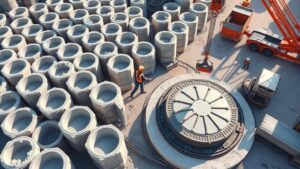
Steel reinforcement significantly enhances the strength and durability of concrete structures. It aids in load distribution, minimises cracking, and improves resistance to environmental factors. One notable advantage is its fire resistance, as it helps safeguard steel from extreme temperatures. This results in lower maintenance costs and a longer lifespan, promoting economic sustainability. Additionally, using recycled materials supports environmentally friendly practices. As you delve deeper, you’ll see how these benefits are applied in modern constructions and innovative designs.
Key Takeaways
- Steel reinforcement boosts concrete’s tensile strength, improving load distribution and minimising stress points, leading to more resilient structures.
- Reinforced concrete offers excellent fire resistance, ensuring that buildings maintain their integrity during fire incidents and comply with fire safety regulations.
- Using recycled steel for reinforcement supports sustainability, lowers energy use, and helps decrease the carbon footprint of construction projects.
- Generally, reinforced concrete weighs less than structural steel, which can lower initial costs and provide long-term financial advantages.
- Modern design methods, like fibre-reinforced concrete and alternative materials, enhance durability and encourage environmentally friendly building practices.
Strength and Durability of Reinforced Concrete

Reinforced concrete combines concrete’s compressive strength with steel’s tensile strength, resulting in a strong material that can effectively withstand various stresses. The addition of steel reinforcement improves load distribution, allowing forces to spread evenly across the structure and reducing localized stress points. This not only enhances structural resilience but also improves flexibility, making it less likely to crack under pressure. Furthermore, reinforced concrete is durable against external forces and environmental challenges, leading to a longer lifespan and reduced maintenance needs. The integration of steel reinforcements significantly contributes to the material’s ability to manage tensile stress that concrete alone cannot withstand. Additionally, the use of proper curing methods during construction is essential for achieving the desired strength and durability of the concrete.
Fire Resistance and Safety
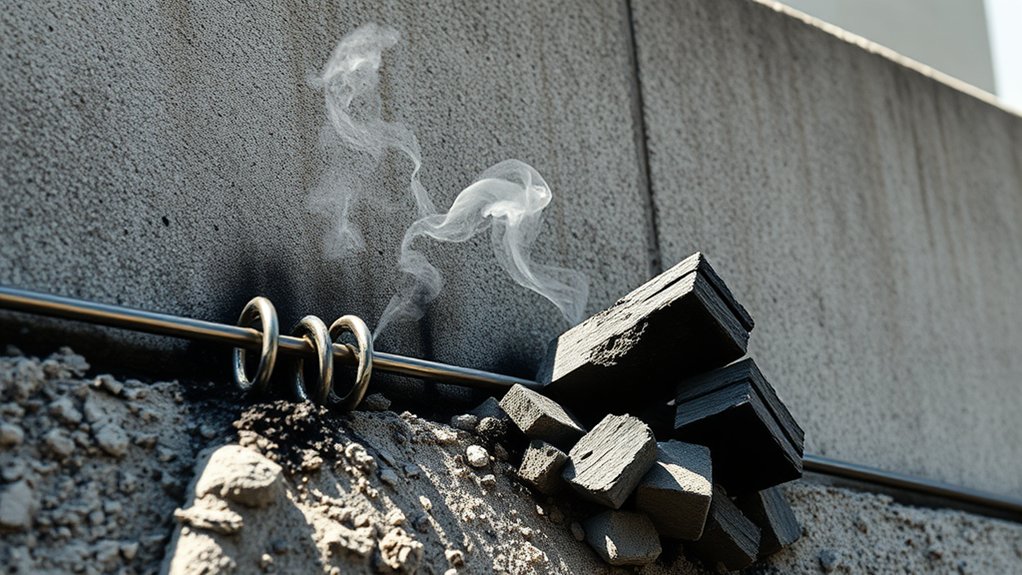
Understanding fire resistance and safety in reinforced concrete construction is crucial for maintaining structural integrity during fire incidents.
The fire resistance features of steel reinforcement in concrete offer notable benefits:
- Thermal Insulation: The layer of concrete protects the steel from direct heat, helping to preserve its strength.
- Heat Dissipation: Reinforced concrete, as a composite material, disperses heat more efficiently than unprotected steel structures.
- Fire Resistance Ratings: Adhering to British Standards ensures a minimum two-hour fire resistance, which is vital for safety.
Environmental Advantages of Steel Reinforcement
Fire safety measures in reinforced concrete construction not only protect buildings during emergencies but also provide environmental benefits.
Most steel rebar is made from recycled materials, with up to 95% sourced from post-consumer and industrial products. This practice reduces reliance on virgin materials and minimises waste, supporting sustainable waste management by diverting old steel from landfills and promoting a circular economy. Additionally, using recycled steel consumes less energy than producing raw steel, which is crucial for reducing CO2 emissions. The durability of reinforced concrete extends its lifespan, lowering the need for new materials, while its capacity to be retrofitted or repurposed further cuts down on waste. Moreover, the fact that reinforcing bars produced in electric arc furnaces account for about 45% of steel products in America underscores the significance of using recycled materials. This energy-efficient production method not only conserves resources but also contributes to lower carbon emissions associated with steel manufacturing.
These factors collectively enhance the environmental advantages of steel reinforcement in construction.
Economic Benefits of Reinforced Concrete
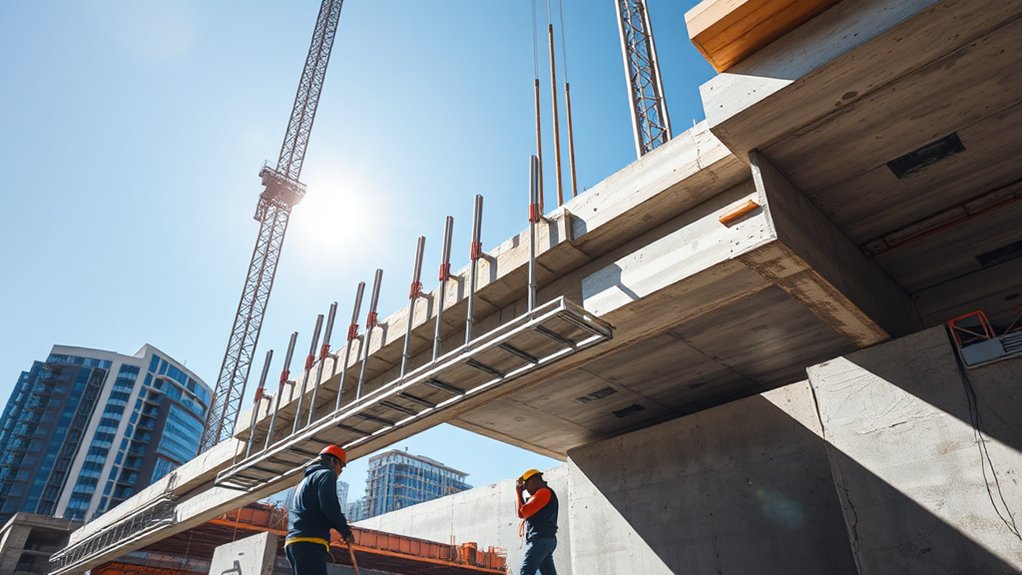
While the initial outlay for reinforced concrete construction may appear high, its economic benefits quickly become clear through cost-effectiveness and long-term savings.
Here are some key advantages:
- Cost Savings: Reinforced concrete typically uses less material by weight compared to structural steel, resulting in significant savings.
- Labour Efficiency: Using precast concrete can reduce construction costs by up to 50%, cutting down on-site labour requirements and accelerating project timelines. This efficiency is enhanced further through advanced manufacturing techniques that streamline production processes.
- Durability and Longevity: Its robust nature means lower maintenance and replacement costs over time, contributing to overall economic sustainability. Additionally, this material’s performance against water damage ensures that structures remain intact, further reducing long-term expenses.
In essence, investing in reinforced concrete pays off in the long run.
Structural Integrity and Reliability
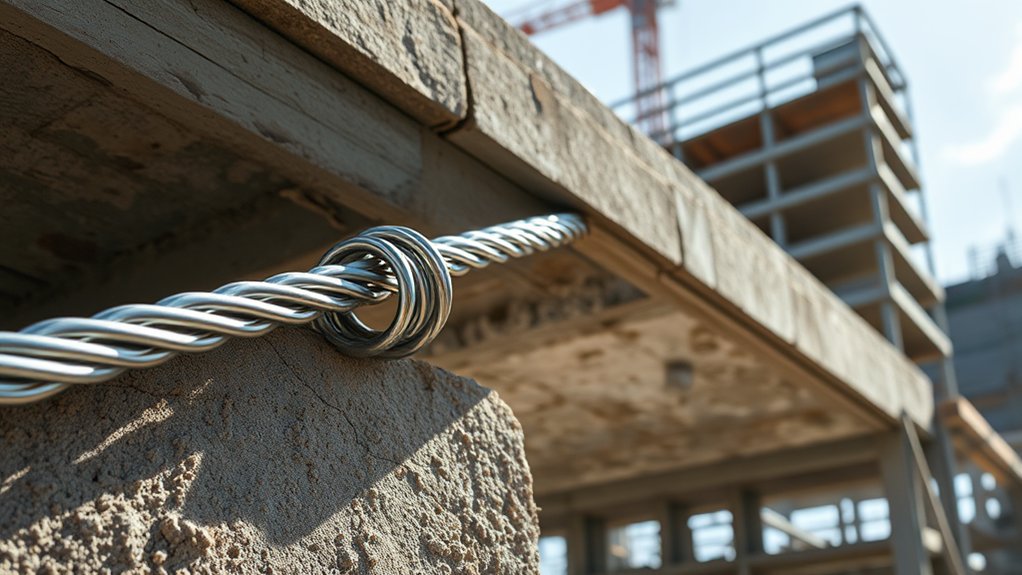
Reinforced concrete offers significant economic benefits alongside its structural integrity and reliability, making it a popular choice in construction. By adding steel reinforcement, you greatly enhance design reliability, often achieving safety indices above the target level of 3.8.
Slabs with optimal steel ratios can handle accidental loads up to twice their intended limit, ensuring they remain functional throughout their lifespan. Effective control of deflection also prevents unsightly changes and user discomfort, while high percentages of steel enhance serviceability.
Adhering to standards like ACI 318-05 ensures proper detailing, which helps reduce potential construction issues. This built-in redundancy lowers the risk of sudden failure, making reinforced concrete a strong and dependable option for any building project.
Impact Resistance and Ductility
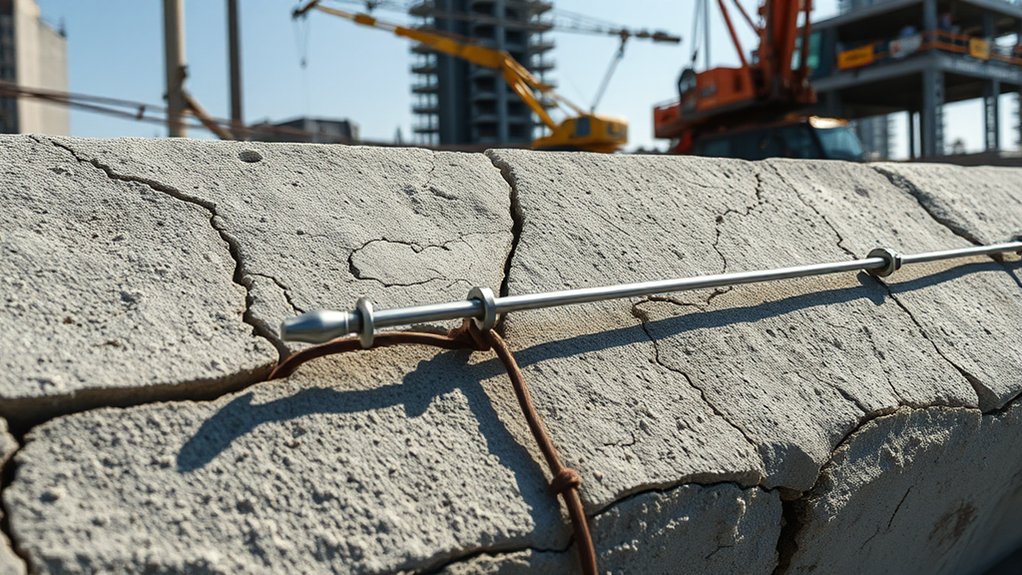
Impact resistance and ductility are vital for concrete structures, particularly in areas exposed to dynamic loads.
Steel fibres significantly improve these characteristics through several key mechanisms:
- Impact Absorption: Steel fibres effectively absorb and distribute impact loads, minimising the chance of sudden failure.
- Crack Control: They help to stop crack propagation, maintaining the structural integrity and allowing for greater deformation before failure occurs.
- Energy Dissipation: The fibres dissipate impact energy, thus enhancing durability under repeated loads.
Using a typical fibre volume of around 1.5% can lead to notable improvements in both impact resistance and ductility.
This combination not only prolongs the lifespan of concrete structures but also ensures they perform reliably under stress, making them safer and more resilient in challenging environments.
Thermal Mass and Energy Efficiency
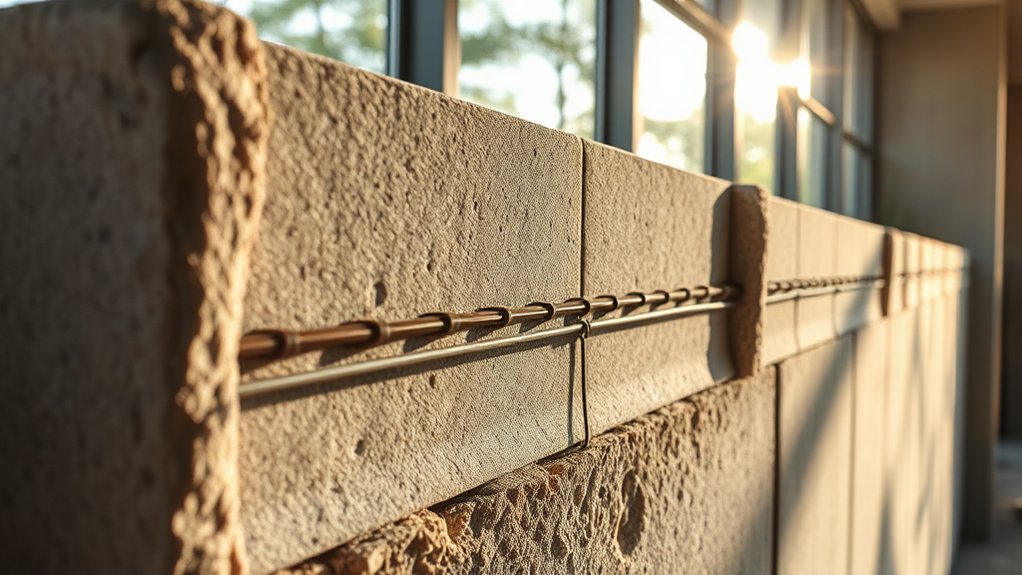
Thermal mass is vital for improving energy efficiency in concrete structures. It allows materials like concrete to absorb, store, and release heat efficiently.
Using high thermal mass materials can help stabilise indoor temperatures, leading to notable energy savings. In multi-storey buildings, concrete slabs serve as an effective thermal mass, promoting natural cooling and reducing dependence on heating, ventilation, and air conditioning (HVAC) systems.
For optimal performance, a thickness of 75-100mm is recommended. Additionally, designing with fewer windows can further minimise solar gain, enhancing these benefits.
Contemporary Applications in Modern Construction
As modern construction progresses, the use of steel reinforcement in concrete has become essential for improving structural performance and enabling architectural creativity.
Contemporary applications focus on three main areas:
- Structural Integrity: Steel reinforcement ensures that buildings, bridges, and dams can endure natural disasters, providing vital resilience against extreme weather events.
- Architectural Flexibility: Reinforced concrete allows for complex designs, such as curved surfaces and cantilevers, facilitating innovative architectural styles.
- Material Efficiency: Incorporating recycled materials in steel reinforcement reduces waste and energy consumption, supporting sustainable construction practices.
These applications not only enhance durability against environmental challenges but also promote long-term sustainability, making steel reinforcement a fundamental element of modern construction.
Innovative Designs and Sustainability

When exploring innovative designs in concrete construction, sustainability is a key focus. The use of smart technologies significantly enhances these sustainable practices.
For instance, recycled steel, predominantly sourced from post-consumer materials, is now commonly used in reinforcement. Moreover, fibre-reinforced concrete (FRC) reduces the need for steel while still ensuring strength and durability.
Innovations such as replacing Portland cement with alternative materials like fly ash can significantly lower CO₂ emissions. Intelligent mix designs help optimise performance and reduce waste, aligning with a cradle-to-cradle approach.
Frequently Asked Questions
How Does Steel Reinforcement Affect Concrete’s Curing Process?
Steel reinforcement significantly influences the curing process of concrete. It helps retain moisture, which is crucial for hydration, ensuring the mix sets properly. By controlling shrinkage, it also prevents cracking, resulting in a stronger bond. This ultimately enhances the concrete’s structural integrity and durability. For instance, in large structures like bridges, proper curing with steel reinforcement can lead to a longer-lasting, more resilient build.
What Types of Steel Are Commonly Used in Reinforcement?
You might think stainless steel is the top choice for reinforcement, but carbon steel is often more practical. Widely used, carbon steel provides cost-effectiveness and strength, while stainless steel is typically reserved for specific environments that require excellent corrosion resistance.
How Is Steel Rebar Installed in Concrete Structures?
To ensure proper rebar placement, use techniques such as mechanical ties and spacers. These methods secure the rebar, keep it aligned, and ensure sufficient concrete cover. This is crucial for effective load distribution and maintaining structural integrity. For instance, in a reinforced concrete slab, correct rebar positioning helps prevent cracking and enhances durability.
What Are the Maintenance Requirements for Reinforced Concrete?
Consider your reinforced concrete as you would a car; regular inspections ensure it remains in good condition. Adhere to inspection standards and promptly apply repair techniques to maintain safety and longevity. This approach helps prevent expensive damage and preserves the structural integrity over time.
How Does Weather Affect Steel Reinforcement Performance?
Weather conditions significantly affect the performance of steel reinforcement. Cold weather can lower corrosion resistance and hinder hydration, while excessive heat can weaken the material, leading to quicker deterioration. For example, during winter, a construction project may face delays due to freezing temperatures, impacting the curing process of concrete. Understanding these weather-related effects is essential for ensuring the structural integrity and longevity of concrete applications.
Conclusion
Incorporating steel reinforcement into concrete construction strengthens structures and enhances their durability. Consider a skyscraper that withstands strong winds; its steel framework provides flexibility and resilience, ensuring safety for those inside. This combination of strength and longevity allows for innovative designs, improving both safety and sustainability. As you think about the future of construction, recognise how steel reinforcement can elevate ordinary concrete into remarkable structures that endure over time and against the elements.

Offering enhanced durability and crack resistance, fiber-reinforced ready-mix concrete products are revolutionizing construction—discover their manufacturing process and future potential.
Understand the advantages of air-entrained concrete for durability and workability, but what challenges might it present in your construction projects?

Astonishingly versatile, concrete is essential in commercial construction; discover ten innovative ways it transforms projects and boosts efficiency. Explore the Read more