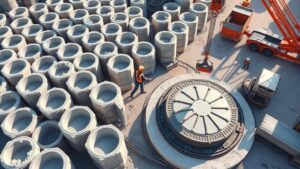
Concrete is essential in commercial construction, used for high-rise building foundations, decorative finishes, and precast panels that streamline assembly. It’s perfect for creating durable pavements and effective retaining walls to manage landscaping and soil erosion. You can also take advantage of its soundproofing properties and various water management systems. Innovative interior solutions can enhance spaces, while efficient formwork systems simplify the construction process. Explore these applications to see how they can elevate your projects.
Key Takeaways
- Concrete is essential for the foundations of high-rise buildings, providing the necessary stability and load-bearing capacity for tall structures.
- Decorative concrete techniques enhance the visual appeal of commercial properties, boosting their marketability.
- Precast concrete panels allow for quicker construction, which can lower labour costs and minimise delays caused by weather.
- Concrete pavements are durable for roads and walkways, leading to reduced maintenance and repair costs over time.
- Concrete water management systems support efficient drainage and help mitigate flooding risks in urban areas.
High-Rise Building Foundations

When constructing high-rise buildings, understanding the significance of foundations is essential, as they support the entire weight and stability of the structure.
Foundation design must consider various factors, such as soil conditions, load-bearing capacity, and environmental influences. A well-designed foundation evenly distributes the building’s load, preventing settlement or structural failure.
Engineers often choose between shallow and deep foundations based on the specific site conditions. For example, in areas with poor soil quality or substantial loads, deep foundations like piles or caissons are necessary. Additionally, using C40 concrete ensures the foundation can withstand heavy loads and environmental stressors, enhancing the building’s overall durability.
Decorative Concrete for Aesthetic Appeal
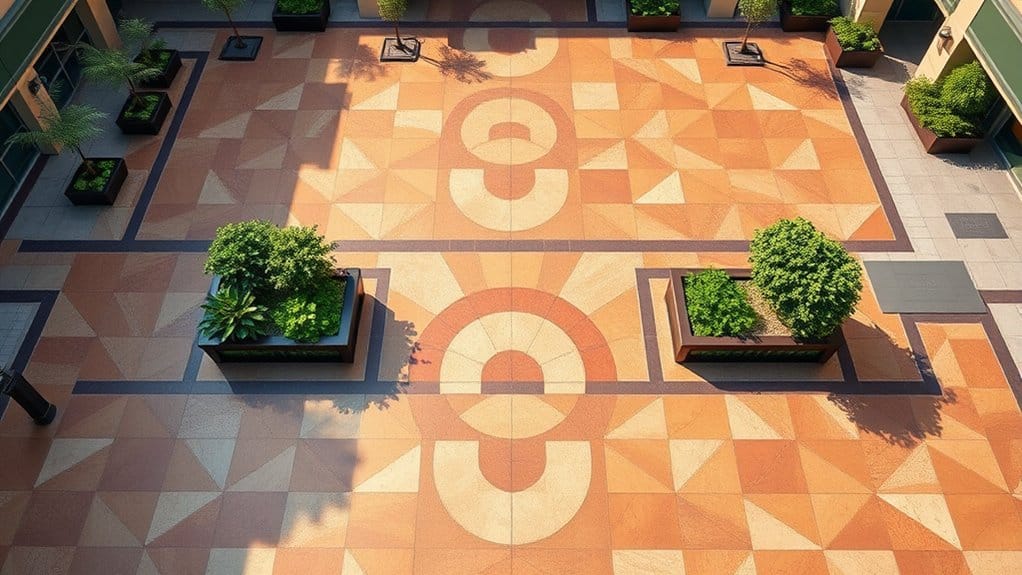
While the foundation of a high-rise building ensures structural stability, the surface finishes are crucial for enhancing aesthetic appeal.
Decorative concrete techniques, such as stamped concrete, allow you to replicate natural materials like stone or brick, providing an eye-catching surface at a lower cost. By adding coloured finishes, you can further personalise the appearance, creating a distinctive atmosphere that aligns with your project’s branding and design vision.
These methods not only enhance the building’s exterior but also boost its marketability, attracting potential tenants or buyers. Additionally, ready-mix concrete’s exceptional strength ensures that these decorative features are both durable and visually appealing.
Investing in decorative concrete improves both the visual impact and overall value of commercial properties, making it a wise choice for modern construction projects.
Precast Concrete Panels for Rapid Construction

Precast concrete panels transform the construction process by facilitating quick assembly and lowering on-site labour costs. These panels provide numerous benefits, such as improved quality control, enhanced durability, and accelerated project timelines. They can be effectively used in various applications, including commercial properties, warehouses, and car parks. Furthermore, their cost-effectiveness ensures that they provide significant long-term savings in maintenance and repair costs.
| Advantages of Precast | Applications of Panels |
|---|---|
| Quick installation | Commercial properties |
| Reduced labour costs | Warehouses |
| High precision and quality | Car parks |
| Minimized weather delays | Retail spaces |
| Energy efficiency | Industrial facilities |
Concrete Pavement for Roads and Walkways
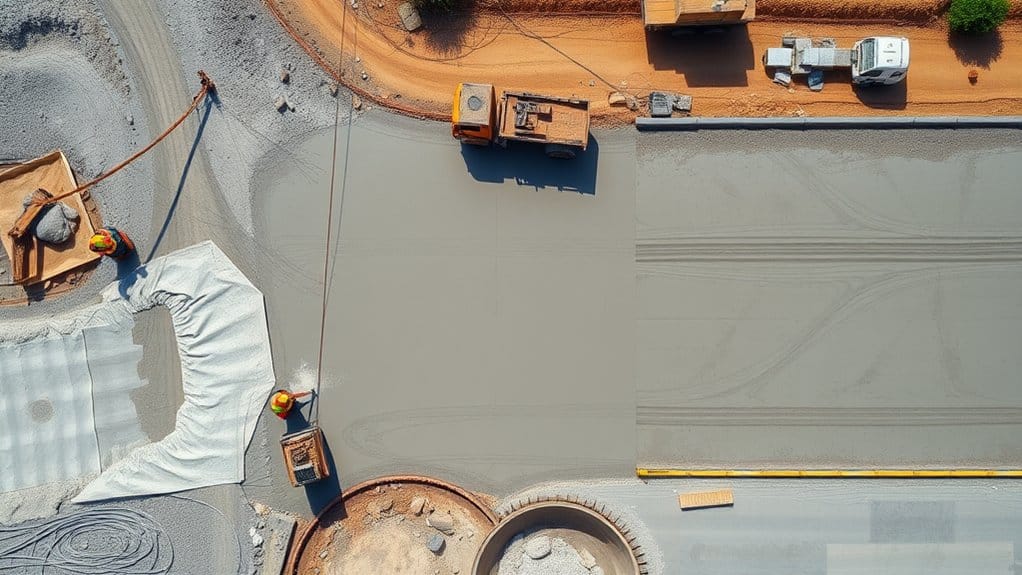
When considering concrete pavement for roads and walkways, you’ll find it offers excellent durability and longevity, even under heavy traffic.
This material not only stands up to wear and tear but also proves to be cost-effective over time.
For instance, while initial costs may be higher, the reduced maintenance and repair needs make it a smart choice for commercial construction projects.
Understanding these benefits will aid you in making informed decisions.
Durability and Longevity
Durability and longevity are essential for the performance of concrete pavements used in roads and walkways, as they impact maintenance costs and user safety.
When considering concrete for these applications, keep the following in mind:
- Weather Resistance: Quality concrete can withstand various weather conditions, reducing the risk of damage from freeze-thaw cycles and heavy rain.
- Low Maintenance: Well-designed concrete pavements demand fewer repairs over time, leading to lower upkeep costs.
- Material Longevity: Concrete’s strength makes it capable of supporting heavy loads, making it ideal for high-traffic areas with minimal wear.
Cost-Effectiveness Benefits
When choosing materials for roads and walkways, initial costs are often a concern. However, concrete pavements can be a cost-effective option in the long run.
Their durability means less frequent repairs and replacements, leading to significant savings over time. By investing in concrete from the start, you can reduce ongoing maintenance costs.
Furthermore, concrete can handle heavy traffic loads, resulting in fewer disruptions and lower expenses for traffic management during repair work. Its reflective surface can also lower lighting costs, adding to the financial benefits.
In short, opting for concrete not only addresses immediate project needs but also enhances long-term cost efficiency, making it a wise choice for commercial construction.
Retaining Walls for Landscape Management
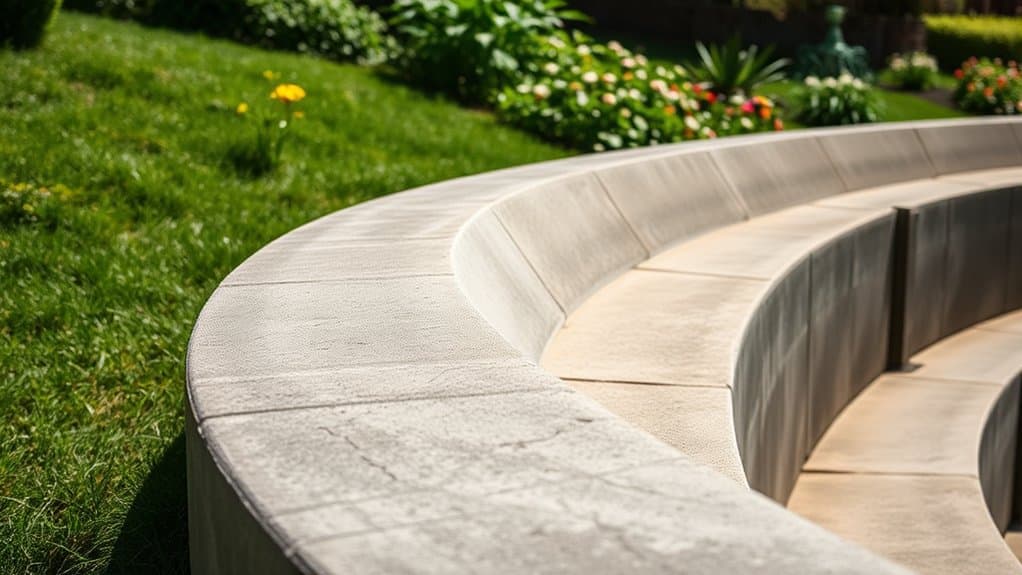
When considering retaining walls for landscape management, you’re enhancing structural stability and tackling erosion control.
These walls support soil and plant life, helping to prevent issues on sloping terrain. By using effective designs, you can significantly reduce erosion while keeping your garden looking attractive.
For example, a well-placed stone wall can’t only hold back soil but also add character to your outdoor space.
Structural Stability Enhancement
Retaining walls are crucial for improving structural stability in commercial landscapes by effectively managing soil erosion and preventing land movement. They significantly enhance the overall integrity of a site, especially in challenging conditions.
- Load Bearing Capacity: Well-designed retaining walls can bear substantial lateral pressures, ensuring stability even under heavy loads.
- Seismic Resistance: Reinforced concrete walls are built to endure seismic activity, reducing the likelihood of structural failure during earthquakes.
- Soil Management: By containing soil, these walls prevent shifting and settling, creating a safer environment for commercial buildings.
Incorporating these factors not only safeguards your investment but also extends the lifespan and safety of the landscape, making retaining walls an essential element in commercial construction projects.
Erosion Control Solutions
Effective erosion control is vital for maintaining the integrity of commercial landscapes, especially in areas where soil can easily be displaced. One practical solution is the use of retaining walls, which provide essential support and help prevent soil erosion.
By using soil stabilisation techniques, these walls can improve the stability of slopes and reduce runoff.
When choosing materials for retaining walls, concrete is a strong option due to its durability. Concrete walls can endure various environmental stresses, making them suitable for long-term erosion prevention.
They also facilitate effective drainage management, minimising water accumulation that could contribute to further erosion.
Concrete in Sustainable Building Practices

As the demand for eco-friendly construction solutions increases, concrete has become essential in sustainable building practices. Its versatility allows for the use of recycled materials, significantly lowering the carbon footprint of commercial projects.
Here are three ways concrete supports sustainability:
- Recycled Aggregate: Crushed concrete from demolition sites can be used as aggregate, helping to reduce waste and the reliance on new materials.
- Low-Carbon Mixes: Advances in concrete formulations now incorporate supplementary cementitious materials, which help to decrease carbon emissions during production.
- Energy Efficiency: The thermal mass properties of concrete assist in regulating indoor temperatures, leading to lower heating and cooling energy consumption.
Concrete not only meets construction needs but also contributes positively to our environment.
Soundproofing and Insulation With Concrete

When it comes to soundproofing in commercial spaces, concrete’s acoustic properties significantly reduce noise transmission.
Its thermal insulation also boosts energy efficiency, making it a practical choice for various applications.
For instance, using concrete in offices can minimise distractions, creating a more productive environment.
Understanding these features can improve your project’s performance and overall comfort.
Acoustic Properties of Concrete
Concrete’s inherent density and mass make it a popular choice for soundproofing in commercial construction. Its acoustic properties effectively reduce noise, creating a quieter environment.
Here are three key aspects to consider when using concrete for acoustic insulation:
- Mass Law: Heavier materials like concrete hinder sound transmission, making it challenging for noise to penetrate walls and floors.
- Damping Properties: Concrete can absorb sound energy, which minimises reverberation and echo in large spaces, improving overall acoustic comfort.
- Composite Systems: Combining concrete with other materials can enhance sound insulation, providing tailored solutions for specific acoustic needs.
These features position concrete as an excellent option for achieving high-performance acoustic insulation in various commercial settings.
Thermal Insulation Benefits
Concrete stands out as an excellent choice for commercial construction, offering both soundproofing and thermal insulation.
Its high thermal mass allows buildings to absorb, store, and release heat, helping to maintain stable indoor temperatures. This leads to greater energy efficiency and lower heating and cooling costs over time.
Moreover, concrete’s dense structure significantly reduces sound transmission, creating a quieter environment.
This combination not only ensures compliance with strict building regulations but also promotes sustainability through enhanced insulation and reduced energy use.
Choosing concrete means investing in a robust material that benefits both occupants and the environment.
Concrete in Water Management Systems
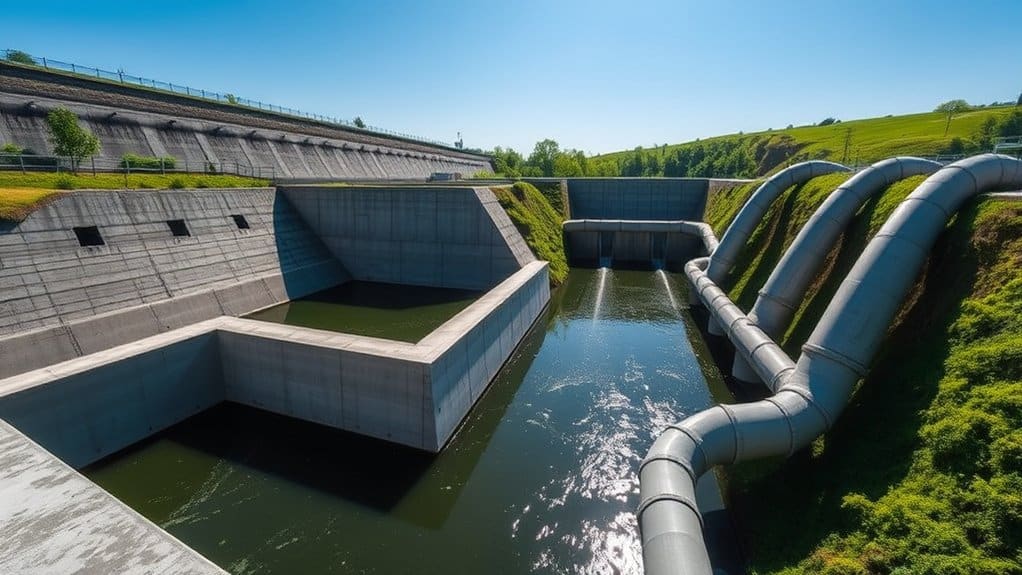
As urban areas grow and encounter increasing water management challenges, effective solutions often leverage concrete’s unique properties.
Concrete is crucial in developing systems that enhance water management due to its durability and versatility. Here are three key applications:
- Water Retention Systems: Concrete structures can be designed to retain stormwater, helping to reduce flooding risks and improve groundwater recharge.
- Drainage Solutions: Engineered concrete channels and pipes ensure efficient stormwater drainage, effectively directing excess water away from urban areas.
- Permeable Pavements: Using permeable concrete allows for water infiltration, reducing surface runoff and aiding in aquifer replenishment.
Innovative Uses in Interior Spaces
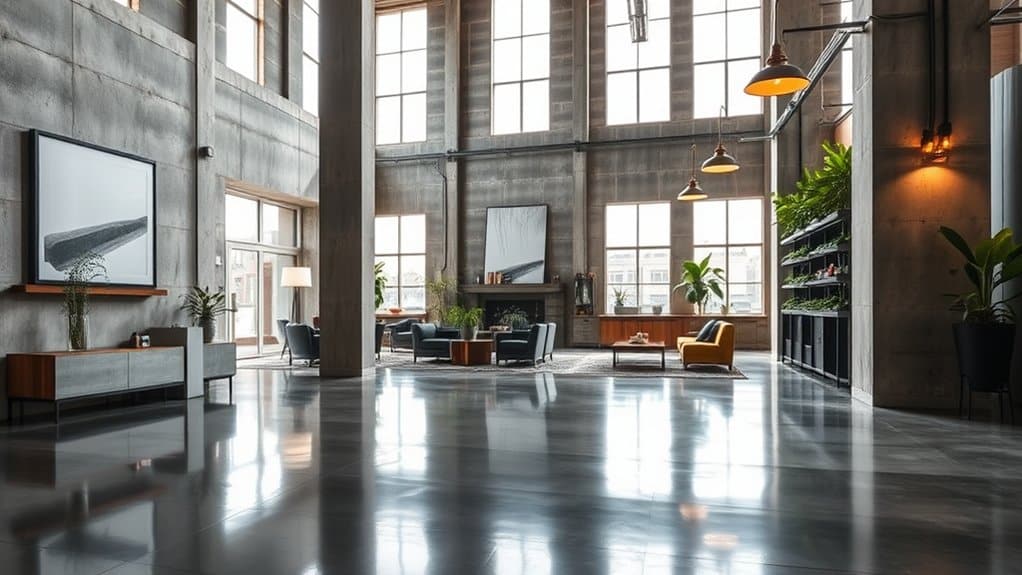
Concrete is gaining recognition for its innovative applications in interior spaces, enhancing both aesthetics and functionality. Concrete art adds visual interest with unique textures and finishes that elevate design.
Beyond its appearance, the material’s durability and versatility offer creative solutions in various settings.
Incorporating indoor landscaping with concrete features, such as planters and water elements, effectively brings nature into commercial spaces. This not only improves air quality but also creates a calming atmosphere for occupants.
The adaptability of concrete allows for customised solutions that cater to specific spatial needs, from partition walls to bespoke furniture. Embracing these innovative uses of concrete can significantly enhance the overall experience in commercial interiors.
Concrete Formwork Systems for Efficiency
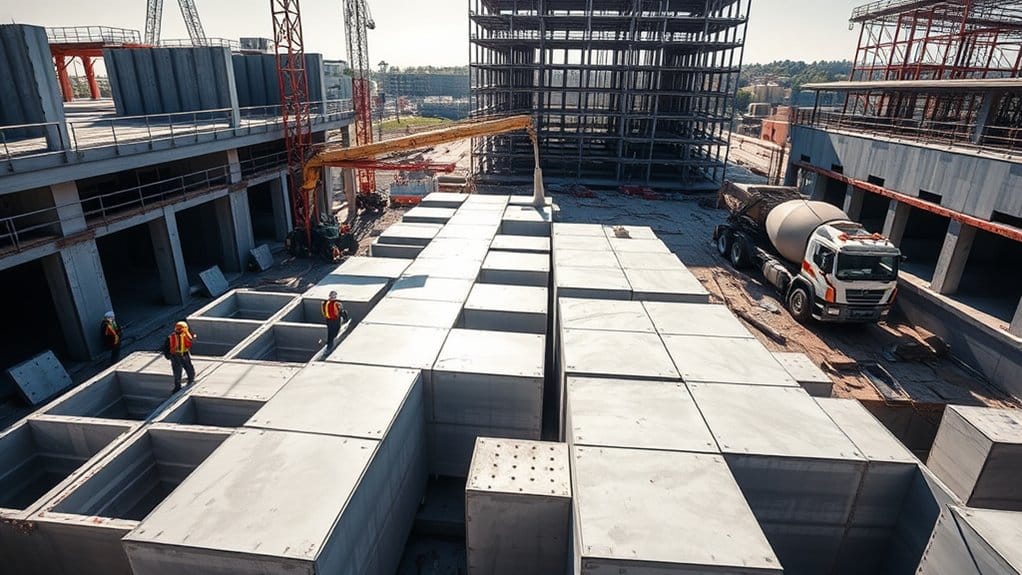
The efficiency of commercial construction projects largely depends on the effectiveness of formwork systems. Choosing the right materials and techniques can significantly boost productivity and accuracy.
Here are three key considerations:
- Material Selection: Opt for robust materials like steel or engineered wood. These options ensure durability and reduce maintenance costs over time.
- Modular Systems: Modular formwork allows for quick assembly and disassembly, which cuts down on labour time on site. For instance, using pre-fabricated panels can speed up the process considerably.
- Design Flexibility: Adaptable formwork systems can cater to various project designs, helping to streamline workflows and minimise waste. This flexibility is especially beneficial in complex builds.
Frequently Asked Questions
What Are the Environmental Impacts of Concrete Production?
Concrete production significantly contributes to carbon emissions and depletes resources. Its high energy requirements result in substantial greenhouse gas emissions. Additionally, the extraction of raw materials places pressure on natural resources, adversely affecting ecosystems and sustainability initiatives. For instance, quarrying for aggregates can lead to habitat destruction, highlighting the need for more environmentally friendly alternatives in construction.
How Does Concrete Compare to Other Building Materials in Cost?
When comparing concrete to other building materials, its durability and longevity often make the cost worthwhile. Although the initial investment may be higher, the long-term savings from lower maintenance and fewer replacements should be taken into account. For example, a concrete driveway might cost more upfront than gravel, but it will last significantly longer and require less upkeep, making it a smarter financial choice in the long run.
Can Concrete Be Recycled After Use in Construction?
Yes, concrete can be recycled after its use in construction. Recycling concrete not only reduces waste but also conserves resources, making it a sustainable practice. For instance, crushed concrete can be repurposed as aggregate for new concrete, or used in road base materials. This contributes to a more eco-friendly construction industry.
How Does Weather Affect Concrete Curing Processes?
Extreme temperature changes and fluctuating humidity can significantly impact concrete curing. In cold conditions, hydration processes slow down, while excessive heat can lead to rapid evaporation. It’s essential to keep a close eye on the weather to ensure proper curing and enhance the concrete’s durability. For instance, during a heatwave, using wet coverings can help retain moisture.
What Are the Safety Considerations When Working With Concrete?
When working with concrete, prioritising worker safety and site security is essential. Ensure that proper personal protective equipment (PPE) is worn, such as gloves, goggles, and sturdy footwear. Keep pathways clear to prevent trips and falls, and use safety barriers around mixing and pouring areas to minimise accidents and injuries. For instance, if you’re mixing concrete in a confined space, make sure there’s adequate ventilation to avoid inhaling harmful dust. Always be aware of your surroundings and communicate clearly with your team to maintain a safe working environment.
Conclusion
In commercial construction, concrete is essential for both innovation and functionality. Its versatility ranges from high-rise foundations to creative interior uses. As you consider these ten applications, remember that using concrete can enhance efficiency and sustainability. By leveraging concrete’s full potential, you’re not just constructing buildings; you’re creating smarter, more durable projects that endure over time.

Discover the crucial applications of ready-mix concrete in construction that can transform your projects; you'll be surprised by its versatility Read more
Mysterious yet essential, lightweight ready-mix concrete offers unique benefits for construction; discover how it can transform your building projects today.

Powerful steel reinforcement transforms concrete construction, enhancing strength and durability—discover the remarkable advantages that await in modern applications.