Common additives in ready-mix concrete production include superplasticisers, which improve flow without compromising strength, and accelerators, which shorten setting times. Retarders extend the time you can work with the mix, while water reducers lower the water-cement ratio, enhancing durability. Air entrainers create tiny air pockets to boost freeze-thaw resistance, and mineral admixtures help improve long-term strength and sustainability. Knowing how to use these additives can significantly enhance your concrete's performance. Explore their applications to make the most of your concrete projects.
Key Takeaways
- Superplasticisers enhance flowability and reduce the water-cement ratio, which boosts the strength and durability of ready-mix concrete.
- Accelerators decrease setting time and increase early strength, making them particularly useful in colder weather.
- Retarders prolong workability, ensuring consistent quality during transport and placement, which is vital for large projects.
- Air entrainers create tiny air voids, improving freeze-thaw resistance and overall durability in colder climates.
- Mineral admixtures reduce cement content, cutting costs while enhancing mechanical properties and long-term durability.
Superplasticizers: Boosting Performance and Workability

If you want to improve the performance and workability of ready-mix concrete, superplasticizers are key.
These high-range water reducers enhance flowability without compromising strength and durability. There are several types of superplasticizers available, such as sulfonated melamine formaldehyde (SMF), sulfonated naphthalene formaldehyde (SNF), and polycarboxylate-based additives. Each type has its own benefits; for instance, SMF offers a good balance between workability and cost, whereas polycarboxylate-based superplasticizers are particularly effective at retaining fluidity. By lowering the water-to-cement ratio, superplasticizers improve compressive strength and durability, making concrete easier to handle and compact. This chemical additive not only speeds up construction but also enhances the finish, resulting in a more robust and high-quality concrete structure. Additionally, the incorporation of superplasticizers can lead to improved workability and pumpability, ensuring that the concrete is easier to transport and place effectively.
Accelerators: Speeding Up Concrete Setting

Accelerators are vital in the concrete industry, significantly shortening setting times and boosting early strength. These chemical admixtures, such as calcium chloride and calcium nitrate, enhance the concentration of calcium ions, leading to quicker hydration. They're especially useful in cold weather construction, as they help prevent freezing during the setting process. By using accelerators, you can often remove forms earlier and cut down on labour costs, making your construction more efficient. Additionally, using concrete accelerators can facilitate high-quality concrete production within a short turnaround time. Furthermore, proper selection of admixtures is crucial to ensure optimal performance and durability in various environmental conditions. However, it's crucial to control the dosage. Excessive amounts can negatively impact performance, particularly with accelerators that may corrode steel reinforcements. Conducting trial mixes is essential to find the right balance of strength and workability, ensuring you get the most out of these additives for your projects.
Retarders: Extending Workability Period
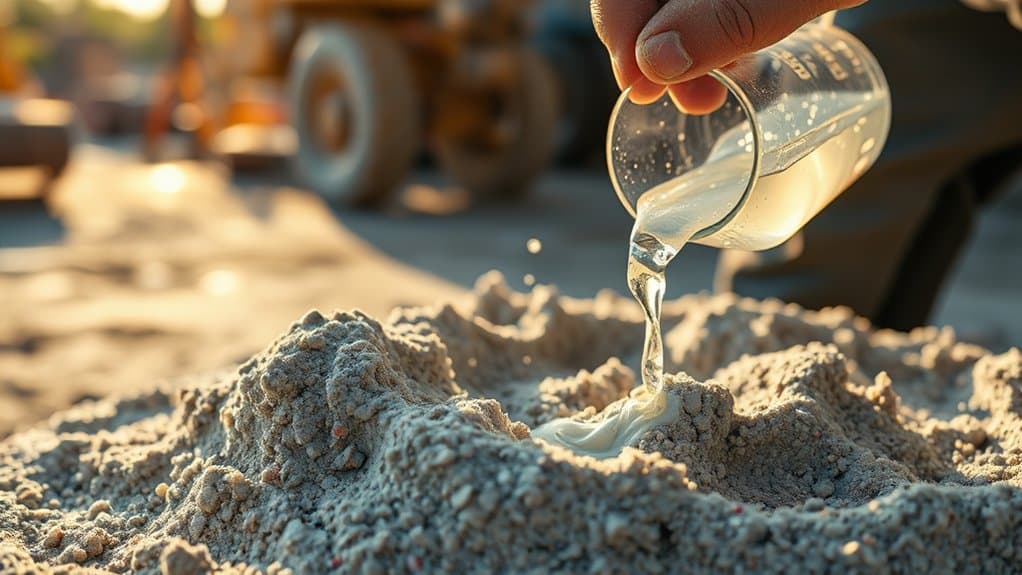
In construction, managing the setting time of concrete is just as crucial as speeding it up. Retarders are key in extending the workability period, ensuring your mix stays usable during transport and placement.
Here are some important points to consider:
- Types of retarders: Organic options, like sugars, and inorganic choices, such as borates.
- Applications: Essential in ready-mix concrete and large projects, which benefit from consistent quality assurance to maintain structural integrity.
- Benefits: They help prevent thermal cracking and enhance handling.
- Practical aspects: Careful dosage is vital to avoid unnecessary delays. Additionally, retarders can improve workability in hot weather, counteracting rapid setting.
Using retarders effectively helps maintain the quality of your concrete while adapting to different environmental conditions, ultimately improving your construction efficiency.
Water Reducers: Enhancing Durability

Using water reducers improves workability while significantly lowering the water-cement ratio.
This reduction not only strengthens the concrete but also enhances its durability against environmental factors.
For example, a well-optimised mix can withstand harsh weather, making it ideal for outdoor structures.
Improved Workability Benefits
Water-reducing admixtures significantly improve the workability of concrete, allowing for optimal flow without the need for extra water. This enhancement simplifies placement and boosts the durability of your structures.
Here are some key benefits:
- Reduced Segregation: Ensures a consistent mix by evenly distributing cement particles.
- Increased Slump: Improves workability without sacrificing strength, making handling easier.
- Cost Savings: Lowers cement usage while maintaining strength, reducing overall expenses.
- Temperature Control: Keeps workability intact, even in high temperatures.
Using these additives can greatly enhance both the handling and long-term performance of your concrete, ensuring strong and lasting results.
Reduced Water-Cement Ratio
Reducing the water-cement ratio is essential for improving the durability and strength of concrete, as it directly affects its density and overall quality.
By lowering the water content, you significantly enhance concrete strength and reduce porosity. This leads to better resistance against weathering, increasing durability. A lower water-cement ratio also boosts both compressive and flexural strength, which helps prevent shrinkage cracking over time.
Water-reducing agents play a key role in this process by neutralising the charges on cement particles, improving their dispersion and flow without adding more water.
In large pours, they also help to minimise the heat generated during hydration, which is crucial for maintaining structural integrity.
Air Entrainers: Improving Freeze-Thaw Resistance
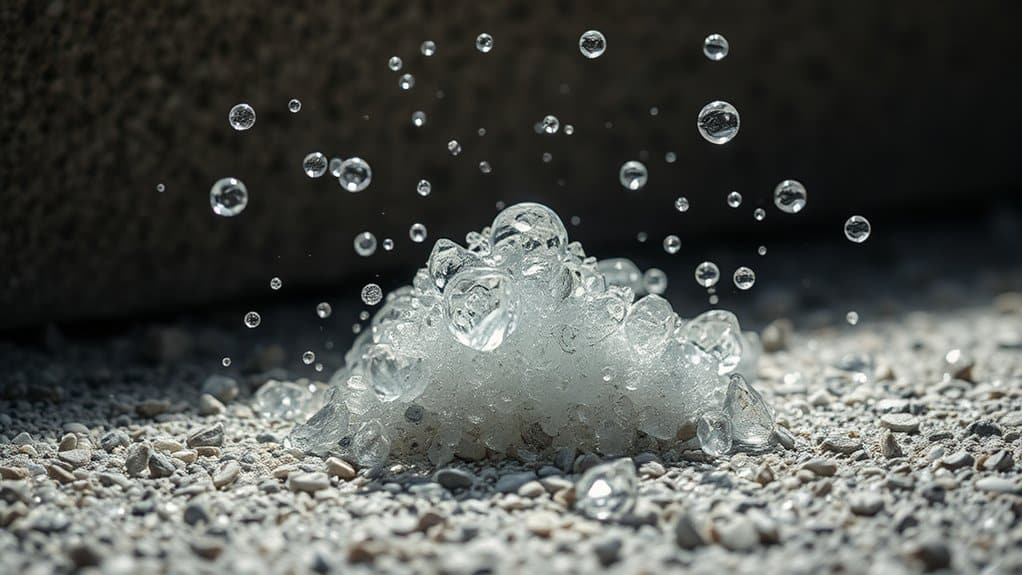
Air entrainers significantly enhance freeze-thaw resistance, making them vital for concrete in colder climates.
By introducing stable microscopic air voids, these additives help alleviate internal pressure during freeze-thaw cycles, which reduces the likelihood of cracking.
To ensure optimal performance, check that your mix adheres to the recommended air content specifications, maximising its durability against harsh weather.
Freeze-Thaw Durability Benefits
When concrete is subjected to freeze-thaw cycles, it can incur serious damage if not designed correctly.
Air-entraining admixtures create air void systems that help manage this risk by allowing space for water to expand when it freezes.
Here are the benefits of using air entrainers:
- Prevents pressure build-up during freeze-thaw cycles
- Enhances the overall durability of concrete structures
- Reduces water absorption, thus lowering saturation risks
- Improves workability without sacrificing strength
Incorporating air entrainers is a smart choice for ensuring long-lasting concrete, especially in colder climates.
Application in Cold Climates
In cold climates, using air-entraining admixtures significantly improves the freeze-thaw resistance of concrete, ensuring it remains structurally sound despite harsh conditions.
These admixtures create tiny air bubbles that relieve pressure, which is essential for preventing damage from ice expansion.
Cold weather presents challenges such as low temperatures and frozen ground, so effective insulation techniques like curing blankets and heated surfaces are crucial for maintaining proper curing.
By adjusting the air content to 5-7% and increasing the cement content, you can mitigate strength loss while enhancing durability.
Additionally, incorporating accelerators allows for quicker setting times, boosting performance in cold conditions.
Together, these methods help ensure concrete stays strong and reliable throughout its lifespan.
Mineral Admixtures: Strengthening Concrete

Mineral admixtures are crucial in strengthening concrete, enhancing both its mechanical properties and durability. By adding these materials, you can unlock significant benefits, especially for long-term performance.
- Increased Compressive Strength: Mineral admixtures improve the strength of concrete over time.
- Reduced Permeability: They enhance resistance to chemical attacks and environmental factors.
- Microfiller Effects: Finer materials, such as silica fume, fill voids and boost overall density.
- Cost Efficiency: Using these admixtures can lower cement content, reducing production costs while maintaining quality.
Incorporating fly ash, silica fume, and similar admixtures not only strengthens concrete but also supports sustainability by recycling industrial by-products.
Consequently, your concrete structures will perform better and last longer, making them more resilient to various stresses.
Frequently Asked Questions
How Do Additives Affect the Overall Cost of Concrete Production?
Additives significantly influence the cost of concrete production, affecting pricing strategies by improving material efficiency, reducing labour, and enhancing durability. For instance, using a water-reducing agent can help achieve the same strength with less cement, which lowers material costs. By optimising your mix designs, you can cut expenses while ensuring the concrete remains robust and performs well.
Are There Any Health Risks Associated With Concrete Additives?
Yes, there are health concerns associated with concrete additives. It's important to follow safety regulations to reduce risks like respiratory problems and skin irritations from exposure. Using appropriate protective equipment and receiving proper training are essential for safe handling. For instance, wearing gloves and masks can help prevent direct contact and inhalation of harmful substances.
Can Additives Be Used in All Types of Concrete Mixes?
Not all types of additives can be used in every concrete mix due to compatibility issues. It's essential to understand the specific requirements and limitations of each additive to ensure optimal performance and avoid potential problems. For example, a water-reducing agent might work well in a high-strength mix but could cause issues in a low-slump mix. Always check compatibility to achieve the best results in your concrete projects.
How Do Weather Conditions Influence the Choice of Additives?
Weather may seem like a mere backdrop, but temperature and humidity significantly impact your choice of additives. For instance, in hot weather, you may need additives that promote rapid setting, while in humid conditions, moisture-retaining additives are essential to ensure your concrete performs optimally.
What Are the Environmental Impacts of Using Concrete Additives?
Using concrete additives affects the environment by supporting sustainable practices and encouraging eco-friendly options. For instance, these additives can lower CO2 emissions, enhance the workability of concrete, and prolong the lifespan of structures. This not only benefits the environment but also improves construction efficiency.
Conclusion
Incorporating additives into ready-mix concrete is akin to adding seasoning to a meal; each one enhances the final product's quality. Just as a well-prepared dish can impress diners, the right mix of superplasticisers, accelerators, and mineral admixtures can significantly improve the performance and durability of concrete. By understanding these additives, you're not merely combining ingredients—you're creating a strong, long-lasting material that can withstand the elements, ensuring your projects remain robust and resilient.

Learn about the diverse types of concrete used in construction and discover which mix can transform your next project.

For a long-lasting driveway that laughs in the face of the UK's unpredictable weather, the C20 concrete mix is your Read more

In the UK, you've got a a lot of lightweight concrete types to choose from, each with its unique perks. Read more