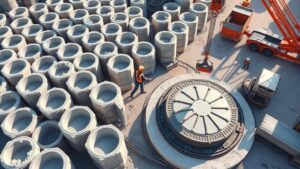
Standard ready-mix concrete is generally more cost-effective and easier to work with, but it has a lower strength range of 2,500 to 5,000 psi, which can limit your project's flexibility. On the other hand, high-performance ready-mix concrete boasts superior strength, exceeding 8,000 psi, and can be tailored for specific needs, offering enhanced durability against environmental challenges, albeit at a higher price. Understanding these distinctions is crucial for making informed choices for your construction projects and determining the best applications for each type.
Key Takeaways
- Standard ready-mix concrete typically has a compressive strength ranging from 2,500 to 5,000 psi, while high-performance concrete (HPC) can exceed 8,000 psi.
- HPC is pricier, generally costing over £140 per cubic metre compared to standard concrete's £90 to £110 per cubic metre.
- High-performance concrete is designed for enhanced environmental resistance and low permeability, making it more durable against severe weather and chemical exposure.
- Standard concrete allows for limited on-site adjustments, whereas HPC can be customised for specific needs, offering greater flexibility.
- The handling and logistics of HPC are more complex, requiring careful curing and coordination to ensure it performs well during transit and application.
Overview of Ready-Mix Concrete

Ready-mix concrete (RMC) is a vital material in modern construction, effectively mixing cement, water, and aggregates like sand or gravel. It's prepared off-site in a controlled batching plant, ensuring consistent quality by accurately measuring each ingredient. Different mixing methods, such as central mixing and shrink mixing, allow for adjustments to meet specific project needs. Additionally, RMC is delivered via rotating transit mixer to building sites using truck-mounted transit mixers, which keep the mixture intact during transport. This approach not only ensures uniformity in the concrete but also saves time and labour on-site. The use of automated batching plants further enhances the precision and quality control of the concrete mix. RMC is widely used in residential, commercial, and infrastructure projects, making it an essential part of today's construction practices.
Advantages of Standard Ready-Mix Concrete

When it comes to construction, standard ready-mix concrete has several advantages that improve efficiency and quality. Here are the key benefits:
- Consistent Quality: Controlled mixing processes ensure uniform strength and reliability. This is achieved through strict quality assurance protocols that enhance production efficiency.
- Time-Saving: Removes the need for on-site mixing, making operations smoother.
- Standardisation Benefits: Precise batching and quality control minimise variability, ensuring project specifications are met. This leads to improved quality standards that reduce the likelihood of defects and rework.
These advantages lead to better workability and less manual labour, enhancing project efficiency.
With a standardised composition, you can rely on every batch to meet high-quality standards.
Limitations of Standard Ready-Mix Concrete

While standard ready-mix concrete has its advantages, it also has significant limitations that can affect project outcomes.
One key issue is cost; standard ready-mix is often more expensive than site-mixed options, especially for smaller projects where setup and delivery costs can add up quickly. In remote areas, transportation expenses can further escalate, making it less economically viable. Additionally, the reliance on logistical planning can complicate the timely delivery of materials, further impacting project budgets. Furthermore, the efficient transportation of ready-mix concrete can significantly reduce overall costs, which is often not the case with standard mixes.
Another concern is mix flexibility. Once you've established your specifications, making adjustments can be difficult, which may hinder your ability to adapt to on-site conditions.
Standard formulations mightn't meet specific project needs, and the fixed setting time can lead to complications if your schedule changes. These limitations can ultimately impact both your budget and project efficiency.
Advantages of High-Performance Ready-Mix Concrete
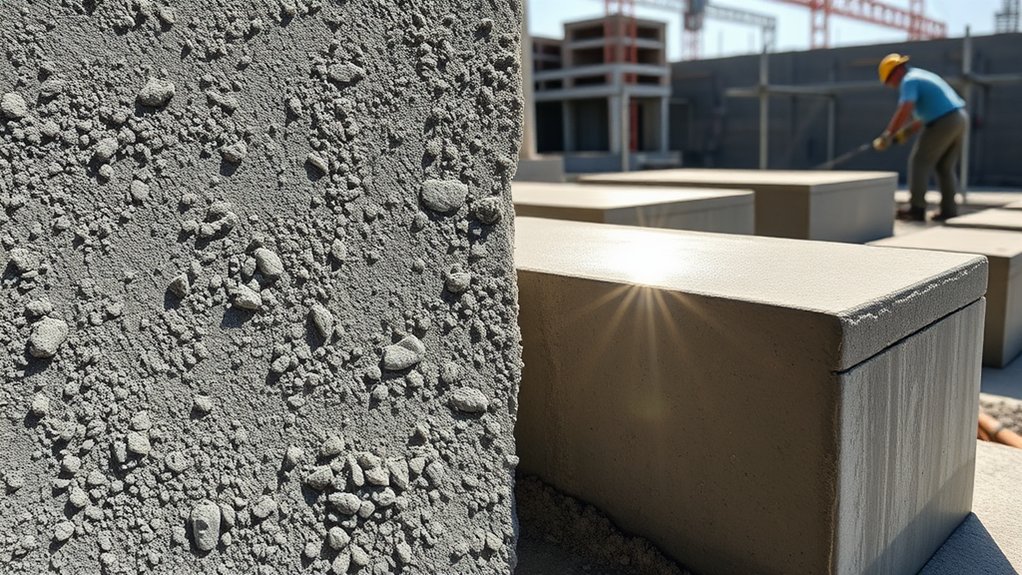
High-performance ready-mix concrete provides excellent structural integrity, making it ideal for projects that need to bear heavy loads and withstand tough environmental conditions.
Its superior resistance to adverse weather reduces the risk of damage, helping to extend the lifespan of your structures.
With a customised material composition, you can achieve optimal performance tailored to specific applications, such as bridges, high-rise buildings, or industrial floors.
Superior Structural Integrity
Strength and durability are crucial in construction, and high-performance ready-mix concrete offers superior structural integrity compared to standard mixes.
Here are three main advantages:
- Enhanced Compressive Strength: This means your projects can withstand greater stress without bending or breaking.
- Superior Aggregate Quality: Better quality aggregates improve the connection between particles, boosting overall performance.
- Lower Permeability: This reduces the risk of water penetration, helping to maintain the concrete's integrity over time.
These features ensure that high-performance concrete not only meets but surpasses the demands of contemporary construction, providing the long-lasting durability and reliability needed for any building project.
Enhanced Environmental Resistance
When building structures that need to withstand harsh environmental conditions, choosing high-performance ready-mix concrete significantly boosts durability and longevity.
This concrete type offers excellent resistance to chemicals, making it suitable for areas exposed to aggressive substances. Its weather resistance ensures it can handle extreme temperatures and severe weather conditions, which is crucial for maintaining structural integrity.
High-performance concrete has low permeability, which reduces moisture penetration and the risk of cracking. It can also endure multiple freeze-thaw cycles, making it ideal for colder climates.
Furthermore, structures made from this concrete can withstand heavy use without losing strength. By selecting the right admixtures and quality aggregates, you can further enhance the environmental resistance of your projects, ensuring they perform well over time.
Specialized Material Composition
The specialised material composition of high-performance ready-mix concrete distinguishes it from standard mixes, providing notable advantages for construction. This formulation enhances material properties, leading to improved performance and durability.
Key benefits include:
- High-Quality Cement: Using specialised cement with reduced C3A content enhances compatibility with superplasticisers.
- Supplementary Cementitious Materials (SCMs): Adding materials like fly ash and silica fume enhances strength and durability.
- Fibre Reinforcement: Incorporating fibres increases tensile strength, especially in Ultra-High Performance Concrete (UHPC).
Limitations of High-Performance Ready-Mix Concrete

When considering high-performance ready-mix concrete, it's important to factor in its higher cost, which stems from the use of specialised materials and processes.
The handling requirements can also be complex, affecting logistics and potentially delaying project timelines and budgets.
For instance, if you're working on a large construction site, coordinating the delivery and mixing of this concrete can be more challenging than with standard options.
Being aware of these limitations is crucial for effective project planning and execution.
Higher Cost Factors
High-performance ready-mix concrete often incurs several higher cost factors that can significantly affect project budgets.
Effective cost management and strategic pricing are essential to navigate these expenses. Here are the key factors to consider:
- Raw Material Prices: The use of specialised aggregates and increased amounts of cement can substantially elevate costs.
- Transportation Costs: Longer delivery distances and the need for specialised equipment can drive up logistical expenses.
- Market Demand: High demand can strain supply chains, leading to raw material shortages and increased prices.
These factors contribute to the higher costs associated with high-performance concrete.
It's crucial to factor these into your budgeting to ensure your project remains financially viable while meeting the required performance standards.
Complex Handling Requirements
High-performance ready-mix concrete has specific handling requirements that can complicate construction projects. Transport logistics are crucial, as careful handling is needed to avoid segregation or premature setting during transit, which can affect quality.
The complex mix design requires precise curing conditions, adding to the challenges of placement. Limited setting times mean efficient site preparation and prompt application are essential to prevent hardening issues.
Additionally, specialised admixtures may be sensitive to handling, which can impact final strength. Given the need for thorough site preparation and advanced equipment, it's vital to coordinate logistics and ensure quality assurance throughout the process to achieve the desired performance of high-performance concrete.
Comparison of Strength and Durability
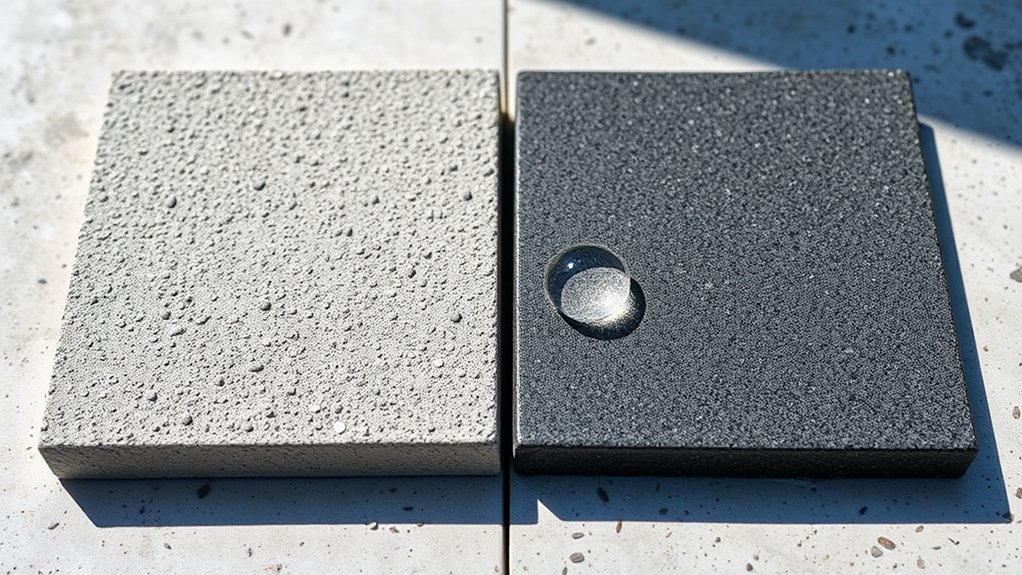
While standard concrete serves many construction needs, high-performance concrete (HPC) significantly boosts strength and durability, making it ideal for tough environments.
Here's a straightforward comparison of their strengths and durability:
- Compressive Strength: Standard concrete typically ranges from 2,500 to 5,000 psi, whereas HPC can exceed 8,000 psi.
- Tensile and Flexural Strength: HPC offers flexural strength over 2,000 psi, greatly outperforming standard concrete.
- Environmental Resistance: HPC's low permeability provides excellent resistance to chemical attacks, freeze/thaw cycles, and corrosion.
These enhanced characteristics allow HPC to maintain structural integrity under harsh conditions, making it a preferred choice for critical infrastructure projects.
Cost Considerations in Concrete Selection

When deciding between standard and high-performance ready-mix concrete, it's important to consider the costs involved. Standard concrete typically ranges from £90 to £110 per cubic metre, while high-performance options usually exceed the average of £140.
For budgeting purposes, keep in mind that high-performance concrete requires skilled labour and specialised equipment, which can drive up costs. Small-scale projects might also face high short-load fees, adding to the financial burden.
Additional charges for delivery, special finishes, and waiting times can further increase expenses. While high-performance concrete may require a higher initial outlay, its durability can lead to long-term savings on maintenance.
It's crucial to balance upfront costs with potential future benefits.
Environmental Impact and Sustainability
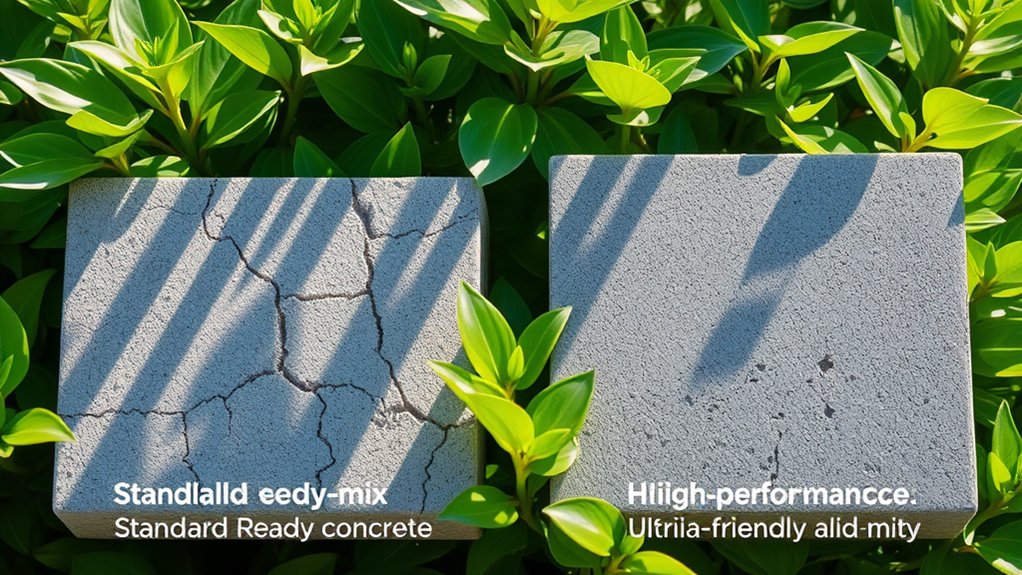
Choosing the right type of ready-mix concrete involves not just cost considerations but also its environmental impact. Here are three key factors to consider:
- Carbon Emissions: Ready-mix concrete can significantly lower carbon emissions due to its efficient production processes at centralised facilities, in contrast to traditional on-site mixing.
- Waste Reduction: With precise batching, ready-mix concrete minimises waste, ensuring that only the necessary amount is produced and delivered, which is more efficient.
- Sustainable Practices: Using supplementary cementitious materials (SCMs) in concrete mixes enhances sustainability by decreasing the reliance on virgin materials.
While high-performance concrete (HPC) is known for its durability, it can be energy-intensive to produce.
However, the long lifespan of HPC structures can offset these environmental impacts, making it a strong choice for sustainable building projects.
Future Trends in Concrete Technology
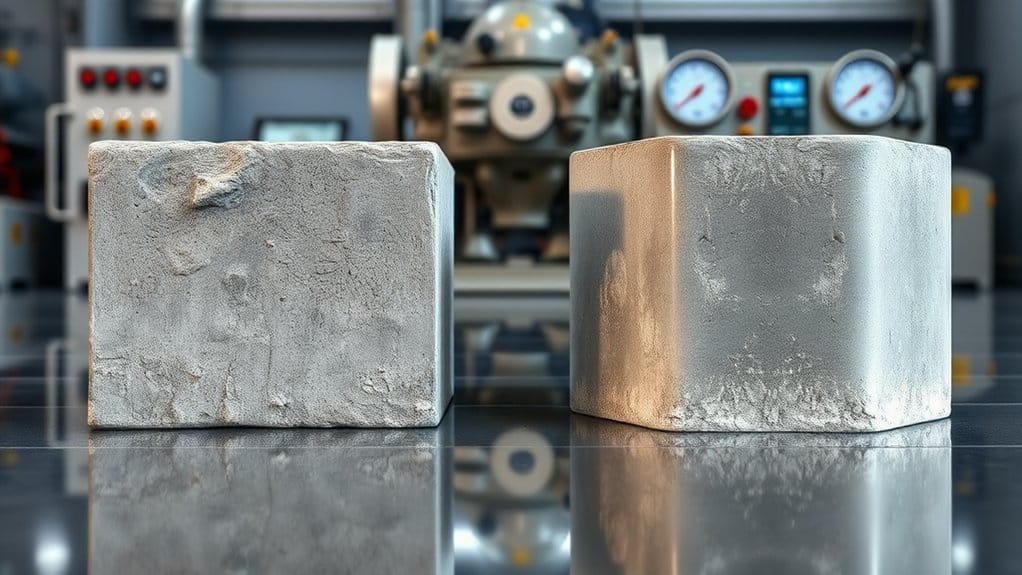
Advancements in concrete technology are transforming the construction industry, with innovative methods and materials enhancing efficiency and sustainability. For example, using recycled aggregates and alternative cements can significantly lower environmental impact while still delivering strong performance.
The future looks promising with applications like 3D printing and smart technologies, which allow for custom shapes and real-time monitoring to improve safety and resource management.
Self-healing concrete can prolong the lifespan of buildings, and ultra-high performance concrete (UHPC) offers exceptional durability for essential infrastructure.
Modular and prefabricated construction techniques also help streamline assembly, cutting down on waste and time.
Frequently Asked Questions
How Do Weather Conditions Affect Concrete Curing?
Weather conditions significantly affect the curing of concrete. High temperatures and humidity can either speed up or slow down the hydration process, which directly impacts the strength of the concrete. For instance, in hot weather, you might need to mist the surface or cover it to prevent rapid drying, which can lead to cracking. Conversely, cool and damp conditions can slow down curing, requiring longer protection time. Keeping an eye on these factors is crucial to ensure proper curing and maintain the structural integrity of the concrete.
What Are the Most Common Uses for High-Performance Concrete?
High-performance concrete is widely used in commercial settings because of its exceptional strength. It's commonly found in bridges, tall buildings, and marine structures, providing durability and resistance to challenging conditions, which enhances both functionality and visual appeal.
Can Standard Concrete Be Upgraded to High-Performance Later?
Upgrading standard concrete to high-performance concrete isn't a simple task. While you can enhance its properties using admixtures, achieving genuine high-performance usually necessitates a complete reformulation. This ensures the consistency and quality that standard concrete often lacks. For instance, if you need concrete for a high-stress environment, starting with a high-performance mix from the outset is advisable rather than trying to retrofit standard concrete.
What Are the Typical Lead Times for Ordering Ready-Mix Concrete?
When ordering ready-mix concrete, lead times can vary based on factors such as distance, production capacity, and seasonal demand. For instance, if you're within a short distance from the plant, you might expect quicker delivery. It's wise to confirm your delivery schedule well in advance to prevent any hold-ups.
How Should I Prepare the Site for Concrete Pouring?
To ensure a successful concrete pour, proper site preparation is essential. Start by clearing away any debris, such as stones or vegetation, from the area. Next, level the ground to create a stable base. Consider the drainage; ensure the site allows water to flow away from the concrete. Finally, install suitable formwork to shape the concrete. Each of these steps is crucial for achieving durable, high-quality results that will stand the test of time.
Conclusion
When deciding between standard and high-performance ready-mix concrete, it's important to consider the advantages and disadvantages of each. Standard concrete is often more affordable, but high-performance concrete offers enhanced strength and durability, making it a better choice for projects that demand more resilience, like commercial buildings or infrastructure. Ultimately, selecting the right concrete is crucial for the longevity of your structure. Remember, investing in quality concrete can save you time and money in repairs down the line. Don't compromise on your choice; it's worth it in the long run.

Learn about the diverse types of concrete used in construction and discover which mix can transform your next project.

For a long-lasting driveway that laughs in the face of the UK's unpredictable weather, the C20 concrete mix is your Read more

In the UK, you've got a a lot of lightweight concrete types to choose from, each with its unique perks. Read more