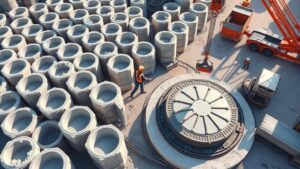
Old concrete can be recycled at specialist processing facilities or through on-site crushing services across the UK.
Both plain and reinforced concrete gets broken down into what we call Recycled Aggregate (RA) or Crushed Concrete Aggregate (CCA). To meet British Standards, these materials must be at least 90% concrete.
Recycled concrete proves useful in many ways – it’s brilliant as sub-base material for new building projects and works well in garden landscaping.
The recycling process relies on heavy-duty kit like hydraulic crushers and impact breakers to turn what would be waste into valuable building materials.
British construction firms are increasingly finding new ways to reuse concrete, which makes perfect sense given our push towards sustainable building practices.
Key Takeaways
Old concrete needn’t go to waste – it’s fully recyclable and increasingly valuable in UK construction.
Concrete waste can be transformed into Recycled Aggregate (RA) or Crushed Concrete Aggregate (CCA), perfect for new building projects. Whether it’s reinforced with steel or plain, all concrete can be recycled, though steel-reinforced bits need extra processing to remove the metal.
The recycled material proves useful across various applications:
- Foundations for new buildings
- Road and pavement sub-bases
- Garden and landscape materials
On-site recycling makes solid financial sense. It cuts transport costs, dodges landfill charges, and provides cheaper materials right where you need them. Plus, it’s far better for the environment than sending loads to the tip.
Modern crushing machines and screening equipment ensure the recycled aggregate meets British Standards, making it a reliable choice for builders and developers. The whole process is straightforward: crush, screen, separate, and reuse – turning what was once waste into a valuable resource.
Understanding Concrete Recycling Basics
Concrete recycling plays a vital role in sustainable construction by converting used concrete into reusable materials.
Construction waste from demolition or renovation projects can be effectively managed through recycling, supporting environmental goals across the UK. Recent developments in electric arc furnace technology, powered by renewable energy, are making zero-emission cement production increasingly viable.
The recycling process relies on robust machinery to crush and process old concrete into usable aggregates.
Two main types emerge: Recycled Aggregate (RA) and Crushed Concrete Aggregate (CCA). To meet British standards, CCA must contain at least 90% concrete content for optimal performance in new builds.
Modern techniques, like Sika’s reCO2ver process, have improved the separation of cement stone from aggregates whilst incorporating CO2 into the process. This innovation strengthens the circular economy approach.
Recycling concrete delivers multiple benefits: it reduces pressure on landfills, preserves natural resources, and creates cost-effective materials for the construction industry.
For instance, recycled concrete aggregates are commonly used in road base construction throughout Britain, demonstrating their practical value.
The Environmental Impact
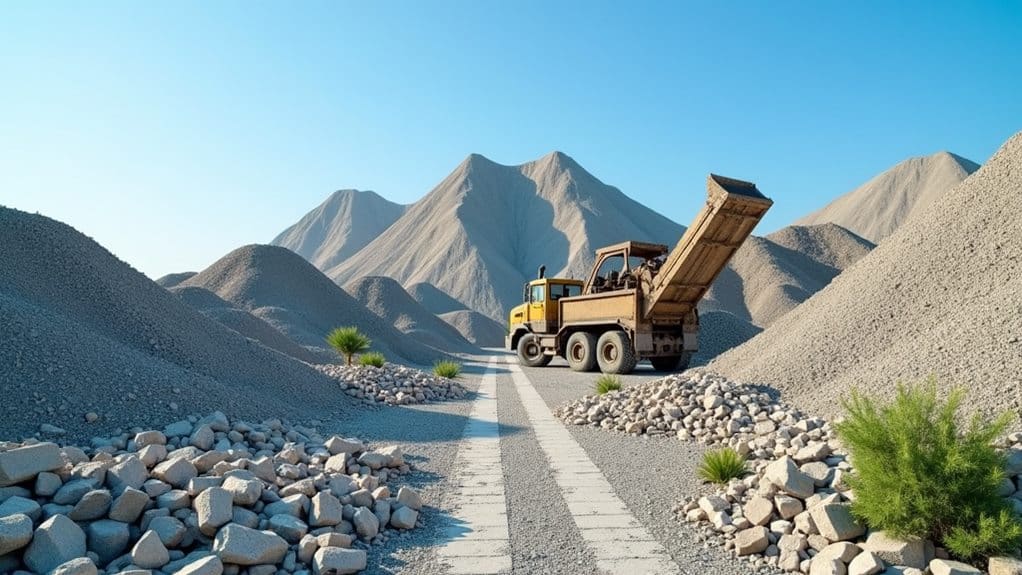
Environmental Benefits of Concrete Recycling
Recycling concrete delivers significant environmental gains beyond simply cutting waste. The material can take centuries to decompose in landfills, so recycling helps preserve valuable landfill space.
Using alternative building materials such as timber, straw or hempcrete can reduce the need for concrete altogether, whilst recycling existing concrete provides multiple benefits across construction.
The process cuts demand for new aggregates, reducing the environmental damage from quarrying and mining.
Local concrete recycling also means shorter transport distances, lowering carbon emissions from construction projects.
These practical benefits make concrete recycling a vital part of sustainable building practices in the UK.
Breaking Down Old Concrete
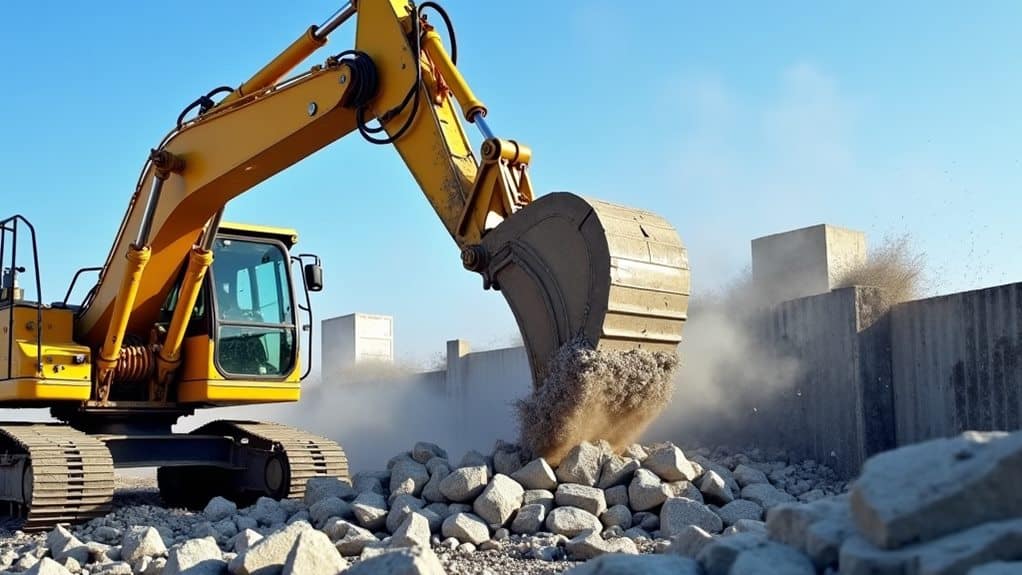
Breaking down old concrete demands robust machinery, including hydraulic crushers and impact breakers that turn large chunks into usable pieces.
The crushing happens in stages – first breaking down the big bits, then processing them further into smaller sizes through multiple screens.
Much like sorting through a box of mixed items, special techniques using water and magnets help remove unwanted materials like metal and wood, ensuring clean, high-quality recycled concrete.
This recycled material often ends up in new building projects or as sub-base for roads and driveways across Britain.
Crushing Methods and Equipment
Breaking down old concrete demands robust machinery built for the task – primarily jaw crushers and impact machines that grind concrete into smaller pieces.
These machines are essential for any concrete recycling operation, ensuring reliable processing throughout.
The crushing process uses a dual-screen approach for best results. The first screen filters out large debris, whilst the second extracts valuable coarse aggregates.
For top-quality output, proper sorting is crucial. This includes using magnets to remove metal bits and water-based separation to ensure clean, recycled aggregates.
Beyond creating useful materials, this process helps the environment. Crushed concrete’s increased surface area absorbs CO2 through carbonation.
The end product serves multiple purposes, from new concrete mixing to forming solid foundations under roads and pavements – making it a practical example of effective recycling.
Size and Sorting Techniques
Modern concrete recycling relies on precise sizing and systematic sorting to maximise material recovery. The typical operation uses a dual-screen system that separates materials by size. The first screen filters out large debris, whilst the second distinguishes between coarse and fine aggregates.
Advanced sorting techniques are essential for quality results. Water flotation removes lighter contaminants, and magnetic separators extract steel reinforcement from crushed concrete. These methods ensure recycled aggregates meet British Standards and industry requirements.
Careful sorting directly impacts the final product quality. Strict control over separation phases ensures crushed concrete remains free from contamination.
This systematic approach not only prepares concrete for reuse but salvages valuable materials that would otherwise end up in landfill, making the process both cost-effective and environmentally sound.
Types of Recyclable Concrete

Two main types of recyclable concrete exist: Recycled Aggregate (RA) for general construction and Crushed Concrete Aggregate (CCA), which must contain at least 90% concrete content.
As concrete ranks as the second most-used material globally after water, recycling it’s crucial for sustainability.
Modern electric arc furnaces can process both reinforced concrete (containing steel bars) and plain concrete, though each needs different handling.
When recycling concrete, it’s important to know its original use – whether structural (like foundations) or decorative (such as garden paths) – as this affects how it can be reused under British Standard BS 8500:2023.
Reinforced Vs Plain Concrete
Between reinforced and plain concrete, each presents different recycling challenges.
Reinforced concrete contains steel bars or mesh that complicate the process, requiring specialist equipment like magnetic separators to remove the metal components from the concrete.
Plain concrete is far simpler to recycle. With just aggregates and cement in its makeup, it can go straight through crushing machines without the need for metal separation – much like breaking down a brick wall versus dismantling a steel-framed building.
Both materials are recyclable, but reinforced concrete needs more advanced technology and careful handling to ensure proper separation.
When using recycled reinforced concrete in new builds, the processed aggregates must meet UK construction standards.
Though the extra processing steps for reinforced concrete impact project costs and timeframes, the recycled materials remain valuable for various construction uses, from road sub-bases to new concrete mixing.
Structural Vs Decorative Types
Structural and decorative concrete require different recycling approaches.
Structural concrete from foundations and beams is typically easier to recycle into quality aggregates for new mixes or construction fill. This is largely because it’s made from uniform materials without added treatments.
Decorative concrete poses more complex recycling challenges. Examples like stamped patios, exposed aggregate driveways, or coloured garden paths need more sophisticated processing due to their aesthetic treatments. These additional materials and coatings can reduce the quality of recycled aggregates.
Before recycling any concrete, it’s crucial to assess its type, as this affects the end product’s value.
Whilst both varieties can be recycled, structural concrete consistently produces better quality materials. Understanding these differences helps ensure proper recycling methods and suitable applications in future building projects.
Crushed Aggregate Classifications
British Classifications for Crushed Aggregates
Two main types of recycled concrete materials are recognised in UK construction: Recycled Aggregate (RA) and Crushed Concrete Aggregate (CCA). For construction waste management, these classifications determine how the material can be reused. CCA is the premium option, requiring at least 90% concrete content, making it ideal for new concrete mixes.
Key classification criteria include:
- Material Content: CCA needs 90% concrete content, whilst RA allows various construction materials.
- Performance Standards: CCA must meet BS 8500:2023 requirements for structural use.
- Processing: Crushing separates coarse aggregates for use in new concrete, improving strength.
For example, CCA might be used in foundations for a new housing development, whilst RA could be suitable for temporary access roads on building sites.
Quality checks against these classifications are crucial before use. The better the recycled material quality, the more reliable the end result in construction projects.
Common Applications For Recycled Concrete
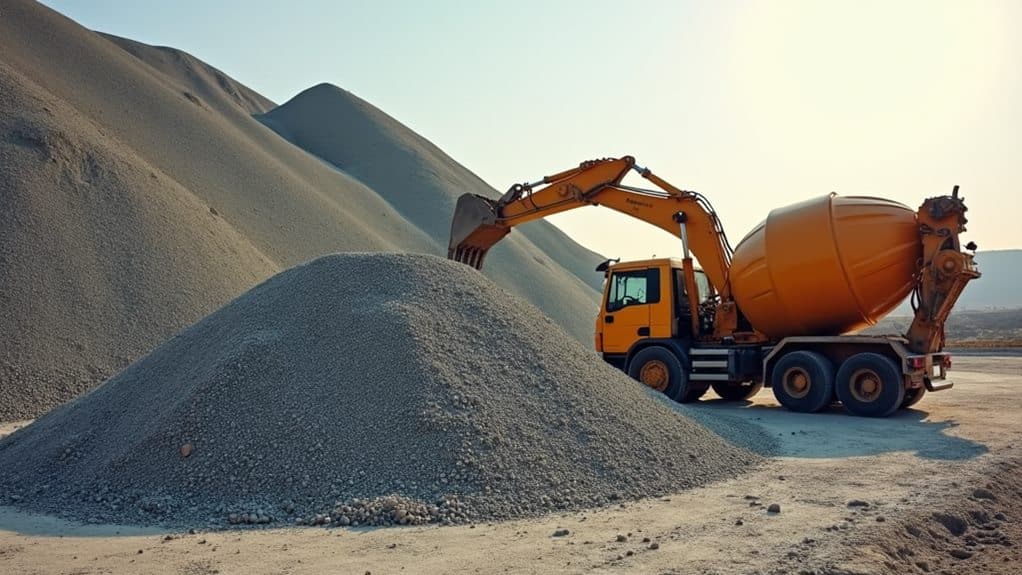
Recycled concrete serves multiple practical purposes beyond its original structural use. When processed correctly, it works brilliantly as a base layer under asphalt pavements, providing essential support for new road surfaces.
The material works well as aggregate in fresh concrete mixes, supporting sustainable building whilst maintaining structural strength. Much like recycled sand applications in kerbstones and garden slabs, recycled concrete proves remarkably versatile in construction.
Crushed concrete excels in outdoor settings. Its porous structure makes it perfect for footpaths and walkways, allowing rainwater to drain naturally into the soil below.
For landscaping, recycled concrete can be transformed into practical items like paving blocks and garden seating. It serves decorative purposes too, working as an alternative to traditional mulch or filling wire cages to create screening and retaining walls.
These uses showcase how old concrete can be repurposed effectively, cutting waste whilst supporting eco-friendly building practices.
Economic Benefits of Concrete Recycling
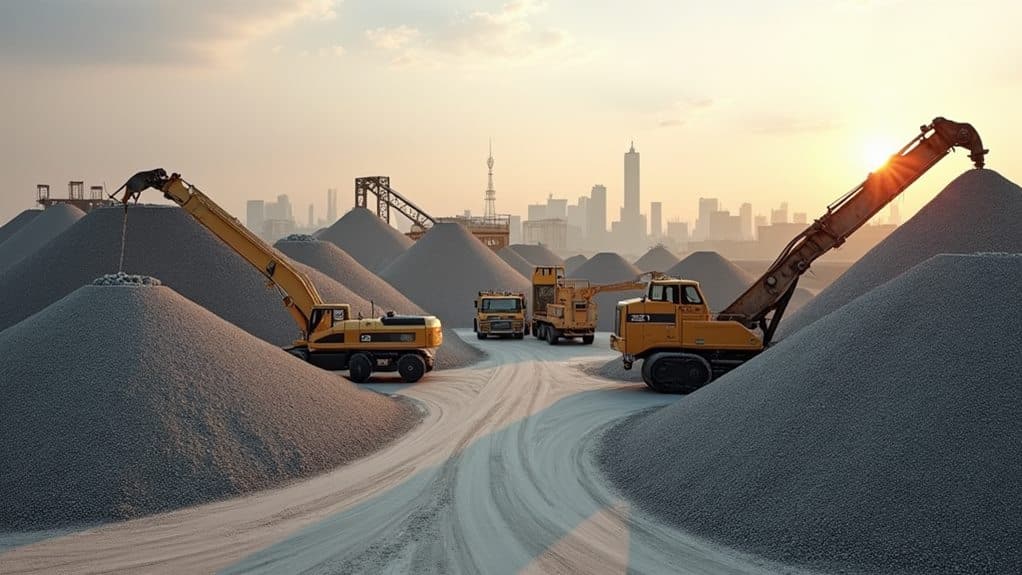
The financial benefits of concrete recycling are substantial for UK construction projects.
On-site concrete recycling eliminates transport costs normally incurred when moving waste to distant recycling facilities. Whilst sustainable options like timber and hempcrete are emerging as green building materials, recycling existing concrete remains the most cost-effective approach. This direct cost reduction boosts project efficiency whilst supporting sustainable construction practices.
Recycled concrete offers savings beyond initial costs. Recycled aggregates are typically cheaper than new materials, and firms avoid costly landfill taxes and disposal fees, significantly improving profit margins.
Key financial advantages of concrete recycling:
- Eliminated transport costs through on-site processing
- Lower material costs from using recycled aggregates
- Avoided landfill taxes and disposal fees, leading to substantial savings
Processing Methods and Equipment
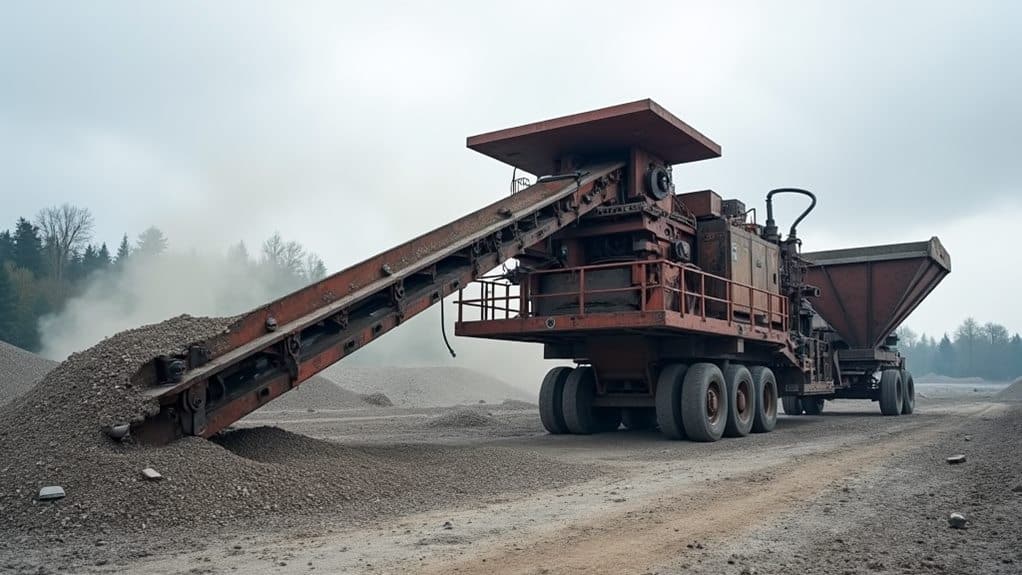
Breaking down old concrete requires robust machinery, including industrial crushers and impact breakers that reduce large sections into usable sizes.
The processing involves two crucial screening phases – first removing rubbish and debris, then sorting the crushed material by size for different uses.
Modern plants use advanced techniques like water separation and magnets to clean the concrete thoroughly, ensuring high-quality recycled aggregate suitable for construction projects across the UK.
Crushing and Sorting Equipment
Breaking down old concrete demands specialist heavy-duty machinery for optimal material recovery. The essential equipment includes industrial crushing jaws and impactors that turn concrete waste into reusable granules.
The crushing and sorting process works through two main screening phases:
- Primary screening removes large debris and unwanted items.
- Secondary screening separates coarse aggregates.
- Advanced sorting using water flotation and magnets removes contamination.
Your equipment must maintain strict control over particle sizes throughout. The quality of separation between valuable materials and waste directly affects the end product.
Well-implemented crushing and sorting systems deliver higher recovery rates whilst meeting UK standards for recycled aggregates.
This methodical approach to concrete recycling supports sustainable building practices across Britain, much like the successful recycling programmes already operating in cities such as Manchester and Birmingham.
Think of it as a massive version of household recycling – but instead of sorting bottles and paper, it’s processing tonnes of concrete into reusable building materials.
Advanced Separation Techniques
Advanced separation techniques have transformed concrete recycling across Britain through modern processing methods. These techniques use robust machinery, including industrial crushers and impactors, to break down concrete into usable sizes.
The process works in two main stages. The first stage filters out large debris, whilst the second focuses on extracting reusable coarse aggregates for new building projects.
To ensure top-quality recycled materials, additional cleaning methods are essential, including water flotation and magnetic separation to remove contaminants.
The process becomes particularly effective when using CO2 and Sika additives during treatment. These additives boost aggregate quality and support carbonation, reducing the carbon footprint.
This approach maximises material recovery whilst supporting sustainable construction practices throughout the UK.
Quality Standards for Recycled Concrete
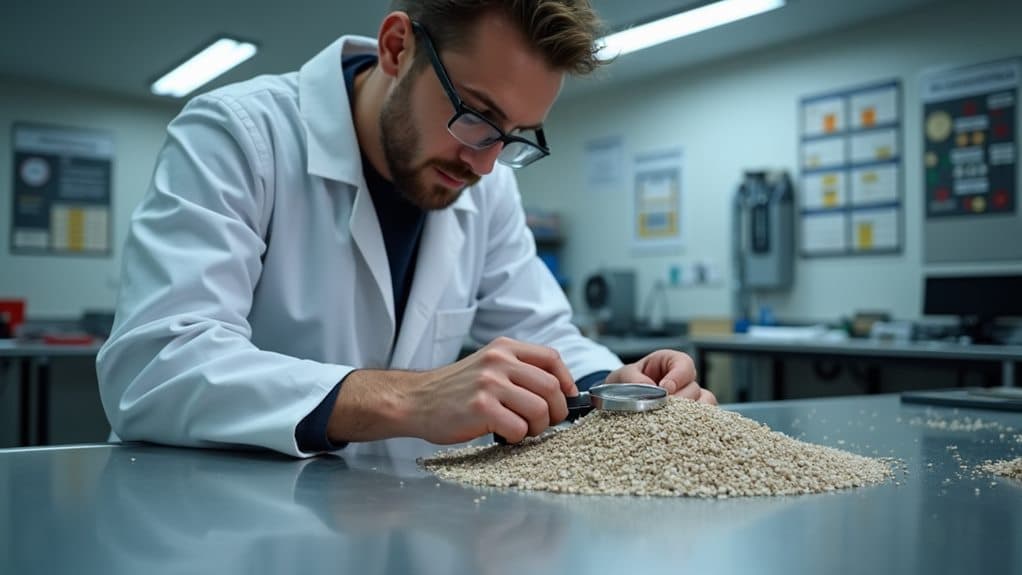
Quality assurance is essential for recycled concrete in UK construction, with specific standards governing its use.
Recycled concrete must meet BS 8500:2023 requirements, which stipulate that Crushed Concrete Aggregate (CCA) should contain a minimum of 90% concrete-based materials.
Recent developments, including innovative shell-based alternatives, show how new materials can satisfy strict quality standards whilst supporting environmental goals.
Recycled Aggregate (RA) standards are particularly demanding to ensure structural safety and reliability.
Key compliance requirements:
- Thorough cleaning using advanced methods like magnetic separation and water flotation
- Comprehensive testing of vital properties, including frost resistance and porosity
- Strict adherence to RA and CCA material classifications
Quality control throughout the recycling process is vital.
Following these standards ensures recycled concrete performs effectively for its intended use.
Though there are some restrictions for high-performance applications, proper processing and quality control significantly broaden the practical uses of recycled concrete in building projects.
Residential Concrete Recycling Options

Residential Concrete Recycling Options
Many UK councils provide concrete recycling services, including kerbside collection and local drop-off points, making it simple to dispose of old concrete responsibly.
Taking inspiration from sustainable construction practices, including the use of timber and hempcrete, can help identify practical reuse options.
Local recycling centres specialising in construction waste offer a straightforward solution for concrete disposal.
These facilities crush and process old concrete into reusable materials. Some specialist firms even bring mobile crushing equipment to your property, turning old concrete into material you can use straight away for garden projects.
Recycling concrete makes both environmental and financial sense.
You’ll avoid costly landfill fees, whilst recycled concrete serves as an excellent base material for driveways and garden paths – a much cheaper option than buying new aggregate.
This practical approach turns waste into a useful resource, reducing the need for new materials whilst meeting your building needs cost-effectively.
Future of Concrete Sustainability
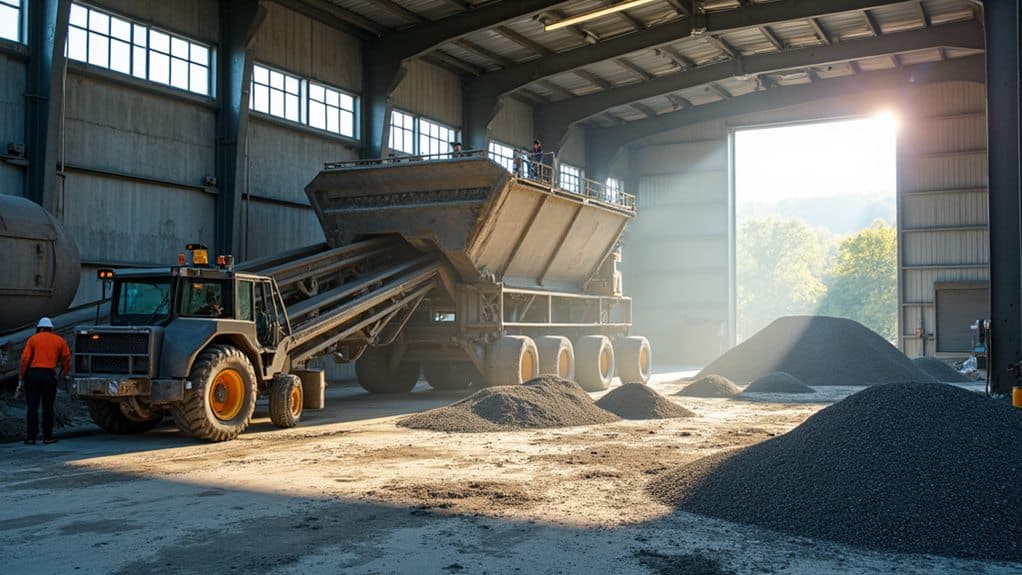
The future of concrete sustainability in the UK rests on three vital developments: circular economy integration, innovative recycling technologies and carbon footprint reduction.
Leading examples include Sika’s reCO2ver process, which turns waste concrete into usable resources, whilst recycled aggregates are becoming commonplace in British construction projects.
Electric arc furnaces have transformed cement recycling without inflating production costs, marking a crucial step forward in sustainable concrete production.
Key industry advances include:
- Advanced recycling systems converting concrete fines into cement substitutes, cutting raw material demand
- Growing use of recycled aggregates across UK construction supply chains
- Effective steel reinforcement recovery from demolished concrete, creating closed-loop material cycles
These developments make both environmental and business sense.
The industry’s adoption of carbonation processes boosts recycled concrete’s green credentials, with ongoing research exploring new uses for recycled materials.
As environmental concerns grow, these circular economy practices are set to become standard practice in British concrete production and construction.
Frequently Asked Questions
Can Concrete Be Recycled in the UK?
Concrete recycling is widely available across the UK, with local facilities turning old concrete into valuable building materials. Construction sites can either send concrete to recycling centres or crush it on-site for immediate reuse. This practice helps reduce landfill waste and creates cheaper aggregate for new building projects.
Can Concrete Be Recycled or Reused?
Concrete is fully recyclable and reusable throughout Britain’s construction industry. Once crushed, it creates valuable aggregates and powder that builders regularly use in new projects. This practice not only cuts down on landfill waste but also helps preserve the UK’s natural quarry resources. Common applications include road base materials, garden landscaping and new concrete mixing.
Why Can’t Concrete Be Recycled?
Recycling concrete presents significant challenges across several areas: the material breaks down easily during freeze-thaw cycles, the recycling process often compromises its structural strength, and the costs typically outweigh the benefits for most building projects. Whilst some firms do recycle concrete for low-grade applications like road sub-bases, it’s rarely practical for primary construction use in the UK.
What to Do With an Old Concrete Slab?
Old concrete slabs needn’t go to waste. Opt for professional crushing services, turn them into garden paths, or create decorative borders around flowerbeds. These practical solutions give your old concrete new life whilst avoiding skip fees and landfill waste.
For DIY enthusiasts, broken slabs make brilliant stepping stones or can form the base for a rustic rockery.
Conclusion
Recycling concrete plays a vital role in sustainable construction across Britain. The process of crushing old concrete into reusable aggregate offers both environmental and cost benefits. Through proper crushing methods and quality control measures, waste concrete becomes a valuable resource for new building projects. This practice supports the UK construction industry’s move towards better material management and reduced waste.

Learn about the diverse types of concrete used in construction and discover which mix can transform your next project.

For a long-lasting driveway that laughs in the face of the UK's unpredictable weather, the C20 concrete mix is your Read more

In the UK, you've got a a lot of lightweight concrete types to choose from, each with its unique perks. Read more