Yes, you need to damp-proof concrete due to its porous nature and vulnerability to moisture absorption.
Without proper protection, concrete can suffer from structural damage, health risks from mould growth, and costly repairs.
We recommend implementing damp-proofing methods like liquid membranes or epoxy coatings to create an impermeable barrier against moisture infiltration.
These techniques not only preserve the concrete's integrity but also enhance its durability and longevity.
Proper surface preparation and application are essential for effective moisture management.
By understanding the risks and taking preventive measures, you'll be better equipped to protect your concrete structures from potential moisture-related issues.
Key Takeaways
- Concrete's porous nature makes it susceptible to moisture absorption, potentially compromising structural integrity.
- Untreated damp issues can lead to costly repairs, health risks from mould growth, and decreased property value.
- Damp-proofing is essential in high-humidity environments or areas with poor drainage and inadequate ventilation.
- Various damp-proofing methods exist, including liquid membranes, epoxy coatings, and plastic damp proof membranes.
- Proper surface preparation and application are crucial for effective damp-proofing, regardless of the chosen method.
Understanding Concrete's Vulnerability to Moisture
Concrete's vulnerability to moisture stems from five key factors. First, the porous nature of concrete allows for moisture absorption from the ground, which can lead to dampness and compromise structural integrity if left unchecked.
Second, small cracks in concrete surfaces act as entry points for water, exacerbating damp issues and potentially causing wood rot in adjacent structures.
Third, high humidity levels in the environment can penetrate concrete surfaces, increasing the risk of moisture-related problems. Whilst traditional concrete is susceptible to moisture, innovative cement-free materials are being developed as sustainable alternatives that may offer better resistance to dampness.
Fourth, poor drainage and inadequate ventilation can trap moisture in concrete areas, making damp-proofing vital for maintaining structural integrity.
Finally, neglecting damp-proofing measures can result in costly repairs and long-term damage to both the concrete and associated building materials.
We must understand these vulnerabilities to effectively address moisture-related issues in concrete structures. By recognising the importance of proper damp-proofing techniques, we can prevent water ingress, minimise structural damage, and guarantee the longevity of our concrete structures.
Implementing appropriate moisture management strategies is essential for preserving the integrity of concrete and protecting adjacent building materials from potential deterioration.
Risks of Untreated Damp Issues
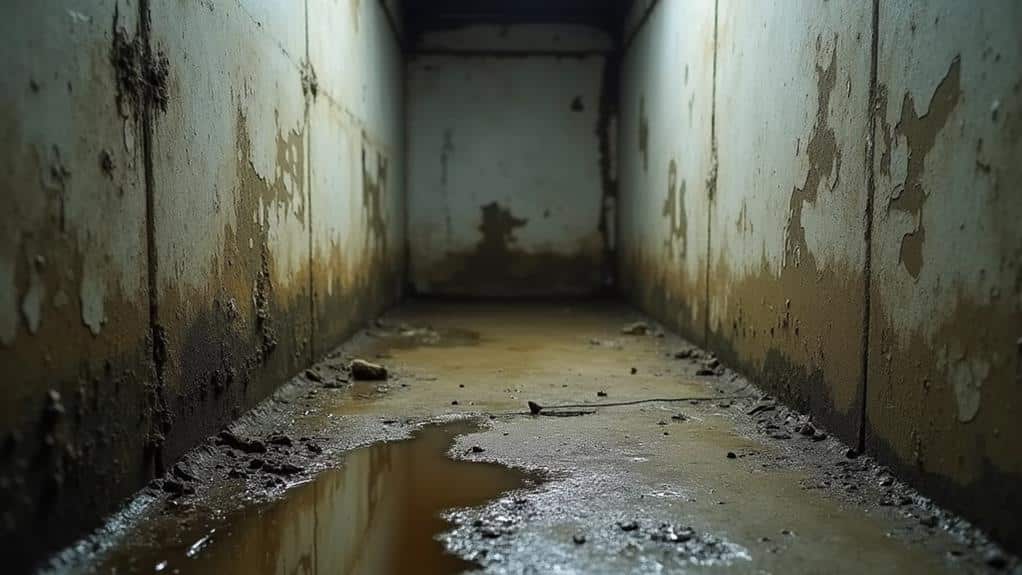
In light of the notable risks associated with untreated damp issues, it's essential to address moisture problems in concrete promptly. Neglecting these issues can lead to severe consequences, both financially and structurally.
We've seen cases where unaddressed damp has resulted in costly remedial works, often exceeding thousands of pounds depending on the extent of the damage. High-performance concrete mixes can considerably improve durability and resistance to moisture-related issues, potentially extending the lifespan of structures to 50 years or more with minimal maintenance.
Beyond the financial implications, untreated damp poses health risks to occupants. Mould and mildew growth can greatly impact indoor air quality, necessitating immediate action through effective damp prevention strategies.
Additionally, the structural integrity of concrete can be compromised over time, leading to cracks and further deterioration.
We must also consider the aesthetic damage caused by moisture exposure. Discolouration and efflorescence can diminish a property's visual appeal and value. Long-term neglect of damp issues can greatly decrease property value, deterring potential buyers.
To mitigate these risks, it's vital to implement robust damp prevention strategies and utilise moisture detection tools regularly. By proactively addressing damp issues, we can prevent costly repairs, maintain structural integrity, and preserve property value.
Damp-Proofing Methods for Concrete
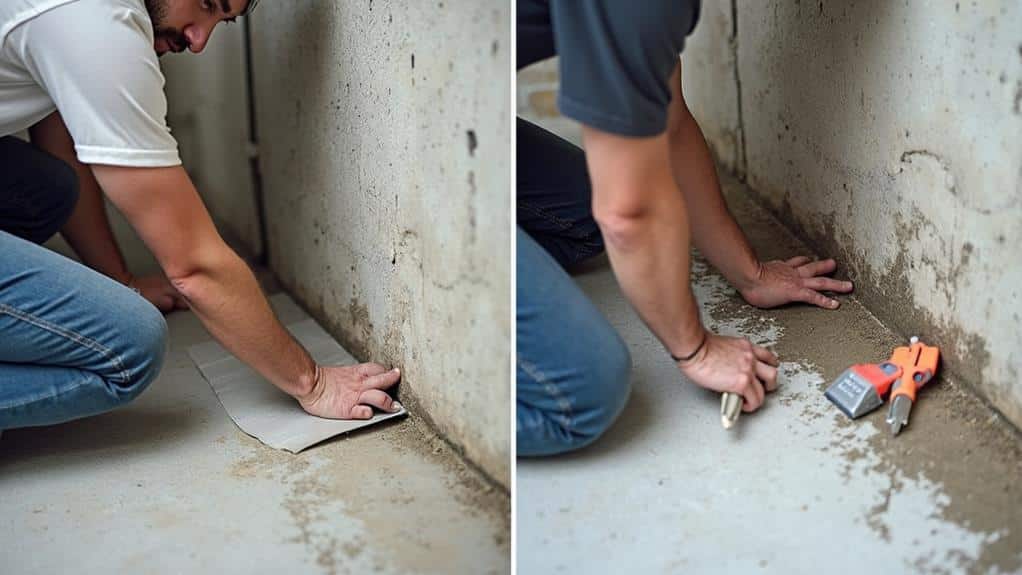
A variety of effective damp-proofing methods are available for concrete structures. When considering membrane types and coating comparisons, we must review each option's suitability for specific applications.
Liquid membranes excel for floors that will be covered with carpet or wood, creating a hard, impermeable surface once dried. Epoxy floor coatings demand thorough surface preparation and multiple layers for peak moisture protection and durability against damp conditions.
Slab-on-grade foundations, common in warmer regions, may require additional damp-proofing measures to prevent moisture ingress from the ground.
For effective moisture management, consider these key factors:
- Surface preparation requirements
- Application method (rolling, brushing, or spray-on)
- Drying time and curing process
- Compatibility with intended floor coverings
- Long-term durability and maintenance needs
Plastic damp proof membranes offer an alternative approach, serving as a barrier between concrete and underlay floor coverings. Traditional damp proof coatings require meticulous surface preparation for proper adhesion.
In basement applications, cavity drain systems often prove most effective, combining wall membranes and perimeter drainage channels for thorough damp management.
Applying Liquid Membrane Protection
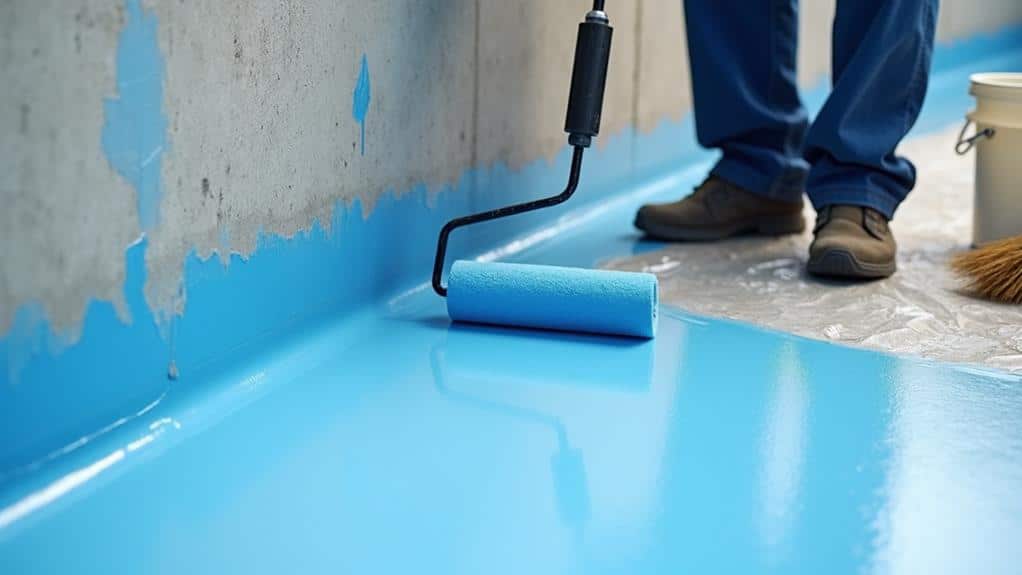
Applying liquid membrane protection offers a swift and effective solution for safeguarding concrete surfaces against moisture infiltration. This paint-like application forms an impervious barrier once dried, making it ideal for concrete subfloors that will be covered with carpets or wood.
One of the key liquid membrane benefits is its quick application process, which can greatly reduce project timelines.
To guarantee ideal results, we must properly prepare the surface. The concrete should be clean and slightly porous to allow for effective adhesion.
We can't stress enough the importance of thorough surface preparation, as it directly impacts the membrane's effectiveness.
In high-humidity environments, we may need to apply multiple layers to provide all-encompassing protection.
When considering application techniques, it's vital to follow manufacturer guidelines for thickness and drying times between coats.
After application, we must regularly monitor the treated area for signs of dampness.
This ongoing vigilance helps maintain the integrity of the liquid membrane and prevents potential moisture issues.
Epoxy Coating Application Process
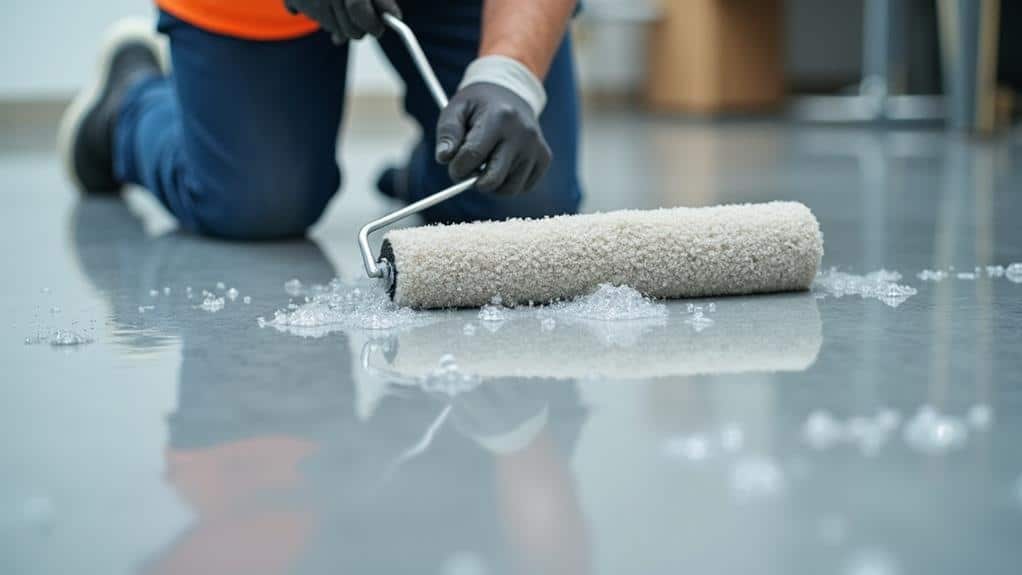
Epoxy coating application demands meticulous preparation and execution for optimal results. We begin by verifying the surface is clean and free of existing sealants through a water test.
Surface preparation is essential; the concrete should be slightly porous to enhance bonding. Once prepared, we mix the epoxy and apply it using broad strokes to minimise air bubbles, aiming for an even and smooth finish.
The process typically requires at least two coats, with adequate curing time between applications for ideal adhesion and durability. Multiple layers may be necessary for areas exposed to heavier wear.
After application, we must carefully monitor the curing time, as most epoxy products have specific requirements before they can withstand traffic or be covered with other materials.
To guarantee a successful epoxy coating application, consider the following:
- Thoroughly clean and prepare the surface
- Use proper mixing techniques for the epoxy
- Apply even coats with broad strokes
- Allow sufficient curing time between layers
- Monitor the final curing process closely
Frequently Asked Questions
Do You Need Moisture Barrier on Concrete?
We absolutely need damp-proof membranes on concrete for effective moisture control and concrete protection. They're essential to prevent water penetration, which can lead to structural damage. Let's always include this vital step in our concrete projects.
Do You Need DPM Under Concrete?
Like a shield against a rising tide, one absolutely needs a DPM under concrete. It's a vital step in concrete installation for moisture prevention. One cannot stress enough how essential it is for long-term structural integrity.
Can Damp Get Through Concrete?
Yes, we can confirm that damp can indeed penetrate concrete. Due to concrete's permeability, moisture intrusion is possible through pores, cracks and capillary action. We must consider proper damp-proofing measures to prevent potential water-related issues in structures.
Do I Need to Waterproof Concrete?
We highly recommend waterproofing concrete. The benefits include increased durability and protection against moisture damage. Various concrete sealing techniques can be employed, such as liquid membranes or epoxy coatings, to create an effective barrier against water infiltration.
Whilst the text is already suitable for a UK audience and uses British English spellings, no changes were necessary to adapt it further.
Conclusion
We've journeyed through the maze of concrete dampness, and now we're at the finish line. Like a shield against a relentless tide, damp-proofing is our concrete's armour. We've explored various methods, from liquid membranes to epoxy coatings, each a weapon in our moisture-fighting arsenal. It's clear: neglecting damp-proofing is like leaving our concrete fortress unguarded. Let's arm our structures with the right protection, ensuring they stand strong against water's silent siege.

Learn about the diverse types of concrete used in construction and discover which mix can transform your next project.

For a long-lasting driveway that laughs in the face of the UK's unpredictable weather, the C20 concrete mix is your Read more

In the UK, you've got a a lot of lightweight concrete types to choose from, each with its unique perks. Read more