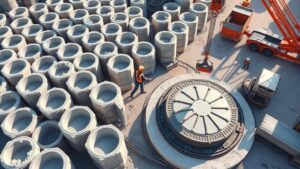
To use Ground Granulated Blast Furnace Slag (GGBFS) in concrete, replace 25% to 70% of Portland cement with GGBFS. Keep the water-cementitious ratio between 0.320 and 0.450 to ensure a good balance of workability and strength. For larger projects, add GGBFS directly into the mixer. It’s important to monitor the slump to assess workability, and you might want to use superplasticisers to enhance flow. These changes not only improve strength and durability but also support sustainability in construction.
Key Takeaways
- Replace 25% to 70% of Portland cement with GGBFS to improve concrete properties and longevity.
- Keep the water-cementitious ratio between 0.320 and 0.450 for the best mix performance.
- For larger projects, add GGBFS directly into the concrete mixer to ensure even distribution.
- Use superplasticisers to enhance flow and compaction, particularly when using higher GGBFS levels.
- Carry out compressive strength tests and monitor performance to meet standards like BS EN 15167-1.
Understanding GGBFS and Its Composition

Ground Granulated Blast Furnace Slag (GGBFS) is a key ingredient in contemporary concrete. This non-metallic by-product of iron and steel production is rich in calcium silicates and aluminosilicates. When mixed with water, GGBFS activates latent hydraulic properties, producing calcium silicate hydrate (C-S-H) that significantly boosts strength. Its fineness, akin to that of Portland cement, is crucial for enhancing reactivity. GGBFS is specified for its protective qualities against sulfate and chloride attacks, often replacing sulfate-resisting Portland cement due to its superior performance and cost-effectiveness.
GGBFS is classified into different grades based on its activity index, which affects its performance in various applications.
Environmental Benefits of Using GGBFS
Incorporating GGBFS into concrete mixes offers notable environmental benefits that support sustainable construction. By replacing Portland cement, GGBFS can reduce carbon dioxide emissions by approximately 900 kg for every tonne produced. In the UK, this translates to a reduction of around 2 million tonnes of CO2 emissions each year, helping to lower the carbon footprint of concrete.
Moreover, GGBFS utilises industrial waste from iron production, diverting about 2 million tonnes from landfills annually. Its enhanced durability means structures last longer, which reduces the need for repairs and lessens overall environmental impact throughout their lifecycle. Additionally, the production of GGBFS requires less energy than Portland cement, further contributing to its sustainability.
Ultimately, GGBFS encourages responsible sourcing and energy efficiency, aligning with green building practices and promoting principles of the circular economy.
Recommended Mix Design and Proportions

When using GGBFS in your concrete mix, it’s essential to find the right replacement ratios to boost performance while adhering to compliance standards. Adjustments tailored to your project’s needs can help strike a balance between workability and strength. For instance, a typical replacement ratio might range from 30% to 70%, depending on the specific requirements of your application. A typical combination of GGBS is 50% with 50% CEM I, which can enhance concrete properties significantly.
Optimal Replacement Ratios
To achieve optimal performance in concrete mixes using Ground Granulated Blast Furnace Slag (GGBFS), it’s essential to consider the replacement ratios of GGBFS to cement.
The right ratios can significantly enhance the properties of concrete. Here are some key points:
- Replacement Range: GGBFS replacements typically range from 10% to 90% by weight, depending on the intended application.
- Cement Substitution Ratio: A common guideline is to use an equal weight of GGBFS to cement, but this can be adjusted based on specific requirements.
- Water-Cementitious Ratio: Keep this ratio between 0.320 and 0.450 to ensure effective hydration.
- Curing Temperature: Be aware that higher GGBFS content may require longer curing times, particularly in cooler conditions.
Following these guidelines will help you optimise your mix design for improved durability and sustainability.
Performance-Based Adjustments
To achieve optimal performance in concrete mixes using GGBFS, careful adjustments to the mix design are essential.
Focus on key performance indicators like compressive strength and setting time. Keeping the paste volume between 30% and 33% enhances workability without compromising strength.
Adjust the water-to-solid ratio to improve strength while considering the impact on setting time, particularly with higher GGBFS content.
Also, remember to factor in the moisture content of aggregates to ensure accurate water-cementitious ratios.
Starting the mixing process with solids promotes better uniformity.
When combining with materials like fly ash, proportion GGBFS thoughtfully to enhance hydration kinetics and mechanical properties for an improved mix.
Compliance With Standards
Compliance with standards is crucial for ensuring that concrete mixes containing Ground Granulated Blast-Furnace Slag (GGBFS) adhere to performance criteria and regulations.
To ensure your mix design is compliant, follow these essential steps:
- Submit Concrete Mix Design Submittals (CMDS) at least seven days before production for review.
- Use GGBFS as a cement replacement, typically up to a 20% reduction with a slag-to-cement ratio of 1.25:1.
- Utilise standard spreadsheets provided by relevant authorities for accurate reporting and assessment.
- Conduct trial batching to confirm that the mix meets specified strength targets.
Enhancing Durability With GGBFS

Traditional concrete often faces durability challenges, but incorporating Ground Granulated Blast-Furnace Slag (GGBFS) significantly improves its strength against tough conditions.
For instance, GGBFS reduces chloride ion permeability by 29.4%, which helps protect reinforcing steel from corrosion. Its refined microstructure also limits sulfate ion penetration, enhancing resistance to sulphate attacks, particularly at 50–70% replacement levels.
Moreover, using GGBFS at 30% or more effectively mitigates alkali-silica reaction (ASR) expansion, making it ideal for reactive aggregates. Additionally, the densified microstructure slows carbonation, boosting long-term durability.
Mechanical Properties of GGBFS-Enhanced Concrete

Incorporating GGBFS into concrete leads to notable long-term strength gains, especially after 28 days. This not only decreases porosity but also enhances overall durability.
Understanding the workability of GGBFS mixes is essential for optimising your concrete’s performance effectively. For example, using GGBFS can improve the flow of the mix, making it easier to work with on-site.
Long-term Strength Development
When looking at the long-term strength development of GGBFS-enhanced concrete, it’s important to note that while it may have a lower compressive strength than ordinary Portland cement (OPC) at first, it gains strength over time, especially after 28 days. This long-term performance is crucial for structural applications.
- GGBFS concrete can surpass OPC strength after 90 days due to ongoing hydration.
- Higher GGBFS replacement ratios might reduce initial strength but lead to improved durability and long-term strength gains.
- A typical GGBFS content of 30%-50% strikes a good balance between performance and durability.
- Curing conditions play a significant role in the rate of strength development, particularly in warmer temperatures.
Reduced Porosity Benefits
Reduced porosity in GGBFS-enhanced concrete significantly improves its mechanical properties, allowing structures to better withstand environmental stresses.
The chemical reactions involving GGBFS create a refined pore structure that fills micro-capillary voids and reduces overall pore volume. This enhancement in durability results from lower permeability, which limits the transport of harmful ions and decreases the risk of corrosion in reinforcing steel.
Tests show that GGBFS can greatly lower chloride ion permeability, thus providing improved resistance against environmental damage. By partially replacing cement with GGBFS, you achieve a better balance of reactivity and workability, leading to increased compressive strength.
As a result, the more refined pore network restricts moisture ingress, protecting the concrete matrix and ensuring its long-term performance even in harsh conditions.
Enhanced Workability Features
The enhanced workability of Ground Granulated Blast-Furnace Slag (GGBFS) concrete is largely due to its finer particle size compared to traditional Portland cement. This improves the packing and flowability of the mix.
Here are some key advantages of GGBFS regarding workability:
- Smoother Mix: GGBFS creates a more cohesive mix, improving slump and making placement easier without the need for extra water.
- Reduced Segregation: Better particle interaction reduces segregation and bleeding, ensuring a consistent mixture.
- Ideal Content: Using around 80% GGBFS strikes a good balance between workability and strength, while minimising any negative effects.
- Caution with Recycled Aggregates: Be mindful that incorporating recycled aggregates can adversely affect workability, potentially reducing slump by up to 31.3%.
Application Methods for GGBFS in Concrete

Incorporating ground granulated blast-furnace slag (GGBFS) into concrete can provide significant advantages, but it’s crucial to understand the application methods for optimal results.
Ensure proper handling of raw materials to prevent moisture absorption, which can hinder reactivity.
When designing your mix, consider replacing 25% to 70% of Portland cement with GGBFS. Adjust the proportions based on the level of durability and sustainability you aim to achieve.
For instance, if you’re working on a large project, you can add GGBFS directly into the concrete mixer or use it in bulk.
Standard methods for placing concrete, such as pumping and vibrating, remain effective. However, be aware that you may need to extend curing times due to the slower early strength gain associated with GGBFS.
For specialised applications, consider innovative approaches, such as spraying GGBFS with an alkali activator to facilitate rapid setting.
Considerations for Quality Control and Compliance

When using GGBFS in concrete, it’s crucial to ensure compliance with relevant standards such as BS EN 15167-1.
Implement strong quality assurance measures, including regular testing and assessment of GGBFS properties.
Keep an eye on documentation and compliance checks to uphold high standards throughout your project.
Compliance With Standards
Ensuring compliance with standards is crucial when using Ground Granulated Blast-Furnace Slag (GGBFS) in concrete mixtures. Adhering to regulations such as BS EN 15167-1 ensures that the material meets necessary performance criteria.
Here are some key compliance points:
- Confirm that GGBFS grades (80, 100, 120) satisfy strength and reactivity requirements.
- Implement a quality management plan (QMP) that reflects current standards.
- Ensure certification processes include monthly mill test reports for traceability.
- Monitor cement substitution limits to comply with local specifications.
Quality Assurance Measures
Quality assurance measures are vital for ensuring the integrity and performance of GGBFS in concrete applications, as they significantly influence the material’s reliability and adherence to standards. A well-documented quality management plan (QMP) ensures consistent monitoring of production processes. Regular audits of suppliers and the submission of manufacturers’ certifications are crucial for maintaining quality compliance.
| Quality Control Measure | Purpose |
|---|---|
| Raw Material Qualification | Ensures chemical composition meets required standards |
| Process Monitoring | Confirms reactivity and strength contributions |
| Equipment Calibration | Ensures accuracy of testing equipment |
Testing and Evaluation
With robust quality assurance measures in place, the focus now shifts to testing and evaluating GGBFS in concrete.
Using the right testing methods ensures compliance with performance standards. Here are the key components to consider:
- Compressive and flexural strength: Refer to BS EN 12390-3 and BS EN 12390-5 for assessing load-bearing capacities.
- Durability assessments: Check freeze-thaw resistance through BS EN 12390-9 to ensure long-term stability.
- Workability analysis: Measure slump using BS 1881-102 to confirm mix consistency.
- Chloride permeability: Perform rapid chloride permeability tests to reduce corrosion risks.
These methods will effectively monitor the influence of GGBFS on concrete performance, ensuring quality and compliance in your projects.
Improving Workability and Performance

Incorporating Ground Granulated Blast Furnace Slag (GGBFS) can significantly improve concrete performance, but achieving the right workability requires careful proportioning. Replacing up to 30% of ordinary Portland cement (OPC) with GGBFS typically enhances flowability and workability.
However, using higher volumes of GGBFS can create challenges, particularly when mixed with recycled aggregates, resulting in a slump loss of up to 31.3%. To address this, adding superplasticisers can greatly enhance flow and compaction, especially with higher water-to-binder (w/b) ratios.
It’s crucial to balance GGBFS content with suitable admixtures and w/b ratios to maintain ideal workability while enjoying the benefits of GGBFS, such as improved durability and strength.
Adapting Mix Designs for Early Strength
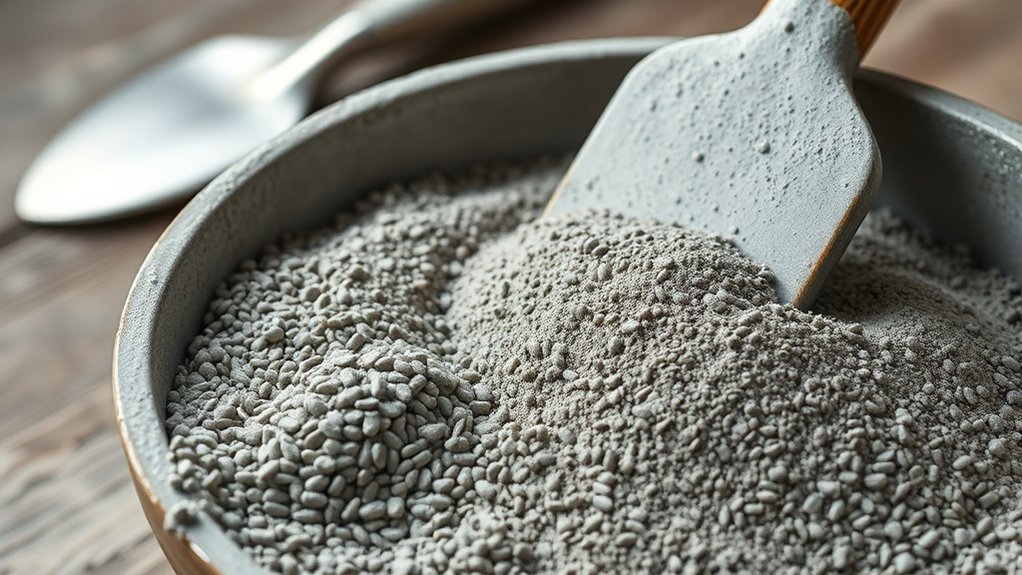
To ensure sufficient early strength in concrete mixes using Ground Granulated Blast Furnace Slag (GGBFS), it’s essential to adapt your mix design effectively.
Here are four straightforward strategies for optimising early strength:
- Combine GGBFS with Type III or high-early strength Portland cement to boost hydration rates.
- Keep GGBFS content between 15–30% by weight to prevent early strength loss.
- Lower the water-cementitious material ratio to between 0.3 and 0.45 to encourage quicker strength gain.
- Incorporate chemical admixtures like superplasticisers to maintain workability without compromising strength.
Case Studies and Successful Applications of GGBFS

The use of Ground Granulated Blast Furnace Slag (GGBFS) in concrete has gained popularity for its numerous benefits in infrastructure projects. For instance, in the S360 road construction, GGBFS helped achieve a remarkable reduction in drying shrinkage, measuring just 0.116 mm/m.
Similarly, during the Creve Coeur Memorial Bridge project, GGBFS played a crucial role in controlling temperature during large concrete placements, which improved overall performance.
Replacing 20% of cement with GGBFS not only enhances workability but also boosts durability by reducing permeability and increasing resistance to chemical attacks.
Additionally, GGBFS is eco-friendly as it repurposes waste from steel production, thereby lessening environmental impact.
These successful applications highlight GGBFS as a valuable asset in contemporary concrete engineering.
Frequently Asked Questions
How Does GGBFS Affect Concrete’s Setting Time?
GGBFS prolongs the setting time of concrete due to its slower hydration characteristics. A higher GGBFS content can significantly delay the setting process, especially in cooler temperatures or when using low cement mixes. This means you’ll need to adjust your construction schedule and formwork design accordingly. For instance, if you’re working on a project during the winter months, you may want to factor in the extended setting time to avoid delays.
Can GGBFS Be Used in Cold Weather Conditions?
Yes, GGBFS can be used in cold weather, but be aware that it sets more slowly. Expect longer setting times and increased bleeding. To ensure proper curing and maintain structural integrity, consider using preheating and insulation methods.
What Are the Potential Drawbacks of Using GGBFS?
Using GGBFS is like planting a tree; it offers long-term benefits but requires patience. You may encounter performance variability and some environmental concerns, as it typically leads to slower strength gain. This can result in increased susceptibility to cracking and specific challenges in mix design, especially in the early stages of a project.
Is GGBFS Suitable for Residential Construction Projects?
Yes, GGBFS is suitable for residential construction projects. It offers notable benefits such as increased durability, a lower carbon footprint, and improved workability. For instance, using GGBFS in concrete can help structures withstand harsh weather conditions while contributing to sustainability. Overall, it maintains structural integrity and aligns with eco-friendly building practices.
How Does GGBFS Impact the Cost of Concrete?
GGBFS affects concrete costs by enabling substantial savings due to lower cement usage. However, it’s important to factor in price variations depending on local availability and market conditions, ensuring that your concrete projects remain economically viable. For instance, if GGBFS is readily available in your area, you could see significant reductions in material costs, making your project more affordable.
Conclusion
Incorporating Ground Granulated Blast Furnace Slag (GGBFS) into your concrete mix is simpler than you may think. This byproduct of iron production can significantly improve the sustainability and durability of your concrete. By following straightforward guidelines and utilising the unique properties of GGBFS, you can meet industry standards while also benefiting the environment. For instance, using GGBFS can enhance the strength and longevity of your concrete structures, making them more resilient over time. So, why not opt for a smarter concrete solution that also helps reduce your carbon footprint? It’s a practical choice for both performance and the planet.

Learn about the diverse types of concrete used in construction and discover which mix can transform your next project.

For a long-lasting driveway that laughs in the face of the UK's unpredictable weather, the C20 concrete mix is your Read more

In the UK, you've got a a lot of lightweight concrete types to choose from, each with its unique perks. Read more