To measure shrinkage and creep in hardened concrete, start by preparing specimens with uniform dimensions and controlling environmental factors like temperature and humidity. Use load cells for precise force measurements and embed strain gauges to track changes in strain over time. Conduct standard shrinkage and creep tests, ensuring loads are applied carefully to avoid microcracking. Calibrating predictive models can improve the accuracy of your assessments. Understanding these factors is crucial for effective structural design and material selection.
Key Takeaways
- Use standard specimens, like cylinders or prisms, to accurately measure shrinkage and creep in hardened concrete.
- Employ strain gauges or Linear Variable Differential Transformers (LVDTs) to track precise deformation and strain changes over time.
- Carry out shrinkage tests by measuring the volume reduction due to moisture loss during hydration.
- Apply a constant uniaxial compressive stress of 30-40% of the ultimate strength for creep testing in controlled conditions.
- Maintain controlled environmental conditions, such as temperature and humidity, to ensure reliable measurement results.
Definition of Shrinkage and Creep

When studying concrete, it’s important to understand the difference between shrinkage and creep, as both significantly affect its performance.
Shrinkage is the reduction in volume of concrete, mainly due to moisture loss during hydration. This can lead to problems such as surface cracking and dimensional instability. Key causes of shrinkage include the loss of both free and adsorbed water, which creates internal negative pressures within the cement paste. Plastic shrinkage can develop on the surface of fresh concrete due to water evaporation, adding to the overall shrinkage issues.
Creep, in contrast, is the gradual increase in strain in hardened concrete when subjected to a constant load over time. This behaviour arises from the properties of calcium silicate hydrates within the concrete.
It’s crucial to note that shrinkage occurs even without any load, whereas creep develops under stress. Understanding these two phenomena is essential for effective concrete design, as their combined effects can impact structural integrity significantly.
Experimental Setup for Shrinkage Tests

To understand concrete shrinkage, a well-structured experimental setup is essential for accurate measurement. You will prepare specimens with specific dimensions that mirror real-world conditions. Use load cells for precise force measurement and embed strain gauges to monitor changes in strain. Implement a data acquisition system for continuous logging of results, while ensuring temperature and humidity are controlled in the environment. Understanding shrinkage mechanisms is crucial as it directly influences the cracking behavior in concrete.
Here’s a quick overview of the key components:
| Component | Purpose |
|---|---|
| Load Cells | Measure forces applied |
| Strain Gauges | Track strain in specimens |
| Teflon Sheets | Minimise friction in testing |
This setup allows for effective analysis of shrinkage behaviour, enhancing your understanding of concrete performance.
Experimental Setup for Creep Tests

To accurately assess creep behaviour in concrete, a well-designed experimental setup is crucial. Here are some key aspects to ensure reliable results:
- Specimen Selection: Use standard cylinders or prisms, sized appropriately for the type of concrete.
- Load Application: Apply a constant uniaxial compressive stress at 30-40% of the concrete’s ultimate strength, doing so gradually to prevent microcracking.
- Environmental Conditioning: Keep the temperature between 20-25°C and relative humidity at 50-70% to influence creep accurately. Testing environments are critical for obtaining consistent results.
- Instrumentation: Use strain gauges or LVDTs for precise deformation measurement, ensuring they’re calibrated to avoid errors.
Calibration of Prediction Models
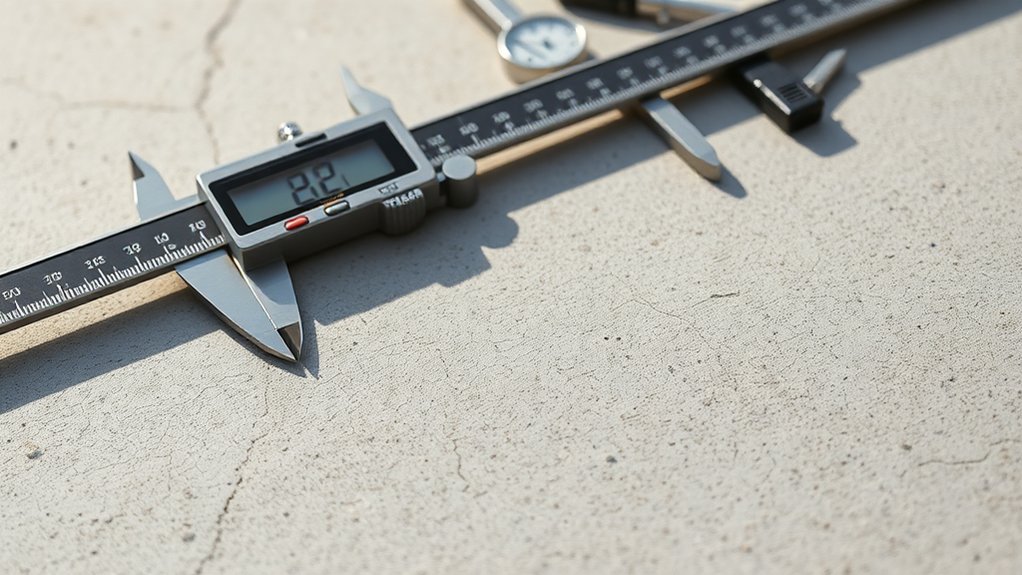
Accurate calibration of prediction models is crucial for reducing uncertainties in shrinkage forecasts, which in turn ensures reliability in your design processes.
Utilising statistical analysis techniques will help you evaluate the fit of your models, enabling informed decisions based on real data.
Furthermore, choosing the right model criteria is essential for achieving precise predictions tailored to your specific concrete mixes.
Importance of Accurate Calibration
When calibration is overlooked in shrinkage and creep prediction models, the accuracy of concrete behaviour assessments can suffer significantly. Proper calibration is vital for improving model precision and ensuring dependable predictions.
Here are some key reasons why calibration techniques are important:
- Calibration enhances prediction accuracy for specific concrete mixtures.
- Without calibration, models may provide generic averages that don’t accurately reflect real-world performance.
- It broadens the range of models applicable, particularly for concrete strengths between 20 to 70 MPa.
- Calibrated models help reduce structural risks associated with unexpected deformations.
Statistical Analysis Techniques
Calibration techniques improve prediction accuracy and depend on strong statistical analysis methods to refine models for concrete shrinkage and creep. Treat parameters like q1, q2, and εsh∞ as statistical variables, incorporating uncertainty factors ψ1 and ψ2 to reflect variability.
These factors, which follow a normal distribution, have coefficients of variation of approximately 23% for creep and 34% for shrinkage, ensuring the model remains robust.
To assess calibration accuracy, perform residual analysis; balanced residuals suggest unbiased predictions. Use comprehensive experimental databases to derive meaningful parameter distributions and validate model predictions over time.
Model Selection Criteria
Choosing the right prediction model for concrete shrinkage and creep requires careful consideration of key criteria that affect its effectiveness. Here’s what to focus on:
- Model Complexity: Determine if the model offers detailed predictions, similar to solidification theory models, which can provide insights into the behaviour of concrete over time.
- Data Compatibility: Ensure that the model can handle large databases for calibration, like the CEB-FIP 2010 guidelines, which are widely recognised in the industry.
- Performance Metrics: Assess the models using metrics such as residual methods and mean square error to gauge their accuracy.
- Industry Preferences: Consider the balance between traditional methods that practitioners are familiar with and the potential benefits of more advanced models.
Comparison of Different Models
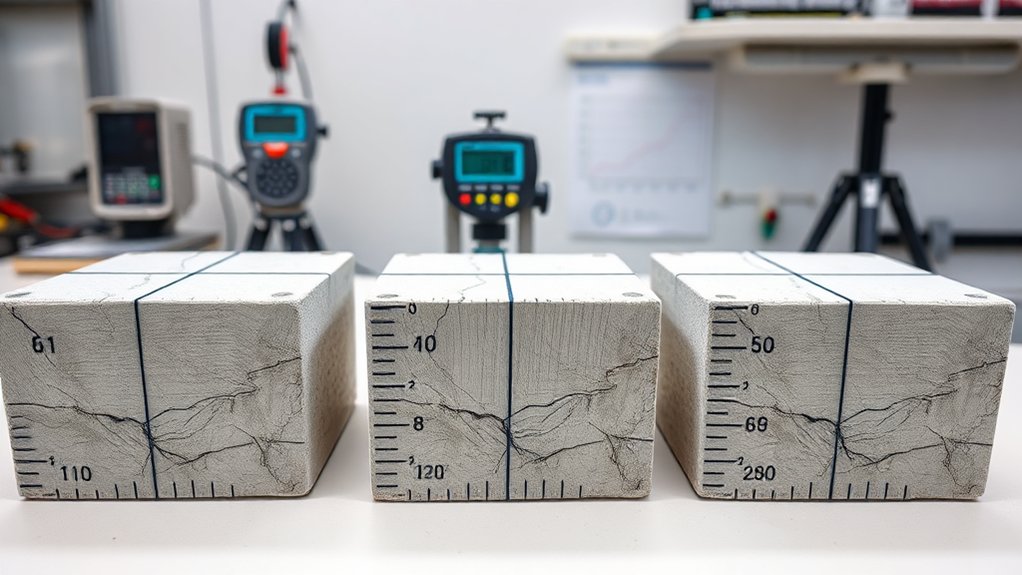
When examining the different models for measuring shrinkage and creep in concrete, it’s important to recognise their respective strengths and weaknesses. Each model has specific features that affect its accuracy and suitability.
| Model | Strengths |
|---|---|
| CEB-FIP 2010 | Reliable for assessing compressive strength and humidity effects |
| CEB MC 90-99 | Accurate when properly calibrated for creep and shrinkage |
| B3 | Straightforward and well-supported by experimental data |
| ACI 209 | Tends to underestimate creep strain in high-strength mixtures |
| GL 2000 | Often overestimates creep strain across various mixtures |
Practical Considerations and Applications
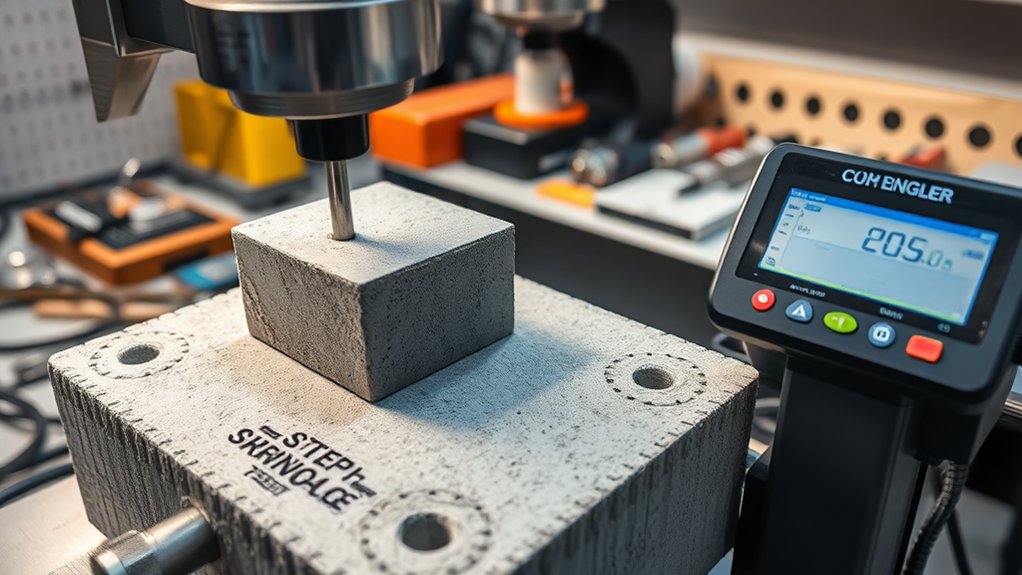
When measuring shrinkage, it’s important to consider environmental factors that can significantly impact your results. The choice of materials is crucial, as different concrete mixes behave differently under stress and varying conditions. For instance, a high-performance concrete may resist shrinkage better than a standard mix. Additionally, the integration of Supplementary Cementitious Materials (SCMs) can further enhance the concrete’s resistance to shrinkage and reduce overall emissions.
Environmental Sensitivity Factors
Understanding environmental sensitivity factors is crucial for accurately measuring shrinkage in concrete, as various conditions significantly impact the material’s behaviour.
Key environmental factors to consider include:
- Relative Humidity (RH): Higher RH levels can reduce both creep and shrinkage, influencing moisture change rates in concrete.
- Temperature: Fluctuations in temperature can affect hydration rates, which in turn impacts shrinkage and creep.
- Curing Conditions: Proper curing helps retain moisture, thereby minimising early shrinkage and creep.
- Exposure Conditions: Elements like wind and sunlight can hasten drying, leading to increased shrinkage.
Being aware of these humidity effects and environmental factors is essential for reliable shrinkage measurement, ensuring that concrete structures remain sound over time. Additionally, implementing sustainable practices such as responsible sourcing of materials can further mitigate environmental impacts associated with concrete production.
Material Selection Impact
Environmental factors significantly affect concrete shrinkage, but choosing the right materials is crucial too. The type of cement—whether it’s Type I/II or the quicker-setting Type III—affects how the concrete hydrates and gains strength, which in turn influences shrinkage and creep.
The kind of aggregates used, whether crushed or natural, and their sizes determine the aggregate-to-paste ratio, impacting the overall mechanical properties.
For instance, high-strength concrete (HSC) uses lower water-to-cement ratios to boost strength, but this can lead to more autogenous shrinkage. Additionally, using 4000 PSI ready mix concrete can provide enhanced durability and structural integrity, which is vital for minimizing shrinkage and creep in demanding applications.
It’s essential to balance the mixture proportions carefully; while higher compressive strengths generally result in lower creep strains, this relationship isn’t straightforward.
Understanding these material properties is key to optimising performance and minimising shrinkage and creep in real-world applications.
Importance in Structural Design

The importance of accurately measuring shrinkage in concrete is crucial, as it directly impacts the structural design and longevity of reinforced concrete (RC) structures.
Understanding how shrinkage and creep affect design is vital for ensuring structural performance.
- Shrinkage can alter stress distribution, complicating how loads are managed.
- Restrained shrinkage raises the likelihood of cracking, which can compromise durability.
- Creep leads to gradual deformation, which can help relieve stress but may also affect deflections.
Taking proper design measures can prevent expensive repairs and extend the lifespan of structures.
Frequently Asked Questions
What Are the Common Causes of Shrinkage in Concrete?
Common causes of shrinkage in concrete include temperature changes and quick moisture loss. High temperatures speed up evaporation, while poor moisture retention during curing can lead to contraction. This increases the likelihood of cracks and can compromise the structure’s integrity. For instance, if concrete is left exposed to the sun without proper curing, it may shrink unevenly, resulting in visible cracks.
How Can Environmental Conditions Be Controlled During Testing?
You can control environmental conditions during testing by ensuring strict temperature regulation and managing humidity levels. Keeping temperatures stable and relative humidity between 50-60% helps achieve accurate measurements, reducing external factors that could affect your specimens’ behaviour. For example, if you’re testing materials for construction, maintaining these conditions can prevent variations in results that might occur due to moisture absorption or temperature fluctuations.
What Tools Are Best for Measuring Creep in Concrete?
To measure creep in concrete effectively, use precision pressure transducers, displacement sensors, and load cells. These instruments provide accurate monitoring of deformation under sustained loads, ensuring reliable results. For example, displacement sensors can track how much a concrete sample deforms over time, giving you crucial insights into its long-term behaviour.
How Does Concrete Mix Design Affect Shrinkage and Creep?
Your concrete mix design significantly influences shrinkage and creep. By optimising the mix composition and using a lower water-cement ratio, you can effectively minimise these issues. This balance enhances workability and strength, while reducing the excess paste that typically contributes to shrinkage and creep. For example, think of it like cooking; too much water in your recipe can ruin the consistency, just as it can affect the durability of your concrete.
Can Shrinkage and Creep Be Predicted in Real-Time?
Yes, shrinkage and creep can be predicted in real-time using predictive modelling techniques. By integrating sensor data with established models, accuracy is improved, enabling timely adjustments and proactive management of a structure’s integrity throughout the concrete’s lifespan. For example, in a bridge construction project, monitoring data can help anticipate changes in the concrete and allow for necessary reinforcements before issues arise.
Conclusion
Measuring shrinkage and creep in hardened concrete is crucial for maintaining structural integrity. Concrete can shrink by as much as 0.5% over time. While this may sound minimal, it can lead to serious structural problems if neglected. By using precise testing methods and calibration models, these risks can be managed, improving the durability of your structures. A solid understanding of shrinkage and creep not only helps in effective design but also protects investments and ensures public safety.

Boost your concrete quality assurance with 10 essential testing methods; uncover critical techniques that could transform your project's success.

Finding the hidden strengths and weaknesses in concrete, core sampling reveals essential insights about structural integrity after installation—discover its crucial Read more

Prepare to explore essential methods for testing concrete for Alkali-Silica Reaction (ASR) and discover how these tests can safeguard your Read more