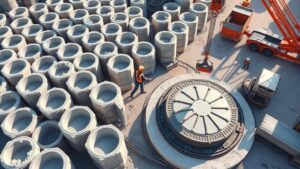
Concrete is vital in dam construction due to its exceptional load-bearing capacity, durability, and resistance to environmental conditions. It can withstand hydrostatic pressure and various stresses, ensuring the structure remains intact over time. Additionally, concrete offers seismic resistance, which is crucial in areas prone to earthquakes.
Recent advancements, such as high-performance and roller-compacted concrete, improve efficiency and help lower costs. As sustainability becomes increasingly important, new materials are being developed to significantly reduce emissions associated with concrete production.
Overall, concrete’s role in dam construction is both critical and evolving, making it a fascinating topic for further exploration.
Key Takeaways
Concrete plays a crucial role in dam construction for several reasons:
- Its high load-bearing capacity ensures stability against hydrostatic pressure and various stresses that dams face.
- The durability of concrete offers long-lasting protection from water and environmental factors, which is vital for the longevity of dams.
- Advanced concrete types, such as High-Performance Concrete (HPC), boost strength and reduce maintenance costs over time.
- Smart concrete technology allows for real-time monitoring, enhancing safety and structural health management in dam projects.
- Roller-Compacted Concrete (RCC) provides a cost-effective solution, streamlining large-scale dam construction while ensuring structural integrity.
In summary, concrete is essential for the safety, durability, and efficiency of dam structures.
Importance of Concrete in Structural Integrity

When building a dam, the role of concrete in ensuring structural integrity is crucial. Its high load-bearing capacity enables it to withstand hydrostatic pressure and various stresses that dams encounter. Concrete’s durability ensures it lasts against water and environmental factors, while its resistance to thermal and chemical effects helps prevent degradation. Furthermore, well-engineered concrete structures provide significant seismic resistance, which is vital for stability during earthquakes. The use of C40 concrete in dam foundations enhances load-bearing capacity and longevity, contributing to the overall safety of the structure. Regular inspections and advanced monitoring systems are essential for identifying any structural concerns, ensuring that the concrete’s integrity is maintained over time. Additionally, structural engineers are vital for maintaining dam safety and operational services, emphasizing the importance of quality concrete in dam construction.
Environmental Impact and Sustainable Practices

Concrete dams play a crucial role in water management and energy production, but their construction and operation significantly affect the environment. The carbon emissions from cement production and the disruption to ecosystems lead to a decline in biodiversity, particularly among freshwater wildlife. This decline is evidenced by the fact that migratory fish populations have decreased by 76% since 1970, underscoring the urgency of addressing these impacts. Additionally, the production of concrete accounts for nearly 10% of global industrial water use, which further stresses local water resources and surrounding ecosystems.
To enhance environmental sustainability, we can use innovative materials like rock-filled concrete (RFC), which can cut greenhouse gas emissions by around 64% compared to traditional concrete. Additionally, conducting life cycle assessments helps identify and mitigate environmental impacts throughout the dam’s lifespan. By implementing these sustainable practices, we can reduce emissions while also supporting biodiversity conservation, ensuring that ecological balance is maintained alongside the advantages of dam infrastructure.
Economic Advantages of Concrete Dams

The construction of concrete dams not only addresses environmental issues but also brings significant economic benefits.
These structures are vital for boosting local economies and maintaining economic stability. Here are some of the key advantages:
- Job Creation: Building dams generates numerous jobs, enhancing local employment rates.
- Infrastructure Improvement: Dams support essential infrastructure, promoting growth through renewable energy generation and irrigation. The surge in the construction of hydroelectric dams is a testament to this growth. Additionally, the use of ready-mix concrete in dam construction improves project efficiency and reduces waste.
- Flood Risk Mitigation: By controlling water flow, dams significantly reduce economic losses caused by flooding.
- Contribution to Local Economy: Dams help increase local GDP by producing renewable energy and supporting farming activities.
Technological Innovations in Dam Construction

Advancements in materials and construction methods have significantly changed dam construction.
Smart materials like high-performance concrete (HPC) and roller-compacted concrete (RCC) improve durability and lower maintenance costs, extending the lifespan of these structures.
The use of specialised equipment and digital control systems streamlines construction, speeding up project timelines and reducing labour costs.
Moreover, smart concrete equipped with sensors allows for real-time monitoring of structural health, enabling predictive maintenance and timely repairs.
These innovations enhance safety and minimise environmental impacts by optimising resource use, making modern dam construction more efficient and sustainable.
Future Trends in Concrete Dam Development
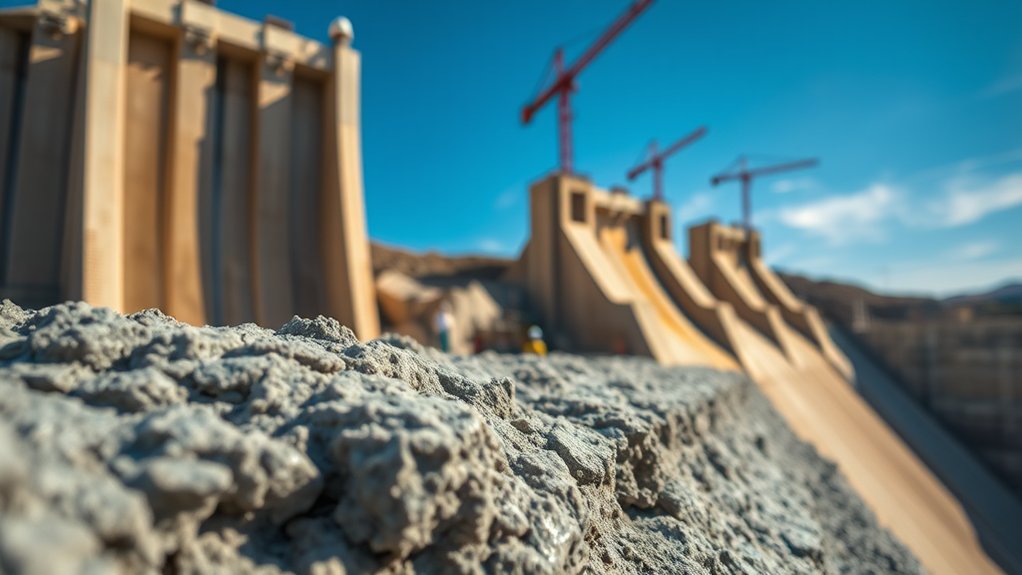
As global demands for sustainable energy and efficient water management rise, concrete dam development is set for significant advancements.
Expect to see innovative materials and design optimisations that improve both performance and sustainability. Key trends include:
- High-Performance Concrete (HPC), which offers enhanced durability and strength.
- Smart Concrete, equipped with embedded sensors for real-time monitoring.
- Self-Healing Concrete that can autonomously repair damage, cutting maintenance costs.
- Roller-Compacted Concrete (RCC), a cost-effective option for large projects.
These innovations not only prolong the lifespan of dams but also reduce their environmental impact, effectively addressing climate change challenges.
As you delve into these trends, you’ll appreciate the critical role concrete plays in achieving sustainable infrastructure goals.
Frequently Asked Questions
What Types of Concrete Are Used in Dam Construction?
In dam construction, high-strength concrete is often used for challenging applications, while roller compacted concrete is preferred for quick builds. Each type caters to specific structural requirements, ensuring long-lasting durability and efficiency in different dam designs.
How Does Weather Affect Concrete Dam Performance?
Weather significantly impacts the performance of concrete dams. Temperature changes can affect hydration rates, while moisture levels play a crucial role in curing efficiency. For instance, high temperatures can speed up hydration, potentially leading to weak concrete if not managed properly. Conversely, too much moisture can hinder curing, resulting in poor strength. It’s essential to monitor these conditions to ensure the dam maintains its strength and durability over time.
What Are the Maintenance Requirements for Concrete Dams?
Maintaining concrete dams may seem straightforward, but it’s quite complex. Regular inspections are essential for identifying cracks and controlling seepage, which helps prevent minor issues from becoming major problems. Schedule routine checks to ensure the dam’s structural integrity and to comply with regulatory standards. For example, if a small crack is left unchecked, it could lead to significant water loss or even structural failure. Prioritising maintenance is crucial for safety and longevity.
Are There Alternative Materials to Concrete for Dam Construction?
Yes, there are alternative materials for dam construction, including roller compacted concrete, steel, and earth. Each option has its own advantages and disadvantages, depending on factors like site conditions, costs, and environmental effects. For instance, roller compacted concrete is often used for its strength and quick installation, while earth dams can be more economical and environmentally friendly. It’s essential to assess these factors carefully for effective implementation.
How Long Do Concrete Dams Typically Last?
Concrete dams generally last between 50 to 100 years, depending on factors such as material wear and environmental conditions. Regular maintenance can help these structures endure beyond this typical lifespan, ensuring they remain safe and functional. For example, proper upkeep can significantly extend the life of a dam, much like regular servicing can keep a car running smoothly for many years.
Conclusion
In dam construction, concrete is essential; it acts as the core support against environmental challenges. By adopting innovative and sustainable practices, you improve structural strength while also enjoying financial advantages. The future of concrete dams looks promising with new technologies that enhance durability. By focusing on these aspects, you create robust structures that will benefit future generations, reflecting the balance between human creativity and the natural world.

Reliable Ready Mix Concrete When searching for a reliable ready mix concrete supplier in the Manchester area, Barrowmix Concrete stands Read more

Weighing the pros and cons of mixing your own concrete versus buying ready mix? Discover which option saves more money Read more

Maximize efficiency and cost savings by mastering the calculation of ready mix concrete coverage and quantity needed for your project—discover Read more