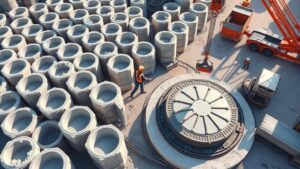
Precast concrete is a building material made from concrete components that are cast and cured in a controlled environment. Once ready, these components are transported to the construction site for assembly. This approach ensures better quality control and speeds up project completion. It also helps reduce labour costs and material waste while offering considerable design flexibility for various uses, from homes to larger infrastructure projects. By understanding its manufacturing process and advantages, you can improve your construction methods. Discover the full potential of precast concrete today.
Key Takeaways
Precast concrete is a construction technique where concrete elements are cast and cured in a controlled environment before being transported to the building site for assembly.
The process involves designing the components, casting them into moulds, and curing them to enhance strength and durability.
The benefits of precast concrete are significant: it is cost-effective, offers design flexibility, and allows for quicker construction times. Common precast products include panels, beams, and blocks, which are utilised in a variety of settings, from homes to commercial properties.
This method also promotes sustainability by minimising waste and improving energy efficiency, ultimately leading to lower life-cycle costs.
What Is Precast Concrete?

Precast concrete consists of concrete components that are cast and cured in a controlled setting before being transported to the construction site for assembly. This method provides several benefits, including improved quality control, quicker construction times, and less disruption on site.
Precast concrete is used in a variety of applications, such as bridges and building panels, showcasing its versatility. While the concept has roots in ancient civilisations, it gained traction in the 20th century due to advancements in technology and construction methods.
The Manufacturing Process of Precast Concrete

The manufacturing process of precast concrete involves several key stages that ensure efficiency and quality.
- Design: Engineers create detailed plans, ensuring all specifications align with project requirements.
- Casting: Concrete is poured into moulds, using advanced techniques to achieve the desired shapes and sizes.
- Curing: The precast elements are cured using methods such as steam curing or ambient curing, which enhance their strength and durability.
These stages are crucial for producing high-quality precast concrete components.
By using precise manufacturing techniques and effective curing methods, manufacturers can reduce defects and ensure that the final products meet stringent industry standards.
This results in reliable and long-lasting construction materials.
Benefits of Using Precast Concrete

Choosing precast concrete offers notable cost efficiency, design flexibility, and quicker construction times.
These benefits help you stick to your budget while also allowing for innovative designs in your buildings.
For instance, with precast panels, you can achieve unique shapes and finishes that might be more challenging with traditional methods.
Understanding how these advantages fit into your construction plans is key to ensuring a successful project.
Cost Efficiency
Cost efficiency in construction projects largely depends on the materials and methods used, and precast concrete is particularly notable for its ability to cut both time and labour costs.
By opting for precast concrete, you can expect considerable savings that aid in effective budget management.
- Reduced labour costs: Precast components need less on-site labour, which helps lower wage expenses.
- Shorter construction timelines: Quicker installation means faster project completion, resulting in lower overhead costs.
- Less material waste: Precasting allows for precise control over material usage, maximising efficiency.
Additionally, the durability and strength of precast concrete stairs ensures that long-term maintenance costs are significantly reduced, further enhancing overall cost efficiency.
Design Flexibility
Precast concrete offers both cost efficiency and excellent design flexibility, enabling architects and engineers to create structures that meet specific aesthetic and functional needs.
This material’s versatility allows for a variety of design innovations, accommodating complex shapes, textures, and finishes. Whether for residential, commercial, or industrial projects, precast elements can be customised to match your vision.
Its modular nature ensures easy integration into different architectural styles, enhancing both form and function. Moreover, precast concrete supports intricate designs without sacrificing structural integrity, making it a top choice for projects that seek a unique visual impact.
Speed of Construction
Speed is a crucial element in construction, and using precast concrete can significantly reduce project timelines. By choosing precast solutions, you’ll enjoy faster construction due to several key factors:
- Off-site fabrication: Components are produced in a controlled setting, minimising delays caused by adverse weather.
- Quick installation: Precast elements can be swiftly assembled on-site, cutting down on labour time and boosting efficiency.
- Reduced curing time: Precast concrete achieves strength more quickly than traditional methods, allowing for faster project progression.
These benefits streamline the construction process, helping you meet deadlines and optimise resources effectively.
In turn, you can complete projects on schedule while ensuring quality, making precast concrete a smart choice for speeding up any construction project.
Types of Precast Concrete Products

When exploring precast concrete products, you’ll come across key types such as panels, beams, and blocks.
Each serves specific structural and aesthetic roles in construction. For example, panels are often used for building facades, while beams provide essential support in structures.
Understanding these applications will help you select the right components for your project.
Precast Concrete Panels
Precast concrete panels are among the most versatile precast concrete products available today, widely used across various applications due to their strength and efficiency.
Here are some key advantages of precast panels:
- Speed of construction: Manufactured off-site, panels allow for quicker assembly on-site.
- Design flexibility: They can be tailored in size, shape, and finish to fit specific architectural needs.
- Durability: Precast panels provide excellent resistance to weather, fire, and pests.
These features make precast concrete panels ideal for a range of projects, such as commercial buildings, car parks, and residential developments.
Their efficiency not only simplifies the building process but also enhances structural integrity, making them a popular choice in modern construction.
Precast Concrete Beams
Building on the versatility of precast concrete panels, precast concrete beams are a vital element in modern construction. These beams are designed for strength and durability, making them suitable for various applications, such as bridges, car parks, and commercial buildings.
One significant advantage of precast concrete is that it can be produced off-site, which allows for faster installation and reduces on-site labour. This approach also cuts down on construction waste and improves quality control, as beams are made in a controlled environment.
Consequently, precast concrete beams can significantly shorten project timelines and enhance structural integrity.
Incorporating these beams into your designs enables you to take full advantage of precast technology, resulting in more efficient and sustainable construction practices.
Precast Concrete Blocks
Precast concrete blocks are key elements in a range of construction projects, providing both versatility and structural strength.
Here’s why they’re advantageous:
- Durability: These blocks are built to endure harsh weather, moisture, and wear, ensuring they last.
- Construction efficiency: They can be manufactured off-site, which cuts down on labour and time on-site.
- Design flexibility: Available in various shapes and sizes, they can meet a wide array of architectural needs.
Using precast concrete blocks not only boosts the structural integrity of your project but also lowers long-term maintenance costs.
Applications of Precast Concrete in Construction

As construction methods advance, the versatility of precast concrete is becoming increasingly valuable across various applications. It can be used in everything from residential properties to large commercial developments.
This material is well-suited for producing wall panels, beams, and flooring systems, leading to quicker project completion and lower labour costs.
In infrastructure, precast concrete is commonly found in bridges, tunnels, and retaining walls, offering exceptional durability and strength.
Its consistent quality, produced in a factory, reduces on-site waste and enhances safety.
When planning construction projects, consider how precast concrete can boost efficiency and sustainability, making it an excellent choice for modern building practices. Additionally, precast concrete often utilizes high-performance concrete which enhances its durability and strength in various applications.
Comparing Precast Concrete With Traditional Concrete

When comparing construction materials, it’s important to grasp the differences between precast concrete and traditional concrete.
Precast concrete has several benefits, while traditional concrete presents certain drawbacks. Here are some key points:
- Advantages of Precast: It reduces construction time thanks to off-site manufacturing, ensures consistent quality, and requires less on-site labour.
- Drawbacks of Traditional Concrete: It often has longer curing times, is more vulnerable to weather-related delays, and can vary in quality depending on site conditions.
- Overall Performance: Precast components integrate seamlessly into designs, improving structural integrity and simplifying on-site assembly.
In essence, precast concrete can streamline the building process, making it a compelling choice for many projects.
Sustainability and Environmental Impact of Precast Concrete

When looking into sustainable construction practices, it’s important to acknowledge the environmental advantages of precast concrete. This method reduces waste and optimises resources, as components are manufactured off-site with precision.
By incorporating eco-friendly materials, precast concrete lessens the carbon footprint typically linked to traditional concrete production. Moreover, the controlled factory setting enhances energy efficiency and results in lower emissions.
Precast concrete also supports sustainability through its durability and longevity, which can lead to reduced life-cycle costs and diminished resource consumption over time.
Its versatility in various applications makes it an even more attractive sustainable choice. By considering these points, it’s clear how precast concrete plays a significant role in supporting environmental goals and sustainable construction practices.
Cost Considerations for Precast Concrete Projects

Cost considerations for precast concrete projects are vital for assessing feasibility and budgeting. A comprehensive cost analysis is essential to ensure your financial planning aligns with project objectives.
Here are some key factors to consider:
- Material Costs: Compare the expenses of precast concrete elements to traditional construction methods to evaluate potential savings.
- Transportation Expenses: Factor in the cost of transporting precast components to your site, as this can significantly impact your overall budget.
- Labour Requirements: Take into account the reduced labour costs due to quicker installation times and less on-site work, which can lead to overall project savings.
Design Flexibility With Precast Concrete

When you opt for precast concrete, you enjoy considerable design flexibility with bespoke shapes and sizes tailored to your project requirements.
This material also provides a range of architectural styles, enabling you to achieve the desired aesthetic effect.
Using precast concrete allows you to effectively combine functionality with innovative design.
Custom Shapes and Sizes
Precast concrete provides exceptional design flexibility, enabling architects and engineers to create custom shapes and sizes tailored to specific project needs.
This level of customisation improves both the functionality and aesthetics of structures, allowing for unique architectural features.
- Complex geometries: Achieve intricate shapes that traditional methods can’t replicate.
- Tailored dimensions: Design elements that fit your exact specifications.
- Enhanced performance: Improve structural integrity while realising your vision.
With precast concrete, you aren’t restricted by standard moulds; you can explore innovative designs that make a striking impact in the urban environment.
Architectural Aesthetics Options
Traditional construction methods can often restrict design options, but precast concrete offers a range of architectural aesthetics that enhance both appearance and functionality.
You can select from various colours and surface finishes to create distinctive and attractive structures. Techniques like acid staining, exposed aggregate, and polished surfaces allow you to achieve the look that best fits your project’s vision.
Furthermore, incorporating textures and patterns provides greater design flexibility, making it easy to adapt precast elements to different architectural styles.
This versatility not only boosts the visual appeal of your building but also ensures it meets practical requirements, creating a balanced blend of aesthetics and functionality.
Common Misconceptions About Precast Concrete
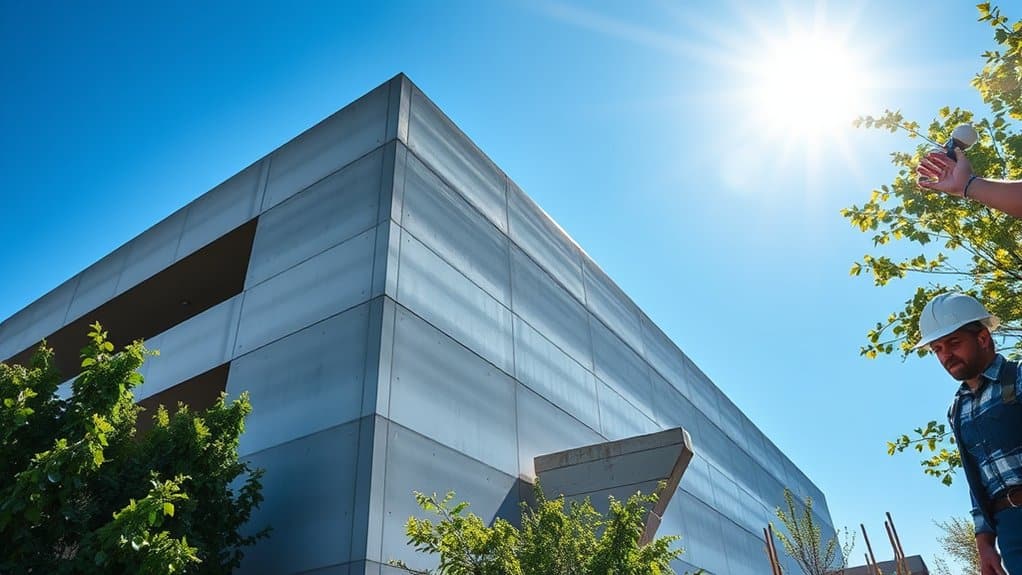
Many people think precast concrete is limited in its applications, but it actually provides numerous design options and benefits. Here are some common misconceptions:
- Limited Aesthetics: Precast concrete can be tailored with a variety of finishes, colours, and textures, making it visually appealing.
- Structural Weakness: In reality, precast elements are specifically engineered to be strong and durable, capable of withstanding tough conditions.
- High Costs: Although the initial investment may appear steep, precast concrete can significantly cut down on labour and construction time, resulting in overall cost savings. Additionally, the use of ready-mix concrete ensures high quality and consistency, further enhancing the value of precast products.
By addressing these misconceptions, you can better appreciate the versatility and efficiency of precast concrete in contemporary construction.
Understanding the facts allows you to make informed choices for your projects.
Future Trends in Precast Concrete Technology

As the construction industry progresses, advancements in precast concrete technology are leading to innovative applications and improved efficiencies.
Expect to see the integration of smart technology that streamlines production processes, allowing for real-time monitoring and quality control. This data-driven approach reduces waste, cuts costs, and enhances safety on construction sites.
Innovative materials like self-healing concrete and lightweight aggregates are also emerging, which will boost the durability and performance of precast components.
These materials not only extend the lifespan of structures but also support sustainability efforts.
Keep an eye on automation and digital fabrication techniques; they’re set to transform how precast concrete is designed and manufactured, making the process more efficient and precise.
Frequently Asked Questions
How Long Does Precast Concrete Last Compared to Traditional Concrete?
When comparing the lifespan of precast concrete to traditional concrete, factors such as environmental exposure and maintenance are crucial. Generally, precast concrete has a longer lifespan, thanks to its controlled manufacturing process and superior durability. For instance, precast panels used in building facades are less prone to cracking and weather damage compared to standard cast-in-place concrete, making them a reliable choice for long-lasting structures.
Can Precast Concrete Be Recycled After Its Lifespan?
Yes, you can recycle old precast concrete instead of just throwing it away. There are sustainable practices and recycling methods that enable you to repurpose it effectively. For instance, crushed precast concrete can be used as aggregate in new concrete mixes, or as a base material for roads and paths. This not only reduces waste but also supports eco-friendly construction solutions.
What Is the Typical Curing Time for Precast Concrete?
The typical curing time for precast concrete is between 7 and 28 days, depending on environmental conditions. It’s important to monitor the curing process closely to ensure the desired strength and durability for your project. For instance, cooler or wetter weather may extend the curing time, while warmer conditions can speed it up.
Are There Specific Maintenance Requirements for Precast Concrete?
Yes, there are specific maintenance requirements for precast concrete. Regular inspections, cleaning, and sealing are essential. It’s important to address common issues, such as cracks and stains, promptly to ensure the longevity and structural integrity of your precast elements.
How Is Precast Concrete Transported to Construction Sites?
Delivering precast concrete is like a finely tuned orchestra. Various transport methods, such as lorries and cranes, ensure that your materials arrive efficiently and on time, exactly where you need them.
Conclusion
In summary, precast concrete is akin to a finely tuned orchestra, combining efficiency, durability, and design versatility in construction. Its manufacturing process ensures consistent quality and shorter build times, making it a sensible choice for various applications. As you plan your next project, consider the cost advantages and emerging trends in precast concrete. Adopting this material not only improves your designs but also supports sustainable building practices.

Simplify your construction choices by exploring the 10 most common types of concrete and their unique applications—discover which one suits Read more

Boost your concrete quality assurance with 10 essential testing methods; uncover critical techniques that could transform your project's success.

Find out how precast concrete beams revolutionize construction with various types and applications that ensure strength and efficiency; discover their Read more