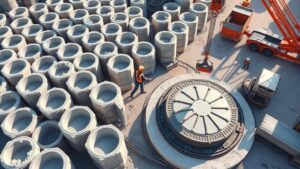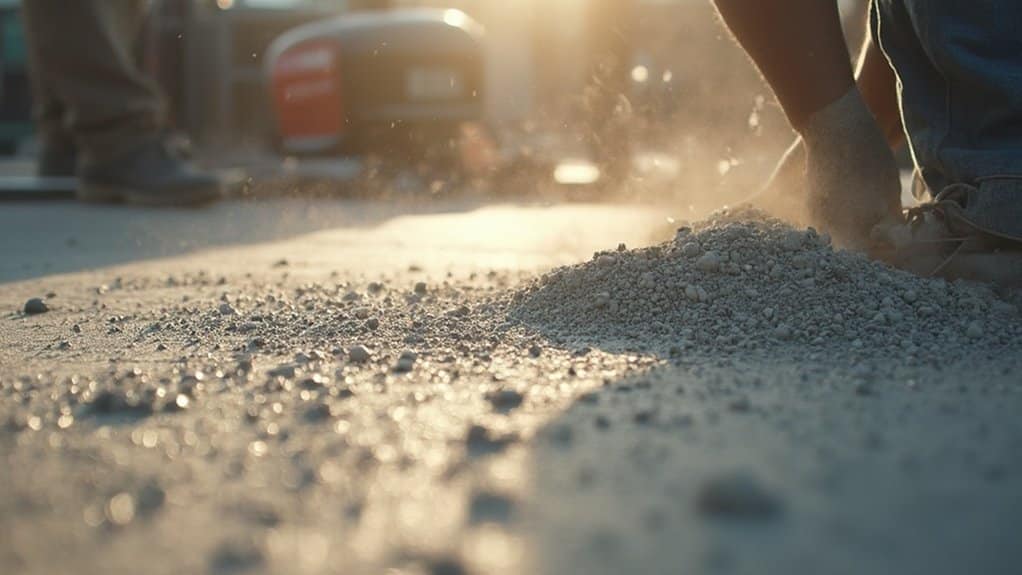
Air-entrained concrete is engineered to enhance durability by incorporating tiny air bubbles that improve freeze-thaw resistance and overall workability. This mix is particularly beneficial for outdoor structures, providing protection against harsh winter conditions and de-icing salts. It maintains a high compressive strength while allowing for a smoother finish.
However, it's important to be aware of potential drawbacks, such as reduced compressive strength and challenges in controlling the mix. By understanding its properties and suitable applications, you can make informed decisions for your construction projects.
Key Takeaways
Air-entrained concrete contains tiny air bubbles, which boost its durability and improve frost resistance in harsh weather. These air bubbles enhance workability, reduce mixing friction, and help achieve smoother finishes.
Typically, air content ranges from 5-7%, offering protection against freeze-thaw cycles, which can cause damage from expanding water. Common air-entraining agents, such as Vinsol resin, improve performance while meeting industry standards.
This type of concrete is ideal for applications like roads, foundations in extreme climates, and marine structures, ensuring they are long-lasting and resilient.
What Is Air-Entrained Concrete?

Air-entrained concrete is a specialised type of concrete designed to improve durability in challenging weather conditions. It contains an air-entraining admixture that creates tiny air bubbles during mixing. These bubbles form pressure relief zones, which are crucial for preventing damage during freeze-thaw cycles. Additionally, air-entrained concrete provides built-in frost resistance, significantly enhancing its ability to withstand harsh winter conditions.
The composition of air-entrained concrete includes cement, aggregates, and water, providing strong performance in various applications. Its enhanced freeze-thaw resistance significantly reduces cracking and spalling in colder climates. Additionally, it offers improved resistance to chemicals and fire, further boosting its overall durability.
Moreover, air-entrained concrete enhances workability, reducing issues like segregation and bleeding. This makes it particularly suitable for infrastructure projects such as roads, bridges, driveways, and tunnels, especially in areas prone to extreme weather and chemical exposure. Typical air content for freeze-thaw protection is around 5-7%, ensuring the concrete maintains its strength while benefiting from added durability.
The Importance of Air Bubbles in Concrete

Air bubbles in concrete are crucial for improving durability, especially in freeze-thaw conditions, as they help relieve internal pressure that can cause cracking.
They also enhance workability by acting as lubricants during mixing and pouring, reducing friction and improving cohesion. This not only protects the structure but also makes the finishing process smoother. For example, when constructing driveways or patios, incorporating air bubbles ensures that the concrete can withstand harsh weather while remaining easy to work with. Additionally, the presence of air-entrained concrete enhances resistance to scaling, further contributing to the longevity of the structure.
Freeze-Thaw Cycle Protection
Concrete may appear solid, but its performance during freeze-thaw cycles depends significantly on air bubbles within it.
These bubbles create voids that allow expanding water to compress without causing damage, which is crucial in regions with harsh weather. For effective freeze-thaw protection, concrete should have an air content of 5% to 7% by volume, as shown by freeze-thaw tests. The size and spacing of these bubbles are vital for relieving stress, helping to minimise cracking and scaling. This is especially important for outdoor structures exposed to de-icing salts. Additionally, the presence of entrained air voids contributes significantly to the overall durability of the concrete in severe environments.
Improved Workability Benefits
Incorporating micro air bubbles into concrete significantly improves its workability, making the mixture easier to manage. These air bubbles serve as lubricants, enhancing flow and placement, which is crucial during construction.
Effective mixing techniques ensure even distribution of air bubbles, while the choice of aggregates also plays a role.
- Reduces friction between particles
- Enhances flexibility for a workable consistency
- Minimises segregation and bleeding
- Accelerates construction processes
- Improves surface finishes
For instance, a more workable mix can be poured into complex moulds without hassle, leading to a smoother final product.
Advantages of Freeze-Thaw Resistance

Air-entrained concrete offers significant benefits in terms of freeze-thaw resistance, greatly enhancing its durability. By incorporating tiny air voids, the concrete can relieve pressure during freezing, which improves its performance in cold conditions and reduces the likelihood of cracks and structural damage.
This system effectively minimises freeze-thaw damage, particularly in colder climates where water expands upon freezing.
Moreover, air-entrained concrete helps reduce spalling caused by de-icing salts and severe weather, thereby extending its lifespan and lowering maintenance costs.
With an ideal air content of 5-7%, air-entrained concrete maintains a high Relative Dynamic Modulus of Elasticity even after numerous freeze-thaw cycles, demonstrating its superior durability compared to non-air-entrained alternatives.
Enhanced Workability and Placement Benefits

When using air-entrained concrete, you'll find it mixes and flows better due to the air bubbles acting as lubricants.
This makes it easier to handle and results in a smoother finish.
These advantages enhance your placement efforts and boost overall project efficiency.
Improved Mixability and Flow
Air entrainment significantly improves the mixability and flow of concrete, making it easier to handle and place during construction. The small air bubbles act as lubricants, enhancing your mixing techniques and ensuring a more even distribution of materials. This leads to a concrete mix with better cohesion and less segregation.
- Improved flow means less effort is needed for spreading.
- Adjusting air content allows you to tailor workability to specific job requirements.
- Optimised mixing time ensures effective distribution of air bubbles.
- Enhanced plasticity makes it easier to place concrete in intricate forms.
- Reduced friction helps lessen worker fatigue during pouring.
Smoother Finishing Process
The finishing process of air-entrained concrete is significantly improved by its enhanced workability and placement characteristics.
With better workability, handling and placing the concrete becomes much easier. The presence of air bubbles allows for smoother pouring, enabling precise placement without the need for excess water, while still ensuring flowability. This results in a more cohesive mix, which is beneficial for effective surface preparation.
The air bubbles also act as stress relievers, improving durability and reducing bleeding, leading to a more uniform finish.
Additionally, this improved workability helps achieve a consistent surface texture, ensuring that the final product is both visually appealing and structurally sound.
Technical Specifications of Air-Entrained Concrete

Air-entrained concrete is designed to improve durability, especially in areas prone to freeze-thaw cycles. Its mix includes cement, aggregates, and air-entraining agents.
It's essential to monitor performance metrics to achieve the best results, with testing standards such as ASTM C231 ensuring accurate air content measurement.
- It generally maintains high compressive strength, despite the inclusion of air.
- For optimal workability, slump values should be between 100 to 150 mm (4 to 6 inches).
- This type of concrete offers better freeze-thaw resistance than non-air-entrained options.
- It enhances durability and reduces the risks of scaling and cracking.
- Adhering to standards like ASTM C387 ensures its reliability across various uses.
Grasping these specifications will enable you to effectively incorporate air-entrained concrete into your projects.
Common Admixtures Used in Production

In concrete production, air-entraining agents are crucial for enhancing durability and workability.
Polycarboxylate-based admixtures and Vinsol resin are common choices that improve resistance to freeze-thaw cycles.
Familiarity with these admixtures is key to optimising air-entrained concrete formulations.
Air-Entraining Agents
When selecting air-entraining agents for concrete production, it's important to assess their specific properties and compatibility with other admixtures. Each agent has distinct air-entraining characteristics that affect the air void system in your mix.
Here are key considerations:
- Fritz-Pak Super Air Plus: Increases air content by up to 1%, making it suitable for demanding mixes.
- MasterAir Admixtures: Ensures a stable air-void system, which enhances the durability of the concrete.
- Sika AIR: Meets ASTM and AASHTO standards, providing better resistance to freeze-thaw cycles.
- Compatibility: While many agents can be used with other admixtures, they often need to be dosed separately.
- Selection Criteria: Choose based on your air content requirements, mixing conditions, and project specifications. Admixtures like air-entraining agents significantly improve freeze-thaw resistance, which is crucial for durability in varying climates.
Making the right choice will help improve the performance and lifespan of your concrete structures.
Polycarboxylate-Based Admixtures
Choosing the right air-entraining agents can significantly improve concrete performance, but using polycarboxylate-based admixtures (PCEs) takes it further.
PCEs are advanced superplasticisers that enhance the dispersion of cement particles, reduce the water-cement ratio, and improve workability. They work well with various admixtures, allowing for customised mix designs that enhance flowability and minimise segregation risks.
You'll see notable improvements in compressive, tensile, and flexural strength due to better particle dispersion. Furthermore, PCEs enhance durability, providing resistance to freeze-thaw cycles and chemical attacks. In addition, water-reducing admixtures can be effectively combined with PCEs to optimize performance in diverse construction applications.
Vinsol Resin Applications
Vinsol resin is crucial for improving the performance of air-entrained concrete, making it a popular choice among various admixtures.
As an effective air-entraining agent, it significantly enhances the durability and workability of concrete.
- Provides freeze-thaw resistance, vital for colder climates
- Creates stable air bubbles that relieve pressure
- Improves workability by reducing bleed water
- Increases durability, leading to lower maintenance costs
- Meets official specifications from ASTM and UK standards
Incorporating Vinsol resin not only boosts the quality of concrete but also ensures long-lasting performance across a range of applications, from road surfaces to building foundations.
Its distinct properties are essential in modern concrete technology.
Disadvantages and Limitations to Consider
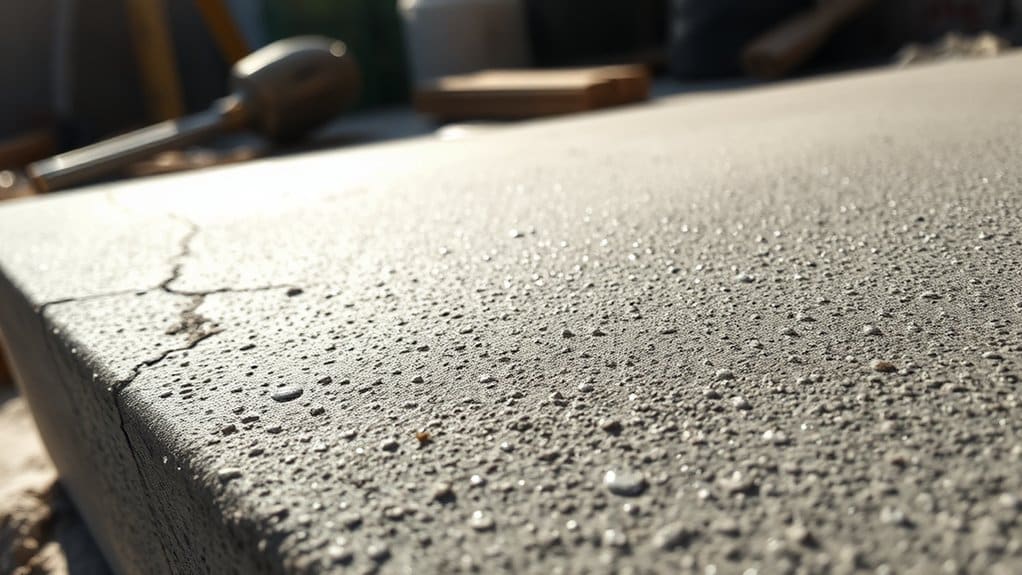
While air-entrained concrete has its advantages, it also comes with significant drawbacks that need careful consideration. The introduction of air bubbles can decrease compressive strength by 5-10% for every 1% increase in air content, which could undermine structural stability.
Furthermore, controlling the air content is tricky; variations can result in unwanted voids or honeycombing. Although air-entrained concrete can improve workability, this often means sacrificing some strength, which may necessitate increasing the cement content.
The initial costs associated with quality control and precise mixing techniques can also affect overall cost efficiency. Additionally, air loss during transport and sensitivity to environmental factors, such as temperature, can compromise performance, requiring diligent oversight throughout the project.
Key Applications in Construction

Air-entrained concrete is widely used in construction due to its improved durability and resistance to environmental challenges. It enhances construction efficiency while offering valuable benefits.
Here are some key applications:
- Infrastructure Development: Perfect for roads and airport runways.
- Building Foundations: Strengthens walls in extreme weather.
- Marine Structures: Resists water exposure and freeze-thaw cycles.
- Freeze-Thaw Prone Areas: Minimises damage from temperature changes.
- Water Treatment Plants: Protects against water-related damage.
Using air-entrained concrete ensures structural integrity and longevity, making it a top choice for essential construction projects.
Its ability to reduce maintenance costs while boosting durability highlights its importance in contemporary construction practices.
Environmental Impact and Longevity
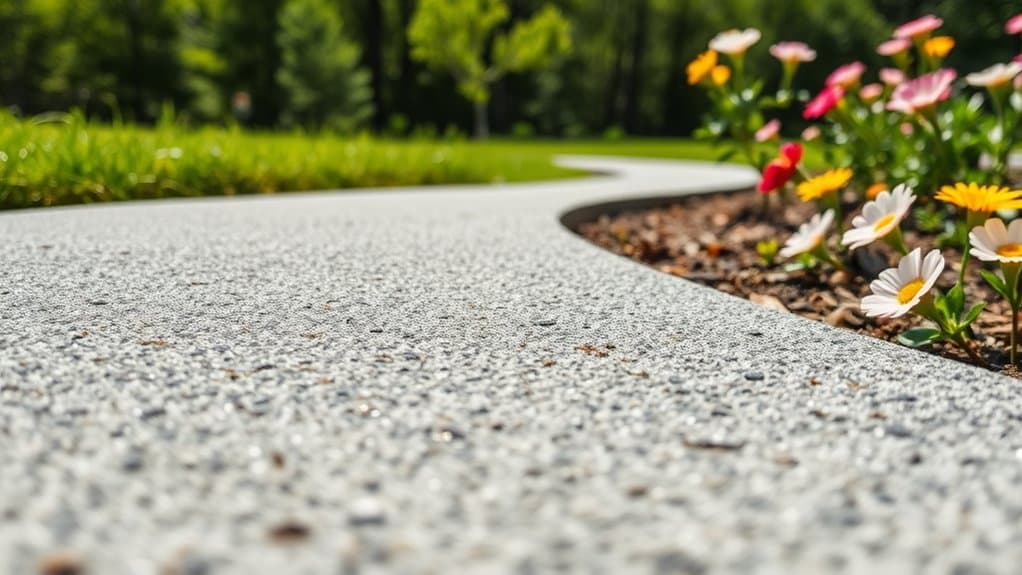
When evaluating the environmental impact of air-entrained concrete, it's important to highlight its contribution to longevity and sustainability. By enhancing durability, air-entrained concrete significantly reduces the frequency of repairs, which is a key aspect of sustainable practices.
This longer lifespan leads to lower resource consumption and diminishes CO2 emissions linked to production and renovation.
Moreover, structures made from air-entrained concrete help decrease pollution during their lifespan, as they require less maintenance and extend construction times.
The effective use of air-entraining agents not only boosts resistance to freeze-thaw cycles but also maximises material efficiency, offering clear environmental advantages.
Cost Considerations for Air-Entrained Concrete

When evaluating the costs of air-entrained concrete, it's important to note that initial expenses are generally similar to those of standard concrete. A cost-effectiveness analysis shows that while you might incur slightly higher upfront costs, the long-term savings can be considerable.
- Air-entraining agents are relatively inexpensive.
- Many regional suppliers don't charge extra for air entrainment.
- A well-designed mix can help optimise costs and material usage.
Reduced maintenance requirements can extend the lifespan of the concrete, lowering future expenses. Enhanced durability can lead to lower costs for structural repairs.
Frequently Asked Questions
How Does Air-Entrained Concrete Compare to Traditional Concrete?
Air-entrained concrete improves durability and performance by adding tiny air bubbles, which enhance freeze-thaw resistance. In contrast, traditional concrete can suffer from irregular air pockets, potentially leading to weaknesses that compromise its structural integrity over time. For example, in colder climates, air-entrained concrete is less likely to crack due to freeze-thaw cycles, making it a more reliable choice for outdoor structures.
Can Air-Entrained Concrete Be Used in Warm Climates?
In warm climates, air-entrained concrete can improve durability by up to 20% compared to traditional mixes. The benefits of air entrainment include better workability and increased resilience, making it suitable for various uses, even without concerns about freeze-thaw cycles.
What Maintenance Is Required for Air-Entrained Concrete?
For air-entrained concrete, regular inspections are essential. Implement maintenance practices such as sealing to protect the surface. For minor damage, use effective repair methods to maintain durability while keeping costs down over time. For example, filling small cracks quickly can prevent more serious issues later on.
How Does Air-Entrained Concrete Affect Curing Time?
Have you ever considered how air-entrained concrete affects curing time? It significantly influences hydration processes. Effective curing methods are crucial; for instance, cooler temperatures can prolong the curing period, which in turn impacts strength development and frost resistance in your concrete projects.
Are There Specific Tools for Working With Air-Entrained Concrete?
Yes, specific tools are essential for working with air-entrained concrete. You'll need effective mixing techniques to properly blend air-entraining agents, along with specialised finishing tools to achieve a smooth surface. This ensures optimal performance, durability, and workability. For example, a high-shear mixer can effectively incorporate air into the mix, while a trowel designed for air-entrained concrete helps achieve the desired finish.
Conclusion
In summary, air-entrained concrete is an effective choice for improving durability and workability in construction. By introducing small air bubbles into the mix, you enhance freeze-thaw resistance and contribute to a longer-lasting structure. While there are some factors to consider, the advantages typically outweigh the downsides. Choosing air-entrained concrete is a wise investment in resilience, making it a sensible option for any modern building project. Your constructions deserve quality, and this could be the ideal solution.

Learn about the diverse types of concrete used in construction and discover which mix can transform your next project.

For a long-lasting driveway that laughs in the face of the UK's unpredictable weather, the C20 concrete mix is your Read more

In the UK, you've got a a lot of lightweight concrete types to choose from, each with its unique perks. Read more